
Up Next

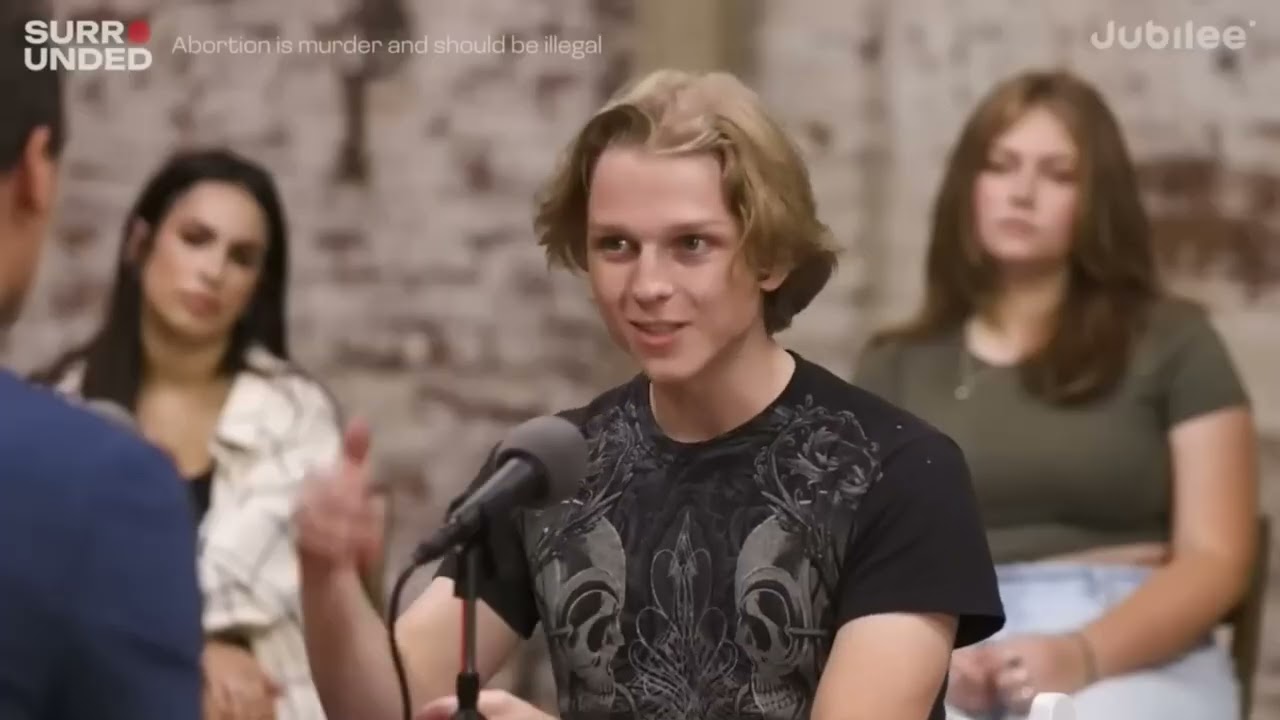
Abortion, Morality, and Legal Perspectives: Charlie Kirk vs Parker
24:37
Pastor Jack Hibbs Addresses Charlie Kirk's Assassination and the Legacy of a Modern American Martyr
45:31
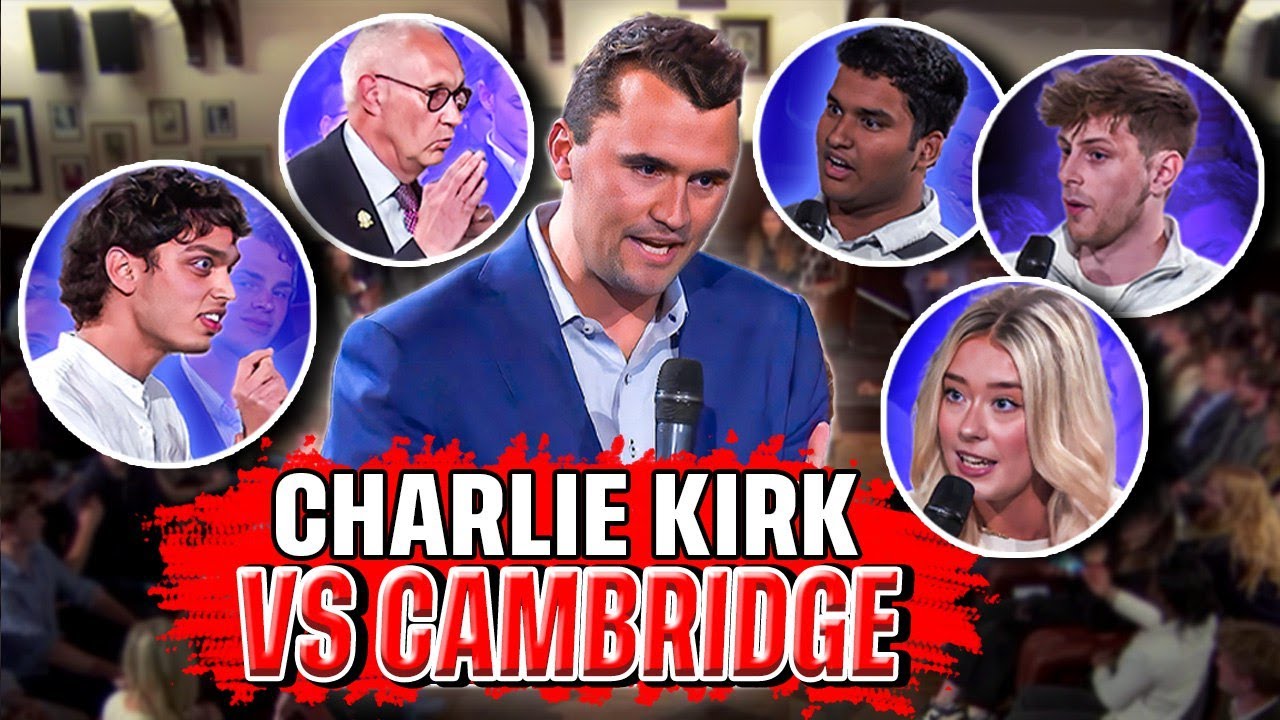
Charlie Kirk Defends Trump, Debates Abortion and Feminism at Cambridge Union in Heated Exchange
1:06:27
Related Books
Browse Conservative Books




Ben Shapiro Honors Charlie Kirk's Greatest Debate Moments After His Tragic Assassination
Ben Shapiro reflects on Charlie Kirk's exceptional debating skills and most powerful arguments following Kirk's assassination. The left has spread misinformation about Kirk's positions, prompting Shapiro to showcase Kirk's actual beliefs through compelling debate clips on abortion, transgender issues, DEI, Second Amendment rights, immigration, and the Israel-Hamas conflict. From Oxford Union to campus debates, these moments demonstrate how Kirk evolved into one of the great debaters of his generation, leaving behind a legacy of 15 billion social media views and timeless arguments that will influence future generations.
A Legacy of Powerful Arguments
Since Charlie Kirk's assassination, the left has been spreading numerous lies about his positions and what he actually said publicly. Ben Shapiro, who knew Kirk for a very long time, decided to showcase some of Charlie Kirk's greatest debate moments to set the record straight. According to Shapiro, one of Kirk's amazing gifts was his ability to improve himself at an enormous number of things. When Shapiro first met Kirk, he was okay at debate, but Kirk became truly one of the great debaters by the time he was murdered. These inspiring clips reveal what Charlie actually believed.
Defending Life at Oxford Union
At Oxford Union, Kirk delivered a masterful defense of the pro-life position when challenged about abortions in cases of sexual assault or rape. He presented two ultrasounds—one from a baby conceived in rape, the other from a loving marriage—and asked if anyone could tell which was which. His point was clear: both are human beings deserving of human rights.
"Someone in this audience was conceived in rape. Do you know who? Tell me, do they look different? Do they get less rights? Are you not able to have free speech rights because you're a rape baby? No. We believe in universal human equality regardless of how horrific or evil the method of conception is. That is what built the West and I will continue to defend that," Kirk argued.
When pressed about babies born from rape potentially being mistreated or abused, Kirk countered that this was a separate issue. He pointed out that plenty of babies from loving monogamous marriages are also mistreated and abused. He rejected the notion that potential future abuse justifies murder, emphasizing that abortion causes psychological trauma for women and that the fundamental question is whether we defend human life universally.
Shapiro noted this was particularly effective because of Kirk's creative use of imagery at the beginning—the two ultrasounds that clarified the fundamental issue without allowing evasion.
Cornering Gavin Newsom on Transgender Sports
Kirk also debated California Governor Gavin Newsom on his podcast, and the conversation did not go well for Newsom. Kirk challenged the governor on the issue of biological males competing in women's sports, specifically mentioning a young man, AB Hernandez, who was about to win the state championship in the long jump in female sports.
Kirk pressed Newsom: "You as the governor should step out and say no men in female sports. Would you say no men in female sports?" Newsom admitted it was "an issue of fairness" and that he "completely agreed" with Kirk on the fairness issue. But when Kirk asked if he would actually speak out against the specific case, Newsom became visibly uncomfortable.
The exchange revealed Newsom's political bind. He acknowledged the unfairness but wouldn't take action because it contradicted the Democratic Party's position that men can become women and women can become men. Kirk pointed out 890 medals and trophies had been taken by biological males competing in women's sports in just the last five years—far more than Newsom realized.
Shapiro observed that Kirk effectively cornered Newsom, and once the governor admitted it was a fairness issue, he had boxed himself in. The exchange implied Newsom might break from his party on this issue, which would have been politically advantageous, but he couldn't because of the Democratic orthodoxy on gender ideology.
Addressing Social Contagion and Gender Ideology
Back at Oxford Union, Kirk addressed the transgender issue head-on when asked about his view that people who identify as trans are part of a social contagion due to causes such as bullying and autism. This issue is particularly significant because Kirk's assassin was a gay man in a relationship with a man who believed he was a woman, and who thought Kirk was hateful for saying men aren't women.
Kirk's response was direct: "Well, I mean, it's true. First of all, you can't be what you are not very fundamentally. So if you are a man, you can't become a woman. If you're a woman, you can't become a man." He cited the Cass report and noted that the UK was actually better on the trans issue than the US, referencing their Supreme Court's recent clarity on defining men and women.
Kirk also praised JK Rowling as a hero, pointing out the hypocrisy of the left: "Everyone loved JK Rowling. She's wonderful. Make her a dame. She's the best. Oh, she says that a woman is a woman and a man is a man. Crucify her."
Shapiro explained that Kirk's point about rapid onset gender dysphoria was backed by research at Brown University showing a massive uptick in young girls identifying as transgender. The data showed it was a social contagion occurring in small social groups, as documented in Abigail Shrier's book "Irreversible Damage." The researcher who discovered this was suspended by Brown for the findings. This explains why identification rates jumped from a tiny fraction to 25% of the young generation identifying as LGBT, with a significant percentage identifying as transgender.
Campus Debates on DEI and Merit
Kirk was murdered while doing his debates on campus, which had become viral on TikTok. He would show up with a traveling tent that said "prove me wrong." In one debate with a student about DEI, Kirk discussed the concept of blind hiring—hiring without knowing a person's race, age, or gender.
When the student opposed blind hiring, Kirk explained that blind hiring is based on merit. The student tried to argue that race, sex, and age can factor into merit, but Kirk cut through the semantic game being played. He clarified his position: "If diversity happens naturally through meritocracy, great. If all of a sudden we have people that—DI is by force. We are going to forcibly make an institution more colorful."
Kirk emphasized that if outcomes happen based on merit alone, regardless of racial composition, that's praiseworthy. He cited examples like the NBA being 75% Black or half of Texas A&M being Black—if it's based on merit, it's excellent. "We want excellence and meritocracy over race in every possible circumstance," Kirk concluded.
Shapiro noted that even Kirk's debate opponent seemed to agree with this basic premise, and that Kirk was advocating for race-blind meritocracy, not some form of reverse discrimination.
Defending the Second Amendment
In another campus debate, Kirk addressed gun rights when confronted with statistics about gun deaths and school shootings. The student believed gun ownership was a privilege, not a right, and supported a ban on guns. Kirk immediately identified their fundamental disagreement: the student did not believe in the Second Amendment as written.
Kirk stated his position clearly: "I believe that the right to protect yourself and your family against a tyrannical government or a home invader is an inalienable right that must be protected and that no one can take it away."
He then addressed the statistics the student cited. While acknowledging about 30,000 gun deaths per year, Kirk pointed out that two-thirds are suicides, and the student agreed that suicide involves underlying issues beyond the firearm itself. Of the remaining 10,000 deaths, the vast majority are gang-related in about 10 cities across the country.
Kirk concluded with a powerful argument about liberty and trade-offs: "Those of us that believe in the Second Amendment, we fully acknowledge that when you have liberty that you're going to have sometimes undesirable outcomes. For example, there are 50,000 people a year that die in auto fatalities. And it's tragic. However, no reasonable person would come up to the mic and say, 'Let's ban driving.'"
Shapiro praised this as an excellent, well-reasoned argument going point by point through the statistics to reach the conclusion that public policy is a series of trade-offs.
Immigration and Western Civilization
Kirk also debated issues of diversity, immigration, and Western civilization on campus. When asked about diversity being America's strength, Kirk made a provocative point: "What country has ever grown stronger the more divided it's been? None. Diversity definitionally will divide you. Unity unifies you. You notice they never say unity is our strength. They say diversity is our strength."
He argued there's nothing racist about wanting your kids around people who speak English or not wanting to import people from distant lands who don't share Western values, don't treat women the same, and don't respect freedom of speech. When the student claimed America has always been a mix of cultures and immigrants, Kirk countered: "From the 1920s to the 1960s, we had very little immigration in this country, nearly 40 years. In fact, that is what largely led to us becoming a world superpower in the 1950s."
Shapiro noted agreement with Kirk's point that "diversity is our strength" is a nonsensical slogan, and that unity is what actually strengthens nations. However, Shapiro expressed some disagreement with Kirk's economic argument about immigration, noting that the booming 1950s economy resulted from America's intact industrial capacity after World War II, not low immigration policies. Shapiro also pointed out that high-growth periods from the 1880s to 1920s actually had high immigration. While Shapiro agrees with arguments against mass immigration due to changed factors like the welfare state and failure to assimilate, he found Kirk's specific economic argument less persuasive.
Israel and Hamas: Moral Clarity
Kirk also debated the Israel-Hamas conflict at Cambridge, where an opponent claimed both Hamas and the Israeli government are evil, with no justification for "the murder and mutilation of thousands of innocent people and children" or "invading hospitals, bombing innocent populations, and dragging out a war which is damaging Israel and the West."
Kirk responded with force: "It was also a moral truth that the war started because 1,300 Jews were killed and 200 were taken hostage. And when you declare war on Israel, expect a firestorm in reaction."
He recounted how Hamas invaded Israel on Shabbat during Simchat Torah, the 50-year anniversary of the Six-Day War, attacking music concerts, homes, and kibbutzim, taking over 200 hostages. Kirk emphasized the impossibility of waging war in Gaza's urban environment with two million people, where Hamas fighters wear civilian clothing and violate every tenet of the Geneva Convention.
"The IDF, when they do something right, they get no credit. When they do life-saving surgeries of a Gazan child, they get no credit. When they drop leaflets, they get no credit. But when they happen to bomb a place where they are operating their military from, which we now know from third-party verified sources, hundreds of Hamas military operations are in mosques, schools, and hospitals," Kirk argued.
He concluded powerfully: "I'm sorry, the country where they were living in relative peace on October 6 that all of a sudden had a war—Hamas started the war. I don't see people really upset about the two million Germans that were killed in World War II, civilians. A tragic truth of war is that civilians die. I don't like it and you don't like it. And they brought it upon themselves. The only operation and entity to blame is the leadership of Hamas, not the Israeli government, for fighting this defensive war after they were invaded. There is a good guy and there is a bad guy."
When his opponent suggested this was "the morality of the child," Kirk shot back: "A child who knows that Israel is the good guy, Hamas is bad, has a lot more wisdom than a student like yourself at Cambridge University."
A Lasting Legacy
Shapiro concluded that Kirk's legacy will live on in these clips for decades to come. These are strong public positions and powerful debates that people will show their children, and their children will show their children. There's a reason Kirk accumulated something like 15 billion views on various social media outlets in the months leading up to the last election cycle. He leaves behind a tremendous legacy, and for that, we are very grateful.
Video Transcript
[00:00] All righty, folks. As you know, since
[00:01] Charlie Kirk's assassination, the left
[00:03] has been out there telling an enormous
[00:04] number of lies about the positions that
[00:06] Charlie took, what Charlie actually had
[00:07] to say. In fact, there are a lot of
[00:09] people telling a lot of lies about what
[00:10] Charlie said publicly. And so today, I
[00:12] want to go through some of the greatest
[00:14] Charlie Kirk debate hits. I knew Charlie
[00:16] for a very, very long time. And I have
[00:18] to say, one of Charlie's amazing gifts
[00:20] was his ability to make himself better
[00:22] at enormous number of things. When I
[00:24] first met Charlie, he was okay at
[00:26] debate. became truly one of the great
[00:28] debaters by by the time he was murdered.
[00:30] These clips, they're they're inspiring.
[00:32] Charlie was great at this. Let's go
[00:34] through some of them. See what Charlie
[00:35] actually believed. Here is Charlie Kirk
[00:37] talking about abortion over at Oxford
[00:38] Union.
[00:39] So, what about abortions in cases of
[00:41] sexual assault or rape?
[00:43] Yeah. So, again, let's just say I have
[00:45] two ultrasounds here. One of the
[00:47] ultrasound is a baby that is conceived
[00:48] in rape. The other one is from a loving
[00:50] marriage. Do we know which one is which?
[00:54] So, they're both human beings and they
[00:56] both deserve human rights. Someone in
[00:57] this audience was conceived and raped.
[00:59] Do you know who?
[01:01] Tell me, do they look different? Do they
[01:03] get less rights? Are you not able to
[01:05] have free speech rights cuz you're a
[01:06] rape baby? No. We believe in universal
[01:08] human equality regardless of how
[01:10] horrific or evil the method of
[01:12] conception is. That is what built the
[01:14] West and I will continue to defend that.
[01:16] So then what happens in cases when the
[01:18] baby from that is a product of rape or
[01:20] sexual assault is mistreated, is abused?
[01:23] It's a separate issue. There's plenty of
[01:24] babies that are in loving monogous
[01:26] marriages that are mistreated and
[01:27] abused. Separate. There is no
[01:29] correlation. There's no moral
[01:30] justification to say that I think or I
[01:32] even have data that that baby will be
[01:34] mis be abused or mistreated. Therefore,
[01:36] murder is okay.
[01:37] I mean, there is correlation. I think
[01:38] it's very clear when they've been
[01:40] perceived in very very horrific
[01:41] situations. The mother specifically as
[01:43] well is obviously in terms of mentally
[01:45] the impact they have on her that still
[01:46] the mother has to raise that baby all
[01:48] the way till 18 years old.
[01:48] Still not a justification for murder.
[01:50] And if you think that abortion is just a
[01:53] medical procedure, a cosmetic type
[01:55] intervention, no different than getting
[01:56] plastic surgery, women have regrets
[01:58] after abortion, they have psychological
[02:00] trauma. Again, the question is, do we
[02:03] defend human life universally as a
[02:05] statement? And if the question is, I'm
[02:07] going to just kind of well, I can
[02:09] eliminate the smaller life because I
[02:11] have regret of a sexual encounter I had,
[02:13] then I find great question with that.
[02:15] So, I mean, look at how good that is. I
[02:18] mean, that really, really is good. The
[02:19] best thing here from Charlie is that
[02:21] image at the very beginning. It's a
[02:22] creative use of an image that really
[02:24] clarifies. When he says at the very
[02:26] beginning, you've got two pictures of an
[02:27] ultrasound. You don't know which is
[02:28] which. Are you going to make a decision
[02:30] about which one of these babies gets to
[02:32] be terminated? It's a fantastic point.
[02:34] It's irrefutable. There's no way to
[02:35] rebut it without actually going to the
[02:37] heart of the matter, which is you don't
[02:38] actually think that human life begins at
[02:40] conception. Or if you do, if you
[02:41] acknowledge that reality, then you are
[02:43] okay with certain types of killing. Next
[02:44] up, Charlie Kirk did Gavin Newsome's
[02:47] podcast. And again, this is just an
[02:48] example of the reality, which is that
[02:50] Charlie was willing to go talk to pretty
[02:52] much anybody. He had debates and and
[02:53] conversations with pretty much anybody.
[02:55] And this is what he was murdered doing.
[02:57] Even Gavin Newsome recognized that.
[02:59] Gavin had a conversation with with
[03:01] Charlie. The conversation did not go
[03:03] well for Gavin Newsome for a good
[03:04] reason.
[03:05] What do you do? But what do you do?
[03:06] Seriously, Charlie Kirk, give us some
[03:08] advice.
[03:08] Better ideas, Governor. Like, for
[03:09] example, I mean, like if you want to
[03:11] like you have an opportunity to like,
[03:13] you know, run to the middle and seize
[03:14] this man. Obviously, you're talking to
[03:15] me about people. So, like you right now
[03:17] should come out and be like, you know
[03:18] what, the young man who's about to win
[03:20] the state championship in the long jump
[03:22] in female sports, right? That's that
[03:24] that shouldn't happen. You as the
[03:25] governor should step out and say no.
[03:27] No. And I appreciate and and
[03:28] but like would you do something like
[03:29] that? Would you say no men in female
[03:31] sports?
[03:31] Well, it's I think it's an issue of
[03:32] fairness. I completely agree with you on
[03:34] that.
[03:34] It is an issue of fairness. It's deeply
[03:36] unfair. Would you speak out against this
[03:38] young man, AB Hernandez, who right now
[03:40] is going to win the state championship
[03:41] in the long
[03:42] I can see you wrestling with it. No, I'm
[03:43] not wrestling. I'm not relaxing with the
[03:45] the fairness issue. I totally agree with
[03:47] you. The issue of fairness is completely
[03:48] legit and I I saw that the last couple
[03:51] years. Boy, did I saw how you guys were
[03:54] able to weaponize that issue at another
[03:55] level.
[03:55] Not weaponized. Don't that's that's
[03:56] well weaponized maybe pjorative. You're
[03:58] right. But you were able to
[04:00] shine a light on
[04:01] highlight it in a way that frankly I
[04:03] there not that many. We're talking about
[04:05] I think ND NC2A what 510,000. No, no,
[04:08] but I just didn't realize.
[04:09] It's 890 medals and trophies that we
[04:11] know of in the last 5 years. That's a
[04:12] lot.
[04:13] So again, look at Charlie just just
[04:15] corner Nuome and he's right. You can see
[04:17] Nome getting ever more uncomfortable
[04:19] because he understands that he's now
[04:20] boxed himself in that once he says it's
[04:22] a fairness issue. Then why don't you
[04:23] just say that it shouldn't happen? And
[04:26] this this was a very bad exchange for
[04:27] Newsome because one of the things that
[04:29] happened from it is that it starts to be
[04:30] implied that maybe he was actually going
[04:32] to break the mold. It would have been
[04:33] good for him to do it. By the way,
[04:34] Charlie was right about this. It would
[04:35] have been very good for for Gavin
[04:36] Newsome to run to the middle on this
[04:37] issue and just take that issue off the
[04:39] table for Democrats. Nuome wouldn't do
[04:41] it because it is an order of faith for
[04:44] Democrats that men can become women and
[04:45] women can become men and some sort of
[04:47] sin to claim the opposite. So here was
[04:50] Charlie back at Oxford Union talking
[04:52] about trans. Now of course this is an
[04:53] issue that effectively got him killed
[04:55] because the assassin of Charlie Kirk was
[04:58] a gay man in a relationship with a man
[05:01] who believed he was a woman and who
[05:04] believed that that the assassin thought
[05:06] that Charlie was hateful for saying that
[05:07] men aren't women. Here is Charlie
[05:08] defending that position. See if this
[05:10] sounds hateful to you.
[05:11] You have previously expressed the view
[05:12] that people who identify as trans are
[05:14] part of a social contagion due to causes
[05:17] such as bullying and autism. Why do you
[05:19] hold this position? And what evidence do
[05:21] you have to support this position?
[05:22] Well, I mean, it's true. I mean, first
[05:24] of all, you you can't be what you are
[05:26] not very fundamentally. So, if you are a
[05:29] man, you can't become a woman. If you're
[05:30] a woman, you can't become a man. Um, as
[05:33] far as the bullying, I mean, we know
[05:34] this because of the skyrocketing rates
[05:37] of, um, peer pressure, social contagion
[05:40] data. In fact, the Cass report was one
[05:42] of the most interesting ones. You guys
[05:44] are actually better on the trans issue
[05:45] than us. Don't mess it up, guys, please.
[05:47] Uh, your Supreme Court actually defined,
[05:50] I think, what was it like a man, what a
[05:52] man as a man and a woman as a woman.
[05:54] Like, they actually had clarity on this
[05:55] topic recently. Um, by the way, you all
[05:58] can agree that JK Rowling is a hero.
[05:59] Yes.
[06:01] So funny how the left will no longer
[06:02] applaud their heroes when you
[06:04] differentiate from the faith. Everyone
[06:06] love JK Rowling. She's wonderful. Make
[06:08] her a dame. She's the best. She's Oh,
[06:10] she says that a woman is a woman and is
[06:12] a man is a man. Crucify her.
[06:14] Colorful stuff there from from Charlie.
[06:16] Obviously, the point that he's making
[06:18] about rapid onset gender dysphoria, it
[06:20] was backed by a study at Brown
[06:22] University, rapid onset gender
[06:23] dysphoria, that demonstrated repeatedly
[06:26] that there was a a massive uptick in the
[06:28] number of young girls who were
[06:29] identifying as transgender for a very
[06:31] very long time. All studies showed that
[06:33] it was essentially a subset of young
[06:35] males who were identifying as girls and
[06:38] then all of a sudden disproportionately
[06:40] women, young girls, you know, underage
[06:41] girls actually started identifying as
[06:43] transgender and it was all in small
[06:45] social groups and one girl would go
[06:47] transgender and then all would go
[06:48] transgender. The researcher in that case
[06:50] was suspended by Brown for that
[06:52] discovery. Abigail Shrier talks about
[06:54] this in her book irreversible damage and
[06:56] the data are very clear on this. It is
[06:58] absolutely 100% a social contagion,
[07:00] which is why you go from a fraction of a
[07:02] fraction of a percentage of people
[07:04] identifying as transgender to 25% of all
[07:10] of the young generation identifying as
[07:12] LGBT and a significant percentage of
[07:14] that 25% identifying as transgender. We
[07:16] get to more of this in a moment. First,
[07:18] the system isn't broken. Very often,
[07:19] it's rigged because, you know, a lot of
[07:21] people get rich when you are in debt.
[07:23] And that's not an accident. That's the
[07:24] plan. PDS Debt has helped hundreds of
[07:26] thousands of people flip the script on
[07:27] credit cards, personal loans, medical
[07:28] bills. They know how to beat these
[07:30] companies at their own game. Your money,
[07:31] your future. It's time to take it back
[07:33] with PDS Debt. PDS Debt doesn't just
[07:35] crunch numbers and then call it a day.
[07:37] They actually take the time to
[07:38] understand your specific situation and
[07:39] build a plan that works for you, not
[07:41] some cookie cutter approach. And here's
[07:42] the best part. They don't care what your
[07:44] credit score looks like. Whether it's
[07:45] pristine or completely shot, they're
[07:47] focused on one thing, helping you save
[07:49] more money, crush your debt faster, and
[07:50] finally start keeping more of what you
[07:52] earn instead of handing it over to
[07:53] creditors every single month. They've
[07:55] built the reputation by actually
[07:56] delivering results. And that's why they
[07:58] have an A+ rating from the Better
[07:59] Business Bureau. Thousands of five-star
[08:01] Google reviews and perfect scores on
[08:02] Trust Pilot. When you're drowning a
[08:04] debt, you need someone in your corner
[08:05] who knows how to fight back. That's
[08:06] exactly what PDS debt does for their
[08:08] clients every single day. I have friends
[08:11] who've gotten into debt. It is horrible.
[08:12] Truly horrible. And so I understand what
[08:14] it's like to try to get out of debt
[08:16] where you feel like you're digging and
[08:17] digging and you can't get out. Well,
[08:18] you're 30 seconds away from starting the
[08:20] process of becoming debtree. Get your
[08:21] free debt assessment. Find the best
[08:23] option for yourself right now at
[08:24] pdsdat.com/shapiro.
[08:26] That's pdsdat.com/shapiro.
[08:28] pds.com/shapiro.
[08:31] So obviously Charlie was murdered while
[08:33] he was doing his debates on campus.
[08:36] Those became quite viral on TikTok
[08:38] particularly. He would show up with the
[08:39] traveling tent that said prove me wrong.
[08:41] Here is one of these debates that he had
[08:43] with one of the students over DEI.
[08:45] What do you think about blind hiring?
[08:47] Are you for blind hiring?
[08:49] No.
[08:49] No. So why not? Because blind hiring,
[08:52] for those you who don't know, is based
[08:53] on merit where you don't look.
[08:55] So what's blind hiring?
[08:56] Blind hiring would be that you do not
[08:58] put the race actually when you submit
[08:59] for you actually you don't even see the
[09:01] person when you interview them for a a
[09:03] job.
[09:03] No, no, no. That's that's one part of
[09:04] blind hiring. There's multiple ways to
[09:06] do blind hiring, but at the end of the
[09:07] day, blind hiring is exactly not knowing
[09:10] the person's race. age or gender. That's
[09:12] based on merit. Like you said, you want
[09:14] merit, correct?
[09:15] Well, hold on. Those things can factor
[09:17] into merit as well. For example, if I'm
[09:19] trying to hire for an Amazon warehouse
[09:21] worker and all of a sudden I find out
[09:23] that they're at 69 with one year left
[09:25] from retirement and the age is not
[09:26] disclosed, wouldn't I prefer to have a
[09:28] 24 year old man than a 69year-old woman
[09:30] who's overweight?
[09:31] You're moving the goalpost. Let's bring
[09:32] it back here. So, no, the whole point
[09:34] was about blind hiring. No, you just
[09:36] said you said race, sex, and age
[09:39] is not incorporated. Correct. I think
[09:41] you should have a full picture of of a
[09:43] human being is when you hire them.
[09:45] So, you care about diversity.
[09:46] No, actually, I don't.
[09:47] How? Why? Because that's basically
[09:49] merit. You're focusing solely on merit.
[09:52] You said you want me.
[09:53] Just to be clear, I want I I if
[09:55] diversity happens naturally through
[09:56] meritocracy, great. If all of a sudden
[09:58] we have people that Well, no, no, it's
[10:00] not. DI is by force. No, no, I got to I
[10:03] got to interject.
[10:05] that we are going to forcibly make an
[10:07] institution more colorful. We're going
[10:08] to forcibly make an institution more
[10:10] black where if all of a sudden if half
[10:12] of Texas&M was black because it was all
[10:14] on merit, praise God. That's an amazing
[10:16] thing. It doesn't matter. If all of a
[10:18] sudden, for example, if the NBA is 75%
[10:20] black because it's on merit, great.
[10:22] Terrific. If the NFL is half black
[10:24] because on merit, we don't want to force
[10:26] race. We want excellence and meritocracy
[10:28] over race in every possible
[10:30] circumstance.
[10:33] Okay. So, I think that even the person
[10:35] that Charlie's supposedly debating here
[10:37] seems to agree with that basic premise.
[10:38] And Charlie is cutting through the
[10:40] semantic game that's being played here.
[10:41] The semantic game that's being played is
[10:43] the idea that if you want to take into
[10:46] consideration relevant factors, that's
[10:48] some form of DEI. No, that is the
[10:50] opposite of DEI if the factors are
[10:51] relevant. What Charlie, I'm sure, was in
[10:53] favor of and articulated many times that
[10:55] he was in favor of raceelind
[10:56] meritocracy. So, if if the question is
[10:59] blind hiring where you don't put the
[11:01] person's race on the form, then yeah, I
[11:04] think Charlie would have been in favor
[11:05] of that. I' been shocked if he wouldn't
[11:06] be in favor of that. Here's Charlie on
[11:08] campus debating the Second Amendment
[11:09] with somebody. In United States, there
[11:11] are 397 gun deaths in 2019 alone. The
[11:15] average of one gun related death every
[11:17] 11 minutes. In 2023, there were 346
[11:20] school shooting incidents in the US. So
[11:22] far, there have been 385 mass shootings
[11:24] in 2024. And a mass shooting is defined
[11:26] as an incident in which four or more
[11:28] people are injured or killed. Why are
[11:29] you pro- second amendment? And can you
[11:31] give me your stance on that?
[11:31] Great. So, I just want to make sure I
[11:33] can know where you're coming from. Do
[11:34] you believe owning a firearm is a right
[11:36] or a privilege?
[11:37] I believe it's a privilege. I'm going to
[11:38] go with that.
[11:39] Okay. So, then you you do not believe in
[11:41] the Second Amendment as it is written.
[11:42] No, I believe it needs to be amended. I
[11:44] believe in a ban for guns.
[11:45] Okay. So, that's where we disagree and
[11:46] that's okay. We have clarity but not
[11:48] agreement. I believe that the right to
[11:49] protect yourself and your family against
[11:52] a tyrannical government or a home
[11:53] invader is a inalienable right that must
[11:56] be protected and that no one can take it
[11:58] away. Now let's just and that's okay. We
[12:00] have we have clarity on that. Now let's
[12:03] go through why I believe that and some
[12:05] also some clarifying statistics.
[12:06] Everything you said is true but one part
[12:09] of it is misleading
[12:10] is that yes there are there are about
[12:12] 30,000 gun deaths a year or death by
[12:15] firearm but twothirds of them are death
[12:17] by suicide.
[12:18] Yes. Yeah. Right.
[12:22] 11 minutes.
[12:27] You and I would both agree though that
[12:28] if someone is committing suicide with a
[12:30] firearm, there's other underlying
[12:31] issues. The firearm is secondary. Okay.
[12:33] So that that's a reason. Thank you for
[12:34] agreeing with that. Okay. So therefore,
[12:36] that gives you about 10,000 gun deaths a
[12:38] year. The vast majority of those are
[12:40] gang related in about 10 cities across
[12:43] the country. Not excusing it, but
[12:45] there's other underlying factors
[12:46] associated with it. Now, let's get into
[12:49] what our position is. Those of us that
[12:51] believe in the Second Amendment, we
[12:52] fully acknowledge that when you have
[12:54] liberty that you're going to have
[12:57] sometimes undesirable outcomes. For
[13:00] example, there are 50,000 people a year
[13:03] that die in auto fatalities.
[13:05] Mhm.
[13:05] And it's tragic. However, no reasonable
[13:08] person would come up to the mic and say,
[13:09] "Let's ban driving."
[13:10] And an excellent, well-reasoned argument
[13:12] from Charlie. He's going point by point
[13:14] through the statistics. And when he gets
[13:15] to the the final conclusion, which is
[13:17] that public policy is a series of
[13:18] trade-offs, that really is is the key
[13:20] thing. That really is the key thing.
[13:22] Now, it'd be interesting to hear the
[13:24] argument from the other side that gun
[13:27] rights are not pure self-defense. There
[13:29] are other forms of self-defense that if
[13:30] you have a society that didn't have any
[13:32] guns in the first place, that maybe you
[13:33] don't want to bring guns in, right?
[13:34] That's an argument that's been made with
[13:35] regard to societies that actually do not
[13:37] have many guns in them. There are some
[13:39] really fascinating debates to be had
[13:40] with with the Second Amendment here, but
[13:41] Charlie's making obviously a very
[13:43] forceful and rational defense for the
[13:45] Second Amendment there. Here is Charlie
[13:46] Kirk debating Western civilization on
[13:49] campus.
[13:49] What country has ever grown stronger the
[13:52] more divided it's been?
[13:54] None. But I'm not saying that to get
[13:56] more divided.
[13:57] No, but but diversity definitionally
[14:00] will divide you. Unity uni unifies you.
[14:02] You notice they never say unity is our
[14:03] strength. They say diversity is our
[14:04] strength. In fact, just so we are clear,
[14:07] there is nothing racist or xenophobic to
[14:10] say that you want your kids to be around
[14:13] people that speak English. There's
[14:14] nothing racist to say that. It actually
[14:16] means that you want to be able to
[14:17] communicate with your neighbor. There's
[14:19] nothing racist and xenophobic to say,
[14:22] for example, we don't want to import
[14:23] people from a far-off distant land that
[14:26] don't share Western values, that don't
[14:28] treat women the same, that don't have
[14:30] the same respect for freedom of speech.
[14:31] So what we see is the unraveling of the
[14:33] United States of America because a
[14:36] country is is is again it is the people
[14:38] that inhabit it. So you have to be very
[14:40] careful what people you allow into your
[14:41] country.
[14:42] Sure. And I but I think that what you're
[14:43] talking about this like mass shift in
[14:45] American culture is like not happening.
[14:48] I think you're fear-mongering. And also
[14:50] I I think that the United States forever
[14:52] has been a mix of culture. I don't
[14:54] really know like where you can point to
[14:57] a time in the US history that hasn't
[15:00] included immigrants in its culture.
[15:02] Again, from the 20s to the 1920s and
[15:03] 1960s, we had very little immigration in
[15:06] this country nearly 40 years. In fact,
[15:08] that is what largely led to us becoming
[15:11] a world superpower in the 1950s.
[15:13] Yeah. So the you know argument here that
[15:16] he is making about diversity that
[15:17] diversity just inherently is is not our
[15:21] strength that unity is our strength that
[15:22] that's obviously true. You could have
[15:24] theoretically racial diversity with
[15:26] unity of purpose. That's what many
[15:28] churches are about, for example. So, I
[15:30] don't think Charlie is arguing against
[15:31] diversity on its own. He's just saying
[15:33] that diversity as our strength is a
[15:35] nonsensical slogan. As far as his final
[15:38] immigration point that that, you know,
[15:39] immigration is somehow inherently
[15:41] weakening. I mean, there's actually a
[15:42] point where I sort of disagree with
[15:43] Charlie. The reality is that the booming
[15:45] economy of the 1950s was not brought
[15:46] about by low immigration policies in the
[15:48] 1930s and 40s. was brought about by the
[15:50] fact that the entire world had been
[15:51] destroyed in World War II except for the
[15:53] industrial capacity of the United States
[15:56] and actually the very fast growth period
[15:59] of the American historical spectrum from
[16:02] say the 1880s to the 1920s which were a
[16:04] very very high growth area of the
[16:05] American economy that actually we
[16:07] actually did have quite high immigration
[16:08] during that time. So you can make the
[16:09] argument against mass immigration. I
[16:11] make that argument all the time because
[16:13] the factors have changed, including with
[16:14] regard to the welfare state, for
[16:16] example, and our failure to assimilate
[16:18] people in. I I sort of disagree actually
[16:20] with Charlie's economic argument there.
[16:21] Well, Charlie also did a debate recently
[16:23] over at Cambridge where he made his
[16:25] positions with regard to the Israel
[16:27] Hamas conflict absolutely clear.
[16:29] In the conflict of Israel versus Hamas,
[16:30] who's the good guy?
[16:32] I believe both Hamas and the Israeli
[16:34] government are evil, but I think also
[16:37] that there is no just equally. There is
[16:39] no justification for the murder and
[16:42] mutilation of thousands of innocent
[16:44] people and children. It's a futile.
[16:47] There is no justification, Mr.
[16:49] President.
[16:51] For invading hospitals, for bombing
[16:54] innocent populations, and dragging out a
[16:55] war which is damaging Israel and the
[16:57] West.
[16:58] You've made that that point. But
[16:59] it's not a point. It's a moral truth,
[17:01] isn't it?
[17:01] Okay. Yeah. It was also a moral truth
[17:02] that the war started because 1300 Jews
[17:05] were killed and 200 were taken hostage.
[17:06] And when you declare war on Israel,
[17:08] expect a firestorm in reaction. Let me
[17:11] finish. I let you talk. Israel at its
[17:14] holiest day of the calendar year besides
[17:17] Yam Kapour and Rashashana, Samat Kur,
[17:19] the 50-year anniversary of the six- day
[17:21] war. On Shabbat, Hamas invaded Israel,
[17:24] deciding to go recklessly to music
[17:26] concerts, to homes, to kabutz, and
[17:29] taking 200 plus hostages. They knew what
[17:31] they were doing. In one of the most
[17:33] cloistered urban environments on the
[17:34] planet, two million people live in a
[17:36] place where it's impossible to wage war.
[17:38] Impossible. Where they wear civilian
[17:40] clothing, they violate every tenant at
[17:42] the Geneva Convention. And the IDF, when
[17:44] they do something right, they get no
[17:45] credit. When they do life-saving
[17:46] surgeries of a Gazian child, they get no
[17:48] credit. When they drive leaflets, drop
[17:50] leaflets, they get no credit. But when
[17:51] they happen to bomb a place where they
[17:53] are operating their military from, which
[17:55] we now know from third party verified
[17:57] sources, hundreds of Hamas military
[17:59] operations are in mosques, schools, and
[18:01] hospitals. I'm sorry, the country that
[18:03] where they were living in relative peace
[18:05] on October 6 that all of a sudden we had
[18:07] a war and Hamas started the war. And I
[18:09] don't see people that were really upset
[18:10] about the two million Germans that were
[18:12] killed in World War II, civilians. A
[18:14] tragic truth of war is that civilians
[18:16] die. I don't like it and you don't like
[18:18] it. And they brought it upon themselves.
[18:20] The only operation and entity to blame
[18:22] is the leadership of Hamas, not the
[18:24] Israeli government, for fighting this
[18:26] defensive war after they were invaded.
[18:27] There is a good guy and there is a bad
[18:29] guy. I'm I honestly the morality of the
[18:32] child. Well, instead Well, hold on.
[18:37] It's interesting you say that because a
[18:39] child who knows that Israel is the good
[18:42] guy, Hamas is bad, has a lot more wisdom
[18:44] than a student like yourself at
[18:45] Cambridge University.
[18:47] Well, Charlie says it quite well there.
[18:49] All right. folks. Well, obviously
[18:51] Charlie's legacy is going to live on in
[18:53] clips like the ones we've shown you.
[18:55] Charlie's a very strong debater. He took
[18:58] very strong public positions. Those
[18:59] clips are going to get traffic for
[19:01] decades to come. They're clips that
[19:02] you're going to show your kids. Their
[19:03] kids are probably going to show their
[19:04] kids. There's a reason that Charlie
[19:06] racked up in the months leading up to
[19:07] the last election cycle, something like
[19:09] 15 billion views on various social media
[19:12] outlets. He leaves behind a lot, and for
[19:14] that at least, we are very grateful.



Comments
Be the first to comment on this video.