Cam Higby Presses a College Student Who Isn't Sad Charlie Kirk Was Killed Over ICE
Enjoying this? Share it with someone who needs to see it.
Up Next
Arielle Scarcella Confronts Pratt Institute Art Students Who Cheered Charlie Kirk's Murder Over Free Speech
18:40
The 'Both Sides' Lie: How Barack Obama and Media Elites Deflect Blame for Political Extremism
3:19
Black Woman Confronts Charlie Kirk Supporters About His Legacy and Lack of Empathy After His Death
16:47
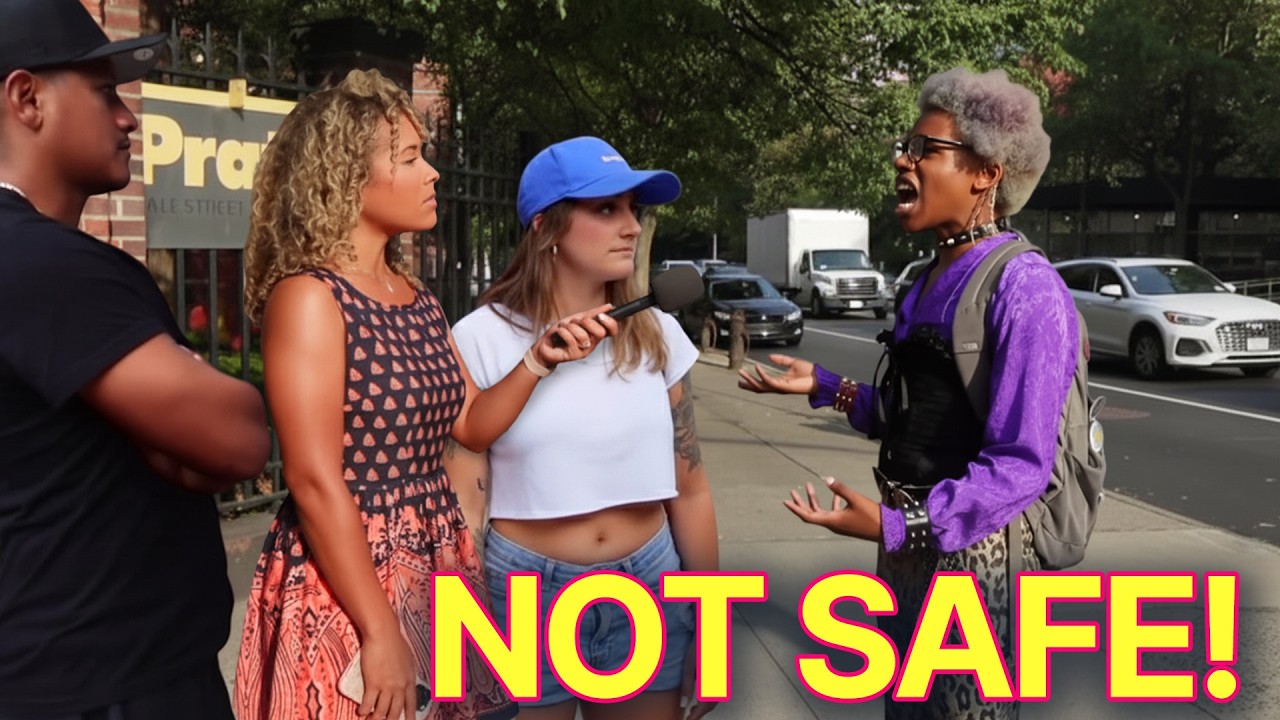
Cam Higby Presses a College Student Who Isn't Sad Charlie Kirk Was Killed Over ICE
Cam Higby sits down with a college student who insists nobody should be killed for their opinions, yet admits she isn't sad Charlie Kirk was killed, arguing his influence helped put policies she opposes into power. Higby pushes her to name a specific right she believes has been stripped away, and the conversation shifts into a heated back-and-forth over ICE enforcement, deportations, and what counts as a civil liberties violation. A military veteran interrupts to thank Higby for continuing to have these conversations at all. Later, a different student offers a sharper contrast, arguing that the only real answer to speech he disagrees with is better speech and better arguments, never violence, and that isolating extreme views through open debate does more good than trying to convert the people holding them. The conversation closes on an unexpected note, with that same student crediting his own faith as the force he believes actually changes people's hearts. It's an unfiltered look at how differently two students on the same campus process the same tragedy.
Confronting a Student Who Isn't Sad Charlie Kirk Was Killed
Cam Higby opened a conversation with a college student by asking directly whether she thought Charlie Kirk should have been killed. She answered that nobody should be killed, but added that she wasn't sad he was, arguing that framing the question around whether he deserved to die was misleading because, in her view, Kirk wasn't simply a man with opinions. 'He's some guy with opinions that use those popular opinions to get' influence, she said, arguing that Kirk's rhetoric helped put people in power who, in her words, don't face the same opposition that she and others like her do.
'Name Me One Right'
When Higby asked her to substantiate the claim that the current administration was removing people's rights, the conversation turned toward immigration enforcement. The student pointed to civil liberties and described people being taken off the street by federal agents as kidnapping. Higby countered that deportation isn't the removal of a right, since there is no right to enter the country illegally, and pressed her to name one specific right that had actually been taken away. The student maintained her position that agents operating without visible badges or identification amounted to kidnapping rather than lawful arrest, while Higby held that it was an arrest, not an abduction.
A Veteran Says Thank You
Partway through the exchange, a bystander who said he had served in the military for ten years interrupted to thank Higby for what he was doing. He said he had put his body on the line for the country specifically so that people could keep having disagreements like this one without resorting to violence, and that watching people debate rather than shoot each other over opinions was exactly what his service had been for.
Meeting Bad Speech With Better Speech
Higby then spoke with another student, who opened by stating his most fundamental belief: that nobody should be killed for what they believe, even though, as he acknowledged, not everyone agrees with that principle. He argued that the only legitimate way to combat speech he considers bad, including speech he might personally disagree with from Charlie Kirk, is with better opinions and better arguments, not violence. He said Kirk had invited that kind of engagement rather than aggression, and that anyone calling for violence against people over their opinions should be met with words and arguments, unless and until they actually participate in violence themselves, at which point they're no longer simply expressing a viewpoint.
Isolating Extremism Rather Than Converting It
Asked whether public argument actually changes the minds of people embedded in ideological echo chambers, the student agreed that direct persuasion rarely works on people who have already decided how they want to think. He said the goal isn't necessarily changing those specific individuals' minds, but preventing their beliefs from spreading further, by publicly out-arguing them so thoroughly in the arena of public debate that their positions become isolated and, in his words, almost laughable to onlookers. The audience watching the exchange, he argued, is often more persuadable than the person being debated.
'Christ Is Really the Only Way to Fix This'
The conversation closed with the student crediting his Christian faith as the actual force he believes changes people's hearts, more than argument alone. He said people can be asked to do good things, but that human nature tends to resist obligation, whereas he believes faith in Jesus can change someone's desires so that doing good becomes something they genuinely want rather than something performed out of pressure. He said that shift, from obligation to genuine desire, is what actually produces lasting behavioral change rather than surface-level compliance.