Charlie Kirk and Frank Turek Debate AI Generated Atheist Objections to Christianity and Biblical Truth
Enjoying this? Share it with someone who needs to see it.
Up Next
Charlie Kirk and Seth Gruber Expose the Truth About Abortion, Margaret Sanger's Eugenics Legacy, and the White Rose Resistance
1:14:36
Charlie Kirk and Dr. Jeff Myers Expose How Truth Decay Is Destroying America's Next Generation
43:55
Charlie Kirk on Faith, Family, and Living a Life That Honors Jesus Christ Above All
12:04
Charlie Kirk and Frank Turek Debate AI Generated Atheist Objections to Christianity and Biblical Truth
Charlie Kirk sits down with Christian apologist Frank Turek to tackle the toughest objections to Christianity, from the resurrection to Old Testament morality. As atheism wanes on college campuses and spiritual seeking rises, Turek explains why students are shifting from questioning if Christianity is true to asking if it's good. They debate AI-generated challenges about Biblical contradictions, slavery passages, and the problem of divine command theory. The conversation reveals how archaeological evidence, multiple independent gospel sources, and the embarrassing honesty of scripture all point to its credibility. Turek and Kirk demonstrate how discrepancies in Biblical accounts are actually evidence of authenticity, not fabrication.
The Changing Landscape of Faith on College Campuses
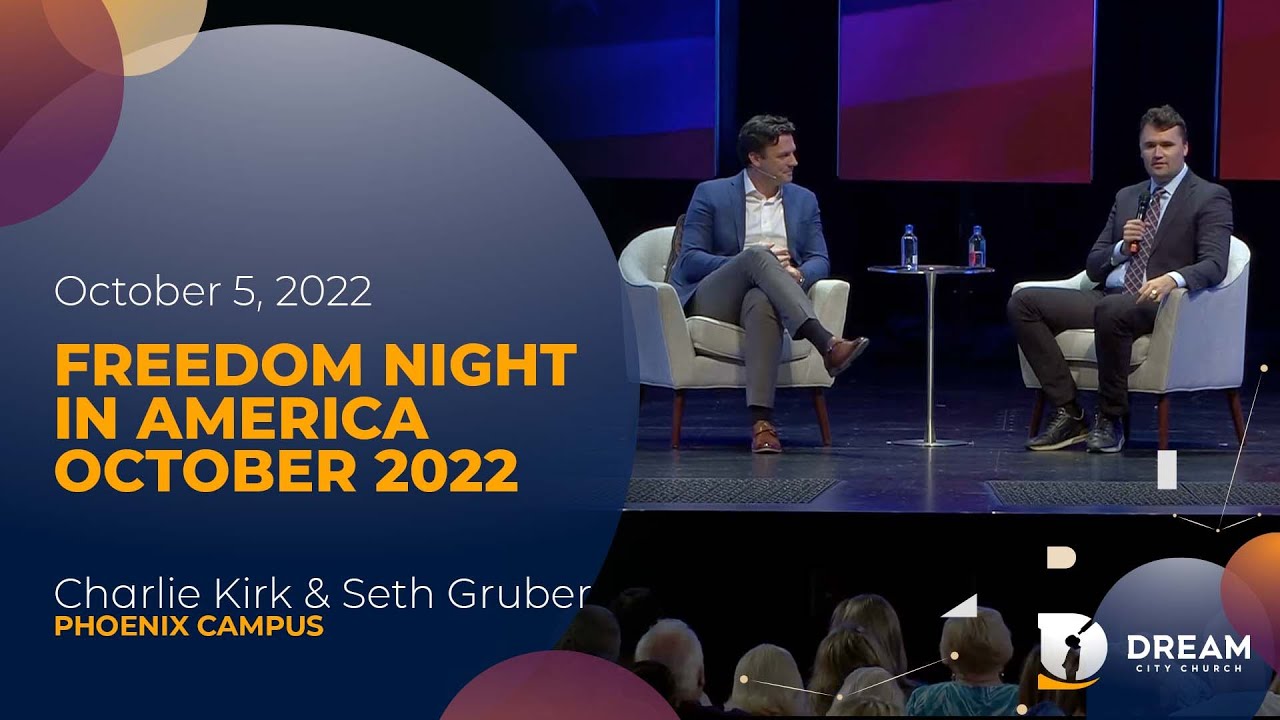
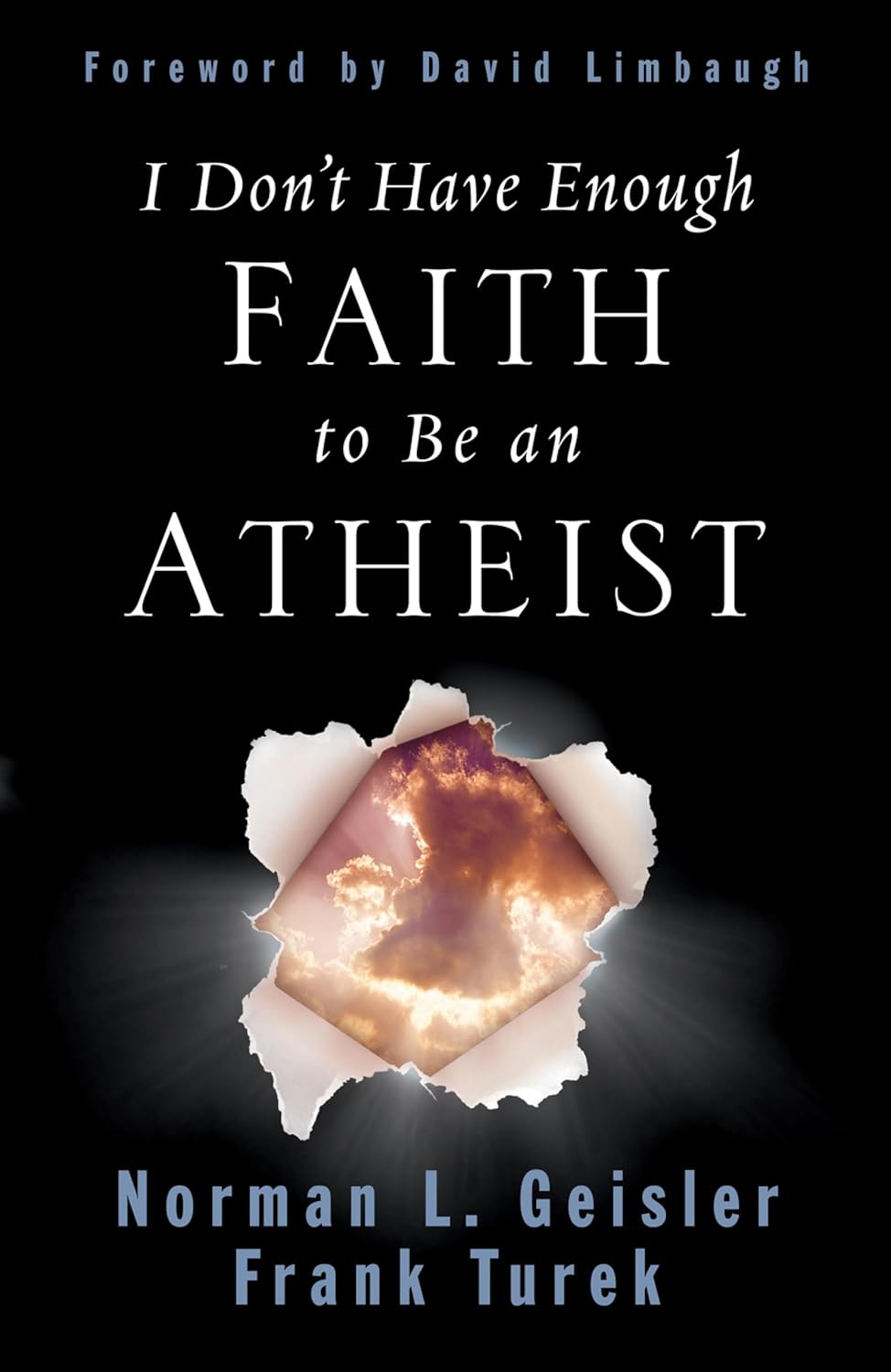
Charlie Kirk and Frank Turek discuss their unique schedules as campus speakers, with Kirk doing 50 to 60 college events per year and Turek doing 15 to 20. Turek, author of "I Don't Have Enough Faith to Be an Atheist" and "Stealing from God," has been mentoring Kirk in Phoenix during their off-season. Both men travel to college campuses engaging students in open question and answer sessions, with their content going viral over the years.
Turek reveals a striking shift from 15 years ago during the heyday of the new atheists. Organizers now ask him to spend more time on New Testament evidence than proving God exists because they're having trouble finding atheists on campus. Atheism is waning while belief in some spiritual force is gaining strength. People are considering Christianity not because everything is going well, but because evil in the world is driving them to seek answers. They're looking for a standard beyond themselves.
Kirk's work in the political sphere has made Christianity appear plausible to many who see him as a sharp thinker who happens to be an evangelical Christian. Kirk receives approximately a thousand messages per year from people saying they believe in God or returned to church because of his influence, plus thousands of comments from people whose faith has been strengthened.
From Truth Questions to Morality Questions
Turek identifies the key difference between then and now: fifteen years ago people wondered if Christianity was true, but now they're asking if Christianity is good. The top three objections on college campuses are all about morality. Students don't like judgment and want God to be, as C.S. Lewis described, a benevolent old man who just wants everyone to have a good time.
Yet God is both infinitely just and infinitely loving. Turek points out the irony that campus groups are very big on justice as their primary concern, yet they resist the concept of divine judgment. He explains there are two things you can have in the afterlife: justice or grace. Turek doesn't want justice because before an infinitely just being, he would be condemned for not being infinitely just himself.
Addressing Claims That the Bible Copied Regional Mythologies
Kirk presents an AI-generated objection that the Old Testament closely resembles Canaanite and Mesopotamian deities, with similarities in stories like Moses, creation, and the flood. Turek acknowledges that every ancient culture has a flood story, asking what the reason for that might be. The answer: because there was a flood. Everyone had some story related to it.
However, parallels to the Moses story aren't that close, and even if there are similarities, it doesn't mean Moses copied from surrounding cultures. The Israelites were specifically commanded to be separate from their neighbors, which is one reason they were pushing out the Canaanites. The last thing they wanted was to borrow from the people they were separating from. When Israel did get too intermingled with the Canaanites, God judged them for playing the harlot and going after Baal and other deities.
Turek points to the archaeology of Jericho, where evidence shows the walls fell down and outward. No other ancient city has ever been discovered with walls that fell straight down and out. When conquering a city, armies crush walls inward, but at Jericho the walls fell outward just as the Bible describes.
Turek's team recently completed a 22-episode series on top archaeological discoveries related to the Bible, finding over 107 people mentioned in scripture who have been discovered in the archaeological record. About 75 of them were from the Old Testament, and many Old Testament events have corroborating data in the dirt. How would someone writing the Old Testament a thousand years after Joshua in 1406 BC know the walls fell down and out? They wouldn't.
The book of Joshua, which has 24 chapters, names over 350 places, working out to more than 13 locations per chapter. Many of these locations have been discovered archaeologically. This is not an invented storyline written down a thousand years later. Moses and later editors wrote these accounts at the time, with editors adding details like Moses's death in Deuteronomy.
The Euthyphro Dilemma and God's Nature
Kirk presents the problem of divine command theory from Plato's writings where Socrates asks: Is something good because God commands it, or does God command it because it is good? This is supposed to create a dilemma for believers. If God looks up at a standard beyond himself, why do we need God since we could do the same?
Turek responds that it's not much of a dilemma because the answer to both questions is yes. It's a false dilemma because God's essence is goodness itself. He is the standard. He doesn't have to look up to anything beyond himself, nor is he arbitrary. His nature is the moral standard. A true dilemma is A or non-A, but a false dilemma is A or B when there might be a third option. In this case, there is: God's nature is the standard. The buck has to stop somewhere, and it stops with God's nature.
Why Doesn't God Reveal Himself to Sincere Seekers?
Kirk reads an AI objection asking why God remains hidden or silent to sincere seekers who never experience divine revelation if He desires all people to be saved and know the truth. Turek explains that everybody experiences divine revelation because God has written two books: the book of scripture and the book of nature. Everyone has access to the book of nature, meaning creation itself.
We know God by his effects. If there's a creation, we reason back to a Creator. If there's design in the universe, we reason back to a Designer. If there's a moral law written on the heart, we reason back to a moral Lawgiver. Nobody in the world can claim ignorance that there's a creator God who is moral and that we haven't lived up to that standard.
There are people who've never heard of the solution to our moral problem, which is Jesus. But everybody knows there's a creator moral God. The Bible indicates that if you seek and take a step toward the works He's provided, God will get you the word so you can be saved.
Old Testament Morality and Modern Standards
The next challenge asks how we can trust scripture as morally authoritative when it regulates slavery, commands genocidal warfare like in 1 Samuel 15, and enforces harsh penalties for non-crimes by modern standards without undermining God's moral perfection. Turek asks by what moral standard the questioner is judging, pointing out they're appealing to a Christian standard.
Slavery in the Old Testament was not the kind of slavery practiced in recent history. It functioned more like a bankruptcy law. The so-called genocidal warfare wasn't genocide but judgment based on ethics, not ethnicity. God wiped out Israelites for doing the same kinds of things. After incidents like the golden calf, God judged Israel repeatedly for their evil.
Dennis Prager, a mutual friend of Kirk and Turek, observes that one of the reasons to trust the Old Testament is that it's the least flattering telling of an ancient people. They would never invent such an embarrassing history where they keep getting disciplined by their own God. Unlike Egyptian monuments that serve as propaganda for how good the pharaoh is without including negative behavior, the Old Testament records the Jews getting the gold medal in sin every time.
Gospel Discrepancies as Evidence, Not Problems
Kirk presents an objection about discrepancies between gospel resurrection accounts and lack of external corroboration, asking how to defend the resurrection as historical without circular reasoning. Kirk answers first, explaining that discrepancies are a feature, not a bug. If people were lying, every account would be exactly the same. It's like when something happens and you interview three people about a controversy or an accident—you get a generalized telling with variations in details like speed or car color.
Kirk also points to external corroboration from Josephus and other Roman historians. The Talmud talks about Jesus and mentions that people believed in the resurrection. Turek praises Kirk's answer and adds an illustration about the Titanic. Eyewitness survivors disagreed on how the Titanic sank—some said it went down whole, others said it broke in two. What should we conclude? That it went down and the water was cold.
Everyone agrees there was a resurrection, and all the gospels agree there were female witnesses, which would have been deeply embarrassing in that culture. The discrepancies actually work against the theory of a shared central canon or Q document. The New Testament represents multiple independent sources of certain events written by eight or nine authors at different times in different places by people not always in contact with one another. People may think the Bible is just one book because it's bound together, but it's actually multiple independent sources, making it far more credible.