Charlie Kirk Breaks Down the Kilmar Abrego Garcia Deportation Case and MS-13 Gang Evidence
Enjoying this? Share it with someone who needs to see it.
Up Next
Charlie Kirk Debates College Student on Trump, Constitutional Authority, and Immigration Law
8:41
Yankee News Confronts Anti-Trump Protesters in Hopkinton Massachusetts on Healthcare, Immigration, and Charlie Kirk's Legacy
35:05
Charlie Kirk Defends Deportations and Challenges UC San Diego Students on Immigration and Morality
1:48:32
Charlie Kirk Breaks Down the Kilmar Abrego Garcia Deportation Case and MS-13 Gang Evidence
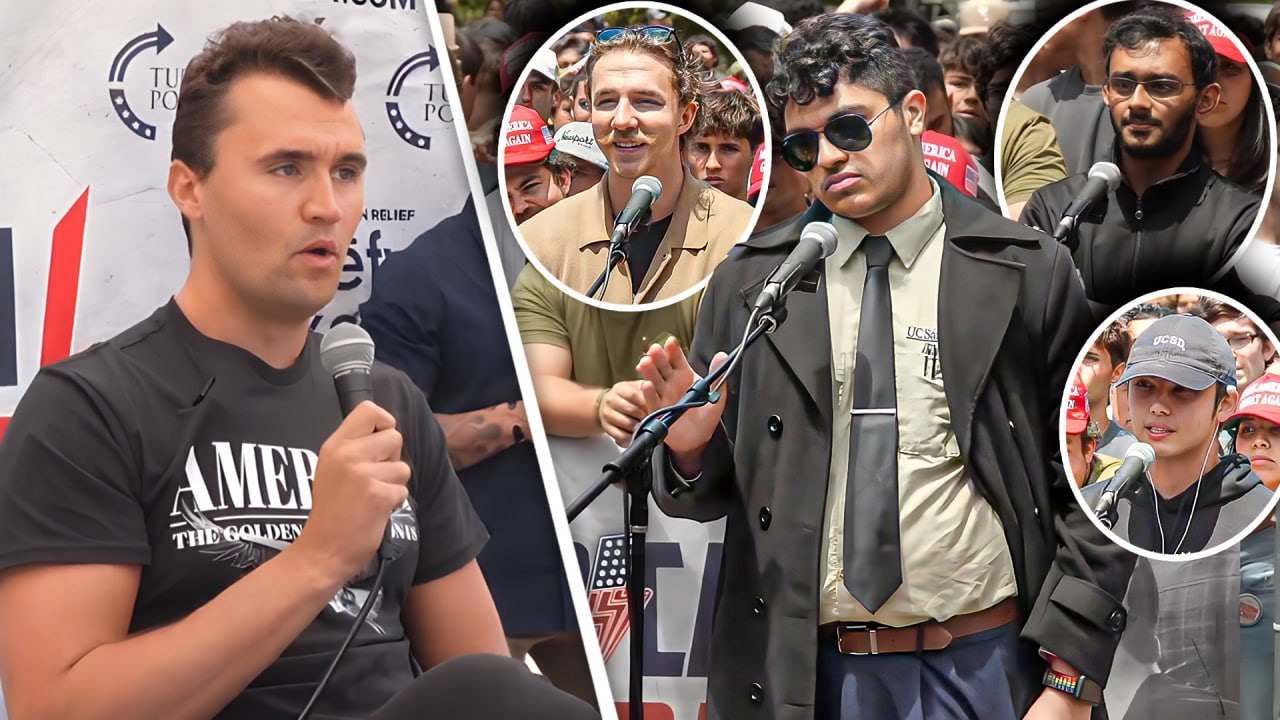
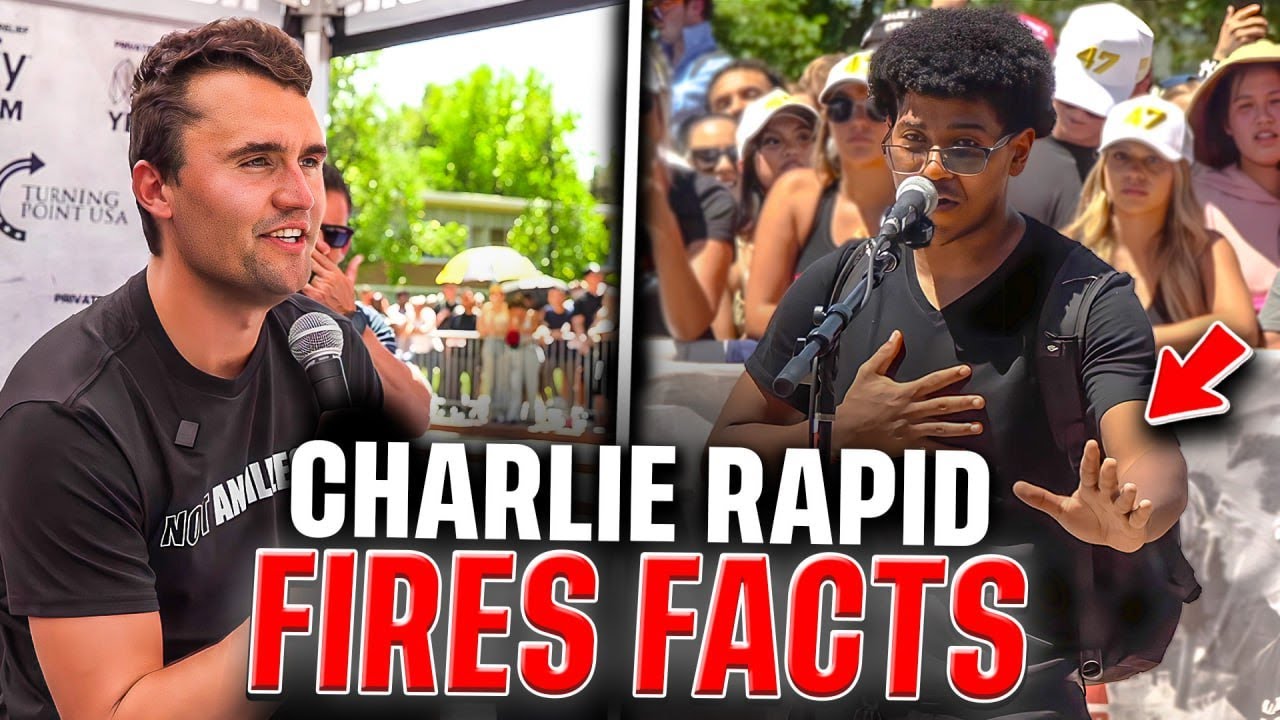
Charlie Kirk dismantles claims that Kilmar Abrego Garcia was wrongfully deported, presenting evidence of MS-13 gang affiliation including specific tattoos, gang-associated clothing, and court documents. The debate covers gang identification methods used by authorities, domestic violence allegations filed by Garcia's wife, and the legal process surrounding his deportation order. Kirk addresses accusations of racial profiling while defending immigration enforcement, explaining how multiple pieces of evidence, from hand tattoos to Chicago Bulls jerseys worn in Maryland gang territory, combine to establish gang membership beyond reasonable doubt.
Charlie Kirk addressed claims that Kilmar Abrego Garcia was wrongfully deported, countering the narrative that Garcia was targeted simply for having tattoos and transporting eight men to a construction site. Kirk came prepared with photographic evidence and court documents to make his case.
The debate centered on whether Garcia had connections to MS-13 and whether his deportation followed proper legal procedures. Critics argued that Garcia was profiled based on appearance alone, while Kirk systematically presented multiple pieces of evidence that, when combined, painted a different picture.
Gang Affiliation Evidence
Kirk laid out several specific indicators that authorities used to establish gang connections:
First, Garcia's hand tattoos displayed what Kirk identified as MS-13 symbolism: marijuana, M, smiley face, S, cross, one skull, three—which Kirk interpreted as representing MS-13. While Kirk acknowledged this pattern alone wouldn't constitute definitive evidence, he emphasized it wasn't nothing either.
Second, Garcia routinely wore a Michael Jordan Chicago Bulls jersey. Kirk explained that in Maryland gang territory, specific sports jerseys carry significance. Just as White Fence and Crips members in certain areas wear Dodgers jerseys, the Bulls jersey holds meaning in Maryland's gang landscape.
Kirk stressed this wasn't about arresting someone solely for a tattoo or jersey, but rather understanding the accumulation of evidence. He drew a hypothetical parallel: if the Bloods started wearing red hats saying "Make America Blood Again," that would constitute a clue worth noting.
Court Documents and Due Process
Kirk revealed that in 2019, Garcia himself told a judge he was afraid to return to El Salvador because another gang would come after him—an apparent admission of gang involvement.
In 2021, Garcia's wife, Jennifer Vasquez Dura, filed a protective order against him, alleging repeated physical abuse including being punched and scratched. She subsequently filed a second order seeking to protect their children from abuse she claimed occurred on a nearly weekly basis.
In 2019, Garcia was arrested in Maryland alongside multiple individuals. Authorities cited expertise in identifying gang traits through behavior, iconography, and tattoos. They also referenced information from a confidential informant regarding Garcia's gang membership. A judge reviewed this evidence and signed a deportation order, explicitly stating that Garcia could be deported at any time for any reason to any country except El Salvador.
The Due Process Question
One of the central arguments in the debate concerned whether Garcia received due process. Kirk maintained that Garcia had extensive due process, appearing before a judge who issued clear warnings and a signed order. The judge specifically told Garcia he could be removed by ICE at any time.
Kirk challenged the notion that due process requires a jury trial in every circumstance, explaining that the legal process for immigration violations differs from criminal proceedings. He noted that Garcia's case was proceeding through the system even as he remained in El Salvador.
Additional Evidence
Kirk pointed out another curious detail: in recent images posted by Garcia's girlfriend, she blurred out the tattoos on his hands. Kirk questioned why someone with nothing to hide would obscure these markings, suggesting it indicated awareness that the tattoos could appear incriminating.
Addressing Racial Profiling Claims
The debate touched on accusations that ICE engages in racial profiling of Latino Americans. Kirk's opponent cited multiple news broadcasts alleging this practice.
Kirk responded by noting that enforcement actions targeting people who crossed the Mexican border illegally would naturally involve individuals of certain demographics, but this doesn't automatically constitute racial profiling. He emphasized that enforcement efforts focus on illegal entry, not race or ethnicity.
Immigration Philosophy
The conversation revealed fundamental disagreements about immigration policy. Kirk's opponent suggested helping people who enter illegally get processed into the country. Kirk countered that this approach would incentivize illegal immigration.
Kirk posed a moral question: if he entered Mexico without proper documents and was caught, what would happen? His opponent acknowledged he would be deported. Kirk argued the United States should maintain the same standard.
Comparing Crime Statistics
When the discussion turned to crime statistics, Kirk's opponent brought up that 51% of rapes are committed by white men. Kirk noted this would still be underrepresentative of the white percentage of the population, questioning the relevance of this comparison to immigration enforcement.
The Bigger Picture
Kirk framed the Garcia case as an example of proper legal process applied consistently. While acknowledging the arguments might seem cold, he maintained that objective application of immigration law—taking a process and applying it evenly—represents the definition of due process.
The debate highlighted the tension between enforcement of immigration law and concerns about humanitarian considerations. Kirk's systematic presentation of evidence—tattoos, clothing choices, court statements, domestic violence allegations, and judicial orders—illustrated how authorities build cases beyond single pieces of evidence.