Charlie Kirk Calls American Pastors to Transform From Peacetime to Wartime Christianity Amid Cultural Battle
Enjoying this? Share it with someone who needs to see it.
Up Next
Charlie Kirk Exposes Three Types of Churches in America and Why Courage Matters Now More Than Ever
58:20
Charlie Kirk Challenges Churches to Rise Up as America's Last Institution Standing Against Totalitarian Left
2:04:58
Charlie Kirk Reveals Five Critical Lessons From A Year of Lockdowns and What the Church Must Do Now
48:03
Charlie Kirk Calls American Pastors to Transform From Peacetime to Wartime Christianity Amid Cultural Battle
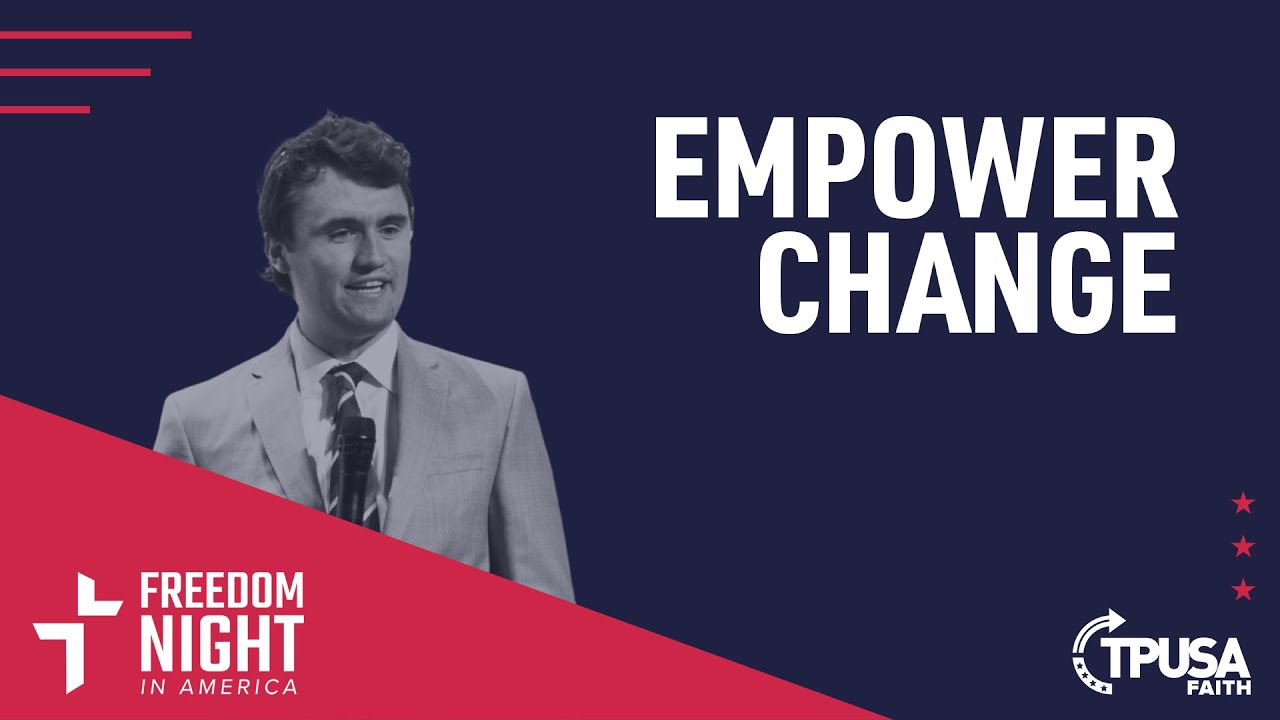
Charlie Kirk delivers a powerful message to pastors at a TPUSA Faith event, challenging the American church to abandon its comfortable, agreeable posture and embrace bold truth-telling. Kirk argues that while young people are experiencing a spiritual awakening and flooding college campuses seeking biblical truth, most churches remain unprepared to receive them. He categorizes churches into three types, true, trembling, and traitorous, and explains why the current generation of young men especially are rejecting cultural narratives that demonize them. Drawing on data showing increased religiosity and church attendance, Kirk insists the church must stop sanitizing its message and start addressing sin directly, shifting from what he calls a "peacetime Christianity" to a "wartime Christianity" that engages culture fearlessly.
Charlie Kirk opened his address at the TPUSA Faith event at Free Chapel Church by outlining three distinct categories of American churches. The first category is the "true church"—congregations that boldly proclaim biblical truth regardless of consequences. Kirk offered a litmus test: Did your church host a celebration prayer service after the repeal of Roe v. Wade, or did you treat it as just another news item? True churches, he explained, prioritize honoring God above all else, even if it means losing members or facing financial setbacks from decreased tithes and offerings.
The second category consists of "trembling churches"—congregations that know biblical truth but hesitate to speak it publicly. These pastors understand what Scripture teaches but filter their messages through a lens of cultural acceptability. They might privately affirm that life begins at conception but publicly soften their stance or claim they "don't do politics." Kirk emphasized that the vast majority of American churches fall into this trembling category, knowing what is biblical but not consistently declaring it from the pulpit.
The third category, which Kirk quickly dismissed, is the "traitorous churches"—those that fly pride flags and marched in BLM parades, fundamentally compromising on core biblical principles.
A Generation Hungry for Truth
Kirk shared observations from his extensive work on college campuses, where Turning Point USA has drawn crowds of thousands of students on short notice. He attributed this success not to his own abilities but to God moving among young people who are desperate for truth. These students are rejecting the lies of modernity and seeking fundamental truths to anchor their lives.
Particularly striking is the trend among young men, who are gravitating toward churches, religion, and conservatism in record numbers. Kirk explained this phenomenon simply: young men are leaving a political movement and worldview that hates them and moving toward one that affirms their identity as men. However, he noted a critical disconnect—the number one complaint he hears from young men on campus is that their local churches are "way too soft" and not telling it like it is.
Kirk posed a challenging question to the pastors in attendance: If you don't have dozens of young men showing up to your church every Sunday, you're doing something wrong. He emphasized that these young men are actively searching but finding the church unprepared to receive them.
The Problem with Modern Church Messaging
The core issue, according to Kirk, is that modern churches have become indistinguishable from secular institutions. When church consists of a TED talk mixed with a rock concert, good coffee, and organized parking, why would a 19-year-old make the effort to attend? Kirk argued that what pastors think will offend young people is actually what will draw them in massive numbers.
Young people don't want sanitized messages or politically correct eggshells. They want someone with the spine to say what no one else is willing to say. Kirk emphasized that this generation is objectively the most suicidal, drug-addicted, porn-addicted, and miserable in history. They know something is wrong. Yet the modern church's response is often to simply affirm them: "You're perfect the way you are."
Kirk challenged this approach, arguing that you cannot effectively communicate that someone needs a savior if you never tell them what they're being saved from. The church has focused on rescue without explaining the drowning. To truly reach this generation, churches must be willing to talk about sin—to explain that people feel miserable because they're not following God's laws and commands, and that they need a savior because they can never fully follow those commands on their own.
The Failure During COVID and the Birth of TPUSA Faith
Kirk explained that TPUSA Faith was born out of observing the American church's response during COVID. He witnessed churches remaining sheepish and falling for biblically illiterate arguments that the church must be submissive to the government. Kirk was emphatic: "You should never be submissive to tyranny. That is not biblical. It is nowhere in the scriptures."
This experience revealed a critical weakness in American Christianity—a failure to stand against clear overreach and unconstitutional mandates. Churches that allowed themselves to be deemed "non-essential" while liquor stores remained open demonstrated a fundamental misunderstanding of biblical principles regarding civil authority and religious freedom.
Peacetime Christianity Versus Wartime Christianity
Kirk introduced a framework that proved central to his message: the distinction between peacetime and wartime Christianity. He argued that America was raised in a peacetime Christianity that lent itself to agreeable pastors focused on non-controversial gospel expansion. These pastors excel at one-on-one counseling, helping broken marriages, and ministering to those struggling with substance abuse—all vital pastoral functions.
However, Kirk insisted that America has entered a wartime moment requiring a different type of leadership. The tension exists because the current composition of the American church is largely a peacetime force facing wartime challenges. Many pastors signed up thinking they would simply preach John 3:16 every Sunday and eventually retire peacefully. They didn't anticipate having to fight city councils that deemed their churches non-essential or address controversial cultural issues from the pulpit.
Kirk explained this with empathy, noting that agreeable personalities are drawn to ministry because of the relational and pastoral care aspects. These individuals are phenomenal at healing and helping but struggle when required to publicly challenge authority or speak controversial truths. This isn't necessarily a moral failing but a temperament issue—they weren't wired for the cultural battle the church now faces.
The Soft Tyranny of the Offended
One of Kirk's most pointed critiques addressed what he called "the soft tyranny of the offended peoples"—a hyper-minoritarian loud vanguard that controls sermons, messages, and public displays. Every pastor, he suggested, knows that voice in their head while crafting a sermon: "Karen's going to be really mad about this one."
Kirk's advice was direct: "I don't care." He encouraged pastors to lovingly explain their biblical positions to offended congregants and welcome them to continue attending, but never to dilute or weaken truth because someone takes offense. The worst thing that can happen—a nasty email from someone who feels offended—should not dictate the content of biblical teaching.
The True Nature of the Church
Kirk concluded with a theological argument about the fundamental nature of the church. Peacetime pastors view the church strictly as a place for food pantries, marriage ministries, and worship music—all good things. But Kirk argued the church should be "salt and light" going into the community and changing the composition of the area, not just affirming the signs of the times.
He pointed to the Greek word "ekklesia" that Christ used when saying "on this rock I will build my church." Kirk noted that Jesus could have used religious terms like "synagogue" or "temple," but instead chose a secular term used for public assemblies. This was intentional—Christ didn't want a comfortable Christianity where believers stay within their walls feeling sanctimonious about possessing truth. He wanted an expansionist, influential Christianity present in every domain of society.
Kirk emphasized that the Constitution, as the founding fathers warned, is only adequate for a moral and religious people and wholly inadequate for any other. No matter how many students he reaches on college campuses or how many videos go viral, it will all be for nothing if the church remains a weak, feeble institution.
His final call to action was clear: pastors must rise up and speak truth boldly. America is at a crossroads where a potential revival awaits, but only if the church awakens from its slumber and transforms from a peacetime force into a wartime infantry ready to engage the culture fearlessly with biblical truth.