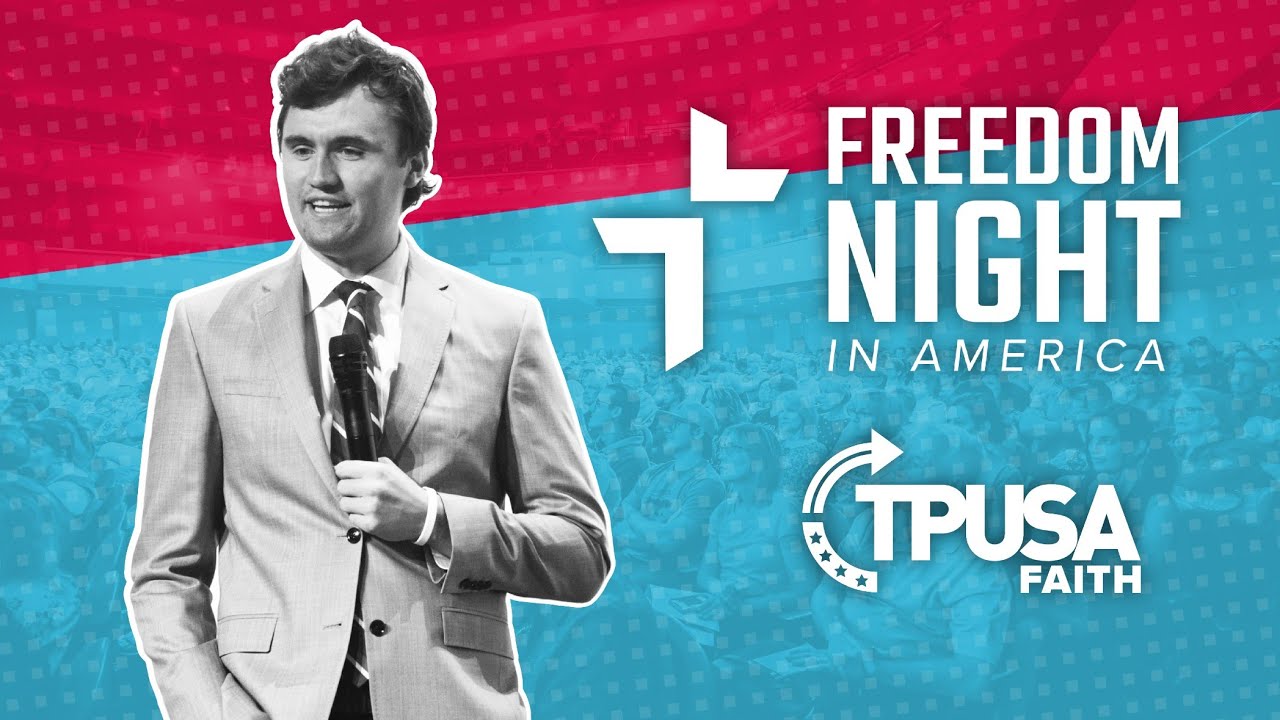
Charlie Kirk Challenges AmericaFest Attendees to Say Here I Am to God's Calling
Enjoying this? Share it with someone who needs to see it.
Up Next
Charlie Kirk and Eric Metaxas Explore Why Atheism Is Intellectually Dead in Modern Science and Faith Discussion
1:54:26
Charlie Kirk on Bill Maher Interview and Why the Death of Christianity Fuels Wokeism in America
5:23
Charlie Kirk Honors America's Most Courageous High School and College Students Fighting for Conservative Values
8:59
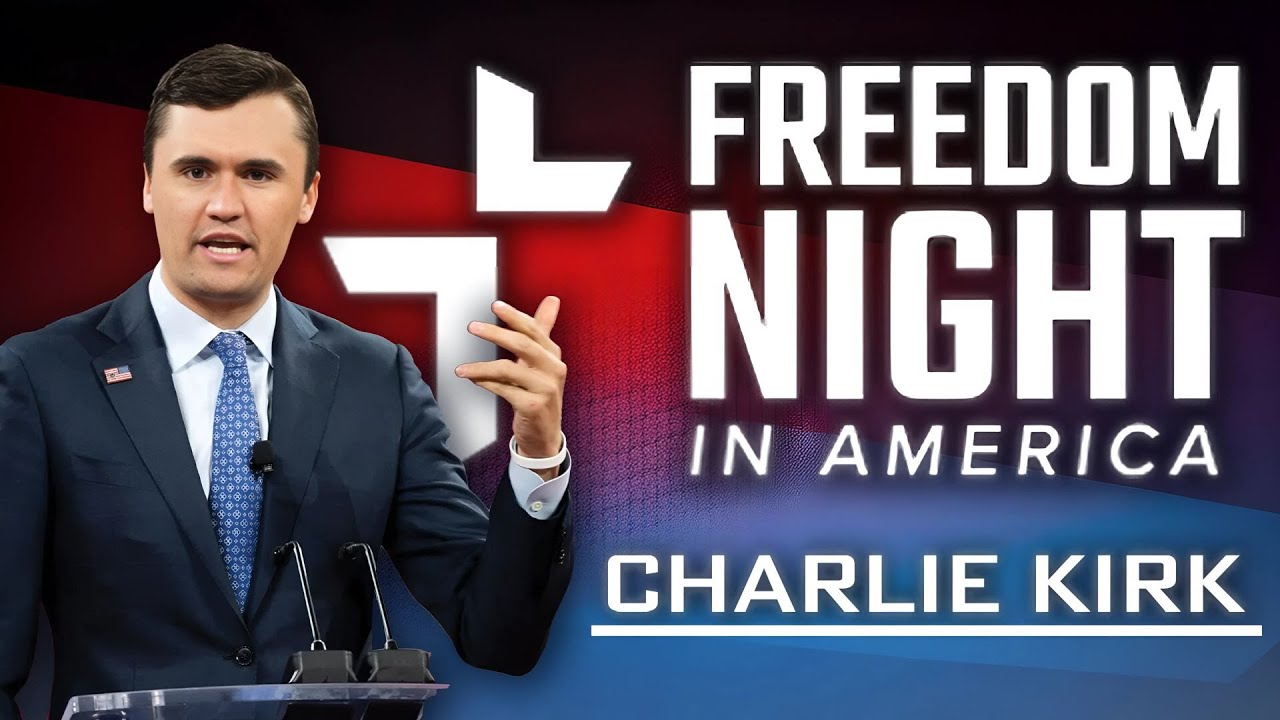
Charlie Kirk Challenges AmericaFest Attendees to Say Here I Am to God's Calling
Charlie Kirk delivers a powerful message at AmericaFest about biblical willingness and surrender to God's purposes. Drawing from the stories of Abraham, Moses, Samuel, Isaiah, and lesser-known figures like Ananias, Kirk explores the transformative phrase "Here I Am" that appears throughout Scripture. He challenges attendees to move beyond comfortable Christianity, confront evil when necessary, and embrace God's calling on their lives—whether that means starting a business, building a family, or speaking truth in difficult circumstances. Kirk emphasizes that God uses willing hearts over talented individuals, and that liberty itself is God's idea, not man's. The message culminates in a clear presentation of the gospel of grace, reminding listeners that salvation cannot be earned through good works or political activism, but is a free gift available to all who believe.
Charlie Kirk opened his AmericaFest message by acknowledging the tireless work of Turning Point USA staffers and setting the evening's spiritual tone. His central theme revolved around a simple but profound posture of faith: telling God "Here I Am" and being willing to be used for His purposes. Kirk wore a shirt bearing this message, explaining that through his devotionals and Bible reading, he felt God calling this to be the defining theme for Turning Point USA Faith in 2024.
Kirk emphasized three foundational truths he wanted every attendee to consider, regardless of their spiritual background: there is a God, you are not Him, and God loves you. These simple propositions form the bedrock of the Christian worldview he was inviting people to explore with open hearts and minds.
The Bible as Life's Instruction Manual
Kirk made an impassioned case for the Bible as the ultimate owner's manual for life. He challenged the audience to identify what other source they were using to answer life's fundamental questions: Why are we here? What is a human being? What is good and evil? He pointed out that Western notions of right and wrong are actually a Christian inheritance passed down through generations.
He referenced Genesis 1:26-27, emphasizing that humans are created in God's image—not accidental clumps of cells from Darwinian evolution. This understanding, Kirk argued, is the foundation for protecting every human life, born and unborn. He issued a bold challenge to pastors, stating that any pastor not speaking out for pro-life ideas, policies, and politicians should resign from ministry.
Kirk described the Bible's unique quality: "The more you read the Bible, the more it reads you." He encouraged even skeptics to spend one hour per week reading Scripture, promising they would find it addresses every major question they might be wrestling with—from the nature of good and evil to what happens after death.
Abraham: The Test of Willingness
The first biblical example Kirk explored was Abraham (originally Abram), whose story first introduces the phrase "Here I Am" in Genesis 22. Kirk painted Abraham as an unimpressive figure—someone who lived with his father until he was about 85 years old, essentially a bum by modern standards. Yet God chose him not because he was talented, handsome, or particularly courageous, but because he was willing.
When God called Abram in Genesis 12 to leave his father's home and go on an adventure, he responded. Later, in the ultimate test of faith recorded in Genesis 22, God asked Abraham to sacrifice his son Isaac—the son whose name literally means "laughter" because Abraham and Sarah had laughed at the impossibility of having a child at their advanced age. When the angel of the Lord called to Abraham, he responded: "Here I am."
Kirk explained that this story is ultimately about Jesus as the true sacrifice, and that Abraham's willingness established the covenant that would eventually lead to Christ. He applied this to the audience: "Many of you are going through a test right now." Whether facing a medical diagnosis, marital problems, or other difficulties, the proper response is still "Here I am, God, use me."
Jacob: Building Something New
Kirk briefly touched on Jacob, whose name means "usurper" or "heel" because he was holding onto his twin brother Esau's heel at birth. When the angel of God called to Jacob in a dream, he responded "Here I am," and from that moment, the nation of Israel was born. Kirk connected this to those in the audience who feel called to build something new—whether starting a business or beginning a family. The willingness of Jacob resulted in the birth of an entire nation.
Moses: Leaving Comfort for Adventure
Moses represented those who have comfortable lives but hear God calling them to something more. Kirk painted the picture of Moses living well with his father-in-law Jethro in Midian, tending flocks and enjoying the high life. Then he encountered the burning bush, and everything changed.
Kirk read from Exodus 3, describing how Moses was keeping his father-in-law's flock when the angel of the Lord appeared in a flame of fire from the midst of a bush. When God called "Moses, Moses," he responded "Here I am." At that moment, Moses committed to leaving his cushy job to lead what Kirk humorously described as "without a doubt the least impressive group of people in the history of the ancient world"—the Hebrew slaves who constantly complained.
This example applies to those who are comfortable—perhaps successful in business, well-liked at their country club, avoiding political controversy. Kirk challenged: "Maybe God's whispering in your ear, are you ready to leave comfort and go on an adventure? Are you ready to leave the nice pleasantries?" He emphasized that eternal matters are far more important than country clubs, nice vacations, and wealth, noting that "comfort and Christianity sometimes come to a head. In fact, we are called to get uncomfortable as Believers and Christians. If you are comfortable, you're not doing Christianity right."
Samuel: Youth Called to Action
For the young people in the audience, particularly Turning Point USA students, Kirk highlighted Samuel. As a boy ministering to the Lord in the presence of Eli, Samuel heard God calling his name. The young Samuel repeatedly responded "Here I am"—more than any other person in the Bible, according to Kirk.
This example demolishes the excuse of being too young to be used by God. Kirk emphasized that "all ages, all backgrounds can be used by God." The eagerness of young activists reminded him of the Turning Point USA students running around the event, demonstrating that God calls people from every stage of life to His purposes.
Isaiah: Prophetic Willingness
Isaiah, one of the Major Prophets whose name literally means "God Is My Redeemer," heard the voice of the Lord asking, "Whom shall I send, and who will go for us?" Isaiah's response was immediate: "Here I am, send me." Through Isaiah's willingness, the prophecies came that pointed toward the fulfillment of God's promise in Jesus Christ.
Ananias: Confronting Evil
Kirk's favorite example was Ananias, a lesser-known character from Acts 9:10. When the Lord called to him in a vision, Ananias responded "Here I am." But the assignment was intimidating: God told him to go to the street called Straight, to the house of Judas, and look for a man from Tarsus named Saul—and lay hands on him.
Ananias protested: "Lord, I have heard from many about this man, how much evil he has done to your Saints in Jerusalem." Saul wasn't just mean—he was actively killing believers. Yet God called Ananias to confront him anyway.
Kirk applied this powerfully to the audience: "How many of you here tonight know somebody that you need to confront that is doing evil? How many of you here tonight know a professor that is abusing their authority? How many of you know tonight a neighbor that is just terrorizing people based on politics? How many of you know a weak pastor that needs to be confronted by a believer and say either you need to lead, follow, or get out of the way and preach the word or not be a pastor any longer?"
The Strong Church Movement
Kirk transitioned to discussing the broader vision for what he calls the "strong church." He emphasized that liberty is God's idea, not man's idea, and declared: "We will never allow the church to be called non-essential again as they allowed strip clubs and marijuana dispensaries and convenience stores to remain open."
In a humorous aside, Kirk mentioned that one of his board members pointed out that "Kirk" actually means "church" in Scotland, and "Charlie" means "strong man"—so "Charlie Kirk" essentially translates to "strong church." Though he claimed this wasn't intentional, he embraced the symbolism: "We do need a strong church everybody, and it starts with all of you."
The Gospel of Grace
Kirk concluded with a clear presentation of the gospel for those who are not yet believers. He described the reality of judgment: everyone will die and meet "the Supreme judge of the universe." Justice means getting what we deserve—eternal separation from God, since "we're all sinners and we all fall short of the glory of God."
But he immediately pivoted to the good news: "Thanks to the cross, a perfect loving God who came down in human form, human flesh, lived a perfect life and died for us so that we could live forever." At the moment of judgment, Jesus steps in and says, "No, no, no, I know him, I know her. Welcome to eternal life."
Kirk broke down the gospel into progressively shorter statements:
Four words: "Jesus took my place"
Three words: "Him for me"
Two words: "Substitutionary atonement"
One word: "Grace"
He emphasized repeatedly that grace cannot be earned: "You cannot earn grace, you do not pay for it. Doesn't matter how much money you give to the hospital. It doesn't even matter how many doors you knock on for Trump—and I hope you knock on a lot of doors for him. You can't earn it. It doesn't matter if you're a good person. It doesn't matter if you have always done the best you can."
What makes Christianity unique, Kirk explained, is that it offers a gift for all of humanity to receive, regardless of everything we have done. He promised that accepting this gift will transform lives: "You will be born again. Grace is not earned, it is given by a God who loves you and wants to spend eternity with you. It is the most important decision you can make in your life."
Kirk closed by repeating his theme for 2024 and beyond: "Here I am." He expressed his hope that this would become the posture of everyone in the audience, as they offer themselves to be used by God for His purposes in the coming year.