Charlie Kirk Confronts Claims That the Constitution Is Based on Racist Principles
Enjoying this? Share it with someone who needs to see it.
Up Next
Charlie Kirk Debates Young Turks Contributor Ben Carollo on Marxism in America and Communism's Historical Record
52:52
Charlie Kirk Challenges Conservatives to Master the Constitution and Foundational Documents Beyond Five-Minute Videos
3:07
Charlie Kirk on the Crisis of Courage and Self-Censorship Destroying America
17:28
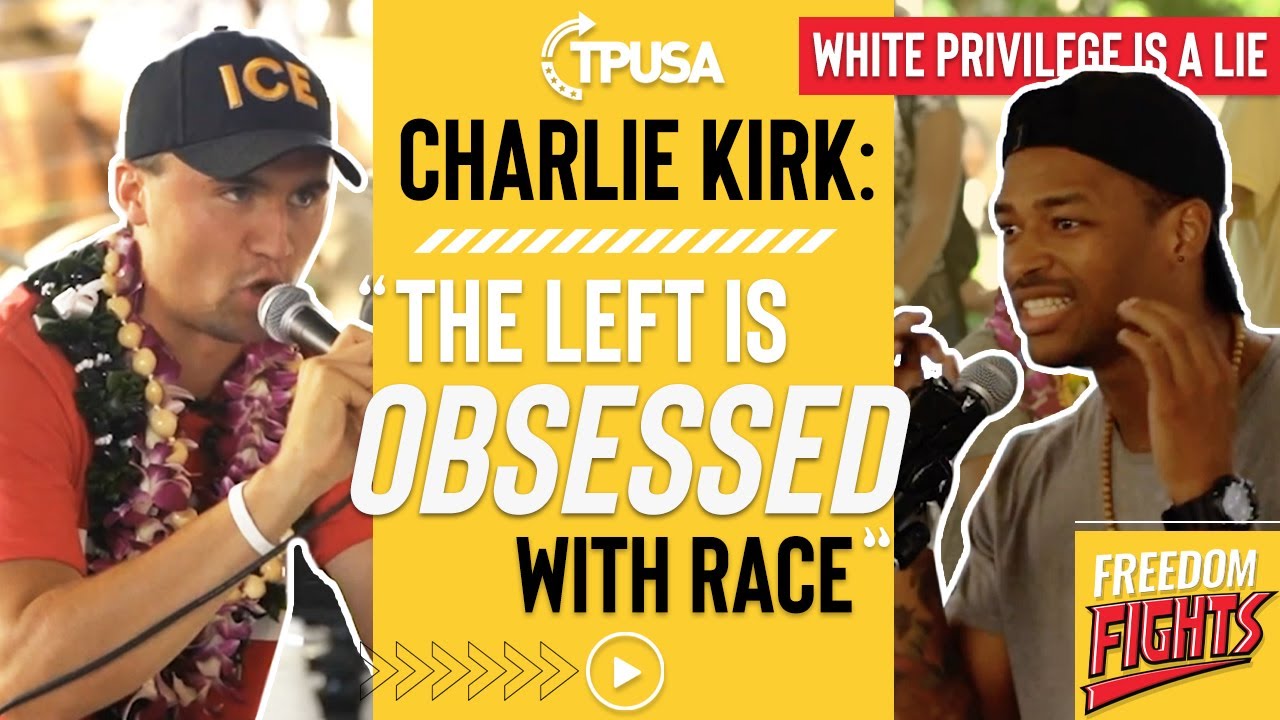
Charlie Kirk Confronts Claims That the Constitution Is Based on Racist Principles
A student challenges Charlie Kirk's assertion that the Constitution is the greatest political document in history, citing claims about racist language regarding indigenous peoples and African Americans. The exchange centers on whether such language actually exists in the document itself. Kirk responds by asking the student to identify where these phrases appear in the Constitution, prompting a direct examination of what the founding document actually says versus popular claims about its content.
During a speaking engagement, Charlie Kirk declared the Constitution to be the greatest political document in history. This statement prompted an immediate challenge from a student who questioned how such a claim could be made given what they believed to be racist principles embedded in the document.
The student asserted that the Constitution describes indigenous peoples as "merciless Indian savages," fails to describe African Americans as full people, and does not recognize other people of color and minorities present in society today. The question posed was direct: how can someone believe this is a great document given these alleged flaws?
Kirk's Response: Show Me Where It Says That
Rather than launching into a defensive explanation or philosophical defense, Kirk employed a simple technique: he asked the student to identify where exactly these statements appear in the Constitution itself.
His response, "Where does it say that in the document?" followed by a repeated request for specificity, shifted the conversation from abstract accusations to concrete textual analysis. This approach placed the burden of proof on the person making the claim about the Constitution's content, requiring them to demonstrate knowledge of what the document actually contains versus what they have been told it contains.
The Importance of Primary Sources
This brief exchange highlights a critical issue in political discourse: the difference between what people believe a document says and what it actually says. Many Americans form opinions about founding documents based on secondary interpretations, classroom discussions, or cultural narratives rather than reading the primary source material themselves.
Kirk's challenge represents an invitation to engage with the Constitution directly, examining its actual text rather than relying on characterizations of it. This method of discourse requires participants to be familiar with source material and able to cite specific passages to support their claims.