Charlie Kirk Confronts Immigration, Social Work, and Veganism Debates with College Students at University of Pittsburgh
Enjoying this? Share it with someone who needs to see it.
Up Next
Charlie Kirk Debates Angry College Student on Deportations, Due Process, and Abortion Rights at Campus Event
22:19
Charlie Debates Abortion, Truth, and Systemic Racism with College Students on Campus
11:25
Charlie Kirk Debates Legal Mexican Immigrant Claudio on Deportation Policy and Breaking Immigration Laws
9:12
Charlie Kirk Confronts Immigration, Social Work, and Veganism Debates with College Students at University of Pittsburgh
Charlie Kirk faces tough questions from University of Pittsburgh students on immigration policy, the future of social work, and animal rights activism. In heated exchanges, Kirk defends strict enforcement of immigration law against a granddaughter of immigrants, offers advice to an aspiring social worker struggling with her field's ideology, and debates a vegan student on the moral worth of human life versus animal life. These conversations reveal deep philosophical divides on government obligation, poverty solutions, and what makes human beings distinct from animals.
A University of Pittsburgh student, the granddaughter of immigrants, challenged Kirk on stereotypes about Hispanic and Latino communities in immigration debates. The student explained her family history: her mother was born in the United States, while her grandfather on her father's side entered illegally from Mexico during the 1970s and 1980s due to political instability and drug problems.
Kirk responded that while he wasn't trying to insult her grandfather, the distinction between legal and illegal immigration must remain clear. He argued that America should only accept immigrants who follow established rules and come on America's terms, not those who break in uninvited. Kirk emphasized that proximity to the border creates a luxury that immigrants from Vietnam, Laos, Pakistan, and other distant countries don't have—those people must wait decades in line.
When the student suggested her grandfather had no choice due to Mexico's political tyranny, Kirk disagreed, stating it's never the only choice to commit a crime. He pointed out that half the world's countries are unstable, and allowing entry based on instability alone would be unsustainable. Kirk maintained that entering the country uninvited is a crime, and those who do so are criminals who should face consequences—specifically, deportation to their country of origin.
The student asked whether Kirk believed the American government has greater obligation to citizens than foreigners. Kirk affirmed this, noting that the current generation of young Americans is the first in history to be worse off than their parents, facing higher costs and diminishing opportunities. He argued that when a country is in disarray—with record depression, suicide, and anxiety rates, collapsing birth rates, and young people unable to afford homes—the government should prioritize fixing domestic problems before helping foreign citizens.
The Punishment for Illegal Entry
Kirk drew an analogy to home invasion: if someone breaks into a dorm room uninvited but does the dishes and laundry, should they be allowed to stay? The student jokingly said yes if they do her dishes, but Kirk pressed the point more seriously. He argued that the punishment for breaking into a nation should be consistent with what's practiced in Switzerland, Israel, and Hungary—every person who breaks into a nation uninvited goes back to their country of origin, period.
The student objected that Kirk's approach categorizes all illegal immigrants under the same label as sex traffickers and drug dealers. She argued that many illegal immigrants are working hard for a better life and shouldn't be grouped with criminals. Kirk responded by asking what defines a criminal. When the student agreed that a criminal is someone who breaks the law, Kirk concluded that anyone who crosses the southern border illegally has broken federal law and is therefore, by definition, a criminal.
Kirk also addressed crimes committed by illegal immigrants, noting that Americans murdered by illegals represent a choice society has made to tolerate their presence. While Americans who commit crimes should go to jail, crimes by illegal immigrants are entirely preventable because those individuals shouldn't be in the country in the first place. The conversation ended with both agreeing they wouldn't find common ground on the issue.
Advice for an Aspiring Social Worker
A University of Pittsburgh social work major named Aaron approached Kirk seeking personal advice. She explained she was passionate about helping children in underprivileged communities but was having difficulty empathizing with older generations in poverty. She also sensed potential conflicts between her conservative values and the typical perspective taught in social work programs.
Kirk confirmed her instinct was correct, explaining that the social work industry generally views poverty as a permanent station in life rather than something people can escape through better choices. The field tends to see poverty not as a series of decisions but as an immovable circumstance. Kirk pointed to Lyndon Johnson's Great Society programs as an example of policies designed to help underprivileged communities that actually hurt the people they were supposed to serve.
These programs created dependence on government, Kirk explained. Single mothers, for example, often receive more financial aid without a man in the house than with one, because the way aid is calculated disqualifies families with an earning husband. Yet research shows children raised in two-parent households are less likely to end up in jail or poverty and more likely to graduate from high school. Kirk suggested Aaron could acknowledge that her left-leaning peers have good intentions, but the policies of their leaders have betrayed the very people they were meant to help.
Values Versus Material Resources
Kirk emphasized that conservatives believe poverty is largely caused by values rather than lack of material resources. The key predictors of entering the middle class are behavioral: saving money instead of spending entire paychecks immediately, not abandoning a spouse after pregnancy, avoiding spending money on alcohol and drugs, and instead opening a 401k. Values are the number one predictor of escaping poverty.
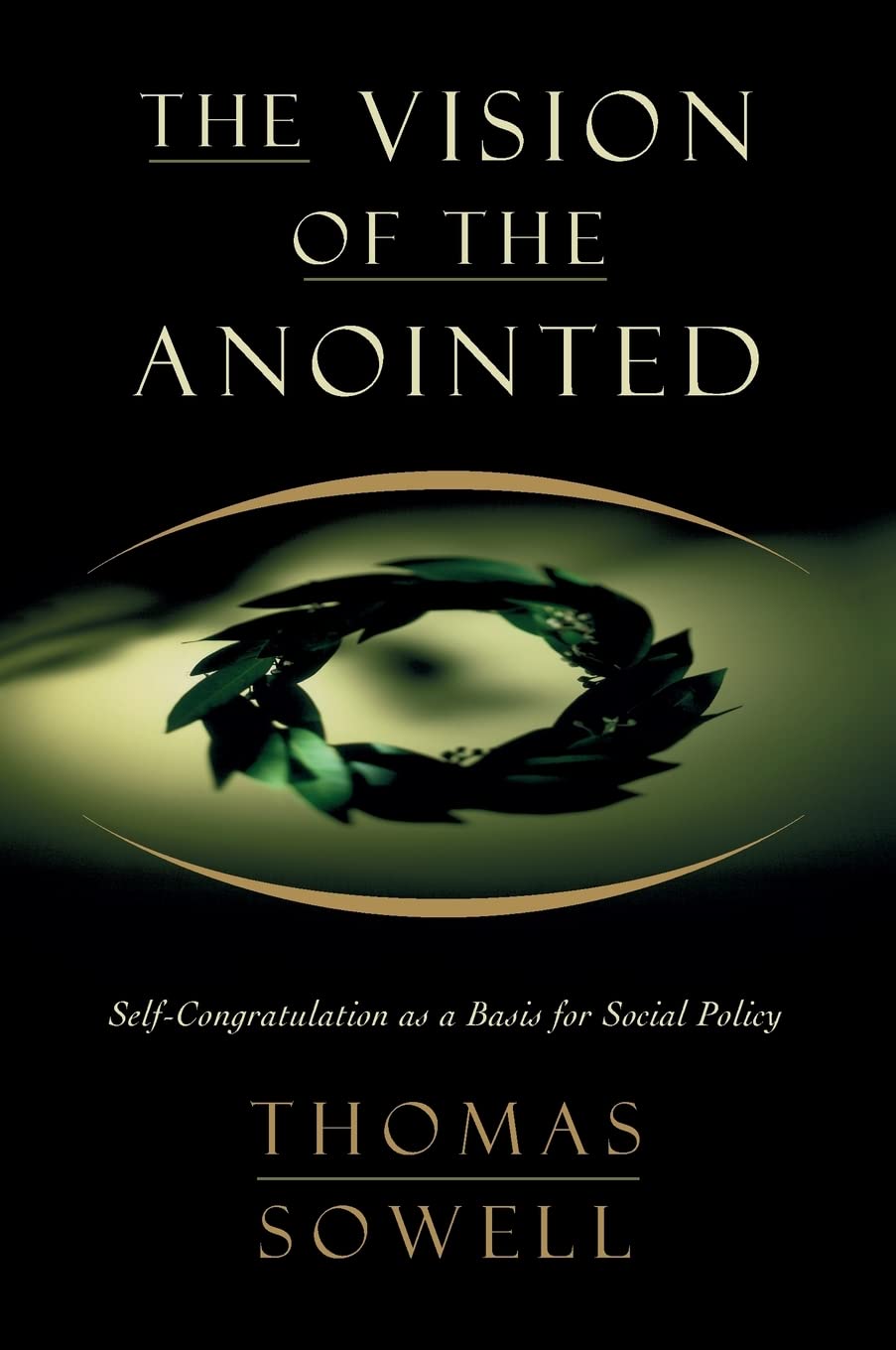
He recommended Aaron read "Life at the Bottom" by Theodore Dalrymple, a social worker in the United Kingdom who entered the field wanting to help people but realized the core issue wasn't lack of housing or food stamps—it was a value system that kept people poor. Kirk also mentioned literature from Thomas Sowell and Shelby Steele that addresses root causes of poverty from a worldview perspective rather than material deprivation.
Aaron expressed frustration that all her social work classes were teaching the opposite perspective. Kirk encouraged her to stay in social work because she's called to it, but to supplement her education with the literature he mentioned to understand actual root causes of poverty. He affirmed that conservatives genuinely care about lifting people from poverty—they just care about actually doing it rather than merely talking about it.
The Veganism and Abortion Debate
A student named Adam challenged Kirk with what he believed was a contradiction: Kirk opposes abortion but also opposes veganism, even though most adult animals like cows, pigs, and chickens are more intelligent than fetuses and small infants. Adam argued this position was hypocritical.
Kirk responded by asking if Adam would leave a cow for five years, whether it would ever be able to talk. When Adam said no, Kirk asked the same about a fetus. When Adam said yes, Kirk concluded that humans possess reason, souls, and the ability to make sense of the natural world—making them elevated beings worthy of protection in a way animals are not.
Adam countered that this argument was like saying mute humans can't have rights because they can't speak. Kirk clarified it's not just about speaking—it's about reason, having a soul, and being fundamentally not an animal. He asked Adam to define what distinguishes a human being from a dog. Adam suggested humans can walk, talk, and have personality, but struggled to provide a clear biological definition.
The Moral Distinction Between Humans and Animals
Kirk explained the key difference: a human being can tell you the difference between right and wrong, while an animal can only tell you the difference between pleasure and pain. Animals can only feel—they cannot reason. This gives humans objective moral worth that differs from animals. From a Western religious view, Kirk added, humans have souls and animals do not. A soul isn't just religious—it's the part of you that's not just your five senses of sight, smell, taste, feel, and hearing.
Animals only have these five senses and cannot withdraw themselves from them to engage in higher reasoning. This is why human beings are worthy of protection while animals are not held to the same moral standard. Kirk agreed animals should be treated humanely and, if eaten, killed in ways that don't cause unjust suffering, but their suffering doesn't rise to the level of concern for human life.
Adam brought up dairy production, arguing that cows must be forcibly inseminated to produce milk, which he characterized as a form of violation. Kirk responded that he thinks dairy is a great thing and isn't concerned about the insemination process because cows aren't human beings. Whatever allows human beings to flourish should be the primary concern, and meat, beef, and dairy contribute to that flourishing.
Insects, Self-Defense, and Testosterone
Adam pressed further, asking if Kirk believed we should limit unjust suffering of insects. Adam said he doesn't believe in intentionally killing insects either. Kirk asked if Adam opposed spraying for mosquitoes even when they carry diseases. Adam responded that if mosquitoes threaten him, that's self-defense, but a cow didn't do anything—it was innocent.
Kirk countered that a cow feeds him, a human being. Adam argued that the World Health Organization has stated a vegan diet is completely healthy for all ages, so killing animals for food isn't necessary. Kirk responded that testosterone rates need to go up, not down, and that's accomplished by eating meat, not soybeans. Adam insisted all necessary protein and nutrients can be obtained from a plant-based diet.
Kirk asked if Adam considered himself a liberal. Adam said it depends on the issue but described himself as moderate, noting he doesn't fully embrace "my body, my choice" rhetoric on abortion. Kirk then asked if humans have the right to eat a steak. Adam said no, because it involves the suffering of an innocent life. Kirk quipped that this is why the American left is losing young men, then thanked Adam for the exchange. Kirk joked that "Keep Steak Legal" would be his new t-shirt slogan.