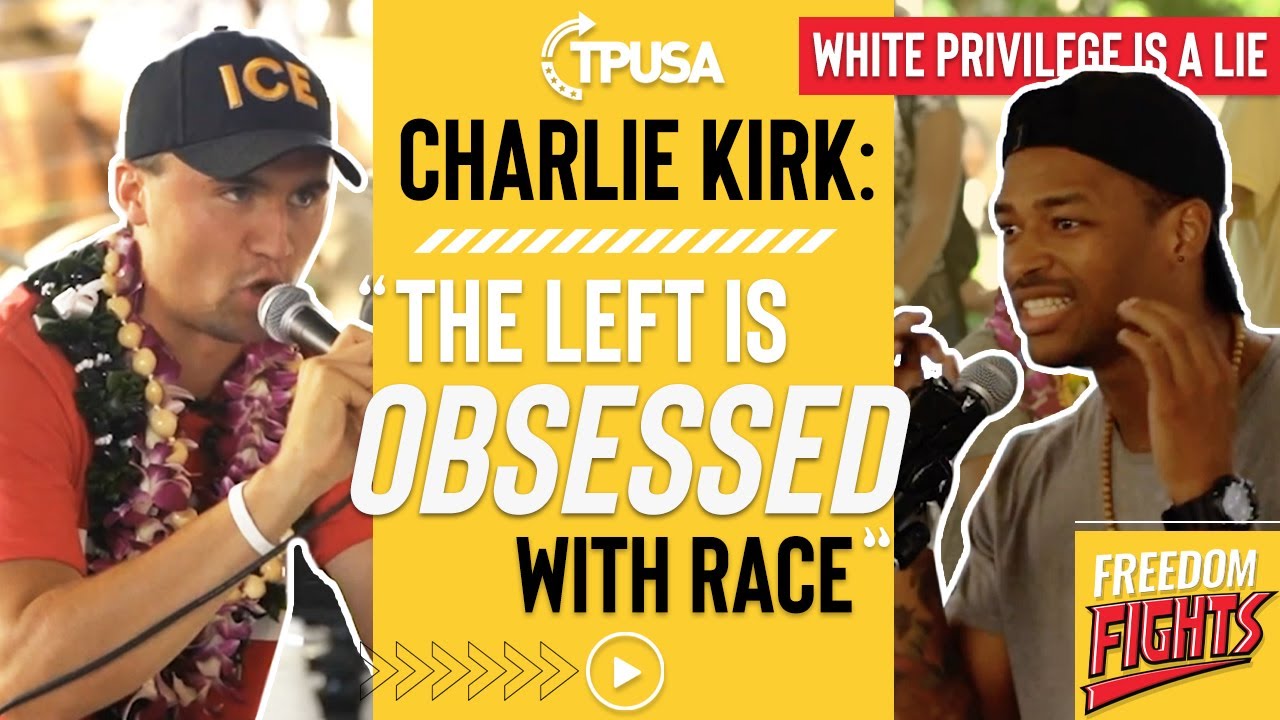
Charlie Kirk Confronts Students on Re-Segregation, Communism, and Immigration at Campus Dialogue
Enjoying this? Share it with someone who needs to see it.
Up Next
Charlie Kirk Challenges Military Veteran on White Privilege: A Heated Exchange on Race and Opportunity in America
1:00
Charlie Kirk Defends Trump 2.0, Debates College Critics on Education, Immigration, and Conservative Values on Campus
22:55
Charlie Kirk Confronts Military Member on Race, Choices, and the Dangerous Obsession with White Privilege
2:56
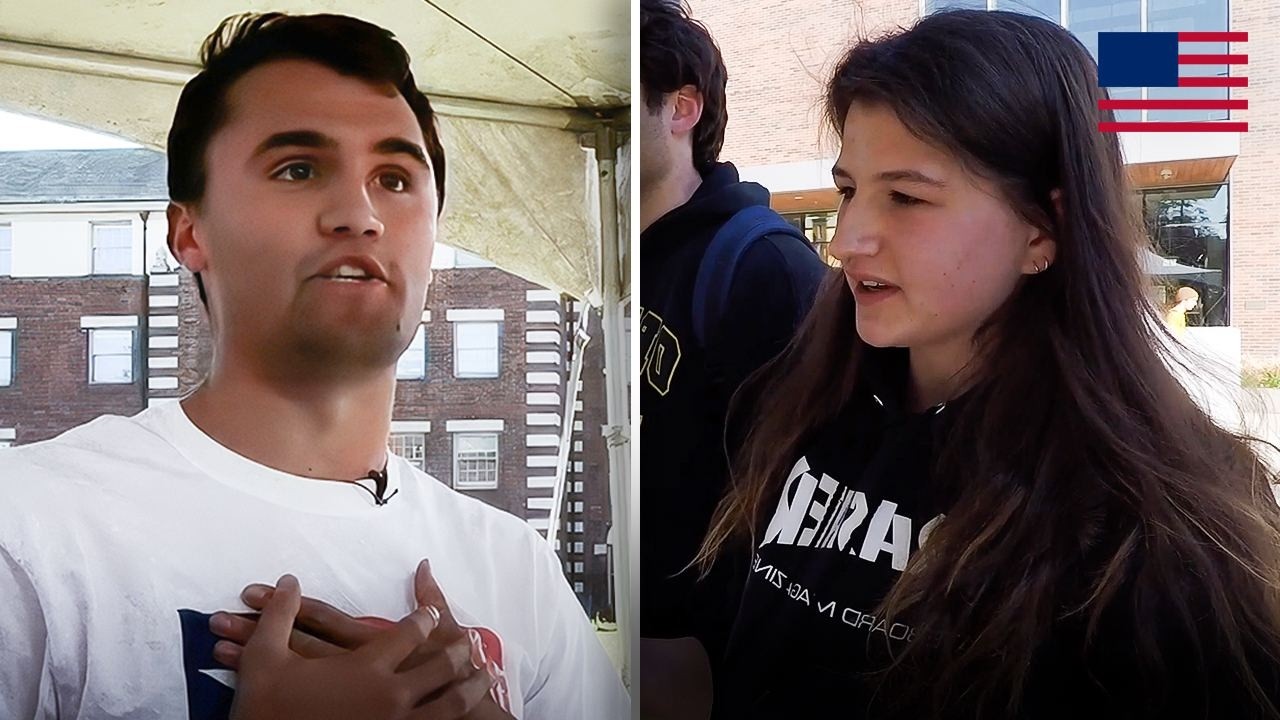
Charlie Kirk Confronts Students on Re-Segregation, Communism, and Immigration at Campus Dialogue
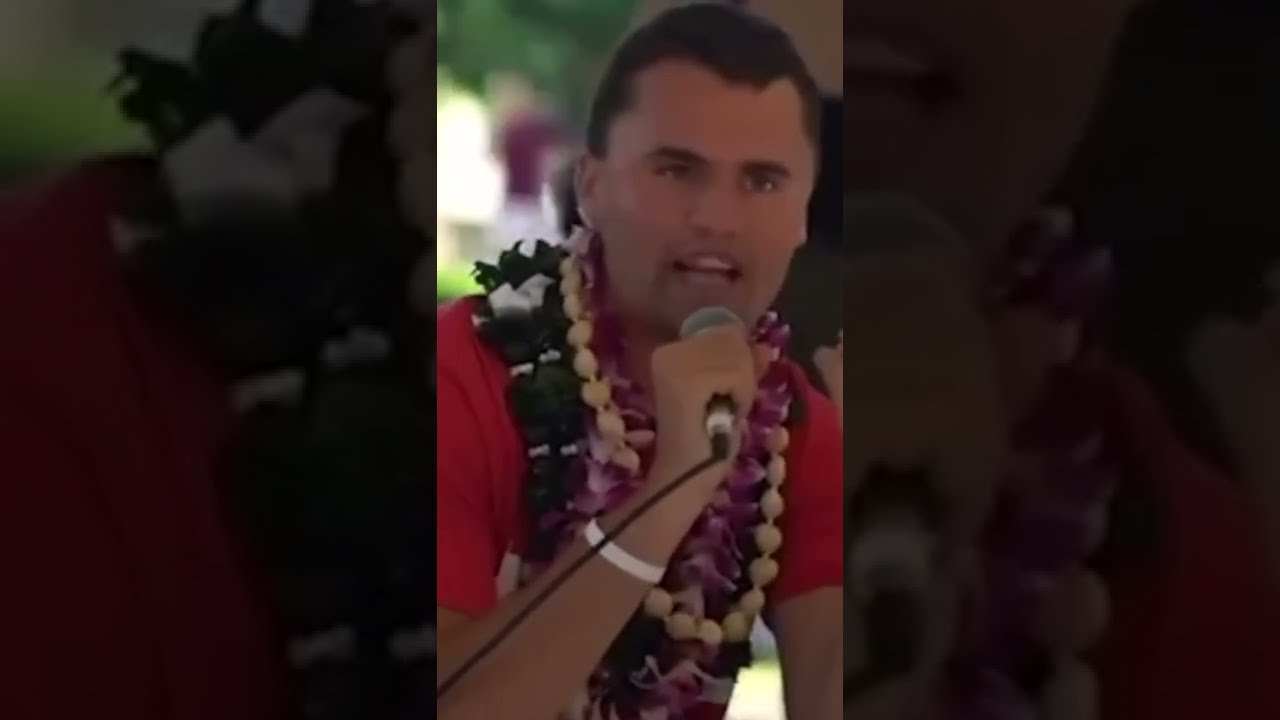
Charlie Kirk engages in heated exchanges with college students on some of today's most contentious issues. From debating a student who supports black-only dormitories and graduation ceremonies while opposing white-only spaces, to speaking with a Romanian immigrant warning Americans about the dangers of communism, Kirk challenges young people to defend their positions with facts and logic. The conversations cover critical race theory, the courage crisis in America, and immigration policy, revealing the deep ideological divides on campus and Kirk's unapologetic approach to controversial topics.
Charlie Kirk confronts a student who supports black-only dormitories and graduation ceremonies but opposes white-only spaces. When Kirk asks what the difference is between segregation imposed by white people versus segregation chosen by black people, the student struggles to articulate a coherent answer. Kirk presses the point: "What's the difference between a white person and a black person? There's no difference. They're both human beings. There's one race, the human race."
The student claims black people are treated differently by police, but when Kirk asks for evidence, the student dismisses data as something that "can be used to lie." Kirk challenges this rejection of facts: "So facts don't matter?" He points out the contradiction in the student's position, noting that the student claims to be post-racial while simultaneously supporting racial segregation.
When Kirk asks the student when someone stops being racist, the student responds, "When they die." Kirk calls this perspective "Sinister" and asks if the student thinks he's racist. The student says yes but refuses to provide any evidence. Kirk uses this exchange to highlight what he sees as a dangerous trend: people being quick to label others as racist without evidence or a clear standard for redemption.
A Warning from a Romanian Immigrant
A Romanian immigrant who has lived in America for ten years shares his perspective on the rising acceptance of socialist and communist ideas among young Americans. He tells Kirk that if anyone had told him a decade ago that he would see American citizens favoring communism, he would have laughed in their face.
When Kirk asks what his message would be to young socialists who don't understand communism, the immigrant responds simply: "If you don't learn from history, nothing will save you."
Though he was only one year old when communism ended in Romania, the immigrant explains that he has never met anyone in his home country who supports communism. He describes how the communist government seized all private property and implemented rationing systems where families received punch cards to get bread, with amounts rationed based on family size. "No meat, no eggs, no stuff like that," he explains.
Kirk contrasts the immigrant's gratitude for living in America with the attitude of many native-born Americans who take their freedoms for granted or actively advocate for socialist policies.
Defining Critical Race Theory
A student challenges Kirk to explain critical race theory without using buzzwords or conservative talking points. Kirk provides a detailed historical and philosophical explanation, tracing CRT back to the Frankfurt School, Herbert Marcuse, Michel Foucault, and Jacques Derrida.
Kirk explains that critical race theory emerged from critical theory, which believes that systems exist both institutionally and systemically. He describes how thinkers like Marcuse in the 1960s believed society must be viewed through a racial lens rather than an economic or legal lens.
Kirk identifies several core beliefs of critical race theory:
There is no such thing as absolute truth
Power dynamics are more important than anything else
Skin color should be a top priority in characterizing people's worth and dignity
American history as traditionally taught is completely wrong
America is systemically racist
He connects these ideas to contemporary movements like wokeism, diversity, equity and inclusion initiatives, and the 1619 Project, describing them as outgrowths of postmodern deconstructionist thinking that Marcuse and other Marxist thinkers from the Frankfurt School brought to America.
When the student thanks him for the response but objects to his use of the word "wokeism" as a conservative buzzword, Kirk stands by his explanation.
Advice for a 13-Year-Old Homeschooler
A 13-year-old homeschooled student named Grace, who has been listening to Kirk's podcast and taking Hillsdale College's Constitution course, asks what advice he has for becoming a more informed and involved citizen.
Kirk emphasizes the importance of courage above all else: "We have a courage crisis right now. Moral courage is the most necessary yet absent characteristic in our country." He quotes George S. Patton and references Aristotle, who said that courage is the ultimate virtue because without it, there are no other virtues.
Kirk explains: "If people aren't courageous, you don't have honesty, you don't have justice, you don't have anything else. You don't have beauty, you don't have wonder if people don't have courage to act."
He defines courage as "doing the right thing when you don't know how it's going to work out" and "committing yourself to the correct course of action regardless of the cost associated with it."
Kirk expresses hope in the rising generation of homeschooled children, offering his vision of success: "New York Times headline in 2050: America's sudden, shocking, and inexplicable right turn can be traced back to homeschooling explosion during COVID-19. That's what success looks like."
The Capitalism and Education Debate
A student questions how a capitalist society would handle education funding, asking if parents would be expected to pay hundreds of thousands of dollars per child without the current tax system. The student suggests that advocating for capitalism requires addressing the massive education spending and taxes.
Kirk clarifies his position, asking the student to identify what primarily funds local schools. When the student correctly identifies property taxes, Kirk points out that he has never advocated for abolishing property taxes. He calls property taxes "an ownership tax" and notes that "if you don't want to pay property tax, don't buy property."
Kirk states he would like to abolish the federal income tax but acknowledges it probably won't happen. He proposes a 10% flat tax for everyone as sufficient to fund essential government services. Regarding school funding, he argues there is more than enough money in property taxes, state taxes, lottery systems, and other government revenue services to effectively fund public schools—if reforms are made.
His key condition: "If you're able to fire bad teachers and fight public sector teacher unions." He sees union reforms as essential to improving education outcomes with existing funding levels.
Are You Here to Divide or Unite?
A student questions Kirk's motives, citing critics who say he comes to campus media-trained with memorized talking points. The student asks whether Kirk genuinely wants to change minds or whether there's a benefit to keeping people divided.
Kirk responds by asking how he's being divisive by inviting anyone who disagrees to come to the microphone. The student mentions Kirk's "clickbaity titles" and "prove me wrong" framing, suggesting he's trying to keep people divided. The student notes that critics are urging people not to talk to Kirk because he'll "spin it."
Kirk invites those critics to come to the microphone, adding: "But they're intellectual cowards and they won't do that."
He argues that talking to people you disagree with is how divisions are healed, while refusing to engage and just yelling at people you disagree with brings the country closer to civil war. When the student accuses him of fear-mongering by using terms like "civil war," Kirk defends the statement as factual and says he doesn't want that outcome.
Kirk maintains that "you deradicalize a population through speech" and that allowing disagreement and providing a microphone for differing views is how to heal the country.
Immigration and Deportation
The conversation turns to immigration when the student accuses Kirk of stopping "a more progressive debate" by stating that anyone in the country illegally should be deported. The student frames this as a moderate-sounding position that actually shuts down conversation.
The student argues there's a "false narrative" that America is a free land where anyone can come and get rich, which causes people to come illegally and risk their lives crossing the Rio Grande. The student suggests there's a "more progressive conversation" to be had about solving the immigration crisis.
Kirk responds simply: "You solve it by deporting the criminals, AKA every single one that broke our laws to come here. That's a very moderate position."
When the student continues to push for a "more progressive way to look at it," Kirk ends the exchange with clarity: "I'm not here to be progressive."