Up Next

Charlie Kirk Challenges Student on Systemic Racism, Single Motherhood, and the Great Society's Impact on Black Families
8:06
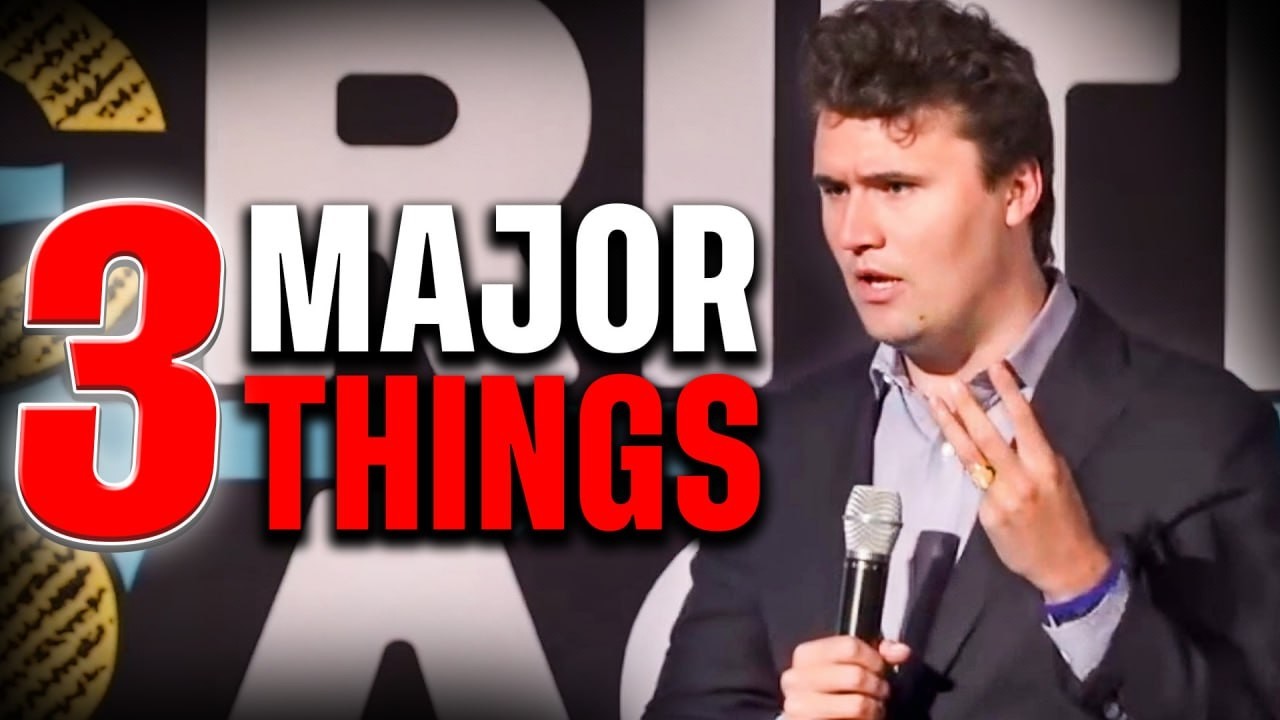
Charlie Kirk Challenges Student on Systemic Racism: Why Single Motherhood Soared as America Became Less Racist
8:06

Campus Debate on Objective Truth, Abortion, Race, and the Legacy of Malcolm X
10:40
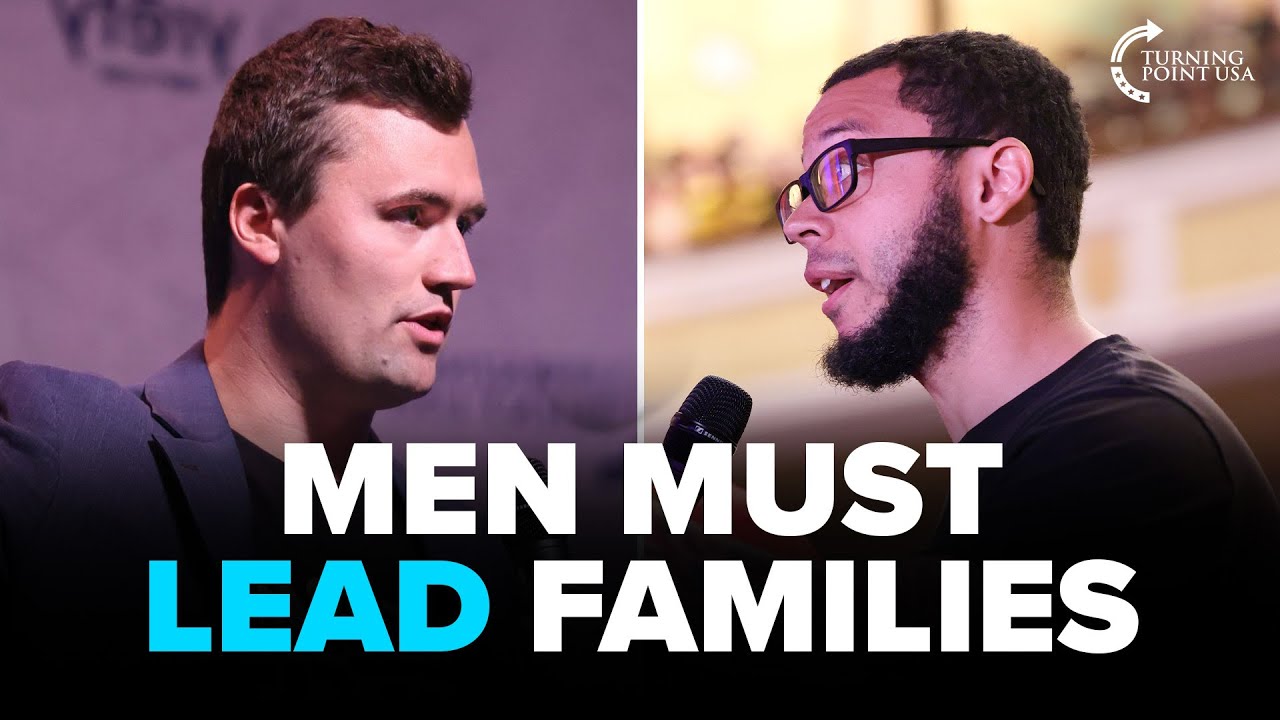
Charlie Kirk Debates College Student on Fatherhood, Crime, and the Crisis in Black America
Charlie Kirk engages in a heated exchange with a college student who grew up without a father, challenging the notion that systemic racism, not family breakdown, is the primary driver of poverty and crime in Black America. The conversation moves from personal experience to hard statistics, touching on everything from the War on Drugs to the influence of rap culture. Kirk argues that the absence of fathers, not structural barriers, lies at the heart of social dysfunction, while his debate partner insists poverty and racism leave communities with no choice but crime. The clash reveals two fundamentally different worldviews about responsibility, culture, and what it takes to lift communities out of struggle.
The Personal Question That Started It All
The exchange begins with a vulnerable admission from a college student who grew up without a father. She asks Charlie Kirk directly: why does it matter? She feels she turned out fine, her mother was her hero, and she sees no practical difference between validation from a mom versus a dad. Kirk responds by describing the unique bond between fathers and daughters—a form of love the ancient Greeks called storge. He explains that a father's role is to shepherd his daughter through life, providing protection and guidance all the way to the marriage altar, where he hands that responsibility to another man.
When the student pushes back, suggesting women don't need men in their lives, Kirk pivots to the societal impact. He points to data showing that when fathers disappear from Black communities, crime and poverty spike. He argues that mothers alone cannot provide the kind of masculine authority needed to discipline rebellious teenage boys. The student counters that the real issue is systemic racism—that Black men are disproportionately imprisoned, leaving families broken by forces beyond their control.
Systemic Racism or Personal Responsibility?
The debate intensifies as the student claims Black men end up in prison because of poverty, leaving them no option but to commit crimes to survive. Kirk challenges this directly: if crimes are born of necessity, why do food stamps, subsidized housing, Medicaid, and welfare exist? He argues that America has an obesity problem, not a starvation problem, and that no one needs to steal to eat. The student insists that these safety nets don't cover everything and that many people are still left without housing or adequate food.
Kirk then raises a statistical question: if poverty drives crime, why do Black Americans—who make up 13% of the population—commit 50 to 56% of murders and violent crimes, while twice as many white Americans live in poverty and commit far fewer crimes? The student struggles to answer, suggesting that Black people are followed in stores and profiled by police. Kirk presses her on murder rates specifically, pointing out that being followed in a store doesn't explain higher homicide rates.
The conversation turns to the definition of systemic racism. Kirk asks what legal privileges white Americans have that Black Americans don't. The student mentions being followed in stores, police violence, and historical redlining. Kirk dismisses these as assumptions and points out that redlining no longer exists and that DEI policies now favor Black Americans in lending and hiring. He insists there is no systemic barrier in the law preventing Black Americans from succeeding.
The War on Drugs and Crimes of Necessity
When the student brings up the War on Drugs as a driver of mass incarceration, Kirk agrees it's a factor but insists that people still have to choose to deal drugs. The student argues that in poverty-stricken neighborhoods with no jobs, dealing drugs becomes the only viable option. Kirk calls this an excuse for criminal behavior and contrasts it with poor immigrants who came to America, worked multiple jobs, and didn't turn to drug dealing. The student reveals that her own white immigrant father from Poland committed crimes and went to jail, which Kirk uses to counter her earlier claim about systemic racism protecting white people from incarceration.
Kirk argues that the core issue is a values problem. He refuses to sympathize with those who steal, loot, and murder, insisting that destructive behavior is a choice, not an inevitability. The student maintains that systemic racism creates the conditions for family breakdown by removing Black men from their homes through incarceration.
Culture, Rap Music, and Role Models
The conversation shifts to culture. Kirk argues that the biggest problem in Black America isn't racism—it's the absence of fathers. He claims that this issue has been ignored on a national scale for a decade, while the student insists there are bigger problems to address. Kirk counters that family breakdown is the root cause of everything else, and that without strong families, issues like climate change and systemic racism are just abstractions.
He brings up the influence of rap culture, asking whether the music of artists like Nicki Minaj, Cardi B, and Kendrick Lamar uplifts Black America or glorifies destructive behavior. The student defends rap as a reflection of lived experience, arguing that artists share their stories so listeners can relate. Kirk asks whether sleeping with multiple women is glorified in rap culture, and the student reluctantly agrees it's one aspect. Kirk argues that culture should elevate people toward virtue, not celebrate their lowest impulses.
The student insists that rap isn't prescriptive—it's descriptive. Artists aren't saying gang violence and promiscuity are ideal; they're simply documenting what they've lived through. Kirk remains unconvinced, pointing out that the cultural messaging still matters, especially when it reaches young people trying to figure out how to live.
Subsidizing Single Motherhood
Kirk introduces another controversial point: the federal government subsidizes single motherhood by providing financial benefits to women who remain unmarried. He suggests this creates a perverse incentive that discourages family formation. The student doesn't dispute the policy but pushes back on the idea that all fathers are beneficial, noting that abusive fathers shouldn't be in the home. Kirk agrees but estimates that abusive fathers are a small percentage, and that generally, children benefit when both parents are present and engaged.
Clarence Thomas vs. Kendrick Lamar
Kirk ends with a pointed question: if a young Black child needed a role model, should it be Kendrick Lamar or Clarence Thomas? The student chooses Kendrick without hesitation. Kirk is stunned. He contrasts Kendrick Lamar—a rapper who won acclaim for his artistry—with Clarence Thomas, a Black man who grew up in the Jim Crow South and became one of the most influential justices on the U.S. Supreme Court.
The student defends her choice, claiming that Clarence Thomas wants to ban interracial marriage. Kirk immediately corrects her: Thomas is married to a white woman. The student also brings up his role in overturning Roe v. Wade, which she sees as disqualifying. Kirk doesn't back down, calling Thomas one of the smartest people ever to serve on the Supreme Court and arguing that he represents a far better example of success and character than a celebrity rapper.
The exchange encapsulates the deeper divide: one side sees structural oppression as the enemy, the other sees personal choices and cultural values as the key to progress. Kirk believes the celebration of figures like Clarence Thomas would do more for Black America than any government program or protest movement. The student believes the opposite—that artists who speak truth to struggle are more relatable and valuable than conservative jurists who, in her view, work against the interests of marginalized communities.
Video Transcript
0:00
Why? Why do we care if there's no
0:02
father? Like I like I grew up without a
0:04
father. I feel like I'm doing fine. I'm
0:06
doing great. I'm in college. Like why
0:09
why are we so towards the father? Why
0:11
why does he need to be there so much?
0:13
It's an So just looking at try to answer
0:16
my question for me. Do you think what
0:18
kind of kind of is is there any time and
0:20
you're you're being very vulnerable and
0:21
I appreciate that when you were growing
0:24
up and maybe not where you said I wish I
0:25
had a dad around? My mom says I did wish
0:28
for that once at a wishing well. But
0:31
like I like I My mom was great. I she
0:34
her mom's a hero for sure. No, no, I'm
0:36
not not there not not a knock on single
0:37
moms. But was there ever a time maybe
0:40
where a more masculine figure would have
0:43
been helpful?
0:44
I can't really not off the top of my
0:46
head like what can you give me an
0:47
example of when a masculine figure would
0:49
be helpful in my life? a boyfriend might
0:50
have broke up with you and you didn't
0:52
want to talk to your mom because she
0:54
just didn't get it and you wanted a
0:55
strong stable man to say you're
0:58
beautiful.
0:59
Um I think I mean I I have if a if my
1:04
father was like you're beautiful
1:07
I I that'd be cool but like if my mom
1:10
was also like you're beautiful I don't
1:12
really see a difference between like my
1:13
mom saying it and my father saying it.
1:14
Wow. Okay. Yeah. That's I I I don't see
1:17
the world that way. Um because there's a
1:19
ve being a father to a daughter there's
1:21
a very unique bond between a father and
1:23
a daughter where it's you kind of you
1:26
fall in love again but not romantic love
1:29
you fall in a different type of Greek
1:30
love which is called stoay which is a
1:33
fatherdaughter love where you have such
1:35
affection for this incredible being and
1:38
your your task is to shepherd that
1:41
vulnerable innocent girl through life
1:43
all the way up until the marriage aisle
1:46
to kind of connect the two topics
1:48
together, right? Where then you hand it
1:50
off to another man because women are
1:52
worthy of protection.
1:54
So, you're saying like there has to be a
1:56
man in the woman's life, the woman can't
1:58
be like alone.
2:00
No, there are exceptions, but it is a
2:02
beautiful ideal. And when when that
2:04
ideal falls apart, now let's talk about
2:06
the technical side. In the black
2:08
community, when fathers are no longer
2:10
around, crime goes up, poverty goes up,
2:11
because you'll you'll understand this
2:13
less. And a man in the audience who grew
2:15
up without a father will totally get
2:17
this. If it's just a mom in the house,
2:19
the dad is should come in and discipline
2:22
the 14-year-old for acting like a brat.
2:24
The dad comes in and he says, "Stop
2:26
doing this." You need to be able to
2:29
outrank the 14-year-old brat with
2:32
another masculine figure.
2:33
But don't you think that like there
2:35
there's a reason that a lot of the black
2:37
community isn't doesn't have a father,
2:40
and it's because of systemic racism?
2:41
It's because like black men are more
2:44
likely to be in prison.
2:45
Oh yeah. So why do people go to prison
2:48
for like a lot of the time it's because
2:50
they're in poverty and they have no
2:52
other way to get
2:53
Okay. So they commit crimes
2:54
because there is they
2:56
Yeah. But so likeovery wait so wait
2:58
they be why do they why do they crime in
3:02
poverty? We should give excuses for
3:03
committing crimes.
3:04
Yes. Because if they have no
3:05
murder
3:06
not I did not say murder. I said like
3:08
I said I'm saying like if someone is
3:10
stealing something because they have no
3:12
money and there's no job.
3:13
That's so interesting. So you think most
3:15
crimes are crimes of necessity in the
3:16
black community.
3:18
Um I wouldn't I'm not saying most
3:20
so like gang banging is like a crime of
3:22
necessity
3:23
that I've literally never said that. I'm
3:25
saying
3:26
you're making an argument of crimes of
3:27
necessity. Like they're so hungry they
3:28
can't handle it.
3:29
I'm talking about like crime that has to
3:31
do with like getting food, getting stuff
3:34
that you need to live,
3:36
right? But we have food stamps for
3:38
anyone that needs it. So that doesn't
3:40
exist. We have we have subsidized
3:42
housing for anyone that needs it. So
3:43
that doesn't exist. We have free health
3:45
care for any poor person that wants it
3:46
called Medicaid. That doesn't exist. We
3:48
also have welfare cash for any that
3:49
wants us. That doesn't exist. So what is
3:51
it they're missing that they need to go?
3:53
Sorry about that.
3:53
Um well the food like a lot of food
3:56
stamp like food stamps might not cover
3:58
all of what they need. And also housing
4:01
is like there's not there's not
4:03
unlimited housing. A lot of people who
4:06
are unhoused have to like go to shelters
4:09
and then they get kicked out of shelters
4:11
because there's a mandatory stay limit.
4:13
So it's not like you just get it's not a
4:16
stuff thing though, right? It's like if
4:18
you need stuff, there's also tons of
4:20
charities out there that can provide
4:21
assistance. Churches, you will not go
4:23
hungry in this country. You will not
4:25
starve in this country.
4:25
Yes, you will. There's like
4:27
No, we have an obesity problem. We have
4:28
an obesity problem, not a starvation
4:30
problem in this country.
4:31
What are you talking about?
4:32
In State Street, if any one of those
4:33
people went to the local Episcopalian
4:35
church or Methodist church, they will
4:37
get fed. I guarantee it. If they go to a
4:39
local food shelter, they will get fed.
4:41
Okay. But I'm talking Okay. Housing.
4:43
Okay. For housing. If if we have section
4:45
8 subsidized housing in this country,
4:47
right? If you want to have a roof over
4:49
your head, you can have a roof over your
4:51
head
4:52
with like a thousands of rules and you
4:54
can't do that.
4:55
Yes. Of course. Yes. I mean, it's not
4:56
ideal, but the point is this. So, let's
4:58
just go back to the crime of necessity,
4:59
right? So, why do people commit crimes?
5:03
I'm not saying why all people commit
5:05
crimes. I'm saying there are people who
5:07
commit crimes because they have no other
5:09
choice.
5:10
Got it. So why is it that other people
5:11
that are as poor as they are in separate
5:14
racial groups don't commit crimes at the
5:16
same rates? So So black Americans are
5:19
13% of the population and commit
5:21
anywhere between 50 to 56% of murders,
5:25
crimes, carjackings. Why? Why is that?
5:27
Well, what percentage of the white
5:28
population is living in the same level
5:30
of poverty?
5:30
Got it. So, you know, there's twice as
5:32
many white Americans in poverty as black
5:34
Americans. Not the same percentage, but
5:35
still, if you look at white Americans in
5:37
poverty, they far they commit far less
5:39
crimes than black Americans in poverty.
5:41
Why is that?
5:42
Maybe it's because when you're in a
5:44
store, like they follow black people and
5:46
they don't follow white people.
5:47
What about murder?
5:49
Rural rural.
5:50
No, but why is it that like saying
5:52
murder? Why is it that black people
5:53
commit so many more murders? Like that's
5:55
not You're being followed in a store and
5:56
you commit more murders.
5:59
is like
6:02
you're making the role or I'll get to
6:03
you in a sec, but it's not it's not a
6:05
good argument. But let me just go back
6:06
to one thing you said, systemic racism.
6:08
Right? So the idea of systemic is that
6:09
it's within our laws. There are some
6:11
black Americans here listening.
6:13
What can you as a white American do that
6:16
the black American cannot do?
6:19
Um let's see. I could go into a store
6:22
and not get followed. The police like
6:24
the police could not track me down on
6:27
like when I'm driving. I'm not pro I'm
6:29
less likely to get um shot and killed um
6:33
while I'm driving. I um there's a lot of
6:36
things that I can do.
6:37
Okay, so just be clear. So if you walk
6:38
into a local CVS here, how would you
6:40
guys be treated differently?
6:42
Well, I would pro they would probably
6:43
say hello and they would probably like
6:45
just walk like let me in and like not
6:47
follow me and then
6:49
so these are a lot of probablys. I don't
6:50
believe you. But I'm talking about laws,
6:52
right? So, what in the legal code of
6:54
America can you as a white individual do
6:57
that the black individual can't? Because
6:59
systemic means it's in our code, right?
7:00
It's like it's for example like Jim
7:02
Crow, totally get it. That's systemic
7:03
racism. What is systemically your
7:06
advantage? Um maybe like housing codes
7:11
because I know redlinining isn't a thing
7:12
anymore but there is um like isn't there
7:16
people who um are white are more likely
7:18
to be given loans because of like they
7:21
have less um
7:24
like I don't know that's just the like
7:26
it's um back from red lining like it
7:29
it's a lot of the same stuff.
7:32
I I I don't I don't buy into any of
7:33
that. So I just kind of go
7:34
you don't buy into red lining or you
7:35
don't buy
7:36
I don't buy into red lining. I don't buy
7:37
any of that stuff I have to say. In
7:38
fact, it's the opposite. Loans are now
7:40
given favorably to black Americans in
7:41
certain cities over white Americans.
7:43
Okay. But
7:44
so we because of I I believe I I know
7:46
red lining existed. I I don't debate
7:48
that. Of course, but because of DEI and
7:50
because affirmative action, there's
7:52
actually a preference given. But so
7:53
let's go back to fathers, right?
7:55
Okay. Let's go back to fathers.
7:56
So something happened to black America
7:58
since 1965. So in 1965, so
8:02
you mean the war on drugs,
8:04
right? Well, so if that's your
8:05
contention, that's fine. So in order to
8:07
again in order to go to jail for the war
8:08
on drugs, you have to be dealing drugs,
8:10
right? Or you have to be caught with
8:11
drugs. So if you don't
8:11
Yeah. Which is one of like the main jobs
8:13
that you can have in a like
8:15
povertystricken like if there's no jobs,
8:17
like you're you're going to do drugs. I
8:19
mean, you're going to trade drugs
8:20
because that's the only option.
8:21
It's such a difference in worldview.
8:22
You're making excuses for criminals.
8:24
Yeah. And what no what an insult to poor
8:27
immigrants that came to this country
8:28
that didn't commit crimes and worked two
8:30
or three jobs and worked themselves out
8:32
of poverty and didn't decide to go deal
8:34
coke.
8:34
Well, my father is a white immigrant
8:37
from Poland and he committed crimes and
8:40
he's fine now.
8:41
Did he go to jail?
8:42
Yeah, he did.
8:42
I thought there was systemic racism.
8:44
That doesn't happen very much.
8:45
I I never said white people don't go to
8:47
jail. I said they go more. And you're
8:49
saying that white immigrants are fine
8:50
and they don't
8:51
far less. Actually, I'm glad he went to
8:53
jail if he committed a crime. I'm think
8:54
that's I think it's terrible. So, but
8:57
the at the core of it, we have a
8:58
difference in worldview, right? My
9:00
worldview is I'm not sympathetic to
9:01
people that steal, that loot, and murder
9:05
because that's a values problem. And I
9:07
don't like making excuses for people
9:09
that do things that are obviously
9:11
destructive. Secondly, we have a problem
9:13
in black America. The biggest problem is
9:15
not racism. It's the lack of dads. If
9:18
dads are around, kids flourish.
9:21
I'm I'm fine with having fathers.
9:23
There's I'm I'm not against having black
9:25
for sure. I'm saying but don't we agree?
9:27
Has anyone heard that mentioned on the
9:29
national scale in the last 10 years?
9:31
Um
9:33
yeah. I mean we we we've heard about
9:34
like Yeah. And
9:36
because there's bigger issues.
9:37
No, there isn't. See, that's the issue
9:39
is that in this is what makes us
9:40
different as a conservative. I focus on
9:43
if you have family breakdown, don't
9:45
worry about climate change. Don't worry
9:47
about systemic racism. All that stuff is
9:48
like these crazy abstraction.
9:50
You can create family problems. Systemic
9:52
racism creates family problems. If you
9:54
take away black people from their
9:56
families, then they're going to have
9:58
broken families.
9:58
Okay. So, but that's interesting. How
10:00
are you taking them away? Aren't they
10:02
leaving?
10:03
They're not staying with the women
10:04
they're impregnated. Not So, for
10:05
example, there there are there 13% of
10:08
the population is black. Not every
10:09
single person ends up in jail,
10:11
obviously. And yet there's huge child
10:13
abandonment because there's a cultural
10:15
expectation that is different in black
10:17
America than in white America, which is
10:19
it's okay to impregnate a woman and
10:20
abandon her in black America. It's not
10:22
based on what what is what is that based
10:23
on?
10:24
That's a good question. Where does it
10:25
come from? It's just based on
10:27
No, I'm saying what is that like your
10:28
view of black America?
10:29
What is that view? It's true. I mean,
10:30
don't take my word for it. Look at
10:32
Thomas Soul and Shelby Steele that have
10:34
done amazing analysis on this. It's that
10:36
in black culture that is not considered
10:38
to be a stigma. in white upper middle
10:40
class culture. For those of you that
10:42
grew up in Wauaaw or Libertyville or
10:44
grew up in Hinsdale or grew up in
10:46
Neapville, you guys all know those
10:47
neighborhoods. If you impregnate a girl,
10:50
a woman, and you just like abandon her,
10:52
that's frowned upon. That is a social
10:54
stigma in upper middle class white
10:55
culture.
10:56
And it's not in black culture.
10:58
No. In fact, it's glorified by the rap
11:00
culture.
11:01
It is.
11:02
I I think I think rap culture is ex
11:05
showing what happened. I don't think
11:07
it's I think
11:08
Do you think that the songs that are the
11:09
most popular in black America are
11:11
uplifting black America to be better
11:13
versions of themselves?
11:14
I think the most popular
11:16
like Nicki Minaj, Cardi B, do you think
11:17
that they're like empowering people to
11:19
be great? Well, I do think um Cardi B
11:21
and Nicki Minaj are empowering, but when
11:23
you talk about like like
11:26
wow,
11:26
black um like let's go like Kendrick or
11:29
whatever like they're talking about
11:32
their life experiences and they're
11:34
saying this is what happened to me and
11:36
people relate to that because that's
11:38
also what happened to them. It's not
11:39
saying this is the greatest thing in the
11:41
entire world.
11:41
Does it lift up the audience to become
11:43
better?
11:44
I think so because it's like because
11:46
it's saying we all relate to this. we
11:48
can all like this is our story. This is
11:51
we can be like better than this. Even
11:53
though it's like I mean there's better,
11:55
there's not better. It depends on what
11:56
your worldview is. But I think that rap
11:59
is good because it can like
12:01
No, I'm not saying it's bad or good. I'm
12:02
saying like the just the the essence,
12:03
the core, the ethos is not exactly about
12:05
like quitting drinking, quitting drugs,
12:07
and getting married and having children.
12:09
No, it's about what you have done, not
12:10
about like
12:12
No, but just like to be clear like in
12:14
black rap culture, is it generally
12:16
glorified to go sleep with a lot of
12:18
women?
12:19
I I mean that's your view of it.
12:21
I'm asking a question. Is it in black
12:22
rap culture?
12:23
Yes or no, guys? In black rap culture
12:25
is glorify women
12:26
to be able to sleep with a lot of women.
12:29
I mean, I think that's one aspect. Yeah.
12:31
Okay. So, let's just take that aspect
12:32
because it's um a luxury that people can
12:34
do and like it's one of the things that
12:36
people can do and everyone can relate
12:38
to.
12:39
or a lot of people can relate to that.
12:40
Shouldn't ideally your culture try to
12:43
elevate and try to challenge the
12:45
individual to virtue and goodness, not
12:48
try to bring them down to the lowest
12:50
parts of their
12:50
who is I'm again I'm not saying that
12:53
they are bringing them down. I'm saying
12:54
that this is what they are doing and
12:56
they are sharing their experiences.
12:58
They're not saying this is the best
13:00
thing in the entire world. They're
13:01
saying this is what I have been through
13:04
like sleeping with a lot of women.
13:05
Yeah. or like gang violence and you know
13:08
I mean if that's what like a lot of
13:10
people have been through gang violence
13:11
because it that's what's happening in
13:13
their neighborhoods that's the only
13:14
that's they feel like that's the only
13:16
option and you might know that that's
13:18
not the only option but when you are
13:20
living in that neighborhood and you you
13:22
don't see any jobs this is how your
13:24
family was raising you what like what
13:27
other option do you have and once you're
13:28
in it it's really hard to get out
13:30
so got it you talk about systemic racism
13:33
and that being a major driver of, you
13:36
know, black America's failure to launch,
13:38
if you will. We subsidize single
13:40
motherhood in this country. So, if you
13:42
stay single as a single mother, you get
13:43
money from the federal government and
13:45
you're it's basically subsidized, if you
13:46
will.
13:47
Sure.
13:47
Can we can we at least agree that if the
13:51
nuclear family in black America was
13:53
stronger and tighter knit, that would be
13:54
a good thing?
13:56
Um, in in a lot of cases, yeah, I think
13:59
if but I think if they're like if the
14:02
father's abusive, I would not want him
14:04
there. So, I think it really depends on
14:05
like what family you're talking about. I
14:07
don't think you can generalize.
14:08
What percentage of fathers do you think
14:09
are abusive?
14:10
I have no idea.
14:11
I would say it's probably small, right?
14:12
Um,
14:14
not like I don't know. I I have no idea.
14:16
I have not done research on what
14:18
percentage of fathers, but generally
14:20
it's good when mom and dad stays around
14:21
and is raising a kid.
14:23
I would say if they are both healthy
14:26
parents and they are both ready to have
14:28
a child, it's great. My father not ready
14:30
to have a child, do not want him around
14:32
me. There's one last question on role
14:33
models. Let's say there's, you know, a
14:35
black kid right now. Would you rather
14:37
have that black kid have a role model be
14:39
Kendrick Lamar or Clarence Thomas?
14:42
Kendrick, obviously.
14:44
So, not the not the black American on
14:46
the United States Supreme Court.
14:48
No, he's he's trying to ban interracial
14:50
marriage. He's trying to like do
14:51
Wow. No, he's he's in an interracial
14:53
marriage.
14:54
He literally like
14:55
he's married to a white woman.
14:57
Yeah, I know. the Roie Wade thing like
15:00
goes against
15:00
he's trying to ban his own marriage.
15:02
That's
15:02
I thought I sorry to break it to you but
15:04
like Rode So just to be clear. So and
15:06
that that's fine. This is the difference
15:07
in worldview. We have clarity but not
15:09
agreement. You'd rather have Kendrick
15:10
Lamar who sleeps around with everything
15:12
that moves
15:13
who is a poet who won a Nobel Prize who
15:15
right no versus Clarence Thomas who grew
15:17
up in the antibbellum South who's a US
15:19
Supreme Court justice one of the
15:21
smartest people ever to serve on the
15:23
Supreme Court as a black American. And
15:24
that that's the difference is that we as
15:27
conservatives think that Clarence Thomas
15:29
is a far better role model for black
15:30
America than just some some rapper.
Related Books
Browse Conservative Books