2,422 videos 1,389,747,653 views US Joined Aug 30, 2018
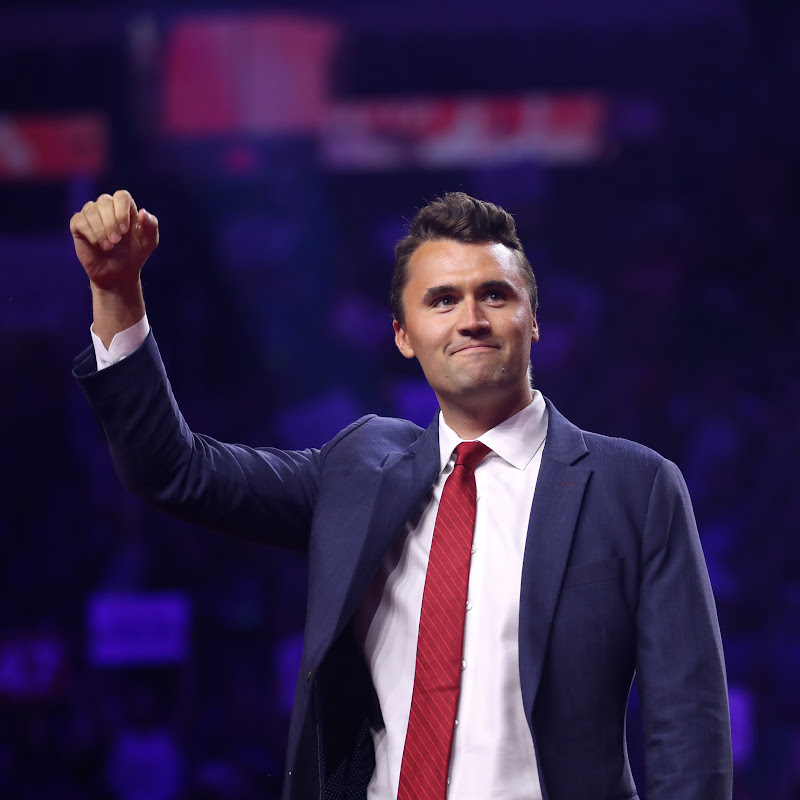
Charlie Kirk is the Founder and President of Turning Point USA, the largest and fastest growing conservative youth activist organization in the country with over 250,000 student members, over 150 full-time staff, and a presence on over 2,000 high school and college campuses nationwide. Charlie is also the Chairman of Students for Trump, which aims to activate one million new college voters on campuses in battleground states in the lead up to the 2020 presidential election. His social media reaches over 100 million people per month and according to Axios, he is one of the "top 10 most engaged" Twitter handles in the world. He is also the host of “The Charlie Kirk Show,” which regularly ranks among the top news shows on Apple podcast charts.
Charlie Kirk Debates College Student on STEM Degrees, Liberal Arts, and the LeBron vs Jordan GOAT Debate
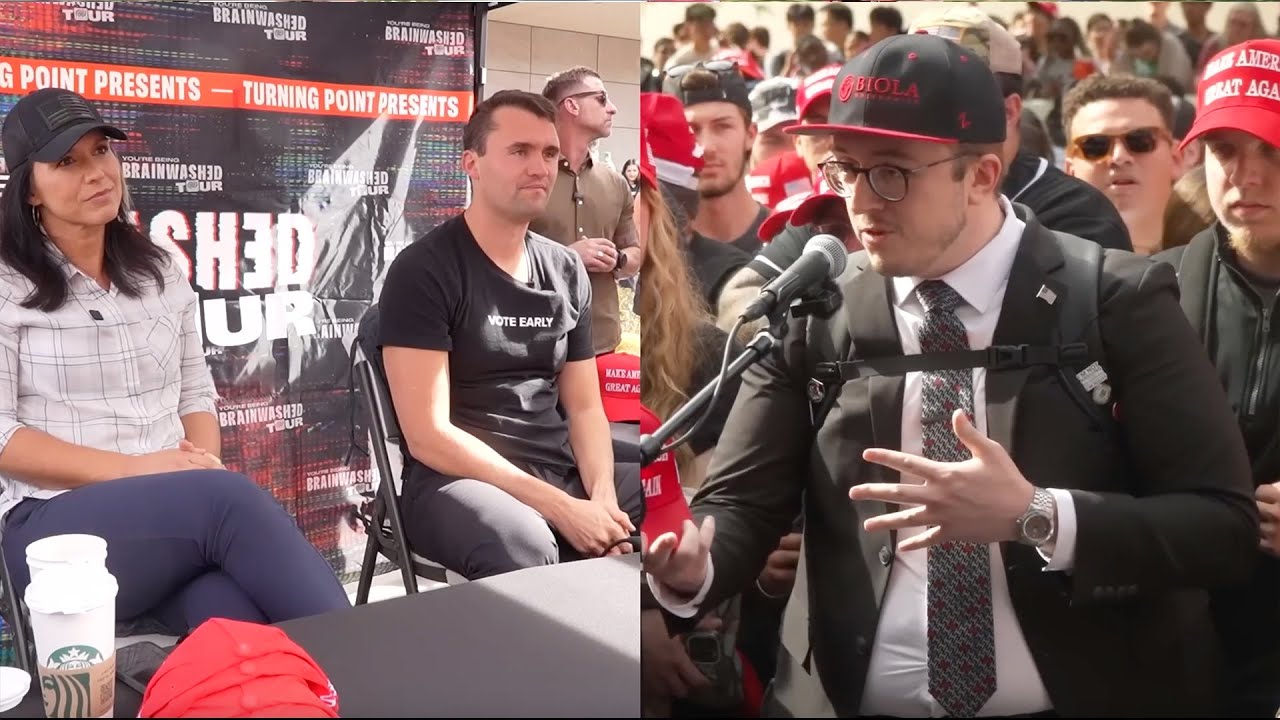
Charlie Kirk engages with a Purdue University student who challenges his stance on college education. The conversation covers STEM degrees versus liberal arts, the value of engineering programs, and how artificial intelligence will reshape the job market. Kirk acknowledges Purdue's engineering focus as an exception to his broader critique while maintaining that most college degrees don't lead to relevant careers. The debate takes an unexpected turn into sports territory as they argue whether Michael Jordan or LeBron James deserves the title of basketball's greatest player, with Kirk making his case for Jordan's cultural impact and Finals record.
Charlie Kirk engaged with a Purdue University student who pushed back on his frequent assertion that college is a scam. The student, wearing a 'White Dudes for Harris' hat as a troll, argued that degrees still provide value even when they don't directly align with career paths. Kirk acknowledged that engineering and STEM programs represent legitimate exceptions to his broader critique of higher education.
Kirk noted that Purdue deserves credit for freezing tuition for 15 years and maintaining a pro-free speech environment. He emphasized that less than 10% of college students nationally study engineering, though the percentage is much higher at Purdue. He argued that engineering minds will become increasingly valuable as society needs more people who understand hardware, while software jobs face displacement from artificial intelligence.
The Liberal Arts Problem
The conversation shifted to humanities and liberal arts programs, where Kirk drew a sharp distinction between classical education and modern approaches. He stated that studying Plato, Aristotle, Augustine, and Socrates provides value, but studying postmodern theorists like Foucault, Derrida, Kimberly Crenshaw, and Derrick Bell doesn't justify the time and expense.
Kirk cited statistics showing that 55-60% of college students study abstract liberal arts subjects like anthropology, social sciences, elementary education, communications, and psychology. He questioned the practical application of these degrees, using communications as an example. When the student mentioned his brother studied communications and now works in tech sales, Kirk countered that a degree isn't necessary for that career path.
The Entrepreneurship Argument
Kirk posed a thought experiment to the student: As an employer, would you rather hire a 22-year-old with a communications degree from Indiana University, or a 22-year-old who has traveled to 50 countries, speaks two languages, and started their own business? When the student suggested both paths weren't mutually exclusive, Kirk pushed back on the practical realities.
He pointed out that only 30% of American young people have passports, indicating international travel isn't as common as claimed. More significantly, Kirk argued that attending college actually weakens entrepreneurship. Students graduate with debt and a largely meaningless degree, making them less likely to start businesses. He emphasized that college has become more about credentialing than education—simply checking a box to prove you have the piece of paper.
The AI Disruption Nobody's Prepared For
Kirk warned that the job market will look dramatically different due to artificial intelligence, with massive displacement of mid-level management positions. He believes half of the students in the audience will end up in jobs that don't require a college degree at all—not just jobs different from what they studied, but jobs where no degree is necessary.
Interestingly, Kirk predicted that engineering will remain valuable because hardware innovation hasn't kept pace with the software revolution of the past 20 years. He sees the future belonging to engineers who can actually build and understand how physical things work, while software development becomes increasingly automated by AI.
The National Education Misalignment
Kirk argued that America has too many young people attending college and not enough pursuing skilled trades. The country needs more mechanics, carpenters, welders, HVAC technicians, and entrepreneurs. He noted that employers at major companies increasingly express disappointment with the quality of job applicants they receive, suggesting the current system isn't producing the talent the market demands.
The student maintained that humanities education remains important because science is fundamentally human, and this human element will keep certain fields protected from AI displacement. Kirk didn't necessarily disagree with the value of humanities broadly, but emphasized the problem lies in how those subjects are currently taught—with a heavy tilt toward postmodern and critical theory approaches rather than classical foundations.
The GOAT Debate: Jordan vs LeBron
The conversation took an unexpected turn when the student asked about the Michael Jordan versus LeBron James debate. Kirk didn't hesitate, calling it an insult to even compare them. He argued the real debate should be Jordan versus Kobe Bryant. Kirk pointed to Jordan as the only player ever to be NBA Finals MVP, league MVP, leading scorer, and defensive MVP while never losing an NBA Final.
Kirk emphasized Jordan's clutch performance, noting he hit 50% of game-winning shots in all six NBA Finals wins. By contrast, he claimed LeBron James is 0-for-14 on game-winning shots in NBA Finals and playoffs. When the student brought up Bill Russell's 11 championships, Kirk explained that greatness isn't measured by championships alone but also by cultural impact on the league.
Cultural Impact and League Popularity
Kirk made the case that Jordan elevated the NBA into a cultural phenomenon in the 1990s, while LeBron has presided over its decline. He noted that people everywhere still wear Jordans, not LeBrons—even in Cleveland and Los Angeles where LeBron played. NBA viewership and attendance have dropped approximately 30% during LeBron's era as the face of the league.
The student, a Denver Nuggets fan, defended the current NBA and LeBron's impact, arguing the game remains exciting rather than just a glorified three-point contest. He pointed out that when Jordan left to play baseball, the Bulls maintained a similar regular season record, while the Cavaliers fell apart after LeBron's first departure. Kirk dismissed regular season performance as irrelevant compared to Finals victories.
Kirk wrapped up by suggesting LeBron might be top five all-time at best, calling him the inventor of the flop, the biggest complainer in the league, and criticizing his left-wing political activism. He concluded that Jordan left the NBA in a better place while LeBron has made it worse, joking that Jordan doesn't have enough fingers for all his championship rings while LeBron doesn't have enough fingers for all the Finals losses.