2,422 videos 1,389,747,653 views US Joined Aug 30, 2018
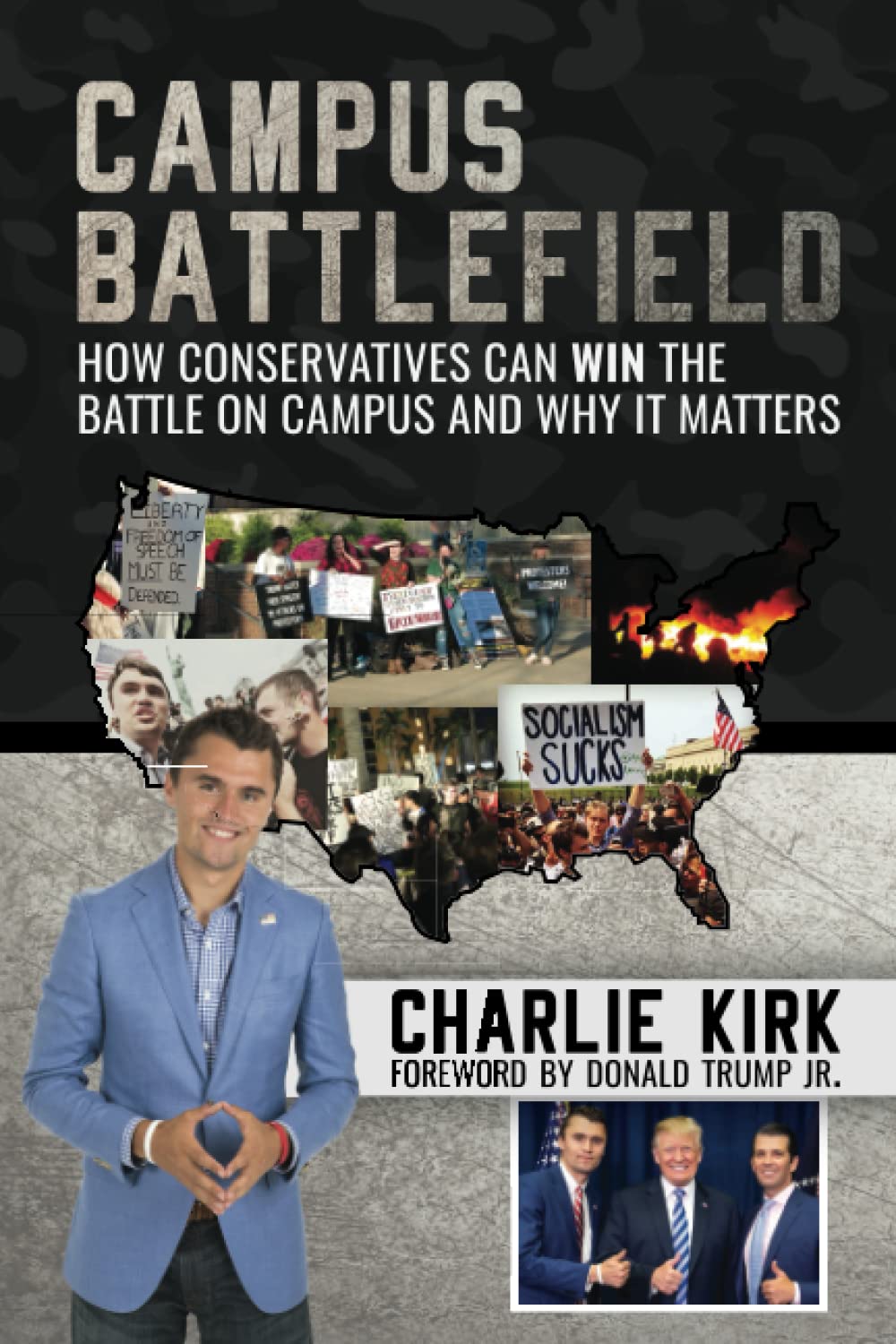
Charlie Kirk is the Founder and President of Turning Point USA, the largest and fastest growing conservative youth activist organization in the country with over 250,000 student members, over 150 full-time staff, and a presence on over 2,000 high school and college campuses nationwide. Charlie is also the Chairman of Students for Trump, which aims to activate one million new college voters on campuses in battleground states in the lead up to the 2020 presidential election. His social media reaches over 100 million people per month and according to Axios, he is one of the "top 10 most engaged" Twitter handles in the world. He is also the host of “The Charlie Kirk Show,” which regularly ranks among the top news shows on Apple podcast charts.
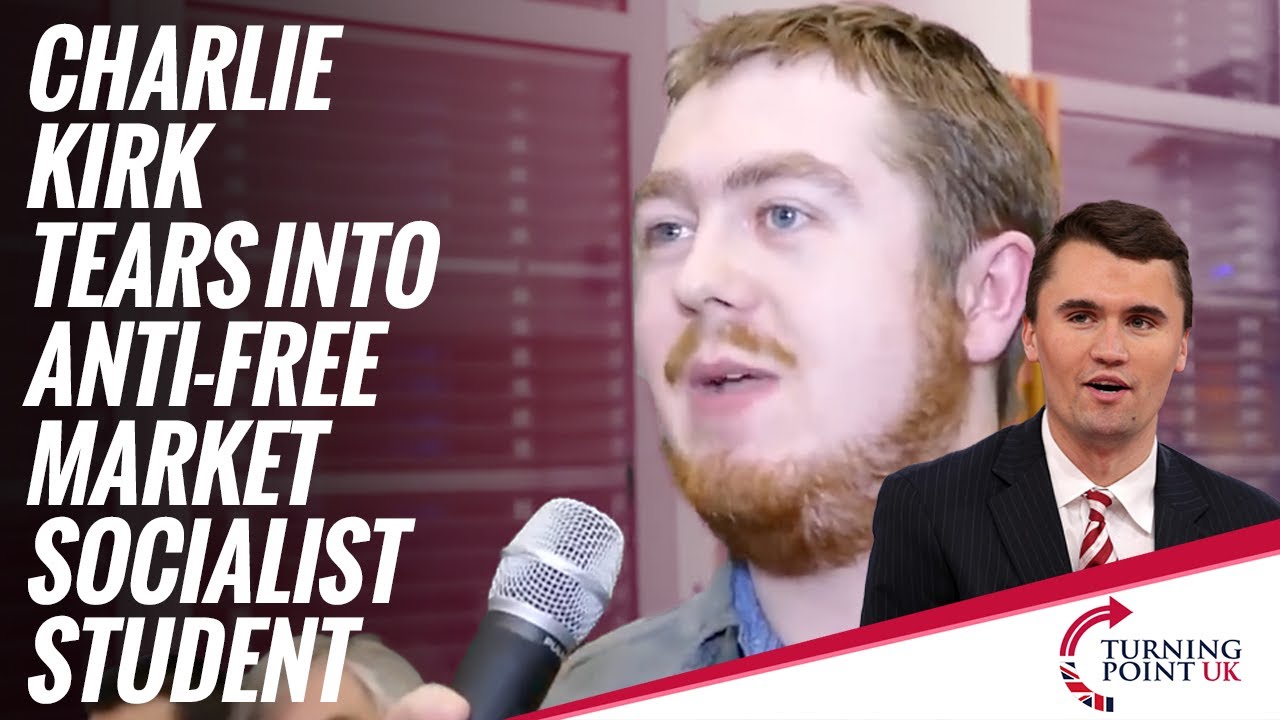
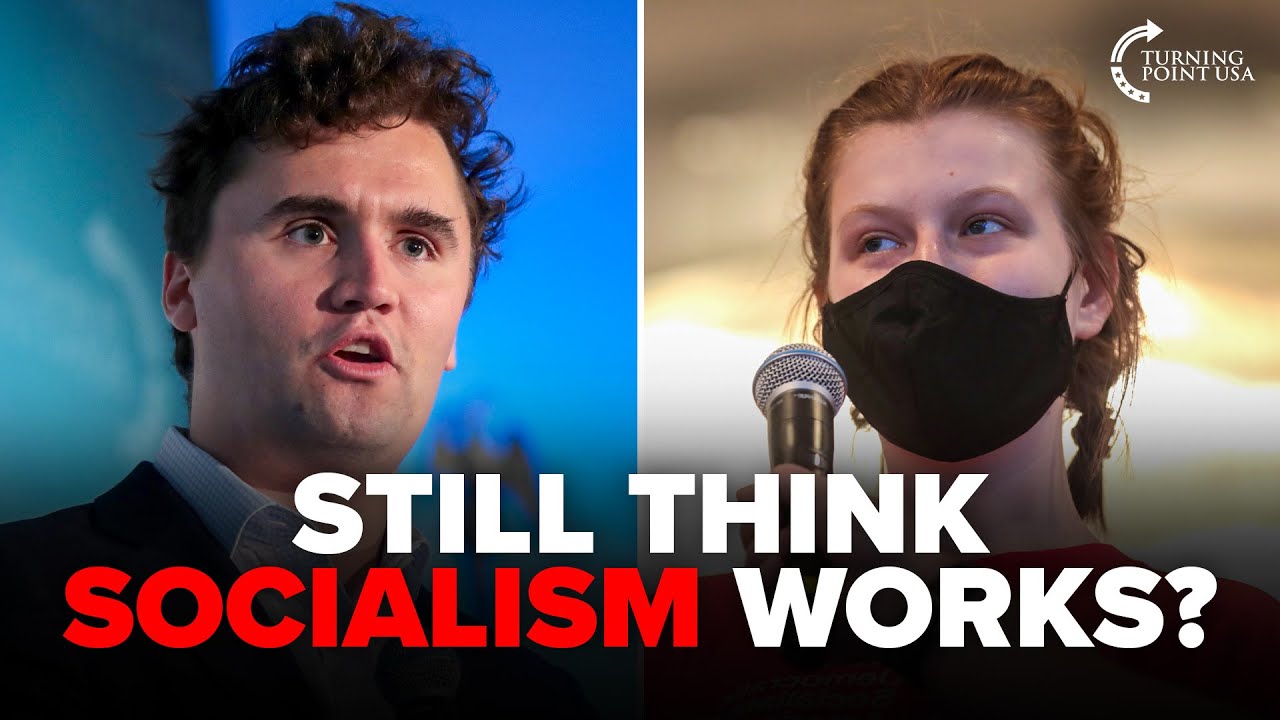
Charlie Kirk Debates Marxist Student on Capitalism, Hierarchies, and Why Socialism Always Fails
Charlie Kirk confronts an 18-year-old self-identified Marxist who calls capitalism a "deadly vampire that feasts on the blood of the working class." What follows is a pointed exchange on the contradictions of condemning capitalism while enjoying its benefits, the historical failures of Marxism across 100+ attempts, and why hierarchies are natural and necessary. Kirk challenges the student on everything from iPhone ownership to the impossibility of a true utopian society, dismantling the core arguments of revolutionary socialism with logic and historical evidence.
The conversation begins with an immediate clash of worldviews. A young activist wearing a "Socialism Sucks" button encounters Charlie Kirk, leading to a frank exchange about their opposing ideologies. The student, an 18-year-old self-described Marxist, doesn't hold back, declaring that capitalism is "a deadly vampire that feasts on the blood of the working class."
Kirk's response is direct and probing. He asks the student to elaborate on this dramatic claim, but receives hesitation in return. The real question comes next: "Do you have an iPhone?" The student admits yes, and Kirk immediately points out the contradiction—how can someone condemn capitalism as vampiric while actively consuming its products?
The Hypocrisy of Selective Participation
Kirk presses further on this contradiction. The student argues that they must "do the best that we can" within the current system, but Kirk challenges this rationalization. If capitalism is truly as exploitative as claimed, why not opt out entirely? Why not live on a farm, reject modern conveniences, and create a voluntary socialist community like some groups in Vermont or the Amish do?
The student responds that "the free market is so pervasive we have like no choice but to live" within it. But Kirk rejects this excuse. The choice exists—nobody is forcing anyone to participate in market-based society. The student could choose to live outside the system, yet chooses to enjoy the heat, light, medicine, food, and technology that free markets provide.
The student admits to loving these benefits, which Kirk identifies as fundamentally contradictory. How can one simultaneously love the fruits of capitalism while describing it as a blood-sucking vampire?
The Question of Freedom and Coercion
Kirk makes a critical distinction between capitalism and socialism that cuts to the heart of the debate. Under capitalism, the student has complete freedom to live like a socialist—to form communes, share resources voluntarily, and reject entrepreneurship. Nobody would stop them. But under the socialist system the student advocates for, Kirk wouldn't have the freedom to be an entrepreneur or capitalist.
"Your ideology is built on control of other people's choices," Kirk explains. "Ours is built on freedom." The student can go to Utah, buy land, and create a socialist colony with like-minded people. That's the beauty of voluntary societies. But socialism, by its nature, is coercive—it doesn't allow for the same freedom of choice.
The Republican Father and Democratic Socialism
Kirk asks about the student's father, learning that he's a Republican. The student identifies with the Democratic Socialists club but clarifies that they're "fairly Marxist honestly." The club affiliation is just what's available online. The student believes that "eventually we will get to a state where enough people will collectively come together and say hey you know this is better for all of us."
Despite this optimistic vision, the student admits to being "very pragmatic" and recognizes that "socialism can't exist like today in America." This admission sets up Kirk's next line of questioning.
The Historical Failure of Marxism
Kirk asks the student to provide a single example of where Marxism has ever worked. The student admits: "No." Kirk emphasizes that Marxism has been tried over 100 times in the last 100 years and failed every single time. It's 0 for 100. Isn't that concerning?
The student pivots, explaining that a true Marxist state would be a "stateless, classless society"—essentially a utopia. Kirk immediately identifies this for what it is: "That's no different than a fiction novel about Neverland." The ideology has been tried repeatedly, and the results are hundreds of millions of people dead.
The student thinks utopia is attainable, though not in our lifetime. Kirk confirms the student has read the Communist Manifesto and points out the fundamental problem: the student espouses a viewpoint that has never worked, they think will never work in their lifetime, will never work in this country, and is essentially no different from believing in a work of fiction.
The Revolutionary Question
Kirk probes whether the student might be more revolutionary than initially admitted. The student believes that over time, societies progress and eventually people will be able to organize differently. But Kirk asks how we would work toward this utopian vision. Isn't that where the revolutionary component comes in?
The student seems to acknowledge there might be some truth to this, discussing how societies change and progress over time.
The Inevitability of Hierarchies
Kirk poses a fundamental question: "Do you think some people are better at some things than others?" The student agrees. Kirk then asks how a smarter person would fit into a utopian society versus a less intelligent person—would there be hierarchies or not?
The student brings up automation, suggesting that in a utopian future, automation will have taken over enough work that traditional hierarchies won't matter. Kirk is familiar with this argument and notes there was a 2020 presidential candidate (Andrew Yang) who promoted similar ideas about automation and universal basic income.
But Kirk points out that Karl Marx himself made similar arguments back in the 1870s. Despite massive automation since then, hierarchies still exist. No matter how advanced technology becomes, some people will always work harder at certain things and be more proficient than others—whether in music, sports, or any other domain.
A true Marxist society would require "the complete and total abolition of any sort of hierarchy whatsoever." The student would believe in this, but Kirk argues this is anti-reality. Human differences are natural—some people are taller, smarter, have higher IQs, or possess more drive. Only in a market-based society can these natural differences elevate the standard of living for all people and make sense of a broken world.
Why Utopian Communism Always Fails
Kirk explains that Marxist, utopian communism has been attempted many times over short periods, citing the Paris Commune as an example. These experiments always fall apart for one simple reason: human beings are inherently selfish.
If you try to build a commune, after about 20 days, one person will inevitably say, "No, I want two loaves of bread, not one." If someone is smart enough to figure out how to get more, they will. A subdivision will break away, creating conflict. The only reason Western societies remain civil is that to get two loaves of bread, you have to earn it—you can't just take it from someone else.
This is the fundamental protection that market-based societies provide: they channel human selfishness and ambition into productive outcomes rather than conflict and violence.
Conclusion of the Exchange
The conversation ends with Kirk thanking the student and expressing hope that they learned something from the exchange. The debate illustrated the core tensions between capitalism and socialism: freedom versus coercion, historical reality versus utopian fiction, and the natural existence of human hierarchies versus the dream of their complete abolition.