Charlie Kirk Defends Capitalism and Western Civilization in Heated UK Street Debates with Socialist Students
Enjoying this? Share it with someone who needs to see it.
Up Next
Charlie Kirk Defends Winston Churchill, Nuclear Family, and Western Civilization Against Modern Decline
1:28
Charlie Kirk Explains Why Socialism Fails Every Time, Even with Good Intentions
7:25
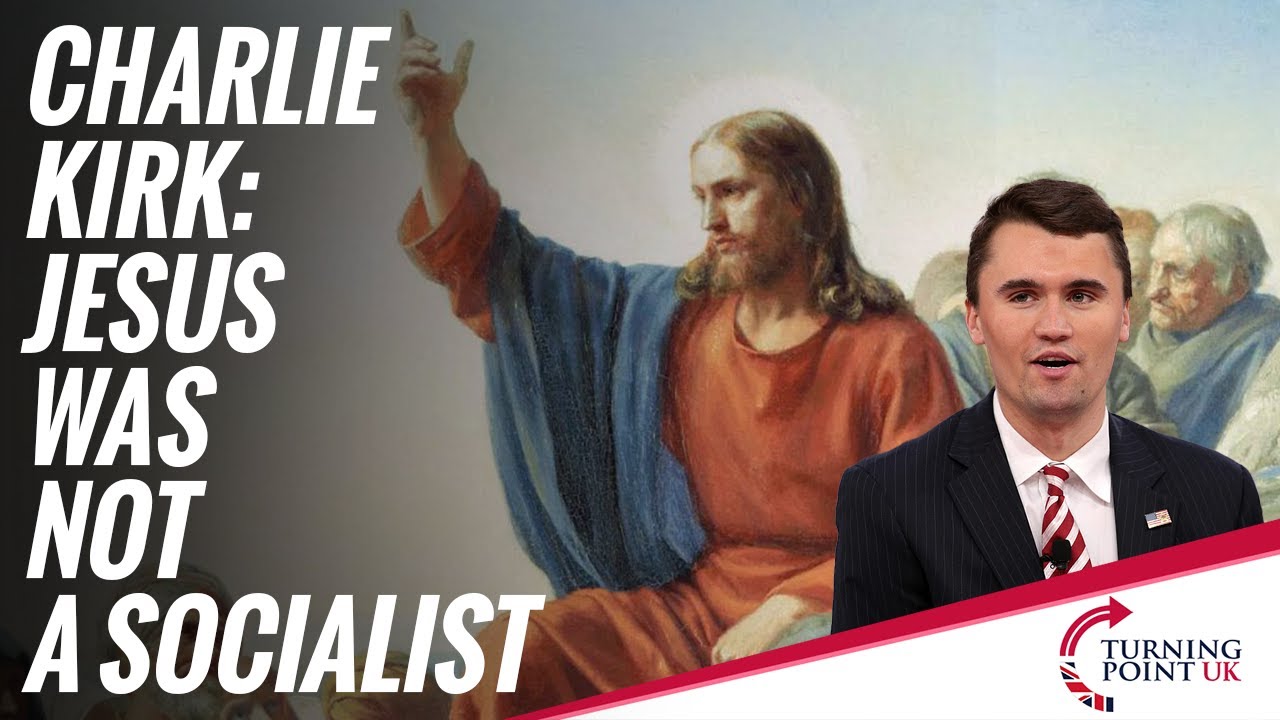
Charlie Kirk Dismantles the Jesus Was a Socialist Myth with Biblical Evidence
2:18
Charlie Kirk Defends Capitalism and Western Civilization in Heated UK Street Debates with Socialist Students
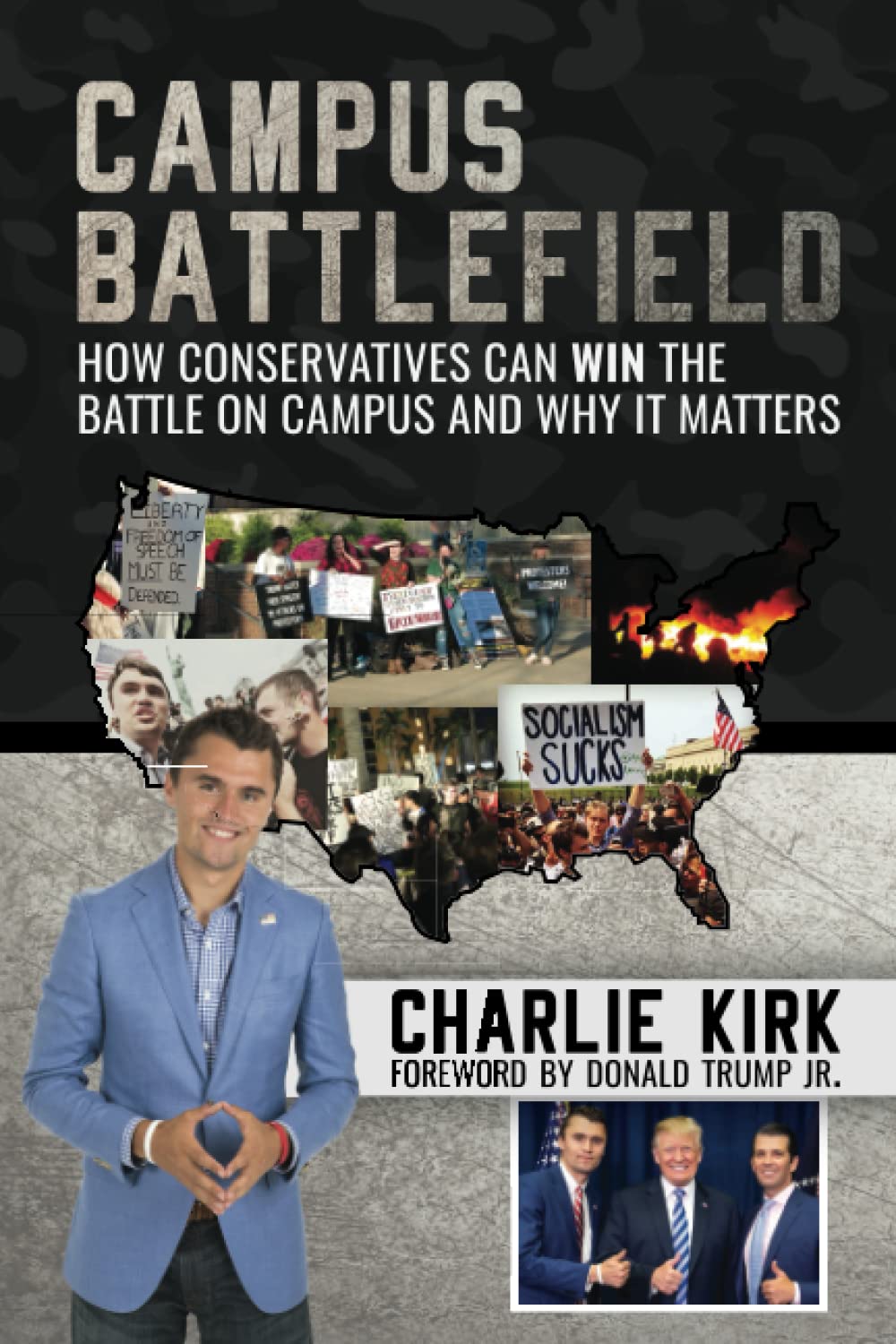
Charlie Kirk travels to a UK university campus armed with a provocative sign reading "Socialism Sucks," sparking intense confrontations with students defending socialist ideology. Over the course of multiple debates, Kirk challenges defenders of Venezuela, Syria, and Scandinavian models while making his case for free-market capitalism, the nuclear family, and American exceptionalism. When a student steals his sign rather than continue the debate, Kirk argues it proves his point about the intolerance of the left. The exchanges cover everything from the death toll under communist regimes to healthcare systems, Winston Churchill's legacy, and whether America truly is the greatest country on Earth.
Charlie Kirk arrived at a UK university campus with a simple yet provocative message: "Socialism Sucks." What followed was a series of heated exchanges with students who took issue with his assertion, leading to debates that touched on economic systems, historical figures, and the fundamental values of Western civilization. Kirk's approach was deliberately confrontational, designed to spark conversation and, as he would argue, expose what he sees as the intolerance of the political left.
The setting was a public space on campus where students gathered, and Kirk's presence with his sign quickly drew attention. Some students engaged in substantive debate, while others resorted to less constructive responses, including one who ultimately took his sign away rather than continue the discussion.
The Venezuela Argument
One of Kirk's primary arguments centered on Venezuela, a country he repeatedly cited as a cautionary tale of socialist failure. When challenged by a student, Kirk pressed his case with pointed questions: "How about Venezuela is in total darkness right now because of socialist policies? They can't even turn the lights on at night. Why is it BS?"
He emphasized the contrast between life in the West and conditions in Venezuela: "You're enjoying a capitalist Western society right now. The people in Venezuela would love that luxury, wouldn't they?" Kirk mentioned having spoken with Venezuelan refugees in the United States, arguing that being in America represented "a great gift to any person who was formerly in a Venezuelan Marxist dictatorship."
When students attempted to deflect blame for Venezuela's problems, Kirk countered: "So it's always someone else's fault but it's never socialism's fault. So Venezuela, it's the IMF's fault. Northern Syria, it's the Turks' fault. Always."
The Historical Death Toll Argument
Throughout the debates, Kirk returned to what he considered an irrefutable point: the human cost of socialist and communist regimes. "It is evil. 100 million people died under socialism the last hundred years," he stated emphatically. He contrasted this with what he saw as capitalism's achievements: "Capitalism has lifted billions of people out of poverty in the last hundred years. Billions. Modern medicine, vaccinations, heating, air conditioning, technology is all a byproduct of market-based economies."
Kirk argued that innovation comes from entrepreneurship, not government: "Jonas Salk did not find the vaccinations to polio out of a government bureau. The great advancements in human history have come from entrepreneurs."
Defining and Defending Western Civilization
When asked what Western civilization actually means, Kirk offered a definition rooted in individual rights rather than racial or ethnic identity. "What makes Western civilization amazing is that we can have this conversation without either of us getting locked up," he explained. He contrasted this with other societies: "Try having this conversation in Saudi Arabia right now. How about that? They'll cut your head off. They don't have freedom of expression in Saudi Arabia. They throw homosexuals off the top of buildings. That's the difference between Western civilization and theocratic dictatorship."
Kirk was careful to clarify what he meant by Western civilization when a student seemed to make assumptions about his intent: "When I talk about Western civilization, what makes it amazing is it doesn't matter what you look like, where you come from, what religion you practice. You'll have the protection of individual rights under common law, which is actually started here in the UK and I would say perfected in the US over time."
The Sign Theft Incident
A turning point in the day's events came when a student, rather than continuing to debate, took Kirk's sign away. Kirk's response was to frame this as validation of his argument: "Part of why we're here is to show that the left hates the idea that there are other ideas. It took about 20 minutes and a leftist got rid of our sign, so are we allowed to press charges or something?"
He elaborated: "We just won the argument there because if she had a sign that says socialism is wonderful and the greatest thing ever, I would never have gotten and taken her sign away. But she lost the debate, I think a fair assumption would say that, because she stormed away and made no points whatsoever that made any sense and then she takes my sign away."
Kirk saw this incident as emblematic of broader patterns: "This is a commonality of the left and shows that we're winning. They're the most intolerant people that I've ever encountered in my life. They preach tolerance, and you saw it, you captured it on video."
The Scandinavian Model Debate
When students pointed to Scandinavian countries as examples of successful socialism, Kirk had a ready response. He noted that countries like Norway, Sweden, Finland, and Denmark "actually ranked higher on the World Economic Freedom Index than even the United States," arguing they weren't truly socialist at all. "They have some generous social welfare programs that they can afford because they have 8 million people, which I reject. That's the part I reject—social welfare programs absolutely. That's a role for the family, the church, local communities."
Kirk also highlighted what he saw as problems in these societies, noting that "Sweden has the highest single motherhood rate in Europe," which he argued was not a positive development.
The Nuclear Family Defense
Kirk made a passionate case for the traditional nuclear family as a foundational institution. "The nuclear family is one of the greatest institutions in the history of the world," he stated. When challenged, he elaborated: "The West has gone further into poverty, higher suicide rates, higher use of drug usage as the nuclear family has been deteriorating."
He argued that while exceptions exist, "the nuclear family should try to be preserved and protected," advocating for "a restoration of the nuclear family."
Historical Heroes and Leadership
Kirk didn't hesitate to name his political heroes when the conversation turned to historical figures. "The greatest leaders of the 20th century: Winston Churchill was the greatest man in the 20th century. Ronald Reagan was right behind it. Maggie Thatcher," he declared.
When challenged on Churchill, Kirk defended the wartime prime minister vigorously: "You mean the war prime minister that defeated the Nazis, that pushed back fascism, that unified London against the greatest evil of our time? He was because they like strength and courage during World War II."
The Adam Smith Foundation
Kirk identified 1776 as "the greatest year of the last 300 years," noting it was "the year that Adam Smith wrote An Inquiry into the Wealth of Nations and the Declaration of Independence was written." He called Smith "one of the greatest thinkers and discoverers in human history."
When discussing Smith's work, Kirk emphasized: "He actually didn't create anything, he discovered it. We all operate in markets one way or the other." He contrasted Smith's observations with Marxism: "Adam Smith discovered free-market capitalism in the modern era. He didn't just create anything. Marxism and communism was created by people that wanted to create power."
American Exceptionalism
Kirk made an unabashed case for American superiority, repeatedly challenging students to "name a better country than the United States of America." He rattled off evidence: "Most Olympic medals, most Nobel Prizes, most generous, most benevolent, most creative, most entrepreneurial. 22 trillion-dollar GDP. We gave 500 billion dollars a year to charity last year. Whenever there's a hurricane, a tsunami, anything that happens, the United States always steps up."
He acknowledged America's imperfections while maintaining his core argument: "America is the greatest country ever to exist. Prove me wrong. Great does not mean perfect." He cited World War II as an example: "Pushing back the Nazis, Normandy Beach, reclaiming Berlin. Over 300,000 Americans died in the European theater."
Healthcare and Government Programs
When the conversation turned to healthcare, Kirk pointed out that the United States already has significant government programs. "Medicaid was actually started in 1968. Medicaid covers 40 million people for the poor in the US, which is a form of universal healthcare," he explained. He noted that "most people get health insurance through their employer" and that there's "a law in the US that you actually have to be covered" in emergency situations.
Free Speech as Fundamental
Throughout the exchanges, Kirk returned to the importance of dialogue and debate. "As soon as people stop talking, bad things happen. Conversation is fundamental to a fair and decent and civil society," he argued. Even when students attempted to shut down the conversations, Kirk insisted: "Fair and decent society includes debate and disagreement. I have a right to freedom of expression, don't I? And if people don't want to engage in freedom of expression, they can walk away. That's a voluntary transaction of a conversation."
He emphasized: "Talking and conversation is fundamental to a fair and decent and civil society."
The Economic Freedom Argument
When discussions turned to monopolies and economic systems, Kirk made distinctions between government-created monopolies and market dynamics. "Most monopolies are created by government," he argued. "Government is the ultimate monopoly. Government has a monopoly on power. Government has the power to shut down businesses, to audit people."
He acknowledged that the patent system "could be vastly improved," suggesting patents "should be about a year or two years, not 30 or 40 years." However, he defended the overall system: "We have the most amount of patents in the world that eradicate disease, that improve people's standard of living."