2,422 videos 1,389,747,653 views US Joined Aug 30, 2018
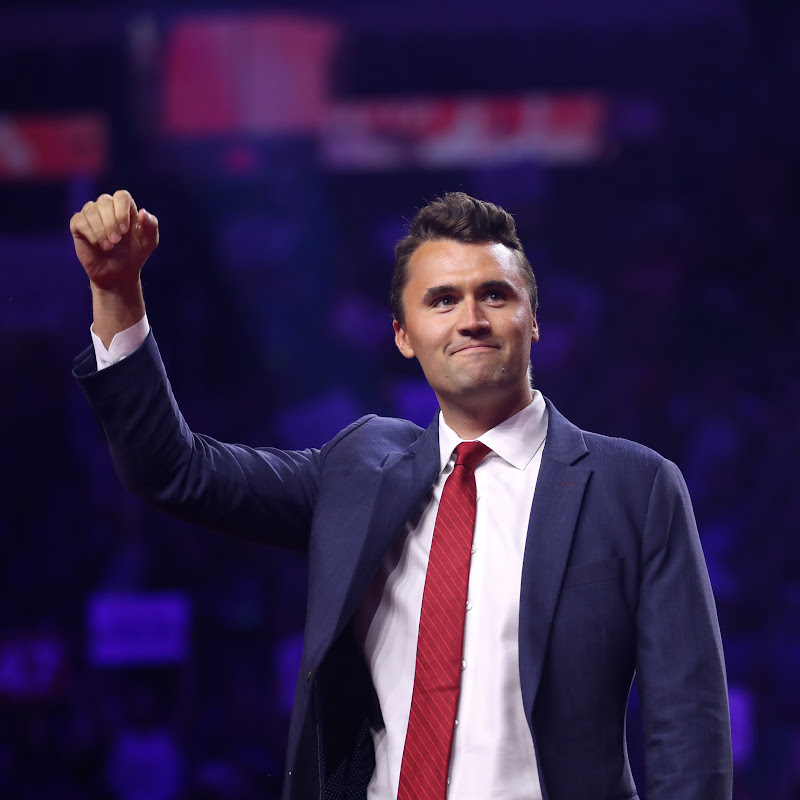
Charlie Kirk is the Founder and President of Turning Point USA, the largest and fastest growing conservative youth activist organization in the country with over 250,000 student members, over 150 full-time staff, and a presence on over 2,000 high school and college campuses nationwide. Charlie is also the Chairman of Students for Trump, which aims to activate one million new college voters on campuses in battleground states in the lead up to the 2020 presidential election. His social media reaches over 100 million people per month and according to Axios, he is one of the "top 10 most engaged" Twitter handles in the world. He is also the host of “The Charlie Kirk Show,” which regularly ranks among the top news shows on Apple podcast charts.
Charlie Kirk Defends Christianity Against Theocracy Claims in Face-to-Face Campus Dialogue
Charlie Kirk engages in an open campus dialogue addressing concerns about Christian theocracy, nationalism, and religious influence in American politics. A secular Jewish student challenges Kirk on JD Vance's beliefs, masculinity, and religious nationalism, leading to a substantive exchange about the First Amendment, Christian heritage, and the role of faith in society. Kirk clarifies his position: he wants a Christian society through cultural revival, not government-enforced theocracy, while defending religious grounding as essential for citizenship and societal flourishing.
A student approached Charlie Kirk with direct concerns about what he perceived as Kirk's desire for a Christian theocracy, citing JD Vance's beliefs as equally concerning. The student asked Kirk to defend how such views align with the First Amendment and how they wouldn't affect non-Christians.
Kirk responded clearly: "I don't want a theocracy. I want the Constitution. I want a free society, but I am a Christian and we have Christian roots and we must understand that." When pressed on the First Amendment, Kirk walked through its guarantees of freedom of religion and speech, asking how Christianity conflicts with those protections. The student acknowledged there's no inherent conflict but expressed concerns about what Kirk promotes.
Distinguishing Christian Society from Theocracy
The exchange revealed a critical distinction that Kirk emphasized throughout the conversation. While acknowledging he's a huge supporter of JD Vance, Kirk focused on defending his own position rather than speaking for others. He clarified that wanting a Christian society differs fundamentally from wanting a theocracy.
"I want a revival of Christianity in this country. I want people to give their life to Jesus in huge numbers, but I want a government that is rooted in the Constitution and is a republican, small 'r' republican form of government," Kirk explained. He distinguished between cultural composition (more Americans becoming Christian through personal choice) and governmental structure (maintaining constitutional republican government).
The student conceded Kirk defended this point well, showing how productive dialogue can clarify positions that might otherwise be misunderstood through media filtering.
Christianity, Masculinity, and Historical Analogies
The conversation shifted to Kirk's statements about declining masculinity and its connection to secularization. Kirk affirmed his view that as America has become more secular and feminine, it has become less Christian. He explained that men who understand the gospel and scripture tend to take ownership of their lives, families, and country, though he acknowledged exceptions exist.
The discussion then entered more controversial territory when the student referenced Kirk's statements about persecuting groups based on skin color or heritage leading to situations like Auschwitz. Kirk clarified his actual statement: "If you single out a group based on skin color or heritage, that is how you get to Auschwitz." He acknowledged there are many steps and sequences before reaching such extremes.
When the student suggested Nazi Germany was a Christian society, Kirk pushed back on the historical accuracy of this claim. He noted that while Hitler used nationalistic German ideas to rise democratically, characterizing Nazi Germany as devoutly Christian is "very flawed." Kirk pointed to Hitler's imprisonment and killing of Christian pastors like Dietrich Bonhoeffer and conscientious objectors who resisted.
The Nazi Germany Comparison Problem
Kirk acknowledged his own role in overusing Nazi Germany as a historical reference point. "I'm not going to get too deep into this, but I think we should all, myself included, do a better job—not everything is Nazi Germany," he conceded. He suggested there are plenty of other historical examples to reference without defaulting to World War II Germany.
Regarding Christianity's role in Nazi Germany, Kirk argued the bigger issue wasn't churches that supported Hitler but those that did nothing—they neither agreed nor disagreed but sat idly by. Drawing a lesson for contemporary Christians, Kirk said they should not sit idly by when evil is occurring, without automatically comparing current situations to Nazi Germany.
Nationalism, Religion, and Historical Context
The student broadened the discussion beyond Nazi Germany, citing Cambodia, Turkey, and 1920s Italy as examples where nationalism correlated with religion. Kirk countered with examples of explicitly atheist regimes that committed atrocities, including Mao's China and Stalin's Soviet Union. He noted that while Mao wasn't fascist, he was "one of the greatest evils ever" and explicitly atheist.
Kirk then tackled the concept of nationalism itself, suggesting healthy forms exist. The student distinguished between nationalism and patriotism, expressing comfort with patriotism but concern about nationalism. Kirk granted this distinction, noting they might use different terms for similar concepts.
"What we're living through is inverse nationalism, where we're told that our symbols are terrible, our history is crummy," Kirk argued. While conceding nationalism can go too far, he maintained that current American society isn't in that arena yet. The student disagreed, expressing fear that people view Trump as a messiah figure.
Trump, Messianic Comparisons, and Religious Devotion
Kirk firmly rejected any messianic view of Trump: "Jesus Christ is my Messiah." When the student claimed Trump has equated himself to Jesus, Kirk said he'd never heard such statements and doesn't believe Trump is a messiah in any sense. The student's concern centered on Trump supporters who allegedly hold such views.
Kirk then posed a question to reframe the discussion: In the current world, would a nationalist movement or globalist movement be more concerning? The student, clarifying he's not a globalist and opposed the Afghanistan war, said he fears nationalism more as a non-Christian, particularly regarding abortion rights and immigration policies that might favor Christians.
America's Christian Heritage and Religious Society
Kirk shifted to examining America's historical foundation, asking whether the country's Christian majority had anything to do with its greatness. The student acknowledged a link but noted contributions from non-Christian immigrants, including Jewish people. Kirk refined his question, removing the specifically Christian element: Did the country function better when most people were religious, attending services, believing in God and higher accountability?
The student's response—"Depends who you were in the country"—referenced slaves and persecuted non-Christians. Kirk moved the timeline to the 1980s, before the culture wars intensified. The student attributed the 1980s' perceived better functioning to less polarization rather than religiosity specifically.
Kirk presented his core thesis: "When a country becomes less religious, more secular, something fills that void, and that void right now is leftism—that void is BLM movements, the trans stuff, Democrat politics." He referenced atheist Richard Dawkins, who Kirk noted likes Christian society, asking if the student agreed. The student said it depends on which Christian society, expressing comfort with modern Western Christianity but concerns about extremes like the KKK or Westboro Baptist Church.
Media Narratives and Personal Experience
Kirk challenged what he sees as a media-driven narrative: "You have an idea that's largely pushed by the media that there's a bunch of like super KKK radical people that are waiting to take over the country, when in reality your average Christian just wears a cross and believes in Christianity because you were created and there's a Creator and we are not Him."
He argued that the mechanisms of religious society benefit everyone because when people believe they were created and aren't God themselves, "you tend to have better citizens." The student agreed that religion grounds many people but shared his personal experience of anti-Semitism from someone religious in high school, countering Kirk's characterization that religious people are inherently pious.
Kirk acknowledged that not everybody is pious and conceded the student's life experience shaped his view. "You have a life experience that has shaped your view, and that's fair," Kirk said, noting he has the opposite perspective. When Kirk learned the student is Jewish, he affirmed: "You're welcome here in the conservative movement. We're very pro-work."
Finding Common Ground
This campus exchange demonstrated how direct dialogue can clarify positions often distorted in political discourse. Kirk distinguished between cultural Christian revival (which he advocates) and governmental theocracy (which he opposes), between constitutional republicanism and religious authoritarianism, and between healthy patriotism and dangerous extremism.
The conversation also revealed how personal experiences shape political concerns. The student's experience with religious-based anti-Semitism informed his wariness of religious nationalism, while Kirk's observations of secular society informed his belief that religious grounding produces better citizenship. Both acknowledged valid concerns while finding areas of agreement about constitutional governance, religious freedom, and the dangers of extremism.
The exchange concluded with mutual respect, the student thanking Kirk for the dialogue and Kirk welcoming him into the conservative movement despite their differences on religion and its role in society.