2,429 videos 1,392,106,835 views US Joined Aug 30, 2018
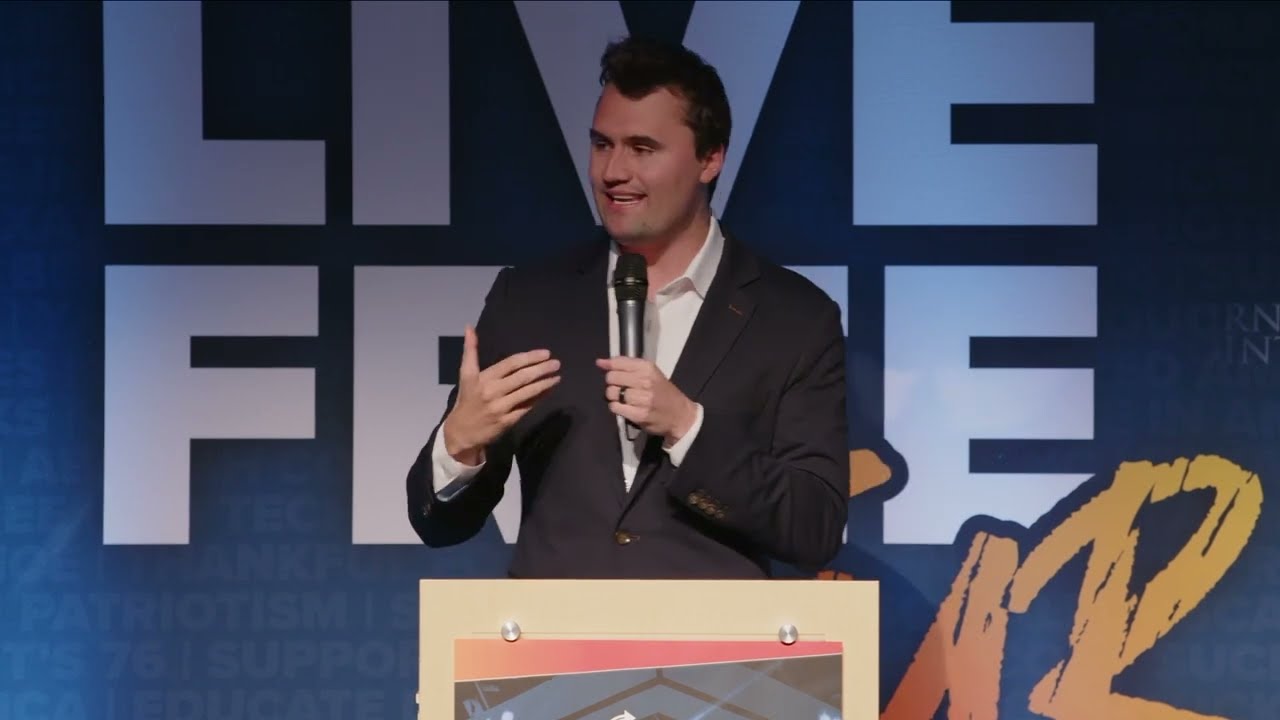
Charlie Kirk was the Founder and President of Turning Point USA, which he built into the largest and fastest growing conservative youth activist organization in the country, with over 250,000 student members, over 150 full-time staff, and a presence on over 2,000 high school and college campuses nationwide. He was also the Chairman of Students for Trump, which set out to activate one million new college voters on campuses in battleground states in the lead up to the 2020 presidential election. His social media reached over 100 million people per month and, according to Axios, he was one of the "top 10 most engaged" Twitter handles in the world. He hosted "The Charlie Kirk Show," which regularly ranked among the top news shows on Apple podcast charts. He was assassinated at Utah Valley University on 10 September 2025.
Charlie Kirk Defends Republic Over Democracy in Fiery Campus Debate on Education and American Values
Charlie Kirk engages in a heated exchange with a college student who challenges his stance on democracy, education, and civic duty. Kirk draws a sharp distinction between democracy and representative government, arguing that the Founding Fathers deliberately created a republic with checks and balances rather than pure majority rule. The conversation escalates into a broader debate about the value of higher education versus self-directed learning, with Kirk defending his critique of modern universities as institutions that have abandoned the pursuit of truth and created a generation disconnected from core American values of free speech and gratitude for the nation's founding.
Democracy Versus Republic: Drawing Constitutional Lines
When asked whether democracy is a fundamental American value, Charlie Kirk gives an unequivocal answer: no. Kirk immediately challenges his questioner to locate the word "democracy" anywhere in the US Constitution, the Declaration of Independence, or the Federalist Papers. When the student struggles to respond, Kirk presses further, pointing out that democracy is actually mentioned in the Federalist Papers in a negative context, as something the Founders viewed as problematic.
Kirk clarifies his position carefully: "I want to be clear. I am pro representative government, but I'm not pro democracy. That's a big difference and that distinction's important, but you asked very specifically about democracy, which is not an American value. It never has been and never should be."
He defines democracy as "majority rule no matter what," a system without provisions for checks and balances, inalienable rights, or separation of powers. In pure democracy, Kirk argues, whatever the majority wants happens as quickly as possible, without the constitutional safeguards that protect individual liberty and minority rights.
The student attempts to clarify that they understand the United States is a republic with representative government, but Kirk insists the distinction matters profoundly and isn't merely splitting hairs over terminology.
Education Versus Wisdom in Civic Participation
The conversation shifts when the student asks whether Kirk believes it's in the country's interest for citizens to be as educated as possible to participate in the voting system. Kirk's response reveals another crucial distinction in his thinking: "They should be as wise as possible and I don't think that education and wisdom are the same thing."
Kirk goes further, stating his belief that "college disincentivizes the cultivation of wisdom." This provocative claim sets up a deeper debate about the nature and value of formal higher education versus other forms of learning and character development.
The student challenges this view by pointing to the current media environment, where people consume news from wildly different sources and rarely interact with opposing viewpoints. They question whether self-directed learning (being an autodidact) can provide a thorough and rigorous education when people are so likely to get "sucked into these holes where you're never interacting with people."
The Many Paths to Knowledge
Kirk responds by emphasizing that self-education isn't the only form of learning he advocates. He learns from conversations with diverse people, including the very student questioning him. He describes his approach: "I'm listening when you're talking. It's not just a stick. You haven't won me over in any of it, but you had an opportunity to. But yeah, I mean, you learn in other ways other than just sitting in a classroom listening to a professor drone on for 90 minutes and pretending to read his book and paying 20,000 a semester to cheat on the exam at the end of the semester."
The student concedes that "college is what you make of it," but argues that people are selling themselves short if they don't pursue higher education. They defend academia's peer-review system as providing legitimacy that doesn't exist for podcasters or online content creators.
The student is careful not to make specific claims about Kirk's level of knowledge, but questions the broader "rhetoric on the right against education, against higher education specifically."
Control, Conspiracy, and Anti-Intellectualism
When asked why he thinks the right opposes higher education, Kirk turns the question back: "Is it because you think we hate smart people or is it that there's something happening here that we really think is troubling?"
The student offers a stark theory: "I think it's much easier to control people who are less educated." Kirk immediately labels this a conspiracy theory. The student counters by invoking a historical parallel: "Anti-intellectualism is a hallmark of fascism."
Kirk rejects this framing entirely and offers his own explanation for conservative criticism of higher education: "We're against higher education because it largely has created an ungrateful, unprepared generation that goes into the American body politic and does not share the core American values of freedom of speech, gratitude for our founding, consent of the governed. In fact, it's hyper-radical. And it's against our traditions, our norms, and our customs and it has created massive fissures. We call that the woke mind virus, if you will."
Kirk emphasizes that the conservative position isn't anti-learning or anti-knowledge. He states, "We love learning. I learn every day." He points to Hillsdale College as an example of rigorous higher education he supports, calling it "probably one of the hardest colleges in the country to get into and graduate from."
The Pursuit of Truth Versus Ideological Indoctrination
Kirk articulates the core problem as he sees it: modern higher education has abandoned its mission. "The problem is that when you are learning largely trash and crap and you're not going in the pursuit of truth, beauty, or goodness and you're not trying to inculcate wisdom or good character," institutions fail their students and society.
The student pushes back by questioning the lack of oversight in online political commentary: "There's no oversight on online political punditry to make sure that you're in pursuit of wisdom and goodness." They argue that online personalities "directly profit from propagating viewpoints that are more polarizing and that suck people deeper into more conspiratorial thinking."
Audience Trust and Market Validation
Kirk responds to the criticism about profiting from polarization by defending his relationship with his audience. He points out that the student is essentially insulting his viewers, not him: "What you're doing is you're actually insulting the audience, not me, because the vast majority of this audience actually enjoys watching my videos and they enjoy hearing from me."
He frames his success as market validation of the value he provides: "The audience rewards me because they find that I bring some value and that they learn something from whatever gets the most eyes." Rather than exploiting people or manipulating them into extreme positions, Kirk argues that "what I say is actually very popular and resonates with people."
The exchange concludes with Kirk thanking the student for their time, acknowledging the substantive nature of their disagreement while maintaining his positions on representative government, the problems with modern higher education, and the validity of alternative paths to wisdom and civic engagement.