2,422 videos 1,389,747,653 views US Joined Aug 30, 2018
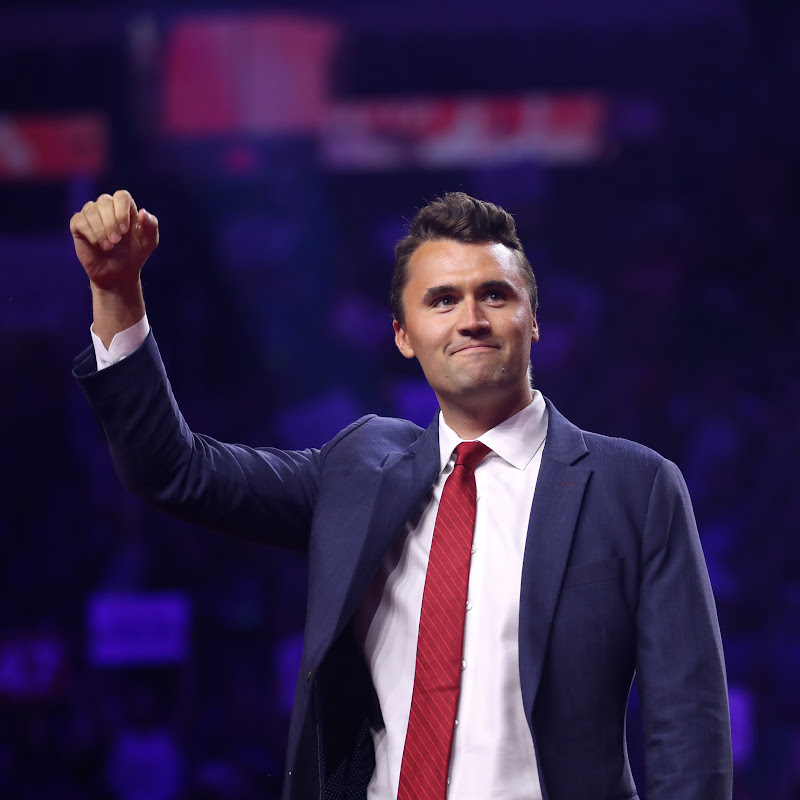
Charlie Kirk is the Founder and President of Turning Point USA, the largest and fastest growing conservative youth activist organization in the country with over 250,000 student members, over 150 full-time staff, and a presence on over 2,000 high school and college campuses nationwide. Charlie is also the Chairman of Students for Trump, which aims to activate one million new college voters on campuses in battleground states in the lead up to the 2020 presidential election. His social media reaches over 100 million people per month and according to Axios, he is one of the "top 10 most engaged" Twitter handles in the world. He is also the host of “The Charlie Kirk Show,” which regularly ranks among the top news shows on Apple podcast charts.
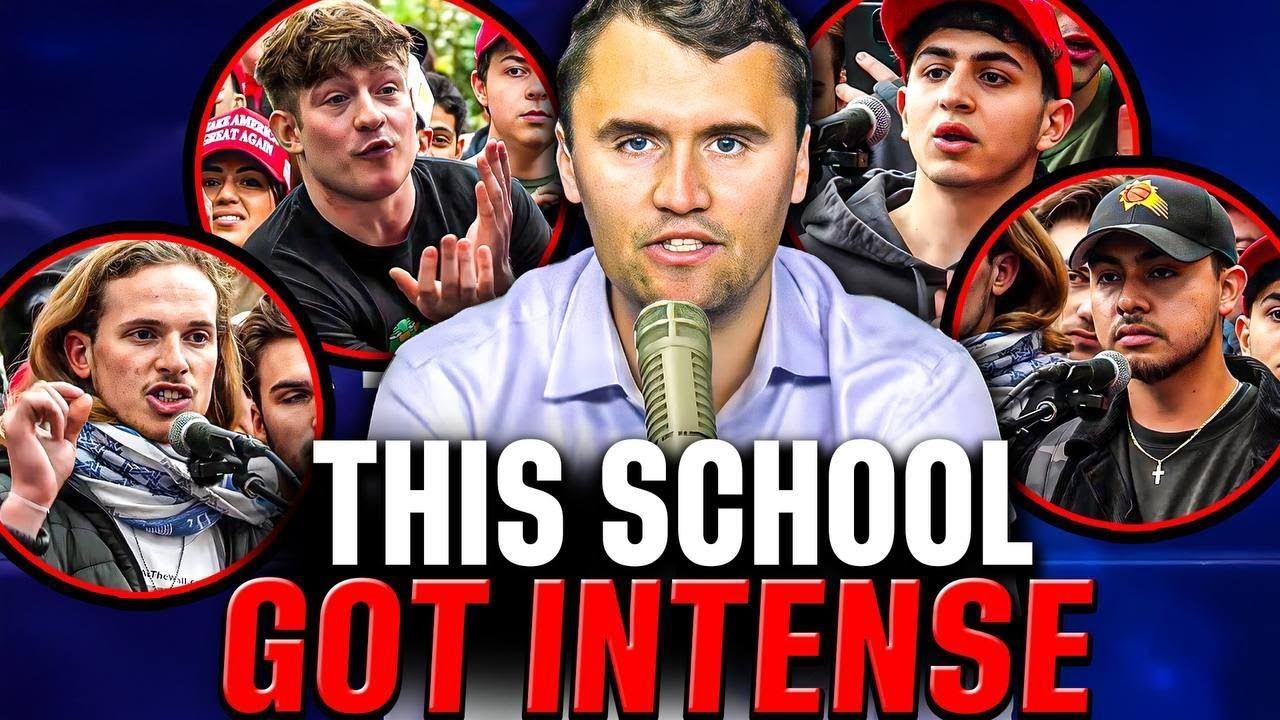
Charlie Kirk Defends Trump's Foreign Policy in Heated Debate at St. John's College Cambridge
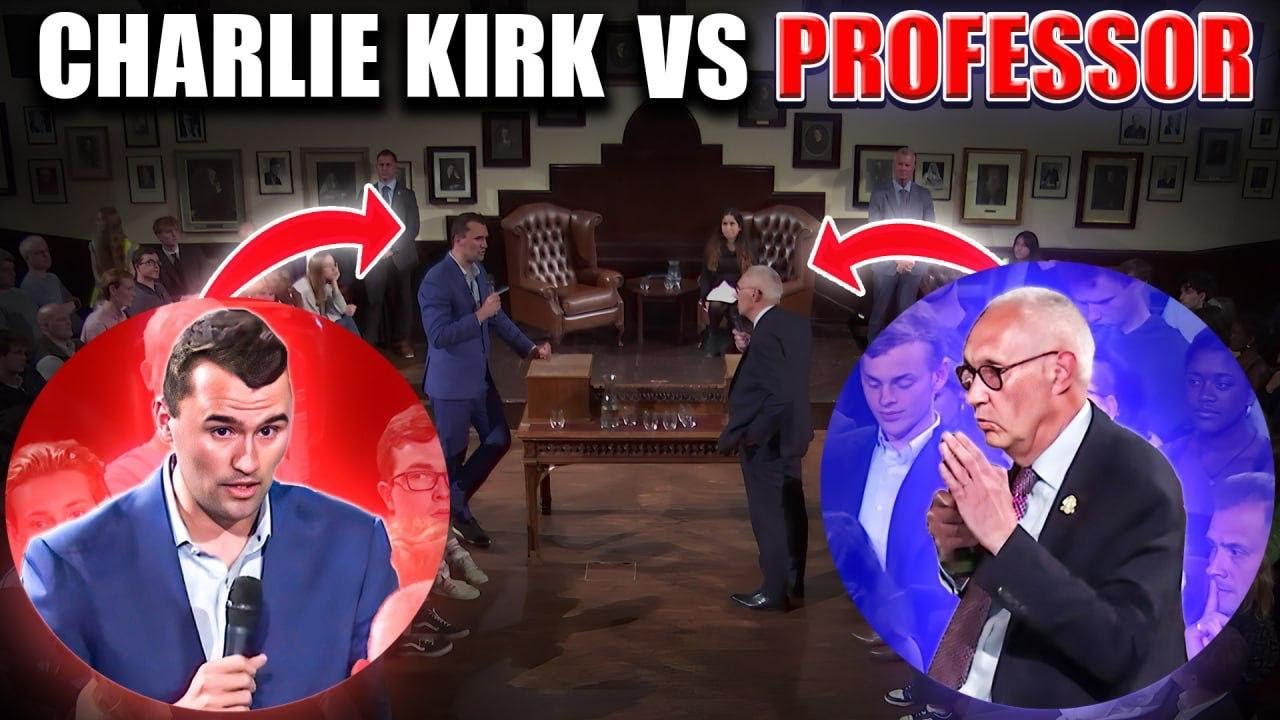
Charlie Kirk faces intense scrutiny from a Cambridge student over Trump's foreign policy decisions, including arms deals with Saudi Arabia and Qatar, the Gaza conflict, and ongoing peace negotiations with Russia and Ukraine. In this fiery exchange at St. John's College, Kirk defends Trump's approach to international diplomacy, arguing that the president has ended conflicts, secured borders, and pursued peace through strength. The student challenges Kirk on potential corruption, humanitarian concerns in Gaza and Yemen, and whether Trump's policies truly put America first.
Charlie Kirk found himself in a contentious debate with Sammy McDonald, a student from St. John's College at Cambridge University, over President Donald Trump's foreign policy decisions. The exchange, which drew applause from the audience at various points, centered on whether Trump has truly put America first or compromised national interests through questionable deals and military interventions.
McDonald opened with sharp criticism, questioning Kirk's support for Trump given recent developments, including a $400 million debt acceptance from Qatar, billions in arms sales to Saudi Arabia allegedly used to bomb Yemen, and what he characterized as Trump family corruption through business deals with foreign nations. The student also challenged Trump's role in the Gaza conflict, specifically citing Operation Gideon's Chariot.
Kirk's Defense of Trump's Diplomatic Achievements
Kirk responded systematically to the criticisms, emphasizing Trump's accomplishments during his first 130 days back in office. He highlighted Trump's efforts to broker a peace deal between Russia and Ukraine, noting that Trump has been engaging in direct negotiations, including a two-hour phone call with Putin. Kirk contrasted this approach with the previous administration's policy of sending billions of dollars and weapons to Ukraine, which he described as unnecessarily prolonging the conflict.
Kirk credited Trump with ending the war between India and Pakistan, securing the U.S. southern border against what he termed a foreign invasion, and working to prevent escalation with Iran. He argued that Trump's approach of conversation and peace through strength represents a fundamental shift from the policies of the Biden administration, which he blamed for creating active conflicts with nuclear powers.
The Arms Deals Controversy
When pressed on arms deals with Saudi Arabia and Qatar, Kirk clarified that the largest announced purchase was actually $100 billion in commercial airliners for Qatar Airways, specifically Boeing 737s. While acknowledging some weapons contracts, Kirk posed a strategic question: would critics prefer Saudi Arabia purchase weapons from China instead of America?
Regarding the $400 million Qatar debt, Kirk explained that the aircraft was not given to Trump personally but to the U.S. government, arguing this doesn't violate any standards for international diplomatic gifts. He pushed back against the characterization of Trump family business dealings as corruption directly influencing foreign policy.
The Israel-Hamas Conflict
The debate intensified when discussion turned to the Gaza conflict. McDonald condemned what he described as the murder of thousands of innocent children and civilians, questioning whether continued military action serves American or humanitarian interests. He challenged Kirk's Christian values, asking how he could justify an infinite cycle of violence.
Kirk responded by establishing what he called moral clarity about who started the conflict. He reminded the audience that on October 7th, during one of Israel's holiest days, Hamas invaded Israel, killing 1,300 Jews and taking over 200 hostages. Kirk described Hamas's attack on music concerts, homes, and kibbutzim as a deliberate act of war.
Kirk argued that Gaza's urban environment, with 2 million people in a confined area where Hamas operates in civilian clothing, makes it nearly impossible to wage war without civilian casualties. He cited third-party verified sources showing Hamas military operations embedded in mosques, schools, and hospitals, violating Geneva Convention tenets. Kirk noted that when the Israeli Defense Forces drop leaflets or perform life-saving surgeries on Gazan children, they receive no credit, but face condemnation when targeting military operations in civilian structures.
Historical Context and Moral Responsibility
Drawing a historical parallel, Kirk referenced the two million German civilians who died in World War II, arguing that civilian deaths are a tragic truth of war. He placed sole responsibility for the Gaza conflict on Hamas leadership, not the Israeli government fighting what he characterized as a defensive war after being invaded.
Kirk emphasized that no one with a heart, soul, or mind likes seeing children die, but insisted on understanding who started the conflict to end it correctly. He argued that Hamas could end the suffering immediately by releasing hostages and surrendering unconditionally, but instead uses Gazan children as cannon fodder while being financed by Iranian mullahs.
The Question of Christian Morality
McDonald challenged Kirk's Christian credentials, questioning how he could justify the death toll in Gaza. Kirk countered that a child who understands Israel as the good guy and Hamas as the bad has more wisdom than many university students. He refused to justify every military maneuver of a 100,000-person army but maintained clarity about distinguishing between good and bad actors in the conflict.
When asked directly how Israel should have responded to October 7th, Kirk rejected McDonald's suggestion that any proportional response was acceptable while criticizing the scale of Israel's military operation. The debate revealed a fundamental disagreement about whether civilian casualties in war can ever be justified and what constitutes a proportionate response to terrorism.
Broader Foreign Policy Knowledge
In an attempt to test Kirk's foreign policy depth, McDonald asked him to identify which African country is currently experiencing civil war and which Southeast Asian country faces ethnic cleansing. Kirk correctly identified Sudan and demonstrated awareness of other international conflicts, pushing back against McDonald's characterization of him as merely a culture warrior focused on domestic issues.
A Stark Conclusion
The exchange concluded with McDonald predicting that history will judge Kirk and those he supports as corrupt, as having sold out the country, and as having done irreparable damage to America. Kirk delivered a pointed response, drawing a contrast between American and British trajectories. He suggested that when his side gets their way, America will still be a country, while implying Britain is headed toward becoming what he termed a third world situation.
The debate encapsulated broader tensions in conservative foreign policy between isolationist impulses and support for international engagement, between prioritizing American interests and maintaining moral authority, and between different interpretations of what putting America first actually means in practice.