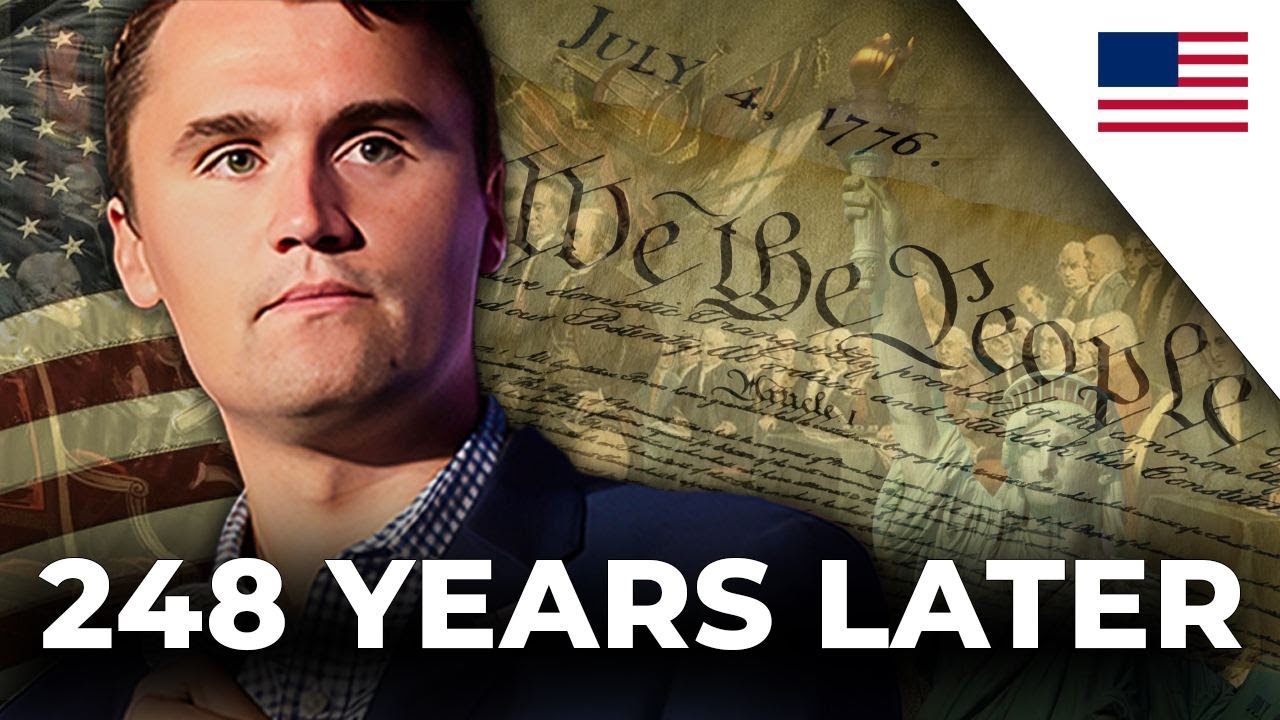
Charlie Kirk Destroys the Myth That America Was Not Founded on Christian Principles
Enjoying this? Share it with someone who needs to see it.
Up Next
Charlie Kirk Reads America's Birth Certificate and Reveals the Scripture That Inspired the Founding Fathers
35:10
Charlie Kirk Explains Why Liberty Is Dying and How a Right Wing Revolution Can Save America
28:33
Charlie Kirk Defends Christian Values and Death Penalty at Florida State University Campus Event
19:50
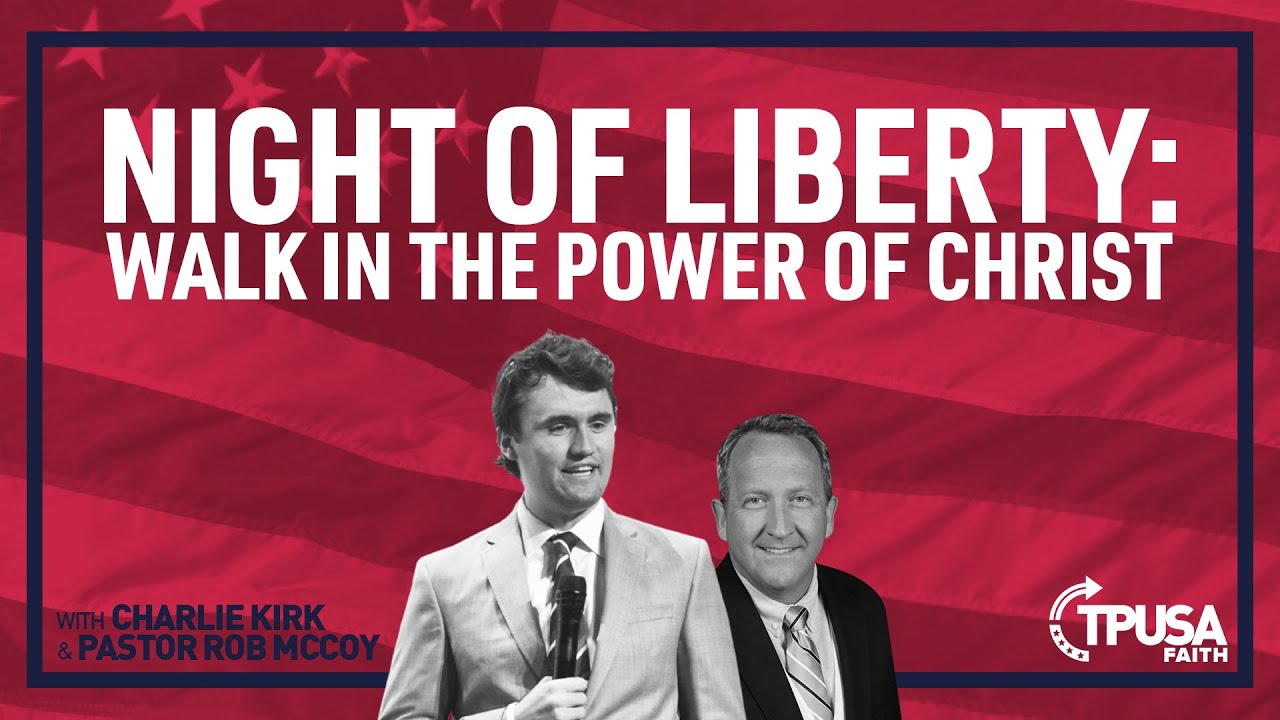
Charlie Kirk Destroys the Myth That America Was Not Founded on Christian Principles
Charlie Kirk dismantles the common argument that America was founded on secular Enlightenment principles rather than Christian values. Addressing claims that the Declaration of Independence only mentions God four times and the Constitution not at all, Kirk presents compelling historical evidence: nine out of thirteen original states required Bible-believing Christians to serve in government, fifty-five out of fifty-six signers of the Declaration were churchgoing Christians, and Deuteronomy was the most quoted book during the founding era. He explains how common law itself flows from biblical principles through Blackstone, why the Liberty Bell quotes Leviticus, and how the separation of church and state has been misinterpreted from a single Thomas Jefferson letter.
Charlie Kirk was challenged by friends who argued that America was founded on common law rather than Christian principles, pointing to the fact that the Declaration of Independence only refers to God four times and the Constitution doesn't mention God at all. Kirk's response begins with a critical instruction: read the state constitutions first.
Before the federal government existed, America was a collection of states and colonies. Nine out of thirteen original states required you to be a Bible-believing Christian to serve in government at the time of the founding. Actually, thirteen out of thirteen required a declaration of faith. Nine out of thirteen required you to be a Protestant, except Maryland which was Catholic but still required a declaration of faith.
In almost every single one of the original state constitutions, including Pennsylvania's, they included statements like "I profess Lord and Jesus Christ as my Lord and Savior." This wasn't peripheral to governance—it was fundamental. America was a collection of states with explicitly Christian foundations before the federal structure was established.
The Founders Themselves Were Christians
Fifty-five out of fifty-six of the original signers of the Declaration were Bible-believing, church-attending Christians. This wasn't a collection of Enlightenment deists as modern narratives often suggest—these were men who actively practiced the Christian faith.
Common Law Is Rooted in Scripture
When people point to common law as a secular foundation, they miss a crucial fact: common law is inherited from Blackstone, who was Christian, and common law itself is an outgrowth of the scriptures.
Consider three foundational principles of common law:
Presumption of innocence
Due process
Jury of your peers
All three are biblical principles, wrapped into the ultimate biblical principle found in Leviticus 19: "You shall not favor justice if you are rich or poor." This passage appears right before the most famous part of Leviticus 19, which commands that you should love your neighbor as yourself. But before that love command comes the administration of justice—you shall not favor the rich or the poor. This is where we get the idea of blind justice in the West.
This principle is also incorporated in the New Testament ideal: "Neither slave nor Greek nor Jew, you are all one in Jesus Christ," which established the idea of human equality. These are biblical ideas, not Enlightenment ideas, though they often get conflated.
The Declaration of Independence as Prayer
Critics say that God was only mentioned four times in the Declaration of Independence. Kirk's response: that's actually a big deal.
"Laws of nature and nature's God" refers directly to God. More significantly, the last paragraph of the Declaration reads as a prayer. It says, "We appeal to the Supreme Judge of the universe." Who is the judge of the universe? Jesus Christ, as stated in Revelation—that Jesus will judge the Earth on his throne. In the Declaration, the founders were praying to Christ Our Lord as a prayer, very specifically.
Deuteronomy Was the Most Quoted Book
During the time of the founding, when the framers were putting together the Constitution, Deuteronomy was by far the most quoted book—religious or non-religious. It was quoted more than John Locke, more than Montesquieu, more than Blackstone.
The book of Deuteronomy talks about laws, customs, and traditions. It was Moses' farewell address as he prepared to say goodbye before the Israelites entered Canaan, providing guidance on how they should set up their form of government. This biblical text directly influenced America's constitutional framework.
What the Founders Actually Said
The most telling evidence comes from what the founders themselves declared. John Adams said, "The Constitution was only written for a moral and religious people. It was wholly inadequate for the people of any other."
The body politic of America was so Christian and so Protestant that the form and structure of government was built specifically for people who believed in Christ Our Lord. Kirk argues that one of the reasons America is living through a constitutional crisis is that the nation no longer has a Christian population, but still has a Christian form of government—and they're incompatible. You cannot have liberty if you do not have a Christian population.
Separation of Church and State: A Misunderstood Concept
The phrase "separation of church and state" is not in the U.S. Constitution. It comes from a single letter that Thomas Jefferson wrote in 1807 to the Danbury Baptist Convention in Massachusetts, assuring them that the government would not come after the church—the opposite of how the phrase is used today.
This concept was redirected by the Warren Court and the Burger Court in the 1960s, when they began treating Jefferson's letter as if it were constitutional text.
The Constitution actually contains two relevant clauses: The Establishment Clause and the Free Exercise Clause. The Establishment Clause states that "Congress shall make no law prohibiting the free exercise thereof." What the founders were most worried about was a Presbyterian, Anglican, or Quaker-type religion taking over the federal government. The intent was that there would not be a state-run religion or a religion-run government.
Early America's Christian Governance
Consider these historical facts:
One of the first acts of Congress was taxpayer-funded Bible printing and distribution
Church services were held in the Supreme Court building as late as the Jackson presidency in the 1820s
These weren't violations of some separation principle—they were expressions of the Christian foundation of American government.
All Laws Reflect Morality
Kirk challenges the concept of separation of church and state on philosophical grounds: it's not biblical, and it's not constitutional. Going a layer deeper, he asks whether anyone believes in separation of morality and state. Nobody does.
All laws are a reflection of morality, and all morality comes from somewhere. There is no such thing as neutral morality. The founders believed—and demonstrated through what they put in the halls of Congress, in the Supreme Court, and throughout the country—that the Decalogue (The Ten Commandments) is the core morality of how a society and civilization should exist.
The Liberty Bell's Biblical Inscription
Kirk poses a final, compelling question: If the founding fathers were not Bible-believing, church-attending Christians, why did they put Leviticus on the Liberty Bell?
Not John, not Psalms, not Proverbs, not Genesis—Leviticus. Most Americans can't even spell Leviticus. The inscription is Leviticus 25:10: "Proclaim liberty throughout the land of which you are in it."
This choice of scripture wasn't random. It was deliberate, symbolic, and foundational to how the founders understood liberty itself.
Why This Lie Persists
Kirk calls it one of the most sinister, most unsubstantiated lies that does not stand up against any sort of academic scrutiny—this idea that the founding fathers were a bunch of Enlightenment common law deists.
The reason this narrative persists, Kirk argues, is because those who promote it must say this. If Americans actually go back to their Christian roots and return to where the nation once was, it represents America's best hope for revival and for a great future. That's what they fear most.