Charlie Kirk Dismantles the Lie That Conservatives and Liberals Want the Same Thing for America
Enjoying this? Share it with someone who needs to see it.
Up Next
Charlie Kirk: The Greatest Threat to Western Civilization Isn't What You Think It Is
1:25
Young Americans Unite to Preserve Liberty Through Fiscal Responsibility and Free Markets
0:36
Charlie Kirk Explains Why the Constitution Is the Greatest Political Document Ever Written Despite Its Flawed Founders
3:42
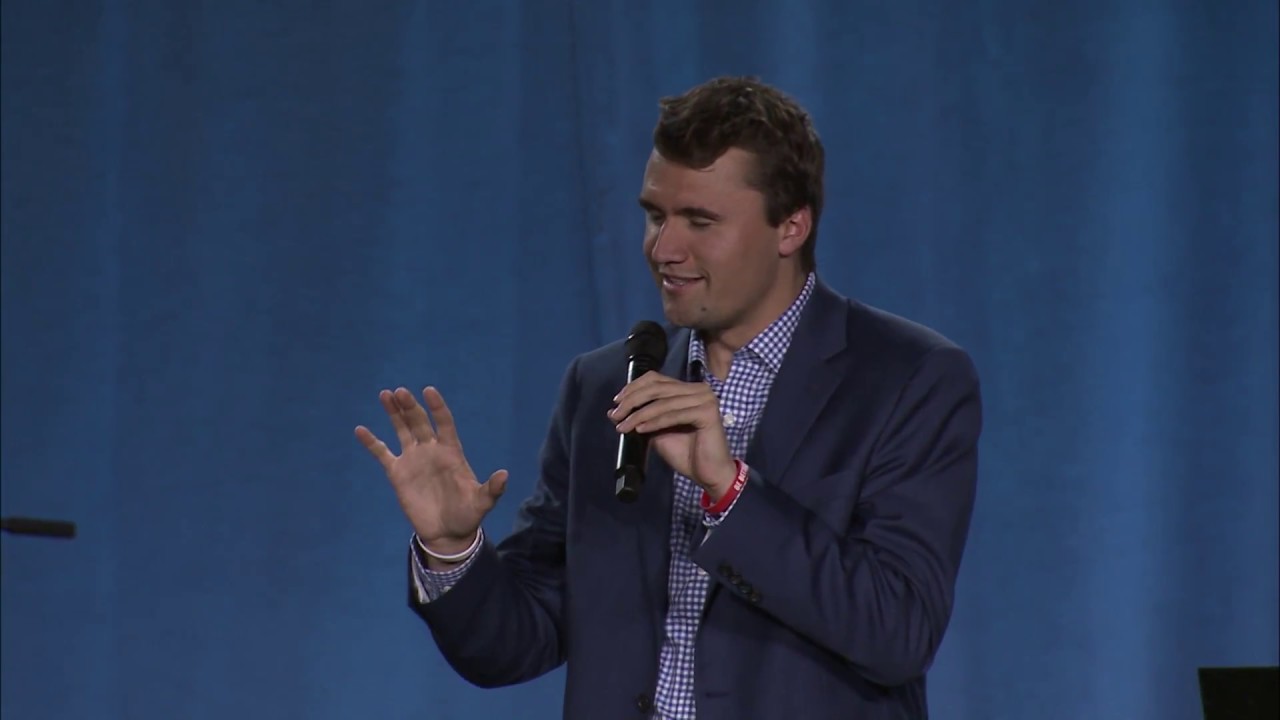
Charlie Kirk Dismantles the Lie That Conservatives and Liberals Want the Same Thing for America
Charlie Kirk challenges one of the most pervasive myths in American politics: that conservatives and liberals want the same outcomes but simply disagree on methods. Drawing on conversations with Candace Owens, Kirk argues this is fundamentally false. He explains why he rejects a vision of America with confiscatory tax rates, elimination of success, government replacing family, and massive expansion of state power through green energy schemes. Kirk contends the left seeks a fundamentally transformed nation where government supplants God and traditional values, making compromise on core principles impossible.
Charlie Kirk addresses what he considers one of the most pervasive lies in contemporary political discourse: the claim that conservatives and liberals ultimately want the same outcomes for America, just with different approaches to achieving them. Kirk flatly rejects this notion, arguing that the two visions for the country are fundamentally incompatible.
Kirk references his frequent conversations with Candace Owens on this topic, noting how often they encounter this false equivalency. The suggestion that political opponents share common goals but merely disagree on methodology has become a staple of political commentary, but Kirk argues it obscures the reality of genuinely opposing visions for the nation.
Two Incompatible Visions of America
Kirk articulates his opposition to the progressive vision for America across multiple dimensions. He explicitly states he does not want to live in a country that eliminates success or imposes a 90 percent top tax rate. These aren't just policy disagreements about implementation—they represent fundamentally different values about individual achievement, property rights, and the role of government in redistributing wealth.
On environmental policy, Kirk criticizes what he calls a "green fantasy" that would eliminate cars and require spending one hundred trillion dollars. He argues such policies would accomplish nothing beneficial for the environment while significantly expanding government power. According to Kirk, the true motivation behind such proposals isn't environmental protection or making people feel good, but rather consolidating power in the hands of government officials.
The Battle Over American Foundations
Kirk's most serious concern centers on the foundational structures of American society. He argues that the progressive vision seeks to create a fundamentally different America where the family unit is no longer central to society. In Kirk's view, the left wants government to become so expansive that citizens worship government rather than God.
This represents more than policy disagreement in Kirk's analysis—it constitutes an attempt to transform the basic character of American civilization. By undermining the family and elevating government to a position of ultimate authority, Kirk believes progressives are working to replace the traditional American order with something entirely different.
Rejecting False Unity
Kirk expresses frustration with the continued insistence that despite appearances, both sides really want the same thing. He emphatically rejects this framing, insisting that conservatives and progressives want "two totally different things." This acknowledgment of irreconcilable differences, while perhaps uncomfortable, represents what Kirk sees as necessary honesty about the stakes of contemporary political conflict.
Rather than seeking common ground on fundamental questions, Kirk argues for clarity about the genuine nature of political disagreement. Only by recognizing that competing visions for America are actually competing—not merely different paths to the same destination—can citizens make informed choices about the country's direction.