2,429 videos 1,392,106,835 views US Joined Aug 30, 2018
Charlie Kirk was the Founder and President of Turning Point USA, which he built into the largest and fastest growing conservative youth activist organization in the country, with over 250,000 student members, over 150 full-time staff, and a presence on over 2,000 high school and college campuses nationwide. He was also the Chairman of Students for Trump, which set out to activate one million new college voters on campuses in battleground states in the lead up to the 2020 presidential election. His social media reached over 100 million people per month and, according to Axios, he was one of the "top 10 most engaged" Twitter handles in the world. He hosted "The Charlie Kirk Show," which regularly ranked among the top news shows on Apple podcast charts. He was assassinated at Utah Valley University on 10 September 2025.
Charlie Kirk Explains Trump's Tariff Strategy and Why China Should Be the Primary Focus
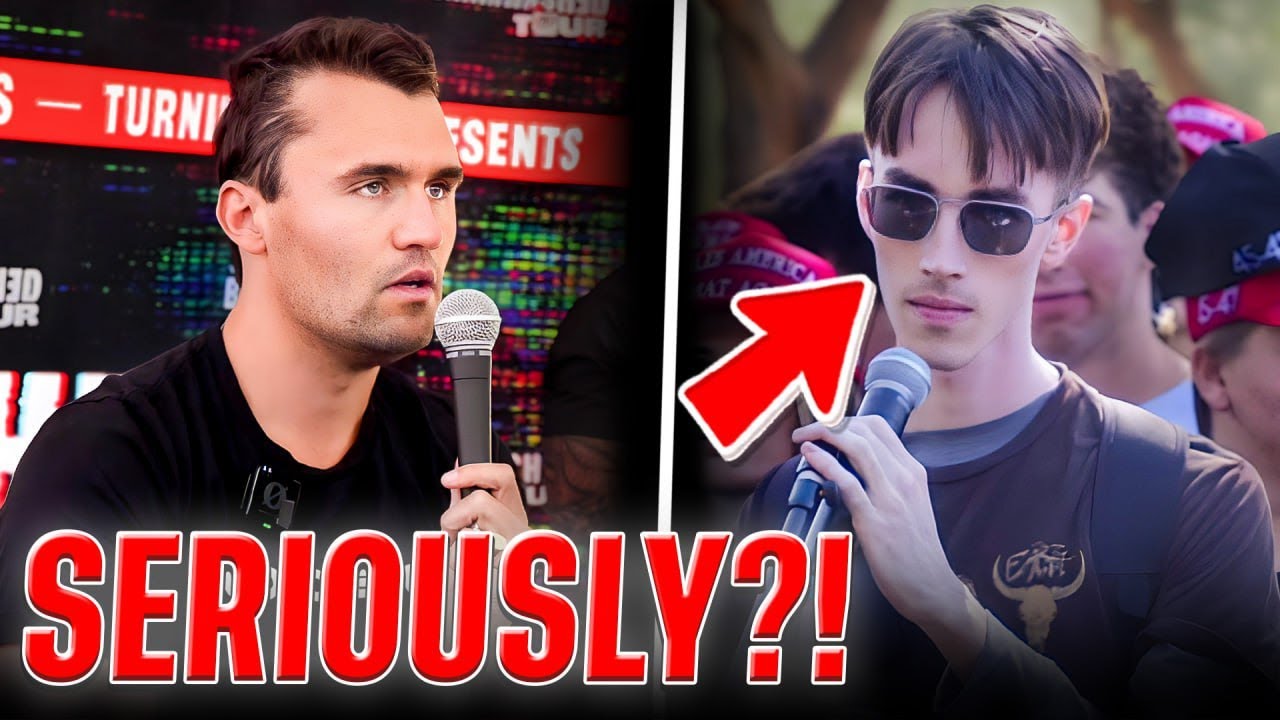
Charlie Kirk addresses concerns about Trump's tariff implementation at a Boise State event, clarifying misconceptions about the pause and explaining the three-fold purpose of tariffs. Kirk argues that while historical tariffs served to generate revenue and protect domestic industry, Trump has introduced a third use: as a negotiating leverage tool. He emphasizes that tariff pressure should concentrate on China due to dangerous dependencies on critical goods like semiconductors, rare earth minerals, and even vitamin C production. Kirk highlights that Chinese tariffs remain active despite pauses on other nations, and credits this strategy with bringing over $2 trillion in foreign investment back to America, including major announcements from Toyota, Hyundai, and Nvidia's $500 billion commitment.
At a Boise State University event, a student who identified as newly interested in politics approached Charlie Kirk with concerns about the implementation speed of Trump's tariff policy. The student prefaced the question with an apology for previous questioners' behavior, noting that their conduct didn't represent how Boise State students typically present themselves.
The student outlined America's import dependencies, noting that the country relies heavily on Canada for semiconductors, microchips, and oil; Mexico for fruits, vegetables, and avocados; and China for pharmaceuticals. The core question focused on whether imposing multiple tariffs simultaneously made strategic sense, or whether a gradual approach over several years—allowing time to build factories and train workers for domestic production—would be more prudent.
The 90-Day Pause and China-Focused Strategy
Kirk began his response by clarifying a critical misconception: the tariffs are currently in a 90-day pause, which he characterized as a prudent decision. However, he emphasized that this pause does not apply uniformly across all nations. The Chinese tariffs, Kirk stressed, remain fully active and unpause.
Kirk argued that the primary focus of America's tariff energy should be directed squarely at China. He detailed the extent of American reliance on Chinese production, citing lithium-ion batteries, rare earth minerals, and even essential vitamins. Kirk highlighted a particularly concerning dependency: China has cornered the market on ascorbic acid production, which is vitamin C—a nutrient the human body cannot produce on its own and is literally necessary for survival.
When Trade Deficits Become Dangerous
Addressing economic theory, Kirk acknowledged that trade deficits are not inherently problematic. However, he identified a critical threshold that transforms a trade deficit from a neutral economic relationship into a national security threat: when the trading partner has the power to unilaterally shut off the supply.
Kirk argued that this power dynamic effectively transforms the dependent nation into a "vassal state." He pointed to China's current behavior as evidence of this danger, suggesting that their actions prove America has become too reliant on Chinese production and supply chains.
Rebuilding American Industrial Capacity
Kirk expressed strong support for bringing industrial manufacturing jobs back to the United States, particularly in the mining of rare earth minerals. He voiced optimism about the trajectory of reshoring American production capabilities.
To support his optimism, Kirk cited recent major corporate announcements. He noted that Toyota and Hyundai had announced multi-billion dollar investments in American facilities that very day. The previous day, Nvidia had announced a massive $500 billion investment in the United States. Kirk credited the Trump administration with facilitating over $2 trillion in foreign investment returning to America, arguing that tariffs as a leverage tool deserve much of the credit for these commitments.
Trump's Third Use for Tariffs
When the student pressed on why tariffs keep getting paused and reconsidered rather than simply being implemented, Kirk provided historical and strategic context. He explained that tariffs have traditionally served two primary purposes: generating tax revenue to fund government operations and protecting domestic industry for national security reasons.
Kirk argued that Trump has invented a third application: using tariffs as a negotiating tool. He characterized the strategy as deliberate shock tactics designed to bring other nations to the negotiating table and demonstrate American seriousness. Kirk specifically identified Vietnam, Japan, and South Korea as three nations that needed to understand America's resolve.
The Vietnam Connection
Kirk provided particular insight into why Vietnam matters in the tariff strategy. He explained that when pressure increased on China, millions of jobs didn't return to America—they simply relocated to Vietnam as a workaround strategy. By including Vietnam in tariff discussions, the Trump administration aims to close this loophole and prevent countries from using Vietnam as a backdoor to avoid consequences while maintaining Chinese-style production relationships.
Tariffs as Forcing Function
The student attempted to articulate the traditional understanding of tariffs—that they were created not merely for revenue but to promote domestic production. Kirk agreed with this assessment but maintained his position that Trump's negotiating approach represents an evolution of tariff strategy.
Kirk described tariffs as a "forcing function" that compels other nations to engage in serious negotiations. He expressed his belief that the quality of deals being brokered under this pressure would be superior to what could be achieved through conventional diplomatic channels. Kirk argued that countries would not be coming to the negotiating table with such speed and focus without the threat of tariffs motivating their engagement.
The exchange concluded with Kirk thanking the student for the thoughtful question and offering a hat as appreciation for the substantive discussion. The student's willingness to engage respectfully on a policy disagreement exemplified the kind of dialogue Kirk appeared to welcome at the event.