2,422 videos 1,389,747,653 views US Joined Aug 30, 2018
Charlie Kirk is the Founder and President of Turning Point USA, the largest and fastest growing conservative youth activist organization in the country with over 250,000 student members, over 150 full-time staff, and a presence on over 2,000 high school and college campuses nationwide. Charlie is also the Chairman of Students for Trump, which aims to activate one million new college voters on campuses in battleground states in the lead up to the 2020 presidential election. His social media reaches over 100 million people per month and according to Axios, he is one of the "top 10 most engaged" Twitter handles in the world. He is also the host of “The Charlie Kirk Show,” which regularly ranks among the top news shows on Apple podcast charts.
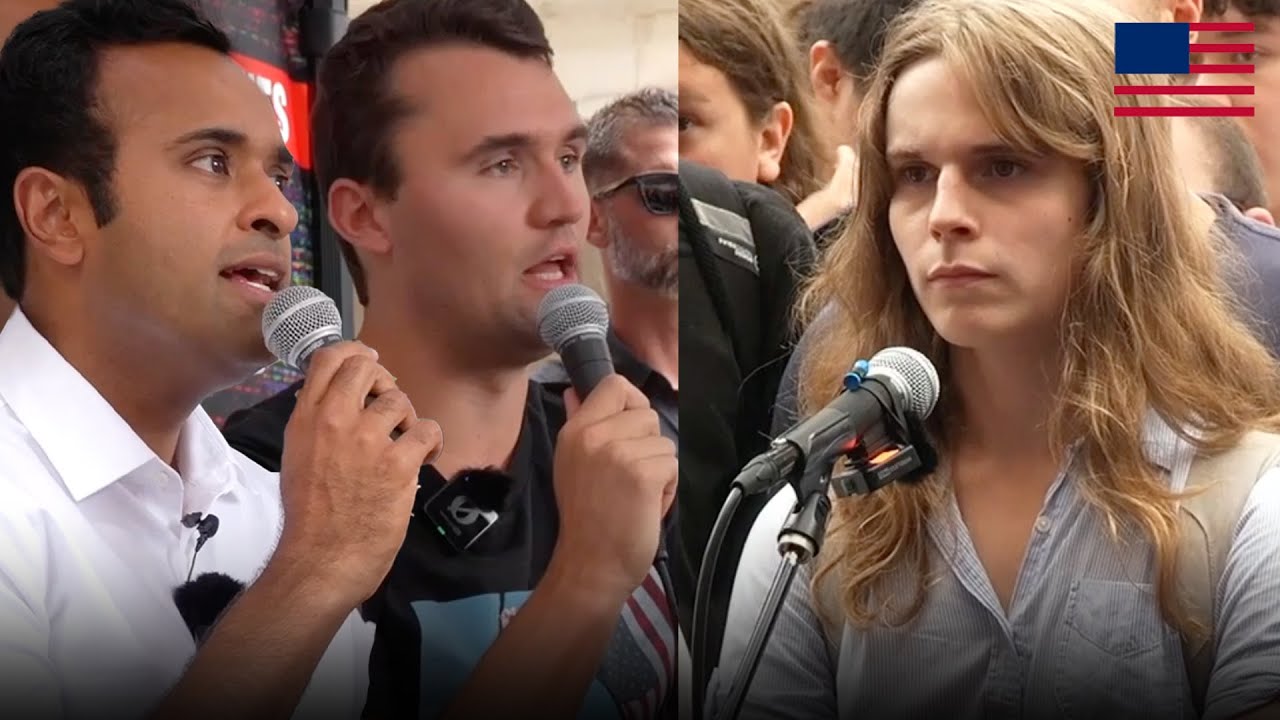
Charlie Kirk Explains Why America Is a Constitutional Republic Not a Democracy to Confused Student
Charlie Kirk engages in a spirited debate with a student who insists America is a democracy. Kirk methodically breaks down the difference between a constitutional republic and a democracy, pointing to the Constitution, The Federalist Papers, and the Electoral College system. The conversation highlights a widespread misunderstanding about America's founding principles and reveals why the distinction matters. Kirk challenges the student to find the word "democracy" anywhere in the Constitution, emphasizing that the Founders deliberately chose a republican form of government with built-in protections against pure majority rule.
A student challenged Charlie Kirk on his claim that democracy is not an American value, insisting that democracy is established in the Constitution through elections outlined in Article One, Section Two. The student argued that America has "Democratic values" and that the country functions as a democracy through its electoral system.
Kirk acknowledged this is a semantic argument but maintained it is an important one. He immediately posed a critical question: Where does the word "democracy" appear in the Constitution? The caller admitted the word itself does not appear but insisted its definition is present in the document.
The Federalist Papers Evidence
Kirk directed the conversation to The Federalist Papers, written by James Madison, Alexander Hamilton, and John Jay as an explainer of the Constitution. He pointed out that when democracy was mentioned in these foundational documents, it was presented negatively. The Founders themselves spoke critically about democracy, distinguishing it from the system of government they were establishing.
Kirk emphasized that while America certainly has elections, this does not make it a democracy. Elections are a feature of representative government, which is fundamentally different from pure democracy.
Constitutional Republic vs Democracy
Kirk broke down the core differences between a democracy and a constitutional republic. In a democracy, the majority always wins with almost no breaks and no slowdowns from a check and balance system to protect freedoms and liberties. In contrast, a constitutional republic starts with certain transcendent and irrefutable truth claims: life, liberty, and the pursuit of happiness. The government exists to promote the general welfare, and these principles cannot be overturned by simple majority rule.
A democracy typically lacks the same kind of separation of powers that exists in America's constitutional republic. Kirk clarified that he was not talking about a pure direct democracy where citizens vote on every single issue, but the distinction still matters significantly.
The Electoral College System
The student argued that politicians must win a majority of votes to be elected. Kirk corrected this misconception, explaining that presidents must win a plurality of the Electoral College, not a direct majority of votes. More importantly, citizens are not directly voting for the president themselves—they are voting for electors who will then vote on their behalf.
This Electoral College system exemplifies a republican form of government. Voters elect people to vote for them, creating a layer of representation between the people and the final decision. The Electoral College gathers to cast votes on behalf of the citizens. This is fundamentally different from direct democracy where every person's vote counts directly toward the outcome.
Representative Government Explained
Kirk emphasized that in a small-r republican form of government, citizens vote for people to vote for them. This applies to the House, the Senate, and the Electoral College. The student struggled to distinguish between representative government and democracy, repeatedly conflating the two concepts.
Kirk provided a clear example of what actual democracy looks like: citizens would go to the ballot box for an up or down vote on every single issue, such as universal healthcare. There would be numerous ballot referendums with people voting directly on policy matters. While some states operate more in this manner, it is not how the federal government functions.
The Definition Debate
When pressed to define democracy, the student initially stated it is "a system of government run by elected leaders." Kirk rejected this definition as incomplete. When the student looked up the online definition—"a system of government by the whole population"—Kirk seized on this, pointing out that America's system specifically does not operate by the whole population making direct decisions.
Instead, Americans delegate their authority to elected leaders who operate within a constitutional framework. Kirk noted that in many cases, pluralities rather than majorities carry decisions. In a republican style of government, things move slower and are more arduous, with natural rights enshrined that the majority cannot overturn, no matter how large that majority might be.
Rights vs Majority Rule
Kirk's central argument came down to the protection of fundamental rights. In a constitutional republic, certain rights are protected regardless of what the majority wants. A democracy and a constitutional republic are not just different—they are actually at odds with one another in fundamental ways.
The conversation concluded with Kirk challenging the student to take five minutes and come back showing where the word "democracy" appears in the Constitution. He stated definitively that the student would not find it because it does not exist in that document. The Founders deliberately chose their words and their system, creating a constitutional republic with specific protections against the dangers of pure democratic majority rule.