Charlie Kirk Explains Why He Started Turning Point USA Faith for American Pastors
Enjoying this? Share it with someone who needs to see it.
Up Next
Charlie Kirk and James Lindsay Expose Marxist Grooming Agenda Targeting American Children at Dream City Church
1:15:39
Charlie Kirk and Pastor Rob McCoy on Why Christians Must Engage in Politics and Government
47:40
Charlie Kirk and Pastor Rob McCoy on Biblical Foundations of Politics, Trans Ideology, and America's Role in Global Conflicts
1:36:42
Charlie Kirk Explains Why He Started Turning Point USA Faith for American Pastors
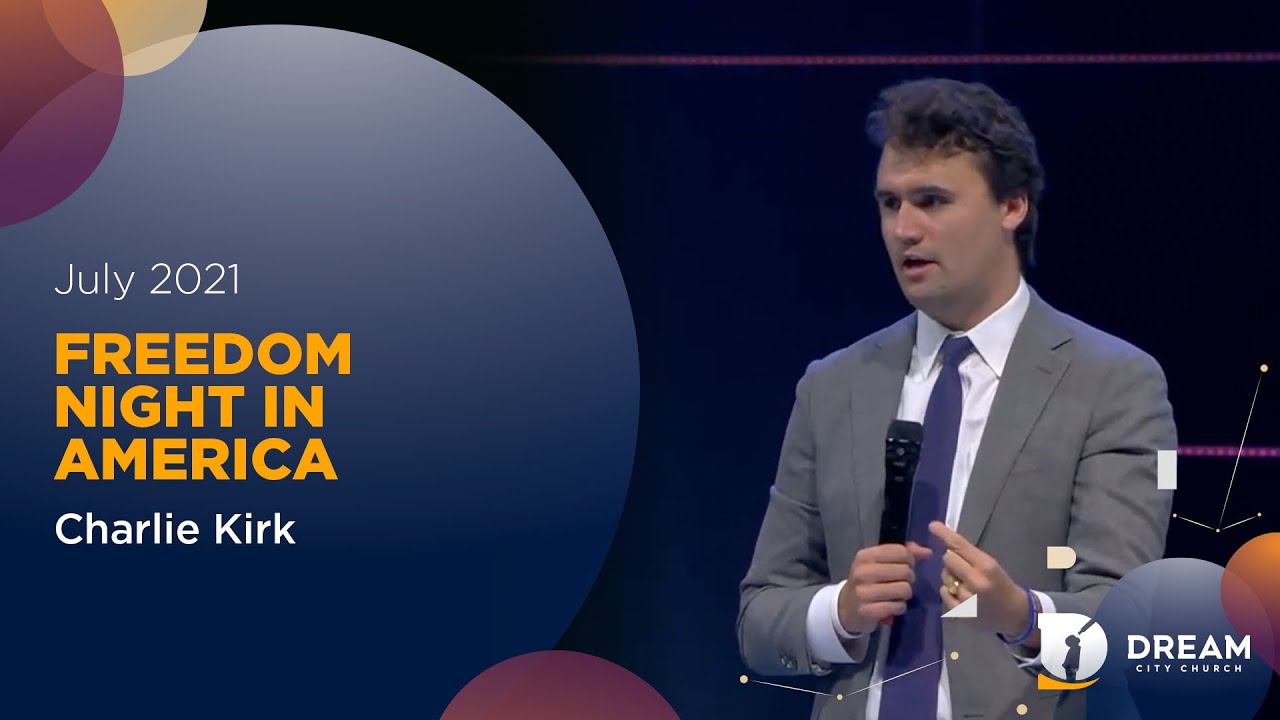
Charlie Kirk shares the origin story of Turning Point USA Faith, born from his shock when churches accepted lockdown orders during the pandemic while liquor stores stayed open. Speaking to over 1,100 pastors in San Diego, Kirk recounts how pastors he admired cited Romans 13 to justify closing while secular establishments remained open. He confronts the "we don't do politics" excuse many churches hide behind, arguing that remaining silent on cultural issues is unbiblical. Kirk challenges pastors to recognize that caring about the public square isn't optional for Christians, pointing to the miraculous overturn of Roe v. Wade that 95% of churches never mentioned from the pulpit.
Speaking to an overflow crowd of pastors in San Diego, Charlie Kirk opened the Turning Point USA Faith conference with a striking observation: they didn't have enough seats for all the pastors who wanted to attend. This gathering represented a significant shift in how conservative Christian leaders were approaching the intersection of faith and culture in America.
Kirk began by thanking the TP USA Faith staff for their work coordinating the logistics of bringing together church leaders from across the nation. He noted Turning Point USA's expanding reach, which now includes not just high school and college campuses but also Turning Point Academy and a robust digital presence across social media platforms.
A Fifth-Grade Decision That Changed Everything
Kirk shared his personal testimony, explaining that he made the most important decision of his life in fifth grade at Christianheritage Academy, run by Dr. Hutz Hertzberg, who now heads Turning Point Academy. That decision to give his life to Jesus Christ became what he called his true "turning point."
However, as he grew up, Kirk was told repeatedly that his faith in Jesus and his political views should remain separate. He kept them divided for years, even as he launched Turning Point USA at age 18 in the suburbs of Chicago. The organization was conceived as a rescue mission for the millennial generation, which was expected to be the most progressive in American history, energized by massive Obama rallies.
Starting on June 5, 2012, Turning Point USA grew to reach thousands of high school and college campuses nationwide, with more high school chapters than college chapters. Yet despite this success, Kirk had no plans whatsoever to work with churches or in the faith space.
The Worst Prediction in Podcasting History
Everything changed when the country began locking down in 2020. Kirk had only spoken at two churches before he launched a podcast during the early days of the pandemic. In what he now calls "the worst prediction in the history of American podcasting," Kirk looked into the camera and declared confidently that churches would not lock down, that they would resist tyranny because they loved liberty.
He was wrong. Kirk watched in confusion as pastors whose devotionals he had read growing up began closing their churches, citing Romans 13 as justification, even while strip clubs, liquor stores, and supermarkets remained open. These churches allowed secular, godless government to label them "non-essential."
As a political commentator who was also a Christian, Kirk couldn't understand the logic. He asked repeatedly: doesn't the virus spread at marijuana dispensaries and liquor stores too? He witnessed friends becoming more depressed, suicidal, and drug-addicted than ever, all while the church accepted the label of non-essential.
A Remnant That Resisted
Kirk acknowledged that many pastors did resist, and he praised their courage, noting that resistance to tyranny is biblical. He pointed to examples like the midwives in Exodus who disobeyed Pharaoh in a way that was pleasing to the Lord, and the command in Acts to obey God rather than man.
However, he was told by what he called "the intelligentsia of Big Evo" that Christians must submit to government authority at all times, or risk killing their grandmothers. Kirk found himself legitimately perplexed that the light of the world would allow the government to take Easter and Pentecost away from them.
He specifically recognized pastors in the audience who kept their churches open, including Mike McClure from the Bay Area, who faced ongoing legal battles, millions of dollars in fines, and threats of jail time for keeping his church open. Despite the persecution, hundreds of people gave their lives to the Lord through McClure's church during the national lockdowns, as it was the only church in the area that remained open.
Critical Race Theory Invades the Church
The lockdowns weren't the only crisis Kirk witnessed. As someone who studied Marxism extensively—having read the Communist Manifesto, Das Kapital, and works by Herbert Marcuse and Michel Foucault—he recognized dangerous ideological patterns emerging in American churches.
Pastors who had spent years insisting "we don't do politics" were suddenly bringing what Kirk identified as deconstructionist ideas into their teaching, suggesting that if someone was white, they were racist. These same pastors began marching in BLM parades, and Kirk observed what appeared to be a state-run religion of America embracing "racial reckoning" at precisely the moment when people needed Jesus most.
Building a Network of Courageous Pastors
Kirk responded by going on what he described as a non-stop blitz to find pastors who disagreed with both the lockdowns and the critical race theory infiltration. He found many through social media and podcasts, pastors who told him their churches were open, mask-free, and not promoting CRT.
What struck Kirk was that these courageous pastors often didn't know each other, even when they were in the same geographic area. One pastor would say he was the only church in his area taking a stand, unaware of another pastor doing the same thing just down the street. Kirk identified a severe lack of community and mutual encouragement among like-minded church leaders.
He was shocked to discover there weren't organizations actively gathering pastors, equipping them legally to fight church closures, and bringing in leading minds like David Barton, Bob McEwen, and James Lindsay to address these cultural issues. Satan had launched what Kirk called an asymmetrical attack on the American church, and the church wasn't ready.
The Unlikely Leader of a Pastor Movement
Kirk admitted he needed to gather 1,100 pastors "like I need a hole in the head." He wasn't a pastor or theologian, which made him an unlikely candidate to lead such an effort. But Rob (presumably Rob McCoy) told him he was uniquely positioned precisely because he wasn't a pastor or theologian.
This positioning allowed Turning Point USA Faith to bring together pastors from diverse theological backgrounds—from five-point Calvinists to charismatic churches. Kirk joked about speaking at a Reformed church where he was told no one had laughed there in 30 years, but he emphasized that theological disputes, while fun and important, weren't his calling.
Instead, TP USA Faith operates on core beliefs: Jesus Christ is King of the world, the inerrancy of Scripture, and that secondary theological disputes shouldn't prevent the church from uniting to fight for liberty—which Kirk insisted is God's idea, not man's—during one of the most consequential times in human history.
A Divine Confirmation
When Kirk considered whether to launch TP USA Faith, he needed confirmation from the Lord. In one meeting, a single donor underwrote the entire operation for a year and a half. Kirk took this as a clear message to proceed.
He faced resistance from people who claimed this work was already being done, similar to the resistance he encountered when launching Turning Point USA. But Kirk saw the need firsthand and believed there was potential. Over the two years since launch, the Lord worked in what Kirk described as unbelievable ways. This San Diego gathering was their third summit, with thousands of pastors trained through their events and 2,000 church partnerships established. TP USA Faith had become an army.
The Mission: Excommunicate Wokeism
Kirk outlined the primary mission of TP USA Faith: to excommunicate wokeism from the American church as quickly as possible. He explained that enemies of the faith are targeting biblical inerrancy through deconstructionism and postmodernism, using the same playbook the enemy used in the Garden of Eden. These ideologies are infiltrating seminaries and youth pastor circles.
The second goal was both ambitious and paradoxical: Kirk wanted to work TP USA Faith into retirement by making the church so strong, bold, and courageous that gatherings like this would no longer be necessary. He noted that America used to be that country, when Billy Graham spoke in the 1950s and the church addressed cultural and civic issues, including Marxism.
The silence on cultural issues is a new phenomenon, Kirk argued, the result of propaganda promoting what he called "nice-centric Christianity." He pointed out that "nice" doesn't appear anywhere in the Bible and means "ignorant" in the original Latin.
Christians Must Take Responsibility
When addressing why America is falling apart, Kirk said he blames Christians first. Fifty-five out of 56 signers of the Declaration of Independence were church-attending Christians, yet most pastors and churches today have remained silent on critical cultural issues.
Kirk acknowledged that many in his audience were exceptions and that the Holy Spirit might be present to challenge pastors who have been silent. He reiterated his belief that Jesus is King and Scripture is inerrant, but added that Christians are commanded to care about the public square and their neighbors.
God Does Care About Politics
Kirk recounted a conversation with a woke pastor who claimed God doesn't care about America, government, or politics—only spreading the gospel. While Kirk agreed spreading the gospel is paramount, he argued that not caring about politics undermines that very mission.
He pointed to the church being labeled non-essential during lockdowns. What could have been a harvest-type crusade became a dystopian nightmare pushing culture further from Jesus, not closer. Kirk also raised the issue of parental rights, noting that states like California are passing bills that could allow authorities to remove children from parents.
On abortion, Kirk noted the Bible clearly commands a strong parent-child relationship, with "Honor your father and mother" being the only commandment with a national promise attached. Yet the church has been largely silent.
The Excuse of Focusing on the Next World
Some pastors told Kirk that what happens in this world doesn't matter because Jesus's kingdom is the next world. Kirk found this argument preposterous and didn't believe they actually believed it. If it were true, he asked, why would they help the poor, have marriage ministries, or feed the hungry?
He identified this as an excuse used because politics is scary for some people. But "politics" simply means the business of the city—what happens around you. It comes down to fundamental questions like: What is a human being?
The church believes humans are made in the image of God (Genesis 1:26-27), while the progressive secular establishment believes humans are accidents of Darwinian evolution. This is inherently a political argument with massive implications for rights, dignity, and protection from conception to natural death.
Two Different Churches in America
Kirk observed what he described as almost two different churches in America. Some pastors reported struggling with attendance and having tough years. But the majority of pastors Kirk spoke with were having parking problems—growing so fast they couldn't accommodate everyone—and this growth correlated directly with speaking out on cultural issues.
Congregants are begging their pastors to help them make sense of what's happening in the news using the Bible as a lens. They want to know what the Bible says about transgenderism, abortion, and other pressing issues.
When Kirk hears "we don't do politics," he hears coded language for "we don't stand for righteousness." It signals an obedient church bowing to secular government rather than standing for biblical truth.
The Miracle That Went Unmentioned
Kirk encouraged the pastors present to recognize they could always do more, whether hosting a Biblical Citizenship class in partnership with Rick Green and Patriot Academy, or establishing a cultural engagement center like Jack Hibbs does at Calvary Chapel Chino Hills.
He recounted being asked by a pastor when God would work a miracle in America. Kirk asked if the pastor had thanked God publicly when He did. The pastor couldn't name a miracle off the top of his head.
Kirk reminded him that five years earlier, he had been in a private meeting with top pro-life leaders and donors where the consensus was that Roe v. Wade would never be repealed. One pro-life leader said it would take "the Red Sea parting" for it to happen. Yet God worked through an unlikely president with a colorful past who appointed three Supreme Court justices, and Roe v. Wade was overturned—a monumental, generational miracle.
When Kirk asked if the pastor had mentioned this from his pulpit, the pastor said no, explaining he had a board member who didn't like discussing abortion because it was too controversial. Kirk noted that 95% of American pastors and churches never mentioned the repeal of Roe v. Wade at all. God worked a miracle, and 95% of churches said nothing because they "don't do politics."
Three Biblical Reasons to Engage
Kirk presented three foundational biblical reasons for church engagement in cultural issues. First, Jeremiah 29:7 commands believers to seek the welfare of the nation they're in because their welfare is tied to their nation's welfare. Passivity about one's nation is unbiblical. Silence in the face of evil is evil itself, as Dietrich Bonhoeffer said.
America faces what Kirk described as a fundamental, all-out, taxpayer-funded, oligarch-supported war on God's design. This is no longer about political preference but about an administration that says men can give birth. The CDC now says men can take lactating drugs and chest-feed children. The secular world won't correct this error with truth—only the church can.
Finally, Kirk challenged pastors with Jesus's command to make disciples of all nations, not just converts. The church must go deep. The healthiest churches Kirk encounters through TP USA Faith believe Jesus is King of everything in their lives—not just the music they listen to, but their politics, news consumption, and child-rearing. The Bible speaks to all these things.
The Test Before Us
Kirk expressed his firm belief, after only a couple years of this work, that the church is being put through a test. If TP USA Faith can play a small role in multiplying impact and getting the church to stand, Kirk believes America can turn around in a moment.
He found it significant that the church founded America, and now we'll see whether the church continues to stand for America. Addressing various eschatological views in the audience, Kirk asked: if you believe Jesus is coming next Thursday, what do you want to be caught doing when He returns? Running to the hills and hoping things get better, or contesting for righteousness and truth and occupying till He comes?
A Personal Thank You
Kirk closed by thanking the pastors for praying for him and his family, acknowledging they face constant attacks. He thanked them for supporting Turning Point USA Faith and expressed his belief that we are in a spiritual war, an invisible war around us. The mission of TP USA Faith is to get the church to start fighting that war and win.