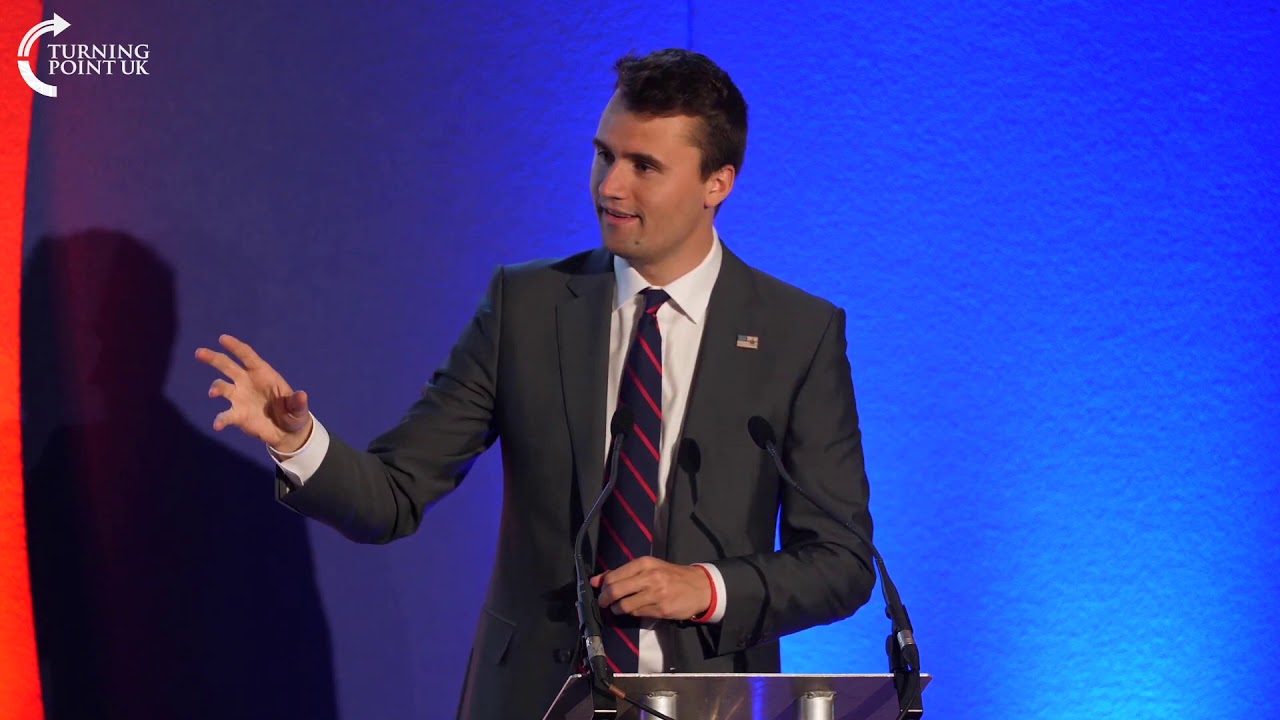
Charlie Kirk Exposes Paul Krugman's Economic Falsehoods Being Taught in American High Schools
Enjoying this? Share it with someone who needs to see it.
Up Next
Charlie Kirk Rallies Georgia Voters: Twelve Days to Define the Future of American Republic
14:44
Charlie Kirk Calls College Students to Action: Record Your Professors and Take Back Your Campuses
3:25
Trump's Budget Plans and the Fight to Balance America's Debt Through Military Strategy and Spending Cuts
0:55
Charlie Kirk Exposes Paul Krugman's Economic Falsehoods Being Taught in American High Schools
Charlie Kirk reveals shocking misinformation in a local high school economics textbook authored by New York Times columnist Paul Krugman. The textbook falsely claims Reagan's tax cuts showed no signs of economic acceleration, despite 23 million jobs being created. Kirk draws parallels between Britain's debt-driven taxation that sparked the American Revolution and today's government spending crisis, arguing that America has doubled its national debt in seven years, the same pattern that led King George to tax the colonies. He challenges citizens to get involved in school boards, support youth initiatives, and vote for fiscally responsible leadership.
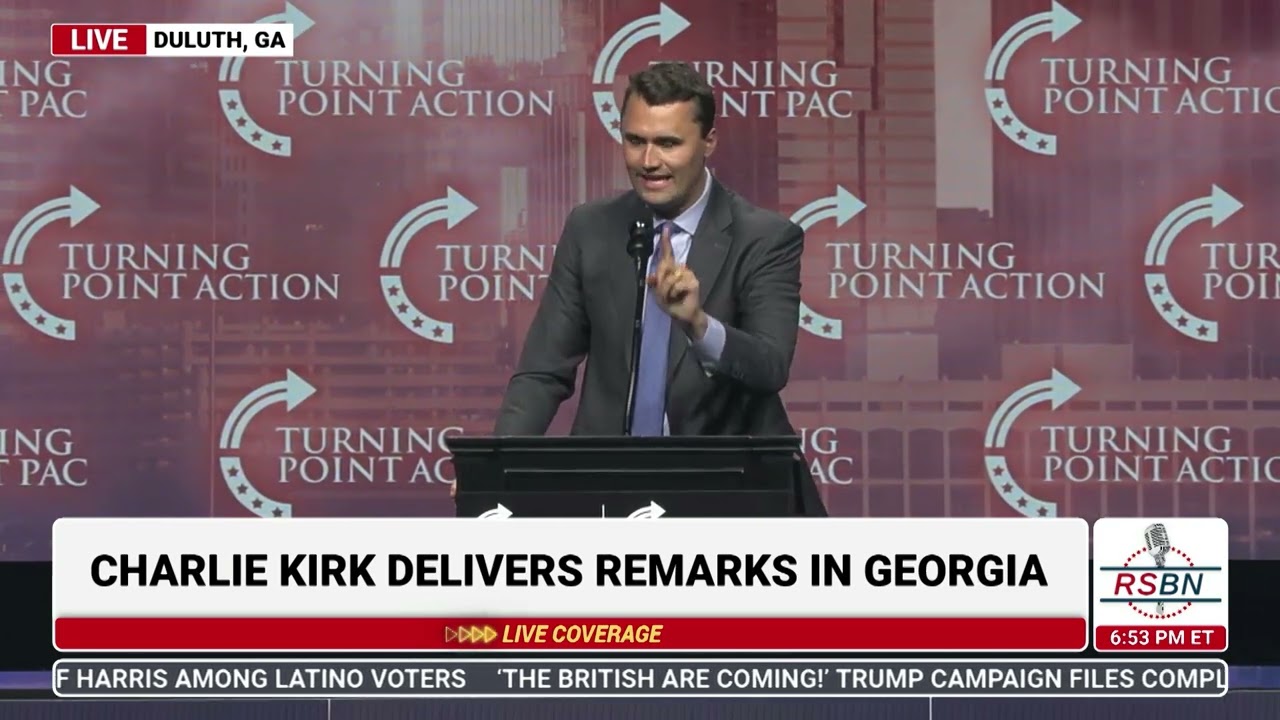
Charlie Kirk stands before an audience holding an economics textbook from a local school district, promising he won't be teaching from it. As a son of the American Revolution whose family has served in every major war dating back to the Revolutionary War, Kirk emphasizes the importance of supporting troops even when government fails to do so. But his focus is on exposing what's being taught to students in public schools.
Kirk reads directly from the textbook: "Outputs and other show signs of growth show no sign of acceleration in economic activity after the Reagan tax cuts." This economics textbook, used in public schools just five miles from the rally, contains what Kirk identifies as flat-out falsehoods. The issue extends beyond one textbook—it represents a systemic problem in American education that Turning Point USA aims to address by going into high schools and colleges to challenge these misleading materials.
Confronting Paul Krugman's Narrative
When Kirk took the textbook to his teacher and school board, pointing out the factual inaccuracies, he learned the author was Paul Krugman, a New York Times columnist and author of "Conscience of a Liberal." Kirk explains that Krugman argues in his book that collective thought should be encouraged and that increased government dependency isn't necessarily problematic as long as society operates collectively. This ideology, Kirk asserts, is being systematically taught in American high schools.
The textbook's claim directly contradicts historical reality. After Reagan's tax cuts, 23 million jobs were created—a sign of significant economic acceleration that the textbook conveniently omits. This misinformation isn't isolated to one classroom or one district; it represents the type of ideological indoctrination happening across educational institutions nationwide.
Taking Action on College Campuses
Turning Point USA isn't sitting idle in the face of this educational crisis. Kirk describes their active campaign to engage students directly. They recently hosted a debate at Illinois State University that drew 250 to 300 college students to hear about fiscal responsibility and limited government. Their schedule includes upcoming events at Loyola University, Iowa State University, Trinity College, Harper College, and the University of Wisconsin at Madison.
The strategy is clear: get on college campuses, enter classrooms, and challenge the ideals that are undermining democracy. Kirk identifies these dangerous ideals as the acceptance that spending more money than you take in is acceptable and that big government provides solutions. He draws a direct connection: big debt exists because of big government.
Historical Parallels to the American Revolution
Kirk makes a compelling historical comparison that resonates deeply. While most people know America was founded on a tax revolt, fewer ask why Britain was taxing the colonies in the first place. The answer lies in debt. Seven years before Britain began taxing American colonists, England had accumulated massive debt. In the seven years following the French and Indian War, Britain doubled its national debt.
The parallel to today is striking. Seven years before Kirk's speech, America's national debt stood at $7.5 trillion. At the time of his presentation, it had reached $16 trillion—a doubling of the national debt in seven years, mirroring the exact pattern that led to the American Revolution. Kirk argues that current leadership is attempting the same solution King George tried: imposing tax increases on wealth creators—those who are producing—to pay for massive debt and fund big government.
The Path Forward: Courage and Action
Kirk outlines a clear action plan for concerned citizens. First, everyone must vote, but that's not enough. He challenges each person to find one individual who didn't vote in the last election and ensure they vote in the upcoming election for the most fiscally responsible candidate—someone with a proven track record of balanced budgets. If this happens, he predicts winning the Senate, House, and Presidency by a landslide.
Success requires citizens to enter the public square and challenge prevailing ideals without fear of debate. This means confronting the same ideas being pushed in textbooks that are undermining schools and universities. Kirk emphasizes that this takes courage, using Congressman Paul Ryan and Governor Scott Walker as examples of leaders who demonstrate this quality.
Leaders Who Show Courage
Kirk expresses admiration for both Paul Ryan and Scott Walker, explaining what sets them apart: courage. He asks why Congressman Paul Ryan continues putting forth budgets to Congress despite knowing he'll be attacked. Ryan doesn't receive extra compensation—he earns the same salary as Congresswoman Pelosi or Congressman Waxman. He does it because he has courage.
Similarly, Governor Walker put forth a plan knowing people would riot on his doorstep. Why? Because of courage. Kirk calls for more Americans to demonstrate this same courage—to get out in the public square, debate the issues, get people involved, and not let school boards operate without oversight, or else misleading economics textbooks will appear in every school district nationwide.
A Call to Youth Engagement
Kirk closes by encouraging attendees to check out Turning Point USA, which he describes as the youth initiative for the country. His final message is direct: stay active, don't forget to vote, and challenge the principles being taught. The battle for America's future is being fought in classrooms, textbooks, and school board meetings. Victory requires engaged citizens willing to confront misinformation, support fiscally responsible leadership, and mentor the next generation in the principles of limited government and fiscal responsibility.