Charlie Kirk Exposes the College Scam: Why Universities Are Ripping Off Students and Taxpayers
Enjoying this? Share it with someone who needs to see it.
Up Next
Charlie Kirk and Isabel Brown Expose the Shocking State of American College Campuses and Indoctrination
1:50
Charlie Kirk Reveals His Dream Dinner Guests, Favorite Superhero, and Why Breaking Bad Is a Masterpiece
26:16
Charlie Kirk Built the World's Largest Conservative Youth Organization from a Card Table and Conviction
1:35:50
Charlie Kirk Exposes the College Scam: Why Universities Are Ripping Off Students and Taxpayers
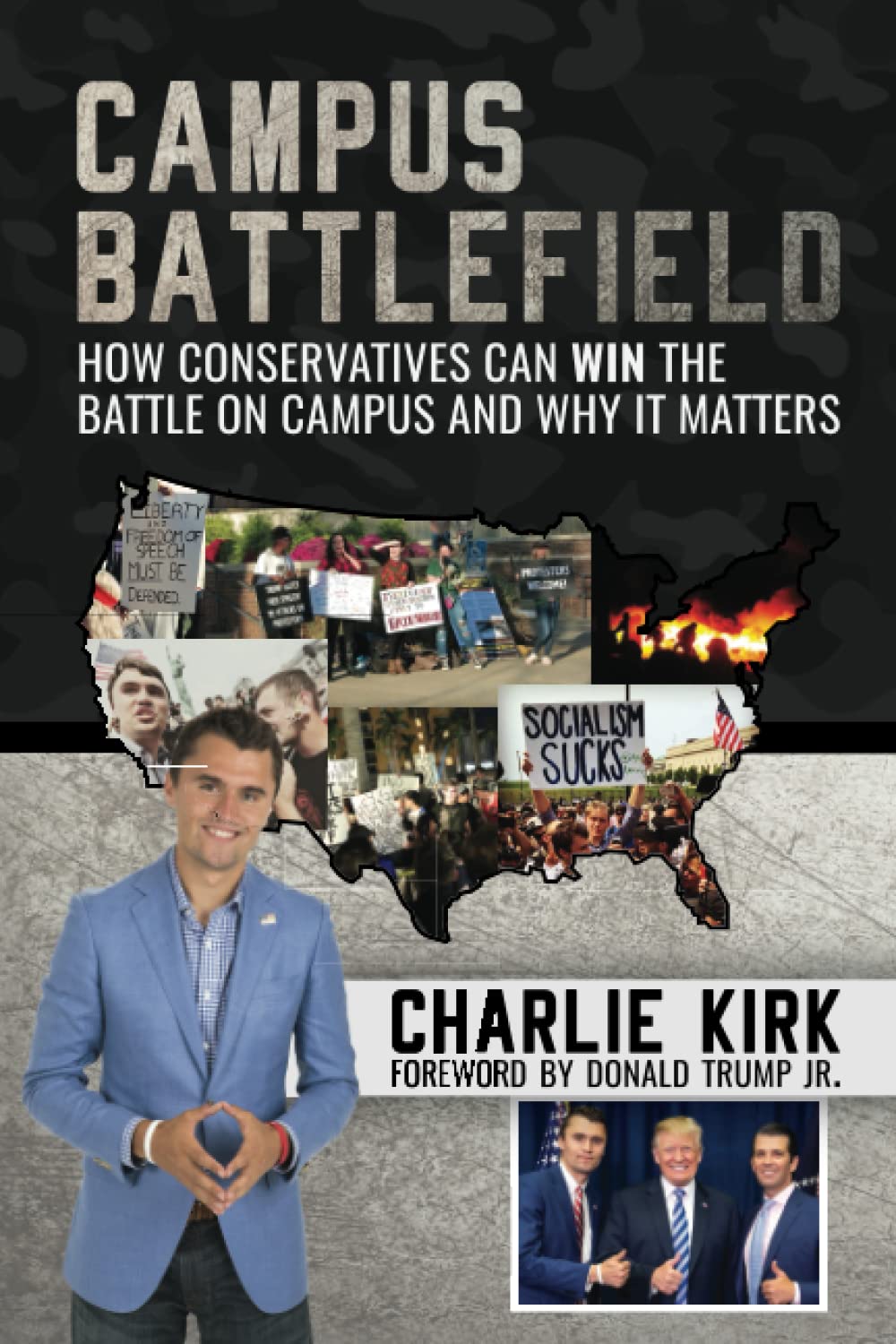
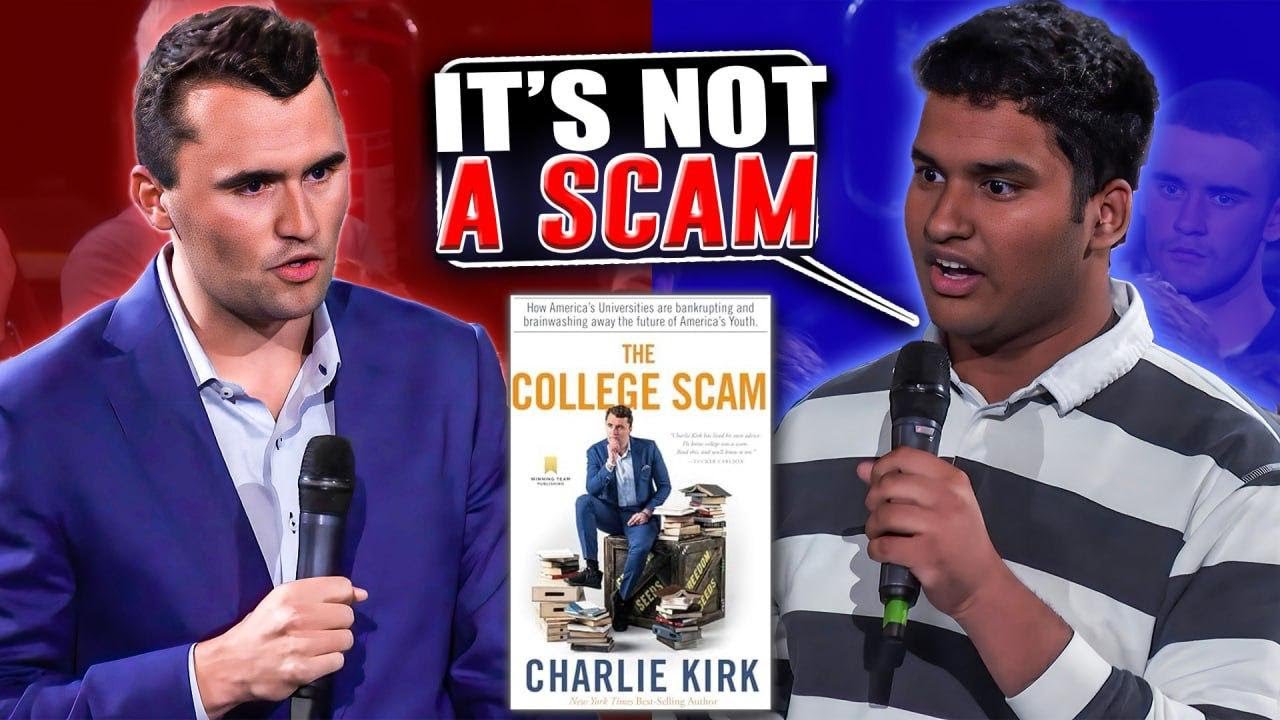
Charlie Kirk joins Donald Trump Jr. to discuss his new book that dismantles the modern college system. Kirk argues that universities have become overpriced indoctrination centers that saddle students with crushing debt while offering little real education or value. Drawing from 35 pages of footnotes and research, Kirk presents a 10-count indictment against higher education, covering everything from astronomical costs and foreign infiltration to violent suppression of conservative speech. The conversation explores how COVID exposed the scam, why 40% of students drop out, and how the America First movement is challenging the notion that everyone needs a college degree. Kirk shares his mission to decrease college enrollment and end the stigma against those who choose alternative paths like trades and entrepreneurship.
Charlie Kirk presents a comprehensive argument against the modern college system in his new book, calling it what he believes it truly is: a scam. Speaking with Donald Trump Jr., Kirk explains that his book operates like a legal case, with himself as prosecutor and readers as the jury. The book contains 35 pages of footnotes and citations, building a detailed case across a 10-count indictment of universities.
The charges Kirk levels against colleges include: education being ridiculously overpriced, universities becoming obscenely rich at taxpayer and student expense, colleges no longer truly educating students, institutions indoctrinating rather than teaching critical thinking, breeding violence and hate against conservatives, foreign infiltration by subversive groups, unleashing waves of anti-American activists, and employing leftist radical professors bent on indoctrination.
The Absurdity of Modern Course Offerings
Kirk highlights the disconnect between college costs and actual educational value by citing real courses offered at prestigious universities. At Harvard, students can take "Languaging and the Latinx Identities" or "Chocolate, Culture and the Politics of Food." Tufts University offers "Demystifying the Hipster," while the University of South Carolina teaches "Lady Gaga and the Sociology of Fame."
The University of Wisconsin-Madison provides a course on Elvish, the fictional language from Lord of the Rings. Perhaps most shocking is Occidental College's offering in their Department of Critical Theory and Social Justice: a course called "The Phallus" that examines various cultural interpretations including "the lesbian phallus," "the Jewish phallus," and "the Latino phallus." The University of Pennsylvania, Donald Trump Jr.'s alma mater, even offers a course titled "Wasting Time on the Internet."
These examples illustrate Kirk's point that students are going into massive debt to study subjects with no practical value or job market application, fundamentally betraying the promise of higher education.
How COVID Exposed the College Scam
Kirk credits the COVID-19 pandemic with exposing the failures of the educational system at all levels. When colleges transitioned to online learning, they refused to adjust tuition despite providing an inferior product. This forced parents and students to confront a crucial question: if the education can be delivered via Zoom, why are we paying $60,000 per year?
The pandemic created what Kirk calls "a massive curriculum transparency project." Parents suddenly heard what teachers were actually saying in virtual classrooms and discovered content they never knew existed. This revelation extended from kindergarten through college, with parents alarmed at the ideological indoctrination happening at every level.
Kirk suggests this transparency was an accidental "self-own" by the education establishment. Teachers' unions wanted to avoid in-person work while still collecting full pay, but in doing so, they revealed the true nature of modern education to millions of parents who had previously trusted the system.
The Staggering Dropout Rate
One of the most damning statistics Kirk presents is that 40% of students who enroll in college drop out. This means nearly half of those who take on student debt, spend years of their lives, and invest tens of thousands of dollars never complete their degree. They end up with debt but no credential, arguably the worst possible outcome.
This dropout rate undermines the fundamental argument for universal college attendance. If the system works so poorly that it fails nearly half its students, why is society pushing everyone toward this path? Kirk argues this represents a massive misallocation of human and financial resources.
The Mission to Change Perceptions
Kirk states his goals clearly: decrease college enrollment and eliminate the stigma against those who don't attend college. He believes too many young people are funneled into universities when alternative paths like trades, entrepreneurship, or direct workforce entry would serve them better.
This mission aligns with the America First movement's emphasis on respecting working-class Americans—welders, electricians, carpenters, truck drivers. Kirk argues that society's elevation of college graduates over tradespeople is both economically foolish and culturally damaging. Many skilled trades offer better earning potential and job security than liberal arts degrees, without the crushing debt.
Kirk himself exemplifies this path, having built a significant conservative movement and organization without a college degree, proving that success doesn't require a diploma.
The Evolution of Campus Culture
Donald Trump Jr. provides perspective on how dramatically campus culture has shifted. He graduated from the University of Pennsylvania in 2000, just over two decades ago. During his time there, politics wasn't a constant topic of conversation. Students didn't wear their political identities on their sleeves, and activism wasn't the defining feature of campus life. His father even spoke on campus and was welcomed and applauded.
In just one generation, universities transformed from relatively apolitical institutions to centers of radical activism where conservative speakers face protests, violence, and cancellation. This rapid radicalization demonstrates how quickly institutions can be captured by ideological movements when left unchallenged.
Trump Jr. expresses concern about the trajectory: if this much change happened in 20 years, what will the next 20 bring? The acceleration of radical ideology on campuses suggests the problem will worsen without significant pushback.
The Taxpayer Dimension
Kirk emphasizes that the college scam isn't just about students getting ripped off—taxpayers are funding much of this dysfunction. Universities receive massive amounts of public funding while building enormous endowments and paying administrators excessive salaries. They operate as businesses that prioritize revenue over education, all while enjoying tax-exempt status and government subsidies.
The student loan system, backed by taxpayers, enables universities to continuously raise prices without market consequences. Students can borrow unlimited amounts guaranteed by the government, so colleges have no incentive to control costs. This creates a bubble that ultimately falls on taxpayers when loans aren't repaid.
Kirk's Personal Journey and Beliefs
When asked about his political evolution, Kirk describes himself as always having been conservative, though he acknowledges Donald Trump changed his perspective on certain issues, particularly trade and immigration. He admits he was previously "overly committed" to free trade orthodoxy and wasn't as strong on immigration—positions he now sees as misguided.
Kirk credits Trump with making these issues mainstream in Republican politics. Before Trump, few serious voices in the party challenged free trade dogma or prioritized immigration restriction. It took an outsider to break the establishment consensus and articulate what working-class Republicans had been thinking all along.
Kirk identifies more as a conservative than as a Republican or libertarian. He expresses frustration with the Republican establishment and doesn't even register as a Republican. He sees Trump as fighting the Republican establishment daily, particularly on issues of war, immigration, and trade.
The Alternative: Hillsdale College
When asked which university he would send his child to, Kirk recommends Hillsdale College, which he describes as "super conservative" and "fabulous." He also mentions Liberty University as a decent option. However, he suggests most institutions have gone "way past the point of redemption."
This stark assessment reflects Kirk's view that the problem with higher education isn't fixable through reform—the corruption is too deep and the ideological capture too complete. Rather than trying to save institutions that are fundamentally broken, he advocates building alternatives and steering students away from the broken system entirely.
Staying Focused Amid Criticism
Kirk discusses the challenges of being a prominent conservative voice, particularly dealing with constant attacks and criticism. He admits the attacks do bother him, especially from former friends who now publicly oppose him. Some of these former friends privately text support while publicly condemning him—a phenomenon Trump Jr. experienced extensively during the 2016 campaign.
To maintain his effectiveness, Kirk emphasizes the importance of unplugging, limiting screen time, and spending time in nature. He mentions trying to limit phone use to 90 minutes per day, though he acknowledges this is difficult. He's become a believer in periodic retreats from technology and social media to recharge and maintain perspective.
Kirk also shares that politicians often complain to him about how miserable life is in Washington, D.C., which reinforces his decision to stay outside elected office where he believes he can have greater impact.