Charlie Kirk on Building Turning Point USA From His Parents' Garage to $150 Million Organization
Enjoying this? Share it with someone who needs to see it.
Up Next
Charlie Kirk Built Turning Point USA From His Parents' Garage Into a $150 Million Movement
8:43
Charlie Kirk Warns CPAC: College Campuses Are the Battleground for America's Future and Bernie Sanders
16:09
Charlie Kirk Declares Victory as Trump Signs 200 Executive Orders on Inauguration Day
6:07
Charlie Kirk on Building Turning Point USA From His Parents' Garage to $150 Million Organization
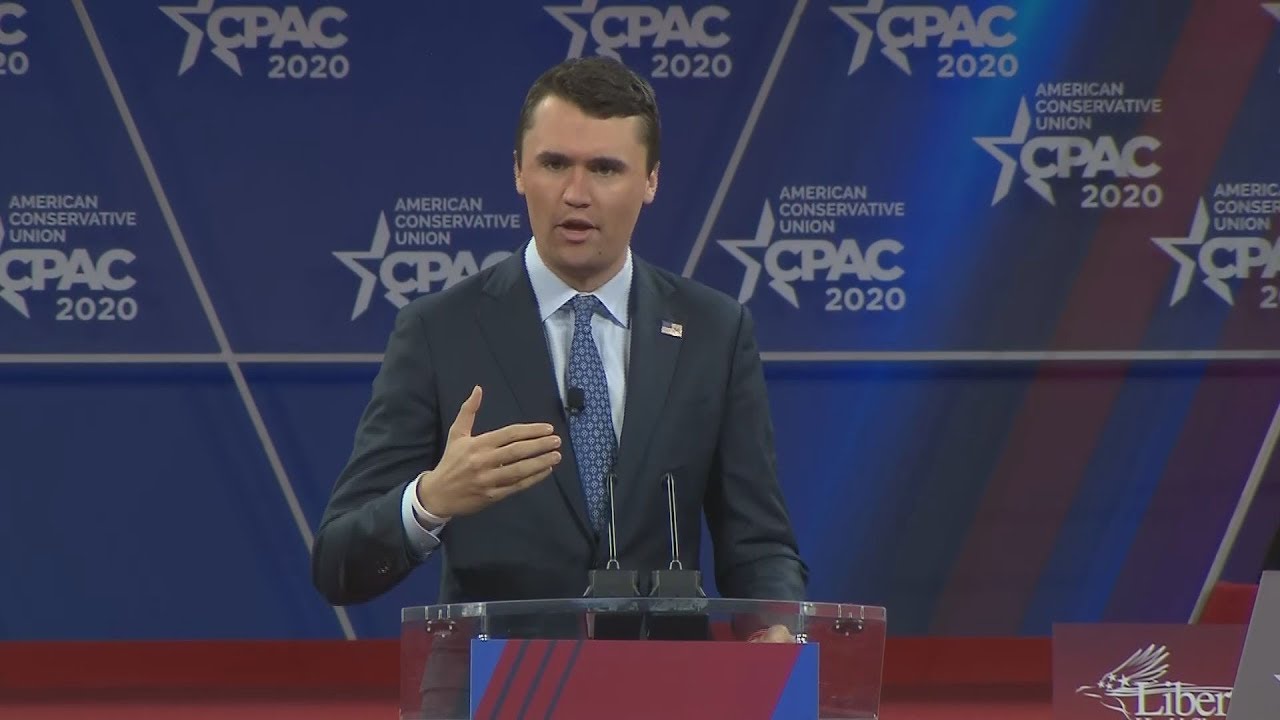
Charlie Kirk shares the entrepreneurial journey behind Turning Point USA, starting from a gap year decision in 2012 to building a $150 million organization with over 1,000 employees. Kirk discusses the sacrifices required for success, his philosophy on wealth building, and why he wishes more people recognized him as an entrepreneur and problem solver. He also opens up about his approach to financial literacy, the importance of living below your means, and how his faith guides his work in reaching America's youth with principles of liberty and freedom.
Charlie Kirk grew up in the suburbs of Chicago with a singular goal: attending the United States Military Academy at West Point. As an Eagle Scout, football and basketball captain, he was heavily involved in his community and positioned for acceptance. When West Point didn't work out, Kirk convinced his parents to let him take a gap year before college. That decision changed everything.
In 2012, Kirk had an idea to start an organization from nothing, aimed at reaching the next generation with first principles of liberty and freedom. He wanted to communicate that America is a great nation worthy of preserving and protecting. What was supposed to be one gap year turned into 13 gap years, and Turning Point USA was born.
The Entrepreneurial Mindset: Identifying and Solving Problems
Kirk emphasizes that entrepreneurs are fundamentally problem solvers. When people ask him how to get rich or be successful, his answer is simple: solve a problem. Once you solve a problem, people will give you value. When you solve a problem over time better than anyone else, you have a market differentiator.
The problem Kirk identified was significant: the nation's youth were dramatically shifting to the left, and college campuses were no longer places of free speech, free dialogue, and open discussion. He decided to start Turning Point USA to address this challenge directly.
Building From Nothing
Kirk started Turning Point USA literally in his parents' garage with no money, no connections, and no idea what he was doing. He credits God Almighty's blessing at every corner and turn for the organization's success over 13 years. The journey has been extraordinary, allowing him not just to make an impact in culture and politics, but to build something of genuine value, substance, and depth.
Today, Turning Point USA has grown to over 1,000 employees and generates well over $150 million in revenue across all entities. The organization has more than 430,000 donors who Kirk refers to as their customers. As a nonprofit with a for-profit arm (his show), the real customers are the students they're trying to reach every single day. Kirk continues to look for new problems to solve and innovative approaches to make America a better and stronger country. He also notes their recent success in helping a certain person become president of the United States, specifically with younger voters.
The Real Path to Wealth
Kirk is candid about what it takes to build wealth, and his advice might not be what people want to hear. The formula isn't complicated: live below your means, save your money, invest in good companies, find good ideas, and read extensively. Reading widely allows you to see trends and stay well-informed.
However, Kirk acknowledges that people are remarkably bad with money. He gives the example of someone spending $700 going out in a weekend while claiming they want to be rich. If your top priority is going out and getting drunk, that's a choice, but you can't then complain about not being materially wealthy.
Kirk doesn't position himself as a moralist. If people want to drink in a free society, that's their choice. But wanting to become actually rich requires sacrifice unless you're born into wealth. It means few nights out, limited weekends off, and thankless, gritty work. Kirk traveled 3,000 days over a decade, becoming a million miler on both American, Delta, and United airlines, visiting all 50 states multiple times.
The Sacrifice Required for Success
Kirk himself doesn't drink alcohol, and he notes that Tucker Carlson and Donald Trump don't either. While this doesn't mean you can't be rich if you drink, the point is that you must sacrifice immensely in some way. Whether you create a good widget, develop a successful social media app, or secure venture funding, even those successful entrepreneurs will tell you they had to fail and sacrifice repeatedly.
The question is what you truly want. If your number one goal in life is to have a large bank account and earn $500,000 a year, that's very conceivable in America—but it requires making wealth your top priority and sacrificing accordingly.
The Problem With Financial Illiteracy
Kirk points out that keeping people financially illiterate serves those who want citizens to remain dependent on the government. If you want people filling out credit cards at 25% interest and staying poor, don't teach them financial literacy.
The best way to build wealth is through long periods of time saving money and doing boring things. It's not get-rich-quick schemes, big meme coins, or dramatic spikes. It's simply going to work, saving money, and living below your means. Kirk acknowledges this isn't the sexy answer everyone wants, but it's what Warren Buffett did. Buffett became one of the world's wealthiest men starting with very little money 70 years ago.
People don't want to hear that steady approach. They want to know about the next Nvidia. But Kirk can tell you that in 40 years, if you put 100 bucks a week into a moderately managed wealth account, you're going to do great. When people claim they can't afford $100 a week but make $91,000 a year, the math doesn't add up.
Teaching the Next Generation
Kirk asks how many young people at age 17 can explain the difference between credit and debit. Most can't. He appreciates an element of Trump's upcoming legislation: every new baby born in America will receive a $1,000 loan from the federal government placed in an investment account they can't touch until age 18, invested in the Dow Jones Industrial Average.
The child will be able to monitor this account throughout their 18 years, and it can be grown by philanthropists, family members, and grandparents. They'll actually see their wealth increase and become stakeholders in the system. Kirk notes that if they have another child, that kid will immediately have an investment account that's a one-way dropbox—you can only add money, not access it until 18. This creates ownership units for the next generation.
In Defense of Billionaires
Kirk questions whether there's anything inherently wrong with being a billionaire. His answer is no. Most billionaires have actually solved big problems for society. People love criticizing Elon Musk, but Kirk considers him a friend and refuses to say anything negative about him.
Kirk challenges critics: tell me the next time you're able to launch a rocket and land it. That's genuinely impressive. When you revolutionize the electric car industry, you deserve substantial compensation. If everything works out and you solve major problems, significant financial reward is justified.
Legacy and What Matters Most
When asked how he wants to be remembered if everything goes away, Kirk's answer is clear: he wants to be remembered for courage and for his faith. Most importantly, he wants to be remembered for his family. These priorities—faith, courage, and family—drive everything else he does.
Video Transcript
It's honor to be with all you guys. Um, you
know, it's I I think my story can resonate
with a lot of you because I get called a lot of
things as you can imagine. The one thing I wish
I would be called more, which is actually true,
is an entrepreneur. Uh, I build things. I build
organizations. We help build movements. We
build uh messaging. And we helped a certain
person become president of the United States
recently. President deserves the credit. Uh,
but we helped especially with younger voters in
particular. But it started back where I grew up,
suburbs of Chicago. I wanted to go to West Point.
It was my whole life was about going to the United
States Military Academy in West Point. Eagle
Scout, football, basketball captain, heavily
involved in my community. Ended up not getting
into West Point. I convinced my parents, hey, I'm
not sure if I want to go right into college. I'd
like to take a gap year before I go to college.
And the idea I had was, hey, I want to start an
organization from nothing to try to reach the
next generation around first principles of liberty
and freedom and that our country is a great nation
and is worthy of preserving and protecting.
Well, one gap year turned into 13 gap years.
This was in 2012 Chicago. So the the process
was look, I saw a problem and entrepreneurs
are problem solvers. It's that simple. People
say all the time, Charlie, how do I get rich?
How do I be successful? You solve a problem. Once
you solve a problem, people will give you value.
And when you solve a problem over a period of
time better than somebody else, then you have
a market differentiator. Well, I saw a very big
problem, which was that the nation's youth were
dramatically going to the left, that our college
campuses were not placed of free speech and free
dialogue and open discussion. And so I decided to
start an organization that would address that. It
was called Turning Point USA. started in literally
my parents' garage with no money, no connections,
and no idea what I was doing. And thanks to the
Lord's providence, and I have to give, you know,
credit to God Almighty for his blessing
at every single corner at Step and Turn,
we experienced the most amazing journey over 13
years, uh, where I have been able to not just
make an impact in the culture and politics, but
build something of value and of great substance
and depth. As you mentioned, we over we have over
a thousand employees at Turning Point. Uh we have
well over $150 million in revenue between all the
different entities. Uh we have over 430,000 people
that donate money to Turning Point USA and Turning
Point Action. You can call them our customers.
But as a nonprofit, we do have a for-profit
arm, which is my my show. But as a nonprofit,
our customers are actually the students are
actually the target that we are trying to
reach every single day. And so it's just been
an amazing blessing. Uh and as an entrepreneur,
I'm always looking at new problems to try to
solve and new ways that we could try to bring
an innovative, passionate approach uh to try
to make America a better and stronger country.
If you want like the secret to get rich there,
it's actually like not super hard. It's like
live below your means, save your money, invest in
good companies and then find good ideas and read
a lot. Like read a lot. If you just read a lot
and you like all of a sudden you'll see trends
and you'll be well informed. Again, I don't
want to make it seem like it's super easy,
but it's it depends what you define by
rich. But I will say one final thing.
People are so bad with money. Like again, if
you if your top priority is getting drunk,
okay, then go do that. Like I know a lot of
people, they're like, "I want to be rich. I
spent $700 going out this weekend." Like,
"Oh, I guess you don't want to be rich,
okay? You want to feel good and you want to have a
bunch of, you know, toxins go through your liver,
but you actually don't want to live a life
of happiness and contentment." And if you
want to if you I'm not a moralist, if you want to
drink, go ahead. It's a free society, go do that.
But then don't all of a sudden complain to me that
you're not materially wealthy. That like you have
to sacrifice everything to want to become actually
rich unless you're born into it. Like no nights,
few weekends. I traveled 3,000 days over a
decade. I'm a million mileer American, Delta,
United. I'm in all 50 states multiple times. Like
it's thankless, gritty work. Not easy. So if you
actually want to be rich, then there is a path for
you. You have to like sacrifice in like immensely.
I don't drink alcohol. Like Tucker Carlson doesn't
drink alcohol. Donald Trump doesn't drink alcohol.
Now that doesn't mean that like you can't be rich
if you don't drink alcohol. But you must sacrifice
stuff. Now it might be that you create a good
widget or like you might a good social media app
or you might get good venture funding, but even
those guys will tell you you have to fail a lot.
You have to sacrifice a lot. But yeah, it depends
on what you want. If you want to be rich, like
actually like have your bank account big, then
there is a way forward for if it's your number
one reason for living to, you know, earn $500,000
a year. Like that's very conceivable in America.
I like have people remain super poor and
dependent on the government. Don't teach them
financial literacy. And if you want to have them
like filling out credit cards at 25% interest,
don't teach financial literacy. The best way to
build wealth is over long periods of time saving
money and doing boring stuff. It's not get-rich
quick. It's not big meme coins, right? It's not
big spikes. It's just going to work, saving money,
and living below your means. I know that's not the
sexy answer everyone wants, but that's what Warren
Buffett did. Warren Buffett's one of the world's
wealthiest men. He started with like very little
money 70 years ago and no one wants to hear that,
right? They want to hear about like what's the
next Nvidia. Okay, I I don't know. But I can tell
you that in 40 years if you put a hundred bucks a
week into a moderately managed, you know, wealth
account, you're going to be great. 100 bucks
a week, man. I can't afford that. Okay. Well,
let's talk about how much money do you make? Oh,
I make $91,000. you can afford 100 bucks a week.
How many young kids right now that are 17 can tell
you the difference between credit and debit? They
can't. It's one of the things I like about Trump's
upcoming big beautiful bill is that every new baby
board in America will get $1,000 loan from the
federal government in I don't know if you guys
know about this, but in a investment account
that they can't touch their 18 invested in the
Dow Jones Industrial Average that they'll be able
to monitor throughout their 18 years. it be it
can be grown by philanthropists, family members,
grandparents. So they'll be actually be able to
see their wealth increase. They're stakeholders.
So if if we have two kids, if we have another kid,
that kid will immediately have a investment
account that's only a one-way Dropbox. You can't
access this money until you're 18. So it actually
creates ownership units for the next gener. But
is there anything like inherently wrong with a
billionaire? No. Like most billionaires actually
have solved big problems for us. Like, you know,
people love hating on Elon Musk. I like Elon a
lot. He was He's become a friend. Um, I know
there's been like a lot of social media talk
about it, but I refuse to say anything negative
about Elon. Like, okay, you tell me the next
time you're able to launch a rocket and land
it. Like, actually, that's pretty cool. Like,
okay, you're able to revolutionize the electric
car industry. Like, you deserve a lot of money
if you do that. If everything completely goes
away, how do you want to be remembered? If I die,
everything just goes away. How would you
if you could be associated with one thing,
how would you want to be remembered? I want to
be I want to be remembered for for courage for
my faith. That that would be the most important
thing. Most important thing is my family.