2,422 videos 1,389,747,653 views US Joined Aug 30, 2018
Charlie Kirk is the Founder and President of Turning Point USA, the largest and fastest growing conservative youth activist organization in the country with over 250,000 student members, over 150 full-time staff, and a presence on over 2,000 high school and college campuses nationwide. Charlie is also the Chairman of Students for Trump, which aims to activate one million new college voters on campuses in battleground states in the lead up to the 2020 presidential election. His social media reaches over 100 million people per month and according to Axios, he is one of the "top 10 most engaged" Twitter handles in the world. He is also the host of “The Charlie Kirk Show,” which regularly ranks among the top news shows on Apple podcast charts.
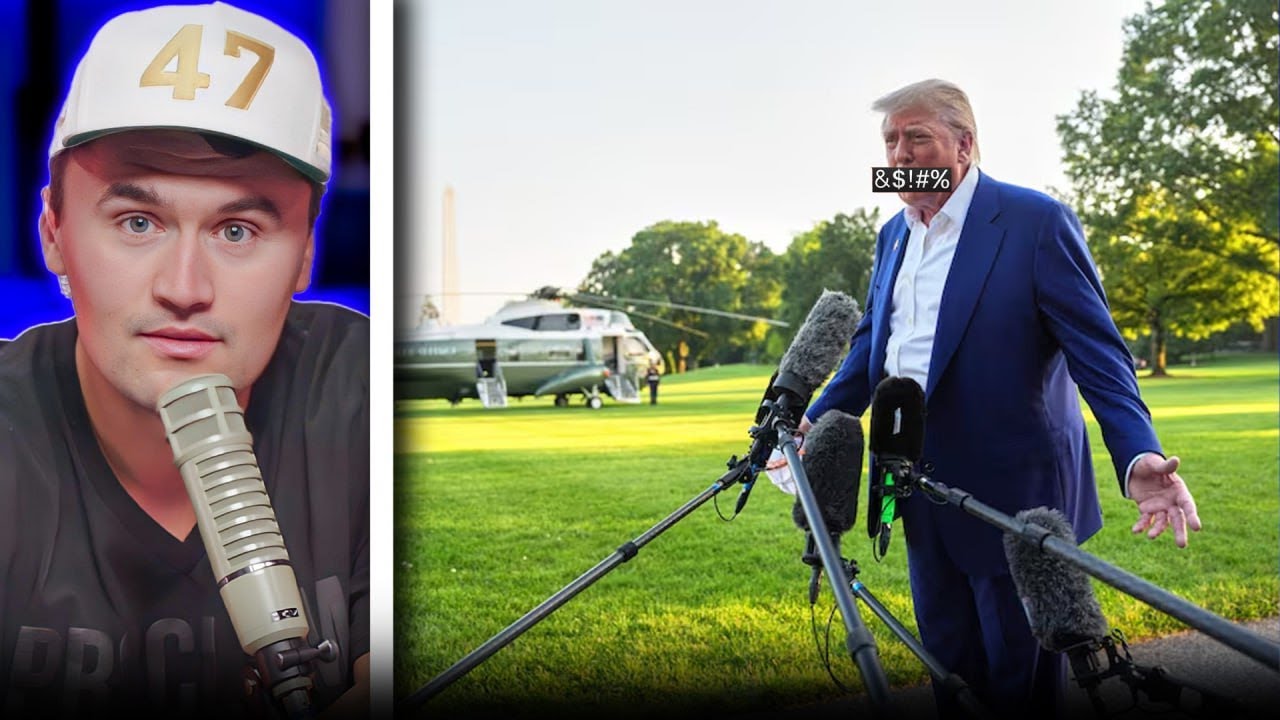
Charlie Kirk Questions Trump's Decision to Send More Weapons to Ukraine Despite Putin's Brutal War Strategy
Charlie Kirk voices concerns over President Trump's announcement to send additional weapons to Ukraine, despite supporting the president's broader foreign policy vision. Kirk argues that further funding this kinetic conflict is not America's fight and questions the consistency of supporting what was opposed under Biden. He explores Putin's calculated strategy of conscripting cannon fodder from impoverished rural regions while shielding Moscow and St. Petersburg's wealthy elite from the war's true costs, a revelation that explains why domestic political pressure hasn't forced Putin to end the conflict despite massive Russian casualties.
President Donald Trump announced plans to send more weapons to Ukraine during a dinner with Israeli Prime Minister Benjamin Netanyahu. When asked about additional armaments to the Ukrainian cause, Trump confirmed the decision, stating that defensive weapons would primarily be sent as Ukraine faces intensifying attacks.
"We're going to send some more weapons. We have to. They have to be able to defend themselves. They're getting hit very hard now. They're getting hit very hard. We're going to have to send more weapons. Defensive weapons primarily. But they're getting hit very, very hard. So many people are dying in that mess," Trump explained.
Kirk's Reservations About Arming Ukraine
Charlie Kirk expressed frustration with the decision, maintaining his consistent opposition to funding the Ukraine conflict. While acknowledging that President Trump possesses information he doesn't have access to and supporting the president completely, Kirk remained unconvinced about the strategy.
"I don't love the idea of sending arms to Ukraine. That's just a difference of opinion. You know, people can disagree. Maybe it's a time to regain leverage against Putin. I can understand that in the art of the deal," Kirk said. "But further funding a kinetic conflict against Russia and the Russian Federation is not our fight, not our conflict. And honestly, we have to be consistent. We were against it with Biden. Why would we be for it now? Unless it gets us to a peace settlement."
Kirk emphasized his belief that it's time to cut off funding for this war and let the sides fight for themselves, a position he has maintained throughout the conflict.
Understanding Trump's Potential Calculus
Despite his reservations, Kirk attempted to understand President Trump's reasoning, suggesting that Putin may be interpreting any lack of Western support as weakness. Trump's track record on foreign policy matters influenced Kirk's willingness to consider alternative perspectives.
"If I were to defend President Trump, because I think he's—I mean, first of all, he's usually right on this stuff on foreign policy—President Donald Trump is saying here is basically Putin smells weakness and if there is no sign of strength from the West behind Ukraine, Putin will just continue to march forward," Kirk explained.
The Hidden Reality of Russian Casualties
Kirk shared insights from a conversation with a senior State Department official that revealed a puzzling aspect of the conflict. While Russia is suffering massive casualties, Putin faces no domestic political pressure to end the war—a contradiction that prompted Kirk to investigate further.
The State Department official confirmed that Russia is experiencing huge losses, leading Kirk to ask why Putin wasn't feeling pressure from his own population. The answer proved illuminating about Putin's strategy for maintaining power while prosecuting an unpopular war.
Putin's Two-Russia Strategy
Kirk detailed how Putin has effectively divided Russia into two distinct countries to insulate himself from political backlash. Moscow and St. Petersburg represent the wealthy, industrial parts of Russia, while the rest of the country remains impoverished—essentially second or third world conditions.
This geographic and economic division has allowed Putin to avoid a politically dangerous draft. Instead of implementing universal conscription that would affect wealthy urban areas, Putin employs a more calculated approach.
"What he does is he goes to the rural areas and he offers a ridiculously high signing bonus, more than what anyone would make in a year in these very poor areas. So these young men sign up for this signing bonus," Kirk explained. "And the cannon fodder basically comes from places like Chechnya and Dagestan in the Muslim regions."
Protecting the Russian Elite
Putin has deliberately avoided conscripting anyone from Moscow or St. Petersburg, recognizing that doing so would create immediate political problems. The wealthy, educated class in these cities—teachers, professors, engineers—have been completely shielded from the war's human costs.
"If all of a sudden the teachers and the professors and the engineers in Moscow and St. Petersburg if their sons were going to go die this war would be over very quickly," Kirk noted. "The children of people who could not bring down his government are the ones that are getting torched."
A Russian Version of 'Fortunate Son'
Kirk drew a parallel to the Vietnam War-era concept of privileged elites avoiding combat while the poor fought and died. This modern Russian version explains how Putin maintains his position despite losing thousands of soldiers weekly.
"This is kind of like a Russian version of the fortunate son," Kirk observed. "And that is why Putin is able to continue the fact that he's losing thousands of people a week. He is staying away from the quote unquote sons of the Russian ruling class. And he has bought at a very—let's just say would say high price—the lives of cannon fodder from the rural areas."
This revelation provided Kirk with what he described as a real "aha moment" in understanding Putin's ability to sustain the conflict despite the horrific cost in human lives. While Russia historically performs well in wars of attrition, the critical difference is that Moscow remains a first-world city whose ruling class has been entirely insulated from the war's consequences.