Charlie Kirk Responds to Student Called White Supremacist for Starting Turning Point USA Chapter at Bethany College
Enjoying this? Share it with someone who needs to see it.
Up Next
Charlie Kirk on President Trump's Executive Order Protecting Free Speech on College Campuses
6:38
Dennis Prager and Charlie Kirk Discuss Student Loan Crisis, Campus Activism, and America's Future
15:10
Charlie Kirk and Candace Owens Address Immigration, Abortion, and Border Security at College Q&A Session
5:53
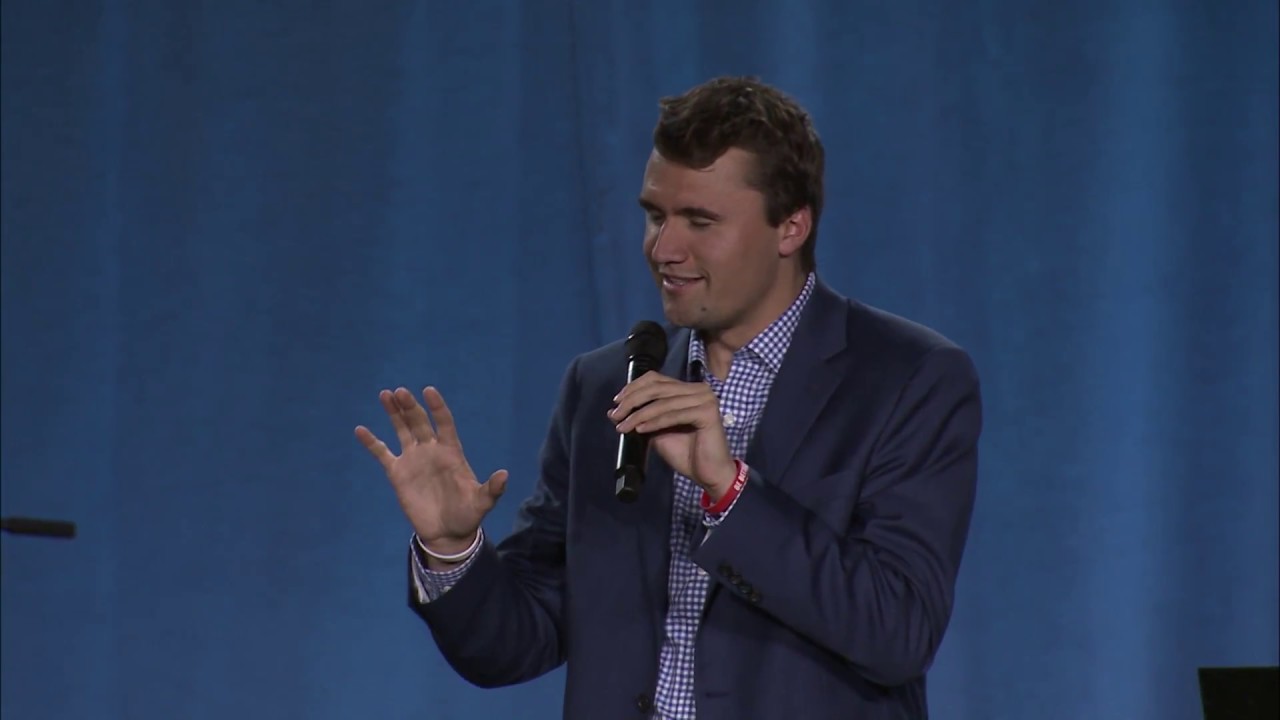
Charlie Kirk Responds to Student Called White Supremacist for Starting Turning Point USA Chapter at Bethany College
A Bethany College student asks Charlie Kirk for advice after being labeled a white supremacist by teachers simply for trying to start a Turning Point USA chapter on campus. The school blocked the student's petition efforts despite campus policies allowing it. Kirk exposes how the accusation itself creates an impossible defense and explains why conservatives must stop playing defense when facing baseless character attacks. With legal action already underway, Kirk reveals the strategy that makes universities respond and why amplifying these stories matters in fighting institutional discrimination against conservative voices.
Student Faces White Supremacist Accusations for Conservative Activism
A student from Bethany College approached Charlie Kirk with a troubling question: how do you prove wrong teachers who have called you a white supremacist simply for trying to start a conservative organization on campus? The student explained that the school administration told him he couldn't petition on campus or even attempt to establish a Turning Point USA chapter, despite the school's own policies stating he had the right to do so. According to the student, multiple liberal teachers have labeled him a white supremacist, a claim that conservative teachers have relayed back to him.
The situation highlights a growing problem on college campuses where conservative students face institutional resistance and character assassination for simply exercising their First Amendment rights. The school administration's refusal to allow a Turning Point USA chapter while presumably allowing other political organizations raises serious questions about viewpoint discrimination.
The Impossible Task of Disproving an Accusation
Kirk addressed the fundamental problem with accusations like "white supremacist" - they're designed to be impossible to disprove. He explained that once such an accusation is made, it operates on a "guilty until proven innocent" framework. The accused person immediately feels defensive, constantly trying to prove their character rather than addressing the actual issues at hand.
Kirk emphasized that this is precisely why these tactics are used. It's not a policy discussion - it's a values discussion. Conservatives argue about whether their opponents are wrong on the issues, while progressives argue that conservatives are bad people. This fundamental asymmetry in how each side approaches political disagreement creates an unfair playing field.
Stop Playing Defense and Go on Offense
Rather than advising the student to try disproving the accusation, Kirk recommended a completely different approach: throw it right back at them. Instead of saying "no, I'm not," say "you're the bigot for not wanting a Turning Point USA chapter at my college. You're the one that's afraid of other ideas."
Kirk argued that conservatives must stop trying to have "decent policy discussions" while being called KKK members. The imbalance is absurd - one side discusses policy while the other attacks character and values. Until conservatives start pushing back with countermeasures and refusing to accept the defensive position, these attacks will continue.
The key insight is recognizing that answering the accusation on its own terms validates the framing. By flipping it and calling out the actual discrimination happening - the denial of equal rights to organize politically - the student takes control of the narrative.
Legal Pressure Works on Universities
Kirk confirmed that the student had already taken the most important step: getting a lawyer to send a demand letter to the university. He predicted that the school would respond because they have to - especially if they accept federal student loans, which makes them subject to non-discrimination requirements.
The student mentioned it had been two weeks since the lawyer sent the letter without a response. Kirk assured him they would respond eventually because demands have time frames and expirations before legal action can be taken. Universities, Kirk explained, don't like pressure because they simply never get it from conservatives. One letter from a lawyer can often resolve situations that seemed intractable through normal channels.
Kirk noted that while Bethany College is a private institution, if they accept federally subsidized student loans - which all schools except places like Hillsdale College do - there can be legal loopholes requiring them to treat students fairly. The form of discrimination described, where one group of students is allowed to have their political beliefs represented while another group isn't, creates clear legal exposure for the institution.
Make Noise and Amplify the Story
Beyond legal action, Kirk emphasized another crucial strategy: make more noise and get more people involved. Universities hate attention, particularly negative attention about discrimination. The more people who know about what's happening at Bethany College, the more pressure builds on the administration to resolve the situation fairly.
Kirk acknowledged he didn't know all the specifics of the particular case but affirmed that by getting lawyers involved and now asking the question publicly, the student was doing everything possible. He suggested that even the act of asking the question in this forum would help amplify what happened and put additional pressure on the school.
The advice reflects a broader strategy for conservative students facing institutional opposition: don't suffer in silence. Document what's happening, get legal help, and tell the story publicly. Sunlight remains the best disinfectant for institutional discrimination masquerading as policy.