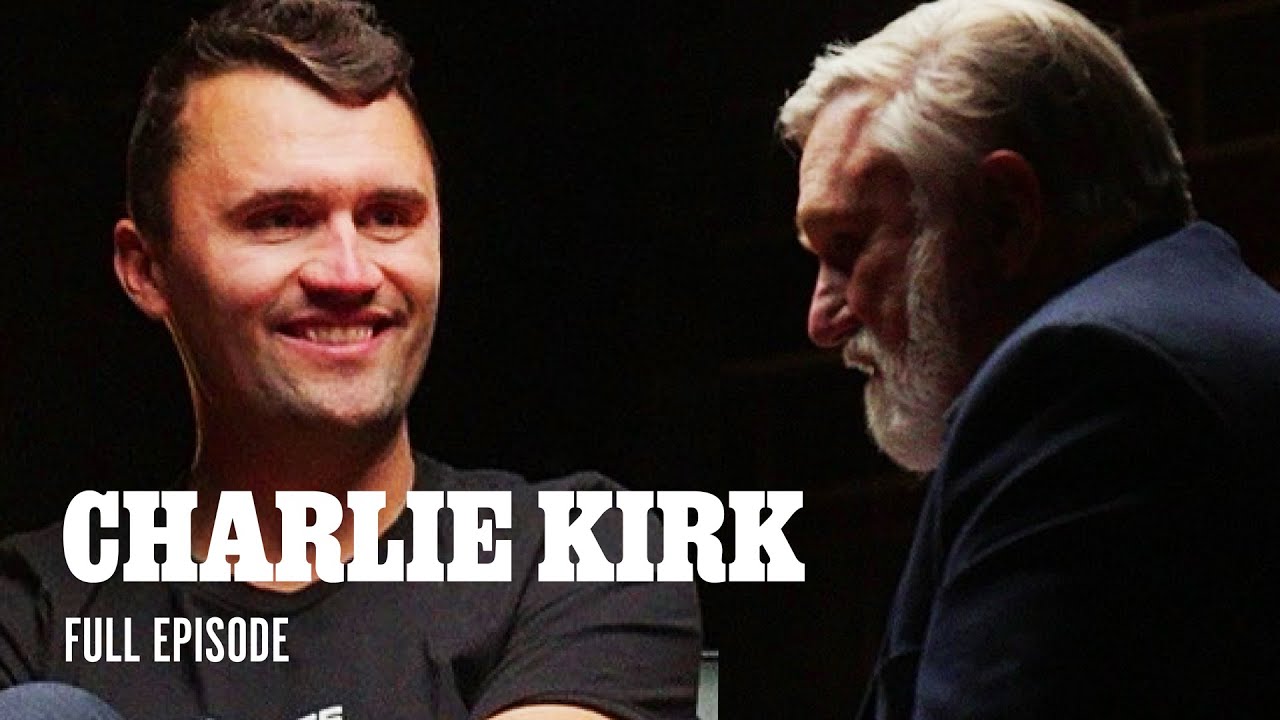
Charlie Kirk Reveals His Mission-Driven Work Ethic and Time Management Secrets Behind Turning Point USA
Enjoying this? Share it with someone who needs to see it.
Up Next
Cenk Uygur and Charlie Kirk Unite on Populist Issues Despite Deep Political Divides
25:02
Charlie Kirk Discusses His Faith, Turning Point USA, and Neoconservatism on Man Rampant Podcast
1:18:24
Erika Kirk Takes the Reins of Turning Point USA After Charlie Kirk's Assassination
58:54
Charlie Kirk Reveals His Mission-Driven Work Ethic and Time Management Secrets Behind Turning Point USA
Charlie Kirk opens up about the relentless drive that built Turning Point USA from barely making payroll to a thriving organization. Kirk discusses his meticulous time management strategies, including scheduling down to 15-minute intervals, layering activities, and taking a full Sabbath every Saturday. He reveals the sacrifices behind his success, including 200 redeye flights and 1,200 cable news interviews in the early years. Kirk also shares his personal health philosophy centered on sleep, walking, fasting, and avoiding poor nutrition. With God, wife, and kids as his top three priorities, Kirk explains how he's restructured his life to minimize time away from family while maintaining the mission-focused intensity that defines his work.
Time efficiency drives everything in Charlie Kirk's world. He approaches his schedule with surgical precision, questioning whether meetings truly need two hours or if they could be condensed. Kirk describes himself as a "time efficiency maximalist," yet remarkably, he still manages to get nine to ten hours of sleep every night. His team describes him as extremely mission-focused, and Kirk readily confirms this assessment with a simple response: he's very driven.
This drive doesn't lead to burnout or regret. Kirk has structured his life around a rhythm that sustains his intense work ethic. He takes a full Sabbath every Saturday, turning off his phone completely to focus exclusively on his kids and family. This weekly reset proves that massive amounts of work can be accomplished in six days when approached with the right mindset and systems.
A Typical Day in Kirk's Life
Kirk's mornings begin between 6:00 and 6:30 AM, when he feels his best. Without hangovers or health issues slowing him down, he gets straight to work. From 9:00 to 11:00 AM local Arizona time, he hosts his daily show. After finishing, he takes a brief break to eat and potentially grab a 10 to 15-minute power nap, which he describes as remarkably restorative.
The rest of his day continues with focused work, punctuated by training sessions and walks. Kirk emphasizes that he's reached a blessed position where opportunities and people come to him, rather than him having to constantly chase after them. This shift represents a significant milestone in his career trajectory.
The Discovery of an Exceptional Quality
Kirk's relentless drive wasn't something he initially recognized as unique. When he first started building Turning Point USA, he assumed everyone possessed equal motivation and hustle. He thought drive was an equally distributed ingredient among the population, which turned out to be a naive assumption.
The realization that his motivation, drive, grit, and hustle were exceptional qualities changed his entire approach. Kirk quickly understood that he could outwork virtually everyone. While acknowledging he's not the most charismatic person, not the smartest, and didn't attend Harvard Law, he recognized his competitive advantage: he would simply put in more hours, read more books, listen to more podcasts, conduct more meetings, and travel to more cities than anyone else.
When asked about his IQ, Kirk mentions taking a test when he was young that came back well above average, though he's hesitant to state a specific number. He acknowledges having a good memory but clarifies he's not an international chess champion or a perfect SAT scorer. He achieved respectable ACT scores in the 31-32 range but not a perfect 36. Kirk sees himself as a unique combination: a heat-seeking missile toward his goals, which alone serves as an incredible differentiator in his field.
The Sacrifices Behind the Success
The biggest sacrifice Kirk makes due to his mission-driven nature is time away from his kids, something he describes as truly painful. He's now structured his life to minimize this sacrifice, saying no to more opportunities and even requiring people who want to interview him to come to Phoenix rather than him traveling to them.
Kirk's priorities are crystal clear and ranked in specific order: God, wife, and kids. These are his top three things, and he's no longer willing to compromise on time with his family. However, the early years of building Turning Point USA required enormous sacrifices that many people don't recognize.
Contrary to popular perception, Kirk didn't start with a bunch of eager donors ready to fund his vision. The reality involved scraping and hustling for elementary funding just to make payroll for the first five to six years. The organization could barely pay the bills during this period. The building where he now conducts interviews didn't open until their sixth year, and they barely had an office for the first couple of years.
The Grueling Early Years
Kirk's flight logs tell the real story of building Turning Point USA: 200 redeye flights where he had to arrive and immediately perform, give speeches, and be engaging all day. He conducted 1,200 cable news interviews, often at 3:00 or 3:30 AM on Fox News. The routine involved getting up, catching flights, managing conference calls, remembering donor names, writing thank you notes, preparing reports for donors, and handling their questions, criticisms, and skepticism.
Kirk doesn't share these details to brag but to illustrate what success actually requires. Many people look at Turning Point USA and think they can recreate it, but Kirk emphasizes that while the Lord's blessing and providence played a role, there's an enormous hustle behind the scenes. This work ethic extends beyond him to his entire team, which now shares his maniacally driven sense of purpose.
Not everyone can sustain the pace at Turning Point USA. Some team members eventually decide the intensity is too much and move to less demanding roles elsewhere. Kirk is fine with this reality because the pace at his organization is first-class, which is why they accomplish more, have more chapters, attract more donors, and operate with a larger budget. The organization continues growing and expanding because they refuse to settle for mediocrity. Excellence is the only acceptable standard.
Advanced Time-Saving Strategies
Kirk's approach to saving time centers on detailed scheduling. He plans days in advance, blocking out specific periods for conference calls, training, lunch, and even time to turn off his phone and walk. He schedules down to 15-minute intervals, creating a highly precise time management system.
His biggest time hack, which he acknowledges isn't new, is layering—fitting two or three activities into the same time block. When traveling to speak, he listens to audiobooks. During training or working out, he listens to podcasts for preparation. He takes all his calls while walking on the treadmill, combining productivity with physical activity.
Kirk's Health Philosophy
Kirk believes several simple health principles are right in front of us but often overlooked. He's a huge believer in sleep, considering it totally undervalued. Walking represents another cornerstone of his health approach—not running, deadlifting, or cold plunging, just simple walking. Studies suggest that forward movement actually allows the brain to function at a higher capacity than when sitting sedentary, and Kirk confirms that his best ideas come while walking.
Fasting represents untapped power in Kirk's view, and simply not eating terribly rounds out his health philosophy. He believes these four elements—adequate sleep, regular walking, intermittent fasting, and reasonable nutrition—can keep someone relatively healthy without complicated interventions.
Kirk practices what he calls "triple layering" by going for walks with his kids. When his daughter was six months old and couldn't yet communicate, he'd take her for walks during which she'd fall asleep. This allowed him to listen to podcasts while getting exercise and spending time with his child—the trifecta of efficient time use.
The Power of Saying No
Kirk emphasizes that much time gets wasted when people fail to say no. He's reached a blessed position that most people don't have but many entrepreneurs do: he doesn't have to sit at a desk waiting for things to come to him. He can constantly set the terms of his own schedule.
However, Kirk is careful to note that this freedom comes at great cost and consequence. With great freedom comes phenomenal and enormous responsibility. His ability to control his schedule wasn't handed to him—it was earned through years of sacrifice, hustle, and building something significant enough that opportunities now seek him out rather than the other way around.