2,422 videos 1,389,747,653 views US Joined Aug 30, 2018
Charlie Kirk is the Founder and President of Turning Point USA, the largest and fastest growing conservative youth activist organization in the country with over 250,000 student members, over 150 full-time staff, and a presence on over 2,000 high school and college campuses nationwide. Charlie is also the Chairman of Students for Trump, which aims to activate one million new college voters on campuses in battleground states in the lead up to the 2020 presidential election. His social media reaches over 100 million people per month and according to Axios, he is one of the "top 10 most engaged" Twitter handles in the world. He is also the host of “The Charlie Kirk Show,” which regularly ranks among the top news shows on Apple podcast charts.
Charlie Kirk Reveals Why Only 8% of 30-Year-Olds Are Married Homeowners Today Versus 50% in 1950
Charlie Kirk examines a stark chart showing the collapse of the American dream for young people. In 1950, half of 30-year-olds were married homeowners. By 1980, it was 45%. Today, it's plummeted to just 8%. Kirk connects this breakdown to immigration policy shifts starting in 1990, the dating crisis, and a system forcing young Americans into a mandatory rental economy. He argues this social compact collapse is fueling populist movements and calls for urgent solutions including mass deportations, ending the H-1B program, building 10 million homes for Americans, and crushing the college cartel.
Charlie Kirk visits hundreds of campuses every year, and he's noticed something alarming. But beyond the emotional struggles students face, there's a deeper crisis illustrated by one powerful chart that perfectly captures what he's been trying to articulate for years.
This chart shows the estimated percentage of 30-year-olds who are both married and homeowners across different decades. The numbers tell a devastating story about the breakdown of the American dream.
In 1950, during the World War II generation, 50% of 30-year-olds were married and owned a home. In the 1980s, it only went down by about 5%—45% of 30-year-olds in 1980 were married and owned homes. Around the turn of the millennium, it was falling but still holding at about 35%. When Obama was president, it dropped to 27%. Today, it stands at approximately 8%.
The country went from half of young people being married homeowners in 1950 to just 8% today. Kirk notes something significant: the chart starts to drop dramatically around 1990, coinciding with the invasion of Iraq and the signing of the 1990 Immigration Act, which increased immigration from 500,000 green cards to 1.2 million. He believes this is no coincidence.
The Breakdown of the Social Compact
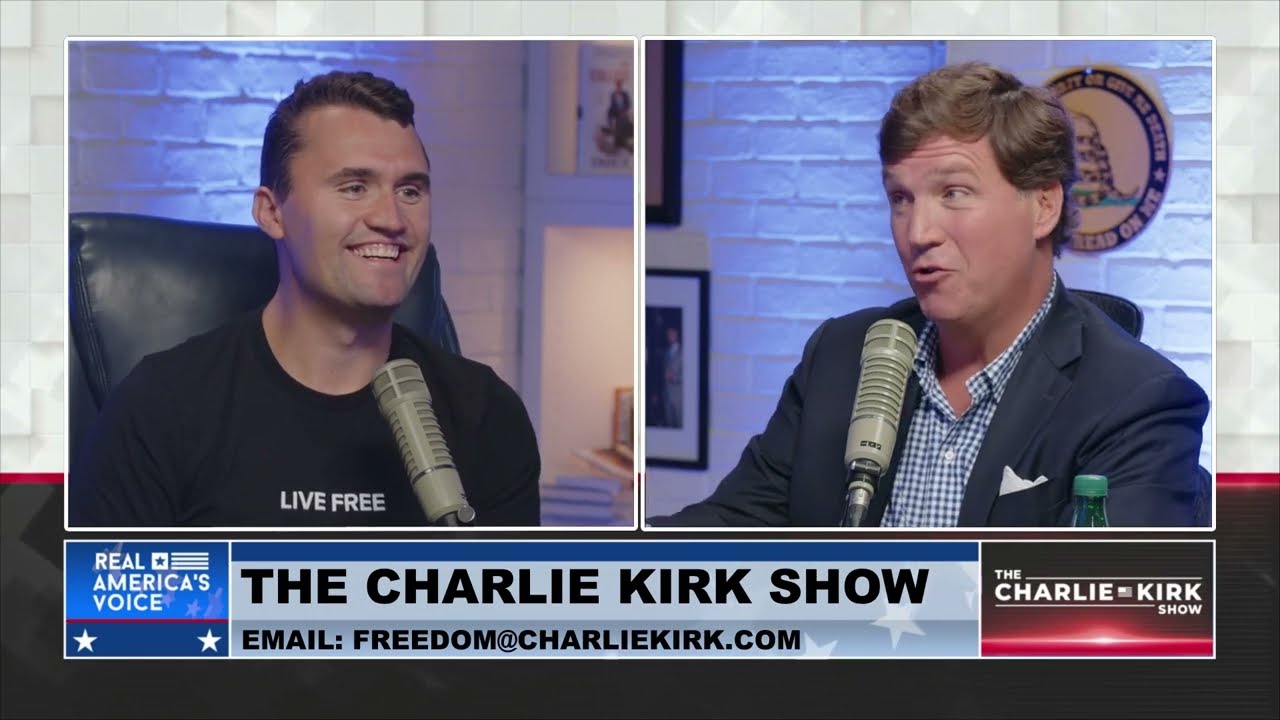
Kirk identifies this chart as visual proof of the breakdown of the social compact. This is the issue he's discussed with Tucker Carlson and on CNBC—the driving force behind the populist nationalist revolution across the West.
He believes President Trump can and will restore this compact through several key policies:
Mass deportations
Stop the H-1B visa program
Dramatically reduce legal immigration
End chain migration and the visa lottery
Build 10 million homes immediately for Americans
Crush the college cartel and make it easier to become a plumber, electrician, welder, or pipe fitter
Kirk asks: Do you want to save a generation? Study that chart. Know that chart.
The Dating and Marriage Crisis
It's harder than ever for young people to find a suitable mate. Kirk hears about this all the time from students on campus. The dating pool has become disordered and problematic, making it difficult for young people to form the relationships that lead to marriage.
This raises important questions: Why are young people not getting married? Why are fertility rates collapsing? These are topics Kirk believes deserve more attention and discussion.
The Forced Rental Economy
Kirk recently had a private discussion with someone he respects who argued that renting is the new way—that renting is actually better. The argument went that homes have inefficiencies and dead space. When was the last time you used your dining room? Wouldn't it be better to have a bed come out of the ceiling and a toilet come out of the wall, investing the extra money in a 401(k) or stock portfolio?
While efficiency might sound appealing, Kirk challenges this premise: Is efficiency really what Americans should be aiming toward? He believes there's something uniquely American about saying "this is my land, this is my property."
Kirk points out that something changes when you become a homeowner—something fundamental shifts in your relationship to your community and country. While people should have a choice to rent if they want, the problem is that young people don't actually have that choice. They're being forced into a mandatory rental economy.
A Generation Asking for a Fair Shot
Kirk highlights a video that captures the frustration of young Americans: "Tell us to stop eating out and rent $2,000 a month. Oh, save for retirement. And yet you can barely save for next week. Tell go buy a house. Every house is half a million dollars, brother. I'm not asking for a handout, man. We're asking for a freaking fair shot at life. Our parents did not work harder than we work right now. They were simply just given a better chance. Their wages covered their lives, their bills, their hobbies, their passions. Our wages barely cover our freaking bills for the month, dude. No amount of budgeting can ever fix a system designed to keep us down."
This sentiment captures exactly what the chart reveals: a system that has fundamentally changed, making it exponentially harder for young people to achieve what previous generations took for granted. Kirk is working on a longer thesis about why homeownership is so important to American life and why restoring access to it should be a national priority.
The urgency is clear. Without addressing these fundamental issues—immigration policy, housing affordability, the college debt trap, and the breakdown of marriage—an entire generation will continue to be locked out of the American dream, fueling radical politics and social instability.