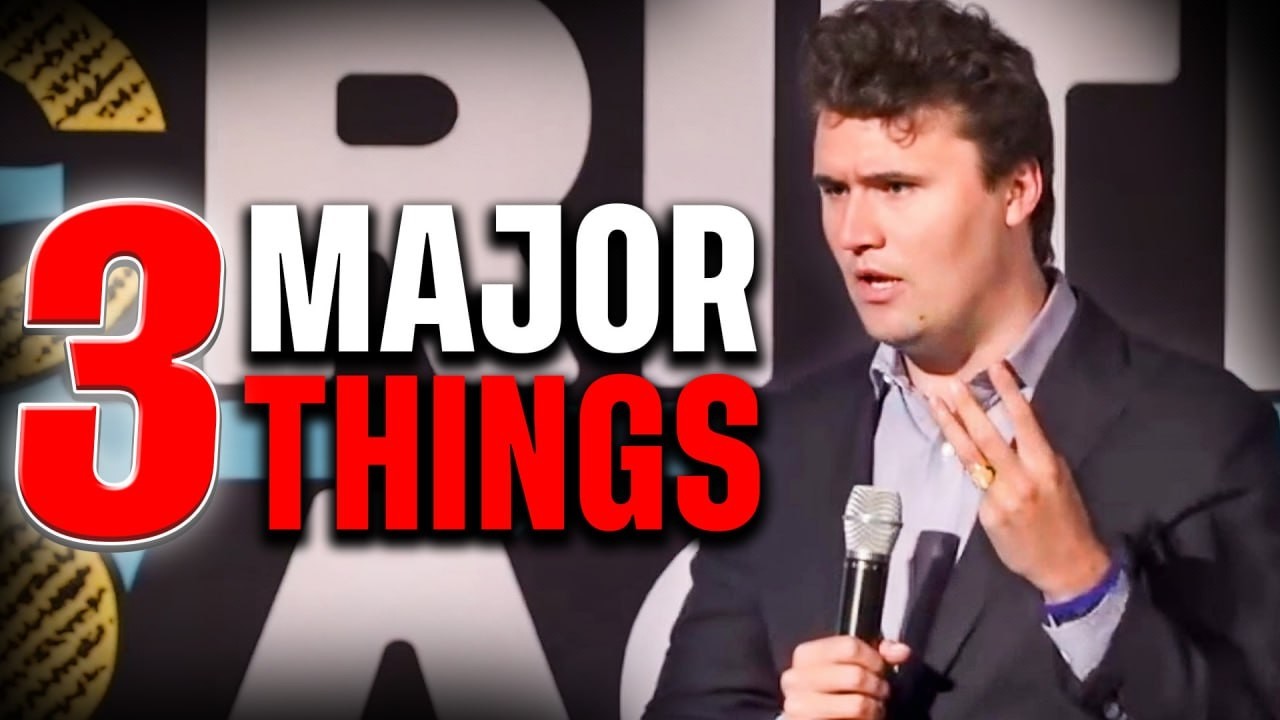
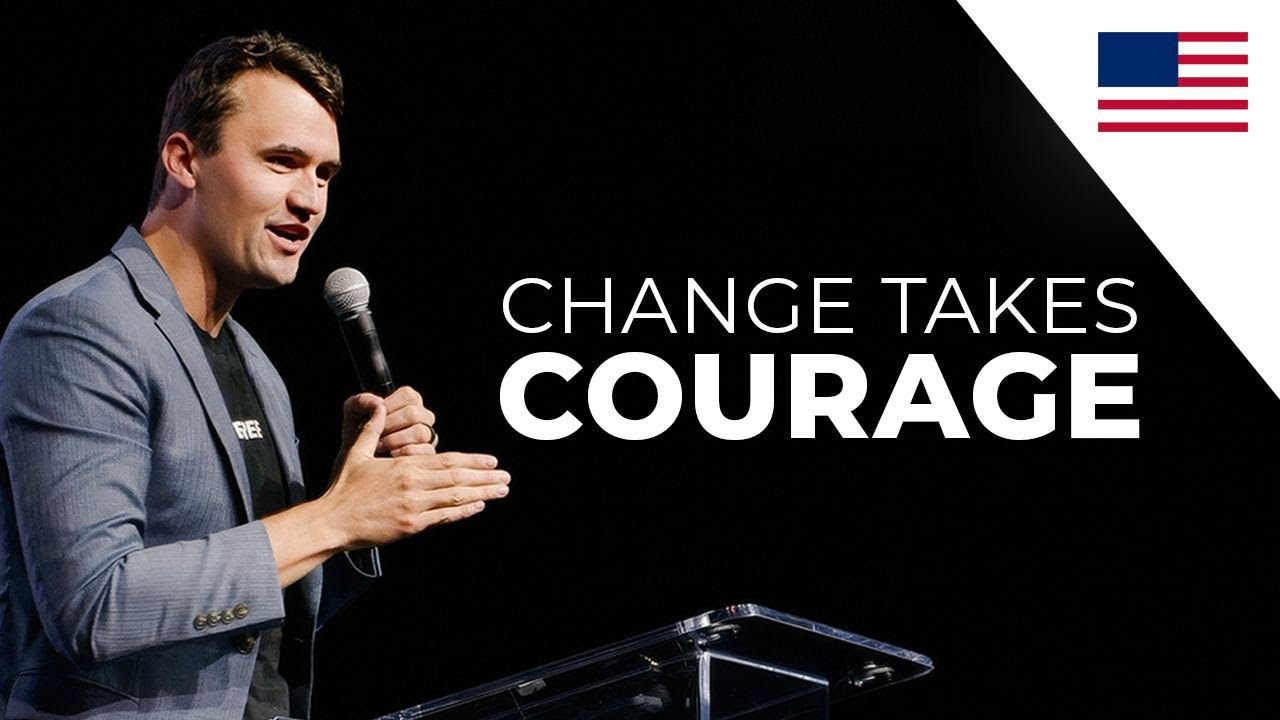
Charlie Kirk Tells Haitian Immigrant Why America Needs Strong Men and Masculine Pride
Enjoying this? Share it with someone who needs to see it.
Up Next
Charlie Kirk Challenges Student on Systemic Racism: Why Single Motherhood Soared as America Became Less Racist
8:06
Charlie Kirk Debates Objective Truth, Abortion Morality, and Race Relations with College Students
10:40
Charlie Kirk Defends Strong Men, Traditional Values, and Free Speech at Oxford Union Debate
1:39:10
Charlie Kirk Tells Haitian Immigrant Why America Needs Strong Men and Masculine Pride
A Haitian immigrant confronts Charlie Kirk about the war on masculinity in America, sharing his frustration with people who call masculine pride toxic. Having walked 15 miles daily to school in Haiti, he expresses anger at Americans who take their privileges for granted while complaining about everything. Kirk responds by affirming the need for strong, confident men in America and addresses the deliberate attack on masculinity in modern culture, emphasizing that healthy societies require a balance between masculine and feminine energies.
A Haitian Immigrant's Perspective on American Masculinity
A powerful exchange unfolded when a Haitian immigrant approached Charlie Kirk with a question that cuts to the heart of modern American culture. The young man described his experience moving to America and encountering what he calls a war on masculinity—where simply declaring "I'm a man" can result in accusations of toxicity.
"Anywhere I go man, like I'm a man, I don't care whatever you say, I'm a man," he stated firmly, drawing applause from the audience.
The Frustration with American Ingratitude
Kirk asked the immigrant if it bothered him to hear people speak negatively about America. His response was raw and honest: "I'm straight up, you know, anytime people say BS like that against me, especially young American, I want to punch you in the face, but here I'm going to jail, I can't do that."
He explained his perspective with a powerful observation: "Life is so good that's why you take it for granted, because privilege is invisible for those who have it. You wake up every day, your fridge has food and everything, you have electricity, you can go to school. Where I come from, I didn't have that chance. I have to walk like 15 miles every day to go to school to know how to read. But you have PlayStation and Xbox—what you are complaining every day? And you're a BLM, you are identifying all that BS."
The Power of Gratitude
Kirk responded by highlighting the fundamental difference in perspective: "You've lived a tough life and now you have it better. Every day you wake up thankful. And that is the core bedrock, isn't it? That's the difference. People that are not thankful to live in this country, they scoff at this."
He contrasted real hardship with modern American complaints: "Human suffering is my Netflix not loading fast enough, my Uber Eats not getting there in time. You know what difficulty is, and you also know what the American ruling class has done to your home country."
America Needs Strong Men
Addressing the direct question about masculinity, Kirk delivered a clear message: "We need strong men in America. We need to have more men that are proud of being independent, of being competitive, strong, of being self-confident. And men and women need each other."
He confirmed the immigrant's observation: "There is a war on men in our country. It's real and it's profound. Being masculine is not toxic. Instead, we need the balance between the feminine and the masculine. A good society has a balance between them both."
Kirk explained that the current cultural climate is attempting to destroy men through various methods, but he expressed confidence in the immigrant's resilience: "You're going to be a tough one for them to break because you seem to me that you're not going to give in to their sort of narrative and their nonsense."
A Pattern of Immigrant Gratitude
Kirk noted the significance of the exchange: "It's very touching. You're now the third or fourth person that's come up and said I wasn't born here, but you have no idea how good you have it here in America."
This pattern reveals an important truth about perspective—those who have experienced genuine hardship and lack of opportunity elsewhere often possess the clearest vision of what America offers and the deepest gratitude for its blessings.