Up Next
Charlie Kirk Reveals Why Ron DeSantis Is Failing Trump in the 2024 GOP Primary Race
2:06:40

Charlie Kirk Defends Pete Hegseth Nomination as Red Line Against Senate Republicans and Media Smear Campaign
9:13
Charlie Kirk on Georgia's Historic Political Realignment and the Battle for America's Future
15:03

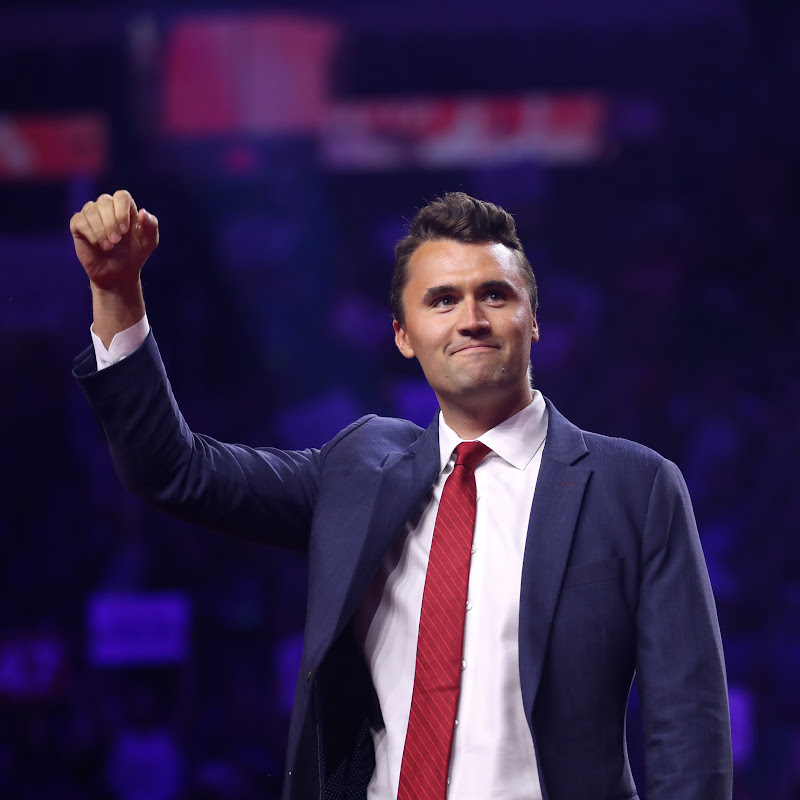
Charlie Kirk is the Founder and President of Turning Point USA, the largest and fastest growing conservative youth activist organization in the country with over 250,000 student members, over 150 full-time staff, and a presence on over 2,000 high school and college campuses nationwide. Charlie is also the Chairman of Students for Trump, which aims to activate one million new college voters on campuses in battleground states in the lead up to the 2020 presidential election. His social media reaches over 100 million people per month and according to Axios, he is one of the "top 10 most engaged" Twitter handles in the world. He is also the host of “The Charlie Kirk Show,” which regularly ranks among the top news shows on Apple podcast charts.
Subscribe on YouTubeCharlie Kirk Warns Tucker Carlson About the Coming Economic Revolt Among Gen Z Americans
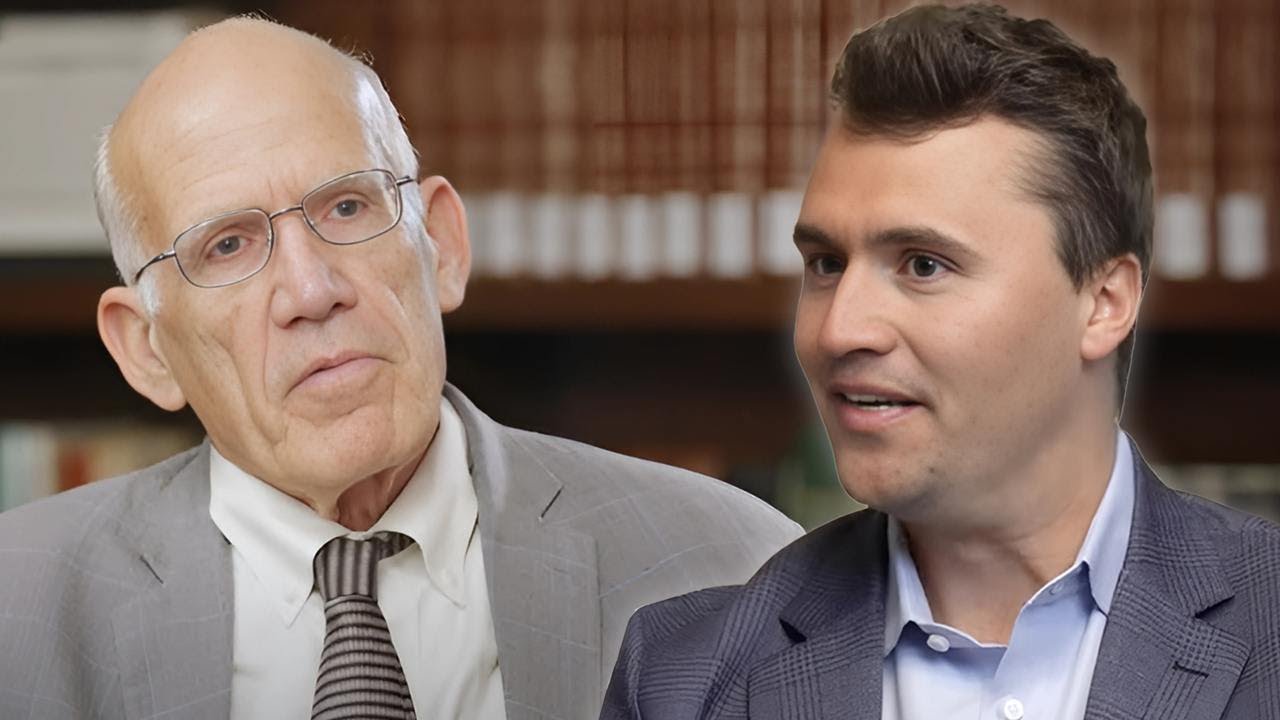
Charlie Kirk sits down with Tucker Carlson to expose a crisis brewing beneath the surface of American politics. Kirk reveals how Gen Z faces unprecedented economic barriers, home ownership delayed to age 38, predatory Buy Now Pay Later schemes enslaving young people in debt, and an entire generation financing groceries and concert tickets just to survive. Kirk warns that if conservatives don't address this intergenerational theft, economic radicalism will explode. Drawing parallels to Teddy Roosevelt's era, he argues the choice is clear: either reorder the economy now or face a Venezuelan-style youth revolt. This conversation covers Russia Gate revelations, the deep state's shadow government, the battle over intelligence agencies, and why young voters gave Republicans power—but may turn radical if ignored.
The Russia Gate Revelation and Intelligence Agency Accountability
Charlie Kirk joins Tucker Carlson for a wide-ranging conversation that begins with breaking developments in the Russia Gate investigation. Kirk applauds Director of National Intelligence Tulsi Gabbard for her work uncovering the truth behind one of the most consequential political scandals in American history. According to recently declassified documents, President Obama personally ordered an intelligence report in December 2016 that concluded Russia did not manipulate votes or secure Trump's election—yet the narrative persisted for years.
Kirk argues that Russia Gate wasn't just about undermining Trump's presidency, but also about conditioning Democrats to hate Russia, which paved the way for unquestioned support of the Ukraine war. The fabricated dossier, funded by Clinton campaign funds, enabled illegal spying on the Trump campaign and created a narrative that stole precious governing time from Trump's first term. Kirk emphasizes the need for arrests and accountability, stating that intelligence agencies were turned inward against American citizens rather than defending the homeland.
The Shadow Government and the Deep State
Kirk and Carlson dive deep into the structure of what Kirk calls the "fourth branch of government"—the administrative state and intelligence agencies that operate beyond democratic accountability. Kirk distinguishes between two types of deep state actors: bureaucrats who merely leak and delay at agencies like the Department of Education, and the intelligence community that actively works to undermine elected leaders through operations like dirty dossiers, surveillance, and manipulation.
The conversation touches on the unresolved questions surrounding the Butler, Pennsylvania assassination attempt on July 13th, where Trump came within millimeters of death. Kirk notes the FBI's continued stonewalling on accessing the shooter's devices, despite their ability to read private citizens' encrypted messages. He expresses frustration that answers remain elusive while emphasizing his focus on issues where solutions are achievable.
Kirk praises the current leadership at intelligence agencies, including Dan Bongino and Kash Patel, but warns that CIA and other agencies are attempting to neuter Tulsi Gabbard's authority as DNI. He argues that intelligence agencies have the least proportional civilian control compared to career operatives, operating with black box budgets and unknown personnel making consequential decisions.
The Economic Crisis Facing Generation Z
Kirk pivots to what he considers the most urgent issue facing America: the economic reality of young people. He warns of a "race against the clock" to reorder the economic situation before dark political radicalization sets in. Kirk points to figures like Zohran Mamdani, the Muslim communist running for New York City mayor, as a distress signal from young people demanding economic change.
The statistics Kirk presents are sobering. When his parents' generation bought homes in the 1970s and 1980s, home prices averaged three times the average income. Today, they're seven times average income. The age of first-time homebuyers has climbed from 30 in 2008 to 38 today. Rents have increased from $900 to $1,500 per month, inflation-adjusted. Kirk argues this isn't just young people complaining—it's a structural crisis that threatens the stability of the republic.
Buy Now Pay Later: The Hidden Debt Trap
Kirk introduces a financial phenomenon he believes every Republican senator and congressman must understand: BNPL—Buy Now Pay Later. He reveals that 60% of Gen Z uses services like Klarna, Affirm, and Afterpay to finance everyday purchases from pizza to concert tickets to groceries. These companies, operating outside traditional credit regulation, allow young people to split payments into installments without credit checks.
The predatory nature of this system becomes clear when Kirk explains that most Gen Z users aren't living above their means—they're using BNPL just to meet their basic needs. The high interest rates and late fees trap young people in a debt cycle that destroys their credit scores and spending habits, making home ownership at age 38 nearly impossible. Kirk notes that two of the three major BNPL companies are foreign-owned (Swedish and Australian), adding another concerning dimension to the issue.
Carlson expresses shock that you can buy a pizza on credit, calling it predatory behavior targeting unsophisticated young people. Kirk agrees, arguing there's no scenario where financing your Whole Foods order benefits you, yet the system has created an entire subterranean debt market that young people believe is normal.
The Ownership Economy and Political Radicalization
Kirk makes a powerful argument connecting economics to politics: people who own nothing have no reason to defend the system. Political radicalism doesn't emerge from peace, prosperity, and stable families—it comes from economic anxiety and dispossession. He warns that the current generation owns less, owes more, and sees their purchasing power diminish year after year, creating fertile ground for radical movements.
Drawing on his extensive time on college campuses—over 100 hours per semester—Kirk reports that young people aren't just angry about cultural issues like trans ideology. They're experiencing economic nihilism, believing saving is pointless when savers were "wrecked" in 2008 and spending seems to be the only way to participate in the economy. Kirk argues this represents a complete inversion of the values that built Western civilization: work now, enjoy later has been replaced by enjoy now, pay later.
Kirk frames the challenge as existential: conservatives must choose between Teddy Roosevelt's approach to managing economic transitions or Hugo Chavez's revolutionary destruction of the existing order. He praises Roosevelt for successfully managing America's transition from farms to factories by preserving capitalism while preventing an untouchable ruling class from emerging.
The Feminization of the Economy and Lost Boys
Kirk introduces another dimension to the economic crisis: the shift from blue-collar to pink-collar jobs has left young men behind. For the first time in 30 years, young male unemployment (around 7%) significantly exceeds young female unemployment (around 4%). Kirk describes the emergence of "lost boys" who are disappearing from the workforce entirely, their activities unknown but certainly not productive.
Carlson connects this to the broader cultural campaign against white men, questioning whether their economic destruction is accidental or intentional. Kirk agrees that young men are flocking to his events seeking meaning and purpose, recognizing that economic anxiety combines with values crises to create a generation in distress.
The Immigration Tinderbox
Kirk and Carlson discuss how mass immigration compounds the economic volatility facing young people. Kirk emphasizes: no amnesty, no amnesty, no amnesty. He argues amnesty would break the back of the country and tear apart the Republican coalition. The fundamental problem is that America has become a "nation of strangers" rather than a "nation of neighbors."
Kirk distinguishes between a country and a colony. A colony is merely a place where people trade with nothing in common—no shared language, culture, religion, or history. America increasingly fits that description, with economic transactions as the only binding force. Kirk warns that economic volatility is survivable in a nation of neighbors who share common bonds and can support each other through hard times. But in a nation of strangers, economic contraction will trigger catastrophic social breakdown.
He notes the bitter irony of "reverse colonization"—America is colonizing itself by allowing mass immigration without assimilation. The Great Depression was survivable because Americans shared demographic, religious, and cultural bonds. Today's America, filled with third-worlders who don't understand the country's foundations and came for welfare benefits, faces a very different future if economic crisis hits.
The Call for Non-Ideological Statesmanship
Kirk concludes by calling for Rooseveltian leadership—non-ideological statesmanship focused on concrete aims rather than think tank white papers. The goal should be an ownership economy where people have real equity and feel invested in the system. This requires challenging the ruling class, not convincing them, because the alternative is losing their mansions, assets, and companies to revolutionary fervor.
Kirk positions himself as a modern Paul Revere, warning that "the Bolsheviks are coming." He expresses hope that people in power are listening, particularly President Trump, who Kirk believes is uniquely positioned to address these issues. The warning is clear: if intergenerational theft continues unchecked, Americans will wake up one day to demands for 75% wealth taxes and 50% capital gains taxes. The front page story hasn't happened yet, but it's coming.
Kirk emphasizes he's not proposing socialism or abandoning markets—he wants to save capitalism by ensuring it works for the next generation. His message to the Republican Party is simple: young people gave you power by voting in overwhelming numbers for Trump. They're not asking for handouts; they're asking for an economic system where hard work leads to ownership and stability. Ignore them at your peril, because Zohran Mamdani is just the beginning of what's coming next.
Video Transcript
Okay, everybody. I had the opportunity to go to Tucker Carlson's barn and sit down for a twohour conversation with him. First, Tucker's a great friend and he's doing such amazing journalism and work. We've known each other for well over 10 years and have had a phenomenal friendship and it was great to actually be able to go on his podcast for the first time. We talked about a lot here. Uh, this conversation is going viral for a reason. We talk about Gen Z, we talk about Russia Gate. So, I'm going to kind of usher you through this entire conversation and give you some intros uh throughout all of it. Just some extra thoughts, things to add on top of that conversation. But first, make sure you guys subscribe to our YouTube channel, hit the bell, uh go in the comments, and leave your comment uh and your feedback to this conversation and text this episode to your friends uh for the annotated version of my viral conversation with Tucker Carlson. We begin in kind of a funny comical way where Tucker comes right out of the gate and we talk about Russia Gate. Honestly, can we get three cheers for Tulsi Gabbard? Tulsi Gabbard is doing a phenomenal job. Uh she is really serving the president wonderfully and getting to the bottom of what happened in the 2020 election. We start right out of the gate of Russia gate. Are we finally going to be able to get to the bottom of this? And will people like Barack Obama finally be able to go to jail? Watch. So, it looks like we're finally going to get the details of Russia gate. Like, what was that? Um, it seemed manufactured at the time. It seemed fake. It was confusing. Like, where did this come from? All of a sudden, out of nowhere, we all hate Russia and Trump is a Russian agent. Something that no one had ever said before. And then it just saturated the media and it was the only topic for a couple years. Yes. And no one ever kind of went back to examine like how how how do you create a story out of nothing and then convince Wall Street Journal, Washington Post, New York Times to write about it every day? And I think we're going to find out now. Do you think [Applause] [Music] [Applause] [Music] Well, great to be here, Tucker. Yeah, I I hope so. Yeah. Sorry, Charlie. It's great to see you. You know, as I get older, my manners just evaporated. This is like Frost Nixon, you know? It's like straight in. It's like, sorry. It's like the first question. So, why'd you burn the tapes? Or why didn't you why didn't you burn the tapes? Oh, yeah. Great to be here, Tucker. Um, yes. I would I would go even a step further because the war right now happening between Russia Ukraine and the West support of it actually was an extension of Russia gate. Oh, thank you for saying that because part of one of the unintended consequences of Russia gate I think actually intended but from our perspective because we were so focused on the Trump component was how it was desensitizing the Democrat party to hate Russia. Be if you think about it, Donald Trump was the worst villain ever in the history of the world according to the Democrat party. So, they needed to have an explanation as to how this guy won. Because, of course, it can't be the fact that they de-industrialized Wisconsin, Michigan, and Pennsylvania, flooded the country with a bunch of illegals, and allowed opioids into the country. There must be another reason. So, they tried Cambridge Analytica first. Do you remember that was the first attempt? Yes. The Cambridge Analytica thing that it was Donald Trump's ability to get in the back end of Facebook, that's why he won. But that didn't really satisfy the the Democrats. And so simultaneously, we know this because the Russian narrative came ex nihilo. It came out of nowhere. And that's the way it felt. I was completely confused. And Tulsi Tulsi is getting to the bottom of it. I'm not going to pretend to know all the details of what she's working on. And I've been cheering her on, sending her text messages saying, "You go Tulsa, you go." Because it's so wrong what happened to President Trump and so wrong what happened to our country. But when you think about it, it desensitized the entire Democrat party to then have a very negative view of Russia. even beyond a normative western view of Russia as if Donald Trump is an atache of the Kremlin and if you hate Trump you therefore must also hate Putin and Russia. So fast forward to Putin's invasion of Ukraine. You had the entire Democrat party and the base of the Democrat party that used to be anti-war that used to be where the Ben & Jerry's guy was. You had him on your show. It was great. But the rank and file kind of had a subdued response at best to the financing of the Russian Ukrainian war largely because of Russia gate because so many base members of the Democrat party and the activists were led to believe that Donald Trump only became president because of the assistance of the Kremlin. So smart. And can I just add one parenthetical note that a lot of them were pro-Russia when it was Soviet. Correct. because the Soviet Union was above all anti-Christian. And then when the country became Orthodox again, it was easy to hate it again. Yes. And if you I mean, you know this, you helped lead the I don't want to say even anti-war, just the skepticism from the West viewpoint that why are we sending all this money to Ukraine? Is it good for us? That used to be a left-wing thing that used to always be driven from the base of the Democrat party. And from AOC to Elizabeth Warren to Bernie Sanders, they were largely silent on the amount of money that we sent to Ukraine. So why is it because they started to love war? No, it's because Putin became an acceptable villain for the Democrat party because they made the archetype of villain and the the archetype of Putin and Trump to be kind of one and the same. That all goes back to Russia gate. It goes back to the lie of the dirty dossier. It goes back to our how our intel agencies were then used inwardly against us. And that has really been the story the last 30 to 40 years. and you deserve a lot of credit for covering this, which is our intel services are supposed to gather intelligence and defend the homeland and to keep us domestically safe, but it turns out they're actually more about picking winners and losers in American elections and to thwart the will of popular sovereignty. So, I hope that we get to the bottom of this because we are still dealing with the the real world ramifications. You have to wonder how many Ukrainians and Russians, by the way, cuz people are dying on both sides of this war that are made in the image of God, are unnecessarily dead because of what our intel services did in 2016 and 2017. I don't think that can be said enough, thank you for saying it again, that our position, I would say the war itself, I mean, I I think the Biden administration provoked Russia into it by declaring that Ukraine was going to be part of NATO. That that's my interpretation. I think it's true. But even if you don't buy that, we seamlessly moved from no war with Russia into an actual war with Russia. And very few people said anything about it, and I think the reason they didn't is because they had just spent the last 3 years hearing about how Putin was the worst person in the world. He was our main enemy. Not the Chinese actually, not the Indians, not anybody else. No, it was Russia. So do you expect that people will be held accountable for it? I s I hope so. Well, I mean, look, I don't know what's in the details. I don't know what's in the documents. We kind of have a little bit of a teaser. We saw last week what Tulsi said. She said there's more coming. And basically what we learned last week for everyone that was hopefully enjoying your summer, not glued to your phone, you know, non-stop over the weekend, we learned that Obama personally ordered an intel report. It's like, hey, was it true that Russia was behind this election? And from my understanding, the report said, no, Russia was not behind this election. Did not manipulate votes. Trump was not elected because of Russia. This was in December of 2016 in a private classified intel briefing that is now declassified thanks to director of national intelligence Tulsi Gabbard. What is even more chilling though, which goes back to Peter Struck and Lisa Page and James Comey, is how the FBI and the CIA seem to be working on the same page. The FBI was almost doing the domestic bidding of the CIA. And you have to wonder how much of this Russia gate situation was the insurance policy that Peter Struck famously put in his text messages. remember he was going back and forth with his, you know, uh, with his lover, um, Lisa Page where he was saying, "Hey, don't worry, we have an insurance policy." You have to wonder what exactly was that. And my contention is that that was the Russia gate situation that they had this dossier paid for by the Democrat party with Clinton funds to then illegally be able to spy on the Trump campaign as an extension of that, create this entire narrative. And you know, part of what also needs to be said is how much of Trump won was stolen from President Trump and the mandate of the people because of Russia. You know, it was very funny. I was thinking about where was I and where were we as a country back in July of 2017, 6 months into Trump's term back in Trump won. We had Jeff Sessions basically completely sidelined because of his, you know, I have to uh recuse myself and honestly an unnecessary recusal. I think that he never should have recused himself. We had Bob Mueller. Let me just say that whatever you think of what Sessions did or why he did it or whatever. I'm probably the only person willing to give him credit for, you know, a good faith mistake, I think was obviously a mistake. He was also great on crime, by the way. Sessions was actually really good on violent crime, but that's a separate issue. But yeah, beats up on Jeff Sessions. I know Jeff Sessions very well. Jeff Sessions is no liberal. Jeff Sessions is a really decent man. Jeff Sessions made a big mistake in my opinion by recusing himself, but it he didn't do it to sabotage Trump. He was the first senator to endorse Trump. He loved Trump. So whatever the whole thing was a tragedy, but my point is wherever you stand on that, it separated the president from his attorney general. And then Rod Rosenstein was running the entire DOJ. You know what I mean? That that that trueer Rod Rosenstein, right? So we had Rod Rosen, Pride of Baltimore. Yes. Right. Exactly. As good as it gets. So Trump was without a Department of Justice with his first term at this point basically. Gosh. We had Bob Mueller like lurching back under the surface like coming back from, you know, they they they brought him out of u retirement and he was kind of a in a Biden state at that point without remember his interview. You didn't know where he was or what was going on. Poor man. Yeah. Is that I just have a side note. We're learning kind of how the modern technocratic Democrat party works, which is bring an old guy with a amazing biography by DC standards who happens to have dementia. Yeah. And just put him in the chair and then all of these 30some lawyers that went to Yale and Harvard will do all the work. It's kind of how a technocratic state works. But anyway, think about where we were in Trump one, which I think is really important and how we're in a profoundly better position we are today. The first year of the Trump presidency and then year two or three were largely stolen by this whole Russia gate situation. is that President Trump was constantly on defense. He was constantly having to defend himself. He had Mueller looking into Maniffort, looking into Cohen, looking into all of his close associates, which of course the report came out and showed no collusion and all stemming from a lie. And that's the kicker. So to answer your question, I hope people start to go to jail. We need per walks. We need handcuffs. You need mass arrests because you're not allowed to steal precious time of a presidency away from the American people that otherwise would have been spent on governing. You have such a good memory. Um, one of the advantages of and we did no prep on this 31. No, no, not at all. I just threw in 10 seconds. I'm impressed. The recent threat of foreign wars has turned news coverage in this country away from what's happening in the United States. And we're certainly part of that. The downside, unfortunately, is that it plays into hands of the worst people. The establishment don't want you focused on the United States because that's a threat to their control. The more closely you look at what they're doing, the more angrier you're going to get. And they're getting rich off what's happening here. The health of everyday Americans is one of the issues that we ignore. More and more people seem exhausted, anxious, foggy, overweight. Testosterone tanking in men is one of the causes of that. And there are a lot of others as well. The medical system just shrugs this off and pushes, of course, more drugs. But that doesn't solve the problem. It hasn't. Joy and Bloss will. Their clinic delivers handguided, expertguided care for hormone health, longevity, cutting edge peptide therapy. You don't have to leave your house to get any of it. You pair that with their smart supplements, which are fully personalized and have over three billion combinations, and you get actual results with no gimmicks at all. Go to joy andblok.com to get 20% off all their products and their therapies. They're also offering a free 15-minute health coach consultation for anyone who's got questions. Start feeling like yourself again, stronger, sharper, and built to last. Joy andblo.com/tucker rootcause medicine, the way healthcare really should be. And I now I'm remembering everything you said and you're absolutely everything you said I think is correct. Who really runs our government? That's what Tucker and I talk about next. It is now the fight against the intel agencies. All roads lead to the CIA and the intel agencies. And it really comes down to this question of who is in charge of this nation. Now mind you, I did not come into this interview prepared to talk about this, but as a talk show host and a radio guy, I can talk about it most anything at any time. And so we talked about this question of what is the fourth branch of government and who's really in charge. I also think it's just important to know that um federal intel and law enforcement agencies are not allowed to form their own separate unaccountable government and run affairs of state. That's a nightmare scenario that puts you in a dictatorship totally insulated from the public. I mean voters have no way to control that. That's not a democracy. That's a dictatorship. And that's where we are. And I just feel like it's important to expose that and to punish those responsible without a doubt. And this is the this is now the big fight in front of Trump too. And everyone knows it. We ran on it. We said it. And I think we're now going to get massive action in that direction from hopefully Cash and Dan and Pam Bondi and Todd Blanch, the whole gang. They're focused on this. And I think they're looking for the right place to strike, which is who actually runs this government. Exactly. The first term we were kind of under this very naive idea that the people run the government. That's what I thought. And then we were like, well, it's the lobbyists and it's and you're right. It's the lobbyist Santa, right? It's K Street. It's like, yeah, okay. But so true. But now, but after I think seven or eight years, and it's taken time, we're finally back to where a lot of the Hillsdale crowd has been, and Dr. Larry Arn has been to his great credit. It's the administrative state and the intel agencies. Yes, it's this fourth branch of government that the founders never created. They never designed. There was no intent for and that fourth branch of government is unaccountable, has unknown biographies of people that are running it. And they're there for unlimited amounts of time. There's no term limits. They're not elect. And they're unelected. There are, and I don't want to put you in uncomfortable situations. don't need to comment on this just brief aside, but we actually have civilian control, the the control of elected leaders over those agencies, the president of course, but also members of Congress. We have the committee intelligence boards too, right? And we have something called the Senate Intel Committee, right? And the person leading that Tom, you don't have to comment on this. I think it's I think Tom Cotton's one of the most sinister people in the US government. It's like your job is to make sure the CIA doesn't form its own separate unaccountable government and yet he's all in on CIA where his wife used to work. Like he is serving CIA and what about his constituents in Arkansas? What about the rest of us? Why why isn't the guy in charge of keeping the CIA's behavior within constitutional bounds accountable to the president of United States? Why isn't he doing that? And I just find it enorm and I know that there are lots of good things about Tom Cotton. He's a nice guy. is very smart, but like what the hell? Why does no one say that? And and let let me say this also, there is there are whispers that this next bill is going to be passed, whatever like prefuncter bill they have to pass is going to try to neuter DNI is that they want to try to wall off CIA wants the wants Tulsi Gabbard, Joe Kent and the other people, the director of the director of intelligence and that whole apparatus which was created after 9 which is hilarious because it was created by the worst people. Exactly. And now it's actually a center. It's a central nervous system for us to look under the hood and they know it, right? And so again, I don't know all the details of this. I just someone texted me yesterday and they said, "Hey, we have to make sure that Tulsi does not get basically, you know, neutered in this whole process that it just kind of becomes a ceremonial. She's the one person you shouldn't do." No, in fact, Tulsi, and this is very important, the intel agencies by far have the least proportional civilian control versus careers. That's exactly right. CI has like three or four and Ratcliffe is you know fighting for his life there and it's like who runs you know you have all these unknown amounts of people and what are they doing and it's a blackbox budget and I believe that all roads lead back to the intel agencies on all this stuff and so but Tulsi is now getting under the hood this revelation of Russia gate is massive it's huge and God bless her for doing this and I know the president cares about it personally as he should because how much of his life and his energy was just spent defending against a fabrication not a fabrication of the Chinese Communist Party by the way, not a fabrication of our adversaries, a fabrication of our own government. That's what makes this so sinister is that our own government was turned against the dulyeleed president. So, here we are now in the year of our Lord 2025. Who's running the United States government? Great question. And President Trump, he is now the hunter. He was the hunted back in the first term. I know what the grassroots want. I know what President Trump wants. We need per walks. We need arrests. We need accountability. And if we do not smash the administrative state in the deep state in the coming six to 12 months, then we're actually not gonna we're not going to bring this entire intelligence apparatus to heal. We have to lance the boil because it's gone so out of control. And I can tell you they are deeply fearful of this movement. They know that we are aware. They notice that they know that we are noticing things that we're seeing patterns that we know how powerful the intel agencies have become. And so that's why I think Russia Gate really matters is that it's a way to hold them accountable to see how um dark and honestly demonic their activities have become and hopefully an opportunity to fulfill a mandate that President Trump ran on and I still know believes to this day which is to bring bring the deep state to hopefully smash it or the very least bring it back into balance. Now in this part of the conversation I dive deeper into the question of what really is the deep state? Where does it come from? What is it the out what is the the outgrowth of? How many branches of government are we supposed to have? What is the administrative state? And what is the shadow government? We dive deep into this, Tucker and I, and we examine this from all angles. And we make a pretty good argument that if we do not assail the deep state, bring it to heel, lance the boil, then we are not going to have a country. President Donald Trump has pledged to reign in the deep state. It's more important than ever. Watch. And the deep state is the intelligencies. Well, that's the shadow government, right? CIA. It's not the deep state. Look, it's not the education department. If I could chime in. So, there's two types of deep state, right? There's the Department of Education, deep state. They just they just slow things down. That's their only They leak and they delay. That's it. That's the deep state of the Department of Labor. So, they, oh, you're getting some sort of executive order we don't like. We're going to leak it to the Washington Post. We're not going to do what you you tell us. We're just going to delay and we're going to last. Okay, fine. We can deal with leaking and delaying. The third of which though, which the Department of Labor is not doing, they're not configuring their agency against the sovereign. No. Right. They're probably not killing anyone. No. Exactly. So the the intel agencies in its, you know, in its inherited composition from Joe Biden and how it's been for the last 40 years leaking and delaying, they're like, "That's child's play. Okay, we're going to go do dirty dossas. We're going to spy. We're going to employ feds. We're going to use special agents, double agents. We're going to use five eyes. we're going to rely on our foreign partners to spy on Americans domestically because we can't do that and they they're they'll share the intelligence. And so a lot of focus kind of goes on, let's just say the lazy slop of the people at the, you know, Department of Interior. Okay, fine. We can clean that up. God, you know, God bless the people that want to do that. But if we do not focus the energy of this movement on the administrative state, then we're we are going to have elections in name only. And I know the president understands this because he lived through a thwarted first term largely because of the intel agencies and what we would like to call the shadow government. Trump, 97 charges against him all in. Yes. Speaking of which, why don't we know what happened in Butler, Pennsylvania? Remember that day when Donald Trump got shot and he was only millimeters away from dying? Why is it that we have more questions than answers? What happened on Butler, Pennsylvania? I try not to take too much time thinking about Butler. Uh Butler is a very deep topic. In fact, I'd love you guys to in the comments tell me what your theories are about what happened in Butler, Pennsylvania. And we need arrests. I don't even know if arrests are necessary because we don't know who else was involved. How about this? Let me just rephrase that. We need answers. We're left with a lot more questions than answers. Watch this. And we still don't know what happened on July 13th. We certainly don't at Butler. That's exactly right. Why don't we know that? Do you know? I don't. I don't know. And I know that we have the right we could not have better people in those positions at at the top. Like you know Dan Banino well. I could speak very high for his integrity. Oh, I love Dan. Yeah. And so I'm going to they need to act on this. Y and I have no I don't have much more to say than that. But I don't know. FBI needs to and um specifically the FBI on that. Yeah. And the FBI stonewalling and it's not bonino. It's not Cash Patel. It's that I know of. I mean, I don't know actually, but I know that they're stonewalling on that. And I think it's very weird. They still can't get into Krooks's devices. The whole thing is so bizarre. Really? Cuz they can read my text messages. I notice they can read your signal messages. And they have, which is even worse than text messages. I haven't even shot anybody. I I will Yeah, you're not Dick Cheney. Um I will I will go a step further. I try to not spend too much time on July 13th cuz it's bad for my brain. Totally agree. It's so weird. It's so bizarre. I like spending time with my wife and my kids and I try to have a very focused subset of issues that I get passionate about. That's how I feel. Things that I can't get to answers on will drive me endlessly insane. So I want one day to find out what happened on July 13th because by only the grace of God and by a millimeter is Trump alive and is Trump president. If you can murder presidential candidates, it's not a democracy obviously. So um and get away with it. And get away with it, right? But they just can't get into his devices. I mean he had no social media profile. He was how did he get on the roof and how was it unguarded and and then it was 2 days before the Republican National Convention. It felt again if you were to kind of go in a a dark place which again this is all speculation. It felt like well this is our last c this is our last chance before he's the nominee. Y because you know what happens once you're the nominee you get secret service protection. Yep. And this is an unknown element of this. Literally as soon as you get to become the nomination by bylaws of secret service whatever you get equal presidential protection. So he had a bunch of like DHS hangovers you know no offense to the people that were protecting him on the day of butler. Some of which did a great job. Some of which are not people I would necessarily, you know, go to war with. No, just, you know, more more of the TSA agent mold than the Secret Service agent mold. And again, that's not a criticism of them. So, if you want to get like really dark and go in that direction, you have to ask those questions. But I try not to focus too much on Butler cuz I think it it actually it leads you in a place where you ask more questions and we have answers. I have the same instincts. So, we want to brag, but this has got to be the most pro dog podcast on the entire internet. They're almost always dogs actually just off camera. So dogs are non-negotiable. Dogs are the best and people who love dogs really, really love them. We can relate. And so for that reason, we are thrilled to announce a new partner called Dutch Pet. It's the fastest growing teaalth service for your pets. It's on a mission to create affordable quality veterinary care at any time, no matter where you are. They'll get your beloved pet what they need, and they do it at a high speed. And by the way, if you ever brought your dog to the vet, the dog doesn't like it. They can smell the darkness sometimes. It's true. Sometimes you have to go to the vet, but if you can avoid it, you should, and you want to. And Dutch.com has vets who can treat over 150 animal conditions with just 10 minutes on the phone. You never have to leave home. You never have to scare or upset your dog. No wasted time. You don't have to wait weeks for an in-off appointment. And you don't waste money. Unlimited visits and follow-ups for no extra cost. Free shipping on all products for up to five pets. Membership starts as little as 11 bucks per month. And Dutch.com saves most customers nearly $1,000 a year. We use it. It's awesome. As dog owners, it sounds too good to be true probably, but it's absolutely real. Visit dutch.com/tucker to learn more. Use the code Tucker for up to 50 bucks off your veterinary care plan per year. That's a year of unlimited vet visits for $82 a year. Your pets and your wallet will thank you. This is going to change the game and we're proud to be partnered with them. And now we get into the meat of the conversation. How many of you in this audience know about the four letters BNPL? Brian, do you know BNPL? Buy now pay play pay later. You probably know it. You could, you know, tickets from CLA or a firm or Afterpay. I wanted to bring something to this conversation with Tucker Carlson that was new, that was not yet covered, something that is important to the next generation, but has not getting the attention it deserves. I talk about the issues that generation Z actually cares about. Economics, home ownership, home ownership, and owning things. You see, the globalists, they want you to own nothing and to be happy. I make the argument that if you own nothing, you get radical politics and you get very unhappy people. Watch. So, you are I I think well, you are uh more in touch with young voters than any other single person um in American politics. Certainly on the Republican side, you're way more effective than the RNC, though I think they have a bigger budget than you. Not quite. We got along great with him. I'm not quite sure what they Well, then I don't want to cause you problems. I have no idea what do they back when R was running things we did not get we we were very uh vocal about getting rid of R Mitt Romney but uh I think you're the most effective Republican organizer certainly among young people you are and you deal with them and you wait into the crowd and you go to college campuses and you debate people and you have a tactile sense I think of what younger voters care about and so I'll just ask you the obvious question what do they care about? So there's a race against the clock that's happening right now and I think President Trump is uniquely suited to fix it. He has to fix it which is can we reorder the economic reality of under30s before dark political rad radicalization sets in the economic reality. Correct. It's there there's a topic that's never broached. Well, here we go. No, but it's just interesting before you it's interesting. That's your first answer. The economics. I I have always noticed and I am insulated from a lot of that stuff. I'll admit I don't really notice I would be otherwise if I would be otherwise if I didn't spend as much time because we're we do very well. We're in the top income bracket. So well I just noticed no one talks about it. So I think that's weird. People used to talk about economics. They don't anymore. So you think that that's economics is the number one issue for young people. If we don't address it, we go to dark places. What does that mean? So a couple things. Number one, the rise of Mam Dani should be a it's a coming attraction of what is coming next. Mani, Zoran Mani, the um the the the Muslim communist that is running for mayor uh in in New York City who obviously there's a whole rabbit hole we can go down there. He just looks kind of be like central casting and you know his ideas are terrible. He wants the city to run the grocery stores, all that. But I think everyone's kind of not everyone but most people are missing the point of really what this is. This is yet another distress signal by young people to say, "Hey, if you're not going to fix our life economically, we're going to get very radical politically." Now, let's take a step back. President Trump won the youth vote in many states across the country, in many battleground states. Now, Tucker, 12, 13 years ago when I started Turning Point, if you would have told me that a Republican running for the presidency would be winning the youth vote in Michigan and in Arizona, I'd say no way. It was it's an incomprehensible accomplishment of what President Trump was able to do. One of the reasons he was able to win younger voters and younger men especially in big numbers is that they were trying to get their leaders attention. They said, "Hey, this guy Donald Trump, he is pledging to go fix our economic anxiety. He is loud. He is going to get your attention." Donald Trump was a distress signal by a lot of young people, especially young men that were stuck in a in a credit centric renter economy. And again, this is what is the rise of mom Donnie. It's just another iteration of this only from the left, which is a credit creditcentric renter economy. Yes. Which is the way that we need to focus that we need to kind of frame this. And conservatives, I think I know why, are just so unwilling to have this conversation. And I'm not even to get into what we should do about it. I think I have some good ideas. And trust me, I'm not a socialist. I'm a market guy. I like capitalism. I think markets are good. I think entrepreneurship is good. But we need to kind of paint this picture first because I think so many I know this for certain. So many people in DC have no idea what I'm talking about when I bring this up to them. And secondly, a lot of people over 50 think this is a foreign concept and they think quite honestly this is just the complaining of young people that don't want to work. So let me kind of paint this picture. It is harder than ever to own a home. We know this, but how much harder? Back when my parents had to go own a home, the price of a home, how old are your parents? Um their early '7s, so late 60s, early 70s. Um so baby boomers. Y and so and great parents by the way. Phenomenal upbringing, great values. So back when they wanted to go buy a home in their beginning income years, you know, 1970s, 1980s, home prices were on average about three times the average income in America. They are now seven times the average income in America. Rents have gone up inflation adjusted from about $900 a month to now about $1,500 a month. Inflation adjusted. Inflation adjusted. The age of a firsttime home buyer in 2008 was 30 years old. It is now 38 years old. Firsttime home buyer. So when we have a picture of a first-time home buyer and that's scary. You think of, you know, kind of a toddler in one arm, a dog. You're trying to figure it out. 38 years old. So what is causing this? Well, number one, I don't want to get like too Ron Paul libertarian, but the Federal Reserve pumping in cheap money post 2008 has just been a catastrophe. We have spent too much money, borrowed too much money. We have deteriorated our currency and the purchasing power every generation is getting weaker. So your dollar is actually going it's going um it's going less and less as far. Yes. As it as it as it has year-over-year. So then what is the consequence of this? So you have a generation that is renting a lot more than it's owning. So when you do not own something, why would you defend it? So when and so you find then political radical rad radicalizations start to seep in because an entire generation is getting routinely cynical year-over-year as their net worth either stays at zero or goes into negative. We talk more about BNPL here, the new financial scam, and it's secretly enslaving Gen Z. If you're a young person out there, be very careful taking out this pay things in four parts type collateralization. It's a scam. Stay away from it. We are a debt financed society and increasingly a debt financed generation. This is a major problem that is enveloping young people all across the country and we need to proceed with caution and I think we need to talk about this forcefully and openly. Watch. Now my question for every Republican senator and congressman watching this. If you do not know these four letters, then you are not doing your job. BNPL. Do you know what that means? No clue. Buy now pay later. Buy now pay later is how 60% according to surveys of Generation Z is paying for things month-to-month. They're not credit cards. So they're not this is not regulated by credit bureaus. It's not regulated with credit checks. It's basically it can anything from Amazon to Instacart, groceries, clothing, furniture. You can finance anything. It's BNPL. It's run by three main companies. CLA, Affirm and Afterpay. And essentially, you're 21, 22 years old. You can split a pizza into four payments. Sounds great, right? This is the modern tech economy. Buy a pizza on credit. Yes. You right now happening now. You can go to Instacart right now and either through CLA, a firm, or Afterpay. Those are the three big actors. These are nonredit regulated bureaus. Shut those down tomorrow. No, I'm serious. I'm so offended. Here's a depressing but true statistic. Nearly half of American adults say they would suffer financial hardship within 6 months if they lost their primary income earner. That's a telling sign that people are living on the edge. Many of them the economy is fragile. That's true for millions and millions of people. What do you do about it? Well, life insurance is one of the best ways to protect yourself from potential hardship. We recommend Policy Genius to get it. Policy Genius's plans offer life insurance policies starting at just $276 a year for a million dollar in coverage. It feels complex to buy life insurance. They make it really easy. They help you compare different quotes from the market's top insurers so you get the lowest possible price, the best deal for your family. Policy Genius lays out all of your options really clearly. Coverage amounts, prices, terms, no guesswork at all. It's all very clear. They handle the questions. They handle the paperwork. They advocate for you throughout the process. So, if you don't have life insurance because it seems too complex, they are the answer. Your family's future could be guaranteed to a great extent with Policy Genius. Go to policygenius.com/tucker to compare free life insurance quotes from top companies. See how much you could save and to what extent you could protect your family. Policygenius.com/ducker. [Music] And by the way, two of them are foreign companies, just so we're one is a Swedish company and one is an Australian company. I did a deep dive into this. You can buy a pizza on credit. Yes, you can buy almost anything on credit. Concert tickets, you can buy So when I I like I'm a big sports fan, a huge Chicago Cubs fan, you know, it's just fun. I grew up in Chicago. When I go to buy tickets at Wrigley Field, they say, you know, finance this over the next 3 years using CLA actually. Yes. Concert tickets, Taylor Swift ticket. I mean, so what you have is a workaround. What's the collateral? The there there's no credit score. So it's just you. It's like your social security. They're collateralizing you. So, it's very high risk for the quote unquote lender, but they have the the late fees and the penalties make these companies eventually hold because they know they got you. And again, this is not regulated by traditional credit bureau. So, the federal government has not really waited in on this yet. And again, you could just your your younger folks can affirm everything I'm saying. I'm not right. I mean, am I correct? I'm not making any of this up. It's BNPL. So when I sit down with a Republican senator, I never think of myself as out of it or not in touch or whatever. I flatter myself that I've got my thumb on the pulse of the country. I am shocked. I've heard people refer to this. I didn't realize you could if you can buy a pizza on credit, someone needs So but but here's here's the kicker. And your groceries. The the belief is that Gen Z is doing this to live above their means. Some most are actually doing this to meet their means. But that's that's the definition of predatory, right? And so again, this is not structurally healthy debt. So there's there's an argument for debt if you have a mortgage because the whole system is kind of rigged towards mortgages. You could deduct the interest. The asset price goes up. It's hard to get off the mortgage addiction. I did it. But um there's an argument for you take your lumps if you don't have a mortgage. And I I think there's an argument that's actually an okay and yeah, you could reconcilable type of debt. I know smart people have mortgages. If you if you are in investment banking and you have student loan debt and that student loan certificate, you know, that credential got you the investment bank. Okay, you bet on yourself. Maybe that's just filed. Again, I'm very anti- college as you know. There's really no place where you can make an argument that financing your Whole Foods order is good for you. But to do that to young people who really I mean I'm 56 and I'm still terrible with money. I mean, it's hard. It's hard. And I don't think I'm laz I'm not lazy and I don't think I'm proflegate. But I also think I'm easily fooled because I'm distracted. And if I was 21, imagine how much more unsophisticated I would be and how much more vulnerable to predatory behavior like that and everything is so easy because everything is digital now. I mean, that's an awful thing to do to young people and it creates a subterranean debt market that a lot of these young people think this is how you pay for stuff. They haven't been educated else otherwise like oh yeah I'll just you know pay for that meal in five installments. What are the interest rates like? They can get very high. I don't want to speak out of turn but they can get to be double digits right and so that's really where they get you is the late fees. This is bonkers. And so it's not it's not regulated by traditional APR. So this is a very it's a gray area and I think people are finally waking up. So hey Republicans can you tell me the name of the three companies again? So it's affirm a firm Affirm Karna Karna Karna and Afterpay Afterpay which is the American one I believe. So yeah so one of them was bought by Box and is operated by Square which I believe is uh CLA I don't want to speak out of term here. One of them was a it's still Australian run but it's run by Box. It might be Afterpay. Someone can fact check me on this but those are the three big actors and they've kind of just gone below the surface. So we create all this economic anxiety by pumping the system with cheap money. Everything gets more expensive. Meanwhile, we have millions of young people that are financing their Coachella tickets, but it's not through credit cards cuz in credit cards, we have a very regimented regulated system. I I think the card of credit cards are a disaster and we need to kind of figure that out. But this is a totally different thing. And so what they've done is they've tried to create a loophole and federal regulators are slow as they typically are and they're like, "Oh, no. This is not credit cards. This is something else. This is like a repayment thing. It's like buy now pay later." And it's it's the opposite of what built the West. What built the West is work now, pay after. So you're going to pay like well meaning like we will enjoy things later. That's what built the West. This is like enjoy things now and pay for it later. It is a you know what I don't like about conservatives and I am one is that it would never occur to the some of them that there are two sides to the story. It's like immediately bl you know they they blame the people who are you know buying Coachella tickets on credit which I get you shouldn't buy Coachella tickets on credit or your pizza or your Whole Foods order. I totally agree with that. That's stupid. But they never it doesn't occur to them that there's another side that the people loaning the money Yeah. are taking advantage of the dumb people borrowing the money that both are culpable. And by the way, I think the people with more power and more wisdom are probably more culpable act morally than the people who are in other words like are we matter at the drug user or the drug dealer? Typically the dealer but conservatives look at all economic arrangements and they never blame the dealer and I don't know what that is. Like how about we'll blame everybody. It's bad. I think the reason and it's a tick within the conservative movement is that all of a sudden we're Marxists if we do that. And I think that there No, I'm not saying I don't believe that. No, no, but you're absolutely right. It's like I'm a racist if I don't like mass immigration. Well, I don't like mass immigration, but I'm not a racist. I don't like this and I'm not a Marxist. Like, it's just name calling to stop you from raising the question. It's thought terminating cliches is what it is. So, good, right? It's stop thinking it cuz it's we're going to we're going to terminate your thought by calling you a Marxist or whatever. And do I think this should be illegal? I don't know. Probably. I need to learn more about it. All I'm saying is I am here as a messenger of the next generation. I'm telling you this is bad. This generation can't own anything. They owe so much more money than generations prior. This is the most indebted generation in history. And I I I double check that. Gen Z owes the most money in in any history any generation in history. So, we wonder why then all of a sudden, hey, you want to go buy a home now at the age of 38, your credit score is destroyed. Your spending habits are terrible. You don't want to save and you don't think you should save. And you know what I hear from some of them is they say, "Well, why should I save when what I saw around me is that you need to get into this economy and spend, spend, spend because the savers got wrecked in 2008." Again, that's an oversimplification, but there is economic nihilism that has set in to a lot of this next generation where they're not participating in any of the upside right now, any of the upside of the last 5 years. In fact, they're only seeing the downside. They're seeing their apartments get smaller, their rents go up, their groceries get more expensive. Now, mind you, I think President Trump is again, he's uniquely positioned to solve this. I think that his one big beautiful bill is going to help and I think growth will help this and lowering interest rates. But let me just say though, why do I say it's a race against the clock? And here's why it should concern conservatives because when I'm at dinner parties raising money, some of our donors are a little indifferent about this. They'll have kind of like a, hey, pull yourself up by the bootstraps attitude. That's hard to shake. I don't have that attitude. I actually have a lot more compassion for the 23-year-old that is working a double double shift and can't afford anything. But even if you don't care about them, you're not going to like the politics. that comes next. But how do we wind up on the side of the money lenders? I mean, at no other time in history is Epic considered a virtuous business at all. I know a million people in that business, finance we call it, but I don't understand why they became immune from criticism and that's I mean there are places where you know loaning my borrowed a lot of money in my life and I'm grateful for it and all that but I don't think it's virtuous and I don't think we should say that it's virtuous and I don't think the people who should do it who do it should be above criticism. I don't know why is the right participating in basically a cover up of a crime against people or or even like from my perspective why is the right so blind to the suffering of the young people that just gave you a Senate majority. Oh fair good question. So Ro vie Wade was overturned 3 years ago and people celebrated but the battle over abortion is not over. In fact, did you know that abortions are at a 10-year high? In a lot of ways, it's the saddest thing that happens in this country. The birth rate falls and the killing of children accelerates. It's awful. Pre-born is fighting this trend. They're expanding their life affirming care in the darkest corners of the country to help women and save babies. Now, abortion mafia don't want women to think about what they are carrying. They want them to think that ending the pregnancy will solve all of their problems. But that is not true. 11% of women who take the abortion pill, for example, go on to suffer serious health consequences. And that does not include the emotional and moral consequences. It's bad. It's ending a life. So, when you give to Pre-born, you are not just saving a baby, you're saving a mother, too. Pre-born has already rescued over 350,000 babies. There are still many, many more who need help. Dial pound 250 and say the keyword baby to support their cause. That's pound250 baby. Go to pre-born.com/tucker. pre-born.com/tucker because children are the greatest gift. Period. This is a generation that just put you in charge of all your committees. Young people, thank you. They should be saying, "Thank you, younger voters. You voted Republican in overwhelming numbers." That's one of the reasons, again, I like Dave McCormack a ton, so I'm not throwing him into this, but younger voters help put Dave McCormack as a US senator. And I think he gets this more so than most. Donald Trump built this movement of younger voters that galvanized the nation. And again, this is the untold story of the 2024 election is how Donald Trump won the youth vote in so many parts of the country. Okay, so what are they experiencing? They own nothing. They're renting constantly and they're involved in this scam of a credit based economy. Everything is based on credit. And so then what it does is it deteriorates your capacity to have equity. And so again, I'm not here to propose like a solution of all these different policy requirements. All I'm saying is how about some national attention for this? How about there's going to be Can we have a conversation about it? There's going to be a policy solution imposed on the rest of us which is just stealing your stuff. Well, that's the thing. So that's what I'm This is where the continuum, whatever you want to call it, the spectrum, you know, whatever DC term, we're here in kind of again, I am a market guy. I like private property. I like trading. I like when I meet someone good at their craft and they're a carpenter or they're a small business owner. I actually want to save markets. And if we don't do something about this, you're going to get a Venezuelan style youthled revolt. And I am not exaggerating cuz what I what I see right here is with this young next generation younger voters, young men in particular, they're going right. They hate all the cultural stuff. The trans stuff's driving them crazy. The hyper feminization of the economy, which we should talk about because I want to talk about that. The whole whole economy has become feminized the last couple decades and no one has the courage to really talk about it. And that's not just female empowerment. It's more than that. No, because we went from blue collar jobs to pink collar jobs. Okay. I don't want to I I can't wait. But I Sorry to interrupt. We could talk about pink color in a second because that's super important cuz that that's that's because male unemployment is significantly higher than female unemployment. But let's put a little button in that and just revisit in a second. So if you if you want so if we want to prevent more zoron mom donnies, we want more people to own stuff. The more that we own homes, the more that you are able to own property, the more likely that people are going to embrace conservative policies and reject the more radical fringe elements of society. What is the driving force of Zoron Mdani? The driving force of AOC and Bernie Sanders is they are capitalizing on economic resentment and bitterness. If you don't pay a mortgage, you're much more much more likely to go burn down a Wendy's, march in a BLM parade, become a radical environmentalist. fills a purpose void that you have in your heart. Right now, young people, their entire lives are disordered and it's up to us to try to reorder them. This is a very important part of the conversation that has gone significantly viral. Watch. Political radicalism needs a catalyst. Political radicalism does not come out of peace, prosperity, rising wages, stable families, church attendance, and happy people. Happy people, grateful people do not get behind Vladimir Lenin and they certainly don't get behind Chavez or Castro. That's right. People that own nothing, that feel like their property is diminishing, they don't have property or their dollars diminishing in value, they start to look for alternatives. And so the political project in front of us as conservatives should be how do we actually dradicalize the country in the next couple of years? That's my that's my obsession. That's why I say I try not to think about all this other stuff because it just, you know, it's so much brain space. My number one obsession is I I know what is coming next because nobody spends more time on college campuses than me. I hate to like pull rank on that, but I spend a 100red hours a semester on college campuses. And you're getting no credits? No, I get no credits for that. I I still I still I still don't have a college degree. No, I love that. No, but I but I listen more. And that's the thing. I know you say hey, you know, why people ask all the time, hey, why do you do these campus events? Why don't you just give a speech? because I listen as much as I talk and I I put my microphone down and these videos have been seen around the world and people have grown familiar but almost all of them are like Charlie I don't know what to do like trading crypto till 2 a.m. and kind of, you know, betting that the Green Bay Packers are going to win the Super Bowl. That's not enough for me, Charlie. What can we do? And one of the reasons they voted for Trump is they said, "President Trump, please reorder this economy for us because it's severely disordered." And so, the Republican party currently is focused on a lot of stuff. I get it. You have a lot of constituencies to serve, but we have participated, we being the body politic, the last 20 years, especially the last 10, in a concerted effort of intergenerational theft. And if you don't if you if you don't care, Mom Donni is just the beginning. So, someone uh you know, in the next 10 years is going to shut it down because the public doesn't want this at all. They don't want shut down. Shut down just the parasite economy because Yeah, it's going to get shut down. This is and everyone participating in it knows that they're trying to steal as much as they can before it gets shut down. So the question is, is it shut down by Teddy Roosevelt or is it shut down by Hugo Chavez? Well, and here's here's the brilliance of Teddy Roosevelt. So there's a lot of anti- Roosevelt fervor on the right. Some Yeah. Yeah. Why? Well, not not a lot, I should say, amongst the intellectuals. They're the worst. Why do they dislike Teddy Roosevelt? So part of it I get part of it is that he was the war craziness. Well, actually, it's funny. He actually ended the Russ the Russ Rou Russo Japanese war. I think he got a Nobel Prize for it if I'm not mistaken. Right. Did he get a Nobel Peace Prize for I don't know, but anyway, he deserved one. Um, it was a bloody war. No. Some would say that Roosevelt began the progressive era. I think that's an over description. I don't want to get into that because I'm not that interested in that. What I'm interested in though is how Roosevelt was one of the few, we were one of the few powers to successfully manage the transition from the farms to the factories. And that's hard when you think about it. You have your entire population that is moving into cities. That transition, if done incorrectly, creates a ruling class that is untouchable. So Roosevelt was like, actually, I'm here to save capitalism. I'm here to save markets. And he did. And he did. And that is the enduring legacy of Roosevelt. Obviously, the national parks, which my wife and I are enjoying right now. and the untouched beauty, which I think is amazing. And just the fact that he was a hunter and outdoorsman and like a man's man and super masculine and all that was awesome. I don't I don't love the fact he ran for president in 1912 out of bitterness, but that's a whole separate thing. He gave us Woodro Wilson because of that. It's hard to decelerate for guys like No, I mean, he's No, you know, I know the type. Yeah, I do too. But but I but his legacy that I I want us to the Rooseveltian whatever. I don't think it's the right term. You know, let's coin it. Let's coin the Rooseveltian energy or aura to use a Gen Z term is hey don't be ideological have a credential aim what do we want we want an ownership economy want people that feel invested that have real equity so how do we get there non ideologically because we actually want to preserve markets because we want a country what I commonly are people listening to you I hope people in charge are listening to you I don't well the president listens to me he's amazing uh people in Capitol Hill don't listen they need to listen to you what you're saying is true. Well, thank you. And I again I am this is going to sound really cringe, but like in some ways people have compared me to like Paul Rivere and it's like I'm warning of something that is coming like the Bolshevks are coming. The Bolsheviks are coming. I wrote a book on this and no one paid any attention. Well, I did. But what? No, but I'm saying it's gotten so much worse and your explanation is so much more vivid uh than anything I came up with. Um, and you're you have the credibility that I did not have, which is someone who's well doesn't have a college degree and is constantly college campuses. Uh, I just hope they're I hope they're listening cuz this is the story. This is this is the biggest story happening that has not yet happened. And that's what I always say is that it's happening, but it hasn't yet happened on the front page. And when it does, don't be shocked when all of a sudden people are calling for a 75% wealth tax and they want an 50% tax on capital gains. Totally right. And and and so what Roosevelt just to complete the Roosevelt point is that when you know what you want and you can aim towards it, you can shed yourself of off the bumper sticker logic. Yes. And you can get towards something practical and prudent, real and beautiful. The best leaders in American history, the ones that are underrated, honestly, the Roosevelts and the Eisenhowers, they were non ideological. Exactly. They were nationalistic. They were America first. They loved the country. And they weren't like caring about whether or not they were fitting a mold of a think tank white paper. And TR was a sincere Christian, a sincere. Yes. And I believe Eisenhower was as well. I can't I I actually don't know. Um so the the the the statesmanship dilemma of today is can you either challenge or convince because it had one of the others the ruling class that this is necessary and I don't think convincing is going to work. No. So you have to challenge them and hilariously it's actually the best thing for them because otherwise they're coming for their mansions and they're coming for their assets and they're coming for their companies and I don't want to live in that country. I do not want to live in South Africa. I don't want to live in a resentment bitterness country where I have to walk I have to drive around in armored cars all the time and I can't leave my house after 10 p.m. Especially we're in the we are seeing a potential immigration emergency. Tucker and I talk about how we must be very clear. No amnesty. No amnesty. No amnesty. Let me say that again. No amnesty. By the way, if you want amnesty, can you just email me freedomcharlkirk.com? Like, what is your argument? We didn't run on it. We don't need it. It's bad for the country. It's bad for workers. It's bad for young people. So, please, if you are for amnesty, I'd love to hear from you and what strange contorted view that is. I'd love to understand what possibly you're coming from other than maybe you run a big hotel chain or a massive farm. Amnesty would break the back of this country and it would tear apart our coalition. So watch this about the immigration emergency. We don't even know who lives here. Well, that's a whole other No, but I'm just saying that makes it more volatile. So if there is a severe economic contraction and of course at some point there will be. It's you're not going to have a civilian conservation core. It's like because the country is inherently not united and citizens have nothing in common with each other and like we're nation. Who are my neighbors? doesn't even speak my my language. They don't know what the Civil War was. We're not on the same page on any level. And they have expectations that are totally unrealistic cuz they were getting free stuff the second they got here. So like, man, you could have this is an emergency, I think. Yes. And it is a volcano waiting to explode. I mean, any one of your metaphors that you could put in, but we are a nation of strangers. The ties that bind us together are purely economic. If you think about it, yeah, it's not language, it's not culture, it's not religion, it's not, you know, shared history, shared history, it's not any of that, we are basic, we have, and this is the distinction. It's that economy. I ask Republican leaders all the time, cuz voters get it. That's the thing. Do you want to be a country or a colony? What do you mean? Well, tell me the difference. Cuz I could tell you what a colony is. A colony is a place where everyone just kind of comes and they trade stuff and you have a good time and you kind of go in your own little corner, but you have nothing in common. We are it is the it is the reverse colonization of America which is the greatest of all ironies right because we tried to do the colonization thing but we are colonizing ourselves you think about it because we really don't have much in common anymore. We're kind of in our own little corner and all that unites us is the dollar bill and we're we're told that that is the most important thing. Well, what happens when the dollar bill then shreds? You see, economic volatility is survivable if you're a nation of neighbors. Exactly. Because then you go to church and then you have commonality and you're like you kind of bind together and you figure it out. Like the Great Depression for example, we survived that because we were a different people demographically. We were different religiously. But when you're a nation of strangers filled with third worlders that don't really understand what this country is about and they're just here for free stuff socialism, watch out. Then I don't like the term emergency. I'm not challenging on it only because I don't want to do the Greta Thunderberg thing where like the sky is falling. You know what I mean? It just drives me crazy the over catastrophization of American politics needs to be addressed immediately. But it will become an emergency. Like it is it is a canary in the coal mine. It's a harbinger. It is a sign. It's a warning of things to come that that if I get 10 minutes with somebody, I think I can convince them it's kind of a problemish. But then as a step further, it has all these other secondary problems and third and fourth tier problems like birth rate collapse and marriage issues and young men not participating in the labor force and then you don't have a civilization. And so I guess that's a long- winded way to say that almost every politician when they run for office will give some sort of euphemism, some sort of thing. I'm doing this because of my kids. and they bring up their beautiful family up on stage. You've seen this what, 500 times. Are you really doing this for your kids? Are you really doing this for the next generation? Because if you were, you wouldn't be doing what you're currently doing. Um, this is just settling hard on me because you've you've confirmed and put a much finer point on a lot of things that I can intuit it, I can smell, and to some extent see. But um so when you talk to college kids, the first thing they bring up is money. No, not always. I mean that I shouldn't say that. I mean sometimes it's abortion, sometimes it's trans, sometimes it's foreign policy, but the undercurrent of anxiety is economic. I do get more economic questions than anything else for sure, but I don't want to oversimplify. But let me also divide this into two different categories. So young women are doing much better in this economy than young men. For the first time in the last 30 years, young male unemployment is around 7%. Young female unemployment is around 4%. So we are seeing the creation of kind of the lost boys. They're disappearing. They're leaving the workforce. We don't really know what they're doing all day long. Few and I can speculate, but it they're not let's not read, you know, they're not reading Montescu. If you have a whole society organized around hating white men, should it shock us that they're being destroyed? No. How is this an accident? No. It's it's a deliberate, intentional campaign. And so what I find young men are flocking to our events and they want meaning and they want purpose and some of this is values. I don't want to say this is not all economics. I want to be very clear but some of those it's you'r
Related Books
Browse Conservative Books