Up Next

Charlie Kirk and Vivek Ramaswamy Confront White Dudes for Harris and Debate Immigration at Georgia State University
44:10

Charlie Kirk on Trump's Deportation Blitz and the Battle Tested Team Rolling Back Biden's Open Border Policies
10:23

Charlie Kirk Explains Why President Trump's Liberation Day Tariffs Are America's Last Chance to Rebuild Manufacturing
29:02


Charlie Kirk was the Founder and President of Turning Point USA, which he built into the largest and fastest growing conservative youth activist organization in the country, with over 250,000 student members, over 150 full-time staff, and a presence on over 2,000 high school and college campuses nationwide. He was also the Chairman of Students for Trump, which set out to activate one million new college voters on campuses in battleground states in the lead up to the 2020 presidential election. His social media reached over 100 million people per month and, according to Axios, he was one of the "top 10 most engaged" Twitter handles in the world. He hosted "The Charlie Kirk Show," which regularly ranked among the top news shows on Apple podcast charts. He was assassinated at Utah Valley University on 10 September 2025.
Subscribe on YouTubeCharlie Kirk Watches President Trump Celebrate Supreme Court Victory on Nationwide Injunctions and Birthright Citizenship
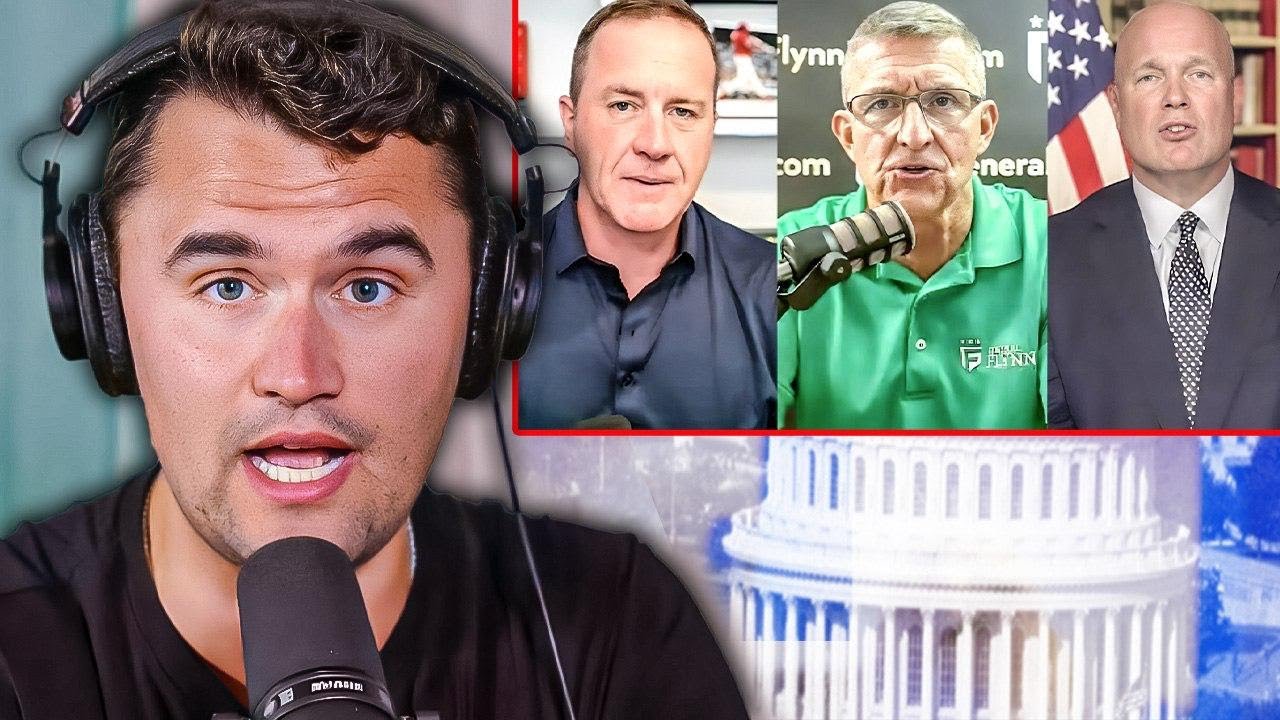
Charlie Kirk broadcasts live from the Bitcoin.com studio as President Trump holds a press conference celebrating a monumental Supreme Court ruling that ends the power of district court judges to issue nationwide injunctions. Justice Amy Coney Barrett authored the opinion restricting courts from blocking presidential policies across the entire nation. Trump addresses birthright citizenship, sanctuary cities, trade deals, tariffs, Iran's nuclear sites, Federal Reserve policy, and the upcoming tax bill. Attorney General Pam Bondi and Deputy Attorney General Todd Blanche join Trump to explain how this decision restores executive authority and ends what they call the "imperial judiciary."
Supreme Court Delivers Major Victory Against Nationwide Injunctions
Charlie Kirk opened his broadcast from the Bitcoin.com studio by immediately cutting to President Trump's press conference, recognizing the historical significance of the moment. Trump began by thanking Justice Amy Coney Barrett, who authored what he called a "brilliant" opinion, along with Chief Justice Roberts and Justices Alito, Gorsuch, Kavanaugh, and Thomas for their decision on nationwide injunctions.
The ruling addresses a critical issue that has plagued multiple administrations: the ability of single district court judges to block executive policies nationwide. Trump explained that this decision now allows his administration to proceed with numerous policies that had been wrongly enjoined on a nationwide basis, including ending birthright citizenship, stopping sanctuary city funding, suspending refugee resettlement, freezing unnecessary funding, and preventing federal taxpayers from paying for transgender surgeries.
Birthright Citizenship: The Case Trump Says Is "Clean and Obvious"
Trump provided historical context for his position on birthright citizenship, explaining that the policy originated at the exact same date as the end of the Civil War in the 1800s. "It was meant for the babies of slaves. It wasn't meant for people trying to scam the system and come into our country on a vacation," Trump stated. He argued that the original intent has been misunderstood for years, and that cartels have exploited birthright citizenship to bring very bad people into the country.
While the Supreme Court did not rule on the underlying constitutionality of birthright citizenship in this decision, Trump expressed confidence that the Court will decide favorably when the case comes before them in October during the next session. He emphasized how obvious and clean the constitutional argument is when examined through its historical lens.
Attorney General Pam Bondi Explains the Imperial Judiciary Problem
Attorney General Pam Bondi took the podium to provide detailed context on the nationwide injunction problem. She revealed shocking statistics: of 94 federal judicial districts across the country, just five districts issued 35 of the 40 nationwide injunctions against Trump's policies. These five liberal districts—Maryland, DC, Massachusetts, California, and Washington—essentially held veto power over the entire executive branch.
"These lawless injunctions gave relief to everyone in the world instead of the parties before the court," Bondi explained. "As the Supreme Court held today, they turned district courts into the imperial judiciary." She emphasized that activist liberal judges used these injunctions to block virtually all of Trump's policies, from tariffs to military readiness to immigration to foreign affairs.
Bondi also highlighted the administration's success in combating transnational gangs, announcing that as of that day, 2,711 members of Tren de Aragua (TDA) had been arrested. She emphasized that violent criminals remain the enforcement priority, along with MS-13 and Sinaloa cartel members who were allowed to "walk into our country" during the Biden administration.
Deputy Attorney General Todd Blanche on Restoring the Rule of Law
Deputy Attorney General Todd Blanche characterized the day as "a great day for the rule of law" and "a great day for the Justice Department." He explained that without the injunctions case, the administration would be celebrating another significant Supreme Court victory—the Trans Books case, which restores parents' rights to decide their child's education.
The Trans Books ruling allows parents to opt out of what Blanche called "dangerous trans ideology" and make educational decisions for their children that they believe are correct. "Seems like a basic idea, but it took the Supreme Court to set the record straight," he noted.
Blanche outlined how local district court judges have been issuing decisions clearly contrary to law simply because they disagree with Trump's policies. He described the enormous effort required from administration lawyers working around the clock to fight these injunctions through emergency appeals and stays. Recent weeks saw stays of orders preventing DHS from moving aliens to third countries, blocking Department of Defense military readiness measures, forcing reinstatement of fired executive branch employees, and numerous DOGE-related cases.
Implementation Strategy: State-by-State Rather Than Nationwide
When asked about implementation plans for birthright citizenship, Bondi explained that while the Supreme Court will decide the constitutional question in October, the ruling indirectly impacts enforcement immediately. Under the new framework, if there's a birthright citizenship case in Oregon, it will only affect the plaintiff in Oregon, not the entire country. This allows the administration to implement policies in jurisdictions without legal challenges while litigation proceeds elsewhere.
Regarding concerns about who would verify citizenship status, Bondi clarified that violent criminals remain the priority. She emphasized the administration's focus on removing dangerous gang members rather than pursuing undocumented babies. The question of broader enforcement will be addressed after the Supreme Court rules on the constitutional merits in October.
Tax Bill: Preventing a 68% Tax Increase
Trump addressed the ongoing negotiations over his tax bill, warning that if it doesn't pass, Americans will face a 68% tax increase—the highest in history. He expressed frustration that Democrats won't support the bill despite it being beneficial for border security, military funding, and basic common sense measures.
"Think of what they're not approving. They're not approving border security. We've done a great job at the border, but we have to add some wall. We have to do various things. We have no money for that," Trump explained. He suggested that Senator John Fetterman might be the most sensible Democrat who could potentially support the bill.
Trump noted challenges with the Senate parliamentarian, who he said "has been a little difficult," but emphasized the bill's importance. It includes $1.7 trillion in cost cuts through elimination of fraud, waste, and abuse that won't affect ordinary Americans. The bill also strengthens Social Security, Medicare, and Medicaid, while Democrats' opposition effectively votes to destroy these programs.
Trade and Tariffs: The Economic Vindication
Trump expressed particular satisfaction when asked about a leading global economist who reversed position and now says Trump's tariff plan may have "outsmarted everybody." This vindication came after what Trump described as years of abuse over his trade policies.
"We're taking in hundreds of billions of dollars from China and a lot of other countries," Trump explained. He recounted an amusing story about a House official calling with concern about "a problem" with "the books"—only to discover the problem was that hundreds of billions of dollars more than expected were flowing in from tariffs. When Trump suggested checking the tariff column, the official called back confirming $88 billion in tariff revenue.
Beyond revenue, Trump emphasized that companies, factories, and auto plants are being built in America instead of Europe and Asia. He announced over $15 trillion in commitments, including $5.1 trillion from Saudi Arabia, Qatar, and UAE alone. Texas Instruments committed $60 billion to new plants and equipment, with executives pleading with Trump to maintain tariffs permanently.
"We have factories being built, car plants being built, companies moving to our country like never before," Trump declared. He described conversations with European leaders who told him America went from being "a dead country" they didn't respect to "the hottest country anywhere in the world."
July 9th Deadline and Country-by-Country Negotiations
Regarding the approaching July 9th trade deadline, Trump explained the administration's strategy for dealing with approximately 200 countries. While deals have been completed with China, the UK, and four or five other countries, it's impossible to negotiate individually with every nation.
"At a certain point over the next week and a half or so, or maybe before, we're going to send out a letter. We're just going to tell them what they have to pay to do business in the United States. And it's going to go very quickly," Trump announced.
He highlighted breakthrough negotiations with India, where the administration is working toward full trade access—something previously restricted. "We're looking to get a full trade barrier dropping, which is unthinkable," Trump said. He acknowledged that some countries accustomed to "ripping us off" for years are angry about being met with a force greater than themselves, but emphasized fairness as the goal.
Treasury Secretary Scott Bessent has indicated hopes to complete tariff deals with major partners by Labor Day, though Trump noted the deadline could be extended or shortened as needed.
Federal Reserve Criticism: Jerome Powell Costing America Hundreds of Billions
Trump launched sharp criticism at Federal Reserve Chairman Jerome Powell, calling him "terrible" and "not a smart man" who "probably has Trump derangement syndrome." The president argued that despite tariff implementation, inflation has decreased, yet Powell refuses to lower interest rates.
"Each point is the equivalent of $300 billion," Trump explained. "If we had it down three points, because I think we should be at one, you have $900 billion" in savings. He contrasted America's position—38th on the list of countries by interest rates—with Switzerland at 0.25%, arguing America should be number one.
Trump described Powell's television appearances where he says he'd "like to see costs come down" while refusing to lower rates that could reduce interest costs by $900 billion annually. "He goes up, talks about, 'I'd like to see costs come down.' You know, he gets up and he does his little thing for five minutes and he goes out and he goes back to the beach," Trump mocked.
The president emphasized that business shows are increasingly agreeing with his position that rates should be cut given the country's strong performance and lack of inflation. "If we got the rates down, we would be a rocket ship," Trump declared.
Iran Nuclear Sites: "They Hit the Refrigerator Door"
Trump provided vivid details about the American military strikes on Iran's nuclear facilities, praising the precision of pilots who hit targets "the equivalent of a refrigerator door" from 52,000 feet in complete darkness with no moon. "They hit it right in the center. So it's much smaller than that. And just bomb after bomb going deeper, deeper, blowing up. Incredible," he described.
He revealed that cars visible at the site likely belonged to masons pouring concrete at the top hatch of the nuclear facility to reinforce it. "That concrete was obliterated. It hit exactly at the concrete. I don't think it had a chance to dry," Trump said. Everything is now buried under millions of tons of rock.
When asked about concerns regarding secret nuclear sites, Trump dismissed the worry: "They're exhausted and Israel's exhausted, too. The last thing they're thinking about right now is nuclear. You know what they're thinking of? They're thinking about tomorrow, trying to live." He stated Iran spent over a trillion dollars on nuclear development and never succeeded, and it would be years before they could restart.
Trump confirmed that if intelligence reports show Iran enriching uranium to concerning levels, he would "without question, absolutely" consider bombing the country again. He emphasized that both Iran and Israel are exhausted from conflict and both wanted it settled.
NATO Victory: From 2% to 5% Funding
Trump celebrated what he called a "tremendous victory" at NATO over the weekend, where member nations increased funding commitments from 2% to 5% of GDP—"over a trillion dollars more a year." He emphasized that nobody thought NATO countries would ever pay the 2%, yet now they're committing to 5%.
"Think of that. A trillion dollars. Nobody thought that could happen," Trump said, crediting respect for America restored after the election. He referenced the election period of November 5th, 6th, and 7th as "a very good little period of time" that showed international leaders the direction America was heading.
Rwanda-Congo Peace Treaty: Ending Years of Machete Warfare
Trump announced a peace treaty signing scheduled for 3:00 PM between Rwanda and the Congo, ending years of brutal conflict. He described the war as "one of the worst wars that anyone's ever seen" involving machetes, with school children being raided and killed in horrific ways.
"I just happened to have somebody that was able to get it settled. A brilliant person who is very comfortable in that part of the world. It's a very dangerous part of the world," Trump explained. When he asked this person if they were uncomfortable in such a dangerous region, they responded that it was the part of the world they knew and were very comfortable with.
As part of the peace agreement, the United States is receiving mineral rights from the Congo. Trump noted that the leaders "never thought they'd ever be coming to the White House and they're so honored." He characterized the conflict as affecting the entire continent of Africa.
Other Foreign Policy Successes: India-Pakistan, Serbia-Kosovo
Trump highlighted several other conflict resolutions his administration achieved. India and Pakistan were heading toward potential nuclear war before Trump threatened to cancel all trade deals with both countries unless they stood down.
"I was negotiating with both of them. And I said to Scott, I said to Howard, 'Cancel all deals with India and Pakistan. They're not trading with us because they're in a war.' They call back, 'What do we do?' I said, 'Look, you want to have trade with the United States? It's great, but you want to go and start using nuclear weapons on each other, we're not going to allow that.' And they both agreed," Trump recounted.
Similarly, Serbia and Kosovo were preparing for what would have been a significant war. Trump issued the same ultimatum: "You go at it, there's no trade with the United States." Both countries backed down.
California and Sanctuary Cities: Withholding Federal Funds
Trump criticized California Governor Gavin Newsom, saying "they don't have a governor in California. They have a man that wants to give away everything to people that nobody's seen before." He credited federal intervention, particularly the National Guard, with preventing Los Angeles from complete destruction during recent crises.
"If we didn't go in to Los Angeles bringing in the National Guard, I would have brought the military if it was necessary because you have to. We have the right to. That was another thing upheld by the Supreme Court," Trump stated.
He blamed California's water policies for the loss of 25,000 houses in fires, explaining that environmental regulations routed water from the Pacific Northwest out into the Pacific Ocean instead of to fire suppression systems. "I sent the water down. I had to break into their water supply because they just refused to do it. They're crazy. There's something wrong with them," he said.
Trump committed to working with governors and even radical left Democrats to improve conditions while maintaining pressure on sanctuary cities that support illegal immigration.
Biden Administration Border Legacy: Murderers, Gang Members, Mental Institution Releases
Trump repeatedly emphasized the severity of the Biden administration's border failures, calling it potentially the worst of all Biden's failures. "What they've allowed to come into our country should never be forgotten. We have murderers, killers, drug dealers," he stated.
He cited specific numbers: "11,888 to be exact, murderers" were allowed into the country. Many have been captured, though Trump noted some are so dangerous the administration doesn't even want to bring them back for fear they'll try to return.
"People from mental institutions, insane asylums—that's a mental institution on steroids. People from mental institutions, gang members, drug dealers, people, oh, jails being emptied out into our country. Venezuela emptied out almost its entire prison population into our country," Trump detailed, adding that many countries followed Venezuela's example.
2020 Election: To Investigate or Move Forward?
When asked about appointing someone at DOJ to investigate judges who allowed political persecution during the Biden administration and to examine the 2020 election, Trump acknowledged the tension between two camps of advisors.
"A lot of people tell me, 'Sir, you just won the greatest election in the history of our country. You won all seven swing states, won the popular vote, won everything. Sir, go on with your life.' Then you have people that say that same thing, go on with your life, but you have to find out what happened because you can't let that happen again," Trump explained.
He detailed the consequences of what he called a "rigged and stolen" election, pointing to Biden opening borders to murderers, people from mental institutions and insane asylums, gang members, and drug dealers. "Venezuela emptied out almost its entire prison population into our country. But I don't want to blame them. Many countries have done that. The Congo," he said.
Trump left the question somewhat open, suggesting investigation continues to be under consideration despite pressure to focus solely on governing.
Cryptocurrency: Building an American Industry
When asked if he would pull away from personal crypto ventures to help pass crypto bills in Congress, Trump reframed the issue around industry development rather than personal investment. "I became a fan of crypto and to me it's an industry. I view it as an industry and I'm president and if we didn't have it, China would or somebody else would, but most likely China," he explained.
Trump noted he got involved with crypto a couple years before deciding to run for his second term, when the industry "wasn't doing particularly well." Since his involvement, he said it's become "amazing" in terms of job creation, with more and more businesses accepting Bitcoin payment.
"People are saying it takes a lot of pressure off the dollar and it's a great thing for our country," Trump stated. He dismissed the importance of his personal investments compared to building a critical industry: "I don't care about investing. I have kids and they invest in different things. They do believe in it, but I'm president and what I did do there is build an industry that's very important."
During recent stock market downturns, Trump noted that crypto and Bitcoin declined "much less than anybody else as a group," demonstrating the sector's resilience.
Parental Rights Victory: The Trans Books Case
Both Trump and Todd Blanche emphasized the significance of the Supreme Court's Trans Books decision, which Blanche said "restores parents' rights to decide their child's education." The ruling allows parents to opt out of public school lessons using LGBTQ materials based on religious objections.
"I think the ruling was a great ruling and I think it's a great ruling for parents. It's really a ruling for parents. They lost control of the schools. They lost control of their child and this is a tremendous victory for parents," Trump stated.
He expressed surprise the issue had progressed to the point of requiring Supreme Court intervention. "I am surprised that it went this far. It took us to bring life back to normal. So it's a wonderful, it's parental and I kept saying we will give you back your parental rights. They were taken away and this is a tremendous victory for parents," he concluded.
Charlie Kirk's Perspective: Nothing More Important Than This Moment
Charlie Kirk opened his broadcast with a striking statement of priority: "There's nothing I can say that is nearly as important as the president." By immediately cutting to Trump's press conference, Kirk demonstrated his recognition of the historical significance of the Supreme Court ruling.
This editorial decision—abandoning his planned content to broadcast the president's remarks in full—reflects Kirk's understanding that the nationwide injunction decision represents a fundamental shift in the balance of power between the judiciary and executive branch, with implications extending far beyond any single policy issue.
Video Transcript
We're here at the Bitcoin.com studio. That's the Bitcoin.com studio. We're going to go straight to President Trump's press conference. We're just going to cut live. This is such a big day. There's nothing I can say that is nearly as important as the president. Let's listen live to the president of the United States. I want to thank Justice Barrett who wrote the opinion brilliantly as well as Chief Justice Roberts and justices Alto, Gorsuch, Kavanaaugh, and Thomas. Great people. Thanks for this decision and thanks to this decision, we can now promptly file to proceed with numerous policies that have been wrongly enjoined on a nationwide basis. And some of the cases we're talking about would be uh ending birthright citizenship, which now comes to the four. That was meant for the babies of slaves. It wasn't meant for people trying to scam the system and come into the country on a vacation. This was in fact it was the same date, the exact same date, the end of the Civil War. It was meant for the babies of slaves and it's so clean and so obvious. But this lets us go there and finally win that case because hundreds of thousands of people are pouring into our country under birthright citizenship. And it wasn't meant for that reason. It was meant for the babies of slaves. So thanks to this decision, we can now properly file to proceed with these numerous policies and those that have been wrongly enjoined on a nationwide basis, including birthright citizenship, ending sanctuary city funding, suspending refugee resettlement, freezing unnecessary funding, stopping federal taxpayers from paying for transgender surgeries, and numerous other priorities of the American people. Uh we have so many of them. I have a whole list. I'm not going to bore you and I'm going to have Pam get up and say a few words, but there's really she could talk as long as she wants because this is a very important decision. This is a decision that covers a tremendous amount of territory. But I want to just thank again the Supreme Court for this ruling. It's a giant. It's a giant and uh they should be very proud and our country should be very proud of the Supreme Court today. And with that, I'd like you to uh listen to the words of Pam Bondish. She's an incredible attorney general. We're very proud of her. And uh as you know, Todd Blanch is with us and we have so many others that worked on this case and other cases. And I think they're doing a great job. Pam, please say a few words. Thank you, President Trump. Thank you for fighting for all Americans. Americans are finally getting what they voted for. No longer will we have rogue judges striking down President Trump's policies across the entire nation. No longer. Today in the 63 opinion, Justice Barrett correctly holds that the district court lacks authority to enter nationwide or universal injunctions. These lawless injunctions gave relief to everyone in the world instead of the parties before the court. As the Supreme Court held today, they turned district courts into the imperial judiciary. Active li liberal justices judges have used these injunctions to block virtually all of President Trump's policies. To put this in perspective, there are 94 federal judicial districts. Five of those districts throughout this country held 35 of the nationwide injunctions. Think about that. 94 districts. And 35 out of the 40 opinions with nationwide injunctions came from five liberal districts in this country. No longer. No longer. These injunctions have blocked our policies from tariffs to military readiness to immigration to foreign affairs, fraud, abuse, and many other issues. The judges have tried to seize the executive branch's power, and they cannot do that. No longer. No longer. And on immigration, on a side note, today marks 2,711 arrest on these terrorists and these gangs. total arrest today with HSI investigations. And thank you Steven Miller. Thank you to Homeland Security. Thank you to everyone working handinand with the FBI on all of these transnational gangs. TDA has been a huge terror to our country as well as MS-13 as well as Sinaloa cartels. No longer. No longer. These injunctions have allowed district court judges to be emperors. They vetoed all of President Trump's power and they cannot do that. This has been a bipartisan problem that has lasted five presidential terms, five different presidents and it has ended today. We will continue to fight for President Trump's policies. I want to thank the Office of White House Counsel, Dave Warrington. You and your staff have been incredible. our solicitor general's office, John Sour, Sarah Harris, and Todd Blanch and Amal Boie. Todd's going to say a few words because we've had another major ruling today on transgender books and some other great wins that we've had. But no longer will they have this power in our country. It is the president's authority under his executive branch to do everything to fight for the American people, and he will continue to do that. That's why he was overwhelmingly elected. Thank you. Thank you. Today's a today's a great day for the rule of law. It's a great day for the Justice Department and it's one that's been a long time coming and one that that every American should have been waiting for with baited breath. And so I I echo what the president said and and attorney general Bondi that the Supreme Court did a a great thing today, not only for this administration, but for every American in this country. Um, if not for the injunctions case, we would be here talking about another great decision that came down today, the Trans Books case, which restores parents rights to decide their child's education. Seems like a a basic idea, but it took the Supreme Court to to set the record state and we thank them for that. It now that that ruling allows parents to opt out of of dangerous trans ideology and make the decisions for their children that they believe is correct. And so we thank the Supreme Court for that. There's been multiple decisions over the past several weeks that just show why this injunction why this nationwide injunction ban had to happen. For examp what I mean by that is local district court judges issuing decisions that are clearly contrary to law just because they don't like the policy of President Trump. And when it gets to the Supreme Court, the Supreme Court has to correct it. But that takes time. Um the attorney general thanked our our lawyers and I I'll do it again. Our lawyers are working 24 hours a day, seven days a week to fight these injunctions and to emergency appeals, emergency stays, going back to the district court judge, asking them to change their view. And and so th their hard work is is really paying off. Um today, but over the past few weeks, we had a stay of an order that prevented DHS from moving aliens to a third country. We had a stay of an order that stopped the Department of Defense from implementing military readiness. Um the EO that President Trump signed. We had another stay of an order forcing reinstatement of fired executive branch employees entirely within the president in article 2 his right to do. We had a stay of as you all know of numerous doge cases and again every one of those stays required a tremendous amount of work and effort by the lawyers and the parties involved and they should be doing other work. They should be doing the work that that the president and this administration demands and has a right to demand and not fighting these these local judges who don't don't make decisions based on the law. They make decisions because they just simply don't agree with the administration's decision about a policy and that's and that's wrong. Thank you. Any questions? Yes. For Pam, please go ahead. When you take time to understand how God has consistently blessed America, pouring his grace and mercy on us over and over again, it will give you hope for the days ahead. We cannot afford to forget our past, good and bad, or we will forfeit the best opportunities of our future. God bless America again. This book will sharpen your perspective on what it means to bring God's truth into our nation today. Alan Jackson Ministries is working hard to bring back biblical truth back into our culture. Go to allenjack.com/charlie for free shipping on God Bless America. Again, that's Alan Jackson. Al lenjackson.com/charlie. I love what I learned from Alan Jackson and you will too. [Music] Um, thank you, Madam Attorney General. So, as you know, the Supreme Court did not rule on the underlying constitutionality of the president's birthright citizenship order. So, what is the plan now? Are you going to try to implement the EO just in states where there isn't a legal challenge? Yes. So, birthright citizenship will be decided in October in the next session by the Supreme Court unless it comes down in the next few minutes. Um I guess it could come down. They're still I think they're still deliberating right now on some cases. As you heard, we just got transgender books which is a huge win, but most likely that will be decided in October in the next session. However, it indirectly impacts us because as you correctly pointed out, if there's a birthright citizenship case in Oregon, it will only affect the plaintiff in Oregon, not the entire country. So, yes, it's indirectly, but but that's pending litigation and we're waiting on that in the next term. And how concerned are you that the Supreme Court will come back and determine that the executive order is unconstitution? We're we're very confident in the Supreme Court, but again, it's pending litigation and that will directly be determined in October, but it indirectly impacts every case in this country, and we're thrilled with their decision today. Peter, Madam Attorney General, thank you for being here to take our questions. A couple questions to the both of you. The EO goes had a 30-day grace period before it goes into effect. Is there any thought about trying to make it effective immediately within that period of time? We're going to follow the law. We're we're going to make those decisions and we're going to do what's right in the bounds of the law. And then the DOJ didn't ask the justices to rule on the merits of the birthright citizenship ban just for explanation purposes. Why? Sure. Because that's going to come down in October in the separate this this was huge because it's indirectly impacted today. As I said, it's it's now it's case by case. Let me reiterate of the 35 of the 40 nationwide injunctions filed against this president against his executive authority as president of the United States, 35 of them came from Maryland, DC, Massachusetts, California, Washington. I mean, that's crazy the these five districts. So, yes, it indirectly impacts us. It will be a separate decision in October. Next question. Thank you, Mr. President. Um, a question for you, sir. Do you believe this ends the power of the lower court judges to stop your agenda? Do you see this as a full green light for your agenda going forward? Well, you'd have to really speak to the lawyers about that, but this is uh really also a decision based on common sense. It didn't work the other way. It was a disaster where somebody from a certain location in a very liberal state or a liberal judge or a liberal group of judges could tie up a whole country for years because their decision would sometimes take years to overturn. We've overturned many of the decisions, but it would take years to do it. And we have to act quickly when it comes to illegal immigration. We have murderers, killers, we have uh drug dealers, we have what they've allowed to come into our country should never be forgotten. It should never be forgotten what they've done to our country. And we have to be able to act very quickly. And we're going to do that. Thank you. Just as Amy Tony Barrett, uh, sir, I know that you praised her and her opinion here in this case. She has taken some heat though from some of your supporters who have labeled her weak, a squishy, a rattled law professor. What is your take on that? I don't know about that. I just have great respect for her. I always have and her decision was brilliantly written today from all accounts. Yeah. President transgender. Uh what would you say to Americans who fear that this is more and more concentration of power in the White House and the executive? Well, this way it brings back the constitution. This is what it's all about. And this is really the opposite of that. I mean, the question is fine, but it's the opposite. The constitution has been brought back. President, thank you. Thank you so much, President Trump. Uh, illegal crossings in the border are zero now. Zero. Does everyone hear that? Trump 2028. Do you intend President Trump, sir? Who's that guy? I like him. I like him. I have some. He's he's working the cameras. With this new reality, President Trump in the border, do you intend to engage personally with leaders from South America, not only Central America in order to do that anyway this situation way and if you have a prospection of meeting some president from South America as Brazil for example? Well, you see as an example, not South America but NATO over the weekend. Yeah. Uh they have great respect for our country now. They did things that nobody thought was possible. They took funding from 2% to 5%. Nobody thought they'd ever pay the 2% and now they're paying the 5%. It's over a trillion dollars more a year. Think of that. A trillion dollars. Uh nobody thought that could happen. That's a different group of people. Different countries, but we get along with a lot of countries. We are respected again. Our country, the US is respected again. Was not respected six months ago. I can ask about the service. Yeah. Go ahead on trades. Mr. President, you have a deadline coming up on trade in two weeks. Which country is on trade on tariffs? Sir, which countries, if any, are close to agreements with the administration? Well, that's an interesting question. Uh we've made a deal with China. We've made a deal with uh probably four or five different countries with the UK was a great deal for both. Uh and we're in the process of making some others, but ultimately, in fact, Scott is here and Howard Lutnick, these two guys have been doing an incredible job. and the people that work with them have been doing an incredible job. But, you know, we have 200 countries, you could say 200 countries plus, we can't do that. So, at a certain point over the next week and a half or so, or maybe before, we're going to send out a letter. We talked to many of the countries and we're just going to tell them what they have to pay to do business in the United States. And it's going to go very quickly. Uh, but some of the bigger countries, India, I think we're going to reach a deal where we have the right to go in and trade. Right now, it's restricted. You can't walk in there. You can't even think about it. We're looking to get a full trade uh barrier dropping, which is unthinkable. And I'm not sure that that's going to happen, but as of this moment, we've agreed to that. Go into Indian trade. We're going to be trading in China. That's going to come a little bit down the road, but we're going to be trading in China. We have a lot of great things going, and we're getting along with countries, but some will be disappointed because they're going to have to pay tariffs. And we've taken in already hundreds of billions of dollars in tariffs, no inflation. The only problem we have is we have a Fed guy that doesn't understand what's happening. And it would be great if he'd lower the rate because we'd be able to borrow a lot cheaper. Yeah. Go ahead, please. Why don't we keep it on this subject? This is such a big subject. You know what? Trade is so big, but this I don't know. In a certain way, this might be bigger than trade. Mr. President, I think this is bigger than trade. Yes, please go ahead. I was wondering though if you could go ahead, sir, on the transgender ruling, the Supreme Court ruling that parents with religious objections can pull their kids out of public school lessons that use LGBTQ materials. Pam brought it up. Your reaction to that ruling today, sir? I think the ruling was a great ruling and I think it's a great ruling for parents. It's really a ruling for parents. They they lost control of the schools. they lost control of their child and this is a tremendous victory for parents and I'm not surprised by it but I am surprised that it went this far. Uh it took us to bring life back to normal. So it's a wonderful it's parental and I kept saying we will give you back your parental rights. They were taken away and this is a tremendous victory for parents. Yeah. Mr. President, if you look at the back at the last week, it's been extraordinary in terms of the action in the Middle East. Steer at the H. I'm wondering now of a week, hasn't it? I'm wondering now if you believe that Iran I'm wondering now, sir, if you believe that Iran has given up its uh long history of ambitions with nuclear weapons or what you would like to see from them uh to prove that they do and what type of meetings is your administration looking for uh next week with Iran? So Iran wants to meet as you know their sites were obliterated. They're very evil nuclear sites. They were now has been proven. We had some fake news for a little while. The same people that covered the Hunter Biden laptop was from Russia. The same people that did three or four of the Russia Russia Russia hoax. But on their No, no, wait, wait. Just listen. They came up with something that delayed the credit that our great pilots and these great America I mean they what talent that was. And they hit it right down in the spot. 52,000 ft. Think of this. Dark, no moon. You couldn't see a thing. and they hit the refrigerator door as they say that's the size of a target. Um and overwhelmingly and it's uh amazing what was done the we're the only ones that could have done it and we took out the other two of the other sites also in addition to that we finished them off. Uh that was a very evil intention. I believe that and again time will tell but I don't believe that they're going to go back into nuclear anytime soon. They spent over a trillion dollars on nuclear and they never got it together. Uh and nothing was moved from the site by the way. To do that is very dangerous. It's very very heavy material. Those cars were most likely the cars of masons because they were pouring concrete uh at the top at the hatch. As you know, the hatch going into the nuclear site. They wanted to reinforce it and they had some masons there pouring concrete. By the way, that concrete was obliterated. It hit exactly at the concrete. It was I don't think it had a chance to dry. Uh but uh everything's down there. It's under millions of tons of rock. Yes. Um your administration has said that El Salvador is one of the safest countries in the hemisphere. So why haven't you yet temporary protective status for that country? Was it part of the deal? Well, we'll take a look. We've had a great relationship with El Salvador. They have a fantastic leader. They built a massive uh prison system and I I don't know exactly why but it's a hell of a system and we bring people there and when they go there they don't get out and frankly when they hear they have to go there they become very nice people they become very nice people it's a tough system but it's a brilliant system and uh it's a system done by a very very good leader we'll talk about El Salvador a lot of respect please thank you a question for you and then a question for the attorney general. Um, as you go into negotiations and talks with Iran, are you demanding not only that there would be no uranium production inside of Iran, but also that Iran would turn over all existing stockpiles of uranium? Well, you know, we're a little early for that, but something like that. Yeah, we'll do something like that. Let me say that I've been saying for 25 years, even as a civilian, you cannot let them have a nuclear weapon. And that's what happened. It's been obliterated. It would be years before they could ever get going. And I really think it's probably the last thing they have to recover from a hell of a tough war. Would you also be demanding that the IAEA have full rights to inspect in Iran or somebody? Yeah. Or somebody that we respect, including ourselves. And a question for for both the president and the attorney general. Um, under birthright citizenship, if this is implemented, who would be tasked with actually vetting citizenship? And how like would this be a situation where you have nurses and doctors checking for citizenship of parents or this is all pending litigation? It's going to be decided in October by the Supreme Court and we'll discuss that after the litigation if you have an undocumented baby. Would that baby then be an enforcement priority? The violent criminals in our country are the priority. Now, let me put it in perspective. Today marked the 20 711th arrest in our country of TDA members. Just TDA. Everyone in this room agrees they are one of the most violent criminal organizations in the world. And the Biden administration let them walk into our country. Walk into our country for the last four years. 2,711 of them today have been arrested in our country. That is the priority of Donald Trump. That is a priority of this country of homeland security of all of our lawyers of FBI. That's the priority that will be discussed in October when the Supreme Court hopefully rules in our favor and we're very confident of that. But you should all feel safer now that President Trump can deport all of these all of these gangs and not one district court judge can think they're an emperor over this administration and his executive powers and why the people of the United States elected him. I just might add one thing and you know they used birthright citizenship some of the worst people some of the cartels to get people into our country just so you know and again I say if you look at the end of the civil war the 1800s it was a a very turbulent time you take the end day was it 1869 or whatever but you take that exact day that's when the case was filed and the case ended shortly thereafter this had to do with the babies of slaves very very obviously and I I think we're going to win. People didn't I don't think they went about discussing it, right? I came along and we we looked and we said, "Wait a minute, this is wrong. We've been looking at birthright citizenship wrong for years, but they've used it, the cartels have used birthright citizenship to get very bad people in and what Pam's doing and what Todd and everybody else what they're doing at DOJ and all over FBI, ICE, uh, Border Patrol, these are incredible people. uh they're trying to keep our country safe and they don't want to have people come in. This is just another way that they get illegal immigrants into our into our country and in some cases very very bad ones. Go ahead. Thank you, Mr. President. Uh on your tax bill, if I could for a moment, senators are racing to rewrite parts of it right now after the Senate parliamentarian ruled that sections of it were outside of the process that they're using to get this through. Do you think that senators should respect the decisions of the parliamentarian? And what have you personally done in the last 48 hours to try and get Republican senators who are against the bill to a yes? Well, look, it's a great bill. It's a massive tax cut. If it's not approved, your taxes will go up by 68%. Think of that. 68, a record, the highest in the history. The Democrats won't approve it only because politically it's so good for the Republicans. The Democrats aren't approving it. But think of what they're not approving. They're not approving border security. We've done a great job at the border, but we have to add some wall. We have to do, you know, various things. Uh we have no money for that. We have no money for the border. We have no money for so many things. Uh but if the Democrats, and it'll be interesting to see if we get any Democrat votes. We should. If I were a Democrat, I would absolutely maybe Federman because he seems to be the most sensible one lately. Uh if I were a Democrat, I would vote for this bill all day long because it's tax cuts and so many other things that are common sense. They're basic things. Uh I think they're doing fine. The parliamentarian's been a little difficult and I would say that I disagree with the parliamentarian on some things and on other ways he's been fine. But we'll have to see. It's a it's a big issue. I will tell you this. If that bill doesn't pass, the country will get a 68 68% tax increase. So, think of this. You're a Democrat and you vote against it. That means you're voting in favor because essentially you're voting in favor of the largest tax hike in the history of our country. And you can't do that. In addition, we're cutting costs by $1.7 trillion. And it won't affect anybody. It's just fraud, waste, and abuse. Mr. President, Mr. President, Mr. Mr. President, a leading Mr. President, a leading global economist just did a 180 and says your tariff plan, you may have outsmarted everybody with it. What is your message? I love this. I love this question. This is the favorite. This is the best question I've ever been asked because I've been going through abuse for years on this, Mr. Because, as you know, we're taking in hundreds of billions of dollars, no inflation whatsoever. But Mr. President, what is your message to critics who think your tariff plan will cause a recession? I think they should go back to business school. It's so obvious. It's so obvious. I mean, we're we're taking in billions and billions of dollars from China and a lot of other countries. Uh we took in I I had a call from somebody in the House and high official. Sir, we have a problem. We don't know what to do. The books are a mess. I said, what do you mean by the books? The books. The money. The money coming in. It's so terrible. I figured, oh boy, what's this? I don't like this question. I said, so what what seems there's so much money coming in and there must be some kind of an accounting mistake because we have hundreds of billions of dollars more money than we thought. I said, "Do me a favor. Go check the Call me back. You have to call me back. Check the tariff column." He calls me back two hours later says, "You're right. We took in 88 billion in tariffs. They have so much money coming in. But more important than the money coming in, we have companies coming in, factories coming in, auto plants being built, AI is being built here instead of being built all over Europe and Asia. We have all of it. We have over $15 trillion just about. Scott, I think we're right about that at that number. We went to Saudi Arabia. We went to Qatar. We went to UAE. Very smart people, very smart leaders, great leaders, and we took in 5.1 trillion dollars just there without the tariffs. I mean, they also liked a thing called November 5th, November 6th, and November 7th. That was a very good little period of time. It's called the presidential election. You know, you used to have one day election. Now you have it go over. But even if you just took that little period because it was pretty obvious it was going to be a landslide. But and they like that, but they love the tariffs. I had Texas Instruments come in the other day, big company, and he said, "We're putting in $60 billion into new plants and new equipment, new everything. Sir, you're going to keep the tariffs, aren't you? Because if I ever took the tariffs off, and we are going to absolutely keep it. And they're worried that somebody that like this communist from New York someday gets elected. I can't believe that's happening. That's a terrible thing for our country, by the way. He's a communist. We're going to go to a communistic. That's so bad for New York. But the rest of the country is revoling against it. But uh if somebody got elected, they're afraid that if this was taken off, well, we're going to guarantee it's never going to be taken off. And again, we're taking in hundred, think of this, hundreds of billions of dollars. And they were all confused because they've never seen this before. You know, it's always the other way. We don't have enough money. So much money is coming in at levels that nobody's ever seen. But most importantly, we have factories being built, car plants being built, companies moving to our country like never before. If you look at 15 trillion, and that's only in a few months. You know, I haven't been here that long. Uh presidents like the last one was a disaster. One of the He's the worst president in the history of our country, by the way. What he did on our border can never ever be forgotten. To me, that's the worst of all the things. And he's done some terrible things. Grossly incompetent. Nobody knew it was him because I don't think it was him. I think it was whoever was controlling the autopen. But our country is doing great and those leaders and other leaders I just left as you know uh a large group of the most highly respected people and that includes big c you know big countries when you look at Germany and France and Spain although Spain didn't come through but they will by the way guaranteed they will that was the only country that sort of tried to hold back on putting up the money but just so you know they said it's unbelievable what's happened to the USA you were a dead country. We didn't respect the country. The leader, you were dead as as a doornail. One said to me, you went from being a dead country. You are right now the hottest country anywhere in the world. The whole world is talking about the USA and everybody wants a part of it and they're pouring into our country and you're going to see those numbers. Thank you for that question. Yeah, go ahead. Thank you, Mr. President. Uh, I have a question about trade. Secretary Bessant has said that he hopes tariff deals with major partners will be done by Labor Day. Uh, so if some deals are not done by your July 9th deadline, will some countries tariffs go back up or will they stay where they are? Well, there's some countries that are used to ripping us off to be honest with you, and I don't want to name them, but you sort of can name them. uh and they're so used to just, you know, getting taking it billions and billions of look, we had a trade deficit of uh more than a trillion dollars. Think of a trillion a trade deficit. That's because nobody cared. Nobody We cared a lot when you know I took in hundreds of billions of dollars in tariff. We had the greatest economy in history up until now. I think we're going to blow it away. But during my time and especially prior to CO, we had the greatest economy in the history of our country. I think we're going to blow it away now based on the kind of numbers that we're seeing. But some countries are very angry because they've been ripping us off for years. They've been making billions and billions of dollars. There was nobody to negotiate with. They could do whatever they want. They charged us tariffs, by the way, at numbers that we've never seen before. And we ended up losing much more than a trillion dollars a year. a trillion dollars a year to on trade and now they're being met with a force that's far greater than them and they don't like it. So they're upset because instead of making, you know, $5 billion, they're going to break even or they'll make a little bit. I want to be nice, they'll make a little bit or we'll make a little bit. It's a big difference. Yeah, please go ahead. Go ahead. Red on the 2020 election. Is there any more information on the special prosecutor? So many Americans still have questions about the 2020 election. And speaking of rogue judges, uh would you consider appointing somebody at DOJ maybe to investigate the judges that allowed for the political persecution of you, your family, and your supporters during the Biden administration? I love you. Who are you? I'm Carol from Lindell TV. Well, it's just is a very nice question and it's not a setup. I have no idea who you are, but I appreciate that question. Uh, all I can say is we're not here for that. I hope so. I hope they're doing a thing because that election was rigged and stolen and we can't allow that to happen. You know, a lot of people tell me, "Sir, you just won the greatest election in the history of our country. You won numbers that won all seven swing states, won the popular vote, won everything." Uh, sir, go on with your life. And the many people that say that, good people, friends of mine. Then you have people that say that same thing, go on with your life, but you have to find out what happened because you can't let that happen again. Look at what this lunatic did. Look at what he did. He opened our borders to people that were murderers. 11,888 to be exact, murderers. And we've captured many of those murderers. And we're bringing them back. Or some of them are so dangerous that we don't even want to bring them back. were afraid they're going to try and come back in. But he allowed people to come into this country. People from mental institutions, insane asylums, that's a mental institution on steroids. People from mental institutions, uh, gang members, uh, drug dealers, people, oh, jails being emptied out into our country. Venezuela emptied out it almost its entire prison population into our country. But I don't want to blame them. Many countries have done that. the Congo. You know, we have a great press conference coming up later and it's the Congo and Rwanda. You know, they were fighting for years and it was machetes. It was vicious. It was as vicious people's heads being chopped off. And I have a man who's very good in that part of the world, very smart, and put them together. And we're signing a peace treaty today. First time in many years they're going to have peace. And uh it's a big deal. Well, you know, we talk about Russia and we're going to work we're working that one. President Putin called up and he said, "I'd love to help you with Iran." I said, "Do me a favor. I'll handle Iran. Help me with Russia. We got to get that one settled." And I think something's going to happen there. But we did uh some we did some great work. India and Pakistan, that was going to be maybe nuclear. We did that. We did a lot of work. I don't know if there's ever been a president that's done much more. uh Serbia, Kosovo was going to go at it. Gonna be a big war. I said, "You go at it. There's no trade with the United States." They said, "Well, maybe we won't go at it." That's what happened with India and Pakistan. I was negotiating with both of them. And I said to Scott, I said to Howard, "Cancel all deals with India and Pakistan. They're not trading with us because they're in a war." They call back, "What do we do?" I said, "Look, you want to have trade with the United States? It's great, but you want to go and start using nuclear weapons on each other. We're not going to allow that. And they both agreed, both have great leaders. They both agreed not to do it. So, so we did a lot, but I appreciate that question. Can I follow? Thank you so much. Thank you, Mr. President. Thank you, Mr. President. Um, I was just speaking with Senator Ron Johnson on the one big beautiful bill, and he says he really wants to get to yes for you uh and get this accomplished. He does. He's a good man, but he also said that he needs more time and he is not certain that the July 4th deadline is well then he's not such a good man because there's too much work. He's a good man. Ron Johnson is doing a good job. He's very committed. Every Republican senator is committed and you know you could have a couple of grandstanders in all fairness. you could have somebody else. And it's very dangerous because our country would go from being the most successful country in the world to who knows what happens with a 68%, think of it, 68% tax increase that was given by the Democrats because they like high taxes. I don't know what happened. You know, all my life I'd grow up and I'd watch politicians talking. I'd say, "Oh, that's fun." And they were always saying, "We will cut your taxes. We will cut your tax." I never heard it. They say, "We will raise your taxes." And they elect people like this guy in New York that maybe has a chance. I find it hard to believe, but he maybe has a chance. Uh they want to raise your taxes. So they want to see a 68% tax increase. That's more money than anybody could afford. You'd go into a depression if that ever happened. So I think there's a lot of pressure to get that approved. Mr. How important is the July 4th deadline to you if it's important. It's not the end all. looking longer, but we'd like to get it done by that time if possible. And look, we have a lot of very committed people and they feel very strongly about a subject. Subjects that you're not even thinking about that are important to Republicans. The problem we have is that it's a great bill. It's a popular bill, but we'll get no Democrats only because they don't want to vote for Trump. If they if that bill was their bill, oh, they would be so happy. It's so great for our military. It's great for everything. And they would normally vote, but because their hatred of Trump, they have Trump derangement syndrome at levels never seen before. And instead of voting for a tax cut, they're voting for a tax increase of 68%. They're voting to destroy Social Security, destroy Medicare, and destroy Medicaid. And we're voting to make them perfect, and to make them better, make them stronger and better. They're going to destroy Medicaid and they're going to destroy Medicare and Social Security will follow. If you vote for the Democrats, you're dead on those three things. Sir, thank you, Mr. President. On a related subject, many Democrats have said that they are not going to support crypto bills in Congress only because of you and your family's personal crypto ventures. And these votes are in some cases needed to pass. Are you open to the idea of pulling away from your personal crypto ventures just for the next few years if that helps get these crypto bills passed in the next few months? Well, it's a very funny thing, crypto. So, I became a fan of crypto and to me it's an industry. I view it as an industry and I'm president and if we didn't have it, China would or somebody else would, but most likely China. China would love to. And we've dominated that industry. It's a big industry, by the way. In fact, when the stock market went down recently, crypto and Bitcoin and all of that went down much less than anybody else as a group. Uh, and we've created a very powerful industry and that's much more important than anything that we invest in. We we invest in it, but really that was an industry that wasn't doing particularly well. I got involved with it a couple of years ago and before this whole before the second term, I got involved before I uh decided to run. And I only decided to run because I saw what was happening and Biden was incompetent and the administration was crooked and incompetent and I was in Bitcoin then not not knowing if I was going to do it a third time. So, uh it's become amazing. I mean it's the jobs that it produces and I notice more and more you pay in Bitcoin. I mean people are saying it takes a lot of uh pressure off the dollar and it's a great thing for our country. So I I don't care about investing. You know, I have my my I have kids and they invest in different things. They do believe in it, but I'm president and what I did do there is build an industry that's very important. And you know, if we didn't have a China would Okay, Mr. President, go ahead with the glasses. Gentlemen, go ahead, please. Go ahead. Thank you, Mr. President. So, um, are you going to cut funds in the sanctuary states like for instance, California, they keep supporting illegal immigration and then these people work under Yeah, we're giving them a hard time. And also um in a foreign policy question. I mean they they don't have a governor in California. They have a man that wants to give away everything to people that nobody's seen before. Uh if we didn't go into Los Angeles with the military, which did a fantastic job, but if we didn't go in to Los Angeles bringing in the National Guard, I would have brought the military if it was necessary because you have to. We have the right to. That was another thing upheld by the Supreme Court. But if we didn't go in with the National Guard uh and be strong and tough, uh you wouldn't maybe have a Los Angeles. It would be like the rest of California, the rest of Los Angeles. They lost 25,000 h houses in a fire. They should have lost none. You know, I sent the water down. I had to break into their water supply because they just refused to do it. They're crazy. There's something wrong with them. They have plenty of water. They don't have droughts or anything. They have pl We let it come down from the Pacific Northwest. They routed all the water out into the Pacific Ocean for environmental reasons. Okay? And now you have 25,000 houses, none of which would have burned down if you had the water. They didn't have water. They didn't have water for the fire pumps. They didn't have water in the sprinkler systems that people put in. So the answer is um we're going to work with governors. We're going to work with radical left Democrats and Democrats. Uh and we're going to make it good for everybody. We have to stop the crime in those uh all in in the case of uh the cities. I think I can say just about all cities with heavy crime are run by Democrats. Go ahead. Yeah. With the glasses. I'm with Iran. Yeah. Go. No. No. The man behind you. Yeah. Please. President Trump. Anthony Mash from Anthony Lebanon. I want to ask you regarding the threats posed by Iran's alleys and proxies operating in the US. They were threatening your life. So what do you say about that and regarding the le Lebanon because as well part of Iran's alleys if there is any time frame in Lebanon regarding disarming and Lebanon. Yeah, Lebanon is a great place with brilliant people. You know, it was known for the professors and doctors and had an incredible history and hopefully we can bring it back again. And I just appointed a friend of mine who's Lebanese and I didn't know he was Lebanese. I've known him for 20 years. Very, very successful man. And uh I just appointed him and I said, "Why would you want that?" He said, "Because I was born there. I was raised there. I love it. I love it so much." I said, "You know, it's very dangerous going to Lebanon as ambassador." And he said, "That's what they say, but I don't care about danger. I mean, this is a guy that is just a very big business guy. He wants to give up his whole life to go to Lebanon because he believes in it so much. Uh we're with Lebanon all the way. We'll try and straighten it out. Your life as well. So what action threaten my life? Yeah, they have threatened. I get that throbbing feeling every once in a while. Get that throbbing feeling. But you know what? That's okay. Uh this is a dangerous business. What I do is a dangerous business. You know, I I tell the story of the car companies and different people in different professions. You have race car drivers as an example. Uh onetenth of 1% die. Bull riders onetenth of 1%. That's not a lot, but it's people die. When you're president, it's about 5%. If somebody would have told me that, maybe I wouldn't have run. Okay. This is this is a very dangerous profession. Yeah. Please. Should by the way, so many questions. Should we keep this going, Pamel? This is the opposite of Biden. Biden would take a half a question and he'd leave without answering it. Go ahead. On Iran, you tell me when it gets boring. Okay. On if Iran um Are you from Iran? No, I'm not from Iran. I'm from the UK. But if um if the intelligence reports conclude that Iran can enrich uranium to a level that concerns you, would you consider bombing the country again? Without question. Absolutely. And have you had any conversations? Turn out to be unbelievable. But uh you know our our incredible flyers and our I call them the shots. These guys are unbelievable. Think from 52,000 ft. They hit the equivalent of a refrigerator door. They actually hit it right in the center. So it's much smaller than that. And just bomb after bomb going deeper, deeper, blowing up. Incredible. Incredible thing. I don't know if you heard the general. He was very impressive. Raisin Kane, you know, he's the one that beat ISIS for me. And he did it in a matter of weeks. And I was told it was going to take four or five years. And when I got this job, I always said, "If I get this job, I'm going to put that guy as the head of the Joint Chiefs of Staff." And Dan Kaine. And he uh when I heard his name was Raisin, his nickname is Raisin. Raisin Kane. I said, "You got to be kidding." So I like to refer the beginning, but he knocked out ISIS in a time that nobody ever thought possible. And when this attack was completed and so successful, I said, "Now I know how you knocked out ISIS so quickly, but we have the best people. We have the best equipment in the world." You know, I rebuilt the military during my my four years during my other term. We have the best equipment in the world. problem is uh we gave away you know a lot of it but small relatively speaking we gave a lot of lot of it away to Afghanistan shouldn't have happened that just shows how incompetent they were they gave all that equipment away billions and billions of dollars worth shouldn't happen but that was small compared to what we have uh now we have a great a great military with great people okay yeah please Mr. President, congratulations. A couple of very different questions. One is Rwanda 1994. As you you grew up in New York, we all knew how horrific those attacks were. Uh congratulations on that treaty. There are talks that perhaps that's going to take place today at 3:00 in the Oval Office. We're going to have a signing with Rwanda and the Congo. I have a follow. So, I I'm a little out of my league in that one because I didn't know too much about it. I knew one thing. They were going at it for many years and with machetes. It is one of the worst one of the worst wars that anyone's ever seen. And I just happened to have somebody that was able to get it settled. I mean, just a brilliant person who is very comfortable in that part of the world. It's a very dangerous part of the world. I said, "Are you uncomfortable there? People are being d killed. School children are being raided and killed. And I don't even want to say how, but as viciously as I've ever heard. Are you uncomfortable?" No. That's the part of the world that I know. Very comfortable. was able to get them together and sell it. And not only that, we're getting for the United States uh a lot of the mineral rights from the Congo as part of it. They're so honored to be here. They never thought they'd be coming to Look, this is a very tough part of the world. They never thought, they were just telling me they never thought they'd ever be coming to the White House and they're so honored. And so, we're going to give him a great big reception. But that's after many years of fighting. It's a great thing. That's at 3:00, I believe. Sir, are you concerned at all about secret nuclear sites in Iran? You talk about maybe just secret nuclear sites. Yes. There might be some Can I tell you they're exhausted and Israel's exhausted, too. And I dealt with both of them. And they both wanted it settled, both of them. And we did a great job. But they're exhausted. The last thing they're thinking about right now is nuclear. You know what they're thinking of? They're thinking about tomorrow trying to live. It's such a mess. It's such a mess. The place was bombed to hell. And uh no, I'm not worried about it at all. And I'm putting out a little statement. I'm going to respond to the Ayatollah's statement uh yesterday that we won the war. We won the war. And I said, "Look, you're a man of great faith, man who's highly respected in this country. You have to tell the truth. You got beat to hell. And Israel was beat up, too. They were both beat up. And it was a great time to end it. It was quick. They got the hate out. There a lot of hate. A lot of hate. It would be great if they didn't have that hate. But the last thing they're thinking about is nuclear weapons right now. Please. Thank you, Mr. President. Iris Tao with NTD Resistor Media with the Apoak Times. Thank you so much for doing this. It's very refreshing for all of us here. in this room. Um, so it's refreshing. Very refreshing. Yes, we have this in, you know, I can I understand what you mean. So, thank you so much for coming out here. Other than Caroline's done a great job. She You're referring to the past administration, not to Caroline, right? Yes. Um, back to the ruling today, if you don't mind. So, you have always talked about winning for the American people. How do you think today's ruling will enable you to further deliver for American families and workers across the country? Not only when it comes to immigration, but also when it comes to trade, energy, what actions are most eager to move forward? Well, I think taking power away from these absolutely crazy radical left judges is is a tremendous This is such a big day. This is such a big day. It's like uh it's sort of sad because we're doing the the signing at 3:00 and I you know this may very well dominate the signing of a big war that was going on and really affecting the continent of think of it the entire continent of Africa was being affected and we're settle we're settling that war today and this will probably be your headline but this is a very big moment and it gives uh gives power back to people that should have it including Congress including the presidency And it it only takes bad power away from judges. It really doesn't take it takes bad power, sick power and unfair power. And it's really going to be this is a very monumental decision. Yeah, please. Mr. President, thank you very much. On on July uh July 9th, is that July 9th date uh a set for tariffs to snap back or could they could there be a We could do whatever we want. We could extend it. We could make it shorter. I'd like to make it shorter. I'd like to just send letters out to everybody. Congratulations. You're paying 25%. He doesn't want He's He's a much nicer person than I am. Go ahead. You finish it up. Who are you considering for the Federal Reserve then? And are you speeding up that process? I see. Secretary Oh, he's terrible. He's terrible. I mean, I have a list of things. We're like 38 on the list. we pay, you know, Cameroon and different places are paying the same as us because, you know, you have somebody sets a rate at 4% or four and a half percent, it's hard to go out and say we should be paying 1% when you have your so-called experts doing that. And the sad part is, you know, as per the question that you asked about tariffs, uh, we've had the tariffs and we have less inflation than we had before. What we have is a hell of a lot more money, a hell of a lot more income, and we shouldn't be paying a rate like that. In other words, when we pay a rate, I'll tell you, each point is the equivalent of $300 billion. So, if we had it down three points, because I think we should be at one, uh, you have Switzerland is at 0.25. In other words, 25% of 1%. And they're the number one right now, but we should be the number one. And soon you're going to have I believe I think you're going to have where the people will pay the bank you know will pay like we had a few years ago where you put up money you loan money and I mean you actually instead of paying you get paid. I love that. I don't know if it's any good but I love it where you put up money and you get paid but we should be in a category. So we should be at the top of the list not toward the bottom of the list. But we have a man who's not a smart man and he probably has Trump derangement syndrome and he's just not a smart person. What he's doing though, he's hurting us for years to come because if we borrow money at two points higher than we should be paying that's 600 billion dollars. You wouldn't you say those numbers are about rights guy? So it's two points would be about 600 actually more than that but about $600 billion all because the guy doesn't want to lower the rates. He's doing the service a very disser and then he goes up talks about I'd like to see costs come down. You know he gets up and he does his little thing for five minutes and he goes out and he goes back to the beach. He goes I'd like to see cost come down. Well, he could lower the interest cost by $900 billion a year. All he has to do is lower rates. And everybody's saying I was watching some of the business shows today and they're saying, you know, Trump's right. He should really be cutting. The country is doing well. We have no inflation now. despite him, we're doing great. But if we got the rates down, we would be a rocket ship. So, I think that'll be it. And I just want to thank everybody. Um, this is a really big day. We've had we've had a big week, you know, we've had a big week. We've had a lot of victories this week. Uh, NATO was a tremendous victory. Uh the war was a tremendous look, we were talking about this for 30 years about Iran being nuclear and all I said is it will not be nuclear and it's not going to be nuclear and uh you know I want to give credit to a lot of people and most importantly to our great military boy they put out that fire once that happened once those bombs got dropped that that war was over. That war was over but I just want to compliment them. Incredible the general and all of his generals. Uh Pete Hexath was great. They all and now I want to compliment Pam. Uh a lot of genius went into this. You know, people if you don't say it exactly right if the Supreme Court doesn't get it because it's incorrectly uh spoken about and that happens. A lot of cases are lost because they don't they don't say the right words. But I want to correct. She's going to go down as a great attorney general. I may change it my mind about that. I don't know. Maybe someday I'll have calls say I was only kidding. She's going to go down as a great attorney general. This was a tremendous win. And we've had tremendous wins, but this was a tremendous win today. So, I just want to congratulate you and Todd and your whole staff. Very brilliant people. And we can't forget John Sauer. That's right. Who is with uh there's a medical emergency within his family. So, he's taken care of that. And we said absolutely. So, I just want to thank everybody very much. Thank you. [Music] the Jefferson
Related Books
Browse Conservative Books