Chris Stewart Breaks Down Seven Charges Against Tyler Robinson in Charlie Kirk Murder Case
Enjoying this? Share it with someone who needs to see it.
Up Next
Sheriff Nate Brooksby Explains How Tyler Robinson Surrendered After Charlie Kirk Assassination at UVU
4:01
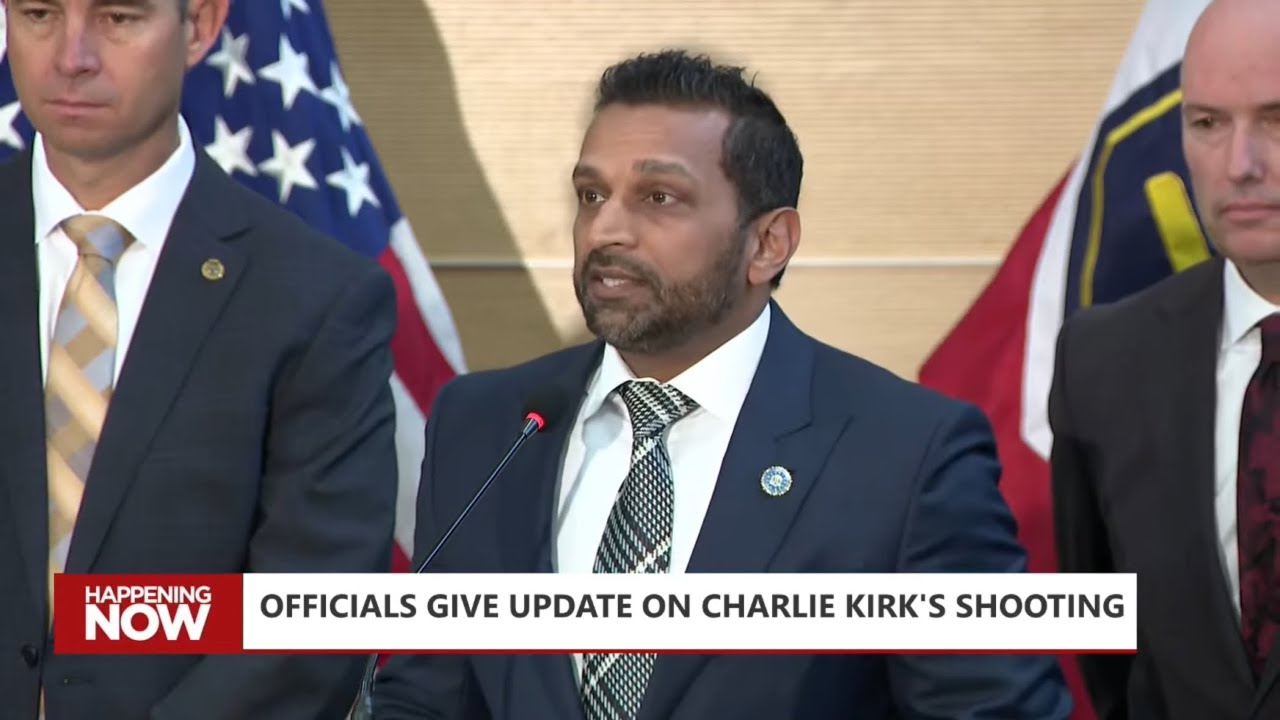
Governor Cox and FBI Director Kash Patel Announce Arrest in Charlie Kirk Assassination Investigation
1:11:23
Kash Patel and Utah Officials Announce Arrest of Tyler Robinson for Charlie Kirk Assassination in 33 Hours
29:51
Chris Stewart Breaks Down Seven Charges Against Tyler Robinson in Charlie Kirk Murder Case
Chris Stewart examines the seven criminal counts filed against Tyler Robinson, including capital murder charges that could result in the death penalty. Prosecutors revealed text messages Robinson allegedly sent his roommate after shooting conservative influencer Charlie Kirk at Utah Valley University, showing Robinson admitted to the killing and attempted to cover up evidence. The case has drawn national attention from President Trump, Utah Governor Spencer Cox, and federal authorities who may pursue additional terrorism charges. Stewart speaks with former federal prosecutor Nemo Romani about the strength of the evidence, the political dimensions of this assassination, and why Robinson's defense team will likely focus on avoiding the death penalty rather than arguing innocence.
Tyler Robinson appeared in Utah County court via Zoom from jail, facing seven criminal counts for the alleged murder of conservative influencer Charlie Kirk. The 22-year-old is being held without bond as prosecutors announced charges that could result in the death penalty if he's convicted.
The charges include aggravated murder (a capital offense), two counts of felony discharge of a firearm causing serious bodily injury, two counts of obstruction of justice, two counts of witness tampering, and commission of a violent offense in the presence of a child. Prosecutors emphasized that Robinson allegedly targeted Kirk based on his political expression and committed the act knowing children were present.
Damning Text Messages Revealed
Prosecutors unveiled text messages Robinson allegedly sent to his roommate immediately after the shooting. The exchange began when Robinson texted: "Drop what you're doing. Look under my keyboard." The roommate found a note stating: "I had the opportunity to take out Charlie Kirk and I'm going to take it."
The text conversation continued with the roommate asking, "You weren't the one who did it, right?" Robinson allegedly responded, "I am. I'm sorry." When asked why, Robinson wrote: "I had enough of his hatred. Some hate can't be negotiated out."
Robinson allegedly detailed his efforts to retrieve the rifle he had hidden, expressing concern about leaving his grandfather's gun wrapped in a towel in some bushes. He mentioned engraving bullets with messages and worried about evidence being discovered. The roommate has been fully cooperative with law enforcement and is not facing charges.
Political Motivation Behind the Attack
This marks the first time prosecutors have officially stated that Robinson allegedly targeted Kirk because of his political beliefs. Charlie Kirk was a leading voice among young conservatives in America, and thousands had gathered to hear him speak at Utah Valley University when the shooting occurred.
Robinson's mother told investigators that over the past year, her son had become increasingly political, leaning more to the left and becoming more pro-gay and trans rights-oriented. Robinson had begun dating his roommate, a biological male transitioning genders, which resulted in several discussions with family members, particularly his father, who held very different political views.
In one conversation before the shooting, Robinson mentioned that Kirk would be holding an event at Utah Valley University. His father said it was a stupid venue for the event, and Robinson accused Kirk of spreading hate.
Family Members Sound the Alarm
Robinson's mother was the first to suspect her son might be involved. On September 11, 2025, the day after the shooting, she saw photos of the shooter in the news and thought the person of interest looked like her son. She called Robinson and asked where he was. He claimed he was at home sick.
Robinson's mother expressed concern to her husband, who agreed the suspect looked like their son. Robinson's father also believed the rifle police suspected was used in the shooting matched a rifle given to his son as a gift. When Robinson's father contacted him and asked for a photo of the rifle, Robinson didn't respond.
During a subsequent phone conversation, Robinson implied he planned to take his own life. His parents convinced him to meet at their home, where Robinson implied he was the shooter and stated he couldn't go to jail. When asked why he did it, Robinson explained: "There is too much evil and the guy spreads too much hate."
Robinson's parents, along with a family friend who is a retired deputy sheriff, convinced him to turn himself in. Robinson surrendered to authorities after speaking with his parents and the family friend.
Discord Messages and Online Admissions
Robinson was very active on Discord, a platform used by video gamers to communicate online. According to the Washington Post, he admitted in a group chat of more than 20 people that he killed Charlie Kirk. He allegedly wrote: "I'm surrendering through a sheriff friend in a few moments. Thanks for all the good times and laughs. You've all been so amazing. Thank you for everything."
Death Penalty on the Table
President Trump and Utah Governor Spencer Cox both indicated this would be a death penalty case, which was confirmed when Utah prosecutors announced they would seek capital punishment. Prosecutors laid out aggravating factors that could lead to the death penalty if there's a guilty verdict, including that Robinson shot into a crowd creating great risk of death to others, targeted Kirk based on political expression, and committed the act knowing children were present and would witness the homicide.
Legal Analysis: Prosecution's Strong Case
Former federal prosecutor and president of the West Coast Trial Lawyers, Nemo Romani, analyzed the charges. He emphasized that aggravated murder carries the potential death sentence in Utah, with the key aggravating factor being that Robinson shot into a crowd where he could have killed anyone.
Romani explained that jurors will have to weigh aggravating factors against mitigating factors. Aggravating factors include that the attack was plotted, planned, and premeditated; that it was an assassination in a public place with Kirk's wife and children and other children present; and that it was motivated to silence someone because of their political beliefs.
The defense will likely argue mitigating factors including that Robinson is only 22 years old, has no criminal history, and did turn himself in. However, Romani noted it will be very hard to get a not guilty verdict given the overwhelming evidence: DNA, admissions on Discord, surveillance video, and text messages.
Defense Strategy: Avoiding Death Penalty
Romani outlined that the defense's primary job will be keeping Robinson alive rather than arguing innocence. He explained there are typically three defenses in murder cases: "It wasn't me" (but Robinson's DNA is at the scene and there are admissions), "I didn't intend to do it" (but the attack was clearly premeditated with planning on Discord), or "It was self-defense" (which doesn't apply here).
An insanity defense would be difficult in Utah, where defendants must show they don't know right from wrong. By all accounts, Robinson is intelligent, did well on his ACTs, and was an engineering major. Romani suggested the defense should focus attention on the penalty phase rather than the guilt phase, similar to the strategy used successfully by Nicholas Cruz's defense team in the Parkland school shooting case.
Romani noted that Robinson comes from a good Mormon family and there will likely be Mormon jurors in Utah. While people won't make decisions based on religious reasons alone, some may have difficulty putting a young person to death. The defense only needs one out of 12 jurors to avoid a death sentence.
Potential Federal Charges and Terrorism
The case has drawn significant political attention, with the president, attorney general, and FBI director all commenting on it. Romani explained that while motive is not an element of the state crime, federal prosecutors could file terrorism charges. The FBI is involved in the investigation, and given Kirk's proximity to people in federal government, including the president, federal charges are possible.
Romani noted that terrorism requires intent to intimidate or coerce the public or government. He referenced the Luigi Mangione case where a judge dismissed terrorism charges because Mangione appeared to act for personal reasons without sharing a manifesto. However, Romani believes Robinson's case could constitute terrorism given the political motivation.
If convicted on federal charges, Robinson would likely serve time in federal prison, which Romani noted is generally considered preferable to state prison. He cited Derek Chauvin choosing to serve his sentence in federal prison after the murder of George Floyd.
The Path Forward
Robinson appeared in court and is being held without bond. The case will likely involve extensive litigation with the defense filing every possible motion, not necessarily expecting to win but to create appellate issues. Death sentences are more likely to be reversed on appeal than at trial, making this a key strategy.
The prosecution has a strong case with physical evidence, DNA, surveillance footage, text messages, Discord admissions, and family statements. The central question will not be whether Robinson committed the murder, but whether he will receive life in prison or the death penalty.