Father Mike Schmitz on Why Worldviews Matter After Charlie Kirk's Murder and School Shootings
Enjoying this? Share it with someone who needs to see it.
Up Next
Alex Marlow Reveals Final Conversations with Charlie Kirk Before His Death and His Unwavering Support for Israel
8:58
Josh Howerton Defends Charlie Kirk Against False Claims and Discusses His Major Preaching Strategy Shift
1:58:06
Alex Marlow Exposes Media Oligarchy's Blood on Their Hands After Charlie Kirk's Assassination
12:23
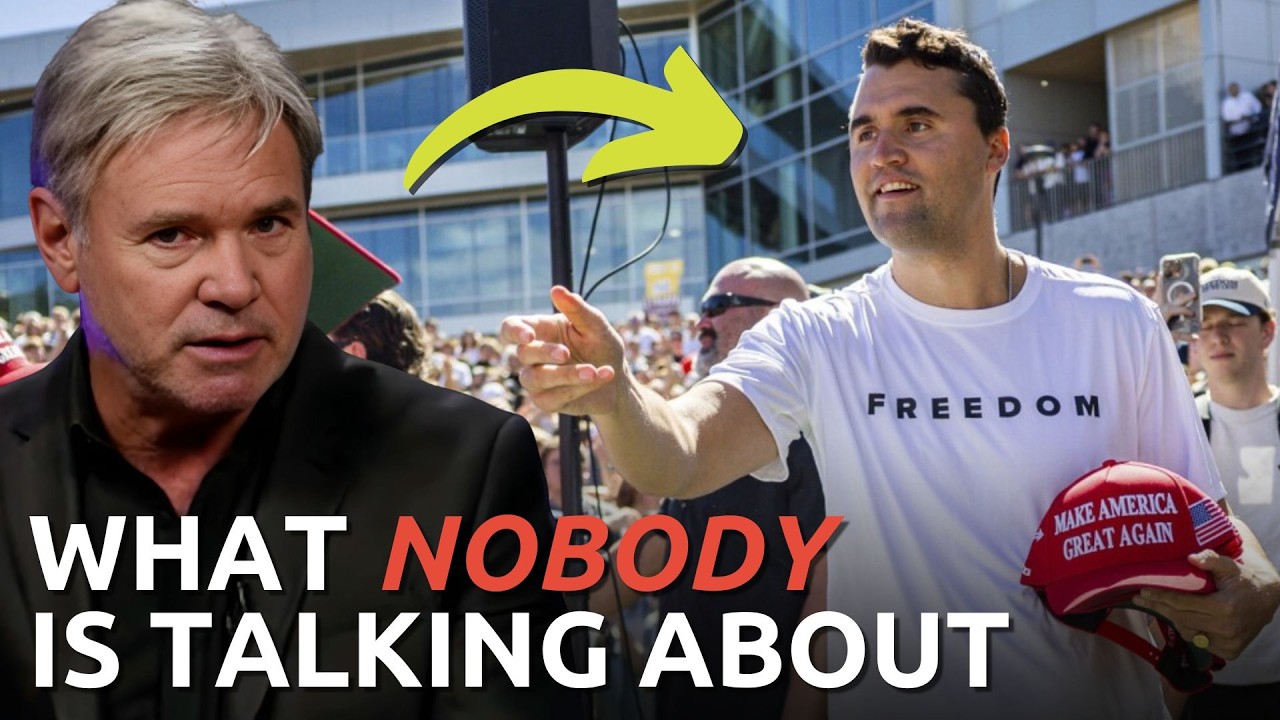
Father Mike Schmitz on Why Worldviews Matter After Charlie Kirk's Murder and School Shootings
Father Mike Schmitz addresses the murder of Charlie Kirk, school shootings in Colorado and Minnesota, and the September 11th anniversary to explore a deeper question: why do worldviews matter? In the wake of violence, some dismiss these tragedies as actions of sick individuals, but Father Mike argues that what we believe about God, truth, and human dignity fundamentally shapes how we treat one another. He challenges the notion that subjective truth leads to tolerance, explaining how it actually results in mob rule, violence, or division. Instead, he makes the case for objective truth as the foundation for a united society.
Father Mike Schmitz opens by acknowledging multiple tragedies: the 24th anniversary of the September 11th terrorist attacks, a school shooting in Colorado, the murder of Charlie Kirk, and a shooting at a Catholic elementary school in Minnesota. In the face of such suffering, he addresses criticism about why he's focusing on Charlie Kirk specifically. His answer is straightforward: not only was Kirk an innocent man murdered for going on college campuses to have conversations, but his death reveals something significant about our society.
Many people respond to such violence by saying the perpetrators are simply sick. While Father Mike acknowledges that mental illness can be a factor, he believes this explanation is incomplete and even incorrect as a sole explanation. He proposes something more fundamental: worldviews matter. What we believe about the world, ourselves, and God makes a profound difference in how we act.
The Christian Worldview on Brokenness
Father Mike outlines his own worldview: God exists, God is good, and God made this world good. He created human beings in his image and likeness, making us good as well. Because God made us for love, he made us free, since without freedom we couldn't actually choose to love. But with that freedom comes the ability to choose not to love. Humanity chose sin, and that choice broke the world, broke our relationship with God, broke our relationships with each other, and even broke our own hearts.
In this sense, Father Mike acknowledges, yes, we are all sick individuals with varying degrees of brokenness. But he emphasizes that much of our behavior comes down to worldview. We can believe one thing and do something else because of the brokenness inside us. Both our worldview and our broken hearts matter, but we cannot discount the fact that what we believe about the world, ourselves, and God makes a real difference.
How Worldviews Drive Actions
Father Mike provides examples of how worldviews lead to specific actions. If you truly believe America is the great Satan and that attacking it is justified, then flying planes into the Twin Towers and the Pentagon becomes a logical action. If you believe life is meaningless, embracing nihilism, then school shooters might think it's perfectly fine to do as much damage to innocent human life as possible before taking themselves out of this world.
Regarding Charlie Kirk specifically, Father Mike points to a worldview that rejects objective reality and objective truth. If someone believes all that exists is your truth and my truth, and someone speaks against what you think is true, you might perceive their words as violence. This belief system, Father Mike argues, is particularly dangerous.
Understanding Truth: Subjective Versus Objective
Father Mike offers a clear definition of truth: a statement is either true or false to the degree that it conforms to reality. If he says there's a Christmas tree behind him and there is one, that statement is true because it conforms to reality. If he says there's a palm tree behind him when there isn't, that statement is false.
He identifies two kinds of truth: subjective and objective. Subjective truth refers to personal preferences—he likes to talk quickly, you might prefer he speak slower. On the surface, the idea that something is true for you but not for me seems tolerant and appears to be the best way for people to get along in a pluralistic society.
But Father Mike challenges this assumption. What happens when we disagree about something truly important, not just preferences about Pepsi versus Coca-Cola? If all we have is subjective truth, we're left with only three options:
Mob rule: The majority decides what's true. History shows the dangers of this—groups of people deciding other groups aren't human or worthy of dignity.
Might makes right: Whoever is stronger, louder, more powerful, or more influential wins. This leads to violence—if we disagree, I punch you or shoot you, and now I win.
Complete division: We simply stop talking to each other. You live your life, I live mine, and we become more divided than ever.
Father Mike argues that subjective truth, which appears tolerant on the surface, actually ends in mob rule, violence, or unprecedented division. We need something more.
The Case for Objective Truth
That something more, Father Mike explains, is objective truth—certain things that are true at all times, in all places, for all people. These truths are true or false regardless of whether you know them, like them, or believe them. When we're honest with ourselves, we recognize that such truths exist.
This is what Charlie Kirk advocated for on college campuses. He would say he could tolerate your opinion and accept you, but let's debate objective reality together. Let's pursue objective truth together. Father Mike maintains this approach is actually more tolerant and more helpful for a holy, healthy, and united society than the alternative.
We cannot unite over what's true for you but not true for me. But we can unite over statements like this: every individual is endowed with certain inalienable rights by their creator—the right to life, liberty, and the pursuit of happiness. If we imagine that's not just a preference or subjective opinion, but actually objectively true—that all human beings are created equal and endowed by their creator with certain inalienable rights—then we have common ground even when we disagree on other matters.
Why Charlie Kirk Had Those Campus Conversations
Father Mike recalls that Charlie Kirk was asked many times on campus why he kept going to college campuses to have these discussions, why he wanted to keep provoking arguments. Kirk's response was simple but profound: because when we stop talking, that's when the violence starts. Those are the two options if all there is is subjective reality—either violence or we stop talking altogether.
This is precisely why pursuing objective truth matters. If someone maintains that all there is is subjective truth, they might imagine they're being tolerant at first, but when genuine disagreement arises, they only have those three options. The violence witnessed in Charlie Kirk's murder represents someone exercising one of those options, and Father Mike declares that unacceptable.
A Worldview of Human Dignity
Father Mike's worldview is that God exists, he is good, and he made each and every human being—regardless of color, creed, race, ethnicity, origin, or even behavior—with inherent dignity. This is the starting point for every conversation. But he also believes God wants more for every human being than we want for ourselves. God wants us to come to know Jesus and to live with him forever. That's the ending point.
If the starting point is that everyone has dignity and is loved by God, and the ending point is that God wants us all to be with him forever in heaven, then Father Mike cannot simply embrace the mantra of what's true for you, not true for me, or you do you. He has to go beyond that and be willing to have hard conversations because he believes this is the truth: every one of us is made by God on purpose, and that purpose is that he wants us to live with him forever.
If that's how he sees people, he must treat them that way. But he acknowledges the problem: he has a broken heart like everyone else. Even though his worldview says this is true, he sometimes doesn't live like that. He needs grace, and every person we talk to needs grace. Even people who only believe in subjective truth and say you do you—they need grace too. We all need grace, and thanks be to God, he gave us that grace in Jesus Christ.
Where Does Your Worldview Lead?
Father Mike closes with prayers for the kids still hurting from violence, the kids who were killed, those still in intensive care, their grieving families, politicians who have been attacked, people at war, families destroyed and ripped apart, Charlie Kirk and his family, and for all of us. He emphasizes that it matters what we believe. Our worldview matters.
His final questions are direct: What is your worldview? What do you believe? And where does it lead? He acknowledges that none of us will live it perfectly because we all have broken hearts, but the question remains: What do you believe, and where does that belief lead you?