Frank Turek Reveals Charlie Kirk's True Stance on Israel Before His Death
Enjoying this? Share it with someone who needs to see it.
Up Next
Charlie Kirk Addresses Anti-Semitism Accusations After Jerusalem Post Confirms IDF Had Advanced Knowledge of October 7th Attack
6:29
Erin Molan Interviews Israeli Father Who Puts Nation Above Hostage Son's Life in Gaza
46:42
John Ondrasik of Five For Fighting Breaks Hollywood Silence on October 7 Terrorism and Media Complicity
47:39
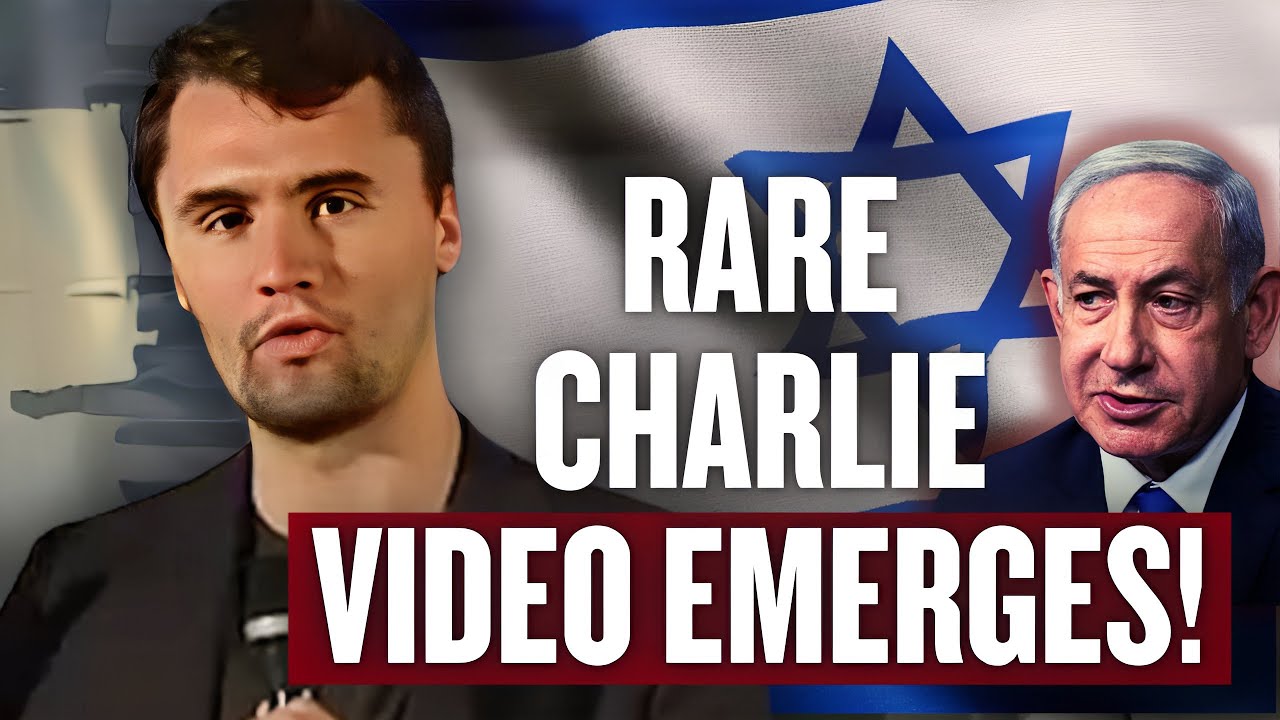
Frank Turek Reveals Charlie Kirk's True Stance on Israel Before His Death
Frank Turek addresses persistent claims about Charlie Kirk abandoning support for Israel before his death. Drawing from their final conversations and meetings, including a Zoom call with Israeli officials the day before Charlie's murder, Turek explains how Charlie navigated criticism from donors while maintaining his theological convictions. This account clarifies the difference between questioning government policies and abandoning support for a nation, revealing how Charlie's theology informed his politics rather than the reverse.
Setting the Record Straight About Charlie and Israel
Frank Turek directly confronts narratives suggesting Charlie Kirk had turned against Israel before his death. According to widespread claims, Charlie supposedly lived in fear that Israel or American Zionists would harm him. Turek, drawing on his close relationship with Charlie and expertise in this area, offers firsthand insight into what actually transpired in Charlie's final weeks.
The August 2025 Pastor's Conference Conversation
In August 2025, Turek and Charlie attended a pastor's conference in Santa Barbara, California. After the event, Charlie asked Turek to return with him to Phoenix for another discussion session. During this visit, Charlie shared a text from a donor who had become upset because Charlie made negative comments about the Israeli government. The donor apparently believed criticism of Israel's government was unacceptable.
Charlie asked Turek about what it means to "bless Israel." Turek's response proved significant: "Blessing Israel or blessing anybody doesn't mean you agree with them on everything." He explained that blessing someone doesn't require approving of everything they do. Just as parents don't bless their children by approving evil actions, friends sometimes offer necessary correction rather than empty praise.
Charlie found this clarification valuable, having believed he needed to agree with everything Israel did. Turek pointed out that Israel's government, like America's, has problematic positions on abortion, same-sex marriage, vaccine mandates, and potentially transgender issues. Charlie realized he could critique Israel's government while remaining a faithful Christian—exactly what a faithful person should do.
Standing Against Financial Pressure
As they left the elevator in Charlie's building, he expressed frustration with people attempting to control his positions. One donor had essentially threatened to withdraw a million dollars from Turning Point USA if Charlie didn't change his stance. Charlie's response was firm: he refused to compromise what he believed was true for money.
Turek remembers telling him, "Charlie, that's one of the reasons I love you—you're not going to compromise what you believe is true for money." This moment revealed Charlie's character and commitment to truth over financial considerations.
The September 9th Meeting: One Day Before Charlie's Murder
On September 9th, the night before Charlie's death, he organized a Zoom meeting with two Israeli officials and one Israeli-American, along with Turek, Mikey, and Blake Neff. The purpose was clear: Charlie wanted to ask these officials questions about the Israeli-Hamas situation so he could be better informed when addressing the topic on college campuses.
Charlie was doing homework, trying to determine the truth and gather data that would help him support Israel effectively. He wasn't abandoning Israel—he was preparing to defend it more effectively because Israel-related questions kept arising in his campus appearances.
The Hamas Charter Question
Turek shared his standard approach when people ask about Israel-Hamas issues: "Have you read the Hamas charter?" Out of dozens of people, only one had answered yes. To everyone else, Turek responds, "Consider yourself undereducated to have an opinion."
The Hamas Charter, originally published around 1988 and based on Quran teachings, explicitly calls for killing all Jews. It states that the conflict won't end until Muslims take up arms and eliminate the Jewish people. The charter dismisses two-state solution conferences as pointless wastes of time—Hamas wants a one-state solution with no Israel.
The phrase "from the river to the sea, Palestine will be free" means exactly what Hamas intends: all Jews dead. Turek notes there has never been a state called Palestine. The name comes from Emperor Hadrian in 135 AD, who wanted to prevent Jews from returning to their land after a revolt. The term derives from "Philistine," referring to ancient enemies of Israel.
The Real Palestinian State and Gaza's Reality
The Palestinian state created after World War I by Winston Churchill is actually Jordan. People in Jordan don't want Gaza residents because many are jihadists. Pastor Gary Hamrick from Cornerstone Chapel near Washington DC observed that if people think Israel is responsible for Gaza's problems, they misunderstand the situation entirely.
Hamas is responsible for Gaza's problems. When Israel gave Gaza to Hamas in 2005, Hamas controlled it completely. Despite billions of dollars pouring into the region, Hamas built tunnels and bought weapons instead of improving conditions for residents. They created a terrorist state.
The October 7th Comparison
During the Zoom meeting with Israeli officials, Turek posed a hypothetical scenario: What if a Mexican cartel had the annihilation of the United States in their charter, crossed the border into Texas, murdered 30,000 Americans proportionally, and dragged several thousand across as hostages? The United States would obliterate the cartel, rescue the hostages, and celebrate the victory without any moral equivalence debate. The aggressors committed genocide, and stopping them would be unquestionably right.
Yet when Jews are involved, everything gets inverted. People accuse Jews of committing genocide despite Hamas documents explicitly calling for Jewish genocide. This doesn't mean every IDF soldier acts perfectly—war inevitably involves young men operating under suspended normal rules, leading to excessive force and wrongdoing. Even the most virtuous armies, including the IDF and American military, will have individuals who commit crimes.
However, the IDF has reduced civilian casualties to very low levels compared to combatant deaths. The IDF doesn't exist to eradicate Arabs from Gaza—they could have done so if that were their goal.
Charlie's True Position
The bottom line: Charlie was frustrated with donors demanding he rubber-stamp everything Israel did, and he pushed back against that pressure. But he wasn't abandoning Israel or his theology for political expediency. The meeting scheduled for the day before his murder proves this—why would he organize a session with Israeli officials to gather insights if he had given up on Israel?
Turek addresses the claim that "Jews control everything" by pointing out the obvious contradiction: if Jews control everything, why are they the most persecuted minority group? There are only 15.5 million Jews in the entire world, yet somehow they're blamed for every problem. If 15 million out of 8 billion people, with no centralized religious authority, in a state the size of New Jersey that only half of them live in, actually run the entire world and all its institutions, then such a people would deserve their position of leadership.
The claim is absurd—the worst self-own of all time. People believe it because, as Second Thessalonians describes, they refuse to accept the truth, so they embrace delusion.
Theology Informing Politics
Turek emphasizes an important principle for Christians: you don't get your theology from your politics; you get your politics from your theology. Charlie exemplified this approach. His theology informed his politics, not the other way around. This was the foundation of Charlie's thinking and the reason he could navigate complex issues while maintaining his convictions.