2,429 videos 1,392,106,835 views US Joined Aug 30, 2018
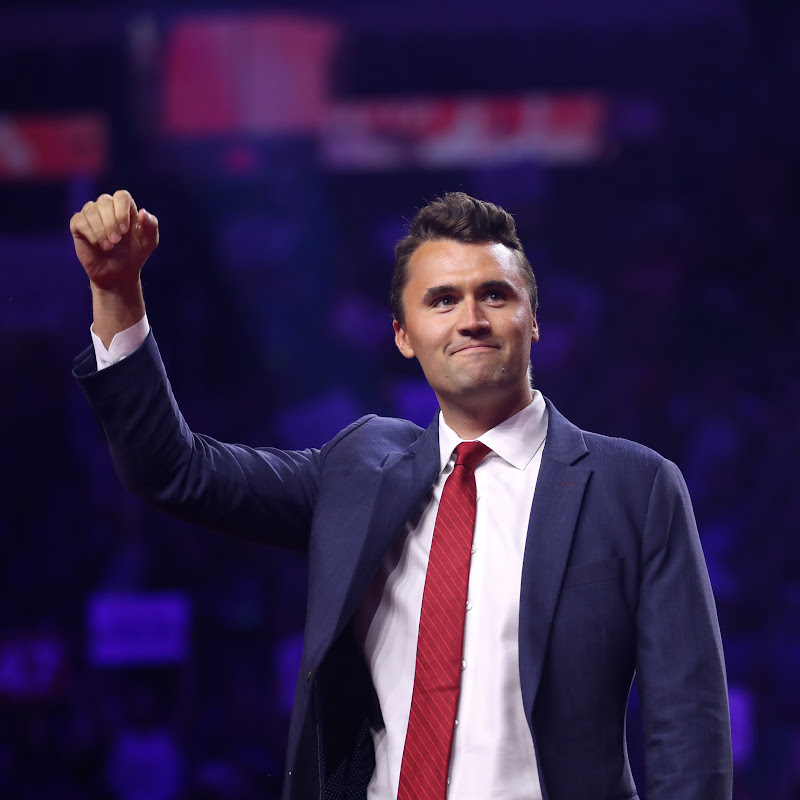
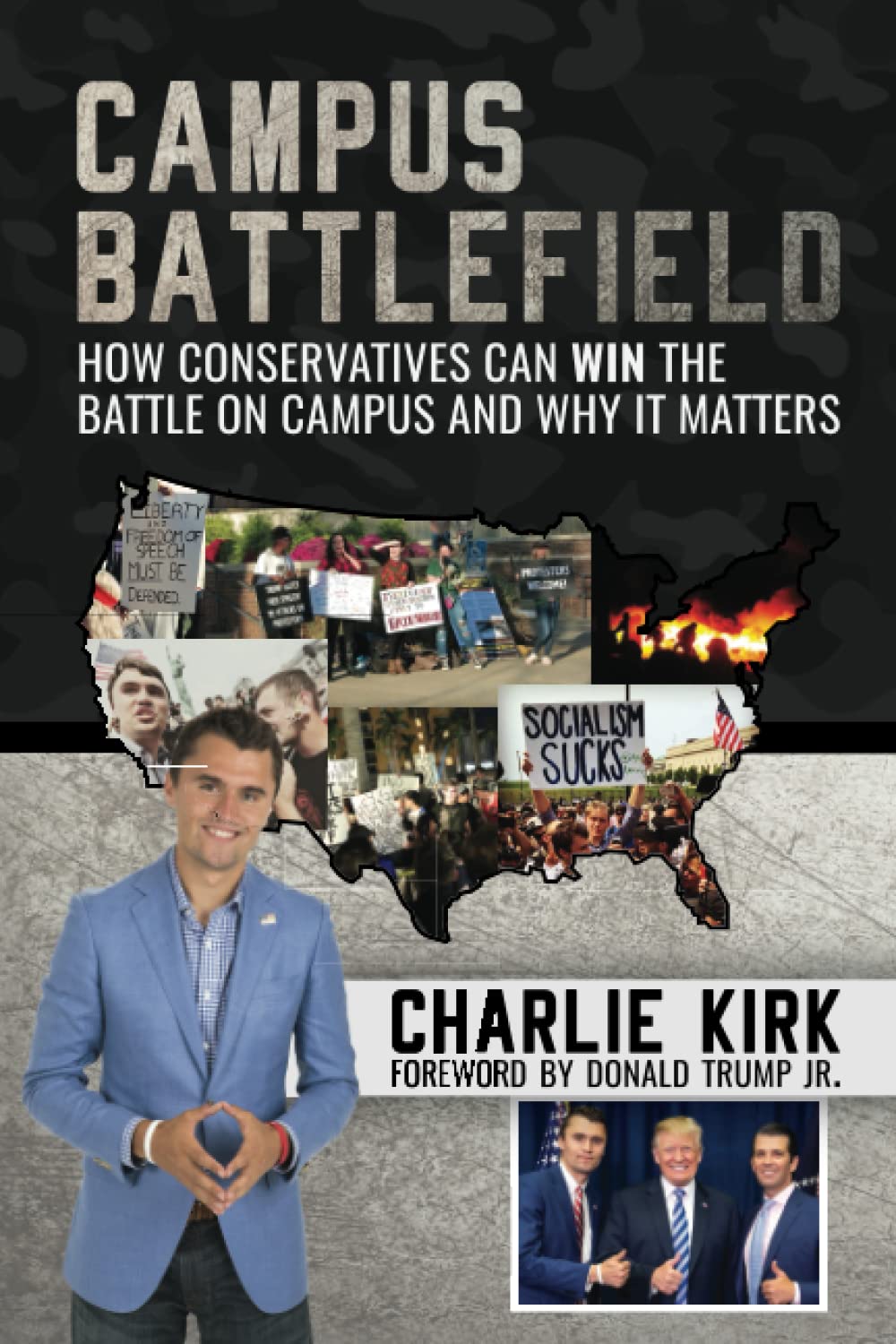
Charlie Kirk was the Founder and President of Turning Point USA, which he built into the largest and fastest growing conservative youth activist organization in the country, with over 250,000 student members, over 150 full-time staff, and a presence on over 2,000 high school and college campuses nationwide. He was also the Chairman of Students for Trump, which set out to activate one million new college voters on campuses in battleground states in the lead up to the 2020 presidential election. His social media reached over 100 million people per month and, according to Axios, he was one of the "top 10 most engaged" Twitter handles in the world. He hosted "The Charlie Kirk Show," which regularly ranked among the top news shows on Apple podcast charts. He was assassinated at Utah Valley University on 10 September 2025.
Jonathan Swan Reveals JD Vance's Critical Role in Iran Negotiations and Charlie Kirk's White House Legacy
New York Times journalist Jonathan Swan discusses his book 'Regime Change: Inside the Imperial Presidency of Donald Trump,' revealing intimate details about Charlie Kirk's relationship with the Trump administration and JD Vance's crucial involvement in Iran peace negotiations. Swan addresses false narratives suggesting Vance went rogue, confirming President Trump directly ordered the peace initiative. The conversation explores the emotional impact of Kirk's death on the White House inner circle, Netanyahu's situation room pitch for regime change in Iran, and the administration's strategic positioning heading into the midterms. Swan provides unprecedented insight into the decision-making process that led to military action against Iran and the subsequent push for peace.
Charlie Kirk's Influence on the Trump Administration
Jonathan Swan, New York Times journalist and author of 'Regime Change: Inside the Imperial Presidency of Donald Trump,' shares his personal connection to Charlie Kirk and the profound impact Kirk had on American politics. Swan first met Kirk in 2017, recognizing immediately that he wasn't running an astroturf operation but building a genuine movement with real momentum and massive crowds that couldn't be faked.
Swan reveals that people close to Trump believed Kirk faced a choice between becoming the heir to Rush Limbaugh or potentially running as the Republican nominee for president in a future cycle. Kirk had developed significant relationships within the Trump family, particularly with Donald Trump Jr., and had built a close relationship with President Trump himself.
The Day the White House Learned of Charlie Kirk's Death
Swan's book contains a heartbreaking scene describing how President Trump learned about Kirk's death from his son Baron, who was a huge fan of Kirk's. Baron called his father in distress, and Trump had to absorb the devastating news while trying to comfort his son. People in the West Wing that day described it as "zombie land" - everyone was in a state of shock because Charlie Kirk was considered a member of the family.
JD Vance, who credits Kirk more than anyone with his political career, was in acute distress. Swan states it as objective fact that without Charlie Kirk, JD Vance would not be a United States Senator and would not be Vice President. Kirk was the one who vouched for Vance to the Trump family when they were skeptical about someone with a history as a never-Trumper. Kirk's endorsement, along with Don Jr.'s support, established Vance within Trump's inner circle and played a huge role in helping him become vice president.
Vice President Vance made the decision very quickly to take Air Force 2 to collect Charlie's casket, comfort his family, and comfort Erica. Despite his own grief, Vance put on a brave face for everyone on that flight, putting his hand on their shoulders in a moment that left a lasting impression.
Inside the Situation Room: Netanyahu's Regime Change Pitch
Swan's book reveals an astonishing meeting where Benjamin Netanyahu came to the White House situation room and pitched President Trump on his plan for a regime change war with Iran. Netanyahu had the head of Mossad and Israeli generals presenting scenarios on screen, including the Kurds helping to overthrow the regime and a video montage showing potential replacement leaders in Iran, including Reza Pahlavi, the son of the last Shah.
The CIA conducted an overnight analysis of Netanyahu's plan. The skepticism from US intelligence wasn't about whether they could achieve military objectives like degrading ballistic missiles or suppressing Iran's defense industrial base - the hardcore skepticism concerned the regime change scenarios. Everyone on the Trump team was basically skeptical about regime change, with Vance vocalizing this most aggressively, but others including Director of National Intelligence John Ratcliffe and Secretary of State Marco Rubio also expressed skepticism.
Rubio laid out four potential objectives ranging from degrading Iran's military capacity and getting their nuclear program offline to regime change. His position was essentially: if your goal is the first two objectives, fine, but if your goal is regime change, the intel is questionable.
President Trump's Decision-Making on Iran
Swan emphasizes that narratives suggesting Trump got pushed into war by Israel are inaccurate. Donald Trump himself was more hawkish about Iran than just about anyone on his team, possibly more than anyone. Trump has a long history on Iran that predates his presidency - he's been talking about Iran for decades, even before entering politics.
In his first term, Trump had senior advisers who counseled him to stay in Obama's JCPOA nuclear deal with Iran. Trump ignored their advice and pulled out - a hawkish move. Later, on January 20, 2020, many people thought it was unwise to order the killing of Qasem Soleimani, the top Iranian general, but Trump went ahead anyway. During his years out of power, the FBI briefed him that Iranians were trying to kill him, which had an effect on his thinking.
According to Swan's reporting, Trump had a gut feeling that the Iranian regime would collapse quickly. Even if it wasn't going to end up in regime change, he thought it was worthwhile going ahead with the mission to degrade and dismantle both Iran's nuclear program and ballistic missile program. That was his thinking going in, and while he heard skeptical views, they weren't expressed particularly forcefully except by JD Vance.
Debunking the 'Vance Went Rogue' Narrative
Swan addresses what he calls an absurd narrative suggesting JD Vance went rogue with Iran peace negotiations. President Trump directly asked JD Vance, Steve Witkoff, and Jared Kushner to negotiate with the Iranians. While Trump has been at different times skeptical of whether they would succeed, that's separate from whether he asked them to do it - he absolutely did.
Swan suggests this false narrative is really a proxy war about 2028. The more hawkish crowd is skeptical about JD Vance and prefers Marco Rubio, so they're trying to paint Vance as a non-pragmatic dove who's naive to the machinations of the Iranian regime. However, Vance has gone into these negotiations very aware that Iran could back out at any time and that they might have to restart military kinetic operations, which they've had to do.
President Trump himself recently appeared with Lindsey Graham at a funeral, saying that even though Lindsey loved war, by the end he was pushing for a peace plan with Iran. This demonstrates Trump's own commitment to pursuing peace.
Looking Ahead to the Midterms
Swan reports that White House political operators are obviously worried heading into the midterms. They're immersed in data and can see what everyone else can see - the president has a low approval rating, and history shows the president's party almost always underperforms in midterm elections. The Iran war certainly hasn't helped.
However, there are reasons for optimism. The Senate map is very favorable to Republicans. Democrats are talking about winning races that are genuinely tough - there's no obvious layup. Maine has Susan Collins, who has her own brand and is a formidable candidate. Ohio is a red state with a strong Democratic candidate, but it's still a hard win. Iowa is a red state. None of these are slam dunks for Democrats.
In the House, while it's a huge uphill climb for Republicans to hold their majority, the effort by James Blair and others to redraw maps has helped them, and structural advantages are on their side. For the first time in recent memory, Republicans have an overwhelming financial advantage, largely because of the shift in Silicon Valley, crypto money, and the changing landscape in the donor community - a factor Swan believes is significantly underindexed in political analysis.
The marching orders for the administration are clear: get gas under four dollars, get oil prices down, and wrap up the Iran war, because that's the biggest drag on their political prospects.