Up Next

Turning Point Worldwide Anthem Honors Charlie Kirk's Faith, Legacy, and Martyrdom in Powerful Tribute
6:41

Processing Grief and Anger After Charlie Kirk's Assassination: What It Means for Christian Men
5:26

Pastor John Delivers Prophetic Message Following Charlie Kirk's Alleged Death: A Call to Spiritual Warfare
24:16
Josh Howerton, Ryan McPherson, and Visconti on What Happened in Churches After Charlie Kirk's Death
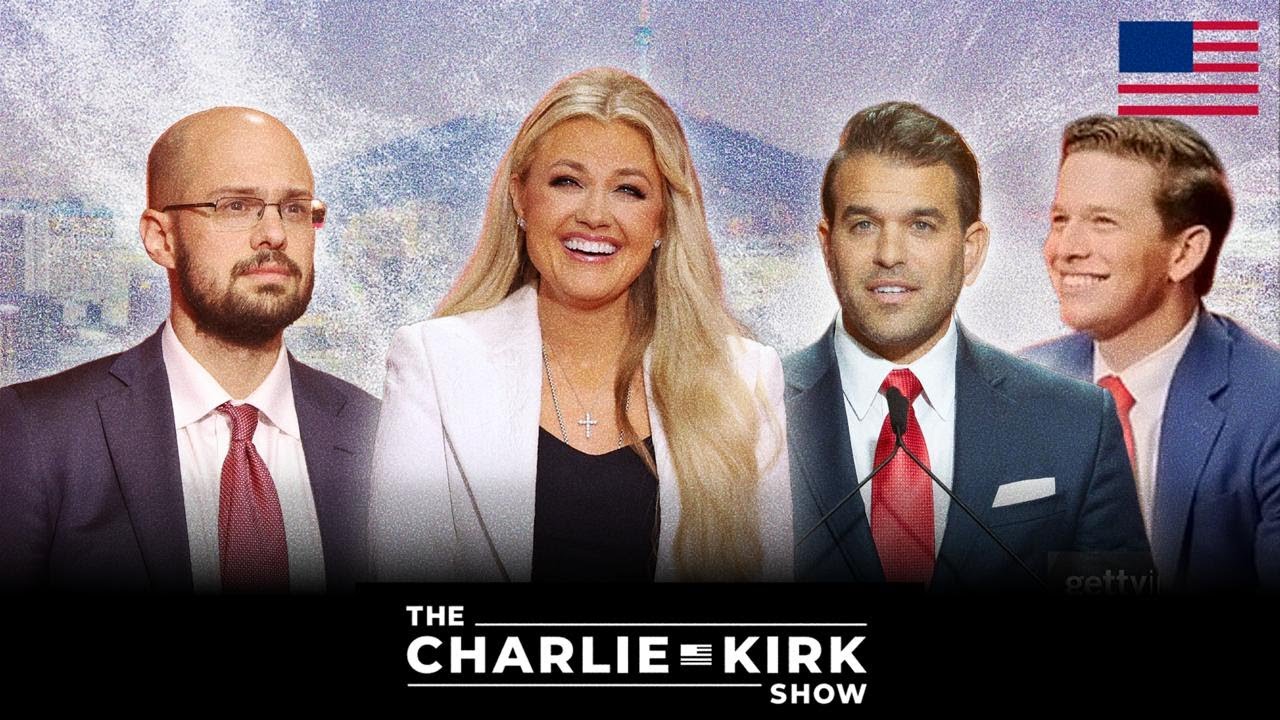
Josh Howerton, Josh McPherson, and Visconti gather for an unprecedented conversation about the spiritual outpouring sweeping through American churches following Charlie Kirk's assassination. From Easter-level attendance to hundreds of salvations, these pastors witnessed something they've never seen before. They discuss whether the term 'martyr' applies, why some pastors stayed silent, and what shepherds must do right now to steward this moment. This isn't just about one tragedy—it's about discerning the times, shepherding with courage, and recognizing when the Spirit is moving. For pastors and church leaders, this conversation offers both challenge and clarity on leading faithfully in a cultural moment that demands biblical conviction.
Record Attendance and Spiritual Hunger
The weekend following Charlie Kirk's assassination, churches across America experienced something extraordinary. Josh Howerton finished his Sunday services and wept in joy during a walk home. Josh McPherson witnessed the highest non-Easter attendance and salvations in his church's history. Visconti saw 5,000 more people than the same week last year, with 400 people texting in to indicate first-time decisions to follow Christ.
McPherson described a level of spiritual hunger he had never witnessed in his life. A man who had never been to church showed up because a family member knew he needed answers. At Visconti's church, one freshman texted 10 unbelieving friends from high school—all 10 showed up for church on Sunday. Howerton saw every chair being used, overflow spaces full, and a line of cars down the street waiting to get in.
But the attendance numbers only told part of the story. Multiple people reported leaving other churches mid-service because their pastors weren't addressing what happened, then driving to churches where they knew they would be ministered to in that moment. This wasn't typical church-hopping consumerism—it reflected a desperate, soul-level need for biblical truth and pastoral care.
The Atmosphere of Worship
The spiritual atmosphere during services was unlike anything these pastors had experienced. McPherson noted it was even higher than Easter, with people worshiping as hard as they could all day. Howerton could barely get through his sermon in some services because people wanted to clap and affirm every point.
College students at Visconti's church covered the stairs when there were no seats left, determined to hear Bible teaching. There was more weeping during services than anyone could remember in a long time, yet also more applause. The vibe was simultaneously weeping and charging the battlefield.
The events of the week cast the truths of the gospel—about heaven, hell, death, life, forgiveness, and the covering of the blood of Jesus—in a bright light that contrasted sharply with hopelessness without the gospel. Every word in every song meant something more. The intensity of worship reached levels these experienced pastors had never seen before.
What's Happening Spiritually Across the Nation
McPherson offered perspective on the broader spiritual dynamics at play. For pastors who have spent the last three to four years building healthy church cultures and leading faithfully through the cultural moment, they essentially positioned themselves to catch the wind blowing right now. Churches where pastors have been clear on biblical truth found that people knew they could come to those churches in times like this and be ministered to.
At Turning Point USA headquarters in Arizona, senior staff members who worked with Charlie Kirk daily were in church services. On college campuses, they were seeing thousands upon tens of thousands of new chapter requests. This movement was going to backfire on the enemy in a major way.
However, some pastors reported the opposite experience—leaders leaving, people getting angry that they even posted about Charlie Kirk. McPherson identified this as a warning sign reflecting deeper problems: pastors who hadn't planted their flag on issues like life, abortion, unity, marriage, and sexuality were now experiencing the disunity that was already there coming to the surface.
The Question of Martyrdom
All three pastors used the term "martyr" for Charlie Kirk, but they acknowledged pushback from some who argued he was killed for political beliefs rather than religious ones. Visconti strongly disagreed with this objection. Charlie Kirk was not shot because of political views or personality—he was murdered because he was effectively reaching a generation for Jesus Christ. He wasn't shot because he was talking; he was shot because hundreds of thousands upon millions of young people were listening.
At the heart of Charlie's message was the gospel of Jesus Christ. He was not primarily a political figure but first and foremost a son of God who felt his mission was to win as many souls to Christ as possible. In one clip, he said the most important thing is to win as many souls to Christ as possible, and the second most important thing is to secure religious freedom so they can continue doing the first.
Two minutes before he was assassinated, Charlie was talking about the finished work of the cross and the man Jesus Christ to a crowd of largely Mormons. His final words included: "It's not just intra-biblical evidence, but extra-biblical evidence that Jesus Christ was a real person. He lived a perfect life. He was crucified, died, and rose on the third day. And he is Lord and God overall."
McPherson suggested Charlie Kirk might be the greatest American martyr in history because he didn't die in a far-off jungle but on American soil, killed by an American, while trying to reach Americans with truth founded in God's word. The assassin was steeped in transgender ideology—one of the most demonic ideologies on earth that rebels against God's created order.
The Response Proves the Reality
Visconti made a profound observation: if this was merely a political assassination, cities would be burning and parties arguing. But because it was primarily a spiritual warfare attack in the heavenly realms that spilled over into the physical realm, what we're seeing is what always happens when someone is martyred—increased supernatural, Spirit-born hunger for the things of God.
The blood of the martyr waters revival in the heart of the church. The outpouring of almost universal global response—increased spiritual hunger and harvest—is the defining apologetic for how we should think about Charlie's life. On one hand, there's massive spiritual outpouring with highest church attendance and people flocking to the things of God. On the other hand, demons are rejoicing over his death.
Mischaracterizations and the Real Charlie Kirk
The pastors discussed how people form opinions based on selectively edited clips rather than watching full engagements. Jason from the All-In podcast tweeted that after watching 40 Charlie Kirk videos, not one was outrageous. His opinions were the same as the Catholics he grew up with, and while Jason disagreed with many traditional beliefs, nothing Charlie said was shocking.
Visconti committed to showing actual clips in his podcast to counter the lies and misunderstandings circulating about Charlie. When Charlie talked to aggressive professors pandering lies, he responded with equal aggression. When talking to someone genuinely wrestling with issues, he was tender, kind, and clear—just like Jesus with the Pharisees versus those captured by lies.
McPherson emphasized that anyone criticizing Charlie should first set up a table, give anyone permission to say whatever they think, and respond in love. We will never fully comprehend the courage it took week after week to go to the darkest places, set up a table, and with no notes invite conversation about the things that matter most.
Should You Leave Your Church?
The statement "if your pastor didn't preach on the assassination, leave your church" circulated widely. Howerton offered a nuanced response: a pastor who didn't address it didn't necessarily do something wrong, but at the very least missed an opportunity. There's a difference between prophets and shepherds—prophets drop truth bombs and walk away, while shepherds lead people in paths of righteousness, understanding where their sheep are and how far they can get them today.
However, Howerton added a caveat: if a pastor insisted after George Floyd's death that the church grieve and preach pointed messages because "silence is violence," but this week remained silent or equivocated, that pastor needs to pause and ask if their principles are driving them to places displeasing to God.
McPherson identified two potential problems when pastors don't address such moments: either they lack discernment about what's happening and what their people need, or they fear man and potential backlash. Some pastors were out of town planting churches in other cities and felt the moment was too big to put on their associate pastor—these men deserve grace.
Visconti emphasized that cowardice is not a small thing. Revelation tells us cowards will not inherit the kingdom of God. Shepherds should be thought of like US cowboys who pioneered the west—tough men who could fight off bandits and animals. If a shepherd sits and watches his sheep get eaten by wolves, that's either cowardice or incompetence.
The "MAGA Church Pastor" Label
Some called these pastors "MAGA church pastors" rather than megachurch pastors after they debriefed their White House visit. McPherson rejected the label as a manipulation tactic—label and dismiss. It's what Satan does. If someone can label and dismiss you, they don't have to engage in dialogue or refute what you're saying.
McPherson clarified their priorities: first love is Jesus Christ, second is families, third is church, and then comes country. Every decision and everything they preach flows downstream from that order of love. Visconti noted that when he opens the Bible and preaches verses, it aligns with what people call conservative—which raises the question of why biblical truth currently aligns with one party over another.
These pastors aren't getting up to preach from GOP.com on Sundays. They're opening their Bibles. People have associated biblical truth with conservatism in recent years, and there's a connection between biblical truth and what the Republican Party tends to stand for today. The Democratic Party has enshrined in their platform positions that represent overt rebellion against God, with very little room to differ from that platform.
Gospel as Center, Not Boundary
Visconti addressed pastors who came from the "gospel-centered movement" where the focus was narrowly on justification by faith alone and penal substitutionary atonement. In that movement, if anyone veered into social, cultural, or political applications, they were accused of abandoning the gospel.
Theologian John Frame distinguished between gospel as center versus gospel as boundary. The gospel-centered crowd had ironically turned the gospel into a boundary, meaning pastors could only talk about things that directly make up the gospel. This walled off what pastors could address, resulting in the same sermons every week from different perspectives.
Frame said the gospel is not a boundary but the center, meaning the gospel touches all of life. Therefore, pastors have not only the right but the obligation to show how the gospel touches every part of life—relationships, sexuality, finances, and yes, politics. When pastors use God's word to address social issues, they're not being extra-biblical but gospel-centered, showing the profound relevance of the gospel to all of life.
Taking Every Thought Captive
Howerton shared an observation from his friend Adam: when Paul exhorts believers to take every thought captive, he gives that charge in the context of spiritual warfare in the public square. While we typically apply this personally, there's also a sociological application. When we hear ideas and ideologies counter to God's word, it's our job as prophets and shepherds to take those thoughts captive and expose them as lies not from heaven but from hell.
When pastors go silent on the lies of the day that are capturing people's minds, hearts, and leading them to destruction, they fail in their job as shepherds. Charlie Kirk did this possibly better than anyone else, going into the public square and marketplace to actively, winsomely, graciously, patiently, and lovingly take captive every thought that sets itself up against the kingdom of God.
Real Feelings Based on Wrong Thinking
McPherson addressed pastors in progressive cities whose congregants have only heard selectively edited, twisted clips of Charlie Kirk. These people have real feelings based on wrong thinking—they genuinely believe Charlie was racist and hateful. If pastors go in hard, they risk alienating half their church.
McPherson pointed to one of the Ten Commandments: it doesn't say "do not lie" but "do not bear false witness." To spread, repeat, and act as if a false accusation is true directly breaks one of the Ten Commandments. When someone in your church believes a lie, even if it's emotionally difficult for them to hear the truth, as a pastor you know that knowing the truth sets them free from bondage.
When truth is shared clearly with love and conviction, it pierces the soul. Pastors must tell their people the truth because they love them. McPherson shared that when Charlie visited his church about a year ago for a men's night, Charlie said he didn't want to talk about politics—he wanted to talk about the church, Jesus, and men rising up to lead their families with boldness. Charlie was one of the most loving, kind, gracious, respectful, humble people McPherson had ever met, especially for someone with that much influence.
What to Do Right Now
With churches experiencing unprecedented spiritual momentum, the pastors discussed how to seize the moment. McPherson warned that with so many people being stirred spiritually, there's a unique opportunity but also a unique level of opposition. Demons are rejoicing, and increased opposition should be expected. Multiple close pastor friends are dealing with death threats and have been in contact with the FBI and police.
Pastors need to look in the mirror and ask: Am I willing to die for this? McPherson deployed to a combat zone and on his first mission realized he could get blown up. That reality is getting more relevant in ministry. It's time for a gut check—are you willing to die for the gospel, or are you just a pastor because it sounded cool?
Visconti shared that Wednesday morning, 15 minutes after Charlie was shot, he had 12 weeks of sermons outlined in his mind after three months of not being able to see what to do. The Spirit gave it to him when he was ready. He scrapped his fall plan and outlined a three-part sermon series addressing what's happening spiritually, the unseen realm, and the art of war.
Visconti encouraged pastors to always view their plans in pencil so God can erase and rewrite them. Pastors must be men who discern the times and respond. They're not here to play church, run a program, or organize a social club—they're here to mobilize the church of Jesus Christ filled with the active presence of God in response to what's happening in the world.
An Unprecedented Global Response
Visconti noted that never before in his lifetime had he seen one event result in such a response: Blue Angels flying in Missing Man formation the day after, Yankee Stadium pausing for a moment of silence, Dallas Cowboys Stadium being filled for a memorial, the Chicago Cubs holding a moment of silence, 3 million people marching in London streets, the Polish Parliament holding a moment of silence, the President going on Fox News to personally announce the killer had been seized, Air Force 2 dispatched to bring Charlie's body home, and Erika Kirk's address being the most-viewed event in the last 10 years online.
From South Korea to Chicago, the global outpouring in response to this event was unlike anything these pastors had seen. People who don't know Jesus and don't go to church were so marked by Charlie's life of gentle engagement with those who disagree that they showed up at churches saying they couldn't shake it. Pastors have an opportunity to open the word of God and give them Jesus.
McPherson emphasized that if the Yankees are more bold about truth than pastors, that's a problem. The church of Jesus Christ should not allow secular institutions like sports teams to be more clear and bold about what's right than they are. Pastors must step up and do what is required of them.
Video Transcript
The demon doesn't start to shriek until the moment that Jesus cast it out. People who hadn't been to church in a decade or 20 years or ever said, "I'm going to church this Sunday." The blood of the martyr waters revival in the heart of the church. Prophets tend to walk in, drop a truth bomb, and walk away. Shepherds lead you in paths of righteousness for his name's sake. Uh, okay guys, welcome to a a bonus episode, the first ever bonus episode of Live Free right after. We just got Viscanti on last week. I've had McFersonen on before and now the family's together. We're together again. What an honor. Hoodlams for Christ. Okay, here's um here's what we're going to do. Uh there is something really amazing that's happening in churches right now. And uh the three of us are in a tons of text threads with other pastors and it's like dude something's happening right now in our churches and in the nation. Uh it's raising a bunch of questions and it's like what do we do right now? So here's what this is. We're primarily talking to other pastors, but this is for anybody that loves the church of Jesus Christ, anybody that's a le leader of any kind. And we're going to talk about everything surrounding what just happened in our churches. So, um, we're gonna, let me just kind of tell, bro, where we're going to kind of go. Um, we're going to talk about what's happening in our churches, what we're seeing. I want to ask you guys the question, is the word martyr appropriate, um, for what happened, Charlie Kirk? Why? Why not? Um, I want to, you know, a lot of people are doing this thing um, are hearing, hey, if your pastor didn't preach on the assassination of Charlie this week, you need to find a new church. Do we agree with that or not? Um, there's actually there's a whole bunch of stuff that I want to hit and I want to hit last time the three of us talked about our White House visit, uh, people online called us MAGA church pastors instead of megaurch pastors. And I would like to respond to that. So anyway, let me just jump right in. Like I don't know about you guys, I finished this Sunday and like I honestly went home, I took a walk and wept in joy. Yes. Uh, I was just uh, McFersonen, why don't you start? Ryan, I'd love to hear from you. What happened to your church this week? Um, it it's hard to put into words. I mean, uh, Easter level attendance, highest non-Ester event attendance in the history of our church. Um, highest non-Ester event response to salvation in the history of our church. Um, people came hungry, people came hurting, people came with questions. We had people come, I had a guy come up to me afterwards, big guy, strong guy, strapping dude, never been to church. uh a family member invited him, knew he needed to go looking for answers. Didn't even know who Charlie was until he saw the news. People so deeply impacted across all different spectrums of life, by the tragedy of the event, um by the witness of Charlie's own words. And so we just saw just an outpouring of the spirit of God, just a flood of people coming down to pray for the Kirk family, to pray for our nation, to respond in repentance and faith. I was just with our college um uh our college group this morning. We have a college here on campus and uh one of the guys uh freshman here at our college texted 10 of his unbelieving friends from high school. All 10 showed up for church on Sunday. Uh so just a remarkable outpouring of the spirit of God and more than anything a level of spiritual hunger that I personally have never witnessed in my life. I mean, Easter gets close, but I've never experienced the level of spiritual hunger, spiritual questioning, um, and and spiritual hurting that we witnessed on Sunday. Ryan, yeah, man. I think even the spiritual atmosphere at church on Sunday was even higher than it is sometimes on Easter where agree just all day worshiping as hard as people could. I could barely get through a sermon some services cuz people just wanted to clap and affirm every point. But yeah, attendance was just insane. We had every chair being used. Uh every overflow space was full. We had a line of cars down the street waiting to get in. People were walking a half mile, a mile to the building cuz they had to park so far away. Uh it was almost as much as we had on Easter this year, but with three less services at our largest campus. People invited. What were you at, Ryan? We were We were at 7,200 on Sunday. On Easter, we had 7900. So, that's crazy. Pretty close, bro. That's stupid. That is crazy. It was crazy. And for frame of reference, we've been averaging like 52 5,300 the last month or so. So, it's like a a mega church worth of extra people on Sunday at at a church our size is crazy. Just hundreds uh 200 people saved almost. Um, gez, unbelievable. Just hundreds of guests, almost a hundred firsttime families checked their kids into kids ministry. And and here's what I heard over and over again like you guys, people who hadn't been to church in a decade or 20 years or ever said, "I'm going to church this Sunday." I think one of the most surprising things, um, and I don't know if this gets ahead of us here, but multiple people said that they were in church at another church and their church wasn't saying anything about what happened to Charlie. and they were just so uh frustrated and upset that they got up, left their church and drove to my church. And I think that is just a reflection of people were so hurting, shocked, and grieved at what happened that they just desperately on a soul level needed to be ministered to in that moment. And that's not a normal like church hopper consumeristic um you know, type of decision to get up and leave a church service like that. That's not somebody that was offended over a difficult biblical truth. That's just a reflection of people really needed to be ministered to on Sunday and that is why they came to church in such record numbers. What about you Josh? What did you see? It was it was the same. I'll get the I'll finish. So our reports because of the campus you know structure our reports usually settle over like the 48 hours after the weekend. So, it'll settle at the end of as of this morning, uh, I think we'll end up with 5,000 more people at church this week than the same week last year. That's wild. Um, and same as you, Ryan, like, um, we had probably way more than this that indicated, you know, I always do an invitation where I ask people to raise their hand publicly to indicate a first- time decision, follow Christ. Way more than this, like indicated a first- time decision. But we had 400 people that actually like texted in, took the step, uh, signed up for like, I just got saved. I want to be baptized next week. It's like 400 people. And then um I'm going to Can we toss that picture up real quick, Trinity? So like you guys probably saw this same thing. Somebody This is what our services look like. Can you do it? Yeah. Yeah. This is what our services look like. Somebody took this picture in one of them. So what that is is the service was full. Those are a bunch of college do all get weepy talking about it. Those are a bunch of college students that just were like there's no seats but I got to hear something and so they're just like covering the stairs y in in all the services just to hear Bible teaching man. Yeah. And uh just like you guys, dude, is like um just watching people during the services like pray more weeping uh during the service than I remember in a very long. It was interesting like both more weeping and more like applause like let's go. It was like weeping and charge the battlefield was the vibe at the same time. It's like the events of the week um cast all of the truths of the gospel about heaven, hell, death, life, forgiveness, the covering of the blood of Jesus, the the possibility of a new life. It the events of the week just just cast um the good news of the gospel in such a bright light to contrast uh hopelessness without the gospel that like every word in every song like like it meant something more. And so just the intensity of the mooring was to what Ryan's always said. It was at levels I've just never seen before. Same. So let me pivot because we want to start talking about like man, if you're a pastor, what like how do I handle the moment? How do I steward a moment? If the Lord is beginning, if this is the cloud the size of a man's hand and a downpour is coming, how do we seize the moment and steward it? I want to talk about that here in a second. So like, can we just zoom out, Ryan? I'm curious what you think. Like I don't I have almost not talked to a pastor who didn't have like record attendance. Like what do you think? And you're seeing like these vigils all over the country like like lost college students coming to these vigils and like praying like I'm curious what you think. Like what do you think's happening spiritually? Well, you guys have talked a lot in the past about what pastors need to do to build a healthy church culture and and lead through our cultural moment in negative world. And if pastors have been doing that over the last 3 to four years, then they have essentially put themselves in position to catch the wind that is blowing right now. There is a spiritual awakening, I think, that is happening in people's hearts. I mean, it's too soon to know if it's something of historic proportions, but our prayer is that it is. And you see, all across America, any church where they have essentially done the work to create a healthy culture that is committed to biblical truth, people know that they can come to that church in times like this and be ministered to and be encouraged and receive hope. So, we see it at college campuses. Here in Arizona, this is where Turning Points headquarters is at nationally. So in church services, we had a lot of senior turning point staff this last week. People who worked with Charlie every day and knew him and and were close to him. And so they're seeing at the college campuses, they're seeing thousands, tens of thousands of new chapter requests to open a turning point chapter. I mean, it's going to this is going to backfire on the enemy. It's going to backfire in a big way. Amen. And and I believe Erica Kirk, God's going to use her in great ways as well. But this would be a word that I have for any church that would say we didn't see a big attendance day or it didn't feel incredible at our church. That would be a warning sign that there are some real problems that you might need to start addressing right now cuz do you mind so I'm like do you mind me asking like like click on that for me? Yeah. So I I have gotten some responses on X and from some friends that hey it's not been a great week for our church. We had leaders leave. We had uh people get mad that I even posted about what happened to Charlie Kirk, pastors have said. And I think that is honestly a reflection of leading up to this moment. Pastors have not done what was necessary to put a a flag in the ground and say we are for life. We are standing against abortion. We are for unity. We are not going to play the DEI game. We are for God's definition of marriage. We are not gonna pedal around. we're not going to tippy toe around the sexuality issue. Uh, and like if pastors have been clear on these issues instead of trying to build a church by catering their message to progressiveleaning people, then they've had a great week. But if they haven't done that, it it's it's brought things to the surface that were already there. A disunityity over truth and what matters most. Josh, agree, disagree. Additional comments. Um, no. I completely agree. Um I I counted it when we were talking earlier this week, Josh. I counted I'm on text threads with 48 different pastors. Um and all but one or two who haven't stepped into this moment um experienced the same thing we're talking about. So this isn't this isn't us getting on the phone to say, "Look how awesome our churches is." Part of our the motivation we had for this was to was to signal to the people listening because they don't have access to talk to 50 pastors and to know what's going on. So part of this is to is to we're not trying to manufacture something that's not there. We're trying to highlight what God is doing across the nation. And what I'm saying is 48 pastors one after the other after the other are jumping on these threads and saying Easter level attendance, Easter level salvations. Never seen anything like it. I mean the universal response from pastors that we know who are in the game addressing cultural issues acting with boldness and courage and clarity in this cultural moment are seeing the winds of revival blow through their church. And the pastors who aren't addressing these issues aren't seeing the winds of the spirit revival blow through their church. And so it's not so much that that we I want to jump on and say if you're not talking about it, you're a coward. I don't know why you're not talking about it. My encouragement is consider why you're not talking about it. Consider if it might be a fear of man driving your silence and and reflect on whether or not that um reflects faithful shephering. Because here's the deal. Every single human being that comes into your church is asking, "How do I think about this? And what do I do?" And I believe it's a part of the shepherd's job if they're going to be faithful to open the word of God and give them answers. I'm not saying what to say or how to say it, but I'm simply saying to ignore addressing this moment feels to me like you're sticking your head in the sand and pretending that life isn't happening. Everyone else in our church has to live in the real world. And it's part of our job as shepherds to address what's happening with the word of God to frame the events of the world we're living through so they understand what's happening in the context of the bigger context of the kingdom of God. So then like so I'll just I'll ask you guys the question I think a lot of pastors and I I you know I know what I think and but okay so what do you what do you say to the guy and you know either e either of you guys jump in here. What do you say to the guy who honestly it it might not be c and maybe here's how he would frame it and I'm gonna frame it that way. He would say, "Dude, honestly, it's not cowardice. It's it's like it's evangelism. I'm trying to become all things to all people. You know, I live in a progressive city. I got a ton of progressive leaning people in my church or man, the people in my church are inundated by progressive um media outlets. So, they've only ever heard negative things about Charlie Kirk. So if I had gone in real clear, I would have just alienated half half my church. So they'd be going, "Man, it's not cowardice. It's an evangelism strategy." Response. Yeah. I mean, I think at a certain point, a pastor has to ask himself, "What kind of church do I want to be the pastor of? Do I want to be the pastor of a church where there is division over such clear matters like this? Do I want to be the pastor of a church where I have to tippy toe around, walk on eggshells when something like this happens? or do I want to pastor a church where people are passionate about God's word and the truth? Few years ago, I just decided I'm going to lead the church I want, not the church that I have. I'm going to preach to the church that I want, not to the church that I have. And over time, God is going to develop people uh in the way that I think honors him and and I think is pleasing to him. And and you posted about this so well yesterday, Joshu Howardon, on your stories, the little insider baseball for pastors. When pastors cater their message to progressives, they're going to find that over time, it's like the body becomes anemic and you cannot be healthy and you cannot grow strong with spiritually malnourished and divided people. Uh, and this is just a I'm just going to say it for you in a blunt way. Like the healthiest and strongest Christians in your church are going to leave if you lead with weakness. And over time, your church will get weaker and weaker and less effective at reaching the lost because they're underdiscipled. And undiscipled people don't reach the lost. So you got to decide what kind this is. This is just the thing. It's going to keep happening whether it's an election cycle, a tragedy or whatever. Like every time that happens, it's like shaking the church. And anyone that is not anything that's not healthy is going to come to the surface and it's going to keep exposing these problems. So, a pastor has to ask like, "Am I going to rip the band-aid off and just start leading with courage so that my church can become strong and bold and healthy, or am I going to keep doing this for the rest of my ministry career and suffer and not reach as many people as I actually could?" So, let me give let me give an example of what you mean, Ryan, by like ripping the band-aid off because we we were all friends or Ryan, you and me were friends when I did this. And then Josh, I'm going to say something. And then Josh, I want to come back to you and say, here's the question I'm gonna ask you in 30 seconds. So Ryan's like, "Hey man, if you cater your preaching to progressives, your church will become anemic." Here in 30 seconds, Josh, I'm going to ask you the question. Somebody might be watching and say, "Yeah, but you you you guys you're just doing the opposite. You're catering your message to conservatives." And what would you say to that? So in 30 seconds, I'm going to ask you that, Josh. Um you know Ryan um this is what so to give an example what you're talking about um I very frankly this is what I used to do. I used to kind of go like, "All right, man. Every, you know, I I I um I don't want to alienate anybody that's part of my church, and some people have these political leanings, and some people have these political leanings." And so, if something was politically divisive, I would just generally try to downplay it, avoid it, or like super massage the language um so that maybe we can get everybody to come along together. And then I started noticing exactly what you said, Ryan. One, I noticed like, oh, dude, I'm not attacking some of the ideologies. The New Testament literally tells us. It says we destroy arguments and every idea that sets itself up self up uh against the knowledge of God. And I started noticing, dang, because I'm not confronting those things head-on, my people are actually getting sucked into these things. So then in it was in 2021, you can probably still find the sermon. I had a sermon where it was uh height of BLM riots and I was finally like, you know what, rip the band-aid off. And I knew, I'm not an idiot, in a church our size, I knew what would happen. And I just put up the BLM vision statement and I walked through it word by word. We are trained Marxists. We want to deconstruct the western prescribed nuclear family. We are queer affirming, you know, all this. And I just watched they took down Hollywood later. Yeah, that's right. They got so much attention they tried to hide it. Not that they took it out statement. They just tried to memory hole it. So I I still have screen grabs of that website. That's right. And you know, honestly, that was a uh that was a rough two weeks uh here where it was like, okay, there's a little But here's what I figured out. It's that Proverbs thing of what we want to do as pastors is build up the wise, correct the foolish, and drive out the evil. That's right. And there were a lot of humble Christians who they struggled with it at first, but the more they thought about it, they were like, you know what, my pastor is right. And they repented and they changed. And then there were some people who were so emotionally committed to what was an evil organization's cause that they left. And honestly, my church got stronger and more unified. Can I just And as a result this week, there was no division in my church at all. Just unified celebrating. Ryan and then let me go back to Josh. And let me just spell out for people like what happens if you don't do that in a moment. Ryan, can you eat your mic? I for some reason your volume's a little low. Yeah. Yeah. Is that better? Here's what happens if you don't do what Josh just described. In a moment like what we just experienced yesterday. The strongest Christians in your church who are really resolute in their faith, they just become frustrated and they lose confidence in your leadership. The good-hearted Christians who are maybe a little less spiritually mature, they just become confused and and they go, "Now I don't really know what to think cuz my pastor is not giving me clear guidance." And then there are like evil people in your church who intend to do harm. And if you don't correct them, they will spread their toxicity. They will spread their lies to other Christians through life groups, through relationships, and the problems in your church will just become more complicated and more dangerous. Josh, let me go back to first of all, agree. Uh Josh, let me go back to you. So, you know, Ryan said, "Hey, man, if you try to cater your preaching to progressives, the church can get anemic." What do you say to the person who points at you and goes, "Yeah, but you're just doing the same thing the opposite way. You're just catering your message to conservatives." Um, in the spirit of Charlie Kirk, I would just flip it on them and say, "Why do you think it is that when I open the Bible and preach Bible verses, it aligns with the party you call conservative?" So, I mean I mean I I and they may not be convincing for some, but I I'm I'm like I'm not up in the pulpit using political language in in sociological categories for people. I'm preaching the Bible. I'm I'm a verse by verse guy through the Bible. And it just so happens that verses in the Bible are lining up with the values that are currently being held by those who would call themselves the conservative political party. And so I look at it and and I go, bro, it's just a damning it's a damning admission that the progressive secular party has nothing to do with a biblical worldview. So, um, when I talk to people about or when guys will ask me, you know, if I preach that, I'll lose it. I just I just I tell them, look at the example of Jesus. Jesus had zero concern for saying things that would cause people to go to to be driven away. And so, I just I just I oftenimes find myself cautioning pastors, don't work so hard to have a higher retention in your preaching than Jesus did. Jesus um spoke the word of That's good. Keep going. Yeah. Yeah. Jesus spoke the truth and and it wasn't 50% truth, 50% g grace. It was 100% truth. Full of 100% grace. And it drove some people away. And Jesus didn't chase them. He He He didn't say, "Okay, did that offend you? Let me water it down. Are you still interested? Oh, you're not yet. Let me water it down more. Are you still interested?" He just laid the truth out there. And I think often times pastors get in trouble when when instead of being the the the man who delivers the message, they try to be the one who convicts people of the message. That's the work of the Holy Spirit. That's not our job. And so, but when we when we neuter the message, when we edit the message, when we water down the message, we actually inhibit the ability of the Holy Spirit to do anything. And I want pastors to hear, I I have LGBTQ people come to our church. I got handed a book yesterday by a woman who is um very very high up in a very public corporation that everyone participates in or buys product from almost every day in this country. She's at the very top of the seauite of this organization. She was a flaming liberal feminist. Showed up at my church her first Sunday after three years of being invited. She shows up to our church and I'm preaching on wives submitting to their husbands and her friends were like, "Oh my gosh, we can't believe we brought her. The Holy Spirit convicted her that morning." And a year and a half later, she hands me a book that she wrote on the toxic lies of feminism that led her to throw away the first 35 years of her life. And so my encouragement to pastors is do not hold back the word of God and the truth of God and stop doing calculations in your mind on how you think it's going to land. The calculation you run is what is God going to think about what I say. Uh stop fearing men. Stop doing the calculus of how many will stay. Get in your closet. Seek the Lord. Walk in the power of the spirit and deliver the goods and let the chips fall. Amen. Yeah. It's like I just want to keep pointing that out like hey man I think all of us would say this like we have not it's not a thing where pastors should accept the GOP into their heart and just like oh man you know I'm no it's like we're just on team Jesus and the way that things align right now it just so happens that there is one party that is uh openly uh in their publicly stated policies they're openly for active rebellion against God in five or six very significant areas and there's one party that's not and so it's not about it's not about political parties for us. It's about team Jesus for us and then there's you know the secondary thing of which you know which which party is more closely aligned. Is that a good way to say it Ryan? Yeah. And it could change over time. It has changed over the last decades the way that the Democratic Party looked. It used to not be in this state of overt rebellion against God. And there was room to disagree and be a Christian but maybe lean more Democrat when it comes to social policies or tax policy or foreign policy. But today, as you said, it's very true. The the Democratic Party has enshrined in their party platform. That is their manifesto. That is their commitment stated publicly for the record, what they are pursuing and what their agenda is. Uh it it is rebellion against God. And there is not really a lot of room within the party to um to differ from the platform and to go a different way. So really that's why you see all Democrats really aligned around the same causes and very very little uh people very little varying from that. Um but we're not getting up to preach from GOP.com on Sundays. We're opening our Bibles and people have associated biblical truth with MAGA or conservatism in recent years and it's like okay if you want to draw that connection then okay I'm not making that connection on Sundays. You're not doing that either. people make that connection because they are there is a connection between biblical truth and what this Republican party tends to stand for today. Well, and I don't think we should I don't think we should Sorry. Go ahead, Josh. No, I was going to to based on what Ryan said because I think it's tangental. So, like last time we hopped on a pod together, you know, we did we talked about debriefed our White House visit and some things we were seeing out of the White House faith office that were like crazy encouraging. Yeah. And you know like that we had some of that stuff like went a little viral and then you know what you know what some guys were like these guys aren't megaurch pastors they're MAGA church pastors. Uh Josh McFerson I I reject that label but Josh McF and it's okay if we disagree Josh McFersonen what do you say? Hey the shoe fits. No I'm totally kidding. Josh is like let me change hats real quick. Yeah. Where is that thing? Yeah. Um, I I I just think I just I think the tactic of the enemy is to accuse and label. And so I just I just reject labels. I'm just I'm just like what an immature way to have a dialogue. Um, let's look at the substance of of our life and the substance of our conversation. And then I don't think it's it's um off uh or it's out of bounds to to say out loud things like our president is saying publicly consistently he wants our church, our nation to come back to God. He gave more of a clear gospel presentation on Easter from the White House than I've heard some pastors give. I just I don't know why we're not celebrating that and talking about it more. And it's like it's like oh we can't say this. Say what you want about his past. Right now in this moment, this man is leaning into desiring a nation that aligns with the moral law of God. And I don't know why we can't celebrate that. That's not selling out our souls. I mean, dear Lord, read the entire Old Testament. It's about prophets and priests speaking into the life of the king so that he could make laws and lead and conduct a nation in line with the moral laws of God. And we have a president who is asking pastors to pray, who is asking pre pastors to the White House to speak into his white. I've heard 300 times from members of this White House saying, "You have a voice in this White House. You have a seat at the table. What's been done in the name of politics and power is egregious." The amount of examples of anti-Christian discrimination are rampant that they're uncovering and exposing. And what they're saying is, we want you to have a seat at the table to reestablish our nation as one nation under God. And it's not political to cheer that. You know, my my buddy Adam, Josh, you and Brian both know him here, one of my pastor buddies here, one of my dearest friends, made the observation yesterday I thought was so powerful. When we read um Paul's exhortation to take every thought captive, he he gives that charge in the context of doing spiritual warfare in the public square. And the observation Adam made was I've always applied that personally. Take every thought captive. There is also an application sociologically, right? When we hear ideas and ideology that is counter to the word of God, it is our job as prophets, it is our job as shepherds to take that thought captive to say no, that is not right. That is not true. That is not from the light. That is not from heaven. That is not from God. That is a lie. And to expose it through the power of the spirit with the word of God. That is our prophetic call to do. And when we go silent on lies of our day that are capturing people's minds and hearts and then ruining them by leading them down roads of destruction, we are failing to do our job as shepherds. And so I just put that out there for pastors consider it is your job to not just take every thought captive in your mind. It is your job to take captive those thoughts and ideas that are not from heaven but rather from hell and are in the public place and gaining momentum. And Charlie did that possibly better than any other person I know. He was going into the public square. He was going into the marketplace and he was actively, winsomely, graciously, patiently, lovingly taking captive every thought that sets itself up against the kingdom of God. And most people have just watched clips of Charlie. I would encourage every person out there to not listen to what people say about what Charlie said, but to go watch an actual hour and a half engagement because very few people have watched an entire engagement. If you watch an hour and a half clip of him at a college, he's laughing. He's inviting people to talk. He's letting people argue with him and make cases again. He's not interrupting them, cutting them off. What you see in the clips is him responding to them. What you don't see is the 15 minutes he let them talk before then, asking questions, understanding their story, engaging in their curiosity. He was a remarkable example of taking every thought captive, and I'm not ashamed of him, dude. So, I watched the uh I think Ryan may have turned me on to it. Uh the All-In podcast with Chimath and Jason. So, Jason is the dude on the All-In podcast. These are like four San Francisco tech billionaires. Jason is the guy on that podcast that's the most progressive. Jason, he tweeted this this morning to your point, Josh. Uh, basically he was, his original response was like, I hate that guy. And he had just, you know, racist, said the civil rights was bad, said black women don't have the mental processing. Like he had heard all the little snippets where people, you know, take and twist. Yeah. And then this morning he tweeted, "Okay, I've watched 40 Charlie Kirk videos now at this point, and not one of them was outrageous." His opinions were the exact same as the Catholics I grew up one. I used to be one. I disagree with many of those traditional beliefs, but nothing he said is shocking. In fact, they're extremely predictable for a Catholic. And I'm actually seeing it's all the little sound bites. Like, yeah, we won't go into it right here. This for a different podcast, but it's like I literally saw it going like almost viral. Charlie Kirk called an Asian woman a racial slur. He said in the And then you go watch the video and he's literally talking to a Muslim man whose name is Yuger. Sink Yuger and he's but it's like so people like literally this was like massive viral. Yeah. And it then you go watch it and so to your point Josh and let me so let me transition. So that dynamic creates a tough spot if you're a pastor in like a super progressive city and your people Ryan I've heard you say before you can have uh you can have real feelings based on wrong thinking and if your people have only ever heard the selectively edited twisted clips and so they actually think they have real feelings based on wrong thinking. They actually think, "Oh, dude was totally racist and hated." D and you're like, "Man, if I go in, I'm going to alienate half my church because they have real feelings based on wrong thinking." Ryan, what do they what's that pastor do? Yeah. Well, can let me say one thing first to follow up on what Pearson just said because I think this is important for any pastor that would listen. When we get called MAGA church pastors or some label like that, okay, that is a label used against us, misrepresenting reality in an attempt to steer us. The hope is that we will pull back from what we were saying cuz oh, I don't want to be labeled that way. Um, and we will start to act differently. So, it's an attempt to manipulate and control. I know all of you guys very well on a personal level. And I can say for all of us, our first love is Jesus Christ. Our second is our families. Our third is our church. And then comes our country. Every decision we make and everything we preach flows downstream from that order of love. Okay? So don't let other people control you. Uh then when I what I would say to pastors who are dealing with that reality, my people think this. My people think Okay, I just want to point out one of the ten commandments is is not actually it doesn't actually say do not lie. It says do not bear false witness. Yes, that's good, Ryan. That's good. So, to to spread and repeat and act as if a false accusation is true is directly breaking one of the ten commandments. That's right, bro. If if you are claiming to be a Christian, and here's Charlie Kirk, who is a professing believer in Jesus, and he he was a real Christian. He loved Jesus. Quick little anecdote. When Charlie visited my church about a year ago for a men's night, when he when he got there, I was like, "Hey, what do you want to talk about tonight?" is there anything you don't want to talk about? And he's like, I don't really want to talk about politics. He's like, I want to talk about the church. I want to talk about Jesus. I want to talk about men rising up to lead their families with boldness. And I'm like, let's go. He He's just such a loving, kind, gracious, respectful, humble guy. I don't know if I've ever met someone who had that much influence in the world and was that humble. This guy, this guy had the president and vice president of the United States calling him on his cell phone on a regular basis. All right, that's beside the point. All right, but this guy loved Jesus, right? And and and we do too. We when someone in your church believes a lie, uh even if it's emotionally difficult for them to hear the truth. As a pastor, you know that knowing the truth sets them free from bondage. And I believe that when you tell someone, when you tell someone the truth, when you actually love them in your heart, in their spirit, if they're regenerate, they can sense that that this pastor is speaking truth that he loves me. It might be hard to hear. It might be uncomfortable, but if the truth is shared clearly with love um and conviction, it pierces the soul. And so pastors, you got to tell your people the truth cuz you love them. That's right. Well, hey guys. One of the reasons we are intentional in creating these kind of podcast episodes is because we believe that disciplehip happens in relationships. Having said that, what we want to do through delivery podcast is we want to model what it looks like to be in a disciplehip group where we come together and open up the word of God together and grow together as followers of Jesus to live free in Christ. for this reason. We love that you're tuning in, but honestly, we don't just want you to be a passive listener. We want you to be an active participant. And so, if you have not yet joined a group, you need to get into Rooted. Rooted is a 10-week disciplehip experience that helps you grow closer to God, build meaningful relationships, and discover the purpose he has for your life. Rooted guides you to practice the seven rhythms of following Jesus to transform your faith from something you know into something you actually live out every single day. And so whether you're exploring what it means to follow Jesus and you're ready to grow deeper in your faith or maybe you're searching for people to do life with, Rooted is for you. Just text the word rooted to 2041 and our teams will follow up personally. Do not wait. Your next step starts now. What What would How would you respond to that? Oh, you're just me you're just mega pastors and Charlie was a racist. What would you do with someone like that? I completely I completely It's I totally agree with what you guys said. I think it's a labels are almost always a manipulation tactic. Yes. Um label and dismiss. That's honestly that's what Satan does. Label and dismiss. if I can label you and dismiss you, I don't I don't actually even have to engage in dialogue with you and refute what you're saying. That's right. So, that's number one. I think it's like usually a tactic um by more progressive uh leaning pastors to like not have to actually engage with the biblical arguments. That's right. Um so, one, I just reject it. No, no, I'm on team Jesus. And if right now, uh biblical convictions just so happen to more map on to modern conservatism than modern progressivism, okay, that's great. then I'm gonna be very clear about that and if that were to ever change I would be very clear about that. So I just completely reject what you're saying. Uh and then I totally agree with what Ryan said. In fact, I'm doing it the the Live Free podcast that'll uh release later this week is I'm going through the primary uh the primary lies or misunderstandings that are people are saying about Charlie and then like okay let me show the actual clip. This is what he actually said. Um, and either show it's a lie and it's misleading or uh then I'll say actually, you know, what he said was right and here's why. Even if it's unpopular. Yeah. Um, or honestly, I would want to call balls and strikes. If I disagree with something he said, I would say, hey, I disagree with that. Uh, and that's okay. Yep. Let me um let me ask you guys the question. uh is I used the word martyr in my sermon this week, but let me um let me present quote unquote the other side. A lot of people are like pushing back on that term. So Ryan or Josh, whoever wants to go first, um here's the objection, man. It's actually I know he was a Christian, but it's actually inappropriate to call him a martyr because he was actually killed more for political beliefs than for his uh religious beliefs. So, uh, yeah, I can jump in here. Ryan, you can catch up with or you can fill in. Um, I think it's using the term martyr to describe Charlie Kirk is 100% accurate because that's what he was. He was not shot because of his political views. He was not shot because of his big personality. He was not shot because he offended some people. He was murdered because he was effectively reaching a generation for Jesus Christ. He was not shot because he was talking. He was shot because hundreds of thousands upon millions of young people were listening to what he was saying. And at the heart of Charlie Kersh's message was the good news of the gospel of Jesus Christ. He was not primarily a political animal. He was he was first and foremost a son of God who felt it his mission to win as many souls to Jesus as possible. You know in one clip I watched this week he said he said the most important thing is to win as many souls to Christ as possible and the second most important thing is to secure religious freedom so we can continue doing the first. Yeah. Yeah. There you go. And and so he was on the record explicitly so, repeatedly so, as saying his sole mission was to win as many souls to Jesus Christ as possible. And he gave witness to Jesus Christ everywhere he went. 2 minutes before he was assassinated, he's talking about Yeah. the finished work of the cross in the man Jesus Christ to a crowd of largely Mormons. He's answering their questions. He's he's inviting them to ask questions and then he's declaring the man Jesus Christ over a crowd full of Mormons. He was very clear on who Jesus was. He was very clear on the gospel. And what Charlie Kirk did was he had the audacity to to believe that the word of God is authoritative over all of life from our sexuality to our relationships to the marketplace and to yes even politics. And so in Charlie Kirk I see a man who was committed primarily and foremost to proclaiming the good news of Jesus Christ. And people were listening to him and that's why he was murdered. Before Ryan responds, I'm going to read uh some of his final words. To your point, Josh, these were some of Charlie Kirk's final words. It's not just intrabraibical evidence, but extra biblical evidence that Jesus Christ was a real person. He lived a perfect life. He was crucified. D I'm getting emotional reading it. He was crucified, died, and rose on the third day. And he is Lord and God overall. That's right. That's right. What a stud. Amen. What a stud. you know, and we and we have to recognize that that that what's happening before us is is spiritual, right? This this this was a demonic attack in the physical realm on a servant of Jesus Christ. Th and and and I say that because the proof is in the response, right? If this was just merely a political assassination, there'd be cities burning and and parties arguing. But because I believe it was primarily a a spiritual warfare attack in the heavenly realms that that that spilled over into the physical realm, what we're seeing is what always happens when someone is martyed. And that is increased supernatural spiritborn hunger for the things of God. That is what always happens. Which is why it's not cliche to say the blood of the martyr waters revival in the heart of the church. And so I think the outpouring of almost universal global response to this assassination is increased spiritual hunger and increased spiritual harvest. I think that is the defining apologetic to how we should think about Charlie's life. I'm going to Ryan, I want you to give your riff on whether Martyr's right or not. But Josh, you say, bro, you just said something I have not thought about that. Hey, the response to it proves the reality of it. That's right. Yeah, because it's two things. You're seeing two things. One, you're seeing the blood of the martyrs is the seat of the church. That's Tertullian's quote. And it's like massive spiritual outpouring. Yeah. Highest church attendance, people flocking, you know, to the things of God. And then on the other hand, you're seeing demons rejoicing. That's right. And so it's like, dude, the the response to it maybe proves the reality of it. Now, Ryan, agree or disagree on the word martyr and why? It starts with the fact that all of Charlie's worldview was shaped by the Bible and that he was a committed Christian. And as you said, McFersonson, he believed that God's word was authoritative. And he said that out loud. And people who know him know that he was about to become even more uh focused on evangelism in the years ahead than he has been in the past. And he's already been a great evangelist. Then I would point this out. He might be not just a martyr, but perhaps the greatest American martyr in history in that he didn't die in a far-off jungle. He died on American soil, killed by an American trying to reach Americans with truth that is founded in God's word because he spoke the truth. Look who killed him. It was somebody who was steeped in transgender ideology. And there might not be any more demonic ideology on the earth today than transgender ideology, which rebelss against the created order of God, starts with confusion, and keeps leading to destruction in a very public way. Not just hurting people, but shedding the blood of the most innocent people. And we've seen these shootings happen with schools and children and people being killed just because they are sharing ideas that really the devil doesn't like. And so I he is a martyr. Uh and pastors should be clear on that. That's exactly right. The reason I use this is what you said, Ryan. The reason I like unequivocally used that word in the sermon is that all of his people are like, well, you know, yes, he said some things about Jesus was explicit about the gospel, but man, it was really like some of his views on transgenderism that he was that he would maybe was killed for. And part part of it is what I would say is well hey where do you think he got those views right from from the Bible. So it's like we're talking about somebody who to Ryan's point dude he was actually killed for biblical beliefs. Oh by the way that he explicitly rooted in the scriptures. So I totally think it's appropriate. I agree. Sorry not to cut you off if you listen to do extended cuts of him because he talks to LGBTQ crowds. He talks to people who come up and and when they if he's talking to some like random white woke professor, he would get very aggressive. If he was talking to someone who came up who is genuinely wrestling with it, he was very tender. Yes, he was very kind. And and and that speaks to me of a man filled the spirit of God. When he was talking to someone who was aggressively pandering lies, he he responded with equal aggression. When he was talking to someone who had been captured by those lies, he was gentle and tender and loving and clear and firm and kind. And it's kind like Jesus. Kind of like Jesus. It's like when Jesus was dealing with the Pharisees who were pandering lies, he was aggressive. When he was dealing with people who were captured by those lies, he was tender, loving, and kind. And I think it just speaks to the nature of his ethos and his character. I mean, anyone criticizing Charlie, it's like until you've set up a table and given anyone permission to come and say whatever they think about you and then respond in love, you have nothing to say. We will never we will never fully comprehend the courage of that man week in and week out to go to the darkest places, set up a table, and with no notes invite a conversation about the things that matter most. And Josh, if I could just say something about the gospel being the center, not not not a boundary. Our conversation that before. When when pastors think about the gospel, they need to think of it in these terms. John Josh, can I set up what you're about to say? Yes. Let me I'm going to set up what you're about to say. Take it. Especially in the team that like me and Josh kind of came out of, it was kind of, hey, this is the the gospel- centered movement. And in the gospel- centered movement, it was kind of like, hey man, um really what it means to be gospel centered is we focus on the gospel. And by gospel, we kind of meant justification by faith alone. Uh and penal substitutionary atonement. And sometimes in the crowd that we came from, it was like, man, if anybody veered into like social uh social, cultural, or political applications of the gospel, people like whoa, you're not being gospel- centered anymore. Actually, you're like abandoning the the gospel. we should stay gospel- centered and that kind of thing. So that's what you're talking about, Josh. This is like super pastor nerd niche stuff. Yeah. Jo, so that with people having that in mind, say what you were going to say, Josh. Okay. Um John Frame um pointed this out and and helped me think about this. Um there's two ways to view the gospel. Gospel as center or gospel as boundary. And the irony is the gospel- centered crowd had turned the gospel into a boundary. Meaning um to be gospel- centered meant you could only talk about those things that make up the gospel. Uh grace, repentance, faith, um th those kind of things. And what that does then it walls off what a pastor can address or talk about. And so a pastor ends up just kind of saying the same things every week from a different perspective. So every sermon is about uh salvation by grace through faith alone in Christ. Every sermon is about justification and even conversations about sanctification become oddly about justification. It's just kind of this weird gospel echo chamber where the gospel never gets out. And so what John framed the profound theologian in 800page systematic theology who's thought about this deeply um what he says was the gospel is not a boundary, it's the center. Meaning the gospel touches all of life. Therefore, we not only have the right but the obligation to show how the gospel touches every part of life from our relationships to our sexuality to our finances and yes to our politics. And that's the difference. So when a pastor is using the word of God like Charlie did quite frankly to address social issues of the day, he's not being extra biblical. He's being gospel- centered and that he's showing the staggering, stunning, timeless relevance of the good news of the gospel and the word of God to all of life. Because when in the name of go being gospel centered, we um we wall off what we allow ourselves to address with the word of God, what we're inadvertently, maybe unintentionally teaching our people is the Bible doesn't apply to most of the real life that we live in. But when we open the word of God and show how the gospel is the center of all reality and how it touches every layer of our life, we're showing people the profound relevance of the word of God to all of life. That's great, Josh. Yeah. Uh all right, let me pivot. Ryan, um there's we just had high attendance weekends, massive spiritual momentum. This seems like something is happening in the hearts of the people of our nation. Um, what do you do? Let's talk to pastors. What do we do to seize the moment? What is it like do this right now? Yeah. With so many people being stirred on a spiritual level right now, I I do think we need to recognize that there's a unique opportunity and we're also going to face a unique level of opposition. And you know when McFersonson was talking about how genuinely this was a Bible verses for that. Yeah. This is a genuine uh what happened speaks to what it was as you said McFersonson and the outpouring of God's spirit at church on Sunday. But at the same time the demons are rejoicing and I I don't think any of us are surprised that we're going to see increased opposition. One of our close pastor friends is dealing with death threats. Uh, I mean, out out of my close pastor friends, I think like more than half of them now are dealing with legitimate death threats and have been in contact with the FBI and with police and and you know, as you said on Sunday, Josh, and I talked about it as well, you inspired me, is just like we have to look in the mirror and ask, am I willing to die for this? And recognize that like there is an element of human fear that is normal to wrestle with. I I mean I deployed to a combat zone and on my first mission it really hit me like I could get blown up and wake up in heaven or I could have my male genitalia blown off by a roadside bomb and that's not pleasant to think about and it caused me to kind of fear. Not to be graphic, sorry to the ladies. And which one would be worse? The the ladder or the being blown off, thousand% I'd personally rather be with Jesus. take me, Lord. Like, and and like that hit me at a young age. And it's just it's crazy how that is getting more and more relevant in ministry to think like, man, if I say some of the things that Charlie was killed for saying, like, I could be hurt. So, I pastors, it's it's time to do like, you know, a bit of a gut check and ask yourself like, am I willing to die for the gospel or am I just a pastor cuz it sounded cool? And then like expect opposition in your church. Expect the enemy not to go quietly. There will be people in your church who cause dissension, who cause problems, and those are schemes of the enemy. Don't let that disruption uh cause you to question what you know is right. When the enemy starts to scream and shoot flack your way, that just means that you're over the target. So, keep pouring it on. That was good, man. Josh, um, what's the question again, bro? What to do from here? I'm sorry. Yeah. If it's like if you're you're a pastor, you're going, "Hey, dude. Something just happened in my church this week. There's spiritual momentum in the nation. What should I do right now?" Um, I would say step into it, capture it, ask the spirit of God to give you wisdom. I mean, I I like I'll just say what we've done. We scrapped our fall plan. And I'm not saying we always do that, but but for us, we're looking at it going, "This is this is such a massive cultural moment that to move on as if nothing had happened seems kind of weird." So Josh, you told the story of of I don't want to steal your thunder. Wednesday morning at 9:39 or whenever you showed me the text, I forget whatever. It was nuts, dude. That that has not happened to me very often. You go ahead. So So what happens to me is is you know, God speaks to his sons differently. Some are hearers, some are feelers, some are seers. I I I don't hear the voice of God so much as I see the work of God. And so that that that's how like my visionary brain works. And for the last three months, I could not see this fall. I couldn't see where to go. I couldn't see what to preach. Josh, you and I have talked about, you know, your your your calendar is your is your is your micro driver system, blah, blah, blah. I could not see it. I could not get it. I had three different sermon series that I had sketched out. I was not excited about them. I could not I just couldn't get behind it. It was the weirdest thing. It was frustrating. I was praying. I was fasting. I'm like, Lord, what the what in the world? 15 minutes after Charlie was shot, I had I had 12 weeks outlined in my mind. There it is. Spirit just gave it to you. And so I I took that as the spirit of God. He'd been saying, "I have something different for you. Wait, and I'll give it to you when you're ready." And so we've sketched out a three-part sermon series, Turning Point USA, and and four weeks on what revival looks like and what the spirit of God is doing in our nation. We're not addressing political things. We're addressing spiritual issues. And then we're doing four weeks on the unseen realm because I believe this is primarily a spiritual war, not not a physical one. And the third series is a four-part series on the art of war. Um, waking you up to the battle you didn't know you were in. And so I would just encourage pastors always view your plans as in pencil and God can erase them and rewrite them at any time. And so I'm not saying throw away your plan and I'm not saying I'm not saying that. But what I am saying is be open to God leading and directing and moving you. And if if if we can't be the kind of men who discern the times and respond, then what are we doing? We're not here to play church. We're not here to run a program. We're not here to organize a social club. We're here to mobilize the active presence of of we're here to mobilize the church of Jesus Christ being filled with active presence of God in response to what's going on in the world. And I'll just tell a pastor like, "Hey, just so you know, never before in my lifetime have I seen one event result in the Blue Angels flying in Missing Man formation on the day after it happened. Yankee Stadium stopping and pausing and putting the man's picture on the board in a moment of silence. Dallas Cowboys Stadium being filled for the precise purpose of memorializing this man, the Chicago Cubs holding a moment of silence. 3 million people marching in London streets. The Polish Parliament holding a moment of silence. I didn't even know Poland had a parliament. I'm like, what? Like the Polish Parliament, the President of the United States going on Fox News to announce personally that the killer had been seized. Air Force 2 being dispatched to bring his body home. Erica Kirk, his wife's address, being the largestly viewed event in the last 10 years online. And on and on it goes from South Korea to Chicago. the outpouring in response to something globally like I have never seen. And what we're hearing is people who don't know Jesus, don't go to church, being so marked by the man's life of gentle d of gentle engagement with people who disagree with him that they're like, I can't shake it. Why was he murdered? This is wrong. And they're showing up at our churches. Men, we have not I won't say obligation. We have opportunity. That's it. to open up the word of God and to give them Jesus. And so my expectation for pastors would just be be open to the spirit of God leading and directing you to respond in a way that capitalizes on the moment. And I don't mean that in a mercenary way, but I'm telling you, Charlie would want us to capitalize on this moment. And I'm not going to let Stephen get martyed in my presence on my watch and not say something about it. Preach, Ryan. And and I I mean I would just say this to pastors as a a brother in Christ and manto man because I love you and want the best for you in your church. If the Yankees are more bold about the truth than you are, that's a problem. That's right. That's right. We should not allow secular institutions like sports teams be more clear and more bold about what's right than the church of Jesus Christ. That's right. So we've got to step up and do what is required of us. That's right. On that note, let me ask um I there's something I want to say about what to do right now, but on what you just said, Ryan, I do want to ask you guys a question. And we honestly, you guys may disagree with me. You're not hurting my feelings at all. We love each other. We're big boys. You know, you see in a lot of the U men, if your pastor didn't preach on uh the assassination, Charlie Kirk, leave your church. Um I I want to know what you guys think. I here's what I would say. I disagree with that. What I would say is that pastor didn't necessarily do something wrong. What I would say at the very least he missed an opportunity. That's what I would say. The reason I would say that the reason I would say that is I I'm just very sensitive to the fact that uh man there's a difference between prophets and shepherds. Prophets tend to walk in, drop a truth bomb, and walk away. Shepherds lead you in paths of righteousness for his name's sake. And so what a shepherd's got to do is go, "Okay, my sheep are here. I need to get them over there. And today I can get them from here to here." And I'm okay with that. So I got a lot of grace for that. So I would not I I personally would not do the thing of man, if your pastor didn't specifically preach on this thing, leave your church. I would say this, and you know, some people, you know, may may hate this. I would say, man, if you're a pastor and after the death of George Floyd, you insisted, you absolutely insisted that your church uh grieve it and you you preached a pointed message about how this must be addressed and you know, silence is violence. Silence violence. this week what we we did silence after violence and we equivocated and oh man well there were three you know there were three tragedies in our nation this week both s like if you're a pastor that did that I do think you need to pause look yourself in the mirror and ask are my principles driving me to places that are displeasing to the living God yeah I'll jump in on that um we both feel similar about this that I I don't like using that phrase a lot. You know, hey, if your pastor didn't say this or if your pastor didn't do this, then you should leave the church because who am I to judge another man's servant is what Paul says in Romans. And I'm not responsible for every other church and what every other pastor is dealing with. So, I hesitate normally to use phrases like that. And I and I think it's also a type of manipulation that gets used among conservatives and on certain in certain circles. If you don't talk about this, just like liberals do it too. if you don't talk about this. Uh, and the thing is like, man, I'm not going to be um I'm not going to be forced into addressing every news event or every uh tragedy. I I have a different agenda than what's happening in the local news. But I will say this, if a pastor was not willing to address this issue and not willing to address it clearly, it is at the very least a pretty big red flag. And there are two potential problems there. either one he does not discern the times and what is happening and what his people need ministerally in support or two he is afraid of man and afraid of potential backlash and not willing to face it. Any other calculation like well man my people are like this demographically or I don't know how far I can get them or like it it's probably more one of the two things I just listed. Yeah, Josh. Um, I I would agree with all of that. I think that's very well said. Um, here's here's a perspective that's helpful. Um, uh, I've talked to several pastors this week and they were like, I was out of town and I had my injury. That sucks. I'll just be honest, what a horrible moment to have to be out of town. Yeah. And I mean I mean the guys I talked to, they they were they were planting another church in another city. I mean, they were they were on mission for they weren't like on vacation sipping my ties on a beach somewhere. They were they were on mission in our town and they felt the moment so big that they didn't want to put the weight of that on their associate pastor or on the intern that was covering for them while they were gone. And so they said, "Hey, hold off on it. We'll address it when I get back." And Monday morning they're like racked with guilt like our people needing to address us and I didn't. I mean, oh my good goodness, brother. So much grace. Not a single person in that church should be judging that guy or running uh giving him the riot act. he's trying his best and there are a lot of um dynamics that go into the calculus of deciding what to address from the pulpit in the life of a church. And so I've got I've got zero issue with that. Um and so that that's one scenario just to put out there. Um that's great Josh. Yeah. The other scenario Oh, sorry. The other scenario is it, you know, if your pastor didn't address it, you know, should you leave? Well, again, I I I I I I get really uncomfortable just just making blanket statements about that. And so, I think what Ryan said is very good. There could be two issues going on. Lack of discernment or lack of of courage. Here's why I think the coward word could be appropriate in some scenarios. And and I get push back from this from from some folks. And so, I want to be very clear. I don't think the word coward should be used quickly or without thought. And I do think it is a word that appropriately describes some pastors. And cowardice is not a small thing. In the book of Revelation, we're told that cowards will not inherit the kingdom of God. And so it's a big deal. And so it's like when we think about shepherds, we you we we tend to think of them in kind of the the the the pale pallet of paintings where they're there with a harp and they're and they're just petting this cute little soft uh sheep. We need to think of shepherds in terms of the modern day or I should say the modern day, no, we shouldn't say modern day. We need to think of shepherds in terms of the US cowboy, right? The the ones that pioneered the west. They slept out outside by themselves. They could fight off bandits and animals. These these are tough dudes. And if a shepherd sits and watches his sheep get eaten by wolves, that that's not honorable. That's cowardice. Or he just doesn't know how to do his job. And so here's how I would define cowardly. And this I think is helpful. If a pastor genuinely believed with deep conviction he had an obligation before Go
Related Books
Browse Conservative Books