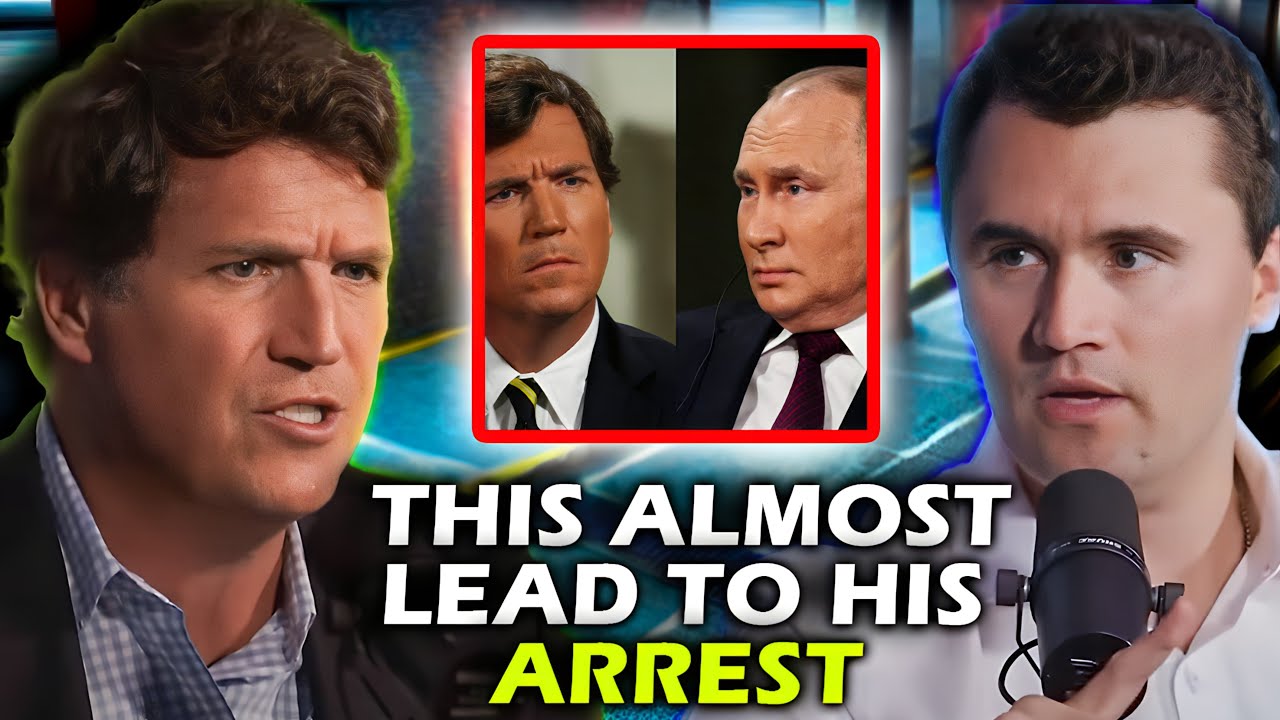
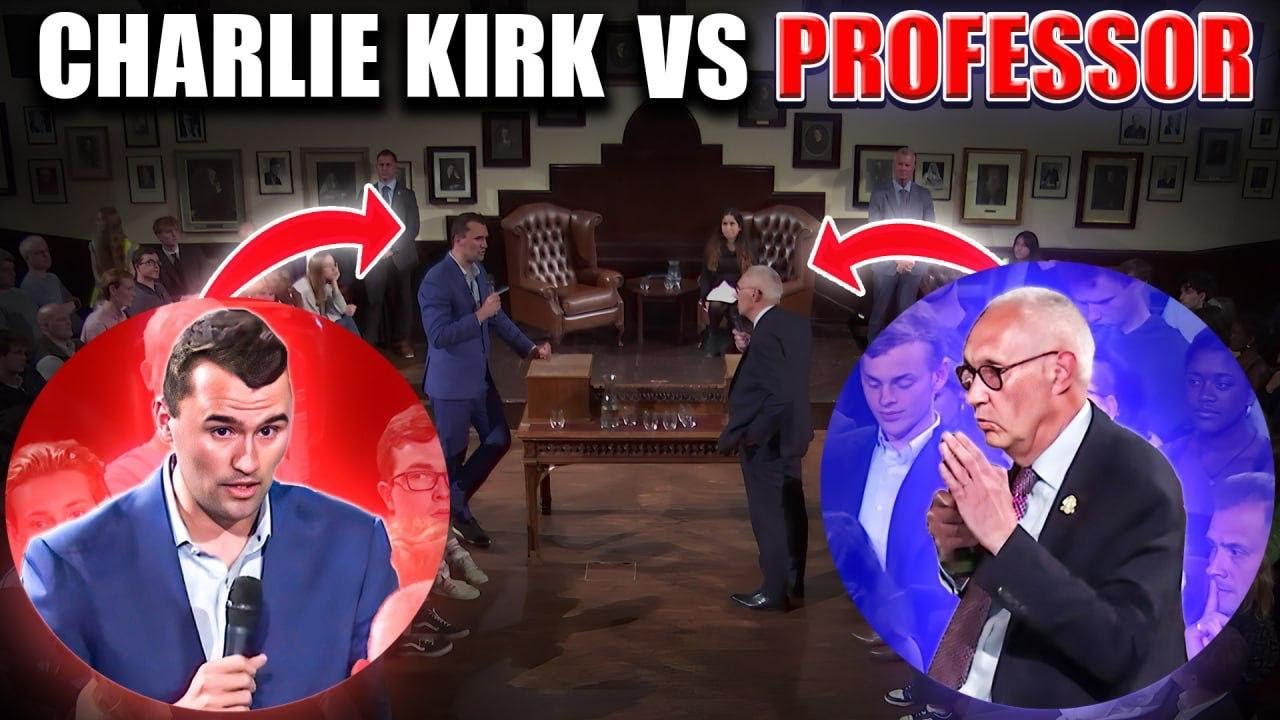
Michael Knowles and Charlie Kirk Play the Yes or No Game: Death Penalty, Porn, and Putin
Enjoying this? Share it with someone who needs to see it.
Up Next
Charlie Kirk Warns Tucker Carlson About the Coming Economic Revolt Among Gen Z Americans
2:13:52
Newt Gingrich on Trump's Historic Speed and the Remaking of American Foreign Policy Under Marco Rubio
15:55
Charlie Kirk and Jack Hibbs Expose the Great Reset and the Global Agenda Behind America's Dismantling
20:05
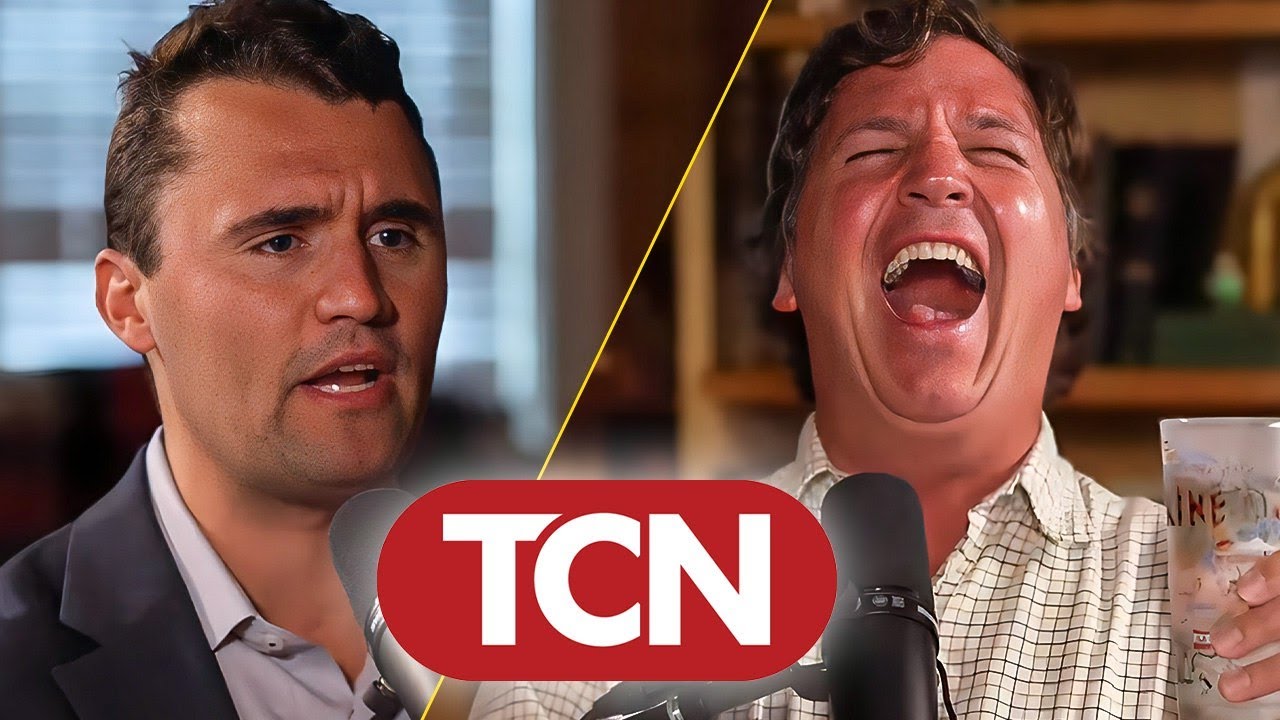
Michael Knowles and Charlie Kirk Play the Yes or No Game: Death Penalty, Porn, and Putin
Michael Knowles sits down with Charlie Kirk for an unfiltered round of the Yes or No game, tackling everything from McCarthyism to the death penalty, pornography bans, and whether they'd rather play the game with Vladimir Putin or Volodymyr Zelensky. The conversation takes unexpected turns through British politics, AI demons, testosterone levels, and whether Princess Diana was taken out by the British establishment. Along the way, they agree on nearly everything except teacher salaries and whether tall people make better politicians, a debate they promise to revisit.
Michael Knowles introduces his guest for this installment of the Yes or No game: Charlie Kirk, described as both a giant of politics and literally a very tall man. The conversation immediately takes a humorous turn when Knowles mentions a Reddit thread questioning whether Charlie might be part of the Nephilim, to which Kirk responds with appropriate skepticism.
As they settle in with their respective beverages—Knowles with a martini, Kirk with coffee—they prepare to tackle some of the most controversial questions in American politics and culture. The format is simple: Knowles guesses how Kirk will answer, and if he's right, Kirk drinks. If he's wrong, Knowles drinks. What follows is a revealing conversation that touches on everything from the nature of political leadership to the corruption of American foreign policy.
Short Men and Political Power
The first question sets the tone: are short men worse at politics? Kirk immediately agrees, though both acknowledge exceptions exist. The conversation reveals an interesting pattern: while taller candidates generally win presidential elections, many successful senators and congressmen are considerably shorter. Kirk admits he generally doesn't trust short people in power, though he quickly names exceptions like Ron DeSantis and Rand Paul.
The discussion touches on the phenomenon of height in politics, with Knowles noting that senators tend to be shorter than the average president, while Kirk observes that some politicians can be too tall, citing Glenn Youngkin and the notoriously towering James Comey as examples.
McCarthyism and the Rehabilitation of Joe McCarthy
When asked whether we gave McCarthyism a bad rap, both men enthusiastically agree that Senator Joe McCarthy was right. Kirk quotes William F. Buckley Jr., noting that McCarthyism was "a political movement around which all Americans of stern moral fiber can rally." They agree that McCarthy's targets in Hollywood and government were actually communists, and that intelligence agencies deliberately turned McCarthyism into a slur.
Knowles adds that McCarthy successfully identified Alger Hiss, one of the founders of the United Nations, as a communist agent. Kirk concludes that McCarthy "burned too bright for our age" and calls him a good man from Wisconsin.
White Supremacists and Federal Agents
On the question of whether 95% of all white supremacists are actually undercover federal agents, both men immediately agree. Kirk jokes that the other 5% are Indian or Hispanic, highlighting what they see as the manufactured nature of the white supremacist threat in modern America.
OnlyFans and the Pornography Crisis
The conversation takes a serious turn when discussing whether producing and distributing OnlyFans content should be banned with criminal consequences. After some clarification about the scope of the question, both men ultimately agree that it should be, though Kirk notes he would target other forms of pornography first.
Knowles describes OnlyFans as particularly insidious because young women at 18—not known for making wise decisions—can quickly create content that will follow them forever, even if they quit after two months. He characterizes the entire system as "degenerate men preying on vulnerable gullible women" where "everyone is degraded."
Kirk shifts the conversation to pornography more broadly, calling it "a tumor on society." He discusses how he wishes it had been harder for him to access pornography as a young person, noting that the median age of exposure is around 11 years old. Knowles makes a striking comparison: if 90% of society were hooked on opium delivered through their phones, melting their brains and making them view people as objects to be used, it would obviously have political effects.
Kirk goes further, suggesting that most depression in young men stems from dopamine deprivation caused by pornographic addiction. He references Gary Wilson's book "Your Brain on Porn," noting that Wilson documented how pornography causes issues across the board with male self-confidence, suicide, depression, and anxiety. He adds that female pornography habits are actually increasing.
Both men agree that laws should make it harder to do things without redemptive or edifying value, noting that the United States jailed pornographers for obscenity until very recently, including during the Bush administration.
The Death Penalty Debate
Kirk reveals this is his most unclear political position. He used to be very against the death penalty, particularly concerned about executing the wrong person. However, he acknowledges the biblical case is clear: the Bible is 100% supportive of the death penalty, from the Old Testament's "life for a life" principle to the execution requirements in Exodus.
Knowles notes that Catholic teaching for nearly 2,000 years supported the death penalty, including popes who carried it out. He cites Blessed Pius IX, who refused a stay of execution for the last criminal executed in the Papal States, saying "we cannot do it and we do not want to." The biblical foundation in Genesis establishes that the death penalty actually defends human dignity rather than undermining it.
However, Kirk makes a crucial practical argument: in current America, he opposes the death penalty because "this current government will use any power we give them against us." He draws a parallel to the Patriot Act, arguing that while the moral case is sound, the practical reality is that a corrupt government cannot be trusted with such power. Knowles suggests that once actual Bolsheviks take over, they'll eagerly use execution against their political enemies.
Putin Versus Zelenskyy
When asked whether he'd rather play the Yes or No game with Vladimir Putin or Volodymyr Zelensky, Kirk immediately chooses Putin, describing Zelenskyy as "the most uppity Ford in a T-shirt"—a phrase he credits to Tucker Carlson.
This launches into a broader discussion of Ukraine. Kirk emphasizes that Putin is "not a good guy" and "a thug," but argues the West has always done deals with thugs. He calls the current Ukraine situation "one of the great cons pulled on the American people," questioning why America is giving dollars to what he calls "this failed project."
Kirk argues that Ukraine as currently constituted is "a fake country," with eastern Ukraine being ethnically and linguistically Russian. He references serious American statesmen from the 1990s, including conservatives, who warned that NATO expansion eastward would antagonize Russia and increase the prospects for war. He compares the situation to the Cuban Missile Crisis, asking how America would react if Russia or China had similar involvement in Mexico.
Knowles notes that the director of the CIA arriving in Kiev two weeks after the Maidan revolution "may have had a little bit of support from the totally Democratic Grassroots." Kirk emphasizes that people underestimate how much social issues play into the conflict, calling it "a proxy war for LGBT versus antiquity." He explains that both Moscow and Brussels use social positioning to rally funding and troops, with Russia positioning itself as defending traditional values against Western degeneracy.
The conversation turns to the consequences of the Ukraine policy. Kirk warns that Russia, China, and India are meeting in St. Petersburg to create a currency to destabilize the dollar. If the U.S. loses global reserve currency status, the 110% debt-to-GDP ratio becomes catastrophic, potentially causing 30% inflation as dollars held as reserves flood back into the American economy.
Climate Change and the Sun
Both men lean toward agreeing that climate change is caused by the sun and has nothing to do with human activity, though they acknowledge the question is too absolute. Kirk notes it could be weather patterns or natural geological phenomena. Knowles points out the absurdity of the liberal idea that until about 1968, the climate was totally static, and then suddenly started changing—coincidentally right when it became politically useful to claim it was changing.
Kirk emphasizes that "carbon is life" and that everything that matters is built on carbon. Knowles identifies the core issue: climate activists don't like humans. They believe nature untouched is ideal, but nature untouched is not moral, orderly, or personal—God is all those things. This represents a return to river civilizations that worshiped created things rather than the Creator, which the Bible calls idolatry.
Women, Men, and Depth
The question of whether women are more shallow than men produces an interesting discussion about different types of depth. Kirk references Dennis Prager's observation that radio calls about the stock market, economics, or sports come entirely from men, while calls about relationships, divorce, or personal matters come entirely from women.
Knowles describes the Pietà—Michelangelo's sculpture of Mary holding the crucified Christ—as an example of profound female depth in the personal and immediate. Kirk contrasts this with Michelangelo's Moses looking up to heaven, representing male depth in the abstract and visionary.
They conclude that women are deeper on the micro level while men are deeper on the macro level. This explains why men come home from work and answer "how was work?" with "fine"—the details are too micro and immediate for male processing. Meanwhile, men think about grand visions like retaking Constantinople while women replay conversations in their heads. Both types of depth are equally important.
Target, Tom Cruise, and Testosterone
Kirk confirms his wife has completely stopped shopping at Target following the company's embrace of transgender ideology aimed at children. He explains the sacrifice: even though Target has the best variety and sometimes price on Spindrift, which he lives on, "these are sacrifices we have to make." He notes people have been called to make bigger sacrifices, and Target is "validly doubling down on transing the kids."
Both men enthusiastically agree that Tom Cruise was right about treating mental health issues with prescription drugs. Kirk argues that benzos and SSRIs are destroying young people's lives, and that society is massively over-medicating. The vast majority of depression diagnoses cannot be proven through chemistry—they're about brain health, nutrition, vitamin D levels, exercise, and dopamine habits.
Knowles praises Cruise as "truly the last" great movie star and "a marvelous film actor" who is pro-American. He notes the hypocrisy of mocking Cruise for Scientology while Hollywood embraces crystals, Reiki, and literal Satanism. Kirk suggests the real reason for attacks on Cruise is his criticism of pharmaceutical companies like Pfizer, AstraZeneca, Moderna, and Johnson & Johnson.
On testosterone levels, both agree the catastrophic drop over the past 50 years results from a plot to feminize men and make the population more easily controlled. The solution: go to the gym, do cold plunges at 35-45 degrees, and stop touching receipts.
AI Demons and Princess Diana
Both men immediately agree it's possible that interacting with AI means interacting with real demons. The question receives no elaboration but complete agreement.
On Princess Diana, Knowles initially seems to disagree because he believes the British Monarchy was destroyed after James II was unjustly routed out and William and Mary took over. However, when the question is clarified to focus on the circumstances of Diana's death rather than her impact on the monarchy, Knowles shares a story about a security professional who told him, "I don't like coincidences." He confirms there's definitely more to Diana's death, though the motive remains unknown.
Instagram and Character Assessment
The final question asks whether you'd find out more about somebody by looking at their Instagram discovery page than going to lunch with them. After clarification that the question means having access to someone else's discovery page, both men agree a lunch date would tell you more.
However, Knowles acknowledges the algorithm is remarkably good. His discovery page shows only three things: watches and horology, memes, and music (guitar and piano). The algorithm has gotten sophisticated enough to show him musical jokes and guitar memes. He likes to think there's more to his personality than keeping time, playing music, and laughing, though he admits Instagram might know him better than he thinks.
Kirk reveals he doesn't have access to any of his social media accounts—his entire team manages them. If he wants to tweet something, he tells them what to say. He doesn't use Instagram frequently, doesn't have TikTok, and rarely uses Facebook except to contact people. He gave up Twitter after the 2020 election, unable to deal with it anymore.
Conclusion
The conversation reveals that Knowles and Kirk agree on virtually everything except the nuances of teacher salaries and the death penalty in practice versus theory. They promise to return for a dedicated discussion on whether tall people make better politicians—a question that clearly deserves deeper exploration. Until then, they've demonstrated that the Yes or No game can reveal more about political philosophy than a hundred policy papers.
Video Transcript
my back and knee pain have greatly improved by ignoring infomercials [Music] in this installment of the yes or no game we are joined by a giant a giant of politics and a giant of person it's a very tall man that would be my friend Charlie Kirk I'm not the Nephilim you are not you are not you've never proven to me that you're not but I am giving you the best there is a Reddit thread that says is Charlie part of the Nephilim how did what did they conclude it's uncertain it's uncertain if you want to ponder important questions such as is Charlie among the Nephilim you've got to get the yes or no game right now you go to dailywire.com shop we sold out once I told you we were going to sell out then we ordered many thousands more copies and what have I told you you got to pre-order we're gonna sell out we sold out again we have ordered thousands and thousands of copies pre-order it daily wire.com shop play for yourself now we are going to play Charlie okay you much more responsible man than I you have a cup of coffee here I do I have a martini maybe I spiked your coffee who knows who knows we'll find out that would be cruel but just even at the playing field you know with the game have you seen the rules at all somewhat yeah okay so like a drinking game I will go first short men are worse at politics okay I am at least three quarters of an inch larger than the average in the United States Ben Davies so short men or how do I think you're gonna answer yes and I'll answer how okay well so I'm answering on behalf of you you're right for your position yes okay oh 100 but it's not it's not an exact rule there's some awful tall politicians there were some awful to I now like Bill de Blasio is awful and he is very tall he's incredibly tall so the reason I see that answer is Presidents the taller candidate generally wins my reason for no though is that you've met many United States senators you're friends with some of them as am I they're not the tallest Bunch the U.S senators that I know not presidents but senators and especially members of Congress some of them are like five six you know these are some fairly diminutive people I don't know why there's a difference between presidents and legislators but that's just what I've noticed so by a numbers game I think these guys are pretty good so I think the question was do politicians have a Napoleonic complex no short men are worse at politics or Worse they're not as good at it but that but aren't you agreeing the Senate's awful we know but they're good at politics okay I'm sorry okay I understand on their politics okay got it so wow so well the taller candidate does usually win yeah for president I mean I'm going to get so much hate for this I generally don't trust short people in power what about generally it's a general rule what would be a good example but short is very subjective what about uh DeSantis he's not a very tall he's like five eleven-ish right five six foot everyone I think it's more like I'm six three six fours I don't want to get called out by the DeSantis campaign I think it's more like five nine or ten he's not a very tall guy as far as I can tell but he's a good good governor what about I'm trying to think of another good Rand Paul I like Rand Paul Rand Paul's great it's not very tall not very tall what about um but there's also some I mean you could be too tall in politics like George Pataki Way Too Tall he was way too tall he was and I mean Glenn youngin Way Too Tall I've never met James Comey Way Too Tall you're like it's true you are not from this Earth yeah and I would definitely agree with that as well okay so I'm gonna just drink okay even though we both got that right are you just looking for an excuse yes Charlie when I did lahayam chin chin we played this game that's well made we played this game during during Lent this is the first time I ever gave up booze like in my life and we were catholic that's tough it's very tough I mean we are sort of born into a part of the ceremony I mean we uh I gave it up I've got to make up for lost time okay you're right all right the Boy Scouts are now just Retreats for Libs yeah I'm an eagle scout so that's I went to the Boy Scouts you're you're right that's sad isn't that sad you're an eagle scout that's supposed to be a very impressive prestigious thing yes and now these days they took out the word boy didn't they no yeah they allow girls in the Boy Scouts that's bad a drink did I guess correctly you did okay I just chose it was a long it was a long length I'm up women are funny so you okay [Music] like obviously the exceptions exist exceptions yeah yeah that's true Christopher Hitchens said there were three exceptions to that rule I don't know if I can say them even he published it in Vanity Fair so I feel he said that the only exceptions to women not being funny these are his words they're not mine I don't want he said they have to be Hefty Dyke or Jewish or Canadian and I don't he didn't maybe you could add that as an addendum isn't there a strange amount of comedians that come from Canada that's true but I bet for women they still fall into one of those three because all of the when you think of the really prominent female comedians almost all of them fall into one of those three groups we could have an hours-long discussion of why that is it my turn you're up my back and knee pain have greatly improved by ignoring infomercials By ignoring information I would say you would say no I think you would say yes I think I know your pain reduction medium of choice that's true and it has nothing to do with infomercial it has nothing to do with 100 drug free um did I guess correctly no yeah yeah you have that's great it's 100 drug free relief Factor though it is true and you throw a football great now thank you yes perfectly that commercial went viral it's good it did it was an excellent commercial well I think people were very confused because they're so used to like the catheter commercial or the gold reverse mortgage pillow I will admit I or Larry Elder on a boat yes when I first saw the commercial Charlie I thought look I like I like relief factor a lot of my friends endorse relay factor I love Charlie I said but usually the people in these commercials are like 110 years old and Charlie's like 20. so I do have an awful back that is that is an actual thing I know I remember I I think I may have texted you about it no it's it's been a real challenge for years yeah I want to get a good commercial like I've never been all the little clips that come up that you know the libs make fun of I've never had a great commercial like that I don't think Bud Light will call anytime an Target as special special influencer give me that can I could look great on there right now head on over to expressvpn.com Michael YT think for a moment about the idea that a single company controls ninety nine zero percent of internet searches runs your email service and gets to track everything you do on your smartphone big Tech is more powerful than most countries and it profits by exploiting your personal data it is time to put a layer of protection between your online activity and these Tech Juggernauts and that is why I strongly recommend expressvpn this is the only VPN that I use it's super easy I'm a huge Luddite you just download it click one button boom you're online very very simple think about how much of your life is on the internet every site you visit every video you watch every message you send gets tracked data or mind when you use expressvpn on your devices the software hides your IP address something big Tech can use to personally identify you expressvpn encrypts 100 of your internet data to keep you safe from hackers and Eaves droppers on your network if I can do it you can do it too very very simple download the app on your phone or computer tap one button you're protected expressvpn does all of that without slowing down your connection so stop handing over your personal data go to expressvpn.com Michael YT get three extra months for free that is expresvpn.com Michael YT expressvpn.com Michael YT to learn more you're up no I'm no Europe okay we really gave McCarthyism a bad rap my only hold up is who's we or which McCarthy and wish McCarthy Dan McCarthy at isi we gave that guy a bad rep uh to quote William F Buckley Jr to paraphrase him because I don't have it Word Perfect McCarthyism is a political movement around which all Americans of stern moral fiber can rally yeah he was right I wish the house committed on American activities would have done more yeah and they were right they were right they were Senator Hollywood they were Communists and culture he got Alger Hiss he was he was one of the top dogs like founded the U.N the Intel agency's turned McCarthyism into a slur yeah you're right of course of course Joe McCarthy uh he burned too bright for our age good man from Wisconsin okay at this point 95 of all white supremacists are actually undercover feds [Music] this is too predictable the other five percent are Indian Or Hispanic I've discovered I also love that our answers are just exact no they're just almost every time except for the tall guy one the tall guy one we'll get back to that one later there's a lot there there's a lot there's a lot we could Plumb the depths of that similar to people who drink Bud Light people who don't drink at all always seem to be hiding something from their father oh we seem to be hiding something from their father similar to people who drink Bud Light that's people who don't drink okay I know yeah I don't know if you believe that I don't believe it yeah because especially some people I know don't drink for religious reasons or from they've never had a drink before a number of the people I know who don't drink don't drink because they've really had maybe one or two too many at times and they've really lived life and they might be hiding all sorts of things but they're not hiding the kind of things that people who drink Bud Light all right in my experience all right next one yep okay okay recycling it's both fake and gay our producer slips in a fake and gay question every time every single episode recycling is both fake and gay yeah I can't imagine you're kind of like a zealot for recycling no when we moved into I guess our house maybe it's an apartment it was our house my wife she goes to me she goes Meg said yeah girl she goes can we now like we're in our own place can we not recycle and I said you know it and you know it this is our home we can do whatever we want it is also we'll put the gay thing aside for a second it is fake it doesn't recycling isn't real so much of what we put into the recycling bin just ends up in some trash Heap in China or more likely in the middle of the ocean it's not a thing it's like it's like a barely a thing right but basically yeah oh producing and distributing pornographic only fans content should be banned and have criminal consequences [Music] for minors or just in general in general producing and distributing pornographic only fancy it's very this is a very specific incredible even genre of pornography yeah so like not the other pornography just this type yeah I guess or at least this type is that so producing and distributing yeah the production and distribution the distribution is a key here it's a very very legally specific question okay um foreign yeah I mean I think you're kind of like the integral I strike so here you go I yeah I mean you know there's never been a separation of church and state ever in my opinion um it's a hard one because you would go after like 200 other kinds of pornography first before you got to but I mean porn is a cancer on society but it's a cancer if you're telling me at least we'll ban this I'd say yeah of course it's not it's it's released like age verification and like also I mean that's like a base Baseline but it's it's it's so awful only fans is particularly Insidious actually because any young girl who's 18 and wants to make a quick buck and 18 year olds are not known for making the wisest decisions can log on to this thing snap some pictures she'll almost certainly not make any money anyway this is how fast Ian Bargains often work and then those pictures will be there forever it's going to it's going to it's not going to necessarily ruin her life but it's going to complicate her life a lot and you know she could be out of it two months later but the damage is already done you think that's just awful I mean it's just it's just degenerate men preying on vulnerable gullible women and desperate women for what to arouse the lusts of other men there's just everyone's a victim in the whole I mean everyone is degraded it doesn't Point towards virtue at all no so did I get that right yeah yeah yeah I mean it wouldn't be my top like right I'd go after the like ones a regime of what we want to go after but I I think that I mean look pornography is made is it's a it's an it's a tumor on society yeah it is I I I've often thought when people talk about why is everything getting so crazy and irrational and degraded and I think well so there's this thing that not a lot of people want to talk about which which what 90 plus 95 plus percent of men have looked at at some point and maybe oh no I I had my struggles with it and I talk about it and I'm I try to warn young men not to not to look yeah no I I wish it would have been harder for me to access it because think about the the median age of exposure to porn is like 11. it's unbelievable and for some people obviously it's much younger so if you if you've got a society that is like imagine if you had 90 of society hooked on opium and but no one talked about it and it was totally legal and easy to obtain you get opium delivered to your phone unless little portal to hell like any time you wanted that would probably mess up our politics wouldn't it so if you've got opium but it but instead of just damaging your the rest of your body it melts your brain it makes you view human beings as nothing but like sacks of Flesh to be used that is probably going to have a political effect well it's even worse than that because you have a built-in as men especially desire to procreate yeah and it completely destroys the ability to do that in a way that is virtuous in a way that is ethical in a way that is moral in a way that is grounded in a way that is traditional yeah yeah I mean it I believe most of the depression of young men can be from dopamine deprivation of pornographic addiction oh that's interesting that it's not even just a depression of this is a degrading shameful act but it's like actually no I think it's actually I mean there's a fabulous book Gary Wilson's book your brain on porn yeah yeah I haven't read it no I mean it's it's he actually just passed away it's too bad because he was such an articulate Defender he doesn't even religious guy he's like this is causing issues across the board of male self-confidence male suicide male depression male anxiety and female as well but I mean what's really sad is female pornography habits are actually increasing right now really yeah they are and so I mean yeah the spirit of the question is I mean are laws should make it harder to do the things we know that do not have any sort of Redemptive value yes yeah and edifying value I mean these these laws actually do exist we did jail pornographers until very recently the bush administer Bush number two jailed a pornographer for obscenity at the end of his well and this is where I mean you wrote a whole book on it where this is not this is not what the founding fathers had in mind for speech no this this would have been labeled licentiousness right it would have been profane not holy right it would have been outlandish and against actually how human beings should live this is clarifying yeah yeah screw only fans we got it yeah that's we I should have answered even more quickly than I already did uh am I up okay this is not that controversial uh fine I'll say it teachers are overpaid I actually oh really I know I mean look in certain but New York California there's yeah we're I'm very biased where I grew up the union bosses are overpaid well they actually do a great job for their members they're just what they do is corrupt the institution for the students but in certain places the teachers are overpaid but in a lot of the rest of America teachers are severely underpaid which creates a difficult incentive problems where they become much more reliant on the union so they got to follow what the union sets for them so they can't provide a good education it it's like all of these leftist politics you know a couple of these like Piggies at the top get get all the riches and then a lot of other hotels are deprived yeah exactly yeah I mean I grew up in district 214 in Chicago where gym teachers make 127 000 a year right and they you guys can factor I could go to openthebooks.com Adam and gieski's website you'll see the average wages in district 214 in the suburbs of Chicago for Math teachers gym teachers upwards 175 000 a year for yeah no this is you guys could fact check it it's all right think about that annualized because you get the summer off first of all then you get 80 of that as a pension obligation once they once they retire right so to answer I mean you got this right in my experience but yes there are some places Across America where teachers are woefully underpaid yeah but the solution is fire Bad Teachers we have way too many teachers yeah and way too many administrators right that's the real killer though yeah that's true okay excluding speaking out against the Catholic Church the death penalty is wrong well I don't even get the parenthetical excluding speaking out against the Catholic church I think that's more directed towards you like I like I don't need to feel like I'm speaking up no I think it meant that you would execute people that would speak out against the church oh okay I wrote that question it was written for you yeah you make a great point Thank you for interpreting what it's the vodka but yeah it is Jen thank you very much I'm not drinking teenage white girl oh yeah I I find for a martini it's got to be oh orwellian of you it's well no the the Vodka thing gin is the drink of choice in 1984. it oh that's right wow though I hope this is better than the Big Brother Jen who knows though daily wire budgets are kind of you know slipping a little bit okay so the death penalty is wrong I know where you stand on this death penalty is wrong no so it's very this is a really interesting one I um this is my most unclear political position hmm I I used to be very against the death penalty very much for multiple reasons I used to somewhat morally but that that's actually not a good argument executing the wrong person really bothers me and that does happen and that there's there's a finality to the punishment right and well is there well if they're not saved yeah right I mean there's that old line from Dr Johnson which is uh depend upon it sir when a man's to be hanged in a fortnight it concentrates his mind wonderfully so you kind of hope there is if you are facing execution it almost accelerates the the confrontation of yes who am I where am I going who's my God so if we look at it strictly biblically there is no argument to say the the it is the Bible is 100 supportive of the death penalty yeah it is without question and I think in Catholic teaching they're so screwed up when well they're against the death penalty yeah the the TR the teaching of the church for um just about 2000 years is quite clear that the death penalty is A-Okay doctors of the church in fact it's necessary that was the old teaching of the church I mean there there's there were many popes who've carried it out including uh Pope who was beatified on his way to sainthood uh uh blessed Pious the ninth who he was the last Pope in the Papal States before they got rid of the Papal States he was asked for a stay of execution by the last criminal to be executed and his answer was we cannot do it and we do not want to so the church was very unless you're telling me that Saint Paul you know advocated something deeply immoral or intrinsically evil that's all obviously no but I mean the Old Testament law in particular was very clear about life for a life yeah right about what actually gets the death penalty yeah which is even if an animal act an ox accidentally kills a human being Exodus 20 or 21 you must kill the ox you do not keep it yeah yeah and you know the there are some Modern Catholics who have tried to make this argument again and I guess Protestants too we've tried to make this argument that the death penalty undermines human dignity but right back there in Genesis the the explanation for the death penalty is actually to defend Humanity no that's correct right yes it's life for life is what it is and it's in fact for example I mean the first recorded murder ever in Genesis 3 yeah of Genesis 4 Cain and Abel where um Cain kills Abel you remember God said it you didn't just kill Abel you kill it's the ground that is shrieking meaning it's the future Generations who killed of him think about that so it's not just him it is what he would have done it is the people he would have influenced the sons or daughters he would have had but with that being said yeah what was the what was the exact wording of the question death penalty's wrong the death penalty is wrong that's a moral question so you did answer correctly that I'd say it's political but I would say in America I would oppose the death penalty for a very specific reason because right now the trend is this current government will use any power we give them against us that so I am and this is the Patriot Act argument right the moral argument I'm totally on board we had a government that was ethical and understood you know Duty and you're saying just you think the government's so far gone that they're they could in the practically right now in America I think we should oppose the death penalty we shouldn't because they could start executing Charlie they would like it's pretty bad but I'm just saying you don't know it's that bad they're not but they're not they're not doing it yet at least the death penalty part yeah they barely carry out the death penalty no because right now opposing the death penalty fits their agenda which is to try to have compassion supersede Justice right but make make no mistake as soon as the actual Bolsheviks take over they're going to want to bring back the geek yeah right you're going to come to this table the idea that Michael Knowles and Charlie could still be in a gulag on Alba is like no no no we gotta wipe them off he's still a threat he's still breathing yeah right we don't get the vacation to Alba that's probably true that's probably true I'll drink to that anyway to our you know impending doom no one here Gets Out Alive anyway we'll go to heaven cheers yeah I certainly hope so in Catholic Church are you guys certain of your have have an assurances well if we don't uh if we don't reject God's grace and if we don't uh you know die in a state of mortal sin if we if we die in the State of Grace um which is available to us by you know cooperating with God's grace and accepting Christ and being contrived for our sins and all the rest of that then we can go to heaven might need a little expurgation period but you know uh but but but there is a risk even you know I'm baptized got the sacraments confirmed in the faith but if I reject God and I choose with the ascent of my will to commit mortal sins I could be liable to the fire there there is biblical evidence for this that Protestants have to wrestle with there is unforgivable sin in the Ten Commandments yep and of course Jesus alludes to the you know I never knew who you were yeah and and Christ says the uh you know there's the unforgivable sin of blasphemy in the Holy Spirit oh that's exactly which which is uh which is sort of what I'm describing here which is you know that you you do still have that Free Will well so blasphemy the holy spirit is the same essence of what is the one unforgivable sin of the Ten Commandments you know do not carry the lord's name in vain hmm it's the same thing that's interesting do not blasphemy the Holy Spirit do not carry the lord's name in advance hmm but one could blasphemy it's not the same thing but it's in essence yeah yeah there's there's a which is which is a rejection or a misuse of of the name of God or the language of God or the rejection thereof I have to I'll have to meditate on that because I was trying I was going through this recently because I figured if I make some stray comment if I laugh at a joke where someone mentions the Holy Spirit could I have committed the unforgivable sin and it's not it's not quite that right I mean and so no but I think the essence of Christ's teaching is did you reject the advocate right did you reject what I left you yeah yeah right yeah I am so as Christ descended to the Holy Spirit came down in Pentecost which is here for us to be able to do his his gifts right the the fruits of the spirit yeah love joy peace patience kindness goodness gentleness and self-control are the fruits of the spirit but then also the gifts of the Spirit right healing speaking of tongues Etc yeah yeah that's I think Europe okay you can go again yeah if I had to choose between the two most the two corrupt world leaders named Vladimir I would have I would have more fun playing yes or no with Putin oh I see what you're saying who would you have more fun playing yesterday or Putin yes yeah okay right um and so it's saying I would have more fun with Putin that's the prompt yeah correct yeah okay no doubt right yeah not that uppity Ford or in a T-shirt that is the most beautiful description I've heard of the leader of Ukraine yeah I didn't come up with as Tuckers but it was Tucker ah Tucker he's got something it says in the Bible that you will you must honor those who you have things from I just have I have a good memory you know it's funny success leaves Clues you know what's funny about Putin until very recently he was if not idolized he was exalted by the West he was a world economic Forum a young Global leader he was because they thought they could liberalize Russia they thought they could liberalize Russia see Putin's not a good guy he's a thug okay but this idea that somehow we in the west don't do deals with thugs is just one of the most laughable geopolitical arguments I've ever heard the whole Russia thing is one of the great cons pulled on the American people right now the fact that we're giving a dollar to this failed project of the current state of Ukraine first of all zelenski's a really bad person he is corrupt he's a liar he's a cheat Ukraine is not known for its sex first of all it's a fake country the way it's currently constituted there is a Ukrainian people eastern Ukraine is part of Russia they speak Russian they want to be part of Russia Crimea you heard of the Yalta Conference that's in Crimea right right literally yeah I mean so why is this our problem is the more important question right Ukraine has been conquered so many times by so many people it was even conquered by the polls Poland is one of the most conquered places on Earth itself and yet Poland conquered let me be clear Putin invading Ukraine's a bad thing yeah we're not us exasperating the conflict and not trying to broker piece is also a bad thing you know going back to the early 90s you had serious American Statesmen including conservatives who said hey NATO as a defensive Alliance probably shouldn't expand too much Eastward Dennis you have lady Graham going right up to the border of Ukraine saying we're going to play offense this is the year we're going to go back to DC could you imagine if the Russians of the Chinese went to Mexico City yeah in fact we know what that is we know what happens when it's called the Cuban Missile Crisis yeah it was probably a bad look for the director of the CIA to arrive in Kiev two weeks after the maidan revolution that may have had a little bit of support from the totally Democratic Grassroots not the best look and but yet all these Sam Nunn Kissinger Dan Patrick Moynihan all these guys George Kennan author of The Long Telegram saying hey NATO if you keep expanding Eastward in antagonize Russia that's going to escalate the prospects for war if you don't respect buffer states which have played an important role historically that's going to increase the risks of war and then what do we get and then Biden literally invited the guy to invade people underestimate how much of how big of a role social issues play in the Ukrainian conflict is that it's a proxy war for LGBT versus Antiquity is that really that's really what it is I'm not saying that's why you should cheer for Russia or not but the rallying cry internally for the Kremlin and the rally and cry internally at NATO is that worse yeah yeah Russia says we're super nut that that that is the Mantra that both sides are using regardless of what Ukraine actually thinks it's sort of Ukraine is just the Battle of course unfortunately they're victims for all this yeah yeah but the actual like the leaders of the the leaders from Brussels and the leaders from Moscow both use social positioning as a way to Rally the funding and the troops and the Personnel in both their respective side that's so true I mean this was one of the arguments about the rest of the kind of American Imperial project was I say okay the Great American Empire I mean truly I thought okay if we're going to spread our values around the world and it's truth justice in the American way okay great but if the thing we're spreading around the world is the rainbow flag and kandahars then what are we doing why would we do that this is the argument to end the war in Ukraine is it's a proxy war for the woke idea virus yeah and it supports the whole state department their why is not about the Constitution or consent to the government or the Declaration or fulfillment yeah fulfilling some sort of madisonian mandate of like yeah you know people-centered government the why of the state department is that we can push back that evil monster Putin Because he believes one man one woman but is there a fear this is the best argument I've heard for us in Ukraine is there a fear that if we allow if we wind down the war let's say we allow Russia to take more of Ukraine that that will embolden say she in Taiwan they're already they're creating their own currency in St Petersburg in the next couple weeks yeah but I mean what we should have done is said Russia no you can have eastern Ukraine hold elections and let's create an actual force and strengthen the dollar and then crush the CCP the opposite is happening yeah you know have India China and Russia going to St Petersburg in the coming weeks they're going to create a currency move to destabilize the dollar so we're going to possibly lose the dollar as the world Reserve currency status because why to support zelenski like the failed TV actor made prime minister by the way when the U.S loses if the Lewis U.S were to lose Global Reserve currency status you know all of a sudden our 100 110 debt to GDP ratio becomes a little bit more of a problem than it is right now all of a sudden for inflation you'll 30 inflation because all those dollars then have to get released immediately as their reserves right so Japan Korea the Philippines Indonesia like okay here's a wire transfer here's 300 billion dollars coming home and then they'll have 30 inflation but don't worry hey supportive zelenski's worth it so you would rather play the game with Putin yeah yeah am I okay climate change is obviously caused by the Sun and has nothing to do with human activity there's no Nuance in any of these questions [Music] yeah if I had to like tilt more side than not that's how it answered for you the AKA yes and for you as well did I get there right yes ish only because that's way too absolute it's way too and it could be forget about even the humans and the cars or whatever it could just be weather patterns of course it could just be all these natural kind of geological things that have happened yeah I don't think the sun is the only contribution to global temperatures as it is yeah but it doesn't need to be that you know because it's not necessarily carbon right carbon is life you do not have life without carbon yeah everything and everything that matters is built on cars I also just love this this lib idea well one obviously we all know they've changed the climate story a thousand times and it was It was kind of cool and it was going to warm and it was this and it was that but I love the idea that until about 1968 the climate was just totally static that's correct and the global mean temperature whatever that means it was just always exactly the same and then that 1968 it all started to change and that's why we've got to give up our money and our rights and our cars but then why do you think that is well I think it has a little bit more to do with a political campaign to upend our order in our society than it does with the sun monster it's also because they don't like humans yeah of course that's why they have to call anthropogenic we're the problem yeah and they believe nature untouched is the ideal right right and nature is not holy it is not orderly right nature untouched is not moral and it's not personal God is all those things right and and yeah that's that's an important point because they'll say oh we have overpopulation we really don't for what yeah first of all we don't but second of all what is the nature for like if we're the problem we serve the Rocks is that it we serve the deer well this is what river civilizations used to believe though and the Bible crushed this belief right they believe that you worship the river you worship the sun you worship the dirt and the Bible makes the claim that go you know this is for you you take dominion over the Earth there's a hierarchy right right nature man God when you when West is built on that idea yeah when you worship created things there is a word for that it's uh not spoken very highly of in the Bible that would be called idolatry yes and that is exactly why it's the first commandment well it's actually the first statement you shall know what regards before me yeah all right you're up I'll drink anyway I'll drink to that drink to life looking at the data women are actually more shallow than men foreign well the statement is simply women are more shallow than men so yes women are more shallow than men or no nothing much tough because of double night it's like a double negative right the way I was racing it was no okay I know it's very this is not or more shallowed so looking at women are actually more shallow than men so I'd say no to that statement meaning no women are not okay I think that yeah I think that's who's more superficial basically well it doesn't necess it could be that they're both equally shallow it doesn't mean that one is more so than the other did I get that right I don't know here's my argument here's because I was trying to think about this so who's deeper is that the question who who goes deeper so you could make an argument and say well it depends on what topic though yes that's the issue and also I just think of I think of the pieta you know in in the Michelangelo pieta and I think the depth of Mary's grief holding her crucified son who is God and the son of God it probably doesn't get a lot deeper than that right so but but now men are deep in other ways right men can be deeper in some ways than women are men are always deeper on the macro and women are always deeper on the micro and this is prager's whole thing right which is I mean I I know you host radio if you if you're talking about the stock market or economics yeah Sports every single call will be for men if you're talking about relationships or divorce or gossip every call will be from women right so when that that picture of the paella is exactly right the personal now what's the equally as popular piece of art that you'll see is Moses of the Ten Commandments looking up to the heavens Visionary abstract Big Ideas that's why when men come home from work how is work fine yeah right it's because it's too detailed it's too micro it's too immediate it's just not it's not something that will dwell over yeah I mean so women will replay conversations in their head when men will think about how you know we can retake Byzantine he wears antium right that's a big difference how can I go conquer the SARS lessons yeah and then while they're gonna be like are you sure my neighbor likes me are you sure and that's actually they're both equally important though right yeah and so because the argument against this is the argument that got Larry Summers fired which is he got fired because he said that one of the reasons why there aren't a lot of female mathematicians at the you know the very highest levels of Academia is because the bell curve of intelligence for men is just wider and so that means that the very very smartest people on Earth are going to be men and also the very very dumbest people on Earth are going to be men and this created a political uproar and he was run out of Harvard even though Larry Summers is actually pretty liberal correct now the reason I don't think that would be a good refutation of this question is depth is about a lot more than IQ I know people have a relatively very high IQ they're very shallow people correct right and so I don't I'm not sure there's a huge connection there yeah again it depends on the topic micro women are far deeper yeah macro I think men are much deeper yeah okay that's good my wife has completely stopped shopping at Target for sure right did you uh we had a conversation about this on air no no no no not you and I I'm my wife and I okay we she asked me the other night she goes I make do what we can't go to Target now I said we can yeah I guess we can married like Whoopi Goldberg wait wait that sounds you never you never heard you know some people say that that's not what my wife actually sounds like to me that's a perfect representation Mac and so she goes she's like I like I've never heard it described as a Whoopi Goldberg boy it sounds like Whoopi Goldberg from uh some one of those movies that's that's yeah from the Ted dance and comedy special who knows I I said to her we have to stop shopping at Target because even though it has the best variety and sometimes price on Spindrift which I live on these are sacrifices we have to make and people have been called on to make bigger sacrifices and they're they're just a validly doubling down on transiting the kids we can't shop there right I mean we we didn't shop there before it's they're dead to us Nick right yeah but we have a whole list this is why I like McCarthyism right is that you have to have a list of the things 200. well it's like it's like North Face Ford you know one after the other I was never a an upper middle class Suburban white girl so I never had the privilege of wearing North Face but they're dead to me I won't wear them anymore the Ford truck that's I'm getting more of a sedan guy but this is what's perplexing to me I mean they do they really think oh yeah the Raptor the Raptor well I mean out of all the communities that are gonna buy Raptors are they like you know what you're right yeah Western San Francisco they're obviously going to start buying Raptors that's where they are that's where Greenwich Village that's where you see the highest proportion of raptors in the country yeah not quite we all owe Tom Cruise I thank you and an apology he made top gun Maverick and was totally right about treating mental health issues with prescription drugs so you could rephrase the question and say Matt Lauer is glib he's glib [Music] duh Tom Cruise is Right Tom Cruise right benzos are destroying so many young people's lives Xanax ssris serotonin disruptors yep yep we are over medicating our society massively I do think he's probably wrong about the aliens coming and with the theatons and the but you're keeping an open mind no I mean I'm a Christian I'm just saying like I I don't think we have to always overcompensate when somebody's right you know I agree I think that he gets so much unfair ridicule he totally does you know he's kind of become a caricature yeah yeah and if you look at the Matt Lauer interview he was so forceful about yeah now what we clinically know which is now the research is showing it the vast majority of depression type diagnoses are not actually anything that could be proven Through Chemistry right it's about brain health it's about whether or not you're feeding yourself correctly vitamin D levels right exercise what are you consuming are you actually do you have healthy dopamine habits are you dripping dopamine or are you dumping dopamine yeah Tom Cruise has talked about all that he called it out in like 2005 I think it was and also he's a marvelous film actor he's truly the last he's just great and pro-american the other thing is because people always make fun of the Scientology stuff but think about all the other stuff that Hollywood and just Libs in general believe the crystals and the Reiki and The Vibes and the energy or like you have Sam Smith dancing to Satanist stuff yeah like lay off him and right yeah I mean obviously it's not my cup of coffee but I just think the whole thing is so I totally you know and I think honestly they go after him so hard because he criticizes Pfizer AstraZeneca moderna and Johnson and Johnson yes yeah I really do yeah yeah and when he when he's sat there with total seriousness and just said Matt you aren't glib that was a precise word to describe the libs the libs are very good okay the catastrophic drop in male testosterone levels over the past 50 years is the result of a plot to feminize and turn the men into Libs in order to make the population more easily controlled by the globalists and currently the only way to fight it is to go to the freaking gym do a cold Plunge at 35 to 45 degrees and stop touching receipts wow based that's a really deep cut to say that uh hold on due to YouTube rules make your guess but do not verbally confirm if the other person guessed correctly give only an ambiguous non-verbal confirmation did you get all that yeah so it basically says go to rumble.com You're the answer download the rumble app so you've got okay we'll make the gas somehow but then we don't confirm or deny how the person did sure okay going to the gym I don't know about the gym you know but okay wait out of all the things we talked about that's what's going to highlight it's really that's holding no that's gonna violate Michael's rules um okay so the plot the catastrophic drop the only way you get a step okay I don't know if you got it right yeah who knows who knows okay uh you're up it's possible that if you interact with an AI you're actually interacting with a real demon yeah for sure right have you ever agreed with a guest as much as this no this is actually truly other than tall people are better at politics we got to settle that one we have to set that's going to be the next special what it really means I know it has a moral demand Napoleon was great as politics not the best moral no he was not yes exactly we'll have to we'll have us entirely separate yes or no for that otherwise I think we've agreed on all virtually every issue one was well the other one that we woman thing no the yeah it was either the death penalty or it was something else the teachers but we also there was some Nuance there was nuances okay all right let's see if we can split it up for the last one all right we had a disagree more this is weird enough time has passed we can all finally admit that Princess Diana was probably taken out before she could totally destroy the entire British Monarchy that she was taken out she was saying it was like MI6 or something like that okay the only reason I'm gonna have to disagree here the only reason why you're a defender of the Intel agencies no no you're telling us the whole story I have to go back further the reason that that prompt I have to answer no is because the British Monarchy was destroyed after the no I'm saying after James II was unjustly routed out of England William and Mary was their motive Princess Diana's death that's the real Essence that's what I answered based on was it just really an innocent car chase was there a little more to the story um okay I'll tell you what I'm gonna put my glass here just for a second just very near to me one time I was in a situation where I had a security agent near me and there was a person who seemed a little bit out of place it was occasionally taking glances at me and uh I talked with a security agent later and I said what do you think it could have you know it could have just been a coincidence and this was a period of particularly heightened security and he turned to me and he said you know Mr Knowles that's a security professional I don't like coincidences they happen but as a security professional one would not like them you answered correctly there's definitely more to that story motive's unknown that's why I didn't like the second part yeah okay motive Center okay is this the last one all right here we go you will find out more about somebody by looking at their Discovery page on Instagram than you would from going out on a lunch date foreign [Music] [Music] my friend really we got it wrong too I did okay so and I'll you go first My Discovery page on Instagram I'll I'll tell on myself what is the really mean Discovery page so you click on Instagram there's the uh the magnifying glass and it just shows you rant I think that's the one it just shows you kind of just random people's accounts and stuff and mine is divided into there are only three things that show up in in this Oh I thought they meant like the profile page no not the profile no no it's the discovery like what the algorithm thinks you are liking if you're if you're going out on a random lunch date why would somebody have a discovery page no meaning like if let's say I want to know about Charlie Kirk and I could and I don't know oh so you got access to my Discovery page exactly I understand okay no then that's a different answer so then you say no you think the lunch date will tell you more than the discovery page which one's which the no is lunch date we'll tell you more the yes is Discovery page we'll tell you more oh launch date would totally tell you but the discovery page is I mean the algorithm is very good in that I get three things on my algorithm I get I like watches I like wrist watches here I'm wearing a very fine Timex wrist watch I don't they don't need to be expensive but I like clocks and horology I don't know why I've always have I just like it okay it's a hobby so it's an interest it's not even a hobby I like memes I like kind of funny memes and I like music so you know guitar or piano these things it's the only three things that pop up on my Discovery page and it's getting smart in that it'll often be musical jokes like it'll be guitar or piano memes of and or it'll be kind of these so it's good I mean the algorithm is good but I like to think I like to think that there's a little bit more to my personality than keeping time playing music and laughing I liked it maybe I'm wrong maybe Instagram knows me because if you could go into somebody else's Discovery yes yeah would you you think I watched Instagram in years so oh you blessed man you blessed me so so it is totally managed by whole Team USA I don't have access to any Mike social media accounts that's so smart not even Twitter you don't really wow it's your mind Ben is like that yeah yeah whole team managers at all so if I want to tweet something I just say tweet them so I don't use it I use Instagram pretty infrequently I don't have Tick Tock I don't really use Facebook unless I'm searching for somebody to get in contact the one for me is Twitter I can't it's about my Twitter I that was tough I can't give it up I love it after what happened in the 2020 election I gave it up I said I can't I can't deal with it yeah that's very good and the other thing is it depends on who's on the lunch date you can find out a lot about a person on a lunch day if you're a bad conversationalist if you're not interested in the other person but it's a lunch date not a dinner date it's different that is different because you only you have three martinis at lunch at dinner who knows I didn't even I'm actually Charlie your teetotaling is worn off on me oh is that right look at that that's a very that not a lot for you that's not I should have had at least three of these martinis then I would be speaking in cursive you'd be speaking in tongues like a true Pentecost yes um at least in my mind I would be yes uh Charlie I think we both won oh okay we'll have to have you back we'll we'll discuss the the height Quest so it's like world war one where you it's just it's a complete stomach until World War II who's on what side who's on what's a question also for the next time until then I'm Michael Knowles this is Charlie Kerr happy playing [Music]