Mikey McCoy on Charlie Kirk's Final Years and the Mission That Continues
Enjoying this? Share it with someone who needs to see it.
Up Next
Riley Reflects on the Charlie Kirk Effect: Revival, Courage, and a Guide to Reading the Bible
36:05
Charlie Kirk's Vision for America: A Grassroots Movement Defending Faith, Freedom, and the Republic
6:56
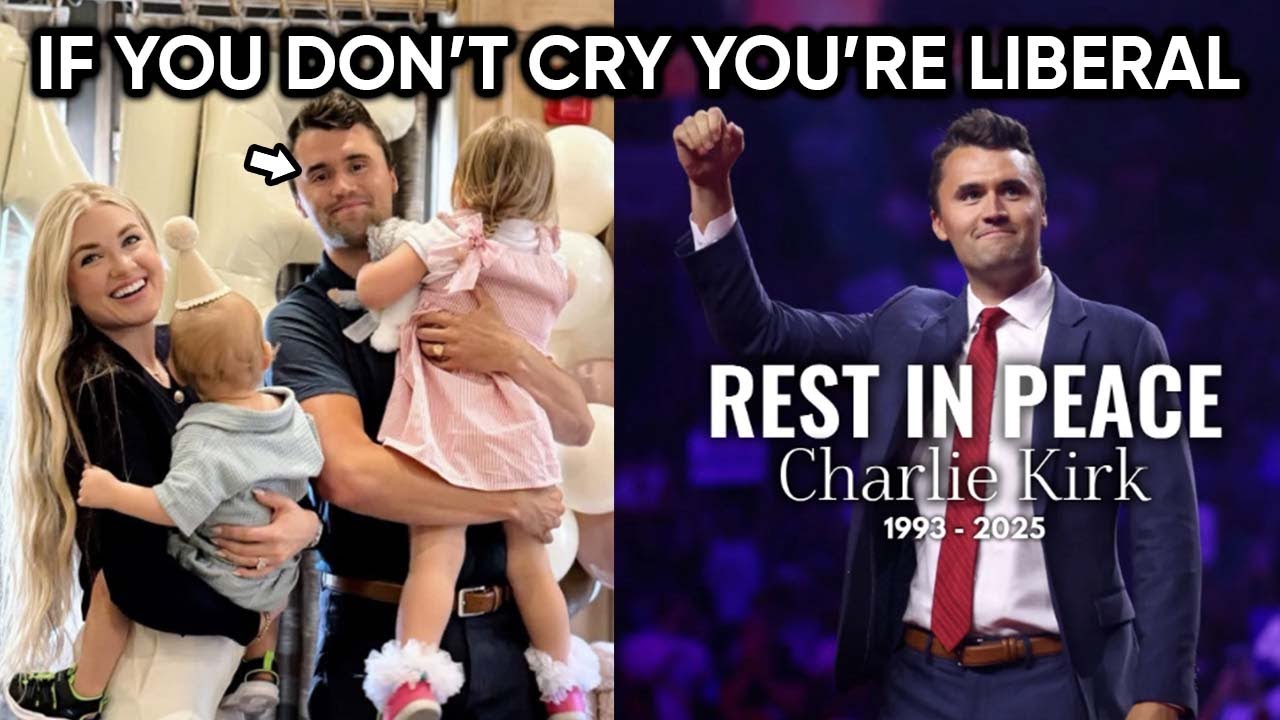
Voices from the Charlie Kirk Memorial Vigil: Thousands Gather to Honor Conservative Leader's Legacy
2:12:22
Mikey McCoy on Charlie Kirk's Final Years and the Mission That Continues
Mikey McCoy served as Charlie Kirk's chief of staff and witnessed firsthand Kirk's relentless dedication to reaching young people. In this conversation with Alex Marlow, McCoy shares intimate stories from the road with Kirk, reflects on the turbulent year following the assassination, and explains why Turning Point USA's leadership remains committed to the mission Kirk started. McCoy also addresses the conspiracy theories that emerged after Kirk's death and reveals the spiritual lessons he learned through the grief. This is a rare behind-the-scenes look at the man who stood beside one of conservatism's most influential voices.
Mikey McCoy met Charlie Kirk when McCoy was just 18 years old. Kirk had come to speak at McCoy's father's church—Pastor Rob McCoy's congregation in Southern California—during the COVID era when churches were closed while marijuana dispensaries and strip clubs remained open. After the service, McCoy offered to drive Kirk and his then-girlfriend Erika to the airport, a trip that would change his life.
During that hour-and-a-half drive through Los Angeles traffic, Kirk grilled McCoy with questions about history, philosophy, and current events. McCoy struggled to answer most of them and assumed Kirk thought he was an idiot. But just before getting out of the car at the airport, Kirk made an unexpected proposition: "I don't think you should go to college. I want you to come work for me instead."
McCoy was baffled. Why would such a prominent figure want to hire an 18-year-old who clearly didn't have all the answers? But he accepted the offer, moved to Arizona, and began following Kirk across the country to college campuses, churches, and political rallies.
Understanding Kirk's Mission
As McCoy watched Kirk operate, he began to understand what made him unique. Kirk wasn't the first person to go to college campuses, but he was the first to be consistently successful at it. The key was authenticity. Kirk didn't pander to young people or try to speak their language. He told them what they needed to hear, not what they wanted to hear.
Kirk saw something in young people that they didn't see in themselves. He saw a generation struggling to afford homes, unable to get married, unable to have children, and inheriting a future that looked worse than what previous generations had experienced. He wanted to fix that by showing young people a better vision for themselves.
McCoy realized that Kirk had offered him a job for the same reason he went to college campuses: he saw potential that McCoy didn't see in himself. This genuine care for young people—this authentic love—was what made Kirk's message resonate.
The Evolution of Kirk's Campus Presence
McCoy witnessed the gradual growth of Kirk's influence firsthand. In October 2023, Kirk set up a tent at the University of Arizona with about 15 to 20 people gathered around. One year later, in October 2024, Kirk returned to the same campus and drew a crowd of 2,000 to 2,500 people.
This explosive growth didn't happen by accident. Kirk had been showing up consistently since 2015 or 2016, sometimes begging for students to come debate him at tables. He could have given up when nobody showed up, but for Kirk, this wasn't about virality or building a brand—it was a mission rooted in genuine love for young people.
Even liberal students who disagreed with Kirk respected him because he showed up authentically and consistently. Generation Z has a particular ability to detect when someone is pandering to them, and Kirk never did that. His persistence and authenticity eventually paid off in a massive way.
A Day in the Life as Chief of Staff
McCoy's role as Kirk's chief of staff meant long, packed days that varied week to week. Some weeks they traveled so much that McCoy saw Kirk more than he saw his own wife. There were days when they visited three or four different states, starting with a donor breakfast in Dallas at 8:00 a.m., followed by a campus stop at noon in Oklahoma, then a speaking event that evening, and flying home the same night.
Kirk's schedule wasn't limited to college campuses. He spoke at churches, attended Lincoln Reagan Day dinners across the country, and participated in small political rallies in parks with just 10 to 15 people, encouraging them to knock on doors and chase votes. He showed up everywhere, consistently.
What struck McCoy most was how Kirk used his downtime. While others might relax, Kirk took Hillsdale College courses, journaled, wrote letters to Erika and his kids, prayed, and even debated with AI chatbots using ChatGPT. He would challenge the AI to debate him and often win, forcing the AI to concede that Kirk was correct about historical events.
Kirk's Commitment to Learning
Kirk was a diligent student who constantly read books and pursued knowledge. Unlike many commentators and influencers who appear smart on camera but don't read behind the scenes, Kirk was always in a learning state. If he sat next to someone at dinner, he assumed that person had something he didn't know and would extract that knowledge by the end of the meal.
One of McCoy's favorite examples of Kirk's dedication to learning involved a 1980s tape recording of Dennis Prager lectures—28 hours worth of content. Kirk listened to it on repeat on a small player. It didn't matter how he accessed information; he was going to find it, study it, and learn from it.
This commitment to being a diligent student is something McCoy misses most about Kirk—those trips where Kirk would teach him what he'd learned, sharing insights in between packed schedules.
The Aftermath of Kirk's Assassination
When asked how he thought the country handled Kirk's assassination, McCoy acknowledged that the left's reaction wasn't surprising—they lack certain morals that the right consistently maintains. What was harder to witness was how the right fell apart somewhat in the wake of Kirk's death.
Everyone who knew Kirk understood that he was a coalition builder, a bridge builder. There were memes of him being like a dam holding everything back. But it wasn't until his assassination that even those closest to him realized how big a role Kirk played in holding things together. He was the glue.
For McCoy personally, losing Kirk meant losing his mentor, boss, and friend. In the aftermath, he watched coalitions fall apart and bridges crumble, and it was painful because he kept wanting to ask Kirk for the solution. He wanted to text him, call him, knock on his door and ask how to fix these problems. He knew Kirk would have had the answer, but he couldn't reach him anymore.
The Conspiracy Theory Targeting McCoy
One of the darkest moments following Kirk's assassination came when Candace Owens put forward a conspiracy theory suggesting that McCoy was involved in the killing. For anyone who knew McCoy even briefly, the accusation was absurd. But it was a deeply abusive and gratuitous attack on someone already suffering from grief.
McCoy hadn't publicly discussed this experience until this conversation. When it first happened, he couldn't believe how things were being twisted and changed. He saw how many people were watching the accusations live and felt upset. After sleepless nights, he prayed and asked God what lesson he was supposed to learn from this experience.
The answer that came to him was humbling: he realized that he had once been on the other side of something like this. At some point in his life, he had participated in making someone else feel the way he was feeling now—by watching, believing, or sharing something that wasn't true. He asked himself where in his life he might currently be viewing, listening to, or believing something that isn't true, naively thinking he couldn't be wrong.
McCoy didn't want to be a victim. He wanted to humble himself before God and make sure he didn't participate in making someone else feel the way he felt during that attack. It was a hard lesson in a year full of difficult lessons.
Finding Support During the Attack
The experience of being publicly accused also helped McCoy separate the wheat from the chaff—discovering who would truly come to his aid in a situation like that versus who would just watch or not reach out at all. He was tremendously blessed by how many people reached out to pray for him and encourage him to ignore the attacks and move on.
That support was encouraging because McCoy wanted to move on. He wanted to feel close to Kirk through the work, not by giving ear to baseless conspiracies. God worked something good even out of that evil situation—helping McCoy identify his real friends.
Charlie Kirk's Loyalty and Generosity
One aspect of Kirk's character that McCoy wishes more people knew about was his loyalty and generosity. Kirk was the most loyal and caring person McCoy had ever met, but he was also incredibly generous. He would randomly reach out to staff members to offer wedding gifts or help pay for honeymoons. He did the same for McCoy and his wife when they first got married.
If you were part of Kirk's family, tribe, or inner circle, he wanted to take care of you and support you. These are the sides of Kirk that McCoy wishes people could see—how loyal he was, how generous he was, how much he cared for those around him.
Christ at the Center of Everything
Kirk used to say, "Politics is my day job. If you're asking what my full-time job is, it's winning souls for Jesus Christ." At the center of all the noise—the campus debates, the rhetoric, the political arguments—was Christ. Kirk spent tremendous time wanting to win people over and bring the gospel to them, to care for people and love them.
As McCoy noted earlier, Kirk didn't bring a message that young people wanted to hear. He brought a message that young people ought to hear. This lesson—that at the center of all work must be something greater than politics—will stick with McCoy forever.
Turning Point USA After Kirk
In the year since Kirk's assassination, there has been zero exodus from Turning Point USA's leadership team. Every single member of the executive team and C-level leadership was handpicked by Kirk, and despite all the blowback, challenges, threats, and grief, not one of them has left. They all wanted to come back to work immediately.
Kirk's absence on campuses leaves a huge void. Nobody can replace Charlie Kirk or be "the next Charlie Kirk." But the leadership team feels a duty to try to fill that void by continuing the mission and legacy he left behind. This fall, Turning Point is sending more than 50 students, influencers, contributors, and speakers to college campuses—50 times the normal workload.
The leadership team and field team are committed to fighting for young people, for college campuses, for freedom of speech. They're willing to go to the places where everyone knows they need to go but nobody really wants to go—places like UC Berkeley and UC Davis—to bring truth and light where there's darkness.
The Power Kirk Wielded
McCoy reflects that everyone has used Kirk as a means to an end this past year, with people constantly saying "Charlie would have said this" or "Charlie would have said that." The truth is, there's literally a Charlie tweet for everything, and McCoy has had to learn that while he thinks Kirk would have said certain things, Kirk probably would have changed his mind on some issues or evolved his thinking.
The more important question isn't what Kirk's response would have been to something like a potential Iran war. The question is whether we would have even gone to war with Iran had Kirk still been alive. That's how powerful Kirk was—one of the most influential people in the private sector, shaping events and helping people in ways most don't realize.
McCoy witnessed Kirk debate a student on a college campus about the housing market, BlackRock, and young people's ability to buy homes, then two days later heard Kirk repeat what that student said at the White House. Kirk was essentially an unpaid lobbyist for young people. McCoy wants people to spend less time arguing about what Kirk would have said and more time talking about Kirk's life—about what he was able to accomplish and what he could have accomplished had he lived.
Moving Forward
McCoy remains at Turning Point USA, continuing Kirk's mission and trying to be a voice for him at the organization. He genuinely feels closest to Kirk where he knew him best—at the office, in conference rooms, walking around headquarters. The company has done a great job this past year despite the tremendous difficulty. Behind the scenes, there are so many people working hard—Andrew Kolvet, Justin Streiff, Erika, and countless others.
For those who want to support Turning Point's mission, McCoy encourages students to join or start a chapter at their high school or college. Information is available on the Turning Point website. He also encourages people to attend AmericaFest and to stay tuned for campus events this fall. With more than 50 people going to campuses, the odds are high that Turning Point will come to a campus near you.
A Final Reflection on Grief
Throughout this conversation, McCoy returned again and again to the theme of grief—losing versions of Kirk over and over as new situations arise where Kirk's wisdom and guidance are desperately needed but unavailable. It's a slow drip of mourning that continues.
But McCoy also emphasized that moral actors and Christians have a duty to continue doing good even when it's not popular. Just because unifying moments like Kirk's memorial have passed and infighting has resumed doesn't mean the work should stop. The mission Kirk dedicated his life to must continue, and those who loved him are committed to carrying it forward.