Nate Freedman Confronts College Students About Charlie Kirk Assassination to Expose Campus Attitudes Toward Political Violence
Enjoying this? Share it with someone who needs to see it.
Up Next
George Abaraonye Confronts His Controversial Reaction to the Charlie Kirk Assassination and the Backlash That Followed
43:14
Andrew Kolvet and Chris Cuomo Discuss Charlie Kirk's Legacy and Rising Political Violence in America
19:01
Oxford Union President-Elect Contests Ousting After Celebrating Charlie Kirk's Assassination in WhatsApp Messages
19:12
Nate Freedman Confronts College Students About Charlie Kirk Assassination to Expose Campus Attitudes Toward Political Violence
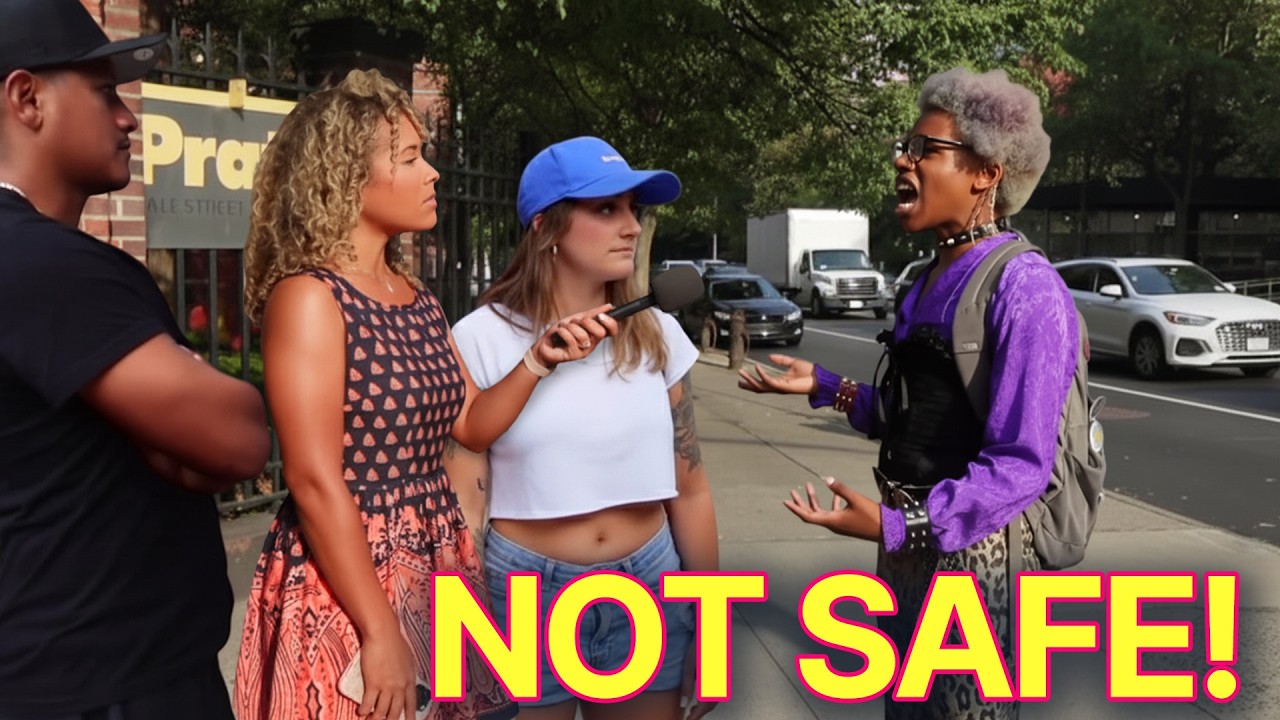
Nate Freedman conducts a social experiment at Emerson College and Harvard University, asking students about Charlie Kirk's assassination to gauge their responses. The reactions reveal disturbing attitudes about political violence, free speech, and celebration of opposing viewpoints being silenced. From students expressing indifference to others suggesting the conservative commentator "had it coming," Freedman documents what he describes as a horrific rot in America's university system. The interviews expose how many students rationalize violence against those they disagree with, with some even acknowledging parties held in celebration of Charlie's assassination.
Nate Freedman conducted interviews at Emerson College and Harvard University, asking students with Charlie Kirk's assassination to measure their reactions and attitudes toward political violence. The social experiment aimed to expose how college students respond to the violence against political figures they disagree with.
At Emerson College, Freedman encountered a business and creative enterprises student named Casey who stated that Charlie Kirk "had what he was coming for" and that "he kind of died in what he lived for." When asked to elaborate, Casey cited disagreements with Kirk's political positions on topics including race, family structure, and abortion. The smile on her face while discussing the death struck Freedman as particularly disturbing.
Celebrating Violence at Emerson College
Multiple students at Emerson confirmed that parties were held on campus in celebration of the assassination. One journalism major acknowledged hearing "rumors of people asking 'should we drink tonight?'" in response to the event. However, this student expressed a more measured view, stating that while they disagreed with Kirk's positions, "we should not be like celebrating this death."
Another student explained the divided response: "I think certain people are in agreement with what I believe and then certain people are kind of really pushing the fact that like this is like a good thing that happened." When pressed about the celebration, one student suggested that while parties may have occurred, people probably weren't specifically celebrating Kirk's death but rather just having parties in general.
Freedman noted that one student brought up the topic in class and was met with disagreement, with people telling them they "shouldn't be celebrating somebody's death." The student clarified they weren't celebrating but merely discussing the event.
The Indifference Factor
Perhaps equally concerning to Freedman was the number of students who expressed complete indifference. One student bluntly stated, "I don't give a [expletive]. I didn't care when he was alive. I don't care that he's dead." Their roommate echoed this sentiment, explaining they wished people would focus on "way more important things."
This group of students suggested that while parties may have happened at Emerson, they doubted "anybody would give it enough [expletive] to like throw a party in celebration of his death." Freedman observed that the smiles and casual manner in which students discussed the murder revealed a disturbing detachment from the gravity of political violence.
Justifying Violence Through Political Disagreement
Several students attempted to rationalize the violence by pointing to Kirk's political statements. One student at Emerson delivered an extended response, claiming Kirk was "saying a bunch of ignorant stuff" about various topics. This student also brought up racial issues, stating, "there's a lot of black people out here that's dying over their opinion or dying for no reason. And I feel like the people in the media want people like especially black people to feel bad for him, but nobody felt bad when all black people were dying and the whole Black Lives Matter movement everything happened."
Some students acknowledged that while the assassination was wrong, they qualified their condemnation. One stated, "I feel like he did die over his opinion but and that wasn't right. But there's a lot of black people out here that's dying over their opinion or dying for no reason."
The Employment Consequences Debate
When asked about people being fired for celebrating the assassination, student opinions varied. One journalism major found it difficult to draw the line, stating that "freedom of speech should not be like a reason that people are getting fired," though acknowledging the complexity of the issue.
Others took a more nuanced position, suggesting that the level of celebration mattered. One student explained, "I feel like if it's like a passing comment, then it's like, okay, that's weird. You should not say that. But if it's like a party like that, like there I've been seeing TikToks of people being like they're acting like they just got a promotion at work, like they like they made it, they won the lottery. And I think they should get fired for that."
This student added that such celebrations are "indirectly promoting violence and that's just it's not a good look for the workplace," particularly for positions like pilots, teachers, and healthcare workers.
Harvard University Responses
At Harvard University, Freedman encountered significantly more resistance to answering questions. He noted that his acceptance rate for interviews was around the same as Harvard's admission rate, with most students declining to participate once they learned the question involved Charlie Kirk. Many simply said "no comment" and walked away.
One Harvard student who did speak acknowledged that "seeing that kind of like punished through murder is never right," adding that "a lot of people here on campus would agree from both sides either party that it was wrong." However, Freedman was struck by how few students expressed actual mourning or sympathy.
The 32% Statistic
Freedman repeatedly referenced a survey showing that 32% of Harvard students believe violence is acceptable to prevent people from speaking on campus. When asked about this statistic, one Harvard student said they were "not surprised" because "Harvard's a pretty charged" environment where "people feel really strongly" and "if someone's speaking differently they'll go to a lot of extents to stop an opposing opinion."
Another Harvard student responded to the 32% figure by saying, "I thought it'd be a little bit higher," suggesting they expected an even larger percentage of students to support using violence to silence speakers. This student explained that "Harvard's quite liberal" and attributed their expectation to that political environment.
Freedman found it particularly alarming that students characterized the 32% as a "radical minority" that shouldn't overshadow the 68% who don't support such violence. He argued that one in three students supporting violence to prevent speech is not a minority concern but a systemic problem, and questioned how many students were too afraid to admit their true views in the survey.
A Former Harvard Staff Member's Perspective
One of the most striking interviews was with Anthony Body, who identified himself as a former Harvard employee with a master's degree from Harvard Divinity School. Body had worked as a mental health counselor to Harvard students for 25 years before retiring.
Body stated, "I think he's an [expletive]" and claimed that "Charlie Kirk preached hate, but but more than just hate, he had such a unique cruelty about him." He went on to say, "I think that it is truly God has some sense of humor" when referring to the timing of the assassination, suggesting divine irony.
Freedman was deeply disturbed by these comments coming from someone who had counseled Harvard students for decades, questioning what happened when conservative students sought help from someone with such strong political views. Body also stated he didn't want to "make him into what the president is calling as if he's some kind of saint," calling Kirk "a heinous man" who "fomented a lot of hate" and displayed "abject cruelty."
Throughout the interview, Body repeatedly asked "where is this going to be played?" expressing concern about getting in trouble, though he had already retired from Harvard.
Misinformation and Context
Freedman noted instances where students and the former Harvard staff member repeated claims about Kirk that were taken out of context or misrepresented. Body claimed Kirk said "gay people should be stoned to death," but according to Freedman, Kirk was actually calling out a children's YouTuber for taking Bible verses out of context.
Freedman referenced that author Stephen King had posted a similar claim, which received 25 million views, before King later apologized and deleted the post when he realized he was wrong. However, Freedman noted that "the lie clearly got around the world" before the correction could make an impact.
The Conversation Divide
One Harvard student provided insight into how conversations about the event differed based on political viewpoint. She explained, "I think from my experiences, it's usually when it's with a conservative viewpoint, it's about the killer. And whenever it's with a more liberal viewpoint, it's about Charlie Kirk himself."
This student noted that while there hadn't been much institutional conversation at Harvard about the scenario, casual discussions focused on "what the implications of it are and what it means for the future of either political party." She described conversations about the identity of the killer and "what that means, his identity versus what people online might be construing it to be."
Students Who Condemned the Violence
Not all students expressed indifference or celebration. Some clearly condemned the violence. One pair of students at Emerson stated, "That [expletive] sucks. I don't think we should be killing people. I think that's crazy." They emphasized that "it's still a life. You shouldn't be celebrating" and noted that Kirk "left behind a wife and kids."
These students acknowledged, "Maybe you didn't agree with him, but it's still a human being," showing a moral framework that separated political disagreement from acceptance of violence. They drew a clear line between free speech and celebrating violence, noting that "free speech doesn't cover killing someone."
The Fear of Speaking
Many students at Harvard declined to answer questions, with several citing fear of professional consequences. One student studying French initially engaged but then asked not to have their answers shown, explaining, "I don't want it to float around cuz I'm like, you know, it might be detrimental to me."
Another group of students initially agreed to talk but then asked if they could "fade away" when they learned the question topic, calling it "pretty charged." Even students who ultimately provided measured, reasonable responses expressed hesitation about being filmed discussing the scenario.
Freedman noted this atmosphere of fear, suggesting it might skew results toward more extreme positions, as moderate students opt out of expressing their views while those with stronger opinions are more willing to speak on camera.
Freedman's Conclusions
After completing the interviews, Freedman reflected that "not a single student I talked to said that they were mourning Charlie's death" in the scenario. He found it astounding that Harvard students seemed surprised that "only 32%" of their peers think violence is acceptable to stop someone from speaking, rather than being alarmed by that figure.
Freedman described what he witnessed as "a horrific rot in our university system" and stated that "even private universities like Emerson are receiving federal funding." He characterized the attitudes he encountered as "the downfall of the West," particularly disturbed by one student who said Kirk "voiced his opinions, got shot, and that's what happens."
He announced plans for "a much deeper dive into how colleges started indoctrinating our youth in a later episode," positioning this social experiment as the beginning of a larger investigation into campus culture and attitudes toward free speech and political violence.
A Personal Note
At the end of the video, Freedman shared personal reflections about Charlie Kirk, describing him as "the best of all of us combined and more" among journalists. He stated that "nobody understood the world as well as Charlie Kirk" and called meeting him "the greatest honor of my life."
Freedman described Kirk's pursuit of knowledge as "unprecedented" and said that "speaking to Charlie was like speaking to a library of a thousand books." He mentioned that Kirk "really believed in me like he did so many other journalists" and that appearing on Kirk's show was "the most fun I've ever had at work."
The video concluded with Freedman directing viewers to a full eulogy he posted on X (formerly Twitter) and promoting another episode where he confronted protesters in Washington, DC. He ended by referencing Kirk's support for "front lines grassroots journalism" as "the salvation of a free society."
Video Transcript
In this video, I will be asking college students what they think of the assassination of Charlie Kirk. Charlie was my friend and a mentor, so this video was the toughest to make in my career, but it was necessary. I interview students at both Emerson College and Harvard University. At the end, I will share a little bit more about going on Charlie's show and meeting him in person. Welcome back to the Nate Freedman Show. Hey, do you go to Emerson by any chance? >> Yes, I do. >> Um, I'm filming a YouTube video. Can I ask a question? >> Sure. >> Okay, perfect. Um, so there's been some like misinformation about like the response to Charlie Kirk's assassination. What did you think of it? >> Um, honestly, I think Charlie Kirk was an awful guy. Um, I think that he kind of had what he was coming >> had for it what he was coming for. Um, he kind of like died in what he lived for. So, I kind of feel like it was >> kind of earned. >> And what would you say he lived for? >> He was racist. He was homophobic. He thinks that black families are one of the worst things to come to America. They think um he thinks abortion should be ab abolished and they think he he thinks like if his 10-year-old daughter had a kid from him who got raped he would have it. Like I think that's so I think it's so messed up. >> What do you think of people getting fired over their response to the assassination? >> Um I don't think it's fair. I think everybody again he voiced his own opinions and he got >> shot. That happens. If you want to voice your own opinions you're going to have consequences. But unfortunately it's the world that we live in >> for sure. And what are your peers saying? >> My peers completely agree with me. They think that he had it coming for him. Yeah. >> Um he talked about awful things and lived for awful things. So >> yeah, right. The right-wing is saying that the colleges are indoctrination centers. What is your response to that? >> Um I wouldn't say like I would say 50/50 on that because the schools don't really they don't really bring attention to it. They don't want to bring attention to it. They don't want their kids talking about it. It's the political aspect of it. Like I got shut down talking about it in school. So >> you me you brought it up like in class. >> Yeah, I did. >> Oh, what? And what happened when that happened? >> Um, a lot of people disagreed with what I said. Um, >> like people thought it was a bad thing. >> People think that I shouldn't be celebrating somebody's death. >> Okay, got it. >> I wasn't celebrating. I was just >> sure. And what uh what's your major if you don't mind asking? >> I'm business and creative enterprises. >> Okay, awesome. What's your name? >> Casey. >> Casey. Nice to meet you, Casey. I appreciate it. Have a good one. Bye. Yeah. >> Seeing that smile on her face saying that Charlie had what was coming to him was like staring evil right in the eyes. There is a horrific rot in our university system in this country. And even private universities like Emerson are receiving federal funding. This is the downfall of the West that you're witnessing. A college student in America just told me that Charlie voiced his opinions, got shot, and that's what happens. I then carried on with the interviews at Emerson before going to Harvard. And now I just want to say that it hurt me tremendously to listen to these college students disparage my friend. But I was there for the truth and that's what you'll get. >> Hey, I have a question. Do you go to Emerson by any chance? >> I do. Yeah. >> Oh, cool. Um, I'm doing a YouTube video right now. Do you mind if I ask you a question for it? >> No. No. I'm a journalism major. >> So, there's been like some misinformation with the response to Charlie Kirk's assassination. What did you think of it? >> What did I think of it personally? I mean, I thought that it was really scary that they put that video just like for everyone to see. I thought that it was really brutal and graphic and I thought that a lot of people responded in the wrong way. I don't think that we should be like celebrating this death. I think that it's something that should, you know, change our minds about certain policies like gun laws, gun reform, stuff like that. But that's what I thought. Um, where you asking me like was our information. >> Yeah. From what you personally thought of it. I know some people were happy about it. Some people were sad about it. So, yeah. >> I mean, I didn't like him as a person. I thought that he had a lot of things that I disagreed with and I thought that he wasn't someone who I viewed as someone that young men, specifically like young Americans, should be looking up to, but I don't think that we should be celebrating. >> What do you think of people being fired for celebrating it? I I don't know cuz we're going to that's like a harder thing because the MSNBC guy got fired for saying something about it >> full details of this that we don't know if this was a supporter shooting their gun off in celebration or so we have no idea but >> I think that although we do have freedom of speech if we're not I don't know there's just it's a hard place to draw the line I think but I think that freedom of speech should not be like a reason that people are getting fired. >> Okay. Gotcha. And what are what are your peers saying like at Emerson? Are they >> I think it's kind of like a mixed bag. I think certain people are in agreement with what I believe and then certain people are kind of really pushing the fact that like this is like a good thing that happened and like >> so people are saying it's a good thing. >> Yeah, there are. >> Are people having parties and stuff? I know George uh GW was doing that. >> I heard of a few parties that happened. I none of like my friends had anything. I didn't go to anything like that, but I did hear like rumors of the hitting and like people asking like, "Oh, should we drink tonight?" and stuff like that. >> Okay. I appreciate. Thank you for talking. My name is Nate. It's a pleasure. Thank you. Byebye. >> What's going on, guys? Sorry to interrupt. Um, I'm doing a YouTube video right now and I was wondering if I could ask you guys a question for it. >> What question? >> Um, what did you guys think of the Charlie Kirk assassination? >> I don't give a [ __ ] >> Okay. >> Yeah. I'm sorry. >> Has someone asked you already? I I just I I've been asked. I don't really give a [ __ ] It's just like I didn't care when he was alive. I don't care that he's dead. >> Sure. Yeah. Yeah. Are what do your peers think? >> Um most of my roommates don't really give a [ __ ] and I haven't spoken to anybody else about it because again >> could not care less. >> Are you guys like tired of hearing about it? >> Honestly, I wish we would focus on >> Yeah. This way more important things talking about the same. >> Yeah. And nobody was talking about it. >> Yeah. Like >> Yeah. Were there um one student said and I don't know if this is true so I'm trying to confirm it. She said that there was some parties going on at Emerson in celebration of it. Is that true or >> I'm sure that there were parties. >> Yeah. >> I don't know that anybody gave it up. >> I don't give I don't think anybody would give it enough [ __ ] Yeah. >> To to Oh >> to like throw a party in celebration of his death or his >> That's what That's what she said. >> Like to celebrate like the fact that he died. I feel like I I I could absolutely imagine there being a party at Emerson dedicated to that, but I doubt that it's like people partying. You know what I mean? >> For sure. >> Yeah. >> Here we go with the smiles talking about how Charlie's murder doesn't even deserve a party. It's so awful to even think about how college students in this country actually have this line of thinking, but it's real. You can even see the girl next to her filled with glee listening to her friend talk about parties for Charlie's murder. This is not the country I grew up in. And later in this video, you'll see a man with a master's degree from Harvard's Divinity School make fun of Charlie after his murder. Now, the worst part about it is that he worked with Harvard students for decades. So, stick around for that. >> If it was somebody else rather than him, >> he would, you know, he'd probably be saying a bunch of terrible [ __ ] about it, you know, but like all death is bad. >> Yeah. What are your peers saying? >> Um, similar things. Yeah, like that like the sentiment is that like gun violence is bad. >> The sentiment is that it's bad but we don't really like him. >> Yeah. >> You know, object the sentiment I would say in my circles >> objectively it's bad. Subjectively um it's there's there's a little bit of like reing, >> you know, but like not much. >> And it always comes down to Yeah. Somebody died, somebody got shot by a gun and that's what >> a lot of people are getting fired over their response to it. Do you think that that's too far? What are your thoughts on that? I think it is too far. People are very willing to people switch up very quickly depending on what kind of thing it is. So, I doubt somebody's response to the Charlie Kirk assassination has very much bearing on their quality as a pilot or as a teacher. >> Okay. >> Is what I would is what I would think. >> What did you guys think of the aftermath of the Charlie Kirk assassination? What did you think of it? >> Um, that [ __ ] sucks. Um, I don't think I don't think we should be killing people. I think that's crazy. Um, >> that's definitely not the direction. Yeah, I didn't I didn't agree with everything he said, but like I don't think we should be dealing with people. I think that's >> that's >> it's still a life. You shouldn't be celebrating. >> He left behind a wife and kids. I think that's >> Yeah, he had like two kids and a wife and all that. Like maybe you didn't agree with him, but it's still a human being. You should be like >> What do you think about people being fired for celebrating it? Do you think that's too far? >> I feel like it depends on the level of celebration. >> Yeah, I feel like if it's like a passing comment, then it's like, okay, that's weird. You should not say that. But if it's like a party like that, like there I've been seeing Tik Toks of people following being like like they're acting like they just got a promotion at work, like they like they made it, they won the lottery. And I think they should get fired for that because I mean people get fired for things they've said in the past. I don't see why it should be any different. >> For sure. >> Yeah, pretty much. Cuz it's like it's indirectly promoting violence and that's just it's not a good look for the workplace. I saw pilots, teachers, healthare workers. Um, >> which those are definitely good people to get some form of punishment from it cuz it's like we heavily like depend on those people. >> Yeah. Free speech, but that doesn't mean you can like essentially celebrate someone dying. Like, you know, free speech doesn't cover threatening to kill someone. >> Yeah. >> Free speech just means you can say whatever whatever your views are and everything. It doesn't mean you can get away with like saying whatever. You know, I can't say I want to kill the president. >> Sure. >> Like I don't want to, but like you know, like that's like >> Yeah. That's what you're saying. >> Yeah. >> Question is, what did you think of Charlie Kirk's assassination? >> Oh, you don't want my opinion on that. >> No, no, we want everyone's opinion. We're getting like every time >> on video. Feel like it was wrong that they shot and killed him in front of his family, but at the same time, he was already talking about how um what's it called? Shooting deaths are just a part of having a gun or something something along those lines. But um and he was answering a question about transgender shootings when he got shot. What I like seen clips of it like his stuff on TikTok and then like I seen something he said like abortion is equal to the is worse than the Holocaust and then like stuff like that. I don't know. He I feel like he did die over his opinion but and that wasn't right. But there's a lot of black people out here that's dying over their opinion or dying for no reason. And I feel like the people in the media want people like especially black people to feel bad for him, but nobody felt bad when all black people were dying and the whole Black Lives Matter movement everything happened. No one g gave a [ __ ] about black people or anything. And then I felt like it was weird how they thought that African-American people were the one African-American person was the one who shot him. That's why they were targeting H.B.CU, but in all reality it was another white person who shot him and like engraved the shell casings and stuff like that. So, I really don't care. I don't really know about him, but just his opinion and the stuff he was saying was like ignorant. How he was saying that black people go to jail more because they don't have dads or stuff like that. It was just like he was just saying a bunch of ignorant stuff and it's like you have kids and you have daughters and you see how where your opinion took you. >> Next up, I went to Harvard University to see if those students thought any differently. Now, one thing I have to mention is that these interviews are the ones I did get. Most people in this video did not want to answer the question. >> So, I'm asking people what they think of Charlie Kirk's assassination. >> Oh boy. >> I think I'm going to decline to comment things. So, I'm here to actually just ask it. >> All right. I'm going to go. >> Okay. >> Now, this will lead answers to be more sane as students are afraid of losing employment opportunities. Now, I measured it based on how many students walked away after realizing the question was about Charlie. And at Harvard in particular, my acceptance rate for an interview was around the acceptance rate to get into the university. >> No comment. >> No comment. Can I ask why no comment? >> Not really. >> What did you think of the Charlie Kirk assassination? >> Uh, I'll >> You don't want to do it? >> Yeah. >> Can I ask a question for a YouTube video on real quick? Take like one minute. >> What did you think of the Charlie Kirk assassination? >> Uh, no comment. >> What did you think of the Charlie Kirk assassination? >> Uh, definitely a bit shocking. I mean u especially like place like Harvard, we encourage a lot of free speech and the uh seeing that kind of like punished through murder is never right. But I think a lot of people here on campus would agree uh from both sides either party that it was wrong. A survey came out that said that 32% of Harvard students believe that violence is acceptable to prevent people from speaking on campus. Does that surprise you? >> Um not really. I feel like Harvard does have like the most strongly opinionated people. You have people who come from like backgrounds working with communities that might be marginalized that um it might be more closely affiliated with like the rhetoric that Charlie Kirk kind of did say. Um so I think the fact that they might accept violence is definitely something I'd expect. Um but still something I disagree with. >> So you believe that that 32% largely comes from the right side of politics? Um, I think the 32% comes from both. Okay. >> I'm not sure like exactly which party dominates, but um >> because you mentioned that like at Harvard they they they promote free speech, but 32% is a pretty high number for people that believe that you should use violence to prevent speaking. >> For sure. But I think we should still like keep that other 68% in mind. Yeah, >> that's still like a majority. There is obviously like that radical minority, but >> Right. totally. Um, have you seen people celebrating at all on campus or >> I have not, but like on Instagram and stuff, Tik Tok, I've seen a lot of instances where people are like >> shouting things at like the funeral or like that kind of stuff. Yeah. >> Do you think that pe it's warranted for people to lose their jobs when they celebrate? >> I think um I think like free speech is protected to an extent. Um I don't think it's right for them to lose their jobs. I think there should definitely be like measures on how much they should say though, like you know, like if a family is grieving over the loss of like their father, you shouldn't go up to them and say that he was like this terrible person, which I'm not going to argue like that's true or not, but um I just think it's like ethically wrong. What struck me the most about this interview was the reference to the 32% of Harvard students who support violence to prevent people from speaking, referring that to as a radical minority. 32% is not a radical minority. That's one in three students. And the sentiment that we should just focus on the 68% just sounds like throwing in the towel. Also to note is that the 32% that said that violence is okay. Were students willing to say that in a survey? How many students were just too afraid to tell the truth? >> Hi. Can I ask you can I ask a question for a YouTube video I'm doing? If you're in a rush, I can walk with you or three minute. I'll take one minute. >> Awesome. Um, what did you think of the Charlie Kirk assassination? >> Oh my god. Um, >> thoughts and prayers. >> Thoughts and prayers. >> Um, I saw that there was 32% of Harvard students believe that it's acceptable to use violence to prevent people from speaking on campus. Does that survey surprise you, those results? >> No comments. >> No comment. >> Um, okay. Is there anything about the assassin? You mentioned thoughts and prayers. Were you happy? Were you sad about it? Like what were your thoughts about the >> Sorry, no comments. >> No comment. >> Yeah. Okay. >> Um Okay. Well, I'm just trying to get answers from people at Harvard. Um can I ask why you don't want to say I'm just trying to show both sides or something? >> What is it? >> I don't want it to float around cuz I'm like, you know, it might be detrimental to me. >> Okay. Like it could be like like you wouldn't like how people think of it or something. >> Exactly. >> Okay, understand. What do you study? >> French. >> French. >> Yeah. Can I ask you guys a question for a YouTube video I'm working on? >> It's okay. Okay. I mean, nobody's commented on that. >> No, it's not that bad. >> Let's get out of that. >> What's the question? >> Um, the question is, what did you think of the Charlie Kirk assassination? >> A, >> that's pretty charged. >> It's a very char. Is there any way we can >> fade away? >> You can say however you feel. I'm trying to get the truth right now. >> No, I mean I mean yes, but I'm not going to show it. >> I'm not going to I'm not going to show your answers if you don't want me to. >> Yeah, it was pretty like terrible to see. I mean, I don't think political violence is ever the answer, but >> coming from someone who didn't like even >> agree with many or anything he said, I just think it's >> no one should ever die. >> Yeah. Do you feel the same? >> I Yeah. Like I will say before the assassination, he was definitely someone I did not like. But like hearing about it and then actually seeing the video and just like someone dying, it's definitely never the answer. Yeah. >> So, I'm completely condemning it. A study I saw, guys, was that 32% of Harvard students believe it's acceptable to use violence to prevent someone from speaking on campus. Does that number surprise you or what do you think? >> We've been here for me, I don't think. >> But it does not surprise me. >> Okay. >> Um, do you have anything to say? I don't >> uh Yeah, I don't know. I don't think force or violence should ever be used to shut people down from speaking. >> I think it's also that's a different obviously example than like political violence is >> Sure. But it's violence to stop people from speaking. I was certainly surprised to see 32%. So I wanted to know if like how students actually felt about it. Why aren't you surprised by it? >> I feel like Harvard's a pretty charged. >> I mean I think people just feel really strongly about >> people feel strongly. So >> if someone's speaking differently they'll go to a lot of extents to stop >> an opposing opinion. Clearly these students have more of a sense of morality which is nice. But don't you find it odd that advocating for violence on campus is being written off as Harvard is just a pretty charged place? Sure, charged is one thing, but I find it extraordinarily alarming that students at, I guess, what once was the top university in the world. That they're not surprised by their peers tolerating violence to prevent someone from speaking. That's not the Harvard I admired when I was a kid. >> Hey, can I ask you a question for a YouTube video I'm working on? >> Yeah. >> Amazing. Do you work at Harvard at all? >> I used to. >> You were, too? Okay, perfect. Cuz it's got to be about Harvard. Uh, whatever. So, I'm asking Harvard students and professors what they think of the Charlie Kirk assassination. >> No, >> you can't say. >> I'm just getting I'm getting every side here. You know, I would be >> doing my job. >> You don't want my >> They sent they sent me out to >> I think he's an [ __ ] but I You don't want my opinion? >> Sure. No, I do. Like I'm I'm here to like my boss says like get everybody's opinion, so that's what I'm going to do. You know, Charlie Kirk preached hate, but but more than just hate, he had such a unique cruelty about him, uh especially when it came to black women and LGBTQ community. He said things like gay people should be stoned to death. He said that Michelle Obama and Katangi Brown, the chief the justice, um would never be where they are um but they're there because of affirmative action. It was so heinous what he said. And I think that it is truly God has some sense of humor when you're being asked about gun violence minutes before he was killed and he answered there will have to be some deaths in order to protect the the second amendment. That is ironic. >> Mhm. >> That literally he was saying that >> minutes before he was killed. >> No, he wasn't. His final exchange was this. The audience member says, "Do you know how many transgender Americans have been mass shooters over the last 10 years?" Charlie Kirk responded, "Too many." The audience member then said, "Do you know how many mass shooters there have been in America over the last 10 years?" Charlie Kirk in his final words said, "Counting or not counting gang violence." Charlie also never said gay people should be stoned to death. Charlie was calling out a children's YouTuber for taking Bible verses out of context. Now, this guy I'm interviewing didn't care about the context, and neither did Stephen King when he posted he advocated stoning gays to death. Just saying. Went on to get 25 million views. Stephen King later apologized and deleted that post when he realized that he was wrong. However, it was too late because that lie clearly got around the world. Now, let me also just say how alarming it is that this person you're listening to was a mental health counselor to Harvard students for decades. Anthony Body, who got his master's degree from Harvard Divinity School, said that God has a sense of humor when referring to the moment that Charlie was murdered. What happened when a conservative student sought counseling from Anthony? There is a deep rot in our university system and Harvard is the center of it. What was your reaction when he was killed? >> Where is this going to be played? I think it's a tragic moment in this country because I think Trump has created such divisions and and anger in this country that we'll never see again. >> Do you feel like it was warranted? I don't want to go that far because I'm I I I think that, >> you know, it's a tragedy that he was that he was that he was assassinated, >> but I I certainly don't want to make him into what the the president is calling as if he's some kind of, you know, saint. >> Sure. >> I mean, he was a heinous man. >> Sure. >> I mean, he he fmented a lot of hate. >> Yeah. >> You know, and cruelty. I mean, just abject cruelty. >> Mhm. >> Where is this going to be played? I mean, I just don't want to get in trouble with uh who you get in trouble with. >> I don't know. It's lately >> get in trouble. You said you used to work here. There's no No one's getting you in >> Oh, I know. Not here. I used to work here. I worked here for 25 years. I just retired. >> Oh, okay. When you retired, what's there to worry about? >> I don't know. But the way they're scouring this uh >> What did you think of the Charlie Kirk assassination? >> Um I didn't really like that guy. >> Yeah. >> Yeah. Were you happy about it or sad or indifferent? >> I am glad that he's no longer like, >> you know, on the internet. >> Yeah. >> It's a shame that he had to die for it. >> Yeah. >> That to happen. >> Um, >> like I'm not happy he's dead, >> but I'm happy I don't have to see YouTube videos about him anymore. >> What did you think of the Charlie Kirk assassination? >> I'm not one of the people that are like celebrating. Yeah. >> Just cuz for me, like death is just a very sensitive thing. Are people celebrating at Harvard? >> I mean, I don't really see people like jumping around and celebrating, but I mean, just people I know like are happier than I am. >> Yeah. >> But also like I didn't like him. I didn't like his views. >> Sure. >> So, I feel like >> Yeah. >> In in some ways, I mean, I think he c he did cause a lot of harm. So, I feel like in a way he is he's better off not here, but I don't think that was the way to go. I think >> that was just more violent than >> I think is appropriate, but it's whatever. I'm like neutral. >> It was more violent than he thinks is appropriate, indicating that less violence would have been fine. Now, this student also just said he's happy Charlie isn't with us anymore, but he's neutral. So, that's what neutral sounds like at Harvard. There was like 32% of Harvard students surveyed that it's acceptable to use violence to prevent someone from speaking on campus. Does that surprise you? >> I thought it'd be like maybe a little bit higher. >> Oh, higher. >> I feel like I feel like Yeah, I feel like Harvard's quite liberal. >> Is there some specific things that he said that made you not like you said that he's it's better off that he's not here. Like is there something specific that he said? >> I feel like he just even if he himself like didn't commit acts of violence. He was quite respectful in that regard actually. I feel like a lot of what he said incited violence just >> the way that I feel like he was hateful certain towards certain demographics of people and he would justify it through means of like >> religion and stuff to kind of feed into a hive mind. I think that >> is there something just that um if someone's watching that they can look this up. Is there some specific uh it doesn't have to be a word for word quote but an idea that he perpetuated that you feel like >> I think a lot of particularly towards minorities and LGBT I know like a few days before his death he said something very weird >> towards like black women for example like being pilots and I was just like even if his intention wasn't in a wrong place that that's just a very impactful thing like it feels like a very hateful thing to say and that's just the sort of thing that spreads so even if he doesn't have a bad intention people who agree with him might have a bad intention kind of carry his ideas with them and use it kind of like politically not in the scene like >> what do you study? >> I study physics and earth science. >> The final interview will not only show you how she feels about the assassination, but she's able to give us the rundown on the conversations happening between the left and the right at Harvard. Take a listen. >> What did you think of the Charlie Kirk assassination? Oh. Um, I think it was very unfortunate and sad that he was assassinated and it caught it has not it has only divided everyone further. >> Yeah. >> Have you felt that on campus? >> Um, I wouldn't say on campus as much. I think a lot of us feel a lot more connected to have these conversations about it. what whatever side you're on or whatever side you're not on. Um but definitely like online I think it's >> okay. Is there anything that you can like mythbust for us like about how things are really are at at Harvard right now? >> At Harvard? Well, >> just about his assassination. >> I honestly the conversations about it haven't there there hasn't been much I guess like institutional conversation or organization conversation that I've seen. Okay. >> Um, it's more so casual like talking about what the implications of it are and what it means for the future of either political party. >> And what are people saying about the implications? >> Um, the implications of who the person was that assassinated him and what that means um, you know, his identity versus what people online might be um, >> construing it to be. Yeah. >> And then especially like situations about whether or not his family was there to witness it or whether or not um like the person who did it was Republican or not or whether it mattered if they're >> So the conversation has been mostly about the killer. >> Um >> I think a lot of the conversation varies between what part people focus on. I think from my experiences, it's usually when it's with a conservative viewpoint, it's about the killer. And whenever it's with a more liberal viewpoint, it's about Charlie Kirk himself. And so, it definitely varies. >> When I stopped filming this video, I couldn't help but realize that not a single student I talked to said that they were mourning Charlie's death. I also thought it was potentially the most astounding moment in my career, seeing that Harvard students were surprised that only 32% of their peers think violence is acceptable to stop someone from speaking on campus. Now, is that what our country has come to be? I'll be doing a much deeper dive into how colleges started indoctrinating our youth in a later episode, so subscribe for that. Now, seeing my friend get killed on social media to then seeing people celebrated and then hearing firsthand that college kids were throwing parties in celebration of his murder showed us serious evil that exists in our country. Now, something I want to say about Charlie is that for us journalists, he was the best of all of us combined and more. I would argue that nobody understood the world as well as Charlie Kirk. Meeting him and sharing a meal with him this summer was the greatest honor of my life because I got to see what made him so special. His pursuit for knowledge was unprecedented. While we tried to learn from him, he really wanted to learn from us. Speaking to Charlie was like speaking to a library of a thousand books. And I'll miss him every day for the rest of my life. He really believed in me like he did so many other journalists. I'll always think going on his show was the most fun I've ever had at work. If you want to see my full eulogy, I posted it on X and that's in the description. If you want to keep watching episodes of the Nate Freiedman Show, the one on your screen is one of my favorites because I confronted the 24/7 protester in DC and exposed how she gets paid, as well as the 247 protester encampment you see when you get off the train at Union Station in DC. I'll see you there and keep on doing it, Nate. We want to work with you at Turning Point USA. Front lines grassroots journalism is the salvation of a free society.