Up Next

Candace Owens Exposes Overwhelming Evidence Manipulation in Charlie Kirk Assassination Trial
1:23:19

Jesse ON FIRE Connects Fort Huachuca, Snake Eyes Movie, and Candace Owens Investigation to Charlie Kirk Theory
36:45

George Webb Reveals Billion Dollar Dupont Deal and Class Action Lawsuit Against Turning Point USA Over Charlie Kirk Investigation
1:05:40
Nisscee Social: Tyler Robinson Didn't Act Alone, What Doesn't Add Up in the Charlie Kirk Case
Independent researcher Nisscee Social joins Off Script for a detailed conversation about her year-long investigation into the Charlie Kirk case. She discusses the UVU review findings, Tyler Robinson's text messages, the exploding mic theory, George Zinn's overlooked role, and Erika Kirk's behavior following the assassination. Nisscee shares which pieces of evidence changed her perspective, what remains unproven, how she separates meaningful coincidences from noise, and why TPUSA's refusal to cooperate with investigators raised serious red flags. She also addresses the responsibilities and risks that come with investigating controversial cases as a creator with hundreds of thousands of followers.
The UVU Review and TPUSA's Silence
One of the most striking pieces of evidence Nisscee uncovered was not a smoking gun, but an absence: TPUSA's complete refusal to cooperate with the UVU investigation. The university commissioned an independent review to assess what went wrong and how to make the campus safer for future speakers. Yet key figures — Brian Harpole, Dan Flood, and Macy Crops — ignored calls, voicemails, messages, and even certified letters. When investigators reached out to higher-ups at TPUSA urging cooperation, they received silence.
"If you guys have nothing to hide, why not participate in this investigation?" Nisscee asked. "This is not the police investigating. It's not FBI. It's not CIA. This was an independent review that that sole purpose was to make UVU campus a safer place for the students and for speakers in the future. So, not participating is suspicious."
Tyler Robinson and the Text Messages
The strongest piece of evidence supporting the official FBI narrative, in Nisscee's view, was the series of text messages allegedly exchanged between Tyler Robinson and Lance Twiggs. In those messages, Robinson appeared to confess: "I put the weapon here. I did this. I did this. I did this."
But Nisscee remains skeptical. "If those messages are real, I still believe they're orchestrated," she explained. "Why would someone confess to committing a crime through text and say, 'I put I put the weapon here. I did this. I did this. I did this'? So those text messages in and of itself I think is the strongest piece of evidence supporting their narrative. But I still have questions about why they were sent."
She also raised a deeper question: if Tyler Robinson was capable of carrying out such an act, would he not be considered mentally unstable? And if so, should his confession be taken at face value, or does it reflect the incoherence of someone whose actions and words don't align with rational behavior?
The Exploding Mic Theory and Ballistics Questions
Nisscee addressed one of the more controversial theories circulating online: that Charlie Kirk was killed not by a rifle shot, but by an explosive device concealed in or near his microphone. She remains cautious.
"I'm still not 100% on it," she said. "I don't believe a .30-06 struck him in his neck, but I'm not 100% on the mic just because it's hard to control the direction that the munition is going to go when you when it explodes. Like, there's just a lot of it's it's not the most efficient way to take someone out. However, there's just a lot of questions about why his shirt moved the way that it moved."
Nisscee emphasized that some people are "110%" certain of the mic theory, but she is not yet there. She does, however, agree that the official ballistics narrative — involving a .30-06 round — does not make sense given the available evidence.
George Zinn: The Most Overlooked Figure
When asked who or what had received the least scrutiny in the case, Nisscee pointed to George Zinn without hesitation.
"George, George," she said. "Volunteering yourself as as the shooter when you didn't do it is suspicious."
Zinn was seen on video throwing his hands in the air and shouting "Shoot me. Shoot me." His pants appeared to fall down during the chaos, seemingly slowing the process of getting him into a police vehicle. Nisscee found his behavior highly unusual and believes his devices, phone records, and bank accounts deserve closer examination.
"I wouldn't even want to ask him anything," she said. "I want to see his devices. I want to see his phone. I want to see his laptop. I want to see his bank account."
Early Clues: Tweets, an Amazon Book, and "More Than One"
In the immediate aftermath of Charlie Kirk's assassination, Nisscee noticed several red flags that suggested advance knowledge or coordination. Multiple tweets appeared to foreshadow the event, and an AI-written book about the shooting of Charlie Kirk was briefly available on Amazon — except in the book, Kirk survived.
"Someone had posted a couple of screenshots of the book before it got taken down," Nisscee recalled. "So I read some of those and so it was clear that this had been written before because in the book Charlie is shot but he survives."
From the beginning, Nisscee was less concerned with whether Tyler Robinson pulled the trigger and more focused on whether he acted alone.
"My initial thing was it wasn't even whether or not he did it. Is whether he did it alone. And to this day, I'll never believe that this was a oneperson operation."
UVU Camera Framing and TPUSA Footage Questions
Nisscee compared TPUSA footage from multiple previous campus events with the rear camera footage from UVU. What she found was unusual: at every other event, the camera was framed wide enough to show the entire table and the ground. At UVU, the framing was tighter, making it impossible to see the ground where evidence might have been visible.
"Every time I watch the other videos, it was like you can see the whole table," she explained. "I did that. I wasn't specifically looking for that. It just dawned on me when I was trying to see the ground at the UVU one and I figured I should be able to see it because I saw it at literally every other video that I looked at."
She acknowledged that the different framing could have occurred in-camera or through post-production cropping, and that Terryl Farnsworth, the cameraman, could settle the question by simply stating what happened. But the inconsistency, combined with TPUSA's overall lack of cooperation, raised suspicions.
Candace Owens, Jillian, and the Cost of Going Viral
Nisscee's research has been featured multiple times on Candace Owens' show, bringing her work to a much larger audience. But with that visibility came unintended consequences.
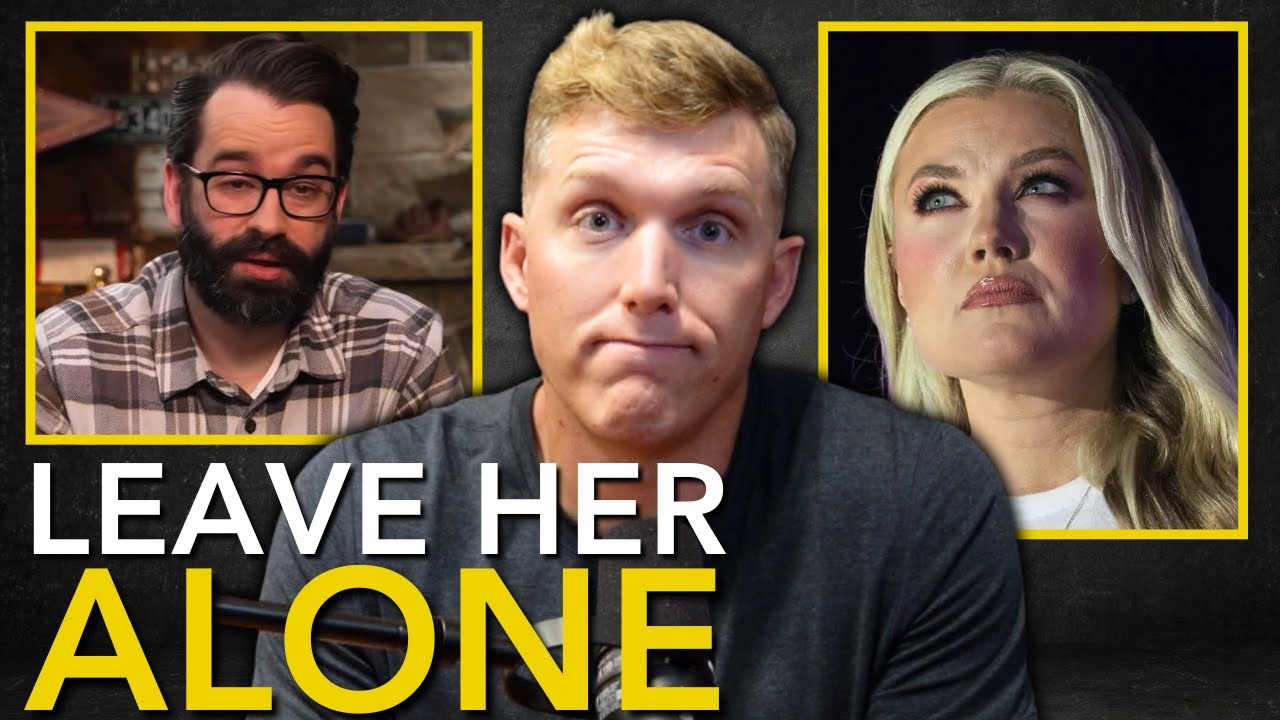
Her first viral moment involved a video about Jillian, a woman who had been friends with Erika Kirk years earlier. Nisscee urged her audience not to contact Jillian, who was a private person and had been very young during her friendship with Erika. But the message did not get through.
"I urged the audience to leave her alone and they didn't," Nisscee said. "And then it became a big story because everyone started covering it and then Candace covered it and I know the girl a lot of people reached out to her. So I did feel kind of bad about that because I didn't want I didn't want her life to be disturbed but I wanted to highlight Erica's behavior that I thought was weird."
Jillian later told Nisscee that people had contacted her immediate family — uncles, brothers, sisters, parents. "People were taking it a bit far," Nisscee said.
The experience taught her a difficult lesson: once you talk about someone publicly, you cannot fully control what happens next. "You can't control what other people are going to do. I just wish that people would be more just be more normal. I don't know what other word to say. Like you don't have to go and harass people. It's not necessary. It actually it makes it harder for content creators to want to or to be able to do um journal like independent journalism."
TPUSA Finances and Former Employee Claims
Nisscee also dug into TPUSA's financial records, looking for evidence of irregularities. She found several concerning patterns, including a shell company created by an Arizona senator that had a UPS store as its address and appeared to be involved in money transfers with no clear purpose.
"Seems like there was some money laundering allegedly. Allegedly seems it appeared as though something fishy was going on with movement of money," she said.
She also noted that a man previously involved in a scandal involving Kari Lake — in which someone allegedly offered her money from Middle Eastern sources to drop out of a race — had been on the board of directors for one of TPUSA's organizations.
Nisscee interviewed someone presented as a former TPUSA employee. She was able to independently verify that the person had worked there through photos on TPUSA's pages showing the individual at events, wearing lanyards, and interacting with students. Beyond that, everything else was unverifiable. "Everything else was a trust me bro as far as what he said," she acknowledged.
Erika Kirk: Why Nisscee Started Investigating
Erika Kirk's behavior following her husband's assassination was what first prompted Nisscee to look closer.
"It was it was the only word I can think of is suspicious how quickly she volunteered to be the CEO of the company," Nisscee said. "Given the fact that she had two very young children, given the fact that her mother is also ailing and she helps take care of her, given the fact that she was saying that she, you know, believes a wife's place is in the home. Not only did she jump up to be the CEO, but in all of the the things that were being like shown about her, like the the private Zoom call where she's like smiling and and she's offering all of them grief counseling but not taking any time to grieve for herself."
Nisscee also found Erika's wardrobe choices troubling. She wore an all-white suit at Charlie's public funeral service, and appeared in a video shot in his studio shortly afterward. But the moment that Nisscee found most disturbing was when TPUSA recreated the tent where Charlie was killed at AmericaFest, allowing people to take photos inside it.
"I think that is satanic. That's weird. Um I don't what what grieving widow does stuff like that. It's just weird."
Another major red flag was Erika's denial, followed by later admission, that Charlie had expressed fear for his life the night before he was killed. Candace Owens reported that three separate people told her Charlie had communicated those fears. Erika initially denied it, then later admitted it was true, claiming she had not checked the app where the messages were stored.
"That's a big lie," Nisscee said.
Romania Charity Claims: What the Evidence Shows
Nisscee investigated claims that Erika Kirk was involved in child trafficking through a Romanian charity. She found the truth to be more complicated — and less sensational — than some online narratives suggested.
"There's no evidence that she had a charity that was trafficking children. That doesn't I've not found it," Nisscee said. "She had a charity that's American and then she had an initiative where she partnered with an existing charity in Romania to give them gifts."
Erika did use the phrase "adopt a child" in promotional materials, but Nisscee explained this was hyperbolic language similar to 1990s infomercials that asked viewers to "adopt" a child by sponsoring them with donations. "You're not literally adopting them. You're sponsoring them really. But they use the word adopt just because it makes people feel good."
However, there was a legitimate concern. The Romanian orphanage Erika partnered with was also working with a military base, and someone named Otto Busher, who was accused of child exploitation, was directly thanked by Erika in public posts.
"That was the connection but there isn't any direct proof that she participated in the trafficking of children just that she partnered with some individuals who were accused of doing so."
Make Heaven Crowded Tour and AI Video Questions
Nisscee also investigated Erika Kirk's Make Heaven Crowded tour, which she launched after Charlie's death. At several stops, Erika did not appear in person, instead playing a pre-recorded video message. Nisscee found one of these videos suspicious.
"This particular video kind of looked fake. So I talked about it. It looked like it was an AI video of Erica."
She also noticed a pattern involving a pastor in Maine who had booked a large venue months in advance for what he described as a small community outreach event — chips, cookies, pop, and music. After Charlie was killed, that same venue hosted a TPUSA Faith event in partnership with the pastor.
"Locals were upset about it because they felt it was a bait and switch like we didn't like this was supposed to be a community outreach event. Why is TPUSA here? But also why did you secure such a large venue for something that you could have done in your church?"
What Nisscee Would Ask Erika Kirk
When asked what she would want to know if given two uninterrupted hours with Erika Kirk, Nisscee's answer was blunt.
"I want to see her phones. I want to see her laptop. I want to see her bank accounts. I want to see her flight logs. I want to see I want to see all of her devices. Same thing with George. I don't want to ask for I want to see all her devices. I don't I don't really see the point in asking her anything because she's a chronic liar. Like I think I could say that because it's documented. Like I could show videos of her saying something and then contradicting herself. So like because she's constantly contradicting herself. I don't I wouldn't expect her to give me an honest answer to anything. I have very low expectations that she would answer anything honestly. So I would just want to see her devices, her her phone, her laptop, everything. Bank accounts."
Skyler Baird Interview: Why Her View Changed
Nisscee personally interviewed Skyler Baird, a man who appeared in multiple media interviews following Charlie Kirk's assassination, often becoming emotional and crying on camera. Many online considered him suspicious. Nisscee's own view of him shifted — twice.
"When I was talking to him, I thought, 'Okay, this guy is cool. He's nice.' I was like, 'Okay, maybe he's just a regular person.'"
But when she went back to edit the interview, which had lasted about two hours, she noticed something troubling. Every time she asked a direct question that should have had a simple answer, Baird would talk for ten or fifteen minutes without actually answering it.
"As I was editing the video, that's when I realized how he like filibustered every time I asked him a very direct question... And I started to feel like as I was watching it back, I felt like he was being manipulated. And I was like, 'Oh, okay. That's that's interesting.' So, as I was interviewing him, I felt, okay, he's being truthful. When I watched it back and I was actually watching the questions that I asked and how he answered, I was like, 'Oh, he actually he was really giving, you know, very succinct, direct answers.'"
She also discovered later that Baird had told her he went to the UVU event alone because no one he knew wanted to go. But months afterward, Nisscee found a YouTube video posted by Baird's brother shortly after the shooting, in which the brother described what he saw. Baird had never mentioned his brother was there.
"So basically, you went from suspicious of him, which is why you asked for the interview, to trusting him during the interview, back to more suspicious of him afterwards," the host summarized. "Yeah," Nisscee confirmed.
Creator Echo Chambers, the Hild Lawsuit, and Fort Huachuca
Nisscee acknowledged the risk of creators and their audiences forming echo chambers where speculation hardens into accepted fact. She also recognized that her own objectivity — her willingness to say "I don't know" — has sometimes led to accusations that she is a "fed."
"I think the people that you should consider feds are the people who are unwilling to be objective," she said. "I think when someone is being objective, that shows you that they're being authentic and they're being sincere in their beliefs. If they're only pushing one side always, always, always, and they're not willing to say, 'I'm not sure,' or or willing to consider other arguments. That's when you should be concerned."
She pointed to the Fort Huachuca narrative as an example of an online ecosystem that built up around a single unverified source. "There's a whole ecosystem on X around Fort Huachuca. Once once Candace had presented Mitch Snow, the story got legs and it has lived on X ever since and more people corroborating it and talking about Google trend searches and stuff like that and making very declarative statements based off of a Google Trend search and I I think that's irresponsible to be honest."
She also noted that the defamation lawsuit filed by Baron Hild against Candace Owens mentioned 17 different X accounts that were spreading and amplifying claims made on Candace's show. "They're actually I don't know if they're in those spaces or they hear about them or they see clips, but they're actively tracking other social media accounts in relation to what other creators say and seeing how much one affects the public and then now they're using that for defamation."
Epstein Files, Naomi Campbell, and Diddy
Nisscee's investigative work extends beyond the Charlie Kirk case. She has spent considerable time researching Jeffrey Epstein's network, Diddy's alleged crimes, and the people connected to both.
She mentioned that she has a video in progress about Naomi Campbell's relationship with Epstein. "She had a very lengthy friendship with Ghislaine and Jeff," Nisscee said. "My opinion, my belief based off of the available information in public domain that [Diddy] was engaged in these types of activities and he never went to trial for it. He was he was on trial for beating up his girlfriends, but not for the real real real crimes that he was committing."
Nisscee also discussed how powerful people in Hollywood and politics are often compromised. She referenced an interview with Columbus Short, who described being drugged at a Hollywood party and managing to escape before anything happened to him. "I've heard other people, even like black men, who say that what they'll do is they'll lace they'll lace the alcohol and they will do stuff to you and record it and blackmail you for it."
Daily Wire Security, Bodycam, and the Bagley Connection
One of the more intriguing coincidences Nisscee uncovered involved the Daily Wire's security contractor and the officer whose bodycam mysteriously turned off during the investigation.
Ben Shapiro stated publicly that his security team was in communication with Charlie Kirk's security team. According to a source cited by James Li, after Charlie was killed, TPUSA contracted the same security firm used by the Daily Wire: Fortified Security Group.
Nisscee discovered that an employee named Marcus Bagley was hired by Fortified Security around late July or early August 2025, just before Charlie's assassination. The officer whose bodycam turned off when he found the screwdriver was also named Bagley.
"I was able to verify that the Marcus Bagley that works for the security group that's contracted by the Daily Wire, he is fifth cousins once removed with the officer that testified," Nisscee said. She made clear that this could be a coincidence, but she felt it was important information given the level of suspicion surrounding the investigation.
"It could be a coincidence. And I made it clear to the audience. It could be a coincidence. It very well could be a coincidence that the Daily Wire has this guy on the security team and then this guy was there and his body camera turned off when he found the screwdriver. It could be a coincidence, but they're related. And I think it's an important piece of information to know at least even if it doesn't end up amounting to anything just because like a lot of us are are skeptical about whether there is some corruption going on."
How Nisscee Learned to Investigate
Nisscee's investigative skills were not developed through formal training. She taught herself by working through other controversial stories before the Charlie Kirk case.
"It helped me doing those ones changed where I look for information and how I look for information. Um the tools that I use to find like do background checks and find people's family trees and find documents and stuff like that. So yeah, definitely I I do think that had I not done those things first, I I probably would have been far behind when it came to the whole Charlie Kirk thing. I had already been doing all these types of investigative stuff in advance. So, it did it did help. It was my my my my on the job training."
Her channel originally focused on culture commentary — Hollywood, gender politics, feminism, entertainment. But she found herself becoming intellectually bored. "At at some point I can only complain about these things for so long. I mean I still care about it. It's not like I don't care but it felt like it was becoming repetitive and I just wanted to do something more different."
The Diddy investigation was what shifted her focus. "That's kind of what started me was was looking into Diddy and then the Brigitte Macron thing." She noted that she believes there is legitimate reason to question whether Brigitte Macron is lying about her identity, though she rejects the more extreme claim that she is Emmanuel Macron's father.
COVID, Media Trust, and Why She Became Skeptical
Nisscee's skepticism toward official narratives traces back to the COVID-19 pandemic and how governments and media outlets in Canada handled it.
"This is when my mindset my mindset really changed like this drastically was COVID when I saw how blatantly they lied. Especially here in in Canada. Like there was they were saying that oh the hospitals are overrun, they're overwhelmed and people are dying that there's all these people in in the in the critical care units, blah blah blah. But you can actually go onto the websites of those hospitals and get live data and it tells you how many people were like in line, how many people were in the ICU and everything like that. And the numbers on their own websites were very different from what the what was being said in the news media that hospitals were not overrun."
That experience fundamentally changed how she viewed authority and institutions. It is why, she said, she will never fully trust the official narrative in the Charlie Kirk case, even if new evidence were presented.
"To be honest, there's not nothing they can do to convince me because they more than happy to fabricate and lie even in the face of a very obvious case," she said. She compared the situation to the Ellen Greenberg case, in which a woman was stabbed 20 times, including in the back, and the death was ruled a suicide. "Law enforcement can be corrupt. The criminal justice system can be corrupt. So something as blatantly obvious as an Ellen Greenberg case can still go as a self-inflicted deletion. So if that can happen, anything can happen."
What It Means to Investigate Responsibly
With more than 300,000 subscribers, Nisscee is no longer a small voice shouting from the sidelines. She is acutely aware that hundreds of thousands of people may act on what she says.
"I try to be very, like I mentioned earlier, I try to make it very clear that what I am saying is either opinion or speculation. If if that's what it is, if this is a fact, I'll say it's a fact. If this is opinion, I'll say that. I try to make it very clear because I don't want people saying that something is established fact when it's not. I try to be very clear about that because I take I do take it serious like we do have a you know we are blessed to have a platform. We're blessed to have people who care um to see what we have to say to see the the work that we you know the the work that we produce. I work very hard on my content and I I I don't take for granted that people want to watch it."
She also discussed her correction policy. If she makes an error, she will correct it in a follow-up video if the topic comes up again. "I'm not perfect," she said. But she emphasized that as long as a creator acts in good faith and makes genuine mistakes, corrections should not tank a channel. "Usually those are the types of videos that will take your channel. Not like, oh, I made a mistake. I I put the time zone as this, but the time zone was that. Like, those are the things that are going to tank your channel. It's usually like a big scandal."
What She Would Never Claim
There is one major claim about the Charlie Kirk case that Nisscee refuses to make: that Charlie faked his death.
"I don't think the evidence supports that. I don't believe Charlie is the type of person who would who would orchestrate his death at all, especially in that manner. Uh, leave your children behind. He very clearly loved being a father. Leave your wife behind. Leave your your whole life behind. For what reason? The the the reasons that I've heard be argued, I think, are very weak and have holes and I've poked holes in those in private conversations."
She also refuses to endorse the Fort Huachuca narrative promoted by Mitch Snow, stating that she does not find him credible. "A lot of people really bought into that and I've stayed away from it because I just don't I don't think it's true."
What Nisscee Wants Her Legacy to Be
In closing, Nisscee reflected on what she hopes to be remembered for as a creator.
"Research. I try to always, you know, do my own independent research and talk about the things that other people had overlooked."
She does not have inside sources feeding her information. "People don't come to me. I don't really have I don't really I really don't have sources. I don't have I don't have sources to protect. Nobody tells me anything useful." Instead, she finds everything herself, combing through public records, social media, financial documents, and video footage.
Looking ahead, she wants to do more interviews with interesting people and continue investigative work. "Hopefully, you know, I can continue to be impactful with the content that I make over the next 5 years."
For now, she remains focused on the Charlie Kirk case, Erika Kirk's behavior, TPUSA's lack of transparency, and the many unanswered questions that continue to multiply the longer the official story remains incomplete.
Video Transcript
So I to be honest there's not nothing
they can do to convince me because they
more than happy to fabricate and lie
even in the face of a very obvious case.
I don't tr I don't what would be the I
don't really see the point in asking her
anything because she's a chronic liar. I
think that is satanic. That's weird. Um
I don't what what grieving widow does
stuff like that? It's just weird. And to
this day I'll never believe that this
was a oneperson operation.
>> Hello and welcome back to Offscript.
Today I'm joined by Nissi from
Nissi.social social, a creator and
independent researcher who has built a
large audience by digging into
controversial stories, questioning
official narratives, and following
details that others often overlook. Over
the past year, much of her work has
focused on the Charlie Kirk case, TPUSA,
Erica Kirk, Tyler Robinson, and the
growing divide between the official
account and alternative theories online.
In this conversation, we're going beyond
the headlines to talk about what she's
actually found, what remains unproven,
how she decides what to publish, and
where she thinks the biggest unanswered
questions still are. Nissi, welcome to
Offscript.
>> Thank you for having me.
>> Of everything you've uncovered in the
Charlie Kirk case, what is the single
piece of evidence that changed your mind
the most? I would say well if you had
asked me this question a week ago it may
have been something else but since that
UVU report came out I would say that the
fact that they're trying to you know do
an investigation to see what were the
shortcomings and make recommendations to
make UV a safer place for speakers going
forward. So having as much information
as possible is obviously advantageous
and you would expect TPUSA to fully
cooperate in that investigation. Brian
Harpull didn't respond to calls,
voicemails, uh, messages, a certified
letter. Neither did Dan Flood. Neither
did Macy Crops. She didn't receive a
certified letter because they didn't
have an updated address for her. But
when they reached out to, you know,
people that were high up in TPUSA urging
the other people to cooperate, crickets.
So, I think that's a pretty strong
indictment. If you guys have nothing to
hide, why not participate in this
investigation? This is not the police
investigating. It's not FBI. It's not
CIA. This was an independent review that
that sole purpose was to make UVU campus
a safer place for the students and for
speakers in the future. So, not
participating is suspicious.
>> Now, is there anything that you consider
plausible but not proven? Like, there's
a lot of things that are going around
that have been talked about the last
year. Is there anything that you're like
maybe but not 100% yet?
>> You know, the the mic theory, I'm still
not 100% on it. I don't believe a 306
uh struck him in his neck, but I'm not
100% on the mic just because it's hard
to control the direction that the
munition is going to go when you when it
explodes. Like, there's just a lot of
it's it's not the most efficient way to
take someone out. However, there's just
a lot of questions about why his shirt
moved the way that it moved. So, that's
when I'm not 100%. There's some people
that are 110%. I'm not there,
but I agree it doesn't make sense. The
30 odd six narrative.
>> Now, you spent a year finding things you
believe don't fit the public story. And
by public, we mean like the FBI official
narrative that was shared by Cash Patel,
which which has changed since then as
their story kind of leveled out, right?
because we know there were some details
they didn't quite know when they had the
press conference and stuff like that.
What is the strongest piece of evidence
that actually supports the FBI narrative
in your opinion?
>> Well, assuming
that the messages with Tyler and Lance
are authentic, then I guess that would
be because he's saying he's essentially
saying that he did it. There's question,
but there's I think there's still a
question about whether or not
that those messages were orchestrated
between Lance and Tyler Robinson. If I'm
giving the most charitable
interpretation of event of events, if
those messages are real, I still believe
they're orchestrated because why would
someone confess
to committing a crime through text and
and say, "I put I put the weapon here. I
did this. I did this. I did this." So
those text messages in and of itself I
think is the strongest piece of evidence
supporting their narrative. But I still
have questions about why they were sent.
>> Yeah. And I think something that some
people have brought up that I think is
interesting as well is if like you
[snorts] said if Tyler did it, if these
texts are real, if they can be verified,
which will probably come out in trial, I
would assume uh in that case if if Tyler
was able to do this and carry this out
and shoot Charlie Kirk and all the stuff
that they claim, then wouldn't he not be
considered a normally functioning sane
person? And therefore, would you not
consider the text messages and things to
be something that would come from a
normal sane person? So, if he says, "I
did it. I'm sorry, my love." Does that
seem out of the ordinary for someone
who's crazy enough to go and shoot
someone at a political event?
>> It's incoherent, I think. I just The
whole thing is incoherent. I don't know.
There's so many things about this
investigation, this case. I just don't
make sense. And I just don't understand
why you would write a letter confessing
to something and but and then say, "I I
planned to take it to my grave." Well,
you didn't though because you wrote a
letter. So [laughter]
because there's a lot of things that
were just contradictory.
>> What would have to be discovered for you
to publicly say I was wrong. The basic
story was right.
>> I'll be very honest. I don't think
there's anything they could do to
convince [laughter] me. Like every time
I talk about this, I always bring up to
people the Ellen Greenberg case. Ellen
Greenberg is a woman who was stabbed, I
believe it was like 20 times in the back
and the final wound was in her chest.
and the she was alone in the apartment.
She was on she's like like the seventh
floor or something like that. There was
no way for someone to have climbed in
through the balcony. There was no
footprints in the snow. The only people
who were in the apartment that day at
all were her and her boyfriend, her
fianceé. And they say she did that to
herself. Law enforcement can be corrupt.
The criminal justice system can be
corrupt. So something as blatantly
obvious as an Ellen Greenberg case can
still go as a self-inflicted
uh deletion. So if that can happen,
anything can happen. So I to be honest,
there's not nothing they can do to
convince me because they more than happy
to fabricate and lie even in the face of
a very obvious case. So I I can't be
persuaded. I'm sorry. There's just too
many things. They've done too many
things. The discrepancy with the
screwdriver. He he assembled on the
roof, off the roof. He put his clothes
on, didn't even put Like, you guys have
the footage. Why is there so much
ambiguity? You should know everything.
>> What's the biggest claim about the
Charlie Kirk case that you refuse to
make because you don't think the
evidence gets you there? I know we've
talked about the mic, you know, like
you're not I think most people are
probably like 80ish, maybe 70 80% on the
mic theory, but is there anything else
that you don't think the evidence quite
pushes you there?
>> Yeah, there's a claim that has been
circulated that Charlie faked his death.
I don't think the evidence supports
that. I don't believe Charlie is the
type of person who would who would
orchestrate his death at all, especially
in that manner. Uh, leave your children
behind. He very clearly loved being a
father. Leave your wife behind. Leave
your your whole life behind. For what
reason? The the the reasons that I've
heard be uh argued, I think, are very
weak and have holes and I've poked holes
in those in private conversations. Uh, I
I don't see the evidence for it. What
distinction do you wish people
understood better between this doesn't
make sense and therefore I know what
happened?
>> I think one of the one of the things
about being a content creator is that a
lot of people who watch our content as
soon as we say something they take it as
go as gospel and I try to be so clear
that this is speculation. I was trying
to make it so clear and you still you
can't control how other people are going
to, you know, communicate what you said
to other people and to and to recycle it
online. You can't control that. But you
have to try as best as you can to say
this is a theory. This is my opinion.
This is my speculation. This is the
piece of evidence that I found. This is
what I interpreted as. This is what the
implications could be. I don't know with
100% certainty. So I always just try to
make it very clear that either this is a
fact or this is something that is
suspicious and I think it deserves being
mentioned. It doesn't necessarily mean
something but I just wanted to share it
with you. I try to make that very clear.
It's not perfect in how people interpret
it, but I I can only do what I can do as
a content creator.
>> We've definitely all experienced that at
some point. There's things I've said
where I say I'm looking at this tiny
piece of the entire Charlie Cook
investigation. This tiny little sliver.
And in this sliver, it looks like that
that piece right there looks like it's
provable. I've done tests and it looks
like you can do this. And people are
like, "Oh, he said Tyler did it and he's
a fed." No. I'm just like, "What? It
just happened."
>> Yeah. It's it's confirmation bias,
right? People want to hear something.
They want to be an echo chamber. They
believe a certain thing. They follow
certain creators. And if you say
anything that challenges that or
challenges their thinking, they
immediately want to lash out at you
because it makes them uncomfortable.
>> I think the people that you should
consider feds are the people who
are unwilling to be objective. I think
when someone is being objective, that
shows you that they're being authentic
and they're being sincere in their
beliefs. If they're only pushing one
side always, always, always, and they're
not willing to say, "I'm not sure." or
or willing to consider other arguments.
That's when you should be concerned.
You've investigated Charlie's security,
TPUSA, Erica Kirk, Tyler Robinson,
witnesses, the footage itself. Who or
what do you think has received the least
scrutiny?
>> George,
George, I don't I think I think I'm
going to have to do some more research
into him because stand volunteering
yourself as as the shooter when you
didn't do it is suspicious. And then he
gets
>> Shoot me. Shoot me.
>> Yeah. and he has his pants falling down
to like slow down the process of of you
know getting him into the car.
>> Yeah. Now, so if you had him here right
now and he was in front of a judge, what
questions would you want him to answer
under oath?
>> Oh,
well, I need a second to think about
that. I wouldn't even want to ask him
anything. I want to see his devices.
[laughter]
I want to see his phone. I want to see
his laptop. I want to see his bank
account. I want to ask him I want
to see all that stuff. I would ask him
questions based off of what I find on
his devices because I don't I don't know
like I don't know anything, right? I
just know that he volunteered. He he
threw himself on the ground or threw,
you know, hands up in the air saying, "I
did it. It was me. Shoot me. Shoot me."
No, I want to see his devices.
>> Take me back to the first days after
Charlie was killed. What was the first
detail that made you think I need to
investigate this myself? first well I
think I think the first detail was all
of the tweets that were saying you know
basically foreshadowing that this was
going to happen. So that was like okay
this is this seems like there was more
than just one person involved. Uh so I
think that was the first thing and that
that Amazon book uh about the the
shooting of Charlie Kirk was like an AI
written book. Someone had posted a
couple of screenshots of the book before
it got t taken down. So I read some of
those and so it was clear that this had
been written before because in the book
Charlie is shot but he survives.
Uh but yeah that was the first thing.
>> And then at that point at the beginning
with all these questions starting to go
around did you kind of say okay maybe it
is Tyler or were you like no there's no
way it was that kid? Like did you know
right away that you were like we have to
look at this because it's not that kid?
>> My initial thing was it wasn't even
whether or not he did it. is whether he
did it alone. And to this day, I'll
never believe that this was a oneperson
operation. This even if he was the
shooter, I don't believe he did like he
did this unprovoked. I don't believe the
narrative that just, oh my my trans
boyfriend, I wanted to to avenge his
transness by taking out the ever so
hateful Charlie. I just don't believe
that narrative. I don't believe that he
would have come to that on his own. Even
the people who know Lance Twigs have
spoken to the media and they've said
that between the two of them, they
thought Lance would be more of the type
of person to do something like that, not
Tyler.
>> You compared TPUSA footage from multiple
previous campus events with the rear
camera footage at UVU. What first made
you think to actually compare the camera
setups?
>> So, the reason I wanted to see the
camera set, well, initially I was just
looking for discrepancies in general. I
just wanted to see what what they
normally did at one of the campus tour
stops uh and compare it to what they did
at UVU.
And then I was thinking about the theory
about the uh exploding mic. And so I was
like, "Okay, let me just go back to the
footage that Candace had shown to see if
maybe we can see anything on the
ground." And that's when I realized I
was like, "Hold on, I can't even see the
ground." And I I I remembered because I
spent all that time watching all the old
footage. I'm like, wait, every time I
watch the other videos, it was like you
can see the whole table. I did that. I
wasn't specifically looking for that. It
just dawned on me when I was trying to
see the ground at the UVU one and I
figured I should be able to see it
because I saw it at literally every
other video that I looked at.
>> You said the different framing could
have happened in camera or because
someone later presented a cropped
version and that the reason remained
speculative, which you said before, you
often speculate. You're not giving a
bunch of facts. So, what evidence would
actually settle that question for you?
>> Terrell Farnsworth can just come out and
say what the truth is. He can just say,
"I zoomed in or I didn't."
>> He could debug it very easy.
>> How do you know if it's the original?
That's the problem with this. How do you
ever know it's the original that you
were getting?
>> We don't. Um, well, let's just say he
presents it and he says, "Well, no, this
was originally how it was. It was never
zoomed out. It was zoomed in." I think
that it bears answering, okay, well, why
did you zoom in? You never did before.
So why on this particular day did you
feel compelled to do it?
>> You were featured on Candace Owens, this
research specifically, and it went to a
much larger audience. What was it like
watching something you discovered
suddenly become part of a national
conversation?
>> Actually, that wasn't the first time
that she featured something. Uh, the
first thing was the Jillian thing.
And to be honest, like when I did the
Jillian video, I tried to I I I
encouraged the audience
to watch the video, but don't go bother
her. She's a private person. She was
very young when she was having this
these conversations with Erica, this
friendship with Erica. It's been like 10
years. I urged the audience to leave her
alone and they didn't. And then it
became a big story because everyone
started covering it and then Candace
covered it and I know the girl a lot of
people reached out to her. So I did feel
kind of bad about that because I didn't
want I didn't want her life to be
disturbed but I wanted to highlight
Erica's behavior that I thought was
weird. It was weird.
>> Did you have any contact with her after
the fact? Did she Was there any backlash
from her? She was yeah she was upset
that people she said that people had
been um reaching out to her to her like
immediate family like uncles brother
sisters stuff like that parents so
people were taking it a bit far [snorts]
uh so she wasn't happy about that but I
think after a while it died down just in
those like two two three weeks when it
was trending a lot of people were just
in her inbox and calling her and
everything like that and not not
respecting her privacy
>> and we have the lawsuit that came out
from Mr. killed against Candace Owens.
We have people like Andrew Ferasi who
was the camera guy that people said that
he had a camera gun, like a top secret
spy camera gun, and he's the one that
took out Charlie. Um, a lot of these
people are receiving similar types of,
you know, harassment and things like
that. So, h how do creators ensure
that? Especially in things like this
where you're investigating, how do you
ensure that you keep these people safe
if you're not 100% correct or 100%
confident that that thing is correct in
that case?
>> It's difficult if you talk about it, you
bring attention to it. Like even with
like and I thought about that when I was
covering the Jillian um situation
because I I blurred out her face. Um,
but I when I when I was showing her
tweets, I didn't blur out her username.
And the reason I didn't bother to do
that was because I I know you can just
copy the verbiage of the tweet and look
for it and find like the people who want
to find the information can find it. As
soon as you give them like an inch, they
take a mile and they find it. Like the
people want to find things, they find
things. So, as long as you're going to
talk about it, it's it's challenging.
You can't control what other people are
going to do. I just wish that people
would be more just be more normal. I
don't know what other word to say. Like
you don't have to go and harass people.
It's not necessary. It actually it makes
it harder for content creators to want
to or to be able to do um journal like
independent journalism. If I go reach
out to someone who might have really
good information, they're not going to
want to say anything to me cuz they're
going to be afraid that the people who
are watching the Charlie Cook
investigation, you know, as soon as I
mention them that that these people are
going to go harass them. So, you're
actually being very you're being very
counterproductive when you go and you
harass these people. But as a content
creator, the only way is to just not
talk about it really. Like, I can't I
can't stop people from doing what
they're going to do. I I can try to
[snorts] I can re I guess I can reword
tweets instead of showing them in blur
faces, but
I I I think that the people who want to
find the information will find it.
>> Well, and it's a it's a conundrum,
right? Because you have wanting to
protect the person and not share the
information and not have them be
contacted or harassed or anything. But
at the same time, people want to see the
original source and the proof. And if
you, you know, if you uh change the way
the wording is or block out their face
and their username, this then it becomes
a trust me bro situation and people will
talk crap about that.
>> Exactly.
>> Now, did Candace's endorsement make you
more confident or more cautious because
the stakes became higher?
>> Cautious.
>> Cautious. It was like [laughter]
after the Jillian thing, I think maybe
two weeks later was when is it what's
her name again? Brandy, whatever freak
her name is, the one from MS Now that
did the
expose on Candace like two weeks after
that. She reached out to me. I was like,
"Oh, no. I'm on the radar now."
>> You've gone through TPUSA's financial
records. What specifically made you
start looking into the organization's
finances?
>> I just wanted to see where the money was
being spent. really. I think there was
what Jay Kaufman, a senator from Arizona
who created this the shell company and
had the address as a as a UPS store PO
box and receiving all kind of money but
no evidence that he was doing anything.
Seems like there was some uh money
laundering allegedly. Allegedly seems it
appeared as though something fishy was
going on with movement of money. someone
else that was pretty interesting that
used to be on the board of directors uh
for one of the TPS USA organizations.
Can't remember which one.
His name escapes me right now. I believe
his last name was Miller.
I can't remember his name right now, but
he is someone that was in a scandal with
uh Carrie Lake where they were trying to
get Carrie Lake to drop out of the race
that she was running. and he said, you
know, people from the Middle East or
from the M East are willing to to pay
you to drop out. There's a lot of shady
stuff going on with people that are on
the boards of these companies and the
movement of money.
>> A lot of politics in these corporations,
whether nonprofit or not, a lot of it's
paytoplay, and I think that's been
proven throughout history,
unfortunately. Now, you interviewed
someone presented as a former TPS USA
employee. What did the source tell you
that you could independently corroborate
and what remains simply their account?
>> Well, the only thing I could really
independently corroborate was that he
was actually working there because there
was photos of him on the TPS pages like
from the time that he was working there
like at the events, pictures of him with
the students and wearing the the lanyard
and stuff like that. So, he definitely
worked there. Everything else was a
trust me bro as far as what he said.
>> How do you protect your sources?
I don't have a lot of sources. People
don't come to me.
I don't really have I don't really I
really don't have sources. I don't have
I don't have sources to protect. Nobody
tells me anything useful. I have I have
people who like No, they don't. Like
they'll say, "Look, you should watch
Barrett's podcast. Look what he said."
I'm like, "Okay, well, he said it. Why
do I need to repeat it if he said it?"
You know, that's like those are my
sources. People who's like, "You should
watch this video." Erica Kirk has become
one of the biggest topics on many
people's channels, but also yours. At
what point did she go from someone
adjacent to the story and Charlie's wife
to someone you felt needed serious
investigation?
>> Behavior uh following the murder of her
own husband. I just felt that it was
it was the only word I can think of is
suspicious how quickly she volunteered
to be the CEO of the company. Given the
fact that she had two very young
children, given the fact that her mother
is also ailing and she helps take care
of her, given the fact that she was
saying that she, you know, believes a
wife's place is in the home. Not only
did she jump up to be the CEO, but in
all of the the things that were being
like shown about her, like the the
private um Zoom call where she's like
smiling and and she's offering all of
them grief counseling but not taking any
time to grieve for herself. um wearing
white an all-white suit at the the the
the actual public funeral service, but
also when she did the video uh in his
studio. I thought that was distasteful.
Uh I think the moment where I was like,
"Okay, this is crazy." was when they
recreated the tent at Afest, the tent
that he was murdered under and allowed
people to take photos in it. I think
that is satanic. That's weird. Um I
don't what what grieving widow does
stuff like that. It's just weird. And
the fact that um Candace had said that
there were people who had more I think I
think three separate people had had told
her that [snorts] they had conversations
with Charlie the night before and he
expressed that he was in fear for his
life and then Erica was saying that
never happened that never happened that
never happened only to come back and say
actually okay yeah I did. So, the fact
that she was trying to conceal the the
the messages that Charlie was sending
saying that he was afraid for his life,
it was all of those things just
compounded and I was like, "This is
this deserves a closer look, this
woman."
>> Now, in light of that type of situation,
do you ever worry that once you
investigate one person intensely like
everyone has been, that every
inconsistency surrounding them can begin
to look meaningful? So the way they
walk, the way they smile, the way they
interact with people, do people start to
overlook into things.
>> Of course. Yeah. I I do try to be
conscious of that too because it's like
there's there's a lot of there's a lot
of coincidences, right? And it's like,
well, how many of these coincidences are
genuinely coincidence versus
um meaning a meaningful thing? Like I
think something that I uncovered early
on that got reported by other people was
that Hunter Kak's father worked for
Jimmy Kimmel. And that was like right
when Charlie had been first killed. Um
Jimmy Kimmel was became a martyr in the
media for the way that he insensitively
commented on it. And I thought that's a
very interesting coincidence that his
his father works there. I wasn't even
looking for that information when I came
across it. I was looking into someone
had said that he has he had a relative
that created like the like manufactur
cameras or some kind of technology for
the university. So of of UVU. So, I was
trying to find that relative when I
stumbled across his mom's Facebook who
was open at the time and I kept seeing
photos of her Jimmy Kimmel. I'm like,
why is she there all the time? Then I
realized, oh, his dad works there. So,
that's something where it's like, okay,
is that a meaningful coincidence or is
it not a meaningful coincidence? I don't
know. There's a lot of there's a lot of
weird
like what is it like five degrees of
separation in this Charlie Kirk thing?
So yeah, I I I try to I do try to not
over put too much weight onto things,
but that one was just too big not to
like discuss at least cuz it was what a
big coincidence.
>> There's so many things because there's
so much attention on this. It's such a
big case. It's so important just in
society in general. If they can take
someone out for free speech or to push a
certain agenda publicly and get away
with it, it's probably going to keep
happening, right? And historically, it
has happened a few times. So, we want to
make sure this does not happen again if
it's possible to control.
>> Yeah.
>> You've also investigated Erica Kirk's
Romania charity. Separate from theories
about what it might mean and what other
people insinuate it might mean. What's
the strongest documented fact that you
actually uncovered?
>> Well, there's no evidence that cuz she
she doesn't have a Romanian charity. She
has the charity that's American and then
she had an initiative where she
partnered with an existing charity in
Romania to give them gifts. So, I've
seen a lot of people and I tried to be
very fair when I covered it because
there's no evidence that she had a
charity that was trafficking children.
That doesn't I've not found it. She had
a flyer that said you can adopt a child.
But that was just her
that was she she was using hyperbole to
say that when you're adopting a child,
you are choosing this particular child
that you are going to be giving a gift
to. Like it's very similar to those
infomercials you used to see in the
'90s. You can adopt a child for 5 cents
a day and it gives them water in the
village, right? You're not literally
adopting them. You're sponsoring them
really. But they use the word adopt just
because it makes people feel good.
So she did have a fire where she talked
about you can adopt a child, but really
you're just giving them a Christmas
gift. So people took that as like, oh,
she was running adoption agency in
Romania. [snorts] No, the the the the
the crux of the matter is that she did
partner with an a Romanian uh orphanage
and that orphanage was also dealing with
a military base. And that particular
military uh base that they were
partnering with did have someone named
Otto Busher and he was actually accused
of picking children and Erica did um you
know shout him out and say oh my god
thank you so much for for you people and
autoer she she directly named him so
that was the connection but there isn't
any direct proof that she participated
in the trafficking of children just that
she partnered with some individuals who
were accused of doing
And then we have people like Greg Lori
with TPUSA Faith who have several
allegations against them including
inappropriate uh of children and things
like that, right? Things to that effect.
And there's also been other other
pastors or preachers, whatever they call
them in their spaces that have had
similar things. Some have actually have
jail time and actually have been
officially charged with it and they're
still allowed in those circles. So, you
know, a lot of people are questioning
that and they say like you're the the
sum of the five people closest to you or
something similar. So, if these people
are in these circles, then it's not out
of the question for people to question
these people as well, right?
>> Like, if you're running these these big
organizations, these nonprofits, there's
children around yet there's people
employed who have already been, you
know, accused of these things against
children. Why wouldn't you distance
yourself from them and get them out of
the company? I think that's what a lot
of people are focusing on.
>> Absolutely. And there's a lot of
charitable work she could have done
locally. So, it's very interesting that
she chose Romania. Of all places in the
world, Romania and Romania has
historically had an issue with children
being exploited. Like, this is a known a
known thing about Romania.
>> Your investigation into the Make Heaven
Crowded tour became one of your biggest
recent videos. What specifically
bothered you enough to investigate it?
>> Yeah. Um, I was scrolling through
through X, Twitter, whatever you want to
call it, and I saw this video of Erica
that appeared to be AI and it was from
the Make Heaven Crowded tour. Uh, Erica
has a couple of stops where she didn't
show up, like she canceled her scheduled
appearance and she plays a video of
herself saying, "Sorry, I can't be
there. You know, I have some partners
that are going to be there with you and
I, you know, just giving a word to the
audience saying, I'm sorry I can't be
there, but XYZ." And this particular
video kind of looked fake. [laughter]
So I talked about it. It looked like it
was an AI video of Erica. And I did also
notice something else that was once
again like we talked about sometimes
it's hard to know what is a coincidence
and what's not a coincidence. But there
was a church I believe was in in Maine
and um they were the the the pastor had
scheduled a outreach event, a community
outreach event is what he called it. And
this was supposed to be in his own words
because he show he shared the emails on
in his own video. So this is him saying
it acknowledging the nature of this
event he was planning. It was a
community event where it was going to be
chips and and chips and cookies and pop
and they're going to play music and it
was going to be free. It was going to be
community outreach event. And he he was
emailing um the city because he wanted
to secure a a a venue.
And you know, you can watch the video to
get more details, but essentially what
drew my attention to it was that he
secured a pretty large venue to just get
chips and cookies. And this venue, he
had started the process to secure the
venue before Charlie was killed, right?
So, he's he's securing this large venue
for chips and cookies before before
Charlie's killed. Charlie is killed. And
then he partners with TPUSA. And now
TPUSA is is is in this venue that he had
already booked months in advance to go
do a TPUSA faith event. And and it was a
lot of people were like the locals were
upset about it because they felt it was
a bait and switch like we didn't like
this was supposed to be a community
outreach event. Why is TB USA here? But
also
why did you secure such a large venue
for something that you could have done
in your church? Because the church is
very big in and of itself. They have a
huge lot. They have a big a pretty big
like room that they host events. Like
they had the capacity to do a community
outreach event for chips and cookies.
So, why secure this large venue and then
all of a sudden you're partnering with
TP USA?
>> What would you ask Erica Kirk if she
agreed to sit across from you for two
uninterrupted hours?
>> Oh, what would I ask Erica Kirk? I want
to see her phones. I want to see her
laptop. I want to see her bank accounts.
I want to see her flight logs. I want to
see
I want to see all of her devices. Same
thing with George. I don't want to ask
for I want to see all her devices.
I don't tr I don't what would be the I
don't really see the point in asking her
anything because she's a chronic liar.
Like I think I could say that because
it's documented. Like I could show
videos of her saying something and then
contradicting herself. So like because
she's constantly contradicting herself.
I don't I wouldn't expect her to give me
an honest answer to anything. I have
very low expectations that she would
answer anything honestly. So I would
just want to see her devices, her her
phone, her laptop, everything. Bank
accounts. What do you think is the the
biggest single lie that she's been
caught in so far in your opinion?
>> Oh, definitely the thing about the the
messages when she says, you know,
Charlie wasn't messaging anyone. I have
his phone. He was not in fear for his
life. That's a lie. And then she later
had to admit that, okay, yeah, I just I
oh, it was in an app that I didn't look
in. That's a big lie. Now, you
personally interviewed Skyler Baird, and
for people that aren't familiar, he is
the gentleman that was in multiple
interviews. He would often get emotional
and cry during these interviews. And um
a lot of people were looking at him as a
very suspicious person. You have
interviewed him personally? What did
talking to him directly change about
your view of him?
>> You know, it's funny. When I was talking
to him, I thought, "Okay, this guy is
cool. He's nice." I was like, "Okay,
maybe he's just a regular person." And
we spoke for like like maybe like 2
hours. I had to cut it down a lot. Um,
as I was editing the video, that's when
I realized how um he like filibustered
every time I asked him a very direct
question, like a question that should be
able to be answered within like three
sentences. He would go on for like 10,
15 minutes. And I started to feel like
as I was watching it back, I felt like
he was being manipulated. And I was
like, "Oh, okay. That's that's
interesting." So, as I was interviewing
him, I felt, okay, he's being truthful.
When I watched it back and I was
actually watching the questions that I
asked and how he answered, I was like,
"Oh, he actually he was really giving,
you know, very succinct, direct answers.
That could just be he likes to talk. He
he likes attention. That's why he's
always at all these places." It it it
very well could be that. I don't know.
But I I realized like my feelings about
him changed when I was watching it back.
And I remember in that interview uh I
had asked him like how he ended up at
the event in the first place. He had
told me that he was like uh doing some
it was like a trade show or some kind of
thing uh nearby and he'd heard that
Charlie was coming to Utah. So he was
trying to see if anybody wanted to go
with him and he didn't know anybody that
wanted to go. So he went by himself. you
can see him in the footage of Charlie.
He's pretty close to the front. Um, and
so he say, "Yeah, I was there by
myself." Uh, and then like months later,
just by pure happen stance, I was
scrolling through YouTube and I saw a
video of his brother and he was one of
those people who after like like an hour
or two after the the shooting happened
had recorded themselves crying, saying
what they saw and he posted it to
YouTube and I was like, "Oh, he never
mentioned to me that his brother was
there." Like he said nobody he knew
wanted to go. He didn't know anyone else
there but his brother was there. So
basically, you went from suspicious of
him, which is why you asked for the
interview, to trusting him during the
interview, back to more suspicious of
him afterwards.
>> Yeah. After I had more time to like
think about it, like, you know, when's
the rose after the the um the the
rosecolored glasses were off and I was
watching it objectively. And this is
like this is almost like a metaphor of
like, you know, if you're have you ever
seen someone dating someone and the
person's awful, but they can't see it
cuz they're just they're just in it.
[laughter]
They're in it. They're too in it to see,
right? But then maybe like maybe a
couple months after the relationship's
over, they can look at it objectively
and they're like, "Oh yeah, I guess they
were awful the whole time." Like not to
say not to say that he was awful and not
not say he was awful or anything, but
like I said, he didn't directly answer
the questions that I had asked him. And
then he got upset with me for one thing
because in the interview I asked him,
"Are you related to Phil Lyman?"
and he had said uh he's like, you know,
I like I may have seen him at like a
family function or something like at a
at a relative's wedding, you know, and
then he like he kind of like went on and
on on and like to be honest, I'll be
very honest, he was he was talking so
much that I kind of tuned out.
So, and so like after like 10 minutes of
him talking, I was like, "So, you don't
know Phil Iman?" He's like, "No." And
then when I was editing, I'm like, this
is actually technically what he said the
first time. The first time he was like
he was conceding that like he has people
that that that think he's that he has a
relative that's married to him and like
he may have seen him at family events,
blah blah blah. But then when I asked
him the second time he's like no. And so
I I kept the first part and not the
second part and he got mad at me for
that.
>> I'm not really saying that I'm not
claiming that I'm an investigator,
right? Um I don't really look into the
people as much as like the the things
that are happening like is it possible
or is it not possible? That's more what
I look into. But um is there a risk that
people looking into this who trust one
another, you know, like all the
different creators creating an echo
chamber where several people appear to
corroborate something that really
originated with one source? Yeah, I
think I think it's the the content
creators in conjunction with their
audiences, especially there's even some
some subjects like outside of the
Charlie Kirk investigation, but still
relevant to some of the relevant people
that I have thought about doing. But
it's like I know if I talk about it,
they're going to be like, "Oh, she's a
fed." It's like, "No, there's like
people are not perfect. There's things
like that are on the outskirts that are
pretty relevant and should be discussed
and and like you said with you know
talking about the possibilities of this
or considering that people say like they
will accuse you of being a fed because
you're being objective. So I think it
does create an echo cham an echo chamber
for people to not want to be objective.
Um,
and you know, there's also some level of
content creators wanting to focus on the
things that are going to get the most
attention. So, if it's very sensational,
it's going to get a lot of attention,
even if it's might not necessarily be
true,
right? And exaggerating
how true something could be because it's
sensational. So, I do see that happen.
There are some people on X who are very
uh
not very careful with the things that
they post that I and I think that they
don't care about being careful. So I I
try when I cover things I try my best to
say this is speculation and I try to
show the original source as much as I
can to substantiate why I have an
opinion and not to just throw things at
the wall for attention. Now, it's
interesting you say that about X because
in the the Hild lawsuit against Candace
that was released, they mention, I
believe, 17 different ex accounts that
were corroborating what she was saying
and spreading it further and having
spaces about it and that kind of stuff.
So, they're actually I don't know if
they're in those spaces or they hear
about them or they see clips, but
they're actively tracking other social
media accounts in relation to what other
creators say and seeing how much one
affects the public and then now they're
using that for defamation.
>> Yeah. And I think that's happened with
the whole Fort Wuka thing as well.
There's a whole ecosystem on ex around
Fort Wuka. Once once Candace had
presented Mitch Snow, the story got legs
and it has lived on X ever since and
more people corroborating it and talking
about Google trend searches and stuff
like that and making very declarative
statements based off of a Google Trend
search and I I think that's
irresponsible to be honest. Um you can
say I I saw this on Google Trends and
this is what it could mean but to say
that this definitive definitively means
something I think is a bit reckless.
Have you ever received a Charlie Kirk
tip in your inbox or wherever that
sounded super exciting and you're like,
"Oh, this is huge. This is super huge."
And then you look into it and it's just
completely false. Not really a tip, per
se. I'll just say an individual reached
out to me. They said that they worked in
previously worked in uh uh the
Department of Homeland Security. And so
I thought, okay, they're going to give
me some good information, but like no,
like they were retired. They just wanted
just wanted me to know that they used to
work there. I was like, "You don't have
anything?
It's like, "No, they're just I used to
work there and I watch your stuff." I
was like, "Okay, never mind." But no,
I've never never got a super fan. Yeah.
Now, I guess people don't go to me. They
don't nobody gives me information.
Everything that I find, I find it on my
own. That's how I've tried to build my
channel because I mean, it's more
difficult to do it that way. The easier
thing is to just react to stuff that
someone else has said. Um, but I enjoy I
enjoy doing research and I think that
that is a value that I could bring to
this thing. Something that I do want to
uh cover more is the Epstein files. I
actually have a video that I have to
edit after this where I talk about Naomi
Campbell's relationship with Epstein.
I've been wanting to do it forever. I
did a video about Diddy like back when
the he was being investigated and I made
just a off-handed comment about you know
Naomi Campbell and like when I was
looking at my analytics a lot of people
kept searching to see if I was ever
going to talk about her because of the
little I mentioned her little like a sec
one sentence but she's she had a very
lengthy friendship with Yane
and Jeff. So I did the video I've just
been I've been busy so I haven't edited
it. So, it's coming up.
>> Definitely be looking forward to that.
But it seems like the who's who of
Hollywood and anyone popular in politics
and that kind of stuff. You almost have
to do it as a right of passage is what
it's kind of turning out to be. Um kind
of that that paid to play. But in this
case, and a lot of people, they're
selling their soul. I'm sure cuz you've
looked into some of like the cultish
stuff and things as well. Uh we've seen
the biggest thing is if you look at
Hollywood interviews, you'll see people
like Jack Black and others like I sold
my soul to to to the devil.
But they're not joking. No.
>> Right. It's literal and and it's so many
of them saying it. Why would they all
keep saying it?
>> Mhm. And there's people who have come
out and talked about
uh there was one one of the interviews I
found was so fascinating was I think
it's Columbus Short. He did a podcast
where he spoke about he didn't want to
say who was involved, but he was invited
to a Hollywood party and basically he
was drugged and he managed to get out of
there before anything could happen to
him. And I've heard other people, even
like black men, who say that what
they'll do is they'll lace they'll lace
the alcohol
and they will do stuff to you and record
it and blackmail you for it. And I do
believe that uh Diddy is my opinion, my
belief based off of the available
information in public domain that he was
engaged in these types of activities and
he never went to trial for it. He was he
was on trial for beating up his
girlfriends, but not for the real real
real crimes that he was committing. And
I've spoken about that before on my
channel as well. And I think I think
Naomi Campbell was aware of what Jeffree
was doing. My opinion based off of the
available information that's in the
public domain, [laughter]
right, which I got to talk about in my
video. But yeah, these, like I said, I
do think it's a right of passage. I do
think that once someone is so high up in
the food chain, people beneath them,
they don't want to rock the boat. Like
they don't want to fall out of favor
with that person. because that person is
granting them access to whatever it is
that they're looking to get access to
you. So, people shut up.
>> Which is kind of similar to what we just
talked about a second ago about creators
not wanting to say or do certain things
because they might get labeled a fed
because they're going against the
narrative or something like that looking
into things even if it is the truth.
You've been featured on Candace a couple
times now. Uh big audiences. You've
interviewed people. You had the uh
incident with Jillian. So, what is your
correction policy when you discover an
error after hundreds of thousands of
people have already watched an original
video?
>> Well, I'll correct it. Like when I if I
if I do another video that is uh growing
uh building off of that topic, I'll
definitely correct it. Like one of them
things that I've uh
made an error. Well, actually, I haven't
gone I haven't spoken about it again, so
I didn't have the opportunity to
publicly publicly correct it, but there
was a video where I wasn't even sure who
the woman was in the video. At the time,
I didn't know it was Erica's mom because
all of the photos that she had posted of
her mom was when her mom was healthy.
And I I didn't know that her mom had
deteriorated so aggressively. So, I was
I don't know who this woman is, but it
was her I didn't accuse her of being
anyone, but I didn't know who she was
cuz her mom had changed in physical
appearance so much. But if I Yeah, if I
um if I make a mistake, I'll correct it.
I I'm not perfect.
>> Now, do you think that corrections in
the past because we we've seen that
whole thing where someone says something
on their channel, they have millions of
subscribers and then it's all that, you
know, it'll be titled something simply
like, I'm sorry, or I did a bad thing
and it's just them on the front looking
sad and then you watch it and they're
like, you know, I said this, I'm sorry,
I shouldn't have said it and and now I
apologize. and then their channels just
like
do you think that again with like other
things we've talked about does that
deter creators from coming out and
admitting when they're wrong?
>> Um I I think as long as you are someone
who always acts in good faith and um it
was a genuine mistake. I don't see how
that would affect you. Usually when
people make those videos, I'm sorry.
It's like they did something like a
scandal like I cheated on my wife. I'm
sorry. I was cheating on my wife with
all of my employees, you know. Sorry.
Usually those are the types of videos
that will take your channel. Not like,
oh, I made a mistake. I I put the time
zone as this, but the time zone was
that. Like, those are the things that
are going to tank your channel. It's
usually like a big scandal.
>> Your brand is built around skepticism.
Your merch even includes, I'm only
asking questions, and pardon my
skepticism. What are you most skeptical
of within your own audience's worldview?
I'm skeptical of,
you know, well, I guess we I mentioned
it earlier, like a lot of people in my
audience, like they've I've had people
email me about stuff about Fort Wuka,
like just clips of um things that other
people have said and saying you should
watch this and other exposts. I've had a
lot of people want me to cover the whole
Fort Wuka thing. I've never covered it
cuz I don't think Mitch Snow is
credible. So, I I don't but a lot of
people really bought into that and I've
stayed away from it because I just don't
I don't think it's true.
>> Yeah. I think I think the like you said
before, there's kind of an ex battle
going on. You have the the team Mitch
and then you have the team everyone else
and I haven't gotten into it myself
personally because I have no way to
verify any of it. So, I've just said if
the truth is going to come out
eventually, it will. And if it never
comes out, then maybe it was, you know,
questionable. like it it's something
that we it's we can't we can't verify it
number one but he did kind of ruin his
credibility when he came out and said he
was the child that was the Zodiac
Killer. I know some people have like a
really great memory, so I don't want to
discount that. But if I saw someone on
like September, was it September 8th,
the 9th? He says September 8th that he
says that he saw her
and then it was what, like 4 months
later. He's saying he saw Cab Phillips.
He saw my heart saw Erica. Like Kevin
Phillips of all people, he has the like
he's the most generic looking white guy
I've ever seen. So like if I saw him, I
wouldn't remember every like there's
like a thousand people who look like
that. But you're going to say with
confidence it was him. Actually, not
even a thousand, like 10 million people
who look like that. There's nothing
distinct about him. Erica does have
distinct eyes. But Kevin Phillips is
very generic looking. You tell me you
remember seeing them there. I just don't
believe it.
>> There's a big difference between finding
an interesting coincidence and then
proving that coincidence actually means
something or has value. What rules do
you personally use to separate those
two?
>> Um the reasonability. Uh and and
sometimes what I'll do like if it's if
it's interesting enough I will present
it but I will make sure that I make it
clear to the audience this doesn't
necessarily mean anything. One
interesting coincidence I found recently
and actually I wasn't even going to
include it but what I hired some
researchers and I told her about it just
mention it just mention it. So I did as
per her advice. Um
I I came across so so remember how Ben
Shapiro said that uh he was
uh on the phone with or he he was in he
was in his his security team was in
communication with people in Charlie
Kirk security team. And you know,
there's the fact that um allegedly,
according to to a source that James Lee
has spoken to, uh after Charlie was
killed,
um they contracted the same security
team that works for the Daily Wire. And
so I went on to the website, I think
it's Fortified
uh security group is the name of the
company. And there's an employee that
was hired. It appears as though he was
hired around the beginning of August,
end of July, cuz that's when the way
back machine shows that they updated the
website to to add his profile. And um
his name is Marcus Begley.
Marcus. So Begley is the same last name
as the officer who whose body camera
turned off.
So I looked into them to see if there it
was difficult because he he worked in
intelligence. So there's not a large
footprint for him online. But I did
manage to find a footprint and I did
manage to find his his partner his
wife's uh Facebook page
and her Facebook page is very open. Uh
he has he has a a burner one that I
found but her page is very open. So I
was like okay. So I could see his
information and so I could see like some
like
because like it was hard to find to find
family tree. But nonetheless, the the
the short version is that I was able to
verify
that the Marcus Begley that works for
the security group that's contracted by
the Daily Wire. Uh he is fifth cousins
once removed with the officer that
testified. Now, he does have family that
lives in Utah in in addition to being
related to him. So, that could be a
coincidence. And I made it clear to the
audience. It could be a coincidence. It
very well could be a coincidence that
the Daily Wire has this guy on the
security team and then this guy was
there and his body camera turned off
when he found the screwdriver. It could
be a coincidence, but they're related.
And I think it's an important piece of
information to know at least even if it
doesn't end up amounting to anything
just because like a lot of us are are
skeptical about whether there is some
corruption going on. Right. So I made it
clear like that doesn't necessarily mean
anything but I found it.
>> Before the show the Kirk investigation
you covered stories including the Mcron.
We talked about Diddy and also other
high controversial subjects. Did working
through those stories teach you anything
that changed how you investigated
Charlie's case?
>> I guess it it helped me doing those ones
changed where I look for information and
how I look for information. Um the tools
that I use to find like do background
checks and find people's
uh family trees and find documents and
stuff like that. So yeah, definitely I I
do think that had I not done those
things first, I I probably would have
been far behind when it came to the
whole Charlie Kirk thing. had already
been doing all these types of
investigative stuff in advance. So, it
did it did help. [snorts] It was my my
my my on the job training. I guess
>> your channel started much more in
culture commentary like Hollywood,
gender politics, feminism,
entertainment. What did you realize or
when did you realize you enjoyed
investigating more than simply reacting?
>> I I enjoy both and I'm passionate about
both. I think
the other stuff it was getting I was
getting intellectually bored with it. At
at some point I can only complain about
these things for so long. I mean I still
care about it. It's not like I don't
care but
I it felt like it was becoming
repetitive and I just wanted to do
something more different. And then the
Diddy thing was so big and I was like
this is interesting. So that's kind of
what started me was [laughter] was
looking into Diddy and then the Breijit
Macron thing. I actually think that
there is some legitimate reason to
question if she's lying about her
identity. I actually do. Like actually I
don't think that she's Macron's father.
That's crazy.
>> Is that a thing?
>> But that's a thing that that's that he
she's his dad. I don't I don't believe
that. I don't believe some of the
crazier things. But there actually is
legitimate reason to question whether
she's lying about her identity.
So I do things I just find it more
interesting. So that's kind of why I
pivoted. It's more intellectually
challenging. Do you consider yourself a
commentator, investigator, journalist,
or do you reject all three labels?
[sighs]
>> I guess I'm a milange of all of those
things. I don't know. I just say I'm a
podcaster. I'm a YouTuber. That makes
sense. [laughter]
>> Mange. It's amazing.
>> Do you speak French since you're in
Canada?
>> We have to. You have to learn it. It's
uh part of the school system up in from
from the time you're 9 years old until I
think your first year of high school.
It's mandatory to learn French.
>> At more than 300,000 subscribers, which
congratulations by the way, you're no
longer a small creator shouting from the
sidelines. Has realizing that hundreds
of thousands of people may act on what
you say changed the way that you
publish?
>> Yeah, I try to be very, like I mentioned
earlier, I try to make it very clear
that what I am saying is either opinion
or speculation. If if that's what it is,
if this is a fact, I'll say it's a fact.
If this is opinion, I'll say that. I try
to make it very clear because I don't
want people saying that something is
established fact when it's not. I try to
be very clear about that because I take
I do take it serious like we do have a
you know we are blessed to have a
platform. We're blessed to have people
who care um to see what we have to say
to see the the work that we you know the
the work that we produce. I work very
hard on my content and I I I don't take
for granted that people want to watch
it. I I wake up every day feeling
fortunate that I have people who care
enough to go see, you know, I have
people like that'll message me, hey, you
haven't posted for a while. Are you
okay? Just want to make sure you're
okay. You know, I I appreciate that so
much. So, I like I don't take for
granted my audience and I try to um do
everything with in good faith and be as
as careful in how I present things as I
can. Now, you spend your professional
life looking for inconsistencies, hidden
motives, and things other people
typically miss. To be honest, does that
mindset ever become hard to turn off in
your personal life?
>> You know, it's funny in my personal
life.
Well,
I'm a skeptical person by by nature. So,
I guess that is kind of hard to turn off
now that I think about it. I don't talk
about this stuff so much in my personal
life because like nobody cares. I'll be
honest, I don't have people in my circle
who care about this. I This is my
audience, but I am a naturally skeptical
person. Uh I have similar to how I have
investigated people to the in this
Charlie Kirk investigation because I
felt that they were lying to me. I have
investigated people in my personal life
that I felt were like people that I care
about. So
>> So you've basically you've become a
professional skeptic
>> a little bit. How has it made it harder
for you to trust people in general?
>> Well, I think because I don't trust
people in general, that's where I got to
where I am. It was that was the egg and
now here's the chicken.
>> It's a cycle is feeding itself.
>> Yes. Because like Well, you know what it
is? This is when my mindset my mindset
really changed like this drastically was
co when I saw how blatantly they lied.
especially here in in Canada. Like there
was they were saying that oh the
hospitals are overrun, they're
overwhelmed and people are dying that
there's all these people in in the in
the critical care units, blah blah blah.
But you can actually go onto the
websites of those hospitals and get live
data and it tells you how many people
were like in line, how many people were
in the ICU and everything like that. and
the numbers on their own websites were
very different from what the what was
being said in the news media that
hospitals were not overrun.
>> Nissi, we've gone through a lot of
questions. This will be your final
question, but I want to say thank you
for coming to Offscript and sharing all
this with you and being open. Now,
imagine we sit down again 5 years from
now. So, this is well into the future.
What would have to happen for you to
feel that Nissi.social social became
something genuinely important rather
than just a successful YouTube channel.
>> I don't know. That's a very deep
question. Um I kind of feel like so far
it's it has been important. I think um
in the little bit of the small ways that
I contributed to this Charlie Kirk
investigation, I I believe it was
helpful in some way or fashion. Um,
I don't know what what I want to do in
for the next 5 years with my YouTube
channel is I would like to do more
interviews with interesting people and
do more investigative stuff. So
hopefully, you know, I can continue to
be impactful with the content that I
make over the next 5 years. When the
views, controversies,
and algorithms are gone, which we know
they change,
what do you want people to remember that
you were willing to do that other
creators weren't?
>> Research. I try to always, you know, do
my own independent research and talk
about the things that other people had
overlooked.
>> All right. With that, Nissy, where can
they find you?
>> You can find me on my YouTube channel,
Nissy.social.
I do have my an ex account. I don't
tweet very often. Twitter is a
battlefield. So, I try to I try to go in
there very little. You might notice I
take forever to respond to messages. I
don't go on Twitter. I just don't like
that place. Uh but I do have a Twitter.
I do have Instagram. But you can, you
know, if you have information, like I
said, you ask me if I have sources. I
don't. But if anyone does have
information that they would like to
share, uh you can email me at
nissy.social@gmail.com.
And yeah, that's where you can find me.
Related Books
Browse Conservative Books