
Up Next

Charlie Kirk Releases Full Conversation With Gavin Newsom From California Viral Debate on Trans Athletes and Wokeism
1:22:50

Charlie Kirk Tribute: Trump, Conservative Movement, and Reaching Young Voters for America's Future
54:31
Charlie Kirk Turns 30 Analyzing Hamas Attack on Israel Biden's Failed Leadership and Why America Needs Feared Leaders
1:54:02
Related Books
Browse Conservative Books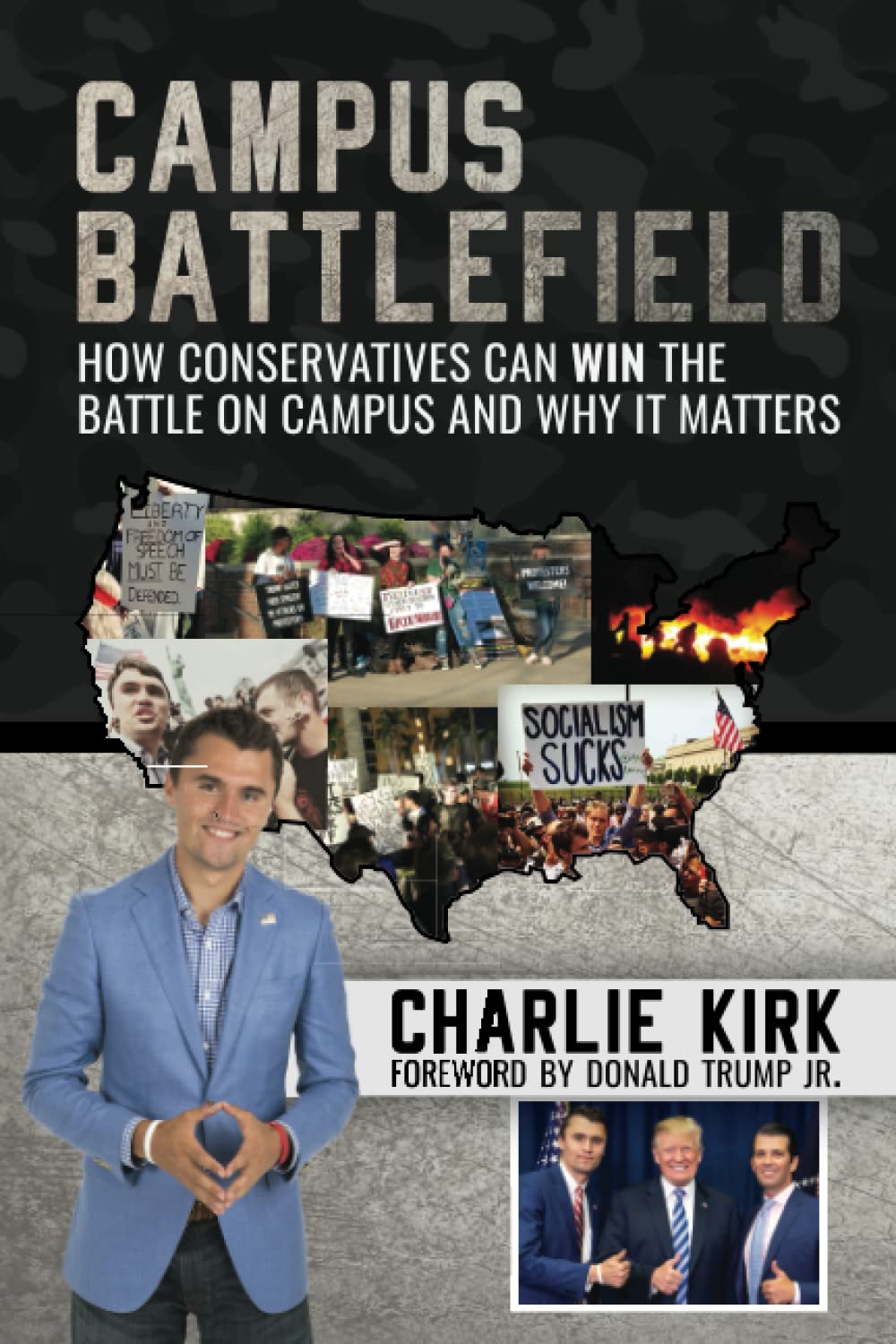


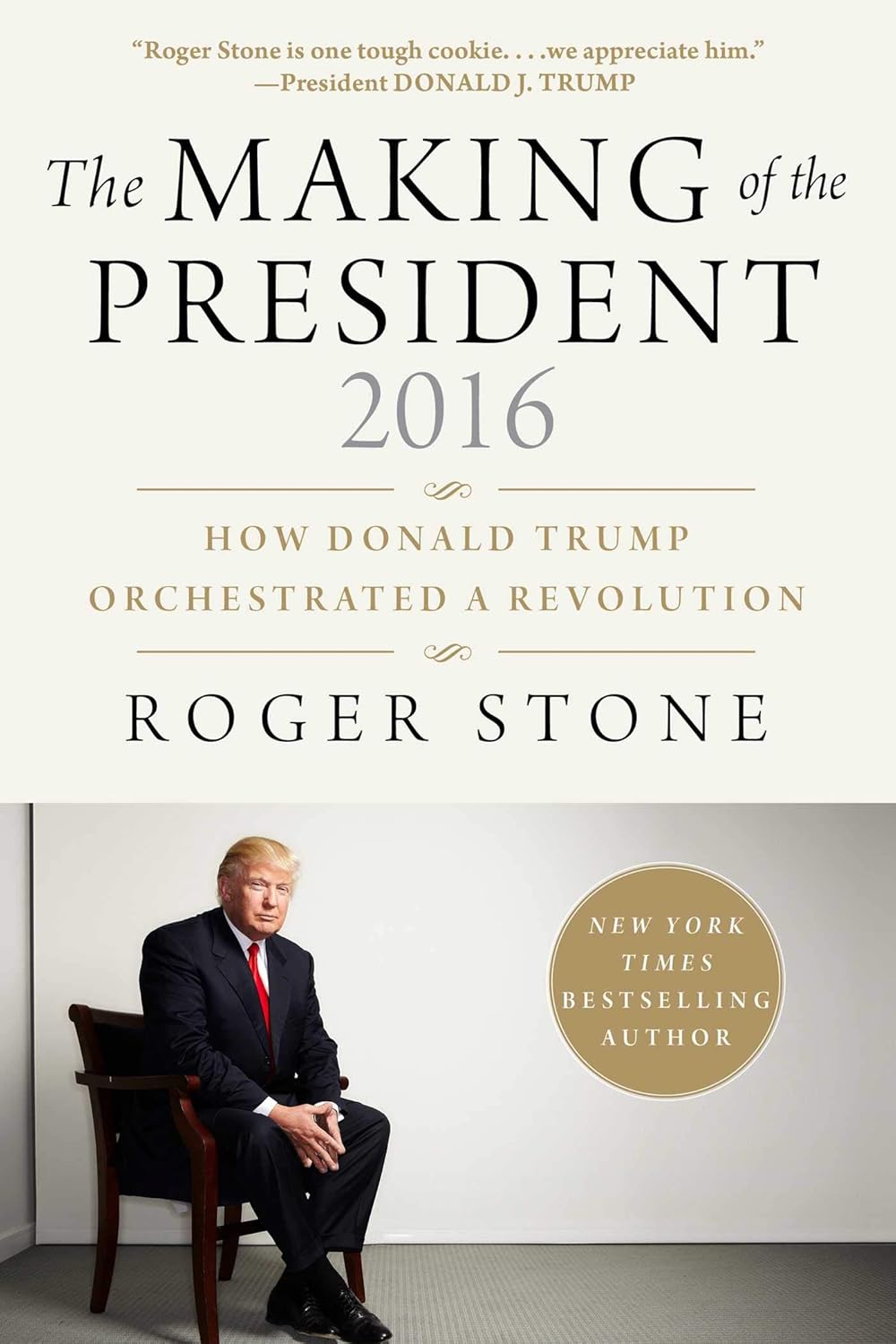


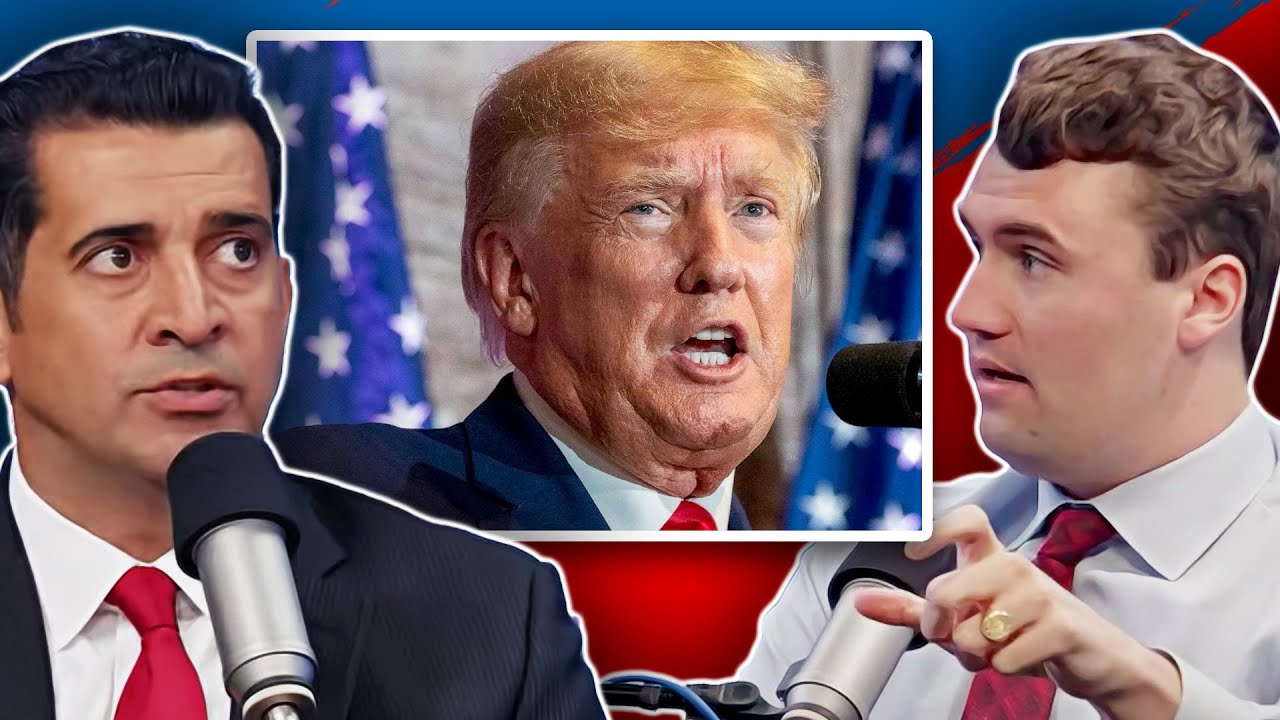
Patrick Bet-David, Charlie Kirk, and Chris Cuomo Debate Trump's Historic Election Victory and the Issues That Mattered Most
Patrick Bet-David sits down with Charlie Kirk and Chris Cuomo to dissect Donald Trump's unprecedented 2024 election victory. Kirk, whom Bet-David ranks in his top five most influential voices behind Trump's win, breaks down the grassroots campus movement and TikTok strategy that reached working-class voters. Cuomo offers a rare independent perspective, revealing he wrote in his brother rather than vote for either candidate. From the young voter surge that swung 30 points toward Trump among men under 30, to the inflation narrative and trans sports ads that dominated the airwaves, this conversation reveals the real factors behind the political earthquake that reshaped American politics.
The Unexpected Alliance: Kirk and Cuomo Unite for Political Discussion
Patrick Bet-David opens this extraordinary podcast episode by bringing together two of the most compelling voices from opposite sides of the political spectrum: Charlie Kirk, founder of Turning Point USA, and Chris Cuomo, the former CNN anchor now with NewsNation. Bet-David doesn't hide his admiration for Kirk's work during the 2024 election cycle, placing him in his top five most influential figures in Trump's victory, alongside Elon Musk, Joe Rogan, Tucker Carlson, and others. The host predicts Kirk will become one of the top three most formidable voices in politics for decades to come, a compliment Kirk's team would surely appreciate given Bet-David's observation that Kirk "loves compliments more than anyone."
The conversation begins with Cuomo revealing a surprising detail about his own vote: he wrote in his brother rather than vote for either major candidate. When pressed about why he didn't vote for Kamala Harris, Cuomo explains his belief that "America can do better than these two candidates," a position that sets the tone for a nuanced discussion that avoids typical partisan talking points. This revelation leads to an exploration of how Cuomo's perspective has evolved, particularly his willingness to discuss vaccine efficacy and other topics that might have been restricted at his previous network.
The Night Trump Won: Charlie Kirk's Emotional Reaction
The podcast revisits the pivotal moment on election night when Fox News called the race for Donald Trump. A viral clip shows Kirk becoming emotional as the realization sets in that Trump has won. Kirk explains the weight of that moment: "From January 2021 to that moment, we dedicated our entire life to get Donald Trump back to the White House." He reminds viewers of the context—Trump was in political exile after January 6, facing 700 years in federal prison, assassination attempts, and the seizure of his business empire.
Kirk describes the journey as climbing out of "the greatest political hole in modern American history," crediting divine intervention: "I believe it's God shining His grace on this great country." The emotional release captured on camera represented years of non-stop work, constant travel, and personal sacrifice. Kirk admits he still hasn't fully processed the victory, given how surreal the journey has been.
Immediate Global Reactions to Trump's Victory
Both Kirk and Bet-David highlight the immediate international responses to Trump's election. Within days of the announcement, a migrant caravan headed to the U.S. southern border disbanded. Qatar informed Hamas they were no longer welcome in the country. The European Union announced plans to purchase American liquefied natural gas instead of Russian energy. Bitcoin hit an all-time high of $87,000, and stock markets surged based purely on confidence in the incoming administration.
Kirk, who has been at Mar-a-Lago helping with transition planning, emphasizes these are not just random events but direct responses to Trump's signals about his upcoming policies. The message is clear: the world is already recalibrating based on expectations of how Trump will govern.
The TikTok Revolution: Charlie Kirk's Billion Views in 90 Days
One of the most fascinating segments covers Kirk's unexpected success on TikTok, a platform that had previously censored conservative content. Kirk explains that October 7th and the subsequent Israel-Gaza conflict became a turning point. TikTok faced potential banning in the U.S. due to concerns about anti-Israel sentiment spreading on the platform. Mitt Romney openly stated at a security conference that TikTok was being banned specifically because it was "sowing anti-Israel sentiment in the United States."
Seeing an opportunity, Kirk's team reached out to TikTok with a proposal: treat conservative content fairly, and they would become the platform's "biggest right-wing fan." TikTok agreed to transparent enforcement of their rules, and Kirk began posting his college campus discussions. The results were staggering: "A billion views in 90 days, 60 to 80 million views a day." Kirk emphasizes this wasn't just about numbers—TikTok reached the working class, the muscular class, janitors, waiters, waitresses, Uber drivers, police officers, and firefighters in ways YouTube and Instagram never had.
Kirk shares a memorable story from Las Vegas where Hispanic and Asian-American Pacific Islander workers approached him, all having discovered him on TikTok. The platform's diversity—reaching Black, Hispanic, Asian, and young voters—made it the most effective outreach tool of his career. The entertainment value of ideas colliding in open dialogue proved irresistible to viewers.
Young Voters: The 30-Point Swing That Changed Everything
A Wall Street Journal analysis revealed stunning shifts among young voters. Trump achieved a 14-point lead among men under 30, a dramatic 30-point swing from 2020 when Biden had a 15-point lead. Among women under 30, Harris led by only 18 points compared to Biden's 32-point advantage in 2020. Overall, voters under 30 comprised 16% of the electorate, up from 13% in 2020, with Harris's support shrinking to just 6 points over Trump (52% to 46%).
The conversation explores how Trump's campaign, guided by advice from his son Baron, reached young voters through college events, TikTok, and popular podcasts like Adin Ross, Logan Paul's show, and ultimately Joe Rogan's podcast. Bet-David credits this strategy as monumental, particularly in reaching independent voters in the final week.
Cuomo pushes back on the term "bro vote," arguing it's a pejorative designed to diminish what resonates with young men: "I see it as a way of diminishing what resonates with young men, and I think it's a continuation of a very overt intentional strategy of bringing down young men." Kirk agrees, noting that Trump's campaign wisely placed their most effective ads during NFL games and the World Series, directly targeting male viewers.
The Three Defining Moments of Trump's Victory
When Bet-David asks both guests to identify the defining moments that led to Trump's comeback, Kirk offers two crucial turning points. First, Elon Musk's purchase of Twitter, which allowed freedom of speech on a major platform while other social media companies were "clamping down." This enabled the entire country to consume information differently, leading to shifts in what people cared about—immigration, Ukraine, and other issues previously suppressed in mainstream discourse.
Second, the indictment of Donald Trump by Alvin Bragg in New York. Kirk explains: "Donald Trump was then viewed correctly as a martyr by his supporters and a sympathetic figure to the people who couldn't afford groceries." Regular people saw a man being prosecuted while they struggled financially, and when they turned to MSNBC for explanation, they heard only "he's a Nazi, he's a threat to democracy." This disconnect drove them to Twitter/X for alternative perspectives.
Kirk emphasizes the importance of Elon Musk's endorsement on July 13th, the day Trump was shot in Butler, Pennsylvania. Musk's laser-focused commitment—living in Pennsylvania for 45 days, dedicating his fortune, time, and energy—created what Kirk calls "a force multiplier the likes of which literally in my opinion saved civilization."
Cuomo offers a different primary factor: the inflation narrative. He references Bill O'Reilly's analysis that everything begins and ends with "the gas pump and the grocery store." When Democrats tried convincing people they weren't actually paying more for things, they entered "a very tricky space." Cuomo argues that when gas, groceries, rent, mortgages, and healthcare all cost more, telling people the guy who presided over lower prices is the problem simply "doesn't compute."
The $75 Million Ad: "Kamala is for They/Them, Trump is for You"
Perhaps no single piece of campaign messaging proved more effective than the Trump campaign's advertisement featuring Kamala Harris discussing taxpayer-funded gender reassignment surgery for prisoners and illegal immigrants. The ad, which cost $75 million and ran extensively during NFL games and the World Series, showed Harris stating that "every transgender inmate in the prison system would have access" to such procedures.
The commercial concluded with Charlemagne tha God reacting in disbelief, followed by the tagline: "Kamala is for they/them, President Trump is for you." Kirk credits campaign manager Susie Wiles and her team for trusting their instincts on this messaging, noting that three different firms have studied it as the most effective ad of the cycle.
A heated CNN panel discussion captures the issue's potency. When a panelist argues that Democrats went too far left on social issues by supporting "boys playing girls sports," another panelist interrupts: "They're not boys, I'm not going to listen to transphobia at this table." The exchange—with the host defending the interruption—perfectly encapsulates why the issue resonated. Kirk observes: "Rarely are you able to see the contention and the point proved in one clip."
Kirk argues this wasn't just about sports or even transgender issues specifically. The ad struck at Kamala Harris's core weakness: "She is this radical ideologue from California who will pander to foreigners, not Americans, with the most wild, abstract left-wing ideas." The messaging also likely suppressed enthusiasm among some Black voters in cities like Detroit who couldn't support a candidate associated with such positions.
Cuomo's Concerns About Culture War Politics
While acknowledging the effectiveness of Trump's cultural messaging, Cuomo expresses reservations about the direction of the debate. He worries about gay and transgender youth "living in a real profound state of fear" and being targeted and bullied. While he agrees that "males in female sports doesn't make any sense," he's concerned about unintended consequences for vulnerable young people.
Cuomo also distinguishes between different immigration-related messages. He found the transgender surgery and illegal immigrant access angles more powerful than the sports issue because they offend people's "sense of justice" and "fairness under law." However, he criticizes what he sees as Trump's demonization of immigrants themselves, arguing "the truth is often enough" without creating "boogeyman" figures. While acknowledging illegal entry is definitionally a crime, Cuomo suggests focusing on policy solutions rather than inflammatory rhetoric about individual migrants.
Kirk counters that specific stories like Laken Riley, brutally murdered in Athens, Georgia, or Rachel Morin, hunted down on a hiking trail by an illegal immigrant, aren't misrepresentations but "real things that happened." These stories tap into what Trump brilliantly identified as Americans' "instinctive, God-built, programmed attunement of justice, of right or wrong."
Why Democrats Failed on the Border
Bet-David presses Cuomo on why Democrats maintained what he characterizes as a "passive border" policy for four years despite obvious political damage. Cuomo offers three explanations. First, weaponizing the problem served both parties better than solving it—allowing Democrats to accuse Republicans of hating immigrants while Republicans portrayed Democrats as dangerously naïve.
Second, Democrats face a genuine Left Flank issue with progressives who are "hyper-sympathetic to the suffrage of those people and believe that you should just be welcoming all in." Third, and most importantly, "paralysis by analysis"—once the Biden Administration relaxed Trump-era agreements and the problem became theirs, the political instinct was to ignore it and focus elsewhere rather than own and fix it, because "owning gets you owned."
Kirk questions how ignoring 10,000 people per day entering the country illegally isn't a dereliction of duty. Cuomo agrees it's "definitely political malpractice" and "definitely wrong," though he distinguishes it from treason, which requires giving comfort to an enemy. He does concede that cartels and fentanyl trafficking represent serious enemy threats that received insufficient attention during the campaign.
The Evolution of Chris Cuomo and NewsNation's Independence
Bet-David acknowledges Cuomo's evolution over recent years, from his time at CNN through his current role at NewsNation. Kirk praises Cuomo's willingness to go to the DNC and "remind viewers that all those boxes up there are bought by corporate Titans," as well as his explanation of why Trump voters supported their candidate. Kirk appreciates Cuomo's candor about the vaccine not delivering on its promises, noting "so many people would hold back on that because they're afraid of being called all these terrible names."
Cuomo explains the difference in his current situation: at CNN, "the brand was bigger than you," making it difficult to express views that might be seen as speaking for the entire network. At NewsNation, owned by publicly traded Nexstar, there's more transparency and leeway with the brand. The day Cuomo hosted a program with Dana White, Mark Cuban, and others during the election demonstrated NewsNation's model—bringing diverse perspectives together for substantive dialogue.
Cuomo articulates his philosophy: "I haven't seen you with your wife, I haven't seen you with your kids, but once I get a feel for you, everything else is kind of secondary." He warns against the toxicity of social media dynamics where "every time they do a poll of real people, seven out of 10 say they share common interests. Where's that? You don't make money off that on social media, but that's what we need to get back to."
Common Sense Politics and Tom Homan's Appointment
Bet-David frames the election outcome through the lens of common sense, comparing political analysis to his daily work in insurance compliance where he constantly evaluates competing arguments. He argues that ordinary Americans who don't follow politics closely simply applied common sense to issues like the border, boys competing in girls sports, and economic struggles, concluding "you don't make any sense" about Democratic positions.
The announcement of Tom Homan as director of immigration enforcement represents exactly the kind of decisive action Trump's supporters expected. Bet-David had discussed Homan's potential appointment a year and a half earlier, recognizing his no-nonsense approach to border security would signal serious intent to address illegal immigration.
Kirk emphasizes that if Democrats don't make adjustments and "stay arrogant thinking Obama can come and save them," they'll continue losing. He notes that "Obama no longer has the voice he used to have," reflecting a broader shift in political influence away from traditional Democratic power brokers toward new media personalities and grassroots movements.
The Future of Political Media and Discourse
Throughout the conversation, all three participants acknowledge the fundamental transformation in how Americans consume political information. Cuomo notes that social media has become "as much as any media" in importance, though he cautions it's "not as reliable on a lot of levels" depending on vetting and structure. He suggests Chris Wallace leaving CNN for a podcast represents this shift, though success depends on execution.
Kirk's success across multiple platforms—his podcast ranking top five on both Apple and Spotify, his TikTok explosion, his syndicated radio show, and presence on YouTube, Instagram, Rumble, and X—demonstrates the multi-platform approach necessary in modern political communication. Each platform reaches different audiences with different characteristics, requiring tailored content and messaging.
Bet-David's model for the conversation itself—bringing together people with different perspectives for substantive dialogue—represents what Cuomo identifies as desperately needed: moving beyond "Jets-Patriots" tribal dynamics toward genuine exploration of shared interests and disagreements. The fact that this was Kirk and Cuomo's first meeting, yet they engaged respectfully despite real differences, offers hope for political discourse beyond the typical cable news combat.


Comments
Be the first to comment on this video.