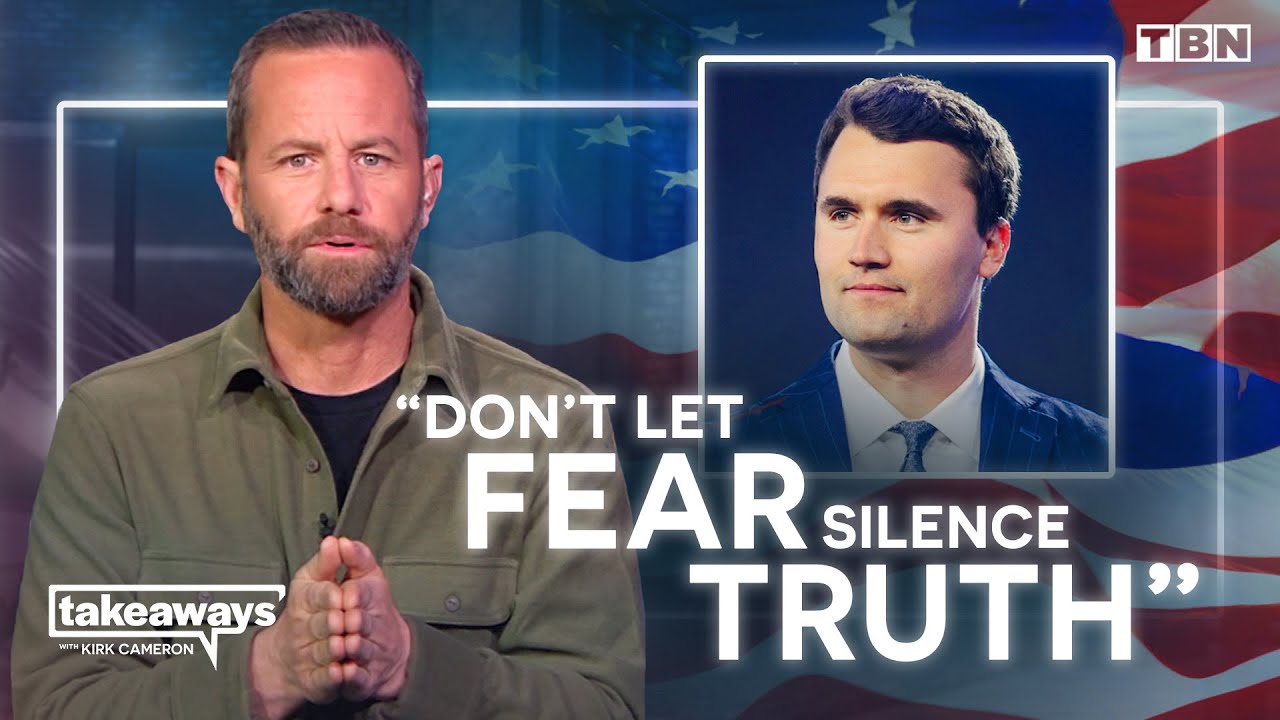
Pirate-Dressed Student Debates Objective Morality and Gets Destroyed by Charlie Kirk on Collective Belief System
Enjoying this? Share it with someone who needs to see it.
Up Next
Yeonmi Park Escaped North Korea's Totalitarian Hell Only to Face Slavery and Human Trafficking in China
2:11:23
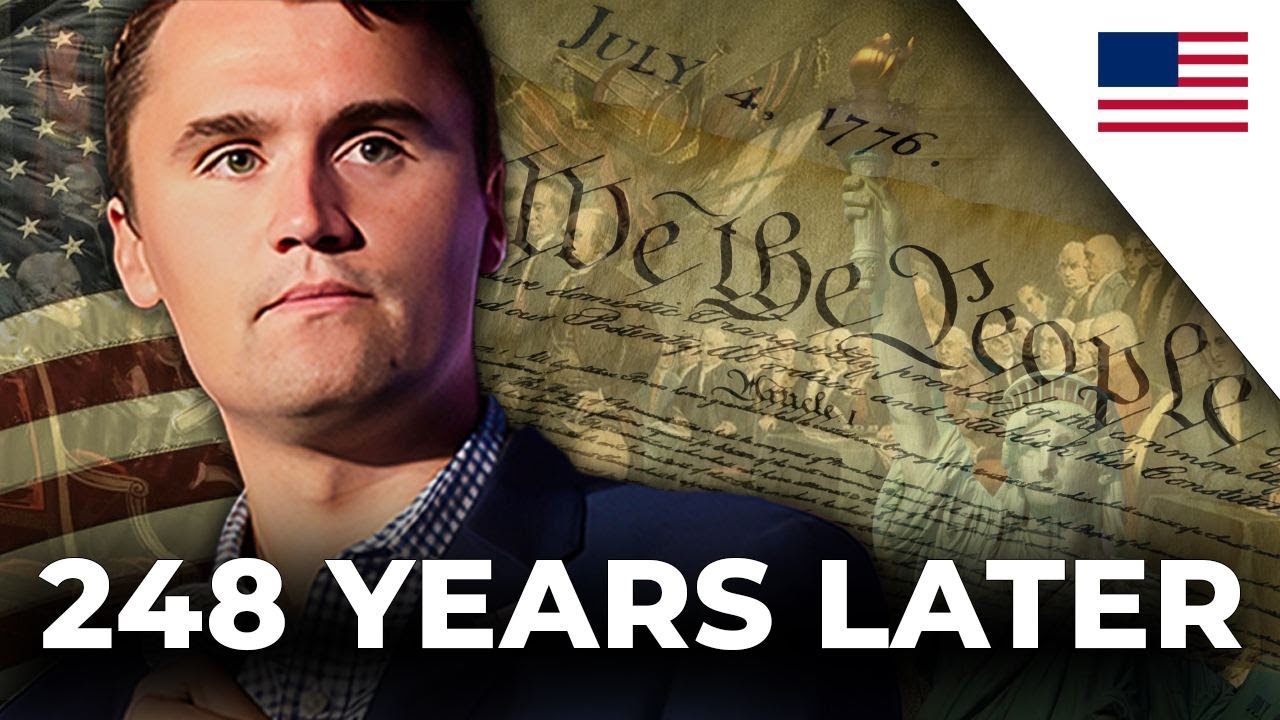
Charlie Kirk on America's Founding Documents, Christian Courage, and Why July Fourth Matters to Believers Today
1:37:01
Charlie Kirk Debates Student on Morality, Christianity, and the State at Campus Event
13:53
Pirate-Dressed Student Debates Objective Morality and Gets Destroyed by Charlie Kirk on Collective Belief System
A student dressed as a pirate challenges the existence of objective morality, arguing that right and wrong are determined solely by what the collective believes. Charlie Kirk systematically dismantles this position by examining historical examples like Nazi Germany and slavery, exposing the fatal flaw in moral relativism. The conversation reaches its climax when the student declares there is no absolute truth, then immediately says he believes that absolutely, contradicting his entire argument. This exchange demonstrates why societies need transcendent moral standards that exist independently of popular opinion or government power.
A student dressed as a pirate approaches to argue that morality is determined by collective belief rather than objective truth. His central claim is straightforward: if enough people believe something is good, that makes it good. The conversation begins with this student asserting that there is no basis for morality outside of what the collective believes, setting up a confrontation between moral relativism and the concept of objective truth.
Testing the Collective Belief Theory
Charlie Kirk immediately challenges this framework by asking whether Hitler was right to kill the Jews, since the German collective wanted it. The student attempts to sidestep by saying "there's a whole damn world" beyond Germany, but this response actually undermines his own argument. If morality is determined by the collective, then Germany's collective decision should have been valid within that framework.
The conversation exposes a critical weakness: the student wants to claim both that morality comes from collective agreement and that collectives can be wrong. When asked if the majority of people in one country deciding something is right justifies it within that country, he struggles to maintain consistency. He acknowledges that Nazi Germany's body politic wanted bad things to happen to Jews, and that the country itself said it was okay, but then appeals to "most of the world" saying it was wrong.
The Abortion and Slavery Parallels
Charlie Kirk presses further by noting that most of the world right now says abortion is okay, asking if most of the world is right. The student responds "Yeah, probably" and claims they've agreed upon a moral standard collectively. The same pattern held true for slavery - the majority of people at one time believed it was acceptable.
When asked if the collective can ever be wrong, the student can only offer "Probably." This hesitant response reveals the intellectual bankruptcy of his position. History provides undeniable evidence that collectives have been catastrophically wrong, yet his framework provides no grounds for calling them wrong. For 2,000 years, the entire planet believed slavery was okay. Under the student's framework, there would be no basis for condemning it.
The Founding Fathers and First Principles
The conversation shifts to how the Founding Fathers recognized the need for a framework that transcends any power structure, tyranny, or king - one that clearly lays out first principles that can be identified when they are crossed. When asked about the faith of the Founding Fathers, the student responds with "separation of church and state," revealing a fundamental misunderstanding.
Charlie Kirk explains this phrase originated from Thomas Jefferson's letter to the Danbury Baptist Convention, guaranteeing them that the state would not come after them. The student attempts to dismiss this by pointing out Jefferson had slaves, but this misses the point entirely. The question is not whether individuals perfectly live up to moral standards, but whether those standards exist objectively.
John Adams famously said the Constitution is only compatible with a moral and religious people. This framework was designed to allow moral people to exist and thrive. When the American people are no longer moral or religious, the promise of the Constitution starts to fall apart.
The Self-Evident Rights Problem
If today there was an up or down vote and people wanted to bring back indentured servitude, would the collective be wrong? The student again responds "probably" and says he would speak against it. But when pressed on what definition of wrong he's appealing to, he can only say "my own sense of morality."
This is the fatal flaw in the argument - it simply comes down to what you feel, which is subjective. The Declaration of Independence states these rights are self-evident. They are self-evident because of objective truth. Without objective truth, rights could not be self-evident.
When asked if they both need objective transcendent morality to live under, the student makes a remarkable claim: "Objective cannot exist in morality. That is opinionated." This means murder cannot objectively be wrong. Child rape cannot objectively be wrong. It's just an opinion.
Philosophy, Wisdom, and Truth
The student attempts to argue that religion is just a form of philosophy, both being pursuits of wisdom. But the word philosophy itself - from Greek "philos" (love) and "sophia" (wisdom) - means the love of wisdom. And where does wisdom come from? Scripture teaches that the fear of the Lord is the beginning of wisdom.
The student claims wisdom comes from experience and that the Word of God comes from "the bastardization of man" because men wrote the passages in the Bible. But this does not disprove the idea of objective truth existing or that men transcribed divine revelation.
The Instinct Toward Good
An illuminating moment occurs when the student swears and immediately apologizes. When asked why he apologized if it's not wrong, he claims "the collective of this room said it's wrong." But there was no vote, no scorecard. Something within him instinctively recognized it as wrong.
The student admits Christianity taught him throughout his youth not to swear. These ideas become deeply ingrained, but Charlie Kirk suggests they are already ingrained within all of us - an innate understanding, an instinct we feel when straying from what is true and good. The Christian inheritance creates better actions and behavior, even in those who don't consciously recognize its influence.
When the student claims he's seen Christians do terrible things, the response is crucial: how does he know it's bad? He knows it's bad before examining it, appealing to his own sense of morality. But Hitler's sense of morality was to kill the Jews. If everyone has their own sense of morality, there's no grounds for condemnation.
The World War II Reality Check
The student attempts to argue the collective said Hitler was wrong, but the historical reality is more complex. Many people in the United States did not think America should get involved in that war. There was a fascist club at Harvard. Oswald Mosley thought Hitler was right. There was an entire fascist movement in Britain.
Hitler was democratically elected in Germany. He took over Europe through military strength, and he believed he was right. The rest of the world did not immediately unite against him. Russia initially aligned with Hitler before changing course. Italy said he was right. Imperial Japan said he was right.
The whole world was not united against Hitler until two Anglo-Christian nations - Britain and America - decided to tell him to stop. The student tries to distinguish between "the men that were leading those countries" and "the people themselves," but this only further muddles his collective morality argument.
The Epic Self-Contradiction
The conversation reaches its climax when the student, apparently frustrated, declares he's "so sick of this conversation of the majority." This is extraordinary - he came in arguing that the majority is what dictates morality, got systematically dismantled, and now rejects his own framework.
The final exchange is devastating. When confronted about bringing up the collective as his moral standard, the student tries to backtrack by saying the collective can be wrong. But there's no absolute truth in his worldview - just competing opinions with no way to adjudicate between them.
When asked if there's such a thing as absolute truth, the student declares there is no absolute truth. The follow-up question destroys the argument: "Do you believe it absolutely?" The student responds, "That's a truth."
He absolutely believes that there's no such thing as absolute truth, thereby demonstrating that there is absolute truth. His philosophy falls apart upon even the slightest cross-examination. This is what fuels postmodernism and why Jordan Peterson's articulation that nothing will improve your life more than living in accordance with the fabric of reality resonated so powerfully - because it reasserted the revolutionary idea that objective truth exists.