2,422 videos 1,389,747,653 views US Joined Aug 30, 2018
Charlie Kirk is the Founder and President of Turning Point USA, the largest and fastest growing conservative youth activist organization in the country with over 250,000 student members, over 150 full-time staff, and a presence on over 2,000 high school and college campuses nationwide. Charlie is also the Chairman of Students for Trump, which aims to activate one million new college voters on campuses in battleground states in the lead up to the 2020 presidential election. His social media reaches over 100 million people per month and according to Axios, he is one of the "top 10 most engaged" Twitter handles in the world. He is also the host of “The Charlie Kirk Show,” which regularly ranks among the top news shows on Apple podcast charts.
Raheem Kassam on Putin's Legacy Problem and Why Russia Won't Back Down in Ukraine
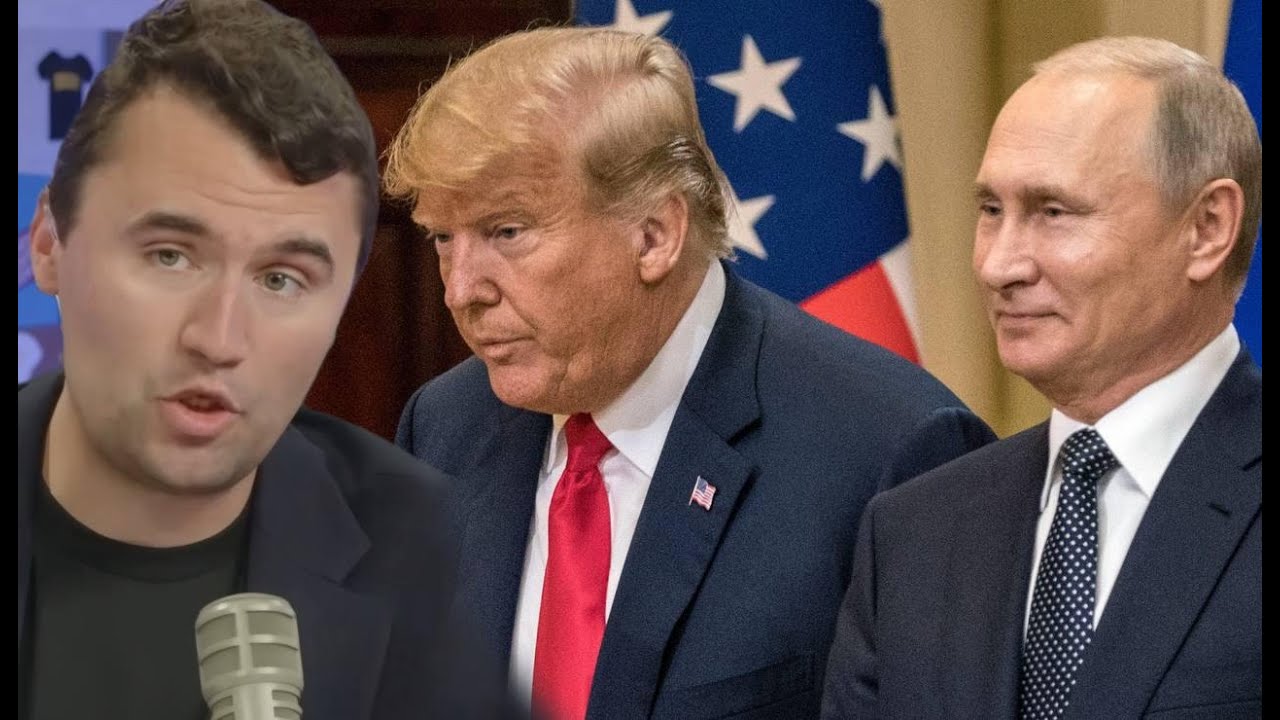
Charlie Kirk sits down with Raheem Kassam, editor-in-chief of The National Pulse, to dissect the escalating Russia-Ukraine conflict. As President Trump expresses frustration with Putin launching missiles during peace negotiations, Kassam offers a unique perspective rooted in his firsthand experience during the 2013-2014 Maidan Square revolution. The conversation explores Putin's inability to sell peace to his own people, the West's role in creating this crisis, and why the world may now be at the most dangerous point of the war. Kassam reveals behind-the-scenes details about Trump's carrot-and-stick approach, NATO's potential shift to 5% GDP defense spending, and the fundamental disconnect between Russia's leadership and its people. This analysis challenges conventional narratives and asks the tough question: what happens when one side simply refuses to make peace?
Charlie Kirk opens the conversation with Raheem Kassam by addressing President Donald Trump's recent statement expressing dissatisfaction with Vladimir Putin. Trump criticized Putin for launching missiles into cities during ongoing peace negotiations, stating that something has gone wrong with the Russian leader. This development marks a shift in tone as the Trump administration navigates the complex path toward ending the Russia-Ukraine conflict.
Kassam, who witnessed the Maidan Square revolution firsthand in late 2013 and early 2014, brings a unique perspective to the discussion. He notes that the situation has become deeply personal for him given his experience on the ground during Ukraine's political upheaval. His analysis highlights the expansionism of both the EU and NATO as contributing factors to the current crisis, setting the stage for what would eventually become a hot war.
Putin's Legacy Problem: Unable to Sell Peace
Kassam identifies a critical issue facing Putin that many observers overlook: the Russian leader doesn't know how to sell peace to his own people. This insight stems from comments made by the vice president approximately ten days prior, who noted that Putin faces a fundamental problem in explaining to Russians what exactly he has achieved through this costly war.
The issue extends beyond Putin's immediate circle of generals and oligarchs to the Russian people themselves. After years of conflict, enormous loss of life, and significant economic costs, Putin must justify what Russia has gained. As Putin ages and considers his legacy, a stalemate in Eastern Europe is far from the historical achievement he likely envisioned. This creates a psychological barrier to peace negotiations that transcends military or diplomatic considerations.
Kassam explains that President Trump has tried promoting peace for peace's sake, but the approach is now shifting to incorporate two familiar tactics from the Trump playbook. The first is rhetorical pressure—sharp, direct language aimed at getting Putin to focus and come to the negotiating table seriously. The second is the economic carrot: offering Russia a return to the G8, participation in international conferences, and renewed economic integration with the Western world.
Why Both Sides Cannot Claim Victory
When Kirk asks whether Russia genuinely wants an end to this war, Kassam's answer is nuanced but ultimately affirmative. He argues that the war has not extracted from Russia what it originally intended. The early failures—not advancing far enough, failing to secure Kyiv, and failing to remove Ukraine's leadership—have left Russia in a protracted conflict that has yielded minimal strategic gains.
The immense loss of life, financial drain, and disruption to Russian society have created a situation where Putin has little to show his people for their sacrifices. However, Kassam points out that Ukrainian President Volodymyr Zelensky faces the same dilemma. Neither leader can credibly return to their people and declare meaningful victory given the blood shed and resources expended. This mutual inability to claim success creates what Kassam calls "a weird log jam" that makes the current moment particularly precarious.
The Most Dangerous Phase of the War
Kassam delivers a sobering assessment: the world is now at the most dangerous point of the war since it began. Neither Putin nor Zelenskyy wants to give up ground, and neither army wants to be the first to appear weak by backing down. Yet both sides recognize that without demonstrating greater military strength, they cannot expect further concessions from the other side.
Kassam's analysis suggests that no further concessions are likely forthcoming. The territorial and political realities on the ground now will likely define any eventual peace settlement. His counsel to both leaders is straightforward: accept the current situation and formalize it through a peace agreement. Continuing to fight for marginal gains risks catastrophic escalation without meaningful strategic benefit.
Growing Republican Support for Ukraine Assistance
Kirk raises a critical question: is there appetite within the Trump White House and the broader Republican coalition to continue sending weapons to Ukraine if Russia persists in prosecuting the war? Kassam's answer surprises some: yes, and increasingly so.
Despite his own fundamental opposition to American involvement from the outset, Kassam observes a shift on Capitol Hill and within the defense establishment. Elements of the Republican coalition are moving toward what he describes as a more Biden-esque approach—continuing to provide resources and weaponry to Ukraine. This is not the preferred route for the Trump administration, but Kassam sees the political winds shifting as Russia's intransigence becomes more apparent.
NATO's Coming Budget Revolution
Kassam reveals that a significant development is imminent: European nations are expected to announce in the coming days whether they will increase their defense spending to meet new NATO targets. Historically, NATO members committed to spending 2% of GDP on defense, though few actually met this threshold. When Trump took office in 2016, about half of NATO members pledged to comply, but only half of those actually followed through.
President Trump has now called for NATO members to increase defense spending to 5% of GDP. According to Kassam, rumors suggest that many European governments are preparing to announce their commitment to this higher threshold. While this may sound like a bureaucratic adjustment, Kassam characterizes it as a potential sea change—not just in how Europeans view their own defense obligations, but in how external adversaries, particularly Russia, perceive European military capabilities.
This shift could fundamentally alter the strategic calculus in Eastern Europe. If European nations significantly increase their defense budgets, Russia would face a much more formidable conventional military threat on its western borders, potentially creating new incentives for diplomatic resolution.
Reconciling Support with Non-Interventionist Principles
Kirk presses on a fundamental tension: how can increased weapons shipments to Ukraine be reconciled with the position that America has no business in this war? This question reflects genuine confusion among many in the conservative movement who have consistently opposed American involvement in foreign conflicts.
Kassam acknowledges this dilemma and frames it in terms of Russia's calculation. If Russia is willing to continue sacrificing enormous numbers of its citizens in this conflict, does the Kremlin believe it has the West over a barrel? Do Russian leaders think the West lacks either the military capacity or the political fortitude to sustain support for Ukraine indefinitely?
The Burden of Being the Global Hegemon
Kassam offers a broader perspective on America's role in global conflicts. The position of global hegemon, whether one accepts it or not, doesn't necessarily mean participating in every war, but it certainly means playing a role in virtually every peace negotiation worldwide. From India-Pakistan disputes to conflicts in Eastern Europe, nations look to the dominant global power for guidance, leadership, and guarantees to underwrite peace agreements.
Despite his personal belief that even his native United Kingdom doesn't necessarily have a role to play in the Russia-Ukraine war, Kassam acknowledges the historical responsibility that comes with past actions. European and American actors led Ukraine to give up its nuclear deterrent. Western powers encouraged Ukraine to believe it would be welcomed into NATO and the European Union. When those promises failed to materialize, the conditions for war were created.
The leadership changes in Ukraine during this period were also influenced by European and American efforts. In Kassam's view, the current administration is essentially cleaning up the mess created by the Obama-Biden administration and previous European Union leadership. This historical context creates a moral and strategic obligation that transcends immediate non-interventionist preferences.
The Summer Deadline and Escalation Risks
Kassam recalls his prediction from January when the Trump administration began: if a peace settlement isn't on the table by summer, something drastic will change. That timeline is now approaching, raising the stakes considerably. The fundamental challenge remains: how can peace be brokered if one side genuinely doesn't want it?
If Russia is truly willing to continue feeding hundreds of thousands of young men into what Kassam describes as a "meat grinder," the West faces difficult choices. The question of domestic appetite in America for continued involvement becomes crucial. How long will the American public support a proxy conflict with no clear endpoint?
Does Russia Want All of Ukraine?
Kirk poses a direct question: does Russia actually want to conquer all of Ukraine? Kassam's analysis distinguishes between different factions within Russian society. The prevailing consensus within Russia's military and political establishment would likely say yes—complete control of Ukraine remains the objective. However, public sentiment in Russia doesn't track the same way.
This disconnect returns to Kassam's earlier point about Putin's legacy concerns. Putin recognizes that he likely won't remain in power for more than 5 to 10 years. He also understands that Russia will take a very different direction after he leaves office. The question becomes whether he can bring the Russian people along with him on the Ukraine question. Kassam's assessment: he cannot. Putin is clinging to what is essentially a losing battle, unable to admit defeat but equally unable to achieve victory.
The Crimea Question and Western Inflexibility
Kirk shares an anecdote from his time at Cambridge, where a professor on the pro-Ukraine side dismissed the idea that Crimea could legitimately be considered Russian territory. This perspective ignored the historical reality that Crimea has been home to Russian wine production, headquarters for the Russian Navy, and has deep cultural connections to Russia dating back centuries.
Kirk asks whether part of the impasse stems from Western inflexibility—an unwillingness to grant Putin any concessions that might allow him to save face and end the conflict. Kassam agrees this is a fair analysis, though with an important caveat. He believes that among official negotiators and diplomats, most territorial questions are actually on the table. The Trump administration and its counterparts are willing to consider various compromises to end the bloodshed.
The Academic and Media Class Problem
The real obstacle, according to Kassam, is not official policy but the academic, media, and think tank classes. Day after day, op-ed writers, professors, and commentators in major publications declare that even if Russia comes to the negotiating table, the West should not recognize Putin's government or grant any territorial concessions. They argue that Crimea must be returned to Ukraine, that Putin is illegitimate, and that Russia must be completely defeated.
Kassam emphasizes that these opinions don't reflect official American policy, but Russian elites don't necessarily understand this distinction. In Russia, major media outlets operate very differently than in the United States. For a significant Russian publication to take a strong editorial position would typically require tacit approval from the government—a "wink and a nod" from the establishment.
Russian analysts looking at The New York Times, The Washington Post, and major think tanks naturally assume these institutions speak with implicit government backing. They interpret the hardline positions of American academics and journalists as reflecting the true position of the Pentagon and State Department, even when this is demonstrably false.
The Liberal Elite Echo Chamber
Kassam notes that he regularly listens to podcasts and shows from across the liberal elite sphere to understand their arguments. He characterizes much of this content as "opinion-driven nonsense," yet these commentators often claim to have spoken with sources in government, giving their positions an air of official credibility.
Frequently, these "sources" turn out to be low-level staff—an intern in a subsidiary department, someone working 1,500 miles from Washington trying to build their reputation or get their opinions taken seriously. Yet when quoted in major publications, these become "State Department sources" or "Pentagon insiders," creating a false impression of official policy.
This dynamic creates a massive obstacle to diplomacy. Russian negotiators attempting to understand American red lines must navigate between actual government positions and the noise generated by a decentralized media and academic ecosystem that doesn't exist in authoritarian Russia.
Russian Suffering and Democratic Deficits
Kassam provides cultural context essential to understanding Russian calculations. For hundreds of years, the Russian national mentality has incorporated a willingness to suffer for the nation and for compatriots. This cultural trait means Russians don't experience war weariness the same way Western populations do. The capacity to endure hardship for perceived national interests is deeply embedded in Russian identity.
However, Russia also lacks the democratic institutions that characterize Western societies. Russians don't have their voices represented at every level of government the way Americans are supposed to. They don't have independent media that reflects diverse public opinion the way American media theoretically should. This creates an enormous chasm between Russian leadership and the Russian people.
The leadership is searching for a face-saving exit that preserves their power and legacy. Meanwhile, public sentiment has turned against continuing the conflict, but this sentiment has no democratic channels through which to influence policy. The Russian people's war weariness exists but cannot be effectively expressed or translated into political pressure on Putin.
The Path Forward
As the conversation concludes, Kirk directs listeners to The National Pulse and poses a final question to his audience: if this war continues, do you support sending more money and weapons to Ukraine? This question encapsulates the fundamental tension facing American conservatives—balancing non-interventionist principles with the practical realities of global leadership and the moral implications of abandoning a country fighting for its existence.
Kassam's analysis presents no easy answers but offers a framework for understanding the multiple levels at which this conflict operates: Putin's personal legacy concerns, the disconnect between Russian elites and the Russian people, the West's historical culpability in creating conditions for war, the communication breakdown caused by America's decentralized media ecosystem, and the unique cultural factors that allow Russia to sustain casualties that would be politically unacceptable in Western democracies.
The conversation leaves open whether peace is achievable in the near term or whether the world is heading toward the dramatic change Kassam predicted would occur if negotiations failed by summer. What remains clear is that traditional diplomatic frameworks are struggling to address a conflict shaped as much by domestic political calculations, cultural differences, and media narratives as by military realities on the ground.