Ray Comfort Responds to Hypothetical Charlie Kirk Death with Gospel-Centered Evangelism on College Campuses
Enjoying this? Share it with someone who needs to see it.
Up Next
Van Jones Reveals Charlie Kirk's Final Outreach for Civil Dialogue Before His Death
1:54:54
A Former Liberal Natalie Beisner Reflects on Political Violence, Free Speech, and Why America Changed Forever
16:48
Remembering Charlie Kirk: Faith Leaders Honor a Christian Voice Silenced by Violence on Campus
54:23
Ray Comfort Responds to Hypothetical Charlie Kirk Death with Gospel-Centered Evangelism on College Campuses
Ray Comfort conducts a powerful social experiment on college campuses, asking students to react to a hypothetical scenario about Charlie Kirk's death. The responses reveal deep divisions and misconceptions about faith, morality, and the gospel. Comfort uses these interactions to demonstrate the difference between defending political ideas and preaching the transformative power of the gospel. Through conversations about abortion, homosexuality, and the Ten Commandments, he shows how addressing the conscience rather than the intellect can lead to genuine repentance. Comfort honors Kirk's faith and courage while encouraging Christians to fearlessly share the gospel, offering practical tools like Ten Commandment coins and gospel tracts to make evangelism accessible to everyone.
Ray Comfort conducted a striking social experiment on college campuses, presenting students with a hypothetical scenario: Charlie Kirk had been shot and killed. The responses were deeply revealing of the current state of moral thinking among young people. Some students responded with shocking indifference or even approval. "Happy," said one. "That's good. Someone had to do it," said another. Others showed compassion, recognizing the tragedy of such violence, especially noting it would have happened in front of his children.
One student called it "a little too extreme to have to kill somebody from a different party," revealing how normalized political violence has become in some circles. When pressed about Kirk's actual beliefs, students often admitted they didn't really know what he stood for, relying instead on vague accusations they'd heard but couldn't substantiate.
Confronting Misconceptions About Charlie Kirk
Comfort used these conversations to correct false narratives. When one student mentioned Kirk said "something about like black people," but couldn't remember specifics, Comfort clarified the truth: "He wasn't racist. He believed black people should get the same equality as white people. He didn't think people should be judged on the color of their skin, but on their character and their ability to do a job." The student responded, "Yeah, that does make sense."
This exchange highlighted a critical problem: many students form strong opinions about public figures based on secondhand information and rumors rather than actual knowledge of what these individuals believe and teach.
The Gospel Versus the American Dream
Comfort reflected on meeting Charlie Kirk and giving him a copy of his book "God Has a Wonderful Plan for Your Life." Kirk had enthusiastically endorsed the book on his podcast, saying people give him books all the time, but this one with over 350,000 copies in print was "terrific" and taught "the proper way to present the gospel."
Comfort emphasized an important distinction: "Our agenda is not to defend the American dream, which is what Charlie did brilliantly. No one could fill his shoes. Our agenda, according to this instruction book, is to preach the gospel to every creature because the gospel is the power of God to salvation. The gospel changes the human heart."
He explained that the modern gospel message often misleads people by promising an improved life without difficulty. The better approach, he argues, is to start with the Ten Commandments, helping people recognize their own sinfulness before presenting Christ as the solution.
Evangelism Through the Conscience, Not the Intellect
Throughout the video, Comfort demonstrated his evangelism method with multiple students. Rather than engaging in intellectual debates, he focused on awakening their conscience through the moral law. His approach followed a consistent pattern:
Ask about lying, stealing, blasphemy, and lust
Help them see they've violated God's law
Show them they deserve judgment
Present Jesus as the one who paid their fine on the cross
Call them to repentance and faith
In one conversation, Comfort told a student named Christian: "You've just told me you're a lying thief, a blasphemer, a fornicator, an adulterer at heart, and a self-righteous person, which is a sin in God's eyes, and saying you're a good person when you're not. You're like the rest of us, and on judgment day, you're going to be guilty."
This direct approach often led to genuine conversations about faith and salvation, with several students praying to repent of their sins by the end of their encounters.
Addressing Moral Confusion on Campus
Comfort engaged students on controversial topics like abortion and homosexuality, exposing significant moral confusion. When asked if abortion was wrong, one student struggled: "This is a hard question." Comfort responded, "No, it's not. Abortion is the killing of a baby in the womb. Is that right or wrong?"
When the student admitted not knowing much about the topic, Comfort pressed: "Haven't you got a backbone to say murder is wrong?" The student agreed murder was wrong, leading Comfort to make the connection explicit.
On homosexuality, students typically defended it as self-expression. Comfort would then ask about adultery, which students usually condemned. When they explained why adultery was wrong, Comfort would challenge the inconsistency in their moral reasoning, particularly the "born that way" argument that could theoretically apply to any behavior.
Sin Is the Problem, Not Skin
Addressing racism and social division, Comfort shared that the first gospel tract he wrote in 1973 was called "Sin, Not Skin." He explained: "Racism isn't the problem. That's the symptom. The problem is the human heart. And when you preach the gospel, the gospel has the power to take someone who's a racist, a hateful person, a lustfilled person, and transform the heart."
This perspective offers a fundamentally different approach to social problems than what's typically promoted on college campuses. Rather than addressing symptoms through political activism, Comfort argues for addressing the root cause through heart transformation via the gospel.
Remembering Charlie Kirk's Legacy
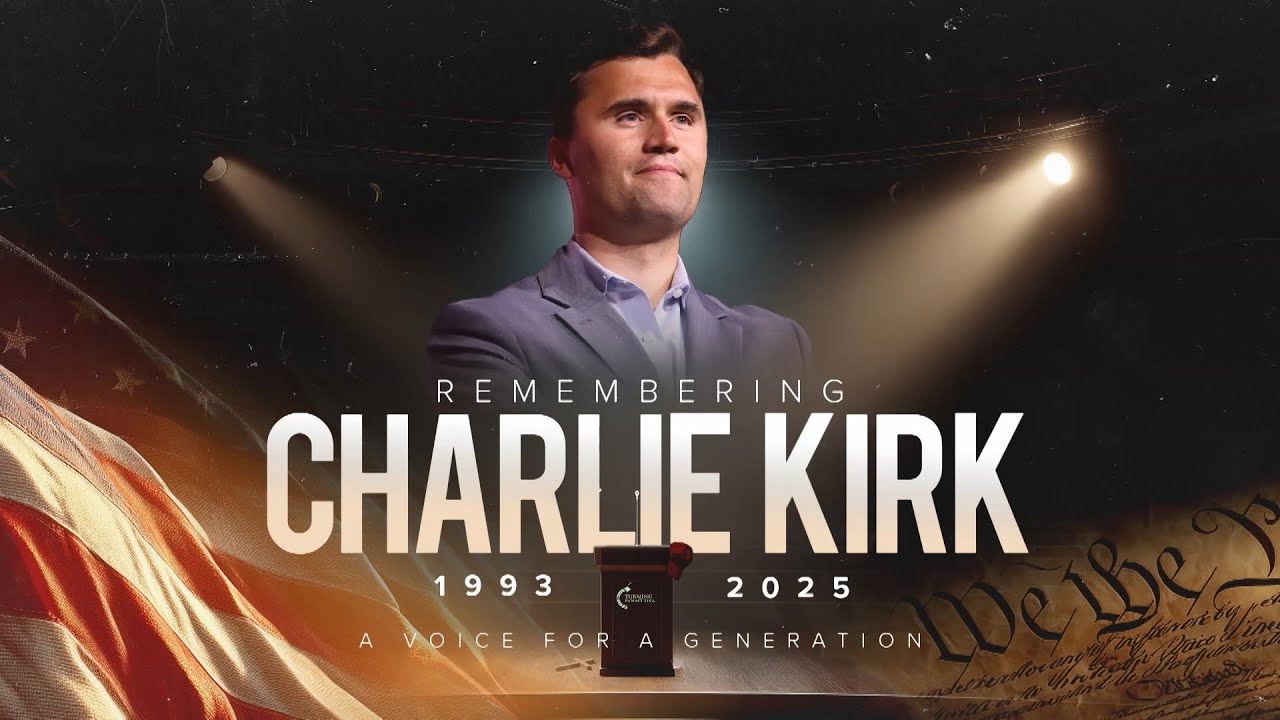
Comfort showed footage of Charlie Kirk at events, throwing hats to crowds, smiling, taking pictures, and living life fully. He reflected on Kirk's own words about how he wanted to be remembered: "I want to be remembered for courage, for my faith. That would be the most important thing. Most important thing is my faith."
Comfort honored this legacy by emphasizing Kirk's love for people and his desire to share God's love and help others get on the right track in their beliefs. The video portrayed Kirk as someone deeply committed to his faith and courageous in standing for what he believed.
A Call to Fearless Evangelism
In response to the hypothetical scenario of Kirk's death, Comfort made a powerful commitment: "The day before Charlie was killed, I told our crew, our camera crew and our team, planning team, that I wanted to go to 13 universities in Southern California. After what happened to Charlie, I'm resolved to do it. I will not fear. I'll not be intimidated. And I want every Christian to feel that way, too. Because if God's for us, nothing can be against us."
This represents Comfort's central message to Christians: don't be afraid to share the gospel, even in hostile environments. He referenced the book of Acts as a blueprint, noting that when persecution scattered the early disciples, they went everywhere preaching the word.
Practical Tools for Evangelism
Comfort promoted several practical evangelism tools his ministry offers:
50 Years of Open Air Preaching
He highlighted his book "50 Years of Open Air Preaching: Everything I've Learned," which documents his mistakes so others don't have to make them. The book teaches how to engage crowds at universities and keep them listening when presenting the gospel. Comfort shared examples of drawing hundreds at UCLA for two hours and peaceful gatherings at Berkeley, typically known for riots.
Ten Commandment Coins
Comfort strongly recommended aluminum coins with the Ten Commandments on one side and the gospel on the other. He explained these are effective because they have perceived value, so even atheists who won't take free books will accept them. He shared a question from ChatGPT that works perfectly with the coins: "Which of the Ten Commandments is hardest to keep?" This immediately opens conversations about sin and the need for forgiveness.
The video showed Comfort successfully using this approach, with one person answering "adultery" and opening the door to a gospel presentation. Multiple students ended up praying to repent after conversations that started with these simple coins.
Beatles Gospel Tracts
Comfort announced a creative outreach strategy: 2 million gospel tracts featuring the Beatles, timed for Paul McCartney's 15-concert tour across the nation. He encouraged Christians who might feel intimidated by university evangelism to distribute these tracts at concert venues where hundreds of thousands of Beatles fans will gather. "These are going to go like hot cakes on a cold day in Alaska," he predicted.
The Evidence Study Bible
He also promoted the Evidence Study Bible and other resources available through his ministry, all designed to help Christians grow in faith and effectively share the gospel.
The Power of a Simple Question
Throughout his campus conversations, Comfort repeatedly asked a pointed question: "When are you going to repent and put your trust in Jesus?" This direct approach led several students to pray right there on camera. Daniel prayed, "Dear Lord, if you could forgive me for my sins, I appreciate it." Christian prayed, "Dear Lord, I'm sorry for my sins. I hope you can forgive me."
After these prayers, Comfort would provide practical next steps: read your Bible daily ("no Bible, no breakfast, no read, no feed"), align your will with God's will on moral issues, and show gratitude through obedience. He often gave students copies of the Gospel of John and his book "Scientific Facts in the Bible" to help them grow in their new faith.
The Heart of the Message
Comfort's core message for Christians is both simple and challenging: "What that does for the average Christian is say, 'Oh, I don't have to be Charlie Kirk.' Because we can't. We don't have that mind. We don't have that brain. But each of us can preach the gospel. It's so simple. And the Bible speaks of the simplicity of the gospel."
Rather than trying to match Charlie Kirk's intellectual prowess in defending conservative values, Comfort calls Christians to do what anyone can do: share the simple gospel message that has the power to transform hearts. He argues this is ultimately more effective because it addresses the root problem of sin rather than just the symptoms manifested in political and social issues.
The video closes with Comfort's promotional materials for his evangelism resources, all reinforcing his central theme: equipping ordinary Christians to fearlessly and effectively share the gospel that changes lives.