
Up Next

Lefties Losing It: ‘Unfunny coward’ Trevor Noah's Charlie Kirk joke falls flat
30:44

Oxford Union President-Elect Faces Backlash Over Charlie Kirk Death Reaction
8:47
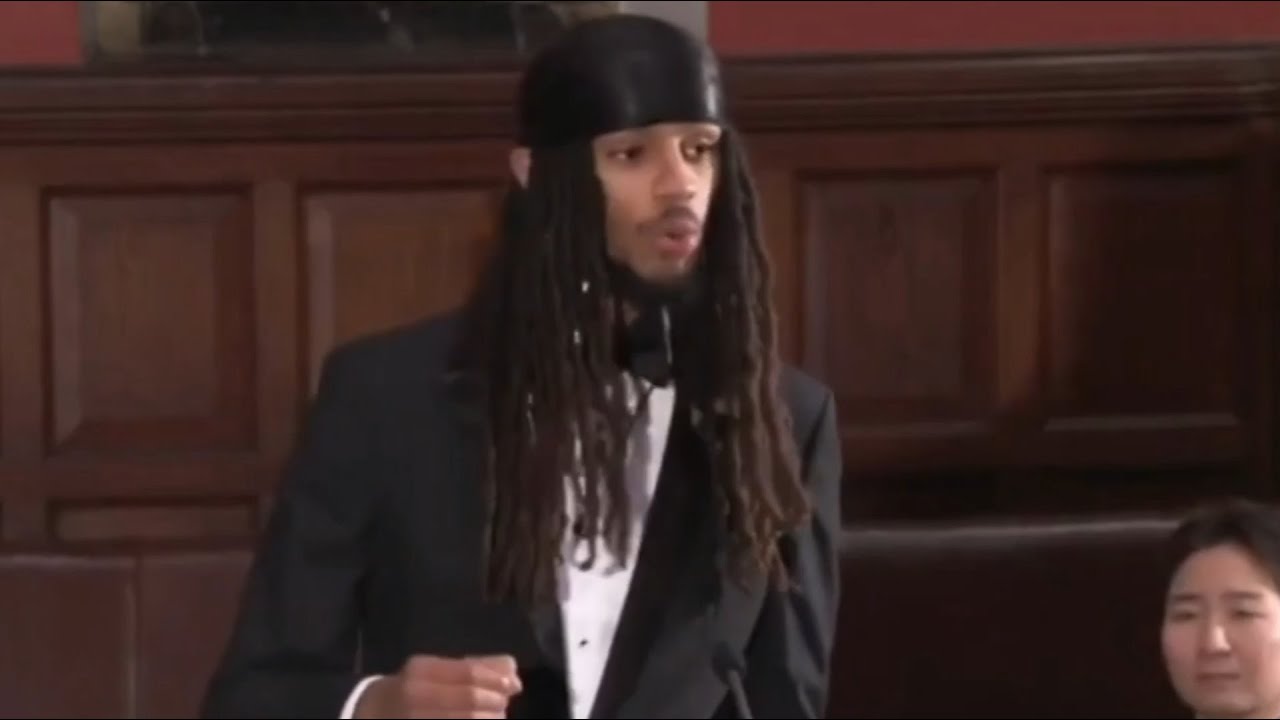
Oxford Union president-elect to be disciplined following disgusting Charlie Kirk comments
6:50
Related Books
Browse Conservative Books





Reflecting on a Controversial Reaction: George Abaraonye’s Perspective
University student leader George Abaraonye on a controversial and offensive message he sent reacting to the assassination of Charlie Kirk. It explores his initial misunderstanding, the public backlash, the scrutiny he faced, and his thoughts on political discourse and personal growth.
Acknowledging the Mistake
“I mean, clearly it was a stupid and offensive thing to write,” George Abaraonye admits. He explains that his reaction was impulsive, based on a notification and headline without full context or understanding of the severity of the situation. Knowing Kirk from previous debates, he did not grasp the gravity at the time and reacted poorly. Upon realizing the seriousness, he deleted the message and issued a public apology.
The Nature of Online Discourse
He reflects on how online political discourse often encourages reactive, inflammatory comments designed to spark conversation and reactions. His intent was to provoke discussion about Kirk’s political legacy, but instead, the focus shifted to whether his reaction was appropriate. He recognizes this was not the conversation he wanted.
Facing Public Scrutiny
As president-elect of the Oxford Union, a prestigious debating society, his private message leaked, leading to intense media and political scrutiny. He describes the shock of being held to a high standard and the disconnect between student freedom and public expectations. Despite the pressure, he found the experience formative, learning from engagement and criticism.
Dealing with Racism and Personal Attacks
He distinguishes between fair criticism of his words and unfair, racist, and classist attacks based on his background and appearance as a Black Oxford student. He calls for deliberate separation of these issues and highlights the vitriol he and his family faced, including threats of violence.
A Call for Forgiveness and Growth
He asks for space to learn and grow, emphasizing that he is still young and imperfect. He hopes the incident encourages more empathetic, collaborative political discourse online, moving away from inflammatory reactions.
Summary
George Abaraonye reflects on a controversial message he sent reacting to the assassination of Charlie Kirk. Initially unaware of the situation’s severity, he reacted impulsively and offensively, later deleting the message and apologizing publicly. His intent was to spark conversation about Kirk’s political legacy, but the focus shifted to the appropriateness of his reaction. As president-elect of the Oxford Union, the leak of his private message brought intense media scrutiny, exposing the tension between student freedom and public expectations. He faced not only criticism for his words but also racist and classist attacks, including threats against him and his family. He distinguishes between fair criticism and unjust personal attacks. Emphasizing his youth and capacity for growth, he asks for forgiveness and space to learn from the experience. He advocates for more empathetic and collaborative political discourse online, moving away from inflammatory and reactionary exchanges.
Video Transcript
[00:00] I mean, look, let's let's get it
[00:01] straight out there. I mean, clearly it
[00:03] was a stupid and offensive thing to
[00:05] write. Yeah, of course. I think, you
[00:07] know, like you said, a stupid and kind
[00:09] of silly thing for me to say. I reacted
[00:11] to kind of a notification and the
[00:13] headline. I had no real context for, you
[00:16] know, what had happened. I didn't really
[00:17] understand the severity of the
[00:18] situation. Did you know who Kirk was? I
[00:20] did know who Kirk was. Um I had
[00:21] previously debated him. Um but I didn't
[00:24] really understand, I think, the severity
[00:25] of the situation at the time. And you
[00:26] know, I reacted and I reacted poorly.
[00:28] And then, upon kind of realizing just
[00:30] how serious kind of these things were, I
[00:32] kind of deleted everything I posted on
[00:34] my social media kind of apologizing and
[00:37] reflecting on the moment cuz I realized,
[00:38] you know, that reaction wasn't befitting
[00:40] of how severe the situation was. And
[00:43] this was all kind of a day before the
[00:44] news cycle and the press started. And
[00:46] so, kind of yeah, it's been kind of a
[00:47] lot then having to kind of deal with all
[00:50] of that going forward.
[00:50] >> I want to talk about that. But I suppose
[00:52] just just to say cuz there'll be some
[00:53] people listening saying, "Well, you
[00:54] know, did you really need to know how
[00:56] severe the situation was?" I mean, you
[00:57] knew a guy who you'd met had got shot. I
[00:59] mean, some people would say, "How could
[01:02] you react that way?" No, of course. And
[01:04] I think it's a valid position, I think.
[01:06] >> Why did you? I think part of the Mr. Mr.
[01:09] Kirk's comments don't exist in a vacuum,
[01:10] you know. He is a incredibly kind of
[01:13] polarizing figure. And I think it's
[01:15] almost a symptom of him and my reaction
[01:17] a symptom of kind of how we have
[01:19] discourse online in which, you know,
[01:21] it's often times very active. It's often
[01:23] times about saying something almost
[01:25] inflammatory almost because I wanted to
[01:27] say spark conversation about kind of
[01:29] what had happened the fact that, "Oh my
[01:31] god, like this is such a major event
[01:32] that's just taken place." And You wanted
[01:34] to get a You wanted to get a reaction.
[01:35] >> Exactly. I wanted to get a reaction. I
[01:36] wanted to have a conversation. And, you
[01:38] know, A laugh? Almost almost exactly.
[01:40] Like a laugh and a bit of a reaction.
[01:41] And kind of I realized afterwards that,
[01:44] you know, that wasn't the right way to
[01:45] go about it. You know, that instead of
[01:48] having a conversation about perhaps Mr.
[01:50] Kirk and his political legacy, I was
[01:52] instead having conversations about is
[01:54] that the appropriate way to react. And I
[01:55] don't think that was the kind of
[01:56] conversation I wanted to have.
[01:57] >> obviously, why so many people found it
[01:59] so offensive.
[02:00] >> Of course. Of course. Yeah, no, of
[02:01] course. I can understand why because,
[02:03] you know, I think it's a very kind of
[02:04] shocking thing sometimes to see to see
[02:06] such a reaction like that.
[02:07] >> But of course, um
[02:09] you sent this message. It was in a
[02:10] private WhatsApp group. It was then
[02:11] leaked, I think. Um
[02:13] and then you found yourself at the
[02:15] center of immense press interest,
[02:18] immense media interest. You know,
[02:20] leading politicians talking about you
[02:22] and about because of the position you
[02:23] had as as the president-elect of the
[02:26] Oxford Union, which is a, you know,
[02:27] famous debating society at Oxford
[02:28] University. Lots of politicians have
[02:30] attended there themselves.
[02:32] That must have been a very curious and
[02:34] and weird period for you to find
[02:35] yourself. Yes, clearly a crass, stupid
[02:38] message, offensive message. But
[02:40] you found yourself scrutinized in a way
[02:41] that leading politicians are
[02:43] scrutinized. Yeah, I think it was
[02:45] definitely a shock for me. I think
[02:47] there's a weird disconnect, I think, as
[02:49] a student versus, you know, your role
[02:51] within the Oxford Union. And as a
[02:53] student, you think, you know, you have
[02:55] the space to say stupid things. But then
[02:57] to, you know, make a mistake and learn
[02:58] from that and grow from that. And, you
[03:00] know, the assumption being that that
[03:02] kind of growth and that kind of period
[03:04] of say criticism isn't going to happen
[03:05] across, you know, international news.
[03:07] And so, definitely it was, you know, a
[03:09] bit of a shock for me to kind of
[03:11] A have to kind of like go through that.
[03:13] But then, I think,
[03:15] you know, in a in a sense it's been
[03:16] quite formative as well because,
[03:19] you know, for as for as for as as great
[03:21] as the pressure's been, you know, I've
[03:22] been able to take away a lot from that
[03:24] and learn a lot from that kind of
[03:26] engagement and the fact that, you know,
[03:27] people have still been able to come up
[03:28] and talk to me and have discussion with
[03:30] me. And I've been able to learn a lot
[03:31] from not just the reaction but also from
[03:33] people engaging with me in discussion
[03:35] and pointing out other things.
[03:37] >> the scrutiny or not?
[03:39] I think there are two sides to the
[03:40] scrutiny. I think, you know, there is
[03:42] there is fair criticism about kind of
[03:44] what I said and whether or not that
[03:45] reaction was fair or befitting of the
[03:47] situation. And I think we can we can all
[03:50] agree that that is perhaps fair
[03:51] criticism. I think the other side of the
[03:52] criticism I received was not necessarily
[03:55] about what I said but more about what I
[03:57] looked like. It was about the grades I'd
[03:59] received. It was about kind of my
[04:01] background or music taste.
[04:03] >> you basically were DEI that you got into
[04:05] Oxford. Exactly. And I think
[04:06] >> Having no idea about your actual history
[04:08] and so on.
[04:08] >> Exactly. Because you're a black man.
[04:10] >> Yeah, exactly. And I think we can be
[04:12] like very specific and very deliberate
[04:14] in making distinctions to the fact that,
[04:16] you know, there is that fair criticism
[04:17] of me and there is should be a space to
[04:19] have that fair criticism of me. And, you
[04:21] know, be responsible in how we go about
[04:23] that in in in consideration of the fact
[04:25] that, you know, I am still a student.
[04:27] But then I think we can also be fair in
[04:29] calling out what what has also been a
[04:31] lot of kind of just racist and classist
[04:33] vitriol based on the fact that I'm a
[04:34] black person, the fact that, you know,
[04:36] I'm a student at Oxford. And I think,
[04:38] you know, we can be deliberate in in
[04:40] splitting apart the two things. Did you
[04:42] um receive threats of violence against
[04:44] you? Yeah, threats. Yeah, I received
[04:46] threats of violence. You know, my family
[04:48] did, my friends did. And, you know, it
[04:49] was a very difficult time, I think, not
[04:51] just for me, you know, but also
[04:54] realizing that, you know, my mistake has
[04:56] not only impacted my life but could
[04:58] impact other people's lives and impact
[05:00] even just broader communities, you know,
[05:01] around me. And that was kind of a scary
[05:04] scary time not just for me but also
[05:06] in understanding, I guess, the
[05:07] responsibility that I bore as kind of a
[05:10] student leader in some capacity. What
[05:11] would you like to say just finally,
[05:13] George? Um what would you like to say
[05:15] to,
[05:16] you know, those people who knew Kirk and
[05:17] maybe saw your comments. But also, what
[05:19] would you like to say to
[05:21] some of the people who said these things
[05:22] about you? Cuz both things can be wrong.
[05:24] Yeah. [laughter] Um and we should have
[05:26] that nuance and be able to say that
[05:27] you've apologized. There's something
[05:28] about forgiveness and grace which
[05:30] Exactly. What would you like to say to
[05:32] those two groups? I think I think the
[05:34] first thing I'd like to say is, you
[05:36] know, like I said, I've I I'm learning
[05:39] and I'm growing. And I've and I think
[05:40] I've been quite open and honest about
[05:42] the fact that I made a mistake. And
[05:44] yeah, I'm willing to learn and grow from
[05:46] that. And I I would ask that, you know,
[05:48] people give me the space to have that
[05:50] growth, to be able to learn from the
[05:51] situation because, you know, I'm not
[05:52] perfect. I'm And you are 20 years old.
[05:54] >> Exactly. I'm still I'm still I'm still
[05:55] just a young adult. And university is
[05:57] kind of that space to be able to make a
[05:58] mistake and learn from that mistake. And
[06:00] I want to be able to do that. And I
[06:01] think,
[06:02] you know, in in another in another
[06:04] sense, I would hope that
[06:07] all of us are kind of able to take away
[06:08] from this
[06:10] a lesson perhaps in how we talk about
[06:12] politics online in that, you know,
[06:14] perhaps we should move away from this
[06:15] kind of incitement of reaction in and
[06:18] this kind of inflammatory nature of
[06:20] political discourse. And perhaps look
[06:21] towards kind of more empathy within our
[06:23] politics. Perhaps look towards more kind
[06:25] of
[06:26] collaborative discourse when we talk
[06:28] about politics.


Comments
Be the first to comment on this video.