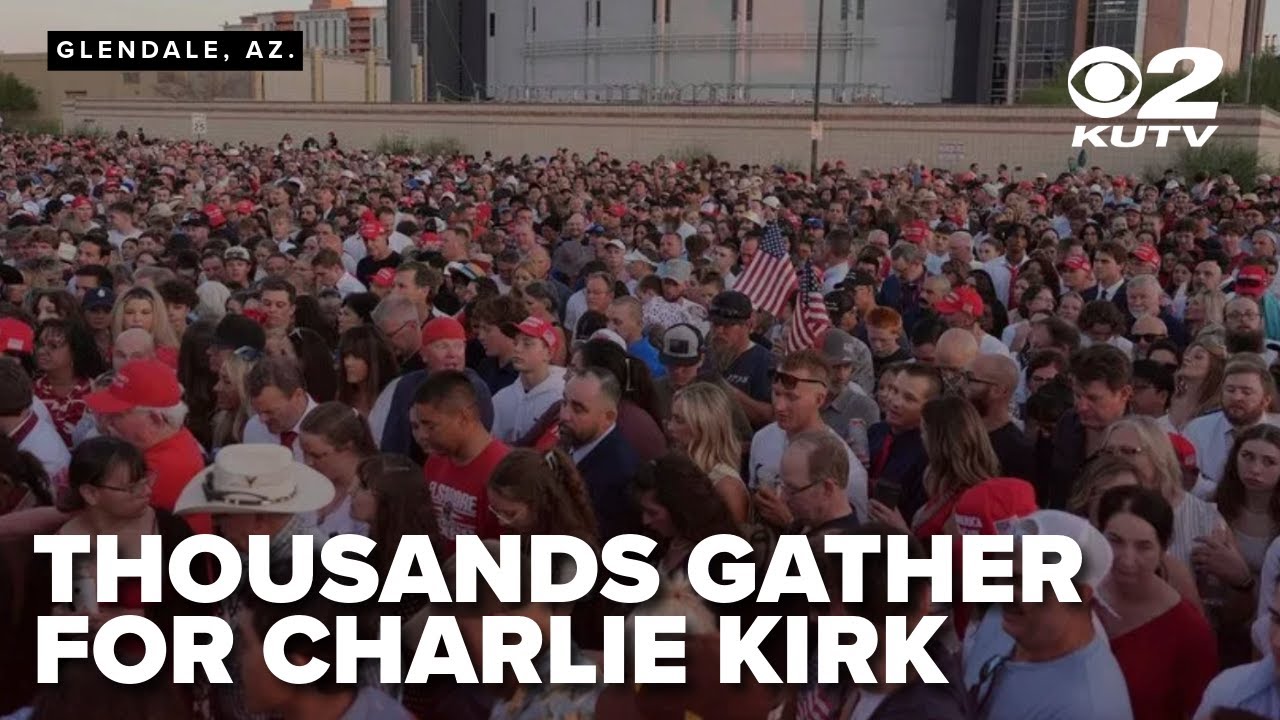
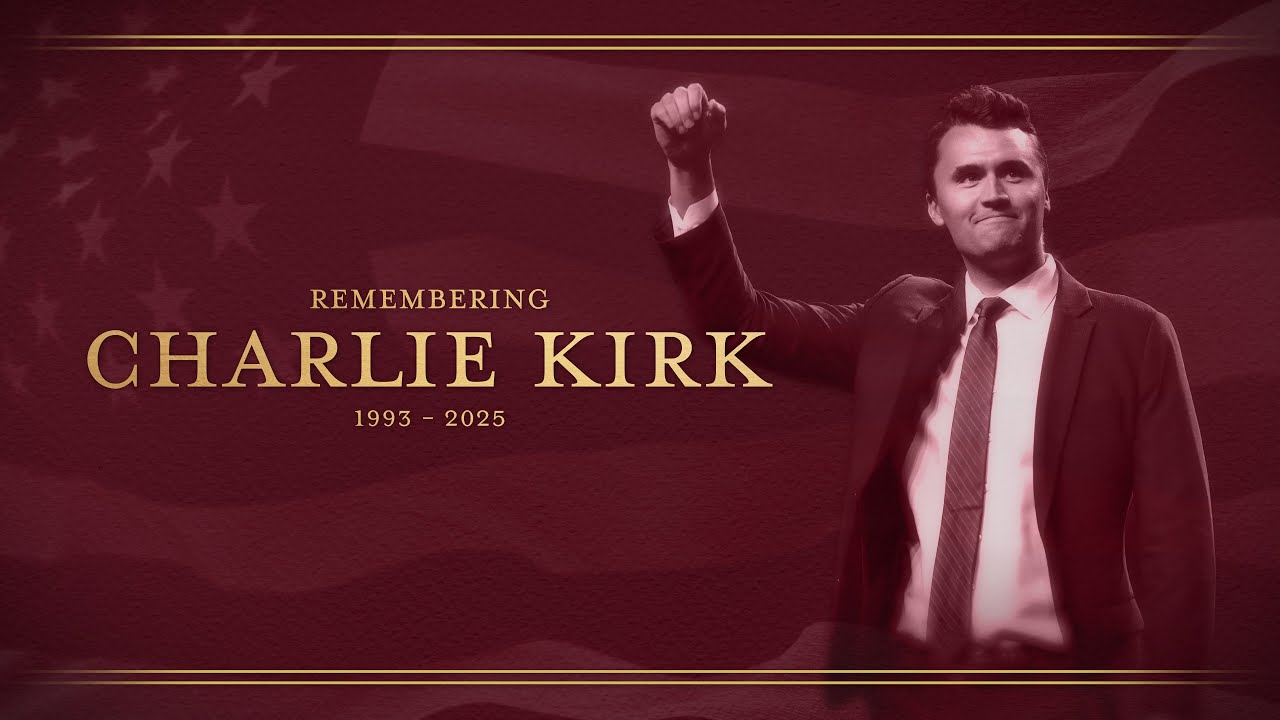
[Applause] [Music] What's going on everyone? Welcome to the behavioral arts. My name is Spidey and I use my degree in sociology and psychology, my certifications in criminal interrogation and body language analysis, and my experience as an award-winning mentalist to teach people behavioral analysis and practical psychology on stages and television shows all over the world. Just last Sunday, tens of thousands of Americans showed up at State Farm Stadium in Glendale, Arizona for the memorial service for Charlie Kirk. The list of speakers notably included Charlie's widow, Erica Kirk, as well as US President Donald Trump. There were also several moments throughout the event that went viral online, leaving a lot of viewers asking questions about the non-verbal and verbal communication. And in this video, those are the moments that we're going to look at. Now, I wanted to approach this analysis in a very specific way. As mentioned a week ago in a community post, I won't be analyzing any of the moments where they're grieving or talking about Charlie and their loss. There are certainly a lot of interesting behaviors to look at in those moments, but I think it's wise for the channel to keep those moments off the table. Second, although the subject has a political undertone obviously, I don't want to talk about specific political ideas or moments either because that's not what the channel is about. So that also takes quite a lot of this out of the equation. Instead, we're going to take a look at three key moments that have been going massively viral and have a lot of very interesting verbal and non-verbal communication to analyze. Starting with this moment that's made headlines all over the world. >> My husband Charlie, he wanted to save young men just like the one who took his life. That young man, that young man on the cross, our savior said, "Father, forgive them for they not know what they do." That man that young man. I forgive him. [Applause] I forgive him because it was what Christ did and is what Charlie would do. Okay, there is so much going on here, both verbally and non-verbally, including literal evidence in her words of the emotional state that she's in. And once you hear it, you can't unhear it. But I want to begin with something that I noticed when a lot of you sent me this clip and a request for me to analyze it. Some of you sent it and said, "Wow, this is so emotional. Why is that?" And a lot of you sent it to me saying there's some kind of inongruence that you're sensing between the behaviors and what's being said. So which of these two things is true? Well, I don't believe that those two things are mutually exclusive at all. In fact, I think that one of them explains the other. So, in a moment, we're going to talk about why some people felt a certain inongruency here and why that lends itself to how powerful it felt for some audiences. So, let's take it right from the top. At first, she's talking about how her husband wanted to save young men like the one who took his life. And the moment she says, "My husband Charlie," we immediately see an eye block. And we're going to see this a lot throughout this speech and in this moment. So, we could consider this part of her baseline, but let's talk about why this happens. So, research has shown that we are born with this reflex to close our eyes conversationally. And it happens when we're trying to keep a thought in or keep a thought out. So, anytime you see it, assume that the person's either trying to hold on to something or trying to block something out. And the interesting thing with Erica is throughout this speech, I think there are moments where both of those things happen. Sometimes I think she's trying to hold on to love, to hope, to a thought, to a memory. So, see that eye block? And sometimes I do believe she's trying to keep things out. In this case, it's probably happening because she knows the segment she's about to go into. She knows it's going to be emotionally very difficult. And I think she's doing this to summon the courage it's going to take to get through this. And the reason I believe that is we're about to see a couple of very deep breaths, but especially breaths like this, which we very often do, eye block and that combined when we're trying to summon courage to get through something. Now, immediately after that, as she says, just like the one who took his life. So, Charlie wanted to save young men just like the one who took his life. The first universal emotion makes an appearance. Now the universal emotions are emotions that have been studied all over the world. And the research shows that they look more or less the same everywhere in the world and have very high recognizability anywhere you go. In other words, these are emotions that are so deeply embedded in human behavior that we see them in all cultures. And in this case, we are seeing anger. And let me show you how we could spot that. So first off, you'll notice after that statement, immediately we notice tension in the jaw. So, we see the muscles here in the jaw kind of tense up. The other thing you'll notice is that our eyebrows are down like this, which is another sign of anger. And what's interesting is when I ask people during my seminars, what do you think the two most important signs are that someone's experiencing anger? Those are the two that they name. Some kind of tension in the mouth or jaw like this and the eyebrows. But here's what's interesting about that combination. Yes, it happens in anger, but it also happens in deep thought or concentration or focus, right? When we're focused on something, the eyebrows come down like this as we look around and we see tension in the mouth like this. Some people just go like that as they think about stuff. So, the most important giveaway of anger for me is the upper eyelids because that is specific to anger and not deep thought. So, look at the difference between this and this, right? That's much more of a glare and very consistent with anger. It's often the way we know that someone's feeling angry even when they're not trying to show it. It's also the reason that we could distinguish anger from other things like focus or concentration. And the reason this happens with anger is because anger is a state of assessment. The body's trying to figure out how to react. And in all emotions of assessment, surprise, anger, and fear, the eyes open up. And research has shown that when the eyes open up, we do take in more information with our peripherals, which helps us figure out how to react. So with Erica in that moment, those upper eyelids are open, the eyebrows are down, there's tension in the jaw, and you'll notice she's looking up just a little bit. It's not all the way up, but just a little up. And some people might ask, wait a second, could that contribute to the eyelids going up? So it's important to note that right in front of her, a little bit raised, is a giant picture of Charlie. And she often looks at that picture, and when she's talking about faith or her beliefs, she looks up to the sky. But there's a difference. when she looks at that picture or upt often her face is relaxed and those eyebrows go up as she looks up which is very common but in this case the eyebrows are down while the eyelids are up and that tension in the jaw this is anger immediately after that there are two things that we see pretty much in succession that we saw a lot throughout the speech in certain moments but then she went very long stretches without doing either of these things and they are a lip lick she licks the lips and a lip retraction that's when the lips in like this. So, let's talk about both of these gestures. In a conversation, when all of a sudden you start to see someone licking their lips more, and that's important. This isn't somebody who licks their lips naturally all the time. It's someone who randomly starts doing it. It's a very good indication of stress for a couple of reasons. First, because when we're stressed, our mouth dries out and licking the lips corrects that. Secondly, it falls into a category of gestures called grooming gestures. And these are gestures that we do to fix our appearance. And licking the lips brings more color to them and makes us more presentable. Now, lip retractions are very interesting because they could happen for the same reasons that the lip lick happens. But there's a big difference with this one. This particular one that we saw right here was held. So, very often when she does the lip licks and the retractions, it's a quick lick quick retraction. In this case, she licked the lips and then she held that retraction for quite a bit. And when a lip retraction or compression is held, it's very consistent with disagreement or withheld opinion. We very often see this in a group where people are discussing something and you notice at the corner of your eye that someone's sitting there like like this or like this, especially with that little bit of a side head tilt. That is very often someone who disagrees with what's being said and is holding it in. They don't want to say it. with Erica here as she's looking at the crowd and we see that lip retraction. We're seeing some kind of conflict between her emotions and what she's about to say. And again, there are a lot more signs of that. It's not just the lip retraction. That wouldn't be enough. It's these eye blocks, these deep breaths that we see again right after that lip retraction. She looks down with another deep exhale. It's also the fact that she keeps repeating that young man, that young man like she's trying to get through this. Another thing I want to throw in here is that she keeps referring to the assassin as that man, that man, that young man. And not just once, she says it numerous times. And this is called psychological distancing. She never uses his name. She never says Tyler Robinson. Now, all I could tell you is what that is. The why requires some speculation. Psychological distancing is normally anytime that we're trying to put distance between us and a thought. So in interrogation, someone might say something like, "I can't remember the last time I saw that person." instead of using their name or no, I would never take anything from there instead of saying steal. Like you you disconnect a little bit more from what it is by using a softer term. And in this case, it could indicate just a psychological distance that she wants to put between her and this person. It could also indicate that she might think that there was something else. Somebody else might have been implicated or something along those lines. I can't tell you why it's happening, but I can tell you that she's using language to distance herself from that man, that young man. Then she looks up with another deep breath. She says, "On the cross, our savior said, and then we see something very unique. It looks like there's tension in the lips." And at first glance, it might look like this is a lip compression or even a mouth shrug, but if you really pay attention, the tension is not coming from the mouth. It's not this. She's not squeezing those lips together. The tension is coming from the chin boss. So, the chin is tensing up and it's pushing the lips up more like that. And that chin boss, that tension in the chin that pushes the bottom lip up is one of the most reliable indicators of sadness all over the world. And this isn't something that most people know to do. So, when most people try to like fake being sad, they use the lips and they go like this. They don't realize that the reason our mouth does that is because the chin tenses up and pushes that bottom lip upwards making that shape. So here that sadness is setting in. We're seeing it in the chin. And then we get the best evidence that she is entirely in an emotional state right now because she misqu. She says, "Father, forgive them for they not know what they do." Now this quote is not just a Bible quote. It's one of the most famous ones. It's all over the movies. It's all over poetry. It's pretty much everywhere. And most people know that the quote is, "Father, forgive them for they know not what they do." Know not not know. Now, there are very modern translations that say, "For they do not know what they are doing." But it's unlikely that she would be referencing that. And either way, it's not not know what they do. Father, forgive them for they not know what they do. >> So, here's the thing. Erica Kirk is a devout Christian. In fact, a big part of her speech was about her faith. And again, even if you're not, this quote is so wellknown. It's used in all kinds of literature and art. People know this quote. But the reason that she misqued is because in this moment, during this speech, she's in what we call limbic mode. You see, when you're emotionally overloaded and you're so preoccupied with emotions and just getting through something or dealing with something, the part of your brain that's responsible for memory or critical thinking or reason or logic isn't really kicking in at that point. You'll notice sometimes in a moment of fear, your all reaction, almost zero thought. Well, it's the same thing here. She's not thinking about this logically. Her memory isn't really working that well. This is a quote she's read probably hundreds of times, said it probably hundreds of times, but in this moment, she's so overwhelmed with emotion that she just kind of spoke the way we normally speak in English because in spoken English, we would say they do not know what they're doing. That's the way we would say it if we're speaking. But biblically, it's they know not. But in this moment, she's so overrun by emotion that even a quote that has that much importance in her faith is just coming out wrong. After the quote, we get another very quick lip lick. That's probably for grooming or stress. She says that man. We get another very quick micro expression of anger where we said tension the jaw and very quickly we see that quick glare with the eyes. Then we see a lip lick combined with a lip retraction again. Not as long as the last one, but they're certainly there. And she looks up again. Now we start to see the eyes are getting tearary. And she repeats that man in a softer whisper. that man, that young man. >> Now, this is something that Erica Kirk does a lot, specifically when she's emotional. So, we've seen her give other speeches where she was very emotional, and she did this kind of repeating something with a whisper. And in this memorial speech particularly, she went a very long time at first without doing this a single time. But the very moment she got emotional and teareyed, she started doing exactly this where she says things in a whisper or repeats what she just said in a whisper. Now, this could be due to a couple of things. First, it is common in emotional regulation. So, somebody who's speaking and all of a sudden gets really emotional. We often see the tone drop and the body language drop as well as they try to just hold on to that emotion because they don't want to get too choked up or surrender to emotion. We also sometimes see it and I've seen it in a lot of religious contexts like this where a speaker is trying to get an audience to connect emotionally with something and they might either drop their tone or repeat something almost exactly with that same whisper. And this happens a lot with like sad or tragic stories. So somebody might say something like and that boy was only 16 years old. 16 years old you know to try to get someone to connect with that emotion. So whether it's her trying to regulate her own emotions or trying to emotionally connect with the audience, it's hard to say, but it happens very consistently when she herself is emotional. And immediately after that, that man, that young man, as she's looking up, we see a very quick twitch on her bottom eyelids. And if you look at the mouth, that's also jumping up really quick like this. So it's kind of like like that kind of thing. And this is actually a reflex that we have when our eyes start to tear up for us to keep the tears in. So you might notice sometimes someone who's about to cry might do this and hold it or sometimes just a quick twitch. It's because the eye is feeling that tear coming and it's just trying to keep it up so the tears don't drop and we don't show our sadness, show our vulnerability. Then she says the words, "That man, that young man, I forgive him." And she surrenders to the emotion. I think everything we saw up until this point was her just trying to get through this part. That's why we're seeing almost everything we talked about. And then she finally says it and surrenders to that emotion. She looks down, she starts to cry, and we see a lot on her face. There are some of those things left over from anger, some tension in the jaw, the eyebrows down. It's also at this point where the gestures associated to sadness make an appearance. And the way you want to look for sadness is in a few ways. One, a general droopiness on the face. Two, we talked about it earlier about that chin bossing causing that bottom lip to come up. But three, and this is the most important one, is the inner corners of the eyebrows. With sadness, the muscle called the glloella that's up here, gets activated. It tenses up. It causes these little U-shaped lines on the forehead, and it pulls the upper eyelids closer together and up. This is something that's very difficult to fake. Very few actors could do it, but even for me, I have to hold this down to kind of show you what it looks like. And I know a lot of you are trying to fake it right now at home. And sometimes people come to me and go, "Oh my god, I could do it." And they can't. They think they can. But basically, it's just the inner corners coming in like this with a dip on the line of the forehead. Now, what's interesting with Erica is that it's not the entire eyebrow that's going up like this. The eyebrows are still down, but there are moments that we very clearly see those inner corners being pulled together and up. And I think this is because there's a lot of emotion here. She's confused. There's a conflict in her. She might still have some of that anger left over, but despite that, the gabella is activating and pulling those inner corners up. And we see it very clearly when the camera cuts to the audience. We see a man in glasses who has on his face the exact universal expression of sadness. This is a picture that I bet my university professors who taught non-verbal communication wished we had because it's really the perfect example of that expression. the eyebrows. You'll notice those inner corners coming in together and up. And that's the thing that I'm telling you is very difficult to fake. We're seeing the lines on the forehead. Even if the quality isn't excellent, we're seeing the mouth downturned, but it's not because of the lips. It's because that chin is tense. You even see a little bit of that bossing of the chin, even if he's got a beard. Actually, I'm going to dial it back a little bit because there's one place where it's not the perfect example of sadness, and it's the fact that if you look at his cheeks, they're not drooping. In fact, there's a bit of like rising there almost to where we see what we call the bubble cheeks up here on the cheekbones. And I think it's because through the sadness, he's trying to smile, but the sadness is winning. I think he's extremely touched by this moment. And the that sadness is just bursting through and he's trying to through that. He's trying to smile. So, we're kind of getting it in these upper cheeks a little bit, but the mouth and the eyebrows, that's exactly universal sadness. Okay. So, what's going on here? Right? because we're seeing all these signs of stress. We're seeing all these signs of like trying to summon the strength to get through this. We're seeing sadness. We're seeing anger. So, is this deceptive? Does she not actually forgive him? Is she saying this despite herself? Well, I think we get her answer in what she says next. >> I forgive him because it was what Christ did and is what Charlie would do. After the applause subsides, she says, "I forgive him because it's what Christ did and is what Charlie would do." So, she's literally telling us that because this is what her faith compels her to do and because she wants to honor her husband and what he would do, she is forgiving him. Now, we have to look at this term I forgive him and understand it in context. Does this mean that everything's forgiven? She's going to have pizza and beers with the guy next week? No. In this context, I forgive him means that I'm working hard to not let him have this grasp on me and let him dictate my life and and hold hate in my heart. She's forgiving in the faith sense in the way that she was brought up to forgive. So, when we put it all together, I think obviously there's a lot of conflicting emotions here. You know, she's angry at parts. She's having a hard time getting through this. We keep seeing these signs that she needs a second to summon the strength to get through this. And obviously any one of us would be a mess of emotions when it comes to something like this. Now let's look at the second and third big viral moments when President Trump called Erica Kirk out on stage and they embraced they greeted the audience and then they both left. And there are a lot of really great behaviors here and a lot of people out there asking a lot of questions. So we're going to look at that. But before we do, do me a huge favor. Hit that subscribe button, turn those notifications on for more behavioral analysis and practical psychology content. And please remember to give this video a like because it really does help with the growth of the channel. >> Could I ask Erica please come out? Erica, please come out. Thank you. [Applause] is all of [Music] the mountains and [Music] [Applause] heat. [Music] Okay, so first off, let's talk about this really quick. In 2012, Erica Kirk, before she was even a Kirk, won Miss Arizona 2012 and participated in MissUSA 2012. And at the time, Miss Universe was co-owned by Donald Trump. She also went on to work in the organization in casting and other roles as well. And there haven't been any sources that have flatout confirmed that they had a working relationship or knew each other back then, but there are a lot of people running with this idea on social media. And there is a possibility that their relationship predates, you know, her being married to Charlie Kirk by quite some time. There's a possibility there. So regardless of that, he introduces her and asks her to come out on stage and he steps away from the podium and turns his attention towards her. So he's left the mic at this point. his attention is towards her and he's applauding as she's approaching and as she gets close we see him greet her with both hands up like this. Now this is very interesting when you consider that even when he shakes hands with men Donald Trump very often extends his hand palm up like this then grabs the hand turns this way and pulls them in. Now exposing the palms pretty much everywhere in the world is a show of good intention. I mean you no harm. Which is why, you know, when we want to show that our hands are empty, we've got nothing. Palms come out like this. We show that we don't mean harm. And in a greeting, if the palms are up, it's the same message. It shows I have nothing to hide. I am greeting you openly. So he opens up like this to greet her. Now with her, we see a very visible shift in her non-verbal communication because at first as she approaches him, she holds him in a very professional way. It's not this big bear hug. She brings her arms up like this on the inside and grabs his arms. And this is something we see a lot in professional settings when a greeting is happening. I'm from Quebec, French-speaking Canada. So, it's very common to see uh lab, you know, two kisses, one on each cheek. So, it's very commonly done like this where the hands come up like this just to show like professional intent and it's a way to kind of keep this distance as you do the two kisses like this. So she does that and immediately after that, after they greet each other with this professional kind of kiss, she completely melts into him. It's not just with the arms that go around him, her head also just melts into his shoulder. And if you notice, his behavior shifts as well because at first when she hugs him, he kind of taps her on the arm like this. But then as he notices she's not letting go, he grips on tight to her as well. So we've gone from professional to friendly and comforting. And as he's holding on to her, we see this expression that we often see with Titan braces, which is this kind of showing the teeth with this this kind of thing. But what really stood out to me is that after that moment, we see on his face, it's not huge, but we see small markers of the universal expression of sadness. If you look at his eyebrows, we saw we were talking about earlier. They're together and drawn up a little bit. We're seeing that line on the gloella, and we're even seeing some tension in the chin there that's pushing that lip up. And the reason I noted this is because I haven't very often seen that expression on Trump. So I think in this moment as he was hugging her and she didn't let go, I think in that moment some emotion got through to him. And then we see the exact same shift that we just saw happen again because he takes her hand and walks her over to the microphone and she gets closer, lets go of the hand and puts her arm around him signaling him that she's still seeking comfort. And it's unclear what's happening cuz I can't see his hand. But in the way that her body moves, it seems like there's either a rubbing or a tapping or some kind of thing like that for comfort that's continuing. So both times it's, you know, he accepted her, she went from professional to seeking comfort, he provides comfort, then he walks her over the microphone, she again seeks comfort and he provides comfort. And then something happened that the online discourse to me is just hilarious because he points to the picture of Charlie where it would be and he says something either about the picture about Charlie. He points and he says something. She looks up, sees it, looks in that direction and then she does this with her hand. As she looks down and we see again a just a cocktail of emotions. There's a bit of smiling there and she's happy. There's a bit of sadness, a bit of anger, a whole bunch of stuff going on. But she does this with her hand. And I saw quite a few commenters online go, "Oh my god, did you guys notice she's satanic? She did the sign of the devil. That's a sign of the devil. Oh my god, she's been a devil worshipper this whole time." And I have a couple of things to say about that. First of all, if anyone is going to be out there trying to bust devil worshippers, shouldn't they know what the hand sign is? Because it's not this. This is I love you in American Sign Language, which by the way, I feel like is something that a lot of people would know or should know, especially if you're going to make videos analyzing hand gestures. And if you don't know, you could look it up and you'll very quickly learn that when the thumb is out like this, that's I love you in American Sign Language. And it's used so often, even if this was some kind of symbol for the devil, like these are the horns. What's this? Like, is he smoking a cigar or something? So, yeah, I love you. The one that's more associated with the devil or satanic stuff is without the thumb. And even like rock and roll musicians use it like this. Either with the palm outwards or with the palm inwards, which I don't want to do because in a lot of cultures in Latin America and in the Mediterranean, it's a very disrespectful gesture when the hand is turned towards me and I do that. It's an insulting way to tell someone that their partner is cheating on them. and I have viewers from all over the world. So, I don't want to throw up a sign that's like really really disrespectful in their culture. But yeah, it's basically the same thing just the other orientation. But then the other thing, the second thing is if she is satanic or devil worshipper, she's a really really bad one because she spent most of her time up there talking about faith and how important it is and how everybody should be moving towards faith. It was a very big part of her speech. She even talked about how there are more people out there turning to faith in her speech. >> This past week, we saw people open a Bible for the first time in a decade. We saw people pray for the first time since they were children. We saw people go to a church service for the first time in their entire lives. And that was really interesting for me to hear because when Charlie Kirk was assassinated, I made a video about the ripple effect and the psychological principles that come into play and cause exactly this kind of thing. And if you haven't seen that video, I really urge you to because it's all about how certain events could change the way we perceive things or feel towards things. And it happens all around us on social media every day. So, I'll leave a link in the description and in the comments. Go check out that video. But it basically relates to exactly what she said here. But the bottom line is this. She spent a lot of her speech talking about this stuff about her faith. So if she's satanic or something like that, it would be very counterproductive to really preach her faith and then just throw up this ambiguous gesture at the end that a lot of people most people are going to think is I love you in American Sign Language as a way to what? Show her demonic affiliations. I have no idea what people are thinking. Oh cross the wilderness. Hal. [Music] Okay. So, something that we talk about on the channel very often is context, right? And things being taken out of context. And there's a very good example of something here where that has happened. And it's as they're walking away where they stop and for a moment, Donald Trump mouths the lyrics of the song that's playing and Erica looks up to the audience and smiles. And for a brief moment, there's an actual smile on her face. And I've seen a few commenters online say that, you know, what kind of grieving is this? Look how happy they both look. One's singing and dancing and the other one's smiling. And you're allowed to think that. You're allowed to look at a moment of happiness and celebration and go, I wouldn't do that at a at a memorial or at a sad event. But that doesn't mean it applies to everyone, and it doesn't mean it invalidates any of their other emotions. We saw numerous emotions come out of her. And throughout her entire speech, we're seeing some anger. We're seeing some sadness. But there were also moments where she looked at the crowd with a smile of happiness or I would say more like hopefulness, you know, because there's all these people who showed up for her husband. She's remembering some positive memories about him. You know, when you look at a funeral, you don't only see sadness and anger the entire time. You see people sharing stories about the person. You see laughter. You see smiles. You see all kinds of stuff. So in essence, yes, the read is correct. In this moment, they do seem more happy or more joyful in this moment. But on the grand scheme of things, in the bigger context of things, it doesn't invalidate other emotions just because not everyone would have a moment like this while they're grieving. Everyone reacts in different ways. And by the way, that's not me defending these behaviors. And nothing I've said in this video is me defending or attacking behaviors. That's not what I do. My job is to just point out behaviors and talk about the reasons that they're there regardless of who they're coming from. Look, I know how this works. In the history of the channel, I've been accused of being both a right-wing extremist and a left-wing extremist. And it was often on the same video. That's because when it comes to certain subjects, some people come in expecting nothing but hate, looking for nothing but hate. And to those people, anything else feels like love. And some people come in wanting to see nothing but love on that topic. and anything else feels like hate. The truth of the matter is it's neither. Think about how I learned this stuff right now. I apply it to corporate interviews, but the way that I learned is I would bring people up on stage as an entertainer and by looking at what I'm seeing in front of me, I have to tell the audience what this person is thinking to get applause and cheers and oh my god, how did you do that? 0% of what I'm looking for is if I like this person, if I dislike this person, if this is a good person, a bad person, it doesn't matter to me. My job is to look at their behaviors and know what thoughts and emotions are causing those behaviors. That's it. All this to say that if at any point in this analysis it felt like I was attacking something or defending something, I assure you that's not the case. I have no emotional attachment to these behaviors. It's just that sometimes nuance could feel extreme to the extremes. But it is my hope as always that as a community we could rise above that divide and really just focus on the very fascinating behaviors that we saw in this video in the conversations that we have in the comments. So let me know what did you see? What are the moments that to you felt the most emotional behaviorally speaking? And what are the moments where you felt the most disconnect as if there was some kind of conflict between emotion and the words that were being spoken? Let me know in the comments and I will see you on the next