Tucker Carlson and Megyn Kelly Discuss Why Charlie Kirk's Kindness Made Him a Target
Enjoying this? Share it with someone who needs to see it.
Up Next
Megyn Kelly and Charlie Kirk Confront Backlash From Pro-Israel Allies Over Nuanced Criticisms
17:36
Officer Tatum Defends Charlie Kirk's Israel Stance Against Megyn Kelly's Mischaracterization of His Final Beliefs
28:35
Andrew Kolvet Addresses Leaked Text Messages and Charlie Kirk's Views on Israel and Free Speech
23:39
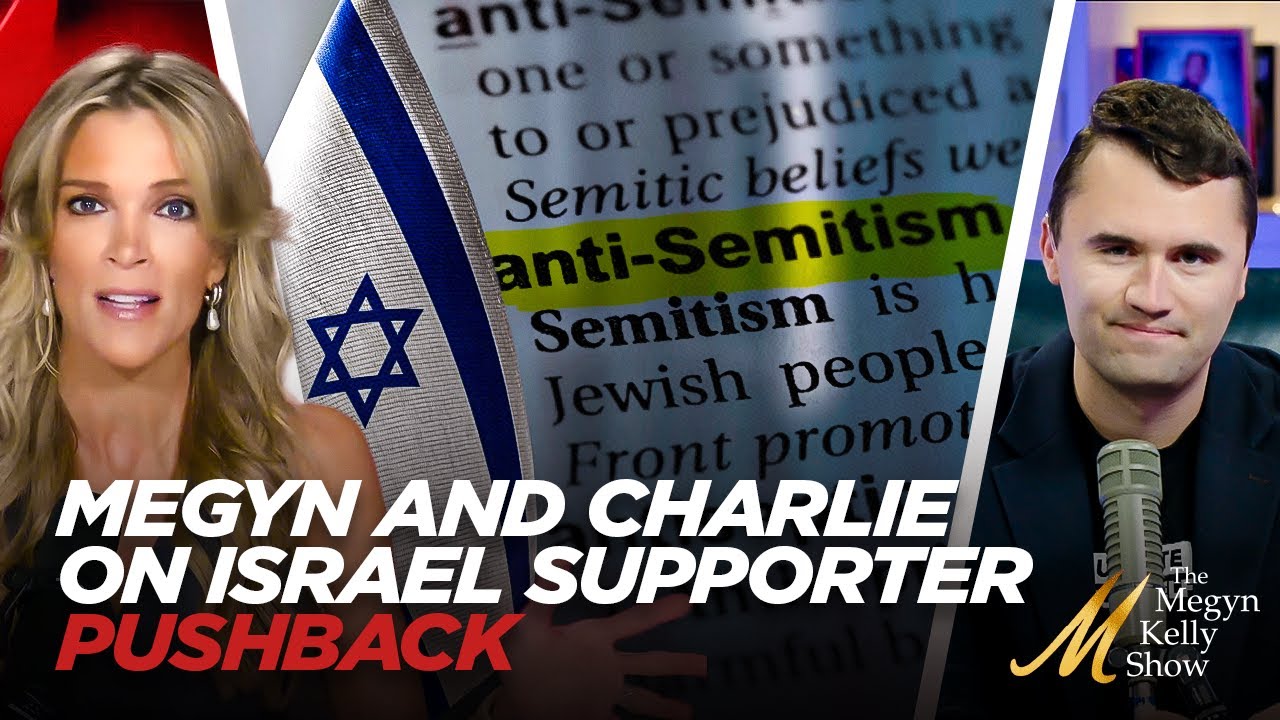
Tucker Carlson and Megyn Kelly Discuss Why Charlie Kirk's Kindness Made Him a Target
Tucker Carlson and Megyn Kelly explore a painful question in the wake of Charlie Kirk's death: why was his particular voice so threatening? In this raw conversation, they discuss how Charlie's combination of kindness, effectiveness with young people, and fearless truth-telling made him uniquely powerful and uniquely vulnerable. Kelly reveals the pressure both she and Tucker faced for platforming certain views, while Carlson reflects on Charlie's exceptional decency even toward his critics. They examine the youth vote swing in the 2024 election, the accusations of anti-semitism leveled against both Charlie and Tucker, and Benjamin Netanyahu's controversial statement following Charlie's death. This is an unflinching look at the cost of influence and the forces that target those who successfully reach hearts and minds.
Tucker Carlson opens the conversation with a striking observation about Charlie Kirk that sets him apart from nearly everyone in their field. Among all the people in what Carlson calls "the let me give you my opinion business," Charlie stood out as genuinely the kindest—not just publicly, but in private moments too. Even toward people who had angered him, Charlie would pause and say, "Well, I try to understand where that person's coming from." For Carlson, this decency was both inspiring and challenging, a standard that made his own struggles with graciousness more apparent.
But Carlson poses a crucial question: why was this kindness so offensive to people? His answer is simple yet profound—it was power. Kindness and positivity, Carlson argues, are far more powerful than negativity and anger. They're infectious, magnetic, drawing people in whether they initially like the messenger or not. And Charlie was converting people at a remarkable rate, making him a substantial threat to those who opposed his message.
Why Charlie Kirk Became a Target
Megyn Kelly picks up this thread, revealing that she's been wrestling with this question intensely over the past week. Taking the accused shooter at face value—someone reportedly motivated by viewing Charlie as "too hateful," someone involved in fringe online communities—Kelly asks why Charlie specifically became a target. Many conservative voices say similar things. Kelly herself makes similar arguments, as does Carlson. What made Charlie different?
Kelly's answer centers on what she calls Charlie's "magnetism," his positivity, and an almost angelic aura that proved far more threatening than typical conservative commentary. This wasn't just about what he said, but how effectively he was winning people over, particularly young people—a demographic that had largely been written off by conservative voices. These were people whom commentators like Kelly and Carlson had never even tried to reach, a demographic that had been completely ceded in the cultural battle.
Charlie refused to accept that surrender. He decided to start young, speaking to 18-year-olds in a way they could hear and understand. And crucially, he practiced this skill for 13 years, going from campus to campus, refining his approach. He was good from the beginning, but he wasn't as effective as he became. This was a deliberately developed skill that made him increasingly threatening and increasingly effective over time.
The 2024 Election and Charlie's Impact
The results speak for themselves. Kelly doesn't hesitate to make a bold claim: it's not an overstatement to say that Donald Trump has Charlie Kirk to thank for his election in November 2024. The youth vote swung by nine points toward Trump—something unprecedented in modern presidential politics. The youth vote simply doesn't swing toward Republicans, certainly not by those margins. Nothing like it has been seen in the past hundred years.
Charlie was an integral, hugely important player in this political transformation, even though he remained understated and projected zero ego. He didn't carry the swagger that such influence might typically generate. In most public appearances, he was quick to defer to whomever he was speaking with, never letting on just how important his work had become. This combination of massive impact and personal humility made him uniquely effective—and uniquely threatening to his detractors.
The Pressure Campaign Against Truth Tellers
Kelly then pivots to a broader pattern she's witnessed, one that extends beyond Charlie to include Tucker Carlson himself. She notes that Carlson also possesses this magnetic quality, and it's precisely why he too has faced threats, deplatforming attempts, and pressure campaigns. Kelly has personally experienced pressure to cut ties with Tucker or refuse to platform him, particularly since he's been more outspoken on Israel-related topics.
Kelly's response to such pressure has been unequivocal rejection. She expresses disgust at the idea of silencing such a powerful, important voice simply because of disagreement on one subject. She's watched Tucker sincerely grapple with principles he's espoused for years—America First, concerns about what's happening to Christians, what's best for American families, how to keep children safe. These are his core priorities, and she's been appalled by those who've tried to pressure her regarding Tucker.
More significantly, Kelly reveals that Charlie Kirk felt this same pressure. There exists, in her view, a layer of nefarious pressure to ensure certain narratives flow only one direction. This must be called out and fought, she insists.
The Absurd Anti-Semitism Accusations
Carlson brings up a particularly egregious example: when Charlie Kirk was denounced as anti-semitic and "dangerous" by the American Jewish Committee, Megyn Kelly was too. Carlson expresses bewilderment at this press release, noting that these are two of the most fundamentally pro-Israel people on the internet. He sees a spectrum of views on Israel—some who hate Israel who aren't anti-semites, some who are, some with religious motivations for opposing Israel—but wonders why reasonable people who don't want conflict, who simply want their country to thrive, would be denounced as dangerous anti-semites.
Kelly breaks down exactly what she had said that triggered this response, revealing the absurdity of the accusations. On Piers Morgan's show, she had stated that Israel was losing the PR war, that they had lost Democrats and independents and were starting to lose Republicans in America, and that it was time to wrap it up—essentially echoing what Donald Trump himself had said a year earlier when he was still a candidate. At Turning Point's student action summit with Charlie, they discussed Jeffrey Epstein and Pam Bondi, including whether Epstein might have been an asset for someone, with Israel being a possibility worth considering.
That was the sum total of her comments about Israel after two years of regularly defending the country on air. Yet suddenly, a certain crowd labeled her an anti-semite. Her response is blunt: these accusations are lies. They were even more dishonest regarding Charlie, who had said even less—essentially nothing. He was targeted because he stood beside Kelly during that discussion, because he hosted Tucker Carlson, and because he had the audacity to invite Dave Smith to a debate, allowing one perspective to be represented while also fully representing the pro-Israel side.
Charlie's Courage in Speaking Truth
Kelly emphasizes how unfair these accusations were, particularly given that both she and Charlie had proven themselves genuine friends to Israel. She's stated openly on Tucker's show that she's not looking to debate Israel's position—she's on their side, no convincing needed. Yet after she criticized AIPAC in a segment with Marjorie Taylor Greene, the loudest Israel defenders treated her like she was a hostile voice, not a friend offering difficult truths.
To call Charlie Kirk an anti-semite, Kelly declares, is a disgusting smear. Charlie was young and unaccustomed to being attacked by people who had supported him, people whose donations were crucial to his organization's existence. It took tremendous courage for him to say no to them and to be honest about how his opinions had evolved.
Kelly frames Charlie as an unofficial spokesperson for America's conservative youth, and the reality, she points out, is that this demographic no longer supports Israel. Everyone under 30 opposes Israel, and Charlie was 31. As a friend to Israel, he was trying to communicate what he was hearing from his constituency—that they needed to wrap up the conflict, that a two-year-long operation couldn't continue indefinitely just to recover every hostage, that they were at risk of losing every friend they had.
What Charlie did was brave and noble, Kelly insists. He didn't deserve to be smeared for it. While she has zero belief that these controversies had anything to do with his death, they're part of the larger narrative of Charlie as a fearless truth teller who made many pockets of power extremely uncomfortable. Whether it was a disturbed 22-year-old in Utah or someone who couldn't stand his frank messaging on race or Islam, Charlie spoke hard truths on all these subjects.
Netanyahu's Inappropriate Response
Kelly concludes with strong words about Benjamin Netanyahu's response to Charlie's death. She reveals that Netanyahu's advocacy really tormented Charlie—they discussed it many times. Netanyahu's advocates tormented Charlie with their pressure and accusations. For Netanyahu to then run around saying that Charlie died for Israel is, in Kelly's view, disgusting and out of line.
Carlson admits he never talks much about Netanyahu and even declined an opportunity to interview him a couple months prior. He simply wasn't interested in doing the extensive preparation necessary to conduct a sufficiently tough interview, as he does with any foreign leader. But he agrees that what Netanyahu did was wrong—a moral wrong. Netanyahu sat there, read part of Charlie's letter, and tried to have the final say on Charlie's positions regarding Israel, knowing full well they weren't the complete story.
Kelly emphasizes that Netanyahu is a foreign leader, not an American one. At most, he should have expressed condolences and offered prayers to Charlie's family. That's it. He was out of line, and Kelly, even as someone who doesn't typically criticize Netanyahu, saw it very clearly and addressed it on her show as well.