Allen Guelzo Explains Why Andrew Jackson Remains America's Most Beloved and Reviled President
Enjoying this? Share it with someone who needs to see it.
Up Next
Allen Guelzo Reveals Abraham Lincoln's Mastery of War, Government, and the End of Slavery
5:52
How General Ulysses S Grant Rose From Humble Beginnings to Save the Union and Win the Civil War
4:44
Tevi Troy Reveals How Jimmy Carter Rose From Obscurity to the Presidency and Lost It All
5:50
Allen Guelzo Explains Why Andrew Jackson Remains America's Most Beloved and Reviled President
Andrew Jackson, the seventh president of the United States, remains one of the most polarizing figures in American history. From his orphaned childhood during the Revolution to his crushing victory at New Orleans, from his war against the National Bank to his forced removal of Native American tribes, Jackson's presidency shaped the nation in ways that still resonate today. Allen Guelzo, distinguished research scholar at Princeton University, examines the life and legacy of Old Hickory, a man who defied the Supreme Court, threatened to hang nullifiers, and never doubted himself even when he was wrong.
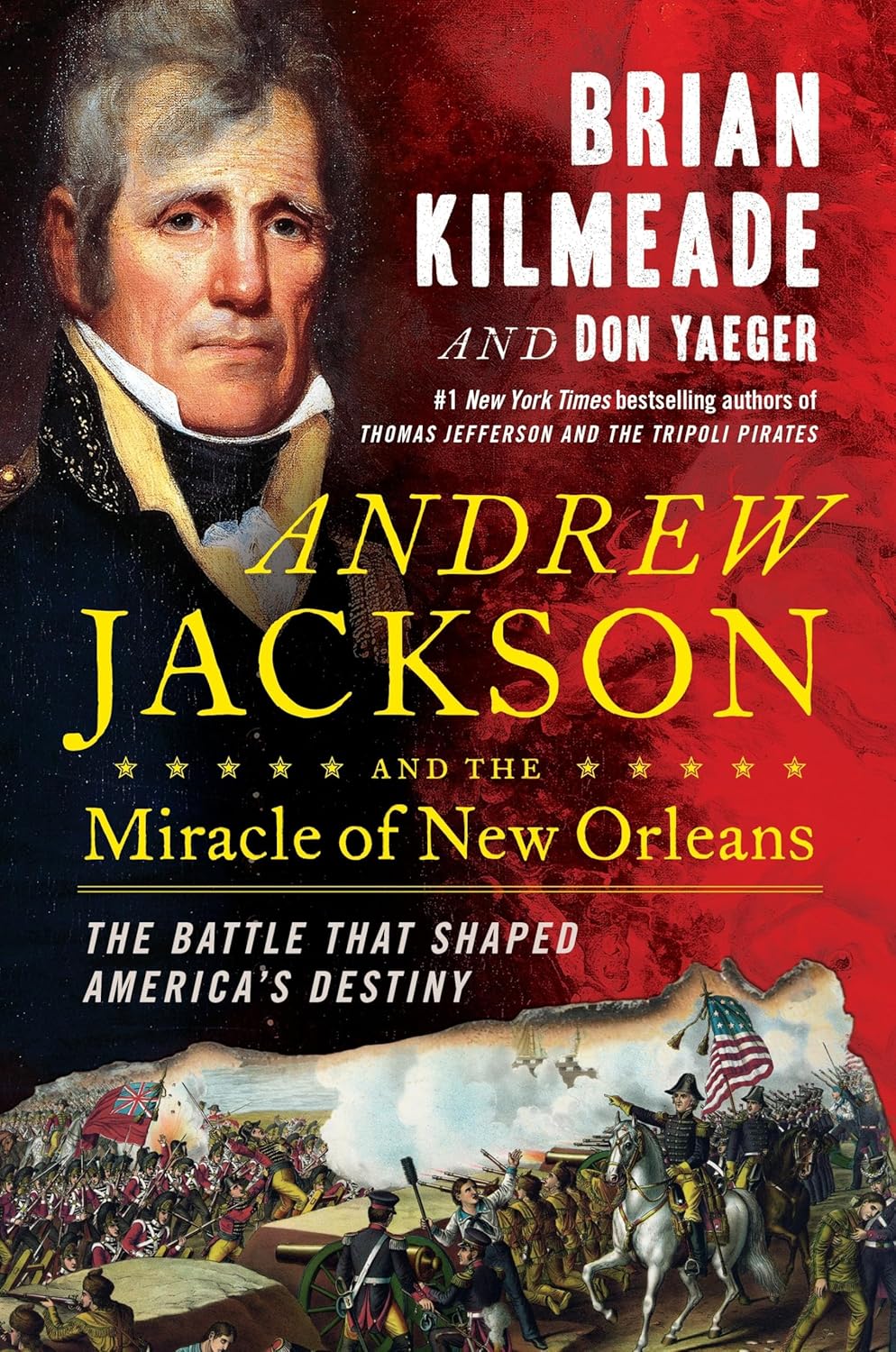
Andrew Jackson was born in South Carolina on March 15th, 1767. He was barely 10 years old when the American Revolution broke out. The war claimed the lives of his two brothers and his mother, leaving Jackson orphaned, alone, and with a bitter hatred for all things British. In time, he would get his revenge.
Tall with sharp features topped by a thatch of red hair, Jackson always made an impression. In 1788, after a brief study of the law, he secured an appointment as a district attorney in Tennessee, then known as the Southwest territories. He began investing in land and slaves and earned an appointment as Major General of the Tennessee militia. Though he had no formal military training, he was a natural leader. The men under his command would follow him anywhere—and if they didn't, he might hang them. He fought numerous duels and killed a man, Charles Dickinson, in one.
Political Rise and Jeffersonian Ideals
As Jackson's investments and military reputation advanced, so did his political interests. He served in Congress when Tennessee became a state in 1796, and later briefly as a senator. His politics were decidedly Jeffersonian. He believed that owning land was the only real wealth, and that industry, commerce, and banking were financial traps that ultimately benefited the rich at the expense of everyone else.
The Hero of New Orleans
In 1812, a new war broke out between the United States and Great Britain. The conflict was a disaster in almost every respect for the ill-prepared Americans, but it ended on a high note thanks to Jackson. Sporting the nickname Old Hickory—hickory being a notoriously hard wood—and commanding a hastily assembled Army at New Orleans, Jackson won a terrific victory over a British invasion force in 1815. That victory made Jackson the most celebrated man in America.
The Corrupt Bargain and Presidential Victory
By 1824, Jackson was ready for a run at the presidency. His two most serious opponents were the Speaker of the House Henry Clay and the Secretary of State John Quincy Adams. Jackson won the popular vote but did not secure a majority in the Electoral College, which according to the Constitution threw the election into the House of Representatives. There, Clay's sudden endorsement of Adams swung the chamber and the presidency to Adams.
An infuriated Jackson, convinced that Adams and Clay had colluded against him in a corrupt bargain, declared his intention to run again in 1828. This time he beat Adams in a landslide.
Presidential Ruthlessness and the Bank War
As president, Jackson applied his characteristic ruthlessness to the federal budget, slashing infrastructure projects he did not believe were the province of the national government. When the National Bank came up for recharter in 1832, he vetoed it. Jackson, who harbored a lifelong distrust of bankers, insisted that the nation's assets should be distributed to financial institutions throughout the United States rather than concentrated in one location.
Was he right? No. This decision led to the financial depression of 1837. But Jackson never doubted himself. That was Jackson.
The Nullification Crisis
Old Hickory's most controversial decision came in 1830. The issue was tariffs. South Carolina, represented by Jackson's own Vice President John Calhoun, insisted that tariffs be lowered because they favored manufacturing and commercial interests at the expense of Southern plantations. Calhoun assumed Jackson, the southern planter himself, would agree. Otherwise, Calhoun warned, South Carolina would assert its state sovereignty and nullify the collection of federal tariffs within its boundaries.
But Jackson regarded South Carolina's nullification threat as an attack on the Constitution and on his authority as president. The states had voted themselves into a federal union in 1788, Jackson insisted, and no single state or group of states could defy it. Back down or face the wrath of the United States military, Jackson told South Carolina. He even threatened to hang the first man of them he could get his hands on to the first tree he could find. South Carolina backed down.
Significant as Jackson's triumph was at the time, it was even more so 30 years later. It bolstered President Lincoln's argument that the southern states had no constitutional right to secede from the union.
The Trail of Tears
If Jackson believed there could only be one national authority within America's borders, where did that leave the Indian tribes and their separate nations? No place good.
In 1830, Jackson relentlessly pushed an Indian Removal Bill through Congress requiring the Cherokee and other tribes in Georgia, Alabama, and Florida to immigrate beyond the Mississippi. The Cherokee appealed to the United States Supreme Court and won, but Jackson waved away the Court's authority and forced the tribes westward in a dreary exodus that became known as the Trail of Tears. That was Jackson.
An Outsized Legacy
Judge Jackson favorably or harshly—Jackson, by the way, wouldn't care—but no one can deny the outsized role he plays in American history.