
Up Next

Candace Owens Receives Brian Harpole Lawsuit: The Path to Subpoena Power in Charlie Kirk Investigation
26:30

Terrel Farnsworth's Dramatic Performance and the Questions Turning Point USA Won't Answer
8:13
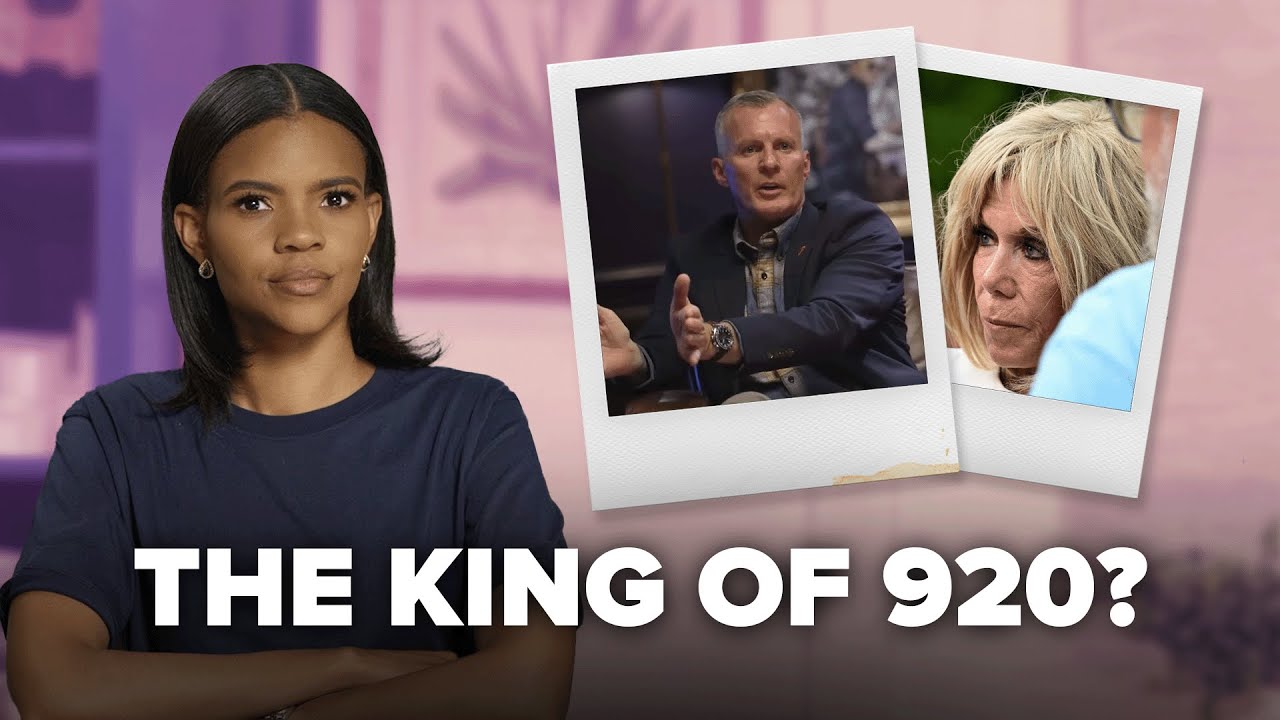
Candace Owens Uncovers French Connection to Charlie Kirk Assassination and Brigitte Macron Investigation Cover-Up
55:28
Baron Coleman Discovers Heber City Flight Connected to Charlie Kirk Event and Butch Hibbs Microphone Mystery
Baron Coleman uncovers a suspicious timeline connecting a private flight from Heber City, Utah to Nashville on August 25th, the same day an explosive systems contract was delivered, just weeks before the Charlie Kirk event at Utah Valley University. Through meticulous investigation of flight records, clothing measurements, and video metadata, Coleman traces how Butch Hibbs, brother of Pastor Jack Hibbs, appeared at the event carrying what appears to be an object matching the exact dimensions of the Road Wireless Go II microphone used by Charlie Kirk. The investigation reveals Hibbs standing near sound technicians moments before the incident, then wandering the scene afterward without the object in his pocket, while being the first person to connect the shooter narrative to the gun-related question being asked on stage.
Opening Statement on Investigation Methods
Baron Coleman begins with a firm statement rejecting the notion that every hypothesis in an investigation must be 100% accurate before being discussed. He compares investigative work to detective movies and true crime stories, where early evidence often points in one direction before later evidence changes everything. Investigations consist of puzzle pieces that must be sifted through to determine which pieces fit and which don't belong at all.
The task becomes more difficult during large investigations involving many actors at the scene and lurking in the shadows beforehand. Coleman references the thousands of characters who played roles, knowingly or unknowingly, in events like 9/11. Similarly, the Charlie Kirk investigation involved an estimated 2,000 to 3,000 people present when he was taken down, with hundreds more in the shadows of his personal and professional life.
The Three Pools of Potential Suspects
Coleman divides potential suspects into three pools. The first pool consisted of perhaps two dozen people from the scene, mostly employees and contractors of Charlie Kirk. The second pool included maybe a dozen or two more behind-the-scenes figures, mostly Turning Point USA employees or contractors, along with tangential figures like donors and affiliated individuals.
The third pool proves most problematic - a small number of people, but individuals tend to come and go from this pool. This includes Tyler Robinson and his roommate, their friends, potential military people, intelligence operators, elected officials, and family members. Because this pool remains unclear, Coleman explains they must sometimes speculate aloud to get clarity on who belongs in this third pool of potential suspects.
The SAM Triple Zero Flight Investigation
While investigating potential members of the third pool, Coleman began speculating about a particular multi-leg US military flight from Joint Base Andrews to Colorado Springs and then Las Vegas on August 25th, a little over two weeks before the Utah Valley University event. The flight carried the rarely used call sign SAM triple zero, reserved for people as high-ranking as the president and vice president, though occasionally used for cabinet-level officials and military officials ranked as high as the Joint Chiefs of Staff.
Coleman received screenshots from an emailer showing city streets closed down near the airport when the plane landed. He scoured schedules of both the president and vice president, determining President Trump was present and accounted for on camera several times during the flight day and following day. However, he could not find video or mention of Vice President Vance being present after the flight left Joint Base Andrews.
Coleman stated he would include Vance on the short list of people who might have been on that flight unless someone could provide proof otherwise. Someone did provide that proof - a person who was in the Oval Office with Vice President Vance on the afternoon of August 25th. After reviewing video with verifiable metadata, Coleman became 100% confident that Vice President Vance was not on that flight. He does not regret speculating aloud, as this is how investigations unfold. The question remains: who was on that flight from Joint Base Andrews to Colorado Springs?
The Butch Hibbs Microphone Discovery
On a previous show, Coleman examined images of Butch Hibbs, brother of Pastor Jack Hibbs, from before and after the Charlie Kirk event. Butch looked different - his beard, hair, and even the curve of his hat were substantially different. An astute emailer asked what appeared to be in Butch's right breast pocket before the event.
Coleman went back and examined images from Charles McClintock Wilson, finding something in the front right pocket that looked like a rectangle or square with rounded edges. He found a full frontal picture from Facebook where he could see the object clearly - a mostly square-looking object with rounded corners. In video from after the event, the Adam Bartholomew Life is Driving video, the object was no longer in Butch Hibbs' front right pocket.
Coleman identified the shirt as a Wrangler fishing shirt and visited Walmart with a tape measure to examine similar shirts. All Wrangler shirts with similar check patterns had approximately one-inch stripes. Based on these measurements, the object appeared to be just under two inches both tall and wide, sticking off his chest less than an inch, maybe half or three-quarters of an inch.
Matching the Road Wireless Go II Dimensions
Coleman looked up the dimensions of the Road Wireless Go II microphone that Charlie Kirk was miked up with seconds before taking the stage. The dimensions were basically identical to what he estimated was in Butch's pocket: 46.4mm high by 44mm wide, converting to 1.8 inches tall and just short of 1.8 inches wide. The microphone is almost square with rounded edges, sticking off about 18mm or roughly 0.7 inches.
Comparing these dimensions to the object in Butch Hibbs' pocket, Coleman found them to match precisely. The question became: how would someone like Butch Hibbs even come in contact with this microphone? All images of Charlie Kirk getting miked up were on the left side of the tent, while Butch Hibbs appeared to be standing on the right side. However, Coleman found an image from just before Charlie Kirk came out showing Butch Hibbs without his hat, standing right next to Brian Harpole, Terryl Farnsworth, and Philip Goldsbury Jr., the man who miked up Charlie Kirk.
The Heber City Flight to Nashville
Coleman told his wife that if the payload was an explosive and Butch ended up with it, he suspected Butch was there to receive it. He noted that Butch lives in Heber City based on Facebook posts. He wondered if there was a plane into Nashville from Heber City on the day the Accurate Energetic Systems contract was delivered.
Accurate Energetic Systems is a high explosive manufacturer in McEwen, Tennessee, about an hour west of Nashville. Coleman reviewed their list of contracts and focused on a $400,000-plus short-term contract. Brian Harpole told the Shawn Ryan Show that he started planning the Charlie Kirk event in earnest on August 24th, a Sunday, though Coleman suggested perhaps August 25th since few people start working on Sunday.
Coleman checked flight records at John Tune Airport, a private airport in Nashville where wealthy people fly. Looking at flight history for August 25th, he found a Heber City, Utah flight landing that day - a private jet with call sign from a company out of Wilmington, Delaware. This was the same day the explosive had to be delivered according to the contract.
The Missing Return Flight
Coleman then searched for a return flight from Nashville to Heber City but could not find one that day or the following days. He checked both John Tune and BNA, the larger commercial airport. He realized why he couldn't find a return flight: Heber City gets almost no traffic as a tiny airport, but more importantly, it is illegal and dangerous to get on a flight with an explosive payload. Federal laws prohibit carrying explosives on commercial or private jets due to pressure situations and electrical concerns.
Coleman acknowledged this could all be coincidence, but he believes if truly investigating, all of this becomes relevant inquiry. Federal authorities could subpoena that flight, get the manifest, and if it was Butch Hibbs or someone he knows, there should be a good explanation for being in Nashville. Where was the return flight? Did they drive? Rent a car? These questions warrant asking a judge for permission to investigate further.
The Accurate Energetic Systems Plant Explosion
Coleman notes that about a month after Charlie Kirk died, the Accurate Energetic Systems plant was wiped off the Earth in an explosion that killed 16 people instantly. He suggests this makes the inquiry even more relevant - investigators could ask what contract they were delivering, as it was a federal government contract. They could request the place of delivery, point of delivery, and time of delivery through Freedom of Information Act requests if it doesn't have national security implications.
Evidence of Fragmented Material
Coleman addresses a theory that circulated about Charlie Kirk being shot from behind rather than the front. People noticed something falling from the top of the tent right after the incident, thinking it looked like a shell casing. In light of new information, Coleman believes it looks like fragmented ABS plastic. If something provided an explosive charge underneath Charlie Kirk's shirt, the Road microphone housing made of plastic would fragment and fall to the ground. This would provide a convenient excuse to pave over the area, as each plastic piece would have explosive residue that bomb dogs would detect.
Candace Owens Timeline and Metadata
Candace Owens contacted someone who took first-person video at the scene. She reviewed the metadata and determined exactly when the video was taken - the only video of the alleged shooter lying prone on the Losi Center looking forward. The metadata showed recording began at 12:22 and went into 12:23, the very minute Charlie Kirk was affected. The witness said he stopped recording about 20 seconds before the shot rang out.
This means the recording could have started as early as 1 minute 30 seconds before the incident and ended as late as 12:23:15. Coleman lined up this timeline with what was happening on stage at that moment to see if anybody's behavior changed, suggesting if no one at the stage was aware the alleged shooter would be there making a loud noise, their behavior wouldn't change at all.
Brian Harpole Abandons His Post
Coleman examined video showing Brian Harpole's behavior during the critical timeframe. Harpole discussed on the Shawn Ryan Show how his team had zones of responsibility, explaining that looking out into the distance means seeing nothing, but looking close person-by-person allows seeing details. Each team member had specific zones they were not supposed to abandon without someone filling that zone.
At precisely 50 seconds before the incident, as the alleged shooter would have been getting into position according to Candace's timeline, Brian Harpole takes a glance up into the distance for the first time in 10 minutes of footage. His glasses, which had been angled down below the speaker at all times as he watched the front rows, suddenly came up higher than the speaker angle as he looked out at the distance. He then looked around, slowly made his way back behind Frank Turek, abandoning his zone of responsibility for the first time.
Butch Hibbs Plants the Shooter Narrative
Coleman shows footage from about 10 minutes after the incident where Butch Hibbs walks up behind Adam from Life is Driving. Butch was the first person to make the connection between the shooter and the question being asked. He was standing about 2 feet to the right of the tent during the incident, seeing everything happen and watching them carry Charlie Kirk off. Yet he asks, "Did you hear he got hit for sure?" - not good faith questioning from someone who witnessed everything.
Butch then says, "That's almost like it was set up because the second speaker was talking about guns and then the next thing you know..." He was the first person on earth to point out this connection, hours ahead of people on Twitter making the same observation. Coleman finds it suspicious that Butch wandered around planting the idea of the gunshot being related to the gun question, making it seem like it clearly was a gunshot rather than an exploded microphone.
The Right to Investigate
Coleman emphasizes that he has never accused anyone of anything definitively. He raises questions so that viewers - whom he dubbed investigators - can examine evidence themselves. Everyone has a phone and computer, can do FOIA requests, send emails, do Google searches, look at plane flights, examine microphone dimensions, and make connections between timeline evidence. There is nothing wrong with investigating, and it becomes more important as cooperation decreases and more lies are discovered.
Coleman asks Andrew Kolvet directly whether he lied when quoting the surgeon the first time, or if he quoted accurately and is now rolling over when called a liar. People are allowed to notice that Butch Hibbs shows up with a square precisely the size of a Road Wireless microphone and leaves without one. They're allowed to ask where it went. If it was mints or nicotine, where did it go in 25 minutes? Did he decide he liked bad breath or give up nicotine mid-performance?
Investigators are allowed to notice that Butch Hibbs lived in Heber City, that there's an airport there, that a flight went from Heber City to Nashville on the day the explosive was supposed to be delivered, and that there was no return flight. Who flies to Nashville from Heber City and drives home? This is called investigating - noticing patterns or pattern disruptions. Coleman emphasizes this is not calling Butch Hibbs a murderer or saying definitively that he picked up explosives, but rather noting that these things look suspicious when lined up together and asking if there's anything to investigate further.
Video Transcript
Stop me if you've heard this before, but this is not going to be a long show. [laughter] Not going to be a long show, guys. Welcome in. Welcome in. Uh, Real Baron podcast. Baron Coleman, your host. Uh, like, subscribe, click notifications, all that good stuff. All right, I got the I got the technical details out of the way. If I hired a consultant, they would say, "You've done your job. You've done everything we asked you to do." Uh, unfortunately, I don't have a consultant. It's just me and a computer and a microphone and a camera. But we're working on it. We're working on it. trying to get this a little more professionalized, but you never know. It may just end up being me forever. Um, but I had I had to go tonight for a couple reasons. One is uh it is the Christmas week and the schedule will be a little altered. For example, normally I have a Wednesday show or a Thursday show. This week there'll be neither. There'll be Christmas Eve and Christmas Day. So, we're not going to do that. Um, I will be back Friday. I I think I can commit to Friday. So, I'll I'll go tonight. I think it's a great show lined up for tonight. And then we'll do um a break on Tuesday, Wednesday, Thursday, let you celebrate the the Christmas holiday with your family and then we will be back in this seat Friday night. So um I think you're going to like what we have today. It kind of shocked me. I wasn't going to do a show today. I was going to try to kick it to tomorrow maybe, but the more I looked at this issue, I thought, "No, I want to talk about this." Like I really want to get into it. So I'm going to jump right into it. Uh the opening really has two parts and so um bear with me as we get to the meat. Uh but I got to get some housekeeping duties out of the way here. Here's the opening statement. I firmly and wholeheartedly reject the notion that every hypothesis and every inquiry pursued during an investigation must be 100% accurate and irrefutably backed by solid evidence before being discussed. Can you imagine, for example, a detective movie or a true crime story without some twists and turns as the early evidence that once seemed to point to a certain direction is contradicted by later evidence that turns the investigation on its head. These developments are not rare. They happen. They happen frequently and we are permitted to discuss them as they happen. Investigations are just that. They're investigatory by nature. They consist of puzzle pieces of evidence that must be sifted through to determine which pieces go where and which pieces aren't part of the puzzle at all. The task becomes all the more difficult during large investigations that involve many different actors at the scene of the crime and even more lurking in the shadows in the events leading up to the moment the crime was committed. Think of 9/11. Think of the hundreds or thousands of different characters who played parts. Knowingly or unknowingly, in the months and years before that fateful Tuesday morning in 2001, consider the Charlie Kirk investigation. There were an estimated 2 to 3,000 people present when he was taken down. There were hundreds more lurking in the shadows of his personal and professional life. At the moment the loud bang was heard roaring across the UVU courtyard, every single one of them, past, excuse me, present and not present, were in the pool of possible accompllices or suspects. Over time, that field of potential prospects narrows. At first, it narrows considerably. Nearly everyone there was ruled out in hours, if not minutes. Most of the spectators meandered off on their own. They simply walked or drove away. upwards of 95% or more of the people could be ruled out and they were never again contacted by anyone. This left a few characters from different pools of contacts. I'll divide them into three pools. First, there were perhaps a couple dozen from the scene of the crime, mostly employees and contractors of Charlie Kirk. There was a second pool of maybe a dozen or two more behind the scenes, mostly TPUSA employees or contractors. There were a few tangential figures like donors and TPUSA affiliated individually individuals who were ne neither employees nor contractors. Then there's the third pool, the problematic third pool. It's this third pool that has caused most of the heartburn. The third pool likely is a small number of total people, but the problem is that people tend to come and go from this pool. Sure, Tyler Robinson is in this pool, but what about his furry roommate? What about their friends? Are there any military people in this third pool? What about intelligence operators, elected officials, friends, and family? The reality is at this point, we don't know. And because we don't know, we sometimes have to speculate out loud in order to get clarity on exactly who does and does not belong in this third pool of potential suspects. It was in trying to nail down potential members of this third pool, this unknown pool of individuals, that I began speculating about the involvement of a particular flight that took place on August 25th, a little over two weeks before the event at Utah Valley University. And the flight was a multi-legg US military flight from Joint Base Andrews to Colorado Springs and then on to Las Vegas later that day. It was given the call sign SAM trip0, a rarely used call sign reserved for people as high ranking as the president and vice president of the United States. Though it's occasionally used for cabinet level officials and military officials ranked as high as the joint chiefs of staff. Whoever was on that plane truly was a VIP, a very important person. In addition to the SAM trip0 designation, I was provided screenshots from an emailer that showed city streets closed down near the airport when the plane landed. The screenshots didn't reveal whether they were closed down because of the official arriving on the SAM triple0ero flight. But if the vice president or president were traveling by car from the airport, it would not be unusual to have the streets closed down for the occasion. I scoured the schedules of both the president and the vice president and was able to determine President Trump was present and accounted for on camera several times during the day of the flight and the following day. But I could not find any video or mention of Vice President Vance being present after the flight left Joint Base Andrews on August 25th headed to Colorado Springs. So I stated as much on the show. I said I didn't know for certain who was on that plane, but unless and until someone could show me evidence of Vice President Vance being on camera somewhere else while that plane was in the air, [clears throat] I was going to include him on the short list of people who might have been on that flight. Well, someone did provide me that proof. I was contacted by someone who was in the room with Vice President Vance on the afternoon of August 25th. They were in the Oval Office. I reviewed video that I am 100% certain came from that day. As a result, I'm now confident. I'm 100% confident that Vice President Vance was not on that flight. Do I regret speculating aloud on this program whether he was on the flight? No, I don't. Because that's how an investigation unfolds. I couldn't possibly contact everyone in Washington asking who might have been in the room with the vice president that day. I looked through news reports. I looked through YouTube videos trying to find proof that he was not on that flight. I looked through what I could find of his itinerary. I asked Grock, I asked Claude, and I asked Chat GPT, and I came up short on all of it. So, I speculated aloud. It eventually made its way to the right person who provided what I asked for. Definitive proof it wasn't Vice President Vance. The question remains, who was on that flight from Joint Base Andrews to Colorado Springs? I still think it's relevant. and I still don't know who it was. I just know it wasn't the vice president. It may turn out that the flight's not relevant at all, but that doesn't stop me from asking the question. A large part of investigating is recognizing patterns and deviations from patterns. It's why some people are good at it and others sadly are not. And it's this pattern recognition that leads me to my first story tonight. On yesterday's show, I had some fun at the end of some with some images of Butch Hibbs from before and after Charlie Kirk was taken from this life. Butch Hibbs, if you will recall, is the brother of Pastor Jack Hibbs. He is an influential pastor in the Calvary Chapel denomination. Butch looked different. I mean, his beard looked different, his hair looked different, even the curve of his hat was substantially different from before and after the uh the event. And so we asked partly in Jess but but really because we wanted to know is this even the same but hips and that led to something I was not expecting. An astute emailer and I don't know if this emailer wants to be known or not so I will not reveal the name emailed in and asked what I thought was in his right breast pocket. But Hib's right breast pocket before the event. I hadn't noticed anything. So, I went back and looked at the images from Charles Mcccleintoch Wilson, and sure enough, you can see something in his front front right pocket, but I couldn't tell what it was. I didn't have a nice clean angle. Looked kind of like a rectangle or a square, maybe with rounded edges. So, I went and found the full frontal picture from Facebook. I'll show you all these in a minute. And I could see the object pretty clearly. It was a mostly squarel looking object with rounded corners. I had no reference for how large or small it was. I could just see that it was there. So, I went to a video from after the event, the Life is Driving video, Adam Bartholomew's video. He it it's been a great reference, even though Adam came on the program and and we disagreed, it it's been a good reference, and I appreciate him leaving it up so we can use it. And lo and behold, the object in Adam Bartholomew's video is not in Butch Hib's front right pocket. At least, not as far as I can tell. That's why yesterday, if you noticed, we couldn't even determine if he had a pocket at all on that side because it wasn't three-dimensional. It was three-dimensional ahead of time because it had that object in it. Afterwards, it would laid flat across his chest and you couldn't even see it. So, I looked up what kind of shirt it was. It it it turns out it's a Wrangler fishing shirt. I'm pretty sure it's a Wrangler fishing shirt. And I found one online, and I thought about ordering it, but ultimately, why do I need a Wrangler fishing shirt? I so I didn't order it. I'm not I'm not I've got eight kids. I'm not wealthy enough to drop 50 bucks on a Wrangler fishing shirt if I don't need one. Uh but I saw they had Wrangler shirts at Walmart. So I packed up the truck, grabbed a tape measure, and headed to the local Walmart. I wanted to see how big that object is. Uh to my dismay, they did not have that exact shirt, but what they did have were other shirts that had similar patterns. And all of them, all of the Wrangler shirts with similar type check patterns all had approximately one inch stripes on them. That'll become important in a minute. I'll show you these pictures. I want to get through the opening. The stripes were all basically one inch on each side. And so I came home again and looked closely at the object in his pocket. And the object appeared, if my estimates of the measurement were correct, to be just under two inches, maybe an inch and 3/4, maybe an inch and four fths, but uh, you know, both tall and what? It appeared to be sticking off his chest, but less than an inch, maybe a half or 3/4 of an inch. And again, this is just estimating based on a few picss. So, I went to the I went to the internet and I looked up the dimensions of the Road Wireless Goto microphone. That's the microphone Charlie Kirk was micro miked up with shortly before taking the stage. I mean, seconds before taking the stage. And you'll never in a million years guess what those dimensions are. They're basically identical to what I estimate is in Butch's pocket. I'll show you that in just a second. But that's not even the best part. I'll get to the best part in a minute. But let me get to the dimensions here. You are I maybe you aren't going to be as easily as amazed as I am, but I'm pretty weirded out by this whole thing. I'm going to be honest with you. This is pretty wild. All right, let me pull up image number one here. We'll get to this image number one. Here we go. This is image number one that I looked at. This is uh a Charles Mcccleintoch Wilson image. You can see this is what I'm talking about right here. This image right here. And you can't clearly see what it is in this image because he's kind of at an angle. We'll fix that in just a second. But let me let me um back up. Click out of this one. Go to the next one. This one gives you a little better idea what it is, but it's still not great. I know I'm probably making you dizzy zooming in and out. There we go. You can kind of see it has a definite bottom there. You can see the the line on the bottom and the sides. This isn't where it's really great. I'm going to pull up the Facebook page from the Butch Hibs uh Facebook event and you can see it plain as day. This is when I was like, "Oh, that's what it is." You see that? That right there. Let me get on there. Where is it? Ah, there. Sorry, I'm making you guys dizzy. I should I should clip these out. This right here. It It This is the one side. It goes right here. It's just short of this real fine white line. And then it goes over to this other line. So, it's just short of two inches wide. It goes from just above this dark line to right almost exactly at that white line there. So, it's just about 2 in tall. You guys can't see it. Oh, great. All right. Here's what I'm going to have to do. You know what I'm going to do? I'm going to take this. I'm going to do a screen grab of it and I'm going to blow it up. I didn't think about how it would not um how it would not come up on that. All right, here we go. This will this will this will help. Now you'll see it plain as day with what I'm about to show you here. Boom. You see that? I made it small. I didn't mean to make it small. Oh gosh. Stop. How did I make it small? It was big just a second ago. There. You see that? That is 2 in high and low. by 2 in right and left. And it's just short of two inches. I'm telling you, these checks are 1 in x 1 in squares based on the Wrangler patterns. So, this is rounded corners. It sticks off of his chest about I don't know a half to 3/4 of an inch. And it's got these rounded corners on it. I'm just making sure everyone can see it. So, each one of these little squares is just about an inch based on the local Wrangler shirts. And if I have to, I will uh go and uh order one. I'll I'll go and order one of these shirts. I don't want to do that if I don't have to, but I can. Okay. So, now you guys have seen it. I'm going to leave that pulled up. And I'm going to show you what I mean when I say it has similar dimensions as the microphone. Oh boy. See, this is why I need a Ah, here we go. This is why you guys deserve better. I always tell you that. And one day I'm going to figure it out. All right. Here are the dimensions of the road microphone. These are the dimensions of the road microphone. It is 46.4 m high. This is the receiver, meaning this is the piece that's underneath your shirt. 46.4 mm high, 44 mm wide. So, you can tell uh that is almost a square. Not quite a square, but almost a square. If you convert 46 to inches, it's 1.8 in tall and just short of 1.8 in wide. So that is the dimension. And if you look here at an image, you can see how the corners are kind of rounded. You see that those corners are kind of rounded. So it's almost exactly square with rounded edges. It sticks off about 18 mm or so. So uh a little under half an inch, maybe a/ an inch, maybe maybe 3/4 of an inch. I don't know what that is. What that comes out to here. Let me do a little math. 18 mm to in. going to be 0.7, right? So 0.7 in off the shirt or off the chest, almost 2 in wide, almost 2 in top uh high. So let's go back and look. Now that you've gotten the dimensions, let's go back and look at it. And I'll tell you why this is important in just a second. Go back and look at the Butchheads image here and tell me this doesn't look identical. Well, hold on. That's not what I wanted. I wanted this one. This one right here. Tell me that doesn't look the same. I know it looks the same because it is the same. [laughter] I know it doesn't look the same. I know it it does look the same because it is the same. Trust me, if I have to order the shirt, I will. But that is roughly the exact dimensions of the microphone. That's roughly the exact dimensions of the microphone. So why is this important? How did he even get up with this? This is the important part of this. How would a guy like B Butch Hibbs even come in contact with this microphone? Now again, why would the microphone matter? If you didn't watch yesterday's program, you need to go back and watch it. If you didn't watch yesterday's program, you need to go back and watch it. And I will show you now an image of Butch Hibbs after the big shebang. You'll notice no pocket square. It's not in there. That's where it would be right there. It's not there. That's why yesterday we didn't even think he had a pocket because it's not in there. No one buy me a Wrangler shirt for Christmas. I saw that comment. I don't need it. [laughter] I don't need it. So, I I had to ask, how would you know? Okay, I was my mind was blown at this point. I spent all day thinking about like how on earth would Butch Hibbs even come into contact with it? Would he even have been near where Charlie Kirk was miked up? Because if you remember, all of the images of of Charlie Kirk getting miked up were on the left hand side of the tent. And Butch Hibbs, all the images of him standing there on the right hand side of the tent. And so, you know, when when would the exchange have been made? And so I dig and dig and I find this image from just before Charlie Kirk comes out. And I know Charlie Kirk is here because Butch Hibbs is photographed with him. This is Butch Hibs without his hat standing right there right next to Brian Harpole, right next to Terrell Farnsworth, and right next to the guy who miked him up, Philip Goldsbury, Jr. Now you'll notice after this when Charlie Kirk's talking, Butch Hibbs goes to this side over here. He's standing right over here on this side behind the tent. But beforehand, he's over here next to all the sound guys, next to the microphone people. So, at least we put him now on that side of the tent. So, how did you know this assumes that yesterday's episode has some merit to it that the microphone did have some sort of either explosive device or had some sort of, you know, whatever. And for those of you saying Altoid tens, did he throw it away in the 20 minutes between the time we were pictured with him before and after? Stop with the Altoid stuff. He didn't throw it away. That's that's ludicrous. That's absolutely ludicrous. And I'm not saying he 100% did all this. I'm saying, "Wow, this needs to be considered. Wow, this needs to be talked about. Wow, you've got a guy here who has a looks like the exact same microphone that might have exploded and it happens to be in his pocket. And this is not a regular. So, stop with the Altoids. Stop with the Zens. Stop with all the garbage. Unless he threw him away. Unless he Unless he gets to the arena and goes, "You know what? I've always hated Altoids." You know what? The more I think about it, I should quit nicotine. No, that's It doesn't make sense. You have to explain why he shows up with it and why he doesn't have it when he's standing behind the guy telling the story about whether or not he got shot in the neck. That's what you have to explain that. So, stop with the oh, it looks like Altoids. Okay, he just decided in the 20 minutes that all of a sudden he likes bad breath. He didn't like bad breath. Now he loves bad breath. Earbuds. Yeah, he threw his earbuds out in the middle of the show. He got tired of the earbuds. Come on, guys. Stop trolling. This is what happens when you kind of get over the target. So again, no one can say definitively conclusively that Butch Hibs absolutely 100% showed up with a sabotaged microphone. But I want to walk through a few things here. I want to walk through something. One thing I want to walk through is a video Blake Bednar put up and I'm going to play his version because he slows down Frank Turk's voice at a certain point and it sounds like Frank Turk is a demon and I kind of love it. [laughter] Sorry, that's where we are now. Uh, but he explains how Butch Hibs even got here, how Butch Hibs even arrived in this entourage. And I want to show you this because it's going to provide background for the next set of facts I'm going to show you. And those blew my mind. I sat here. I pushed back from the table. I put my hands on my head and I thought, "Oh no. Oh no. You are out of your mind. You are kidding me." So, let me play this first and then I'll get to the you're out of your mind fact. There's a whole bunch of TPUSA leaders there that want to pose for pictures. Charlie graciously poses for pictures. He posed for a picture with me. And we'll show this picture here. This is me, Charlie. And in the middle is Butch Hibbs. That's the brother of Jack Hibbs, Pastor Jack Hibbs. >> And he came to the event, wanted to meet us both, so we took a picture. >> I'm sorry. That's hilarious how he slowed him down there presumably for emphasis emphasis, but he sounds like Lucifer himself. He wanted to meet us both, so we took a picture. [laughter] >> Can I turn it up? I don't think I can turn it up. It's up as loud as it'll go on my end. >> This picture was taken maybe 20 minutes before the assassin struck. >> Now, here's here's what I want to play about this video. About 10 minutes after the um assassination, Butch Hibbs, this guy right here, presumably that's the same Butch Hibbs now without microphone in his pocket, walks up behind Adam from Life is Driving. Walks up behind Adam from Life is Driving. Hang on. Someone's asking me to put on slow mode because of the trolls. So, give me just a second. Let me do that. This is This is what you guys do to me in the middle of the show, making me go to slow mode. I'll put a 20 second timer on you guys. You guys keep it up. It's going to get worse. [laughter] I kid. I kid. All right. So, now you uh Let me drop this back over here. Okay. So, now you're going to have Butch Hibs come behind. And Butch Hibs is the first person to make the connection. Blake pointed this out weeks ago, maybe months ago. Butch Hibbs, this guy right here in the flannel, who who appears to be saying, you know, hold keeping to himself, is the first person to make the connection between the shooter, the alleged shooter, and the um and the question itself. So, I want you to listen to this here. He's he he rolls this pretty quick. That's Butch walking there. He walks behind here. Now, this is, I think, minutes and seconds after the shot. >> Somebody got a picture of the guy that got arrested. Is that the guy they they >> apparently? I don't know. So, I was up there on the balcony. >> Saw a guy down there. They cuffed his off. >> There was a guy down here getting video. There was people up there videoing down that that definitely must have got a a you know, a wide out angle. Did you hear that he got hit? For sure. Uh my son here in the neck or the chest. >> Yeah, >> I've heard mostly the neck, but I've heard chest a couple times. >> I want to pause right there because Butch's question reveals quite a bit about his motivation. He said, "Did you hear he got hit for sure? You've seen the video. Is there any question whatsoever that Butch Hibbs knew that Charlie Kirk got hit?" Butch Hibbs was 2 feet to the right of the tent. I I'll pull this back up and show you where he was standing. He was standing right here. This is where he was standing. Butch Hibs, he saw it. He saw everything happen. He saw the commotion all come over there and he saw them carry him off in a bloody heap. So the fact that he's up there, he's like, "Oh, did you did they find out if he got hit at all for sure? Did they know that?" He This is not good faith questioning. And yes, somebody pointed out this is the same Bush Hibs who was talking to the the Bush the Bush where I believe people were flying drones out of. But I, you know, I don't want to get into the drone discussion. People get all been out of shape about the drone discussion. So, I've left that largely alone to other people. But I can't think of any other reason somebody would be standing in a bush except to have shade so they could see their drone screen without drawing attention to the fact that they got a giant drone screen. That's the only reason I can find out figure out somebody would be standing that bush. But I don't know that there were drones. I'm not getting into that conversation. So that was that was kind of the giveaway that Bush is not asking these question. Bush Bush is not asking these questions in good faith. So let's listen to what he says here. >> One of the talked to one of the officers got he said he got hit hard. >> I just pray in his shoulder. >> Yeah. That's almost like it was set up because >> the second speaker was the one talking about guns >> and then the next thing you know >> Yeah, that must be >> You know what I mean? >> Yeah, that does sound fishy. >> Yeah, it does sound fishy. It sounds even fishier that he was the one who the first person on earth that pointed it out. This was hours ahead of other people on Twitter talking about, hey, wait a minute, they were talking about guns. They were talking about trans violence, gun shooting. Now, so we've got that out of the way. So, we we have um we have a picture of Butch before carrying in his pocket something with the precise dimensions of a road go wireless 2. Road wireless goto microphone. It's sitting off his chest the right amount. It's the right amount wide. It's the right amount. Tall. We have him wandering around talking suspiciously afterwards saying, "Did did you hear if he got shot? That's weird. It was talking about guns, you know." Well, that's weird. And then we have a picture a few minutes later and it appears there's no microphone in his shirt anymore. There's no box in his shirt, whatever it was. And again, same guy who was talking to a bush earlier. So, I was I was sitting here to my wife. We were do we were doing this live today. She was in here. I was getting ready for the show. I wasn't sure if I was even going to do a show yet. And I said, you know, based on what I talked about yesterday with the accurate energetic systems, I bet if that payload was an explosive and Butch ended up with it, I bet Butch was there to receive it. And she was like, "What do you mean?" I was like, "Well, think about it. I bet you in Nashville, I know Butch lives in Hebrew City. I know that from his Facebook post." I said, "Wouldn't it be weird if there was a plane into Nashville from Hebrew City on the day the Accurate Energetic Systems contract was delivered?" So, let's review that real fast, just for those of you who don't know what we're talking about. This is wild, guys. This is freaking wild. what I'm about to show you. So, this is the list of awards to Accurate Energetic Systems. This is a high explosive manufacturer in Mchuan, Tennessee. It's outside of Nashville, about an hour, give or take, west of Nashville. These are a list of their contracts. You can come over here and see the amounts. Some of them are they get pretty small uh as far as defense contracts go, but some of them are pretty healthy. You see a brief description here. Uh different types of charges, different types of kits, yada yada yada. The one we're looking at is this $400 and something thousand short-term contract. It's this one right here. So, I will pull that up and show you the details of this because I think this is pretty f pretty fancy. As you know, Brian Harpole told us via the Shawn Ryan show that he started planning in earnest the Charlie Kirk event on August 24th. That was a Sunday. I suggested perhaps he met August 25th cuz who starts working on Sunday? Demons, I guess. No, I'm just kidding. Well, maybe. So, he starts talking. He's saying, "Well, we started in earnest on August 25th. That SAM triple0ero flight, for example, was August 25th." And so I told my wife, I said, "I wonder if Butch came to Nashville, like if he ended up with the microphone, did he come to Nashville and pick up the payload? Like where where would we even begin to find that?" So I was like, "Well, let me look up all the flights that came into Nashville that day." Actually, I started the day before. Maybe it was done on August 24th. So, I go to flight radar. I look up all the flights on August 24th. I see nothing. I look up all the flights on August 25th and I'm looking at a little uh private airport. Not BNA, not the big airport, but John Tune. This is where the rich people fly out of. Let me see here. I don't want to run it away here. All right. So, this is uh John Ton airport right here. I go to the earlier flights. Uh, oh, hush. Hold on. I've messed it up. There we go. I go to flight history. I go back to August 25 cuz this is how I did it. And I think it's just You got to start an investigation somewhere. Let me just see if there's a Heber City, Utah flight into Nashville because that sounds pretty rare. Check that out. Do you see that? I've lost it again. You can't blow it up because of the program. Oh, great. Trust me, it was there. [laughter] I'll redo it here. Oh gosh, I've made it entirely too large. There we go. Uh, this is August 25th. This is a Heber City flight landing right there. That's Heber City. That's a private jet. It's got the call sign and all that. I looked up the ownership of the flight. It's out of uh it's a private company out of Wilmington, Delaware. But that's it. It's a Hebrew City flight into Nashville, Tennessee. I'm going to stop trying to blow it up. I didn't realize this was so finicky. There. It's as big as you're going to get it. I keep trying to blow it up and it just doesn't work. But that's it right there. He City comes in on August 25th. This is the day the explosive is ready to go. according to the contract. This is the day it has to be delivered. Now, you would think that's weird enough. So, I said, "Okay, let me see. Let me see if I can find his flight back." So, I go to all the departures. I'm going to pull this down because I don't need to show you. I can't. It's hard to prove it negative. I start losing faith in my theory because I can't find a flight back to Hebrew City. I'm like, the guy flew in. In my in my working theory here, you pick up the package, you jump back on a flight, and you go right back home. Man, I look through all the flights that day. I look through all the flights the next day, the next day, the next day. I go to BNA, the big airport. Maybe he drove across town and flew out on a commercial jet. Did I find anything? And then it dawns on me, you know why I can't find a flight back to Hebrew City out of Nashville that day or the next day or the next day? A because Hebrew City gets almost no traffic. Tiny little dinky airport. But if I'm right and he's picking up a payload, an explosive payload, it is illegal at that point and very dangerous to get on a flight with it. You've got pressure situations. You've got all kinds of uh uh electric things. It is illegal. There are federal laws that say you can't get on a commercial uh jet with a explosive and you can't get on a private jet with explosive. Yeah. I mean, guys, this is wild. And I'm thinking, okay, okay, okay. I'm not saying I'm not saying Butch Hibbs is the mastermind behind this and he was the guy who orch No, I'm not saying that at all. But I'm saying he showed up to the event with something that looked like a microphone in his pocket. He goes over to the side where they're mking up Charlie next to the sound guys. That's not where he stood to watch. He just goes there and does whatever. Then he goes to the other side of the of the tent and he watches and if you watch the video of Charlie and the big bang is what I'm going to call it from now on cuz I don't believe there was a gunshot anymore. You watch Charlie and the big big bang and he's on the other side but he doesn't move the moment of the big bang. He just bang. He just he doesn't even flinch. He just looks and the guy next to him kind of changes his direction a little bit. Then he hangs around afterwards and he starts planting the idea of the gunshot related to the gun question. In other words, guys, it wasn't an exploded mic. It clearly was a gunshot. They were asking a gun question. Come on, draw the connection. I skipped the point where he was talking to a bush ahead of time and then after that after he plants the seed then he's wandering around listening to other people and you can see his pocket and there's no microphone or there's no 2x2 in box or less. And now I go to the flight and I find where this accurate energetic systems which may have nothing to do with this by the way. I'm just again investigating, speculating. They have to deliver this by August 25th. They I would think you would deliver it, you know, to a commercial location. And and a guy happens to be flying in from Hebrew City, a tiny little dinky town where Butch Hibs happens to live that day. And you can go looking at Nashville uh flights. He city is not a common arrival. It's not like we're getting Heber cities five times a day here. I'm just telling you, I look at this and I think, yeah, it's possible that this is all just some weird coincidence. It's possible Charlie Kirk absolutely got shot in the neck. It's possible that that a a a gay lover of a trans furry climbed up on a roof in a on a moment's notice, less than a week's planning or right out a week's planning and he climbs up there and he happens to lay down at exactly the right moment. Nobody happens to see him. He had no idea if the roof was going to be covered. He had no idea if he was going to be able to get a good shot off. He had no idea if someone was going to shoot at him, somebody was going to arrest him, somebody was going to foil the plot. He had no idea. He just wandered up there on the off chance that he might be able to pull this off. The crime of the century and he took a single shot with a 306. And and at first everybody said that Charlie had Superman trampoline neck. But it turns out three months later they changed the story to frangible round because it's obvious nobody can get a 306 to stop inside a neck and people keep trying and it keeps not happening. It's possible all that is true. It's also possible that this Hebrew City flight has some relevance. It's possible. It's possible that the guy who shows up for the first time ever at a Charlie Kirk event because he just wants to meet him and he shows up with something that looks exactly like the microphone in his shirt. happens to be from the city who had someone fly in on a private jet the day the the payload was built. Uh the alleged payload. I don't even know what Accurate Energetic Systems was making. And then it's possible that this plant a month or so after Charlie Kirk dies just happens to be wiped off the Earth. An explosion happens and kills everybody inside. 16 people die instantly. That's possible. It's all possible. But I think if you're investigating this, if you're truly investigating this, all of this becomes a relevant inquiry. All of this becomes something worth looking at. Who was on that flight? The feds could find out. They could subpoena that flight in no time. They could get the manifest. If it's Butch Hibbs or someone he knows, there better be a damn good explanation what they're doing in Nashville. It's possible that they were vacationing. They like to boot scoot and boogie. Well, where's your return flight? There's no flight back to Hebrew City. That's possible, but how did you get home? Did you drive? Did you rent a car? I mean, th this is enough to me that you go to a judge and you say, "We really need to ask around about this." Like, it it looks like there could have been a possibility that a um a bomb went off or a small charge went off in Charlie's shirt. So, we would like to subpoena a plant that happened to blow up off the face of the earth a month later and just see what what contract were they delivering. It was a federal government contract. What contract was? Ask the federal government. They'll give it to you. They should. Maybe you maybe you could foy it if it doesn't have national security implications. Maybe they'll just tell you what it is. Maybe they'll tell you the place of delivery, the point of delivery, the time of delivery. It may not be this flight at all. It may not be the Hebrew City flight on the day that it said it was going to be delivered. Maybe they delivered early. I don't know. I'm just telling you, it's a very suspicious set of circumstances to me. A very suspicious set of circumstances to me. Um, I found something else that I think further supports this is going to be I think further supports the idea that uh uh let me see if I can find it here. Yeah, here it is. That something may have blown up. [snorts] Do you guys remember u there was this theory that circulated still going around? I still see it sometimes that he was actually shot from behind. He was not shot from the front. This is with the gunshot theory. And the people who subscribed to the gunshot from behind theory noticed something falling out of the top of the tent right after like half a second or so after the big bang. And they thought, "Well, that's awfully suspicious. That looks like a a shell casing." You know, like you fire a pistol and the shell casing shoots out of the the the slide of the gun and it falls to the ground. Not like a revolver. It just kind of spins in the cylinder. But but on an actual pistol, the shell casing often times is ejected sometimes very violently up in the air to the side. I want to show this. I'm going to I think I can mute it. Yeah, let me mute. Well, I don't want to mute it because the sound is kind of important. But I'm going to pull Charlie's head down so you don't see it. It's not It's not important you see him. But I want you to look They'll they'll stop this a couple times. I want you to look up here and watch a piece of something fall down. What it looks like to me, in light of everything we've learned now, is fragmented ABS plastic. >> Gang violence. GREAT. >> Did you see it? I'll play it again for those that missed it. It It falls down from right here. I'll play it one more time. >> Gang violence. Great. And so what you have is uh imagine I'm right. Imagine John Bray is right. Imagine so many others are right. And something did actually provide some sort of explosive underneath his shirt. What you would have is stuff falling. Fragmented ABS plastic falling. the road microphone housing is is just plastic and you would have that plastic falling to the ground. It would go out and come down. We talked yesterday about how that would provide a convenient excuse to need to pave over the place because each of those plastics would now have explosive res residue on it. You could walk a bomb dog out there and you'd go crazy. Well, I think that's evidence in my opinion that did not look like a shell casing coming down. That looked like a piece of plastic coming down, which makes sense to me if his microphone did in fact give some kind of charge, either a directed charge or explode. Period. End of story. So again, am I I go back to the same thing I did on the electrocution theory, which I'm a big fan of, by the way. I'm not married to it, though. I could be convinced there was no electrical charge whatsoever. I'm not sure I could be convinced there's no explosive charge whatsoever. I I am more married to the explosive element. Either an explosive charge out of his necklace or an explosive charge out of the microphone. I'm much more and unfortunately I can't show you in great detail because YouTube is going crazy tagging these videos and pulling them down or or banning content or demonetizing or or shadowb when they demonetize what they're doing is they're shadowbanning you because if they can't monetize the content you guys get annoyed by the commercials that's the only way people will see it. If I don't monetize it, if I click don't monetize this, it doesn't go out because they're not going to make money off of it. So why do they care if people watch it? Trust me, it's not like trillions of dollars. I It's It's not going out on NBC News at the Super Bowl. I'm not making, you know, $100,000 or whatever off this. But that's why the commercials have to run. But if I show the image of the shirt blasting and everything coming up, then they freak out. They send me an email. They start yelling at me. I have to say, "Oh, it's scientific pursuit." And then I'm up all night. I don't have time tonight. I got to work tomorrow. If this was Friday night, maybe I'd stay up and fight it. I'd show it to you. But that that I think is evidence, additional evidence that something was taking place. Now, I want to show you. Let's see here. Let me pull this down. Let me pull that down. Let me pull that down. I'm leaving that up and that up because you guys might argue with me in the comments and I want to leave those up. I'll pull down all this accurate energetic stuff. Um, and I want to pull up a video um and a I got to pull up a setup from Candace on this video if I can find it. This is why I have four screens in here. And frankly, it's not enough. [laughter] Frankly, it's not enough. Okay, this is a timing thing. I don't know why I hadn't thought of this before. Candace Owens got in touch with somebody who took a first-person video at the scene of the crime. She reviewed the metadata. She's going to talk about it here in a clip I'm going to play here in just a second. She reviewed the metadata and she determined when exactly that video was taken. It's an important video because it's the video, the only video of the alleged shooter lying prone on the Losi Center looking forward. So, I'll play that now and you guys can take a look at what she has to say and I'll show you why it's important because I'm going to put the timing together and show you what was happening on stage at the precise moment the shooter allegedly got in position. Again, if no one at the stage was aware the alleged shooter was going to be there making a loud bang, then their behavior wouldn't change at all. Let me take her off and explain that one more time why I'm showing you this. Now, we have an exact moment. Candace has given us an exact second of where the alleged shooter got onto the roof, came in, got in position, and laid prone allegedly to take the fatal shot. Because we now have that precise second, we can go back and look at the theatrics on the stage and say, "Did anybody do anything different at that moment?" I will suggest to you, yes, they did. And you're going to be surprised by Well, maybe not. Not if you've been following the last few episodes, but I will play this and let Candace do the talking. I don't want to just steal her material here. >> The shots. And I said, "Well, you must have been there." Because he then sends me um the I I wanted to see all of the metadata of when he took that footage. And it the metadata begins at 12:22 and goes into 12:23, the very minute that Charlie gets shot. And he says, "Yeah, I saw the shot. I had just stopped recording about 20 seconds before the shot rang out. And he said that he told them a description of what the shooter looked like and it was not the description that the entire world received less than 24 hours later of this person, Tyler Robinson, wearing jeans. I said, "Was he wearing jeans?" He said, "No, actually uh this person was dressed in tactical gear and he was wearing a face mask." >> Okay. I played that part just to remind everybody how crooked this whole case is. But I want you to think about that timing. Go back and listen to the timing in your head. I'll I'll I'll walk you back through it, but I wanted to let her say it first. The metadata suggested that the recording started at 12:22. Tyler uh excuse me, Charlie Kirk, the bang, the big bang happened at 12:2330ish, give or take. So, if it started at 12:22, the very earliest the recording could have started was uh 1 minute and 30 seconds before the Big Bang and it bled into the 1223 minute according to the metadata. And he said he stopped recording 15 or 20 seconds before the Big Bang, which means the end of the video could have been as late as 12, 23, and 15 seconds, maybe maybe even uh 10 seconds. So, that's that's what we have to work with. Now, I want to line that timeline up with what was going on on the stage at that moment. Oh, that's loud. Sorry, guys. I want to line it up so you guys can see the theatrics unfold with a new set of eyes. because everybody who suggests that none of these people were involved, as new evidence continues to come out, it looks more and more likely that people were in fact involved. I don't I mean, I can't say that definitively. I don't know, but it starts to look that way. So, um, in this video, the shot takes place at Let me look here. Shot takes place at Oh, 10:15. 10:15. So, we'll go back to 9ine because that's the very uh early, excuse me, 8:45. That's the very earliest the guy could have started recording because he she said it started at the 12:22 mark and it went as late as the 1223 10 122315 mark. So, this is the very earliest it could have happened. And what you have here is you have Brian Harpole in this front position in front of Frank Turk. He's looking down at the first few rows. And I have, if you um if you wonder why he's looking there, I have this I couldn't play if you guys don't buy my theory here of where he talks about his area of responsibility, seeing less is more. I could go back and play all that if you need me to, but I'm hoping you guys just trust me. He's looking down here um at the front few rows because that's where he says he looks. He says it's actually a waste of time to look up and away. So that's the beginning of the uh of the moment. Now this video goes, we continue to roll, we roll, we roll. Here we have the feedback, yada yada, all that good stuff. Now we're getting to one minute precisely before the Big Bang. We still have Brian Harpole here in front. We've got Frank Turk for some reason standing like that. We roll forward a little more now. Now, you know, I think we're about to where, give or take, the shooter gets into position. Here's why I say that. Let me turn the volume off. Here's why I say that. If you listen to what Candace said in that clip, and I could go back and play it again, but I don't I don't think I have to. If you listen to what she said in the clip, here's what she said. I I started recording. He ran from one side of the roof to the other and he'd been there about 20 seconds or so before I started recording. I started recording and then I stopped recording about 15 or 20 seconds before the bang, which means he was only in position about 40 seconds. He only got on the roof in about 40 seconds before he got he So, what we have is a timeline. This is 48 seconds before the bang that's on your screen right here. This would be very consistent with where the shooter is getting into position. I want you to watch Brian Harpole here. I want you to watch him carefully. He's the guy on the left in the blue shirt, kind of three/arter sleeves. He's got a watch on, gray hair, sunglasses. I want you to watch what he does here. He's looking down. He's looking down. He's fiddling in his pocket doing something. I paused the camera here. We're now 80 seconds or uh uh yeah. Uh, how many seconds are we before the bang? 50 seconds before the bang. 50 seconds or so before the bang. Now, watch where he looks here. He just takes a glance up into the distance. I don't know if you can see that cuz he's kind of hidden behind here. I actually used this right here as a as a a marker to see where he was looking. He just looks up there for two or three seconds and then he starts glancing around. Now, watch where he goes. So, this would be the shooter making his way onto the roof or the alleged shooter making his way onto the roof according to the timeline given to us by Candace's contact. This would be the alleged shooter making his way onto the roof. Can I block him out? No. Now, watch what happens here. Brian took that glance up there. He's looking around now. He slowly looks up again and he slowly starts making his way back out of this position. because now he knows we're getting ready for go time. If assuming this theory is correct, now he walks out of position. I will suggest this right here. That walk could have been some sort of a sign. And here's why I say that. If you go back and watch the whole 10 minutes and 15 seconds of that appearance, Brian Harpole always is in front of Frank Turk. That's his zone of responsibility. That's why I have that Shawn Ryan show clip pulled up. They are positioned in particular places for a particular reason. Every single person, Brian Harpole tells us, this is his team. Keep in mind, every single person is given a specific zone for a specific reason. Within that zone, he says, you see less because if you look up and away and you try to look out into the distance, you see nothing. You see the mountain, but you don't see the details. If you look close to you, if you go person by person close to you, you start, you're able to start seeing things. He just left his post. He just left his post. I could go back and play that that Sean Ryan show interview. Let me show you. I I will. I I think it's important at this point to do it. I wasn't going to do it, but I I'm getting to the point where I think it's important. >> He's talking about the zones of responsibility here. >> So, those are responsibility overlap. They don't go 200 m out because there's a saying that and these guys I always talk to them about it. We train to it is um you have your area of responsibility but if you're looking out all over this you're not going to see anything. You got to look at less so you can see more. So if you're looking out you're not seeing anything. You got to look at less to see more. And I've got him on video and and if I don't know if you could see it particularly well right there, but I've got him on video seeing more like seeing out seeing less. I guess he's looking way out at the um at the uh uh at the horizon because his I can use his glasses. His glasses relative to the speaker are lower than the speaker at all time. The angle is down below the speaker. He's looking in that front row. At the time Candace's witness tells us the shooter is getting in position. Those glasses come up higher than the speaker angle. For the first time in 10 minutes, he's looking out at the distance. When he does so, he looks back down, sort of looks around at his feet, and slowly makes his way back behind Frank Turk. Not his area of responsibility. If you go back and listen to the Sean Ryan show, I'm not going to do it, but they you go back and listen and he talks about each of them have zones. They each get their own little zone. And the only way you would abandon your zone, somebody else would have to come and fill your zone. He says, "I'm not going to fill that guy over there. I'll move to the next person's zone. I'll play it. I'll play it just because you guys deserve this level of critique here. You guys deserve this level of responsibility >> right now, which we we'll put one up. I mean, you have this entire venue broken into zones. >> Scanning, >> different people scanning every every zone's covered from scanning. Not only do you not have not only do you not just have scanning, you also have actual plane clothes security professionals within the crowd. We're we're all dressed like, you know, we're just wearing regular clothes. We're not wearing suits and >> Yeah, I guess I meant detached from the detail. Nobody really knows that they're in the security. >> They look it they're not >> Yeah. >> You know, they all have the look, right? But they're they're not college kids. >> They're they're all tasked with an active responsibility for that area of responsibility. They're all tasked with the an area of responsibility, meaning you're standing in a particular spot. You're looking at a particular zone. You're not supposed to wander behind Frank Turk >> and they overlap. >> Mhm. >> So those areas of responsibility overlap. They don't go 200 m out cuz there's a saying >> and we've already watched that part. So I backed it up a little bit so you could see what he was saying there. But this is, I think, evidence that the actors on the stage, those next to the tent that was so creepily recreated at the Afest, by the way, I think this is evidence that there was some awareness of what was going on up there on the roof. They make this huge deal about how, oh, the ORM police were supposed to have the roof. No, they weren't. No, they weren't. You have one job. When you're a hired security contractor, you have one job. You know what that job is? You leave with your principal alive. He's breathing. His heart is beating. That's your job. Your job is not to pawn off on the ORM police areas of responsibility that everybody acknowledged they were a little weirded out by when they showed up. The the roof is so high. They're see the roof's all over the place. You're kind of everybody's coming in on you. It's all funneled down on you. It looks terrible from a security perspective. They all acknowledged it. Brian Harpole acknowledged it. Frank Turk acknowledged it. They all acknowledged it. So I I mean I look at this and I say, "Okay, assuming it's a setup." Again, you have to investigate assuming these things are what we think they are. Assuming it's a setup, is there some connection between the timing where Candace's witness says the guy gets into place and things happening on the stage near the tent? Yes. Yes. The moment the guy gets into place is the first time Brian Harpole looks up and slowly slithers back behind Frank Turk. So yes, there is a connection in my mind. There is 100% a connection in my mind uh for what takes place there. Okay, I think that's let me see. Yeah, that's that's him. That's him. That's him. That got that one. I got that one. I got that one. I think we've uh I think we've rolled through. All right, I'm going to leave some of this stuff. I'm going to roll through some uh comments and and uh if I have to go through some of this again, this was some dense material. If I have to go through this again, I will. I'll go through it as well as well as I have to to answer the questions. But but again, I want to be very clear. I have never since taking this microphone about this case accused anyone of anything. What I've done is I've raised questions to the surface so that you, the good folks, who I dubbed investigators yesterday, I kned you an investigator. You have a phone. You have a computer. You are now duly united as an investigator. You're allowed to do foyer requests. You're allowed to to to send emails and receive emails. You're allowed to do Google searches. You're allowed to look at plane flights. You're allowed to look at the dimensions of road microphones. You're allowed to examine the video. You're allowed to make connections between what Candace said the timing of a guy getting in position on the roof was with what's going on on the stage. You're allowed to do all this. There's nothing wrong with doing all of it. And I would argue it's even more important that you do it the more that they don't cooperate and the more lies we catch them in. I asked Andrew Kovette a question on Twitter today. Did you lie, Andrew Kovette? Did you lie when you quoted that surgeon the first time? Or did you quote him accurately and now they're calling you a liar and you're rolling over and taking it? One of those two things seems to be true. I'm trying to find a third possibility. I don't know what it is. I don't know what it would be. But you're allowed to investigate these things. You're allowed to notice that Butch Hibbs shows up with a square that's precisely nearly identically the size of a road wireless microphone. You're allowed to notice that. You're allowed to notice that he leaves without one. And you're allowed to ask where the hell did it go? What did you drop off? Was it a t of mints? Was it a pack of nicotine? If it was, where the hell did it go? Did you get sick of it in the middle of it? Did you decide you liked bad breath? Did you give up the the nicotine in the middle of the performance? 25 minutes between when the picture was taken here and the picture was taken there. You're allowed to ask. WE'RE ALL ALLOWED TO ASK. BUTCH, WHAT WAS IN YOUR POCKET? Where did IT GO? YOU'RE ALLOWED TO GET ON THE INTERNET and look up the dimensions and go, "Boy, those do look like the road microphones." And you're allowed to say, "Now, where did Butch Hibs live again? He lived in Hebrew City. Is there an airport there? Oh, there is an airport there. I wonder if there's a flight into Nashville on the day the explosive was supposed to be delivered." Oh, lookucky there. There is a flight into Nashville from Hebrew City. That's weird. And you're allowed to say, "I wonder if there was a return flight back to Hebrew City delivering whoever it was that came into Nashville back home." And then you say, "No, there is no flight back to Hebrew City." That's weird. Did you move here? Did Did whoever flew in move? If not, why didn't they fly home? Well, did they drive Who flies to Nashville from Hebrew City and drives home? It doesn't make sense. You're allowed to notice. We are allowed to notice. That's called investigating. When you notice patterns or pattern disruptions, you're investigating. You're investigating. You're allowed to do all this. That's not calling Butch Hibs a murderer. That's not saying Butch Hibs picked up explosives. That's not saying any Tennessee explosive firm developed explosives that were used at the scene. That's not to say any of that. That's to say, hey, these things all look suspicious when you line them all up together. Is there anything to this? Just like I opened the show, I'm allowed to say a Sam triple0ero flight flew to Colorado Springs that same day. Is there anything to that? Where was Vance that day? And I couldn't find out. And then someone says, "Oh, I was in the Oval Office with him. Here's a video of us. And here's how I can prove it was taken on that day. Here's the metadata. Look at the date. Look at the time. It was taken at 2:37 p.m. or whatever time it was. That flight was had been gone over an hour." Okay. Sold. You proved it. I You know, that's the whole point. I want to know who was where. I think it's important. We lost a national treasure. I didn't always agree with Charlie, but I always agreed he was a national treasure. I always agreed he was a national treasure. I don't know if you guys ever heard Rush Limbaugh tell the story of the first time he met Charlie Kirk. This would have been not 10 years ago, but I mean Rush has been dead a while, eight or 10 years ago. He's telling the story about how he meets Charlie Kirk on the golf course and he's like, "Kid's going places." I can tell you right now, that guy's going places. He just had a way. He had a way. He was a national treasure. And so, I don't think anything should have happened to him. Uh, Major Dumis John said that the explosion was most likely triggered acoustically. Could the trigger have been Hunter Kak saying great, the timing fits. I don't think so. I don't think great would have been loud enough. I think what he might be suggesting, and I don't know this, is that the bang that took place, the loud pop everybody heard, could have been the explosive trigger. Could have been the acoustic trigger, excuse me. I think I think that's what he was saying. I I I may have John on. I talked to John about potentially coming on the program, answering some follow-up questions. I wanted to do the show based on what he said on Trigger. I wanted to um talk to you guys, the folks, get some feedback from email comments, and then I would have a more productive conversation with John, rather than being so arrogant to think I need to bring him on before I've had a chance to let you guys hear what he has to say. You guys help me. You guys help me a great deal on all this. Uh thank you, Living, very generous. Uh Kuck Bucks, hi Baron, check your email for me. I sent it today. Important tip I sent to Candace as well. Very worth checking out. Thank you, Multil Linda. I will do my best to find it. That email inbox is getting very crowded. I used to be get like 20 to 50 emails a day and it would take me 30 minutes or an hour to go through it. Takes a little longer these days. THREE EMAIL SENT THREE EMAILS, GUYS. CONSOLIDATE. CONSOLIDATE. The contract from last night with the contract prefix number 0164 for NSWC Crane. They do electronic warfare and explosives. More in the email. Well, I'll check that out. Is this a uh is this one from Accurate Energetic Systems? Cuz I can look that up real fast. Start searching awards. I will do that. Thank you very much. Um submit add submit. Which one starts? Uh 0164. There it is. Production units MK179 mod. Okay. What about it? What's the delivery date? Uh, it's not even done yet. I don't know. That that's that's that started in May of 24 and it's not even uh at the the period of performance hasn't even run. So, I don't know. I'll look into it. Thank you. Uh, sent three. Oh, that's you. Spouses could fight on each other about big things like threat of bodily harm or dropping a huge cause. uh with Erica acting unaware. Is she hiding it? Or maybe Charlie Kirk didn't tell her because he learned the truth about her. I find it laughably dishonest that she says she was unaware he got these emails or these text messages from people unless he was protecting her. I suppose that's possible that he was protecting her. But but if you're telling Dan Flood and you're telling Andrew Kovette, why are you not telling Erica Kirk? especially when Erica Kirk has a vested interest in your security. I I I find her I find her playing dumb on this issue remarkably dishonest to be honest with you. Uh returning to yesterday's video, I'm unsure about Blake's take on Frank's dark phone. I've seen several phones there and they were all dark. My own phone is dark. That seems a weak observation. I have been following with uh uh intrigue the online Twitter discussion going back and forth about um about whether or not Frank Turk was looking at drone video. I'm unconvinced. I'm unconvinced. I think he's either using his phone as a mirror or potentially part of a mesh network. Uh there's really no other reason you would hold your phone. Look at that. My phone broke. See that? You see that? See what I have to deal with? You see that right there? Broke. But you He's holding his phone up in such a weird way. It It's It's like no one holds a phone like this. You hold it like this, right? He's holding it like this. It's so weird. And I think he's either using it as a mirror looking behind him or he's using it as part of a mesh network, meaning it's it's amplifying some sort of Wi-Fi signal for some sort of reason. Neither neither would be a good reason to lie and say you were FaceTiming. He was not facetimed. I don't believe he was facetiming. Two photos of the guy on stairs show a crooked edge to the top right of his ear, but Tyler Robinson's ears are perfectly rounded. Their chin jaw also look totally different. I noticed that. I noticed that. I've not brought that up on the program because I I try to keep the show to an hour, an hour and a half, and then I try to keep the uh comments to an hour, hour and a half. And I don't always succeed at both. Um but I try to keep it roughly balanced. You know, like you go to mass, you got the liturgy of the word and you got the liturgy of the Eucharist. 50/50 halftime. when they're switching over, when they take the gifts up, that's halftime. Go get a ba go to the bathroom, get a hot dog. No, I'm just kidding. Don't do all that. Uh but but I did notice that um the right ear seems to be different of Tyler Robinson and the guy walking up the stairs. And I think that's a problem for the prosecution. Certainly a problem for their narrative. I always thought Charlie seemed gay. It was simply just a vibe. Then seeing the lies coming out of TPUSA, I I noticed there are literally no pics of Erica pregnant. None. Really weird. Uh, some women don't like to be seen that way. I'll say this, if she did not deliver children, then she faked a picture in an operating room delivering children because I'm pretty su
Related Books
Browse Conservative Books





Comments
Be the first to comment on this video.