2,422 videos 1,389,747,653 views US Joined Aug 30, 2018
Charlie Kirk is the Founder and President of Turning Point USA, the largest and fastest growing conservative youth activist organization in the country with over 250,000 student members, over 150 full-time staff, and a presence on over 2,000 high school and college campuses nationwide. Charlie is also the Chairman of Students for Trump, which aims to activate one million new college voters on campuses in battleground states in the lead up to the 2020 presidential election. His social media reaches over 100 million people per month and according to Axios, he is one of the "top 10 most engaged" Twitter handles in the world. He is also the host of “The Charlie Kirk Show,” which regularly ranks among the top news shows on Apple podcast charts.
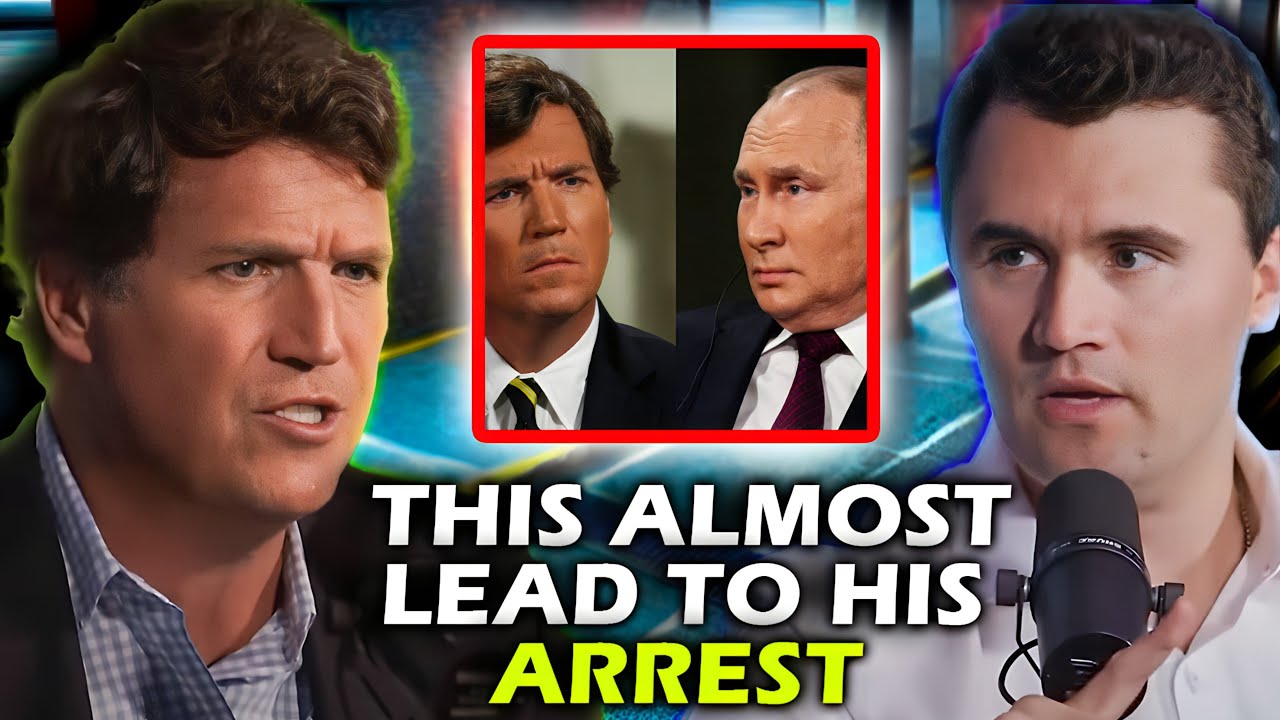
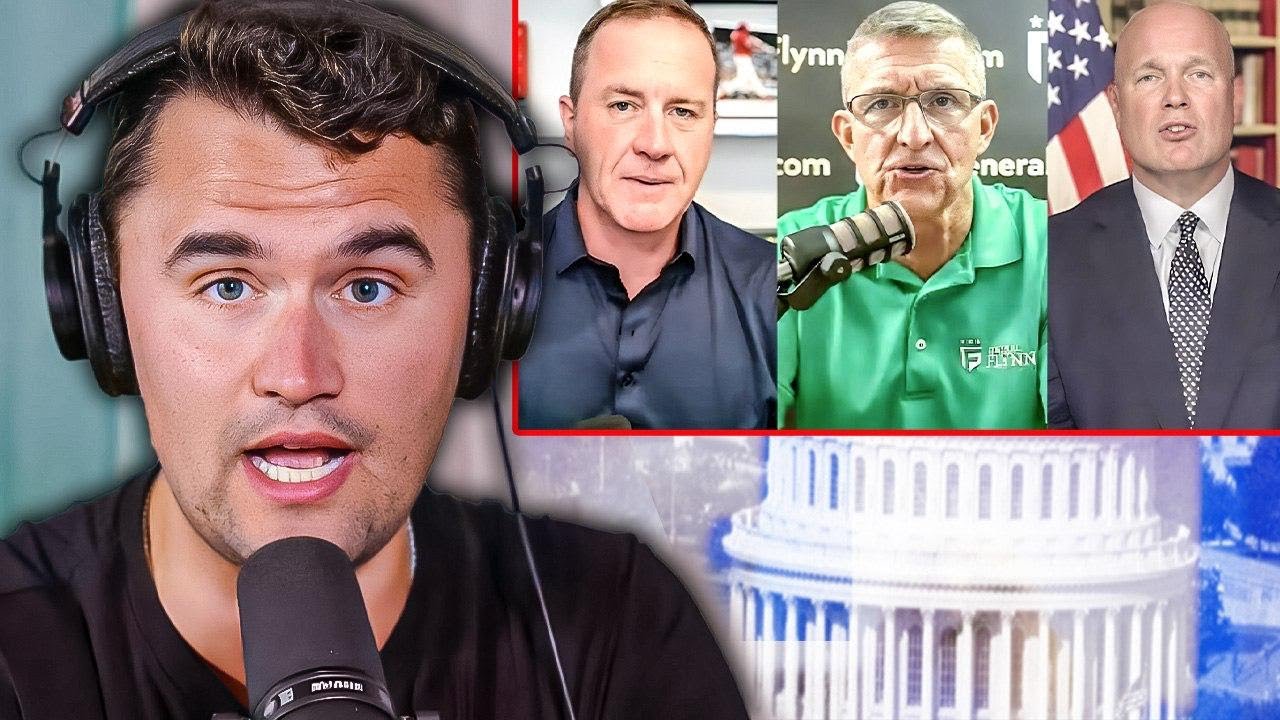
Charlie Kirk and Vivek Ramaswamy Confront White Dudes for Harris and Debate Immigration at Georgia State University
Charlie Kirk and Vivek Ramaswamy face challenging questions from Georgia State University students on immigration, abortion, tariffs, and foreign policy. From confronting a self-described 'White Dudes for Harris' supporter unable to name Kamala Harris's accomplishments, to debating the son of undocumented immigrants about border security, Kirk and Ramaswamy defend conservative positions on Civil Rights Act consequences, January 6th misconceptions, and America's role as global policeman. The discussion reveals sharp generational divides on free market economics, national sovereignty, and whether Russia qualifies as America's enemy.
Charlie Kirk opened the exchange by questioning a student wearing a 'White Dudes for Harris' shirt about hurricane relief funding. The student claimed Republican Congressmen Ted Cruz and Mike Braun withheld hurricane aid to secure funding for Israel and what he called "genocide against Palestinians." Kirk corrected the record, explaining that FEMA has sufficient funding but chose to spend over a billion dollars on illegal migration instead of disaster relief.
When asked about Kamala Harris's greatest accomplishment, the student called her "an idol" simply for being vice president. Kirk pressed further, asking if Mike Pence should also be considered an idol for holding the same position. The student responded that Harris "broke the glass ceiling," but couldn't articulate any specific achievements or policy positions that made her worthy of support.
Kirk highlighted Harris's pattern of flip-flopping on major issues without explanation. Four years ago, she supported ending the filibuster to pass the Green New Deal, supported banning fracking, and advocated for taxes on unrealized capital gains. Today, she claims to oppose these positions. The student admitted he "didn't really care" about these policy reversals, even while maintaining Harris as his "idol."
The exchange concluded with the student unable to provide a coherent sales pitch for why other white men should support Harris, beyond saying "she's looking out for us" and is "an inspiration." Kirk noted the student perfectly captured "White Dudes for Harris energy."
Immigration and the Son of Undocumented Immigrants
A student named Drew presented himself as a single-issue voter on immigration, explaining he was the son of Mexican immigrants who crossed the border illegally in the early 1990s. His parents have been in the United States for most of their lives, raised five children with traditional conservative Mexican values, but remain in the system trying to obtain citizenship or amnesty. Drew said he couldn't vote for Donald Trump because it would feel like voting against his parents.
Vivek Ramaswamy addressed this emotional question by asking Drew to temporarily set aside his family perspective and consider the issue from a citizen's standpoint. Ramaswamy acknowledged that if he were in the position of Drew's parents, seeking a better life with decades of wink-and-nod policies from American leaders, he probably would have made the same decision. However, he emphasized that the blame belongs with policymakers who created incentives for illegal entry, not with the individuals who responded to those incentives.
Ramaswamy explained that America is a nation founded on the rule of law. If that principle means anything, then the first act of entering the country cannot break the law. His parents came to the United States legally through the front door, and he believes that distinction matters for maintaining the rule of law that unites Americans of all backgrounds.
On the issue of "extreme rhetoric," Ramaswamy reframed the conversation. He argued that what's truly extreme is the policy itself: over 30 million people crossing the border in four years, with 350,000 children going undocumented. The extreme policy demands an appropriate level of anger to generate the energy needed to fix the problem. While Drew might not love everything Trump says about immigration, Ramaswamy urged him to focus on actions rather than words when determining what's best for the country.
Abortion Ethics and Rape Exception Debate
A student challenged Kirk on abortion, specifically regarding cases of rape. The student confirmed Kirk's position that he would not allow abortion under any circumstances in his own family except to save the life of the mother, which Kirk clarified would actually be a medical procedure called a sectomy, not an abortion, since abortion is the intentional taking of fetal life.
When pressed on whether a 10 or 15-year-old rape victim should be forced to carry a pregnancy to term, Kirk maintained that the baby would be delivered. The student found this "quite harsh," asking Kirk to focus on the person having to go through pregnancy rather than the unborn child.
Kirk responded with a fundamental moral question: Is it ever okay to do something evil after an evil act? He argued that murdering a baby is not the right response to the evil of rape. The student insisted abortion should be handled "case by case," to which Kirk countered that we don't apply "case by case" morality to fundamental human rights like "you shall not murder."
Kirk asked what species the unborn child is. When the student admitted it was human, Kirk pressed on whether it deserves human rights. The student claimed the fetus gets human rights "upon birth," meaning even a 35-week-old baby with a heartbeat, DNA, brain waves, and ability to feel pain doesn't deserve full human rights. The student said the fetus deserves "most rights" but not all, unable to specify which rights it lacks.
Kirk tested the student's position with a scenario: if a pregnant woman is assaulted and the unborn child dies as a consequence, should the criminal be held liable for that death? The student agreed yes, revealing inconsistency in his position. Nearly every pro-choice person Kirk has met agrees that such a death should result in criminal liability, showing a shared intuition that the unborn child has moral status.
Ramaswamy shifted the discussion to Planned Parenthood's racist origins. Founded by Margaret Sanger with an explicit eugenics agenda to stop black reproduction, Planned Parenthood has resulted in far more black deaths than lynching ever did. He couldn't stand hearing Kamala Harris talk about "reproductive rights" when the effective agenda prevents the reproduction of one class of Americans. The student acknowledged that his generation has abused abortion as an option, to which Ramaswamy responded that this abuse started with Sanger's racist vision.
The Civil Rights Act and Unintended Consequences
A student named Gerald asked why Charlie Kirk felt the Civil Rights Act was a mistake. Kirk clarified that parts of it were good while others were problematic. The original intent to end racial segregation was something he fully supports, as no person should be discriminated against based on skin color.
However, Kirk explained that the Civil Rights Act has been applied in ways never intended, creating a major overarching standard beyond its original scope. For example, when North Carolina wanted to require voter ID, Attorney General Merrick Garland sued under the Civil Rights Act, claiming voter ID disproportionately hurts black Americans. The problem is that the Act doesn't just target discrimination, it targets disparities, and disparities can exist for reasons other than racism.
Kirk noted that the Civil Rights Act has become almost a "super constitution," cited more often than the actual Constitution itself. America had a second founding in the 1960s with this legislation, which he views as problematic. The Act contains nine different titles and has created a bureaucratic system that now even prevents common-sense policies like keeping biological men out of women's sports, because people claim Civil Rights Act protections based on gender identity.
Kirk proposed simplifying it to a one-page bill stating that racial discrimination is illegal and will not be tolerated in the United States. He would eliminate the various provisions that have led to unintended consequences far beyond the original civil rights mission.
Ramaswamy addressed the results of the Great Society programs, of which the Civil Rights Act was a part. Before these 1960s programs, only 20 percent of black children were born into single-parent households. Today, that number exceeds 60 percent. Children raised in single-parent households are much more likely to end up in prison, in poverty, and to fail to graduate from high school. Despite laws passed supposedly to advance black interests, black Americans are economically worse off today in terms of mobility than before these programs.
Ramaswamy then compared the first three years of Trump versus Biden on black American outcomes. Under Biden, 70,000 more black Americans are unemployed. Black Americans who are employed make about $1,500 less per year under Biden than under Trump. And 700,000 fewer black Americans own the homes they live in under Biden compared to Trump. He judges based on results, and those results show Trump delivered more for black Americans than the rhetoric might suggest.
Black Americans vote 90-97 percent for Democrats, the most loyal demographic to any political party in American history. Without that loyalty, the Democratic Party would be "toast." But Ramaswamy questioned what black Americans have gotten in return for that loyalty. He believes the Great Society was a bribe that has proven disastrous, and that America would be better off returning to the first Constitution rather than the second one created in the 1960s.
January 6th and Constitutional Questions
A student heading to ethics class asked about January 6th, wanting to establish common ground on whether a candidate who committed insurrection should be barred from office per the Constitution. Kirk immediately corrected that no one has been tried for insurrection, and Trump is not being charged with insurrection. The student insisted Trump is being tried "on that," but Kirk explained that insurrection is a specific federal statute, and Trump is being tried for events of that day, which do not constitute insurrection.
Insurrection is a specific legal term meaning armed rebellion to overtake the United States government. Kirk noted that if Special Counsel Jack Smith had brought an insurrection case, he would have lost 9-0 at the Supreme Court, which is exactly why he didn't bring it. The student referenced Trump attorney John Eastman, claiming he thought his plan would lose 7-2 or 9-0 at the Supreme Court.
Kirk asked whether Kamala Harris and Joe Biden did a good job managing hurricane relief in Georgia and North Carolina. The student deflected, saying they can't allocate funds because that's Congress's job. Kirk countered that they actually spent a billion dollars of FEMA money on illegal migration. When pressed on whether this was wrong, the student refused to answer the question directly.
The student asked if it was wrong for Republican Congressmen to withhold hurricane aid for Israel funding. Kirk stated they did not withhold it and that the FEMA bill has passed. The student was fixated on Israel, and Kirk finally granted the hypothetical that if that had happened, he would disagree with it, but reiterated that's not what occurred.
When the student called Kamala Harris an "idol," Kirk asked what her greatest accomplishment was. The student said being vice president and breaking the glass ceiling. Kirk asked if Mike Pence was also an idol, to which the student said no because Pence didn't break a glass ceiling. Kirk challenged what Harris has actually done in four years, and the student admitted "she's just the vice president, she can't do much" but is an idol for "just being herself, you know, being a real boss."
On January 6th specifically, the student claimed Trump waited three hours before telling protesters to go home. Kirk corrected that within 30 minutes, Trump sent a tweet telling people to remain peaceful. Before anything happened at the Capitol, Trump said to protest "peacefully and patriotically." The student dismissed this as one sentence in a long speech, but couldn't identify when Trump said to do anything violent. Trump's "fight fight fight" chant came after he was shot, and Kamala Harris uses "when we fight, we win" as her campaign slogan.
The student suggested Democrats committed a coup by replacing Biden with Harris. Kirk agreed, noting that in the primary, voters only voted for Joe Biden, not Harris. Biden received 16 million primary votes without Harris on the ticket, yet she was installed as the nominee without receiving a single primary vote.
Regarding deaths on January 6th, the student suggested multiple people died including police officers. Kirk corrected that one person died on January 6th: Ashley Babbitt, an unarmed Trump supporter shot by Lieutenant Michael Byrd. The student callously responded, "maybe she shouldn't have trespassed in the Capitol." Kirk pointed out there was no warning before Byrd shot Babbitt in the head, and asked if the student was upset about George Floyd's death. The student said he didn't care, revealing his inconsistent standards for when police use of force matters.
Tariffs, Trade, and Austrian Economics
Multiple students challenged Kirk and Ramaswamy on tariffs from a libertarian or Austrian economics perspective. One registered Libertarian trained in Austrian economics asked why not let China expand credit and fall into a debt trap while America enjoys cheap goods until China collapses.
Ramaswamy responded by citing Friedrich von Hayek's "The Road to Serfdom," which is often misunderstood by modern libertarians. Hayek made clear that a nation cannot depend on an adversary for its own military supplies. China is currently the biggest supplier to the U.S. military, providing 40 percent of semiconductors made for the Department of Defense. Even a principled libertarian like Hayek would say this makes no sense.
Additionally, Austrian School economists would acknowledge that if another country applies a big tariff or unfair trading advantage, demanding a level playing field isn't a violation of free market principles. It's recognition that the market wasn't free in the first place. Donald Trump's actual record in his first four years reflects this balanced approach.
When asked if he would support a policy that made markets freer but hurt the country, the student initially said no, believing it would help in the long run, citing Reagan's administration. Ramaswamy challenged this, explaining that shipping jobs to China wasn't actually free market capitalism. The Chinese government subsidizes those industries, so it was a mercantilist myth that the CCP exploited while laughing at 1980s conservatives who called it free trade.
Kirk admitted he used to be an Austrian economics adherent but found it "all a bunch of rubbish" because "it's never worked and it never will work." The monetary policy component of Austrian economics is strong, particularly arguments that business cycles should be organic rather than artificial. However, on trade, there needs to be a reality-focused rather than abstraction-based approach. The principle should be what's good for the country, not what's good for ideology.
Another student raised concerns about Trump's proposed 60 percent tariffs on China and 20 percent on other countries, calling it a return to Smoot-Hawley. Kirk asked which current tariffs are harming the American economy. The student cited Trump's 2017 washing machine tariff, which increased household appliance prices and which Biden has kept in place.
Kirk explained how tariffs actually work. If you're Toyota, how do you avoid a tariff? You build the car in America. Lyndon Johnson put a 25 percent tariff on pickup trucks, and Toyota makes all their popular pickup trucks in America to avoid it. When you're the incumbent economic power, tariffs are helpful in bringing manufacturing home. Solar panel tariffs, pickup truck tariffs, and household appliance tariffs all result in companies building plants in America to do business here.
The student argued that building things in America that could be built cheaper elsewhere wastes money that could be better spent. Kirk responded that he'd rather have Americans employed than the cheapest possible good. The student said that's his choice as a consumer, not the government's choice. Kirk disagreed, arguing the government has a moral obligation to employ its citizens before pursuing the cheapest goods.
Ramaswamy, who leans libertarian, asked whether it's fair for the U.S. to respond in kind when another country tariffs American goods. The student said he favored "turning the other cheek." Ramaswamy rejected this, saying while he follows Judeo-Christian values in personal life, he doesn't apply "turn the other cheek" to economic policy when America is being slapped by other countries.
Looking at Trump's actual record, the tariffs he applied were on countries that had been applying tariffs to the U.S. asymmetrically. Countries also apply effective tariffs through state sponsorship of their companies, making American companies less competitive. Biden has kept every one of Trump's tariffs, so it's not a choice between candidates. Trump pragmatically applied tariffs to countries that already tariffed the U.S. directly or indirectly, which is totally fair to demand other countries play by the same rules.
Russia, NATO, and America's Role in the World
A 17-year-old student named Alex thanked Kirk for coming to Georgia State but disagreed with his earlier statement that Russia is not America's enemy. Alex argued that any anti-democratic, anti-American, anti-freedom state is America's enemy, including nations in Africa and Asia, China, North Korea, and Russia.
Interestingly, Alex proposed accepting more NATO applicants, including Taiwan and Japan. When Kirk pointed out that Taiwan in NATO would be like putting Cal in the ACC (the North Atlantic Treaty Organization applying to the Pacific), Alex acknowledged the geographic absurdity but maintained his position. He believed it's America's role in the world to protect democracy and freedom.
Ramaswamy understood the impulse but disagreed about America's role. The role of U.S. elected leaders is to make sure U.S. citizens prosper. The best thing America can do for other democracies is set an example of what's possible in the United States. If the shining city on a hill no longer shines, no other democracy has a chance.
Kirk asked why it's America's moral responsibility to make sure other countries follow the exact American model of government when they might be perfectly well governed differently. Alex said his position applies to democratic nations like the United Kingdom, Germany, and Taiwan. Kirk asked if Saudi Arabia is an enemy because it has a king. Alex said no, revealing his position isn't actually that all non-democracies are enemies.
Ramaswamy emphasized it's not America's job to be global policeman. The person who suffers when America plays that role is Alex's generation. The $35 trillion national debt falls on his shoulders, with $8 trillion of that due to wars in Iraq and Afghanistan that America overstayed or shouldn't have entered. It will be someone else's gun over his shoulder, fighting in someone else's trench for someone else's freedom if America volunteers as global policeman.
America's role is to show what's possible by living the ideals that made the country great, not fighting for freedom in countries where people may not even want democracy because their cultural tradition doesn't work that way. Republicans and Democrats have made this mistake for 30 years, and it's time for it to stop.
Ramaswamy gave Trump credit for being the first prominent figure to say the Iraq War was wrong. It wasn't a Democrat who said this with prominence, it was Donald Trump on the 2016 debate stage. That represents the future direction of the country, and Alex's generation won't have to pay the price in blood and treasure for being the world's policeman.
Video Transcript
the gentleman there disagreer come to hey it's a it's a white dudes for Harris shirt hey what's up okay so my question was about the hurricane response so I'm a native Georgian yo shout out yeah okay so in light of the hurricane the hurricane relief bill was contested by several Republicans Republicans like Ted Cruz and Mike Brawn both stated they were GNA withhold their vote so they could get more funding for the state of Israel and their genocide against the Palestinians and my thing is do you disavow their actions and do you disavow the genocide in Gaza do you think kamla Harris and Joe Biden have done a good job at managing hurricane relief in Georgia North Carolina they can't allocate funds that's the um that's the job of Congress well they can they actually spent a billion dollars of FEMA money on illegal migration will you answer the question was it wrong for them toy Rel and ten that's not what happened but I'm asking you has KLA Harris and Joe Biden done a good job of helping the people of Georgia North Carolina so we're just not going to answer the question I said that's not what happened so we're getting back to it so it's a false premise right but I'm asking something that maybe we can agree on can you at least say that K Harris and Joe Biden have failed the people of Georgia uh I disagree they can't get funding from Congress FEMA has plenty of funding they've decided to spend that money on non-fa related matters such as Southern border f f news over a billion dollars has been used on luxury hotels and migrant okay will you answer the question do you think it was wrong for the rep the Republican Congressman to withhold aid for Israel they didn't they did not withhold it the FEMA bill has passed before FEMA is fully funded and again you're very you're very stuck on the the issue of Israel and you're kind of conflating with two different things well because this is a serious issue we could have put our country first and give our country but our Congress that are supposed to represent our country withheld Aid so they can send it overseas that's not what happened at all so I'm happy to keep on saying that but for the fourth time fifth time sixth time so do you at least agree can we yes if that was the case I would disagree with it but that's not what happened so I'll even Grant you the hypothetical okay but let me ask you a question you're wearing a white dude's for Harris shirt yeah okay what is her greatest accomplishment um being an idol for uh one sec so so tell me what she has ever done that you think is great an achievement that she should be president um uh being vice president is Mike Pence your idol uh no I I I understand that one he didn't break the glass ceiling like she did so let me just ask you what has she done for you in the last four years to make you view her as an idol um I mean she's just the vice president she can't do much but um I think just being herself you know being a real boss so let me ask you about her view because I'm actually of a slightly different view I don't think that you somebody else held aside and says Kami Kamala you know I think that's given her too much credit actually I don't think to be a communist you have to have views she doesn't have views and I guess I'll leave it to you where four years ago she said that she would end the filibuster to Ram through the green New Deal now she says she's not in favor of it what is your view on her change of position on that matter um I I don't really care okay 4 years ago so why are you voting for her well I just because I said she's an idol for the Democratic party so so she was against a ban on she was in favor of a ban on fracking four years ago today she says she's not against it is that something an idol would do is to change their mind without explanation I don't think fracking is a big deal um it's a big deal to a lot of Americans but I'm not even asking about whether it's a big deal she changes her mind on a big question that matters to a lot of people you're totally fine with that keeping her idle yeah okay now KLA Harris now she wants to she said four years ago she wants to put a tax on unrealized capital gains so that's going to wipe out a lot of the stock market and result in a great you both know that's not going to happen so well so so the things that she says she's not going to happen that's why she's your idol I'm just trying to understand when somebody who has told you one thing four years ago tells you a different thing today see I think if somebody's going to be your idol at least make it somebody who's consistent about their actual belief or has beliefs rather than somebody who has none that'd be my view okay thank you man thank you but I I just just just in closing though what is the sales pitch for other white dudes to support Harris would you say I would say because she's looking out for us she's looking out for the country and uh she she's an inspiration but you say that you objected to sending money to Israel for the genocide do you disagree with kamla Harris sending $200 billion to Ukraine she didn't do that she's the vice president well she actually casted a tiebreaking vote a couple times that did send money to Ukraine she has voice support for Ukrainian war and spoke at the Munich security conference so you did let's just broaden it and be even more fair do you think the Biden Administration with kamla Harris was wrong to spend $200 billion on the war in Ukraine um I think it's open to debate about that one one final question for you all right do you believe that it is a disaster to select someone for the job based on their race and their gender um it depends cuz I'm actually talking about Tim Walls in this case another white dude for Harris so anyway thank you thank you man I appreciate it I have to say he captured white dude for Harris energy perfect yeah should be good uh okay so I'll try to be as quick as possible cuz I have to go to class but um I want to go back to January 6th real quick um just let's just start with like a point of a common ground hypothetically if one of our candidates had insurrecto like to be voted upon well the Constitution says no but it wasn't an Insurrection no one's been tried for Insurrection and you do realize that he's being tried on that no he isn't not on Insurrection the specific uh statute but he's being tried for that he not Insurrection to a very specific crime in the federal code he is not being tried for Insurrection I yeah I I understand that but he's still being tried on that case right no he's being tried on the events of that which is not an Insurrection that I word is actually a super important word because that literally means armed Rebellion to overtake the United States government necessarily you don't have to be so just it does have defition which class are you going to which class do you have next ethics okay so it's relevant so go to section three section three of the 14th Amendment though Insurrection is the word that's used so there was there was actually re Insurrection Rebellion so so there was widespread speculation about whether Jack Smith would bring this case against Donald Trump indeed y he did not the reason Jack Smith didn't bring the case is that he would have lost 90 at the Supreme Court if he did well hold on that's funny that you say that that's that's exactly the result that they had with a number of the cases that have gone to the Supreme Court as well you say it would be it would be nine on the Supreme Court right as it was on the case where Trump could be on the ballot went to the Supreme Court it was 90 hands down this would have been 9 as one of his one of one of Trump's private councils okay one of his lawyers right I believe his name was um uh name does matter johast Eastman correct is it not true that he also thought that his plan to attempt to C the or to let's say subvert the electoral process in 2020 would lose 72 with the Supreme Court and then he later amended that comment by saying it would actually probably lose 90 the Supreme Court you understand that so what was your what is what is the question you have as it Rel January it's very simple okay if one of our presidential candidates had attempted to coup the government he is in unelectable obviously correct and you just deny the fact that Trump attempted to C the government no he did not that's not what happened that day what happened that day is he had a rally a mile and a half away from okay sorry to everybody here I implore you to read the first section of Jack Smith's court filings or read the P page or read the but you have to be honest half of that got thrown up by the US Supreme Court on presidential immunity right do you think that half of it is invalidated do you think that was a reasonable Supreme Court ruling of course more than reasonable you really think so yes it was it was nearly unanimous even the LI do you think no no hold on it's not pivoting you have to be honest do you think Barack Obama should be able to be tried for war crimes for killing interest to anyone El beses I'm saying this you have hold on your standard must apply equally presidential immunity means what happens when you do during President cany you cannot have crimes brought against you if it's in your official code of business you agree with that no absolutely not there's no precent in the entire there is there is none absolutely let me let me let me finish okay Obama killed a US citizen without due process on foreign soil that is a war crime no it's not he wait he went to legal council correct but legal council can be wrong man it doesn't matter I could bring that case I could bring that case in any jurisdiction across the country he did not get First Amendment rights second amendment rights Fourth Amendment rights Fifth Amendment rights Sixth Amendment rights they just drone strike a US citizen imagine if the government just does that they just come by and pop you in the head that's illegal and Obama did that but however I don't think Obama should be able to go to prison because you should get immunity as president against your actions or else a president would never be able to do anything but sure okay regardless okay going back to uh January 6 okay you do acknowledge what like do you acknowledge any of the voter fraud allegations or any that do do you think Donald Trump committed a coup against the US government he attempted to absolutely so why do you believe he left the White House what do you mean why do you leave the White House is it somebody who's really leading aoup it failed why did he call for the the protesters to go home I I just think this idea he didn't do that though right he waited three hours in the white house as not correct within 30 minutes 30 minutes he sent a tweet out goes hold on he said to stay he he said to remain peaceful correct he told riters to remain peaceful does that sense peaceful and patriotically before anything ever happened at the capital when okay we he said that one time during his one and a half hour speech at the lips correct well so you acknowledge he said peaceful and patriotically marked I'm not a four-year-old who a who analyzes the speech out of like takes out one sentence of speech and says it's all okay when did he ever say do anything violent he said to fight fight fight or else you're going to lose your country it'ses do you know when he said fight fight fight after he got shot you know also you know who says fight fight fight kamla Harris has it as her campaign slan fight fight fight when we fight we win I heard every 20 seconds the DN did Harris the Democrats to C the government actually it's interesting oh right oh let's do it yeah yeah yeah yeah this how did she how did she become candidate how many many votes did she get's on the ticket Biden because of a coup they removed a sitting president named Joe Biden and put on the top who are you voting for when you vote on a ticket who are you voting for actually no in the primary you're only voting for Joe Biden not Harris AR in a primary campaign KL Harris was not on the ticket and you know that's correct Joe Biden received 16 million primary votes without KLA Harris as her VP and all of a sudden they I love who we're pivoting all the way out this this is amazing I love this you're the one doing the rabbit hole I just want to ask question though who died on January 6 one person or multiple police no actually one person died on January 6 and it was Ashley Babin and unarmed Trump supporter who got shot in the head by one of maybe she shouldn't have trespassed in the capital I don't know yeah I know it's going to be a hard one I will bite that bullet absolutely Obama Obama's death penalty now makes more sense exactly no so the death penalty for walking through your own capital no but you shouldn't be trespassing trying to subvert the election results correct have you seen the video what happened no warning whatsoever Lieutenant Michael bird pops her right in the head and this guy says oh crime r no warning really he pulled out the gun and she jumped the what you expect to happen did you get mad about the Geor Death of George Floyd I don't I don't I really don't care about any of this I don't I don't care go back to the focus it's irrelevant to this it's irrelevant can yell the whole country blew up for George Floyd and he had a trump support to get shot in the head peacefully and patriotically protesting and that's for all of you to read the first section of Jack Smith's Court filing no one's going to read that crap okay instead you know I'm not surprised I'm not surprised but we have gotten to the point where we don't trust the media we don't trust our legislator we don't trust the executive we don't trust we don't trust anything you know why they haven't earned our trust oh right true let's go to the list Hunter Biden laptop misinformation where did the virus come from biolabs in Ukraine no it's exactly yeah fine it's okay go go go to your ethics class so my name is Drew and know my main question is like is for Charlie like why do you feel like the Civil Rights Act was a mistake so uh parts of it were really good parts of it were not so good so for for example the the way the Civil Rights Act was constituted is that now it is being applied in ways that it was never intended and so the Civil Rights Act has now been used as this major overarching standard that is not just about ending bitter racial segregation which I'm against and you're against right no person should ever be discriminated based on the color of their skin with the Rights Act has done passed through multiple decades is the law of unintended consequences that it's created this Leviathan within the Department of Justice For example let me give you just another examp I have like a hundred of these in the state of North Carolina they wanted to say that you need voter ID in order to vote I don't know where you come down on that issue I think that requiring identification of vote is so normal so simple it is skin color it's it's color blind right Merrick garland from the Department of Justice came in and sued and says you C you should not be able to ask for voter ID because of the Civil Rights Act because it disproportionately hurts black Americans so what would happened is the Civil Rights Act it did not Target discrimination it targeted disparities and disparities is different than discrimination does that make sense so individualized discrimination we were we've always been against but what happens if you have one group that does better than another group there are other explanations for that other than racism unfortunately Civil Rights Act what it does is it goes back and says everything can be ascribed back to racism as our original sin now just go one final point is that the Fanfare that the Civil Rights Act is met with it's almost like the new constitution we talk about the Civil Rights Act more than the Constitution it is it is cited more than the Constitution we almost had a new American founding in the 1960s with the Civil Rights Act which again I want to be very clear and I've always been no human being should ever be discriminated against because of the color of their skin that is always something we've agreed with but the Civil Rights Act has become almost the super constitution of the land so let me let me say a couple words because this is this is actually something that's near and dear to my heart the Civil Rights seor is part of a broader project that LBJ had called the Great Society and one of the things I'm a pragmatist I'm a businessman by background I look at the results so let me let me share a couple of uh couple hard facts with you which is that turns out that you're much more likely to end up in prison you're much more likely to end up in poverty you're much more likely not to graduate from high school if you grow up in a single parent household versus a dual parent household today you're talking about upwards of of 60% of black kids born into single parent households rather than dual parent what number do you think that was in the 1950s before the Great Society probably like like 40 like it was even less 20% damn 20% back then so then we look at what the results have been of this entire agenda put the Civil Rights Act put put the LBJ Great Society black Americans are worse off today even economic economically in terms of Mobility than they were back then in the name of laws that were passed to supposedly Advance black interest so the results haven't worked out so well I want to just bring it back to this election all right I'm I'm going to ask you questions this is not like it's a grilling but more because you have no reason to know the answers to these but we're close to politics I'm going to ask you these questions all right so what do you think if you take the first three years of Donald Trump versus the first three years of Joe Biden where we have where we have data for it were more blacks unemployed under Joe Biden or were they unemployed under Donald Trump no I think they were unemployed under Joe Biden like that's correct so there's about 70,000 more black Americans are unemployed under Joe Biden now look at the ones who are actually employed of the black Americans who were employed did they make more money under Donald Trump or more money under Joe Biden I wasn't working so I wouldn't even know fair enough it's about 1,500 bucks more per year that somebody of black Americans earned under Donald Trump versus Joe Biden you want to talk about the number of black Americans who own the home they actually live in 700,000 more own the home they lived in under Donald Trump's years versus Joe Biden so I end up judging on the basis of results and this started since LBJ this was a bribe I think this was was a bribe to Black Americans which earned 955 to 97% loyalty of black Americans to Democrats that is the single most loyal group to any political party in the history of our countries 90 to 95 97% of black Americans tend to vote for Democrats without that the Democratic party is toast you have been part of the most loyal group to the Democratic party the question is what have you gotten in return for that loyalty I thought and the answer is not very much actually and I think Donald when you judge based on the results has actually given you at least results even if it's a little bit different than the rhetoric along the way and I do come down on the same side on the same side of Charlie with respect to the Great Society is that that I think in the name of helping black Americans was disastrous and I think what we would be better doing for all Americans is go back to the first constitution rather than the second one that we Reed so my question like really like to Charlie so like you would like if you had the opportunity you would get rid of the Civil Rights Act no I think you should have a one-page bill that says that racial discrimination based on race is illegal and will not be tolerated United States of America I I would simplify it I would not have all so so what happened is that the Civil Rights Act has nine different titles in it and you have this this Leviathan that was created and something that most black Americans don't support is men in female sports would you agree what you wait say that again Men playing in female sports oh hell no yeah I know this no no for sure right believe it or not the Civil Rights Act is now being used to keep Men playing in women's sports so it's so the Civil Rights Act was used to help Black America originally totally get that but now the Way It Was Written is that any claim of identification so someone says I'm a woman therefore I can compete in your volleyball team they come in with a civil rights claim and so what we're saying is no no no it should be specified to racial not gender all that other stuff and there were all these other Provisions as well all right and my like last question do you think like if Trump come back into office you think like young thug is getting free or like any like these people in you don't know young who's getting free young thug is Young Thug getting free if Trump come back into office and like why so like would you vote for him if he promised a pardon oh yeah hell yeah if if if y was coming back like we need new music and stuff so I feel like yeah we'll pass that along all right appreciate that appreciate what's your name again Gerald Gerald nice to meet you man thank you super good question thank you I'm currently an undecided voter uh just because I I would say that I'm not going to vote for but there's a couple there's one I'm like a single issue voter and my issue is over immigration and I think that the rhetoric that the Republican party has had um towards immigration uh these since 2020 since 2016 has been very aggressive right um I'm the son of immigrants uh my parents crossed the they came over in the early '90s what country Mexico legally or illegally illegally um they've been in this country for more of their life now than they've lived in Mexico and they've been in the system of trying to get some sort of you know citizenship or or amnesty but um they have been phenomenal role models to me they they've raised five wonderful children conservatively you know traditional Mexican um conservative values uh so I that's that's my issue and that's why I feel like I can't like I won't I cannot vote for Donald Trump because it also feels like I'm voting against my parents cuz I feel like the Republican party though I disagree with the Democrats um so so V is uniquely positioned to answer this because he's also the son of immigrants so I want you to hear him out very carefully here yeah so look this is a hard question because of the position you know you're in thinking about your family situation versus that of the country but I'm asking you for a moment it's a hard thing to do but just to wear the hat of a citizen and then to put yourself back in your position and see how you see it so absolutely but but but wear your citizen hat rather than you know your family hat even though that's a hard thing to do so here's what I would say okay if I was in the position of your parents probably if anybody here were in the position of your parents in another country seeking a better life in the United States and you've got presidents for the last frankly five decades with the exception of Donald Trump who have been you know wink and a nod to come over probably most of us in this audience would have done the same thing too I don't actually blame the those people I do blame the policy makers who created the incentives to enter this country illegally in the first place and so the way I look at it is my parents they came to this country legally through the front door and We're a nation founded on the rule of law if we're founded on the rule of law right if that's one of the things of all of the races and Creeds and ages we have in this audience if there's one thing that unites us it's that we have certain ideals like we believe in the rule of law if we believe in that that means your First Act of entering this country cannot Act actually break the law and so wearing our hat as a citizen you know we got to have only consent granted to those who entered enter legally and if you entered in a way that didn't follow the rules that's where Donald Trump's coming from to say that we need Mass deportations not because all of them are bad people but because we have bad policies in this country that actually created those incentives in the first place so don't take that as a a front or an insult to your parents personally who I'm sure are good people to raise a young man like you who's as thought as you've been in asking this question but when we're looking at what's in the best interest of the country We're a nation founded on the rule of law we got to follow the rule of law if we're ever going to revive an immigration system that actually makes sense and advances the best interest of this country that's where I I agree with that I agree that when I put on my citizen hat I I can understand from a citizen's perspective it's it it makes sense but I also agree with the point that it is not the fault of the people who crossed the border in the early 90s when it was fairly easy it's the follow the policy makers and the politicians and it feels like Donald Trump understands that he's married to an immigrant right he he's I mean other members of his family also have done the same I so I think and my I'm married to a kid of legal immigrants I am one myself as well so most of us in this country intuitively understand that but I think the thing that's been extreme so you brought up one of the reason you have trouble voting for Donald Trump is because of maybe the extreme rhetoric on the issue of immigration I see so the way I look at this is what's been actually extreme is our policies what's extreme is 30 plus million people call crossing a border over the course of 4 years where you have 350,000 kids that have gone undocumented for that actually is is the extreme policy to which we demand I think an appropriate level of anger to Marshall the energy to fix the problem so you know are you going to love everything Donald Trump says about this issue apparently not and that's fair but when you're looking at who's going to do what's best for the country I still come down in the side of what's clear actions speak louder than those words follow the actions and that's how we're going to save our country thank you man I appreciate it thank you guys I'd like to to challenge all mainly on like a moral landscape versus like a political landscape cuz I've not done my homework um in in the political realm so I'd like to challenge you on like your views on abortion and homosexuality um specifically Charlie cuz I've I've consumed some way more of Charlie's uh clips and so in um I watched a clip of you I'd like to just confirm your Viewpoint real quick I I answer this at every tour stop yes I do not believe in personally personally my family would not allow an abortion under any case unless the life of the mother that's correct okay so unless the life of the mother unless the life of the mother of which it would actually not be considered an abortion it's a medical procedure called the sectomy but that's yes abortion is the intentional taking of a fetus or a human life we would our family would never do that personally correct okay um and and you were you were brought up a scenario where a you know a young girl 10 15year old girl was raped and she you were should she give an abortion or or or is it more moral to not give or give this abortion and you said the baby will be aborted and I think I said the baby will be delivered in the video the oh yeah the baby will be delivered my bad um and I I think that's that's quite harsh to to expect someone of this age and this um life experience to have to do this someone in this audience was conceived in rape can you tell me who uh no so I have two ultrasound one baby's conceived in rape one baby was conceived by a loving family which one is which um you cannot tell yeah so that therefore Universal human equality spans to all people regardless of the method of your conception correct sure so that that is my position that is not exactly what I'm trying to tackle here I I'm trying to tackle I want you to look more at the person having to give life to this baby and and and push it out of their body and go through a pregnancy and well let's let's ask another moral question then is is it ever okay to do something evil after an evil act I want you I want you to focus on my question real quick I've answered it I've already no you've not answered it well I said the baby will be delivered because for example murdering a baby is not the right thing after an evil that's the moral position I have general statement that is I would agree I would agree as a general statement yes but no so for example under abortion do you carve out a new morality is there like a different kind of morality that we apply only to abortion well it's it really is a case by case thing for me really so that's Case by case I mean where in life do we do case by case don't we have Universal human morality such as you shall not murder people deserve human rights I mean sure but but the why should abortion be any different because this um I believe the Fus or embryo or however you want to call it or whatever stage it's in it is I believe it should not have the exact same rights as got so so what species is it it is a human it is then should if it's a if it's a human species doesn't it then get human rights not necessarily why because there's a at what point does it get human rights it's I believe it gets human rights uh upon birth and I think wow upon birth so even when it's 35 weeks has a heartbeat its own DNA brain waves can feel pain touch it can hear you that that baby doesn't get human rights well I it it of course it deserves most rights but when you are which ones most rights yeah yeah so if you were to like for me if my daughter you know was raped I would 100% expect an option to not have this baby be bor no that's fine we We Just Disagree you would be okay with murdering a baby I would not why I think murder is a bit of a harsh so so let me ask you said your case by case let me give you a case to react to pregnant woman walking down the street she's assaulted the unborn child dies as a consequ on should that criminal be held liable for that death or not yes okay so therefore we agree that that was actually a moral wrong and a crime that was committed which means we have common ground right and by the way you're not alone in that nearly every pro-choice person I've met in this country says the same thing that if the woman is assaulted she's pregnant the unborn child dies as a consequence in that context I haven't met a single person who says we don't treat that as actually a death that that criminal is responsible for so that says we actually share that same Instinct in common let me just shift as we're on a diverse campus as Charlie mentioned we're here in the city of Atlanta let me just talk about Planned Parenthood for a second because there's an agenda here it's not about these one-off Fringe theoretical cases Planned Parenthood was built on a racist agenda to actually stop the birth of One race of people that is the black race of people and and I know this may be controversial to say but when you look at the number of deaths in this country lynching ain't gotten nothing actually on the abortions that have occurred in this country's targeted against one racial community and so when I hear kamla Harris walking around talking about Reproductive Rights I can't stand it anymore because they're effectively have an agenda preventing the reproduction of one class of Americans and I think especially sitting where we are today we got to recognize that racist agenda for what it is too so thank you man I appreciate the question I'd like to just push back a little bit you know stay out of you know the political realm who said who who said what um and last word last word and then we got to give other people a turn all right so so where ex besides the the cultural um landscape of my generation I so personally I think my generation has started to abuse the abortion uh the the the option of abortion and that has lead led to our societ our culture it started with Margaret Sanger who was a racist who is a co-founder of Planned Parenthood who whose effective objective was eugenics in the United States to stop black people and other categories of people from reproducing that's the Legacy before it's the effect it's had and it deserves to be called out thank you man I appreciate it people thank you so I kind of disagree so I am a registered libertarian so I guess I align a little bit more with youc oh right into the mic sorry about that uh I'm a registered libertarian um and again I'm kind of concerned about the tariffs uh being an Austrian trained Economist my thinking on the situation is why not let China expand its credit and just fall into into a debt trap spiral and you know reaped the rewards of you know cheap goods from China and then eventually they collapse so here's here's a real answer to that question so as a Libertarian have you ever read Hayek yeah you read the road to surum yep good so in the road to surum Hayek actually makes clear and he's misunderstood today in the modern libertarian memory of it versus the real thing yeah he says a nation cannot depend for example on an adversary for its own military let me ask you just a question do you know which nation is the biggest supplier of the US Military today you could probably guess it it's China it's China so it makes absolutely no sense for example for the United States to depend on China as the number one supplier of our Air Force our military including our army and our Navy it just doesn't make any sense 40% of the semiconductors made for the US Department of Defense come from China so even a principal libertarian like one of the ogs like Friedrich Von Hayek would tell you that doesn't make any sense yet that's where we are today here's something also Austrian School economists would tell you is if somebody else is applying a big tariff or an unfair trading advantage to the United States us saying that we have to play on a Level Playing Field that's not actually a violation of free market principles it's a recognition that the market was not free in the first place so those would be the two things I would leave you with and if you look at Donald Trump's actual record in his first four years that's actually the way he led so that's that's where the actions speak louder than words can I ask you a question yeah you can if there was a policy that made markets more more free but hurt your country would you support it what do you mean by hurt the country um for example uh during the 1970s and ' 80s we decided to shut down a lot of factories and send those jobs to China because it made markets more free and we get Goods cheaper but it obviously hurt the country so if Mark if there was a if there was a choice where it made markets Freer and it did not hurt the country would you support it um no because I think in the long run it actually helps the country and I think Reagan's Administration kind of shows that see I I just approach it a little bit differently cuz we got three different views here one is I don't actually think that it made markets more free I think the idea of sipping those jobs to China when the government's actually subsidizing those Industries was not actually the free market in the first place it was some madeup mercantilist myth that the CCP took advantage of laughing at a bunch of people who were at the old generations of conservatives from the 1980s who said that was free market capitalism when in fact that it wasn't so that's why I I just I've read I used to be an Austrian guy it's all a bunch of rubbish right because it's never worked and it never will work it's all abstractions staring into the sky and let me tell you when you go drive through Ohio and Pennsylvania West Virginia and you see the de-industrialization of this country and we were told that it was a good thing it just hasn't been and so again I I went to all the Von Misa stuff I went to all the hyek stuff the literature is very compelling and there is some truth in the monetary TR policy of Austrian economics that is the strongest component where they argue business Cycles need to be organic not artificial and that the money supply component of aan Economics is great however when we get to to trade there needs to be a a non- abstraction more reality focused way of looking at how we do trade and we're just not going to necessarily agree on that here here's here's my opinion is that in the ultimate principle should be is it good for the country not is it good for the ideology yeah and and we have we've been having policy that's good for ideology not for the country yeah so a question I have more for Vivic um so I guess one tariff that definitely affects Americans that Trump's sort of having to come back round to is the uh electric car tariff so I I agree entirely with the with the National Defense argument that's part of the reason why Biden was Angola to help secure uh critical resources from the DRC um so I give credit to both both candidates for doing that um but electric cars right Trump's now saying that you know you get 25k so here's the deeper issue so why should taxpayers have to eat that cost instead of you know Chinese people subsidizing it overseas so to the real problem when you start using the word subsidizing here's the real problem with the electric cars is that taxpayers have been eating the cost since the Advent of electric cars in the United States because taxpayers are paying for some guy in California to buy an electric vehicle at the expense of a guy who wants to buy a gas powered car in Georgia or in the state of Ohio so that's the root cause in the first place so I would say that see here's the thing and this is where I where I actually really agree with the the bang of Charlie statement which is we've never really had the libertarian Utopia because we were never operating according to capitalist principles in the first place so we had to get I mean the state subsidies in the first place and Donald Trump's in favor of this by the way like he says and I I agree with this too I mean I'm a friend of Elon Musk I like the fact that he's got Tesla and that's great we just shouldn't have the taxpayers paying for other other EVs and the beauty of this is actually if we got rid of the EV subsidies a lot of people don't know this Tesla would actually be better off because a lot of the other Ford and GM and inefficient makers are the ones relying on government largest in the first place and so in some ways we're in the worst of all worlds actually we're neither following haek or mes nor are we actually doing what's best for American workers or manufacturers and actually pick either of those options it's going to be better than the State of Affairs that exist today and I think Donald Trump he's a pragmatist he gets it and so that's why to Libertarians out there you got to you know you could you could look at a textbook and say that Donald Trump's not going to be your ideal candidate but if you look at who actually over the course of four years in office better follow those principles no doubt about it it's not even the libertarian candidate for US president this time is Donald Trump all right so my main concern for the Republican party going forward is their insistence on tariffs uh Trump has proposed somewhere around 60% tariffs of China and 20% tariffs on the rest of the world um this is extremely concern I mean this is a return to smoo Holly back in Hoover so um tell tell me why so tell me what tariffs currently because we have over 300 of them on the books that you think are currently harming the American economy so the the I I don't know I can't tell you exactly every tariff on the books tell me one okay the the Tariff that Trump imposed on washing machines back in 2017 I believe it was if you look at the statistics for household appliances in general they have increased the price and Biden has actually kept that tariff in in play and obviously this is something that's kind of um it doesn't strike at the core of our of what of consumers but it's still the if the tariffs increase across all Goods it will they will increase prices in yeah so I guess two questions with tariffs how do you avoid a tariff you don't put I mean you don't you don't put one on the other country no let's pretend you're Toyota how do you avoid a tariff coming into America oh you you you transfer the the money the the cost to the consumer no why not no no how do you how do you avoid a tariff if you're Toyota I'm not sure I'm not sure what you're asking you build the car in America okay yeah okay I understand it's not a hold on it's not a trick question right so let me tell you what's happened for example Lyndon Baines Johnson not my favorite President put a 25% tariff on pickup trucks most people don't know this exists Toyota actually uh per capita has some of the most popular pickup trucks in the country who here knows a Toyota pickup truck I guarantee some of you guys do they make all of them in America to avoid that that tariff so when you're the incumbent economic power tariffs are actually really really helpful now if you're a small fledgling country such as Portugal tariffs can be really really disastrous because you do not have the global Reserve currency status there's been a lot of fraud fraudulent and flimsy economic studies done by major corporations that have made you seem as if free trade is the greatest thing ever but for example solar panel tariffs pickup truck tariffs um even household appliances and electric tariffs what happens over time is these companies want to do business with us so they end up bending the knee and building their plant in America which is great for industry great for job but it's not a zero sum game you you you realize that when you're building something here that could be better built somewhere else that money could be spent oh hold on now this is interesting so of course it could be cheaper in China but wouldn't you rather have Americans be employed to make it well that's my choice as a consumer it's not a choice of the government to impose a tax to tell me where to buy it well actually I the they can chip in this is where we have a moral difference I think our government actually has a moral obligation to employ its citizens before the cheapest possible good so so let me um I'm pretty people who might have been following me know I'm pretty libertarian in my instincts let me just ask you a question about about this is if another country is applying a tariff to the United stes stes on our own Goods is it fair game to say that we got to play by the same rules in both directions well I I'm a fan honestly of turning the other cheek in that sense see so so that that's where you I'm pretty libertarian on a lot of I mean you know but but I think we actually land in a very similar Place well I land the same place as Donald Trump does when you look at his actions as US president all right what he did as US president was because I'm going going somewhere with this first of all you take another country that puts a tariff on us what we have been doing is turning the other cheek for too long and I and I am a big fan of following our judeo-christian values in the country and the way we live our lives but not in our economic policy to turn the other cheek when we're being slapped by other countries with tariffs on the other side because you got to be strong enough to protect who you are so so so so number one is with Donald Trump you actually end up looking at what he ended up doing tariffs he slapped on are actually the countries that have been applying those tariffs to us asymmetrically that's not free trade that's not planned by the same set of rules now you'll see some other cases where tariffs were applied but they say oh no the other country actually applying a tariff there's a lot of ways to apply a tariff one of the ways you apply tariff is you get State sponsorship so in those other countries even in Japan even in other countries around the around the TPP partnership what they do is those governments support their own companies when our own government does not support those Industries here that effectively is a tariff because it makes our own companies less competitive so in some ways this whole debate about tariffs and Donald Trump two things are true about it one is Biden's kept every one of the tariffs that Donald Trump has so it's not a choice between the two candidates number two is pragmatically when you look at the way Donald Trump did this he's a pragmatist what he ended up doing was just applying a tariff to countries that already applied one to us directly or indirectly and even as somebody who leans pretty libertarian I'll tell you it is totally fair game for demanding that other countries play by the same set of rules that we do rather than turning the other cheek economically which is not the thing I think we should be doing in America okay thank you man thanks and I'll just uh one more qu you do not have a a free market which embedded in the idea of a free market is that you have an independent rule system if one country is tariffing you and you are not in fact then you're actually disadvantaging your country for no particular reason thank you very much we appreciate it thank you all right um I just want to say uh thank you for coming to Georgia State my name is Alex and um uh I agree with you on a lot of points however one thing you said earlier today specifically on the Ukraine Russia war is that you said you don't believe that Russia's are enemy and I just have to disagree with you because I believe any anti-democratic anti-American anti-freedom state is our enemy including multiple nations in Africa Asia you know China North Korea including Russia and I also agree this isn't very popular but not right now because I don't believe that us should get more involved with the Ukraine war however I do believe that we should accept more NATO applicants including Taiwan Japan uh Taiwan and NATO I I yes the north Atlant you know that you know what that's like it's like putting Cal in the ACC yeah they did they did it though they did it though but um the only reason I believe that is just because I believe it's our I guess role in the world not many people believe this but it's our role in the world to protect democracy and freedom yeah sure so look I understand the impulse I think our role the role of us elected leaders is to make sure that US citizens actually Prosper I agree and the best thing we can do for other democracies around the world is to set an example of what's possible in the United States because if The Shining city on a hill no longer still shines no other democracy has a chance I agree so why do you believe it's the moral responsibility of the United States to make sure other countries follow our exact model of the way we govern ourselves when they might be perfectly well governed in a different way than the way we choose to here well I I I believe that applies to democratic nations like the United Kingdom and you know Germany other NATO countries and Taiwan but why they all have their issues um in it's like Saudi Arabia an enemy of the United States because they have a king no okay so so what you said so so I think that your position is maybe a little bit different than what you said which is that you know what do you think that the United States of America should view Any Nation that's not Democratic as an enemy I don't think so CU otherwise half the world would be our enemy yeah so it's not our job to be the global policeman and you know who suffers when that's the case it's actually you in your generation how old are you man 17 you're 17 years old $35 trillion national debt in this country's fallen on your shoulders 8 trillion of that is due to Wars in Iraq and Afghanistan that we overstay and or should not have been in in the first place and it's going to be somebody else's gun over your shoulder fighting somebody else's war and somebody else's trench if we volunteer to be the global policeman that's not the role of the United States the role for the United States in the world is to show what is possible when we live by the ideals that made this country great the first time around that's how we're actually going to make America great again it's not for even my sake or Charlie's sake at this point we're older than you guys it's going to be for you and your generation to make make sure you don't find yourself fighting for somebody else's freedom in a country where they may not even want it because we think they want democracy where that isn't the way their cultural tradition has worked for as long as their countries existed it should not be our job to view that government as an enemy and fight for it it's a mistake that frankly Republicans and Democrats have made over the last 30 years and it's time for it to finally stop and Donald Trump I'll give him credit for this he was a guy who in 2016 this is what the Republican party used to think he showed up on that debate stage and the first guy to say the Iraq War was wrong wasn't a Democrat really with prominence it was Donald Trump in 2016 and that's I think the future direction of the country thank you man thank you guys thank you guys so much go vote everybody thank you